This guide is independent and contains no paid placement. If affiliate links are added later, they will be clearly marked and will not change our editorial checks.
Aberdovey (Aberdyfi in Welsh) is a small village at the mouth of the River Dyfi in Gwynedd, and its best asset for dogs is the tide: at low water the estuary beach becomes a vast, firm runway of sand. Plan the big walk around low tide, keep the dog on a lead near the jetty, the golf course and livestock, and use the village as a compact, walkable base for the coast path and the hills inland.
Let the tide set your day
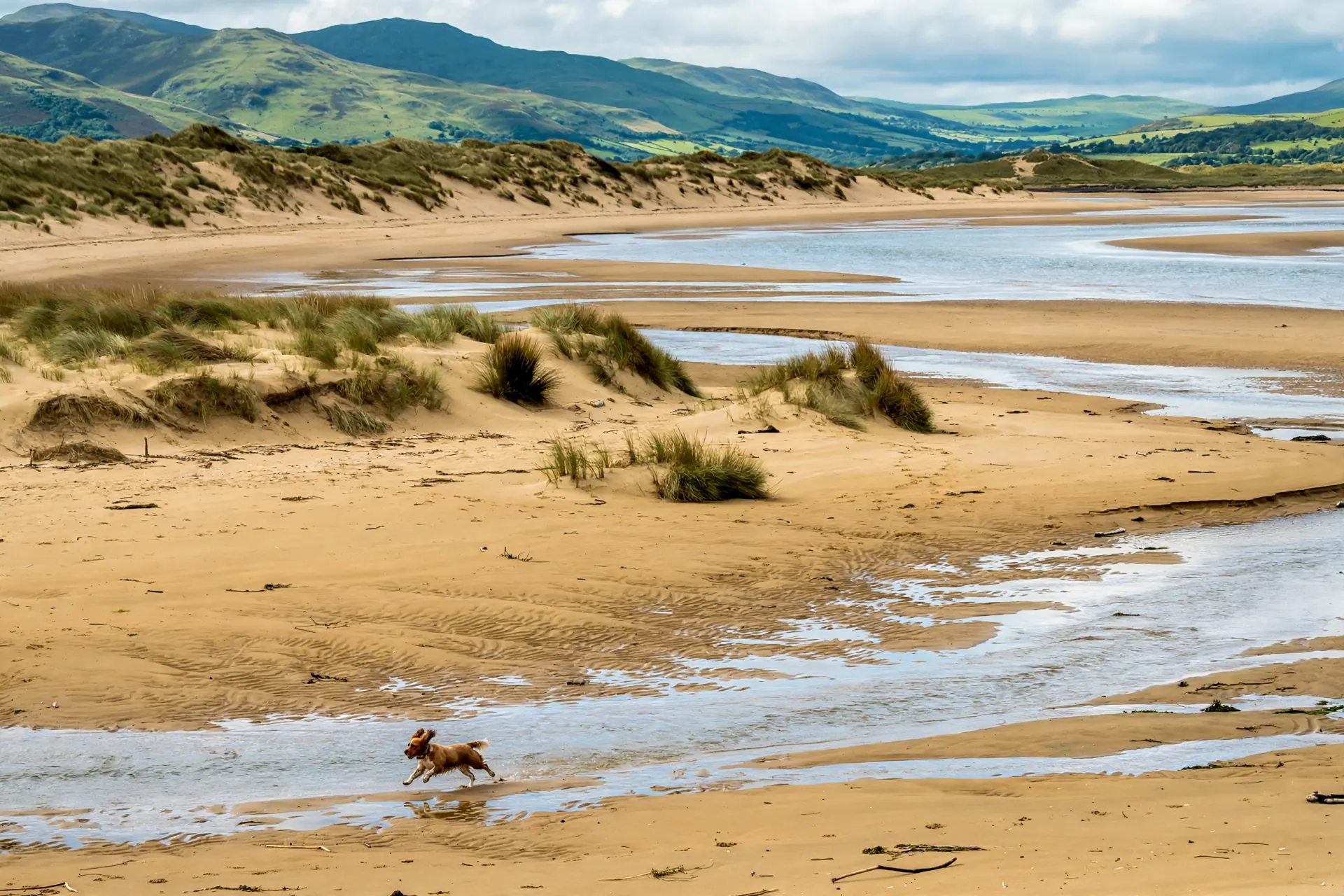
Most British beach towns ask you to check the weather. Aberdovey asks you to check the tide first, and the reason is simple: the beach here is not a fixed strip of sand but a shape that changes twice a day. At high water, the sea comes right up against the sea wall and the dunes, and the beach is a narrow ribbon. At low water, the tide pulls back across the Dovey estuary and leaves a broad expanse of firm, golden sand that runs a long way out towards the water. That is the Aberdovey your dog will remember, and it is worth building the whole day around it.
Check the tide times for Aberdovey the evening before you travel, and again on the morning, because the pattern shifts by roughly an hour each day. The useful window is the two or three hours either side of low water. That is when the sand is at its widest and firmest, when the shallow pools at the water's edge are perfect for a paddle, and when you can walk a long way without meeting a road or a fence. Arrive at high tide and you will still have a pleasant village stroll, but you will have missed the main event.
Low tide also changes the light and the sound of the place. The estuary becomes a mirror of shallow water and wet sand, wading birds work the mudflats, and the hills across the water in Ceredigion look close enough to touch. It is a good time to slow down rather than rush: let the dog sniff the tideline, watch the boats sitting on the sand by the jetty, and walk out only as far as feels comfortable. The estuary is beautiful precisely because it is tidal, and the tide is the one timetable in Aberdovey that never negotiates.
One practical habit makes all the difference. Note the time the tide turns before you walk out, and set a mental deadline to be back on the higher, drier sand well before the water returns. The incoming tide on a flat estuary beach can cut across the sand faster than a walking person expects, and the channels that were dry an hour ago can fill quickly. If you are ever unsure, stay close to the village end of the beach, where the way back is short and obvious, and check the official guidance before you travel for the latest local safety advice.
The beach: rules that actually matter
Aberdovey's main beach is the reason most dog owners come, and the headline is good: dogs are generally welcome on the sand, and the sheer size of the beach at low tide means there is room for a ball game, a long recall practice and a proper run without crowding anyone. That is a rare combination in a British seaside village, where the dog-friendly sand is often a small corner at the far end. Here the whole beach is the dog's playground, provided you use it with the consideration that keeps it that way.
The rules are worth checking rather than assuming. Beach restrictions in Wales are set locally, they can change from year to year, and seasonal controls apply on some nearby beaches even when Aberdovey itself is open to dogs. Before you travel, check the official guidance before you travel and read the signs at the beach entrances when you arrive, because the signs on the day are the rules that count. If a seasonal restriction is in force, respect it rather than testing it: a fine and a confrontation ruin a holiday far more thoroughly than a shorter walk does. Our guide to dog-friendly beaches in the UK explains how seasonal bans and public spaces protection orders work, and how to check any beach before you go.
On the sand itself, a few habits keep the day smooth. Keep your dog under close control near the jetty and the slipway, where boats are launched and recovered and where ropes, trailers and vehicles move without warning. Put the lead back on as you leave the beach and walk through the village, because the streets are narrow and the pavements are shared with pushchairs, mobility scooters and other dogs. Pick up after your dog every time, including on the open sand where it is tempting to assume the tide will deal with it: it will not, and the next family to sit down in that spot will notice. Carry more bags than you think you need, and use the bins provided at the beach entrances rather than leaving bags on the dunes.
The sand itself deserves a mention. At low tide it is firm and flat, which suits older dogs and dogs that struggle on soft, deep sand. The shallow water at the edge is usually calm, but the river channel that runs out through the estuary is a different matter: it is deep, fast and cold, and dogs should not be allowed to swim in it. Let the dog paddle in the shallows and the rock pools near the shore, and keep a long line on a dog that is tempted to chase the current. After the swim, rinse the dog with fresh water if you can, because estuary water and sand get into ears and between toes, and a quick rinse back at the cottage saves a lot of shaking and scratching later.
Dunes and the quieter sand
Behind the beach, the dunes are the second half of Aberdovey's open space, and they offer a completely different walk from the flat sand. The dune system is a rolling landscape of marram grass, sandy hollows and narrow paths, and it is where you go when the beach is busy or when the wind is coming hard off the sea. The dunes break the wind, the grass shelters the paths, and a dog that has had enough of open space can enjoy a slower, sniff-heavy wander through the hollows instead.
The dunes are also a fragile habitat, so walk on the marked paths rather than cutting new ones through the grass, and keep your dog from digging in the dune faces. Nesting birds use the dunes in spring and summer, and the marram grass that holds the whole system together is easily damaged by repeated scrambling. A lead is the right choice in the dunes during the nesting season, and at any time of year when you cannot see what is over the next ridge. The same rule applies around the golf course, which sits among the dunes: keep dogs on a lead, stay off the greens and fairways, and use the public paths that cross the course rather than wandering across the playing surface.
If the main beach feels crowded on a summer Saturday, the dunes are your escape valve. Walk through them towards the quieter stretches of sand at the far end of the beach, where the crowds thin out and the dog can run without weaving between windbreaks and picnics. Early morning is the best time of all: the dunes are empty, the light is low and golden, and the dog can have the whole landscape to itself before the village wakes up. Take a lead, take water, and take a phone, because the dunes all look alike once you are among them and it is easy to lose your bearings for a few minutes.
One more thing the dunes teach you is how quickly the weather changes on this coast. A sunny morning in the village can turn into a sharp sea breeze among the dunes, and a dog that was panting on the sand will be glad of a drying coat on the way back. Pack a light windproof layer for yourself and a coat for a short-coated or older dog, even on a day that starts warm. The estuary coast is a place of small, fast weather changes, and the walkers who enjoy it most are the ones who carry one extra layer rather than one fewer.
The village on foot
Aberdovey is a village you can cross on foot in ten minutes, and that is a large part of its charm with a dog. There is no need to drive anywhere once you have arrived: the beach, the jetty, the shops, the cafes and the railway station are all within a short, flat walk of each other. That matters more than it sounds, because a dog that has spent a morning running on the beach does not want a car journey to lunch, and an older dog does not want a steep hill back to the cottage.
Start at the jetty, which is the working heart of the village. Fishing boats and pleasure craft tie up here, the lifeboat station stands nearby, and the view across the estuary to the hills of Ceredigion is the one every visitor photographs. Keep the dog on a short lead on the jetty: the edge is unguarded in places, the surface can be slippery when wet, and there are ropes, bollards and anglers' gear underfoot. The jetty is a place to look, take a photograph and move on, not a place for an off-lead run.
From the jetty, the seafront walk runs along the village frontage past the hotels, the cafes and the small shops. This is the social part of the day: dogs greet each other, owners exchange beach reports, and the ice cream queue becomes an impromptu dog show. It is also the part of the day where your dog's manners matter most. Keep the lead short, keep the dog on your side away from the road, and do not let them snatch food from outdoor tables or jump up at strangers. A dog that behaves well on the seafront gets invited into more places; a dog that causes a scene gets remembered for the wrong reasons.
The village has a history that is worth a slow look while the dog sniffs the walls. Aberdovey was once a busy shipbuilding and trading port, sending slate and timber out across the estuary and bringing goods in from the sea, and the old cottages along the front still carry that maritime character. You do not need a guided tour to enjoy it: walk the back lanes behind the seafront, look at the slate roofs and the small gardens, and let the dog set the pace. The lanes are quiet, the traffic is slow, and the whole village rewards the walker who is not in a hurry.
The Wales Coast Path, both ways
The Wales Coast Path runs through Aberdovey, and that gives you two genuinely different day walks from the same front door. The choice between them is really a choice about what sort of day your dog wants, because the two directions feel nothing alike even though they start from the same jetty.
South towards Tywyn is the easier walk, and the one to choose first. The path leaves the village and follows the coast along a mix of beach, low cliffs and quiet lanes, with the sea on one side and the hills rising on the other. It is a walk of changing surfaces: sand underfoot, then grass, then a stretch of lane, then sand again. That variety suits most dogs, and the route is short enough to do as a there-and-back walk or as a one-way walk with the train back from Tywyn, which is one of the great pleasures of walking this coast. Check the train times before you set off, because the Cambrian Coast line is not a high-frequency service and a missed train means a long walk back.
North and east, the coast path takes you around the estuary, and this is a longer, wilder undertaking. The route heads inland around the head of the Dyfi estuary before returning to the coast on the Ceredigion side, which makes a one-way walk to Borth a full day rather than an afternoon stroll. It is a beautiful walk, across marshes and low hills with wide views back over the water to Aberdovey, but it is not a casual outing: the ground can be wet, the distances are long, and there are stretches with no facilities at all. Save it for a fit dog, a dry day and a plan that includes transport back.
Whichever direction you choose, the coast path rules are the same. Keep the dog on a lead where the path runs beside livestock, near cliff edges, through the golf course or along narrow lanes with traffic. Carry water for the dog, because the path has long stretches with no taps or shops, and carry a lead even if you plan to let the dog off: there will be a stile, a field of sheep or a nervous horse around the next bend, and you will want the lead in your hand, not in your bag. Tell someone your route if you are walking a long section alone, and check the official guidance before you travel for any temporary path closures or diversions.
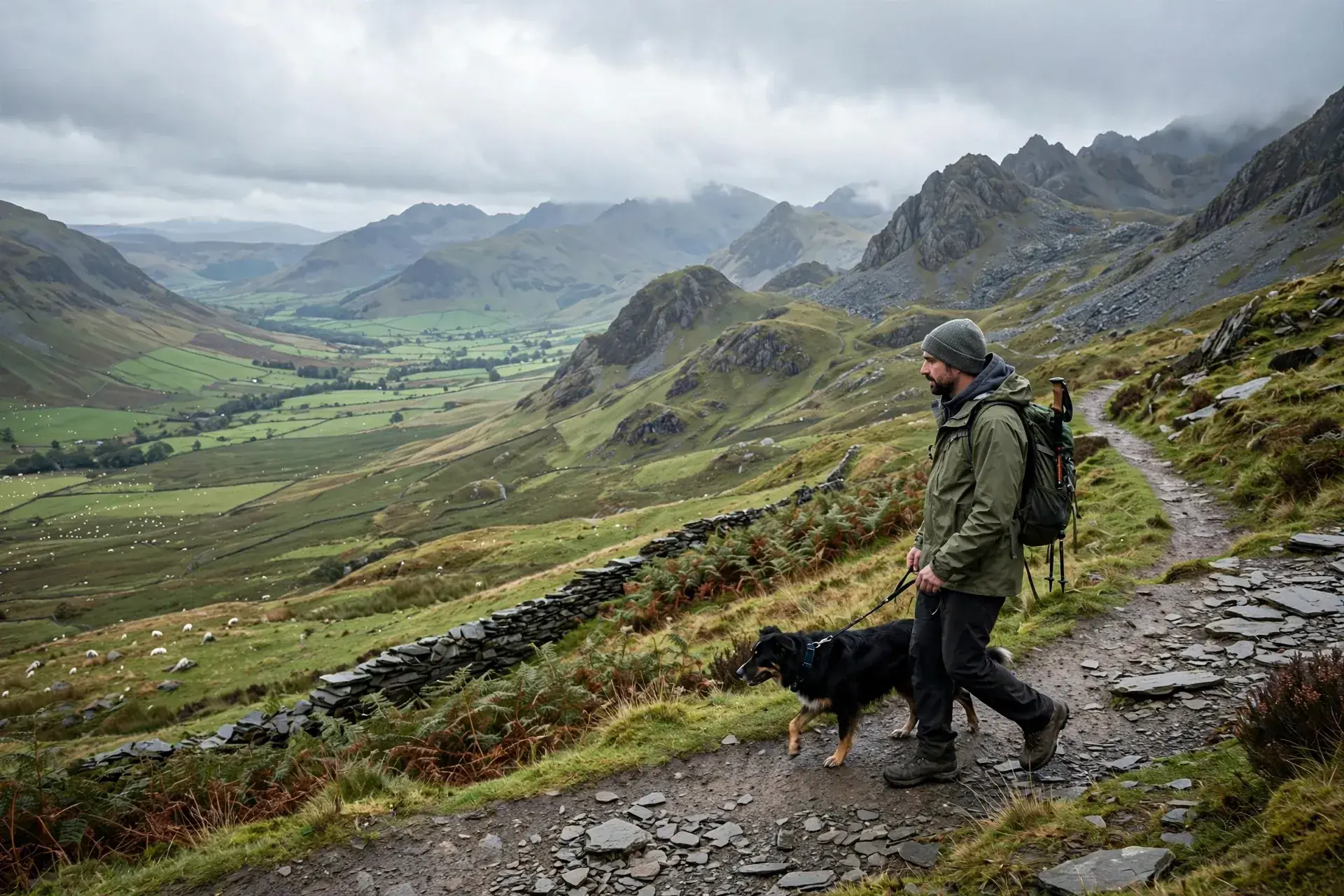
The coast path is also where Aberdovey connects to the wider walking country. From the village you are a short drive or train ride from the mountains of southern Snowdonia, and the walking changes completely once you leave the coast: steep, rocky, sheep-grazed hills where a lead is essential and the weather can close in fast. Our Snowdonia guide covers the mountain rules, the Yr Wyddfa restrictions and the easier valley walks that still feel like mountains, and it is worth reading before you swap the estuary for the hills.
Inland: woods, hills and waterfalls
When the wind is coming straight off the sea, or when the dog has had enough sand for one day, the land behind Aberdovey offers a completely different kind of walk. A short drive inland takes you into the foothills of southern Snowdonia, where the landscape changes from estuary to wooded valleys, fast streams and open moorland. This is the part of the trip that most visitors miss, because the beach is so seductive, but it is the part that makes a week in Aberdovey feel like a proper holiday rather than a single long beach day.
Forestry tracks and woodland paths are the easiest inland option, and they suit dogs that like to sniff and explore rather than run in straight lines. The woods give shade on a hot day and shelter on a wet one, the ground is softer underfoot than the beach, and the streams that run through the valleys give the dog somewhere to drink and paddle. Keep the dog on a lead or under very close control in woodland during the bird nesting season and whenever you cannot see the path ahead, because forestry tracks are shared with cyclists, timber vehicles and other walkers, and a dog that chases a squirrel across a track is a hazard to everyone.
Further inland, the hills rise towards Cader Idris, the great mountain that dominates the southern Snowdonia skyline. This is serious walking country, and it should be treated as such: the paths are steep and rocky, the weather changes quickly, and a dog that is comfortable on the beach may struggle on a long, exposed mountain ridge. If you want a taste of the hills without committing to a full mountain day, choose a lower valley walk that climbs gently through the foothills and turns back before the ground gets steep. The views are still superb, the dog still gets a proper workout, and you are never more than an hour from the car.
The waterfalls and streams of the valleys deserve a special note, because dogs love them and owners underestimate them. Fast water after rain is powerful, slippery rocks cause more dog injuries than most owners expect, and a dog that jumps into a plunge pool can be swept against rocks before you can reach it. Let the dog paddle in the shallow, slow water at the edges, keep them out of the fast water in the middle, and never let a dog swim above a weir or a waterfall drop. If in doubt, keep the lead on and enjoy the view from the bank: the photograph is just as good, and the dog stays safe.
Where dogs can eat and drink
Aberdovey is small enough that you will quickly learn which doors welcome dogs and which do not, and the general picture is a friendly one. Many of the village pubs and cafes accept dogs, usually in the bar area or on the terrace rather than in the formal dining room. That distinction matters: a dog that is welcome in the bar may not be welcome at a table in the restaurant, and the difference is not a snub but a matter of food hygiene rules and the comfort of other diners.
The practical approach is to ask before you settle in, and to make it easy for the staff to say yes. Arrive with the dog on a lead, ask whether dogs are welcome and where you should sit, and settle the dog on a blanket under the table before you order. Order at the bar if that is the house style, keep the dog out of the walkway, and bring a chew or a stuffed toy to keep a young dog occupied while you eat. A dog that lies quietly under the table is a dog that will be welcome again tomorrow; a dog that barks at every passing tray is a dog that will not.
Terraces and outdoor seating are your best friend in good weather. Aberdovey's seafront terraces let the dog lie in the sun while you eat, with the estuary in front of you and no indoor rules to worry about. Bring water for the dog, because a sunny terrace is hot work for a dog in a coat, and bring shade if you can: a dog that is overheating will pant, drool and become restless, and that is the moment to move inside or cut the meal short. If your dog is noise-sensitive, avoid the busiest lunch hours and choose a late lunch or an early dinner, when the village is quieter and the staff have more time.
For self-catering, the village shops cover the essentials: bread, milk, dog food, treats and the all-important poo bags. Stock up on arrival rather than assuming the shops will be open late, because village opening hours are shorter than town hours and the shops close earlier in winter. If you are staying for a week, the nearest supermarket is a drive away, so plan a proper shop on the way in or on the first morning, and keep a day's worth of dog food in reserve in case the village shop has run out of your brand.
Where to stay with a dog
Aberdovey has a good range of dog-friendly places to stay for a village of its size, from seafront hotels that take dogs in selected rooms to self-catering cottages and small campsites on the edge of the village. The right choice depends less on the price than on the dog: a cottage with a garden suits a dog that needs a secure toilet area at night, while a hotel room suits a dog that is happy to sleep quietly indoors and walk out on a lead for every toilet trip.
When you book a cottage, ask the questions that the listing does not answer. Is the garden genuinely enclosed, and how high is the fence? A low wall that a collie can clear is not an enclosed garden, whatever the listing says. Where does the dog sleep, and is there a hard floor or a washable rug for a wet dog to lie on? Is there an outdoor tap for rinsing sandy paws, and somewhere to hang wet towels and drying coats? The answers to these questions matter more than the thread count of the bedding, and a good owner will answer them gladly.
Hotels and guest houses need a different set of questions. Which rooms take dogs, and are they the quiet rooms at the back or the rooms beside the main road? Is there a charge per dog per night, and does it cover one dog or two? Can the dog be left alone in the room while you eat, or must the dog come with you to the bar? The answers vary widely, and the time to learn them is before you pay, not when you arrive tired at six in the evening with a dog that needs a toilet break.
Campsites and touring pitches suit a different kind of trip altogether. A pitch on the edge of the village gives the dog space and fresh air, but it also means a walk to the beach in all weathers, and a wet tent with a wet dog is a test of any relationship. If you camp, choose a pitch with hard standing or good drainage, bring a drying coat and a spare towel for every day of the trip, and check the site's dog rules before you book: some sites limit the number of dogs per pitch, some require leads at all times, and some close their dog exercise areas in winter. Whatever you choose, book early for school holidays and summer weekends, because the dog-friendly rooms and cottages in a small village sell out months ahead.
Getting there and parking
One of Aberdovey's quiet advantages is that you do not need a car to enjoy it, and arriving by train is genuinely one of the best ways to get here with a dog. Aberdovey has its own station on the Cambrian Coast line, the scenic railway that runs from Shrewsbury through Machynlleth and along the coast to Pwllheli. The journey itself is part of the holiday: the line crosses the estuary on a long viaduct, runs beside the sea, and gives you views of the coast that drivers never see. Dogs are generally allowed on these trains, but check the official guidance before you travel for the latest conditions, keep the dog on a lead, and bring a blanket and water for the journey.
If you drive, the approach to Aberdovey is part of the pleasure and part of the planning. The village sits at the end of a coastal road, and the drive in from Machynlleth or from Tywyn runs along the estuary with views that make you want to stop every few minutes. Allow more time than the map suggests, because the roads are narrow in places, the summer traffic is slow, and you will want to stop. Arrive in daylight if you can: finding a cottage in a small village in the dark, with a dog that needs a toilet break, is a poor start to any holiday.
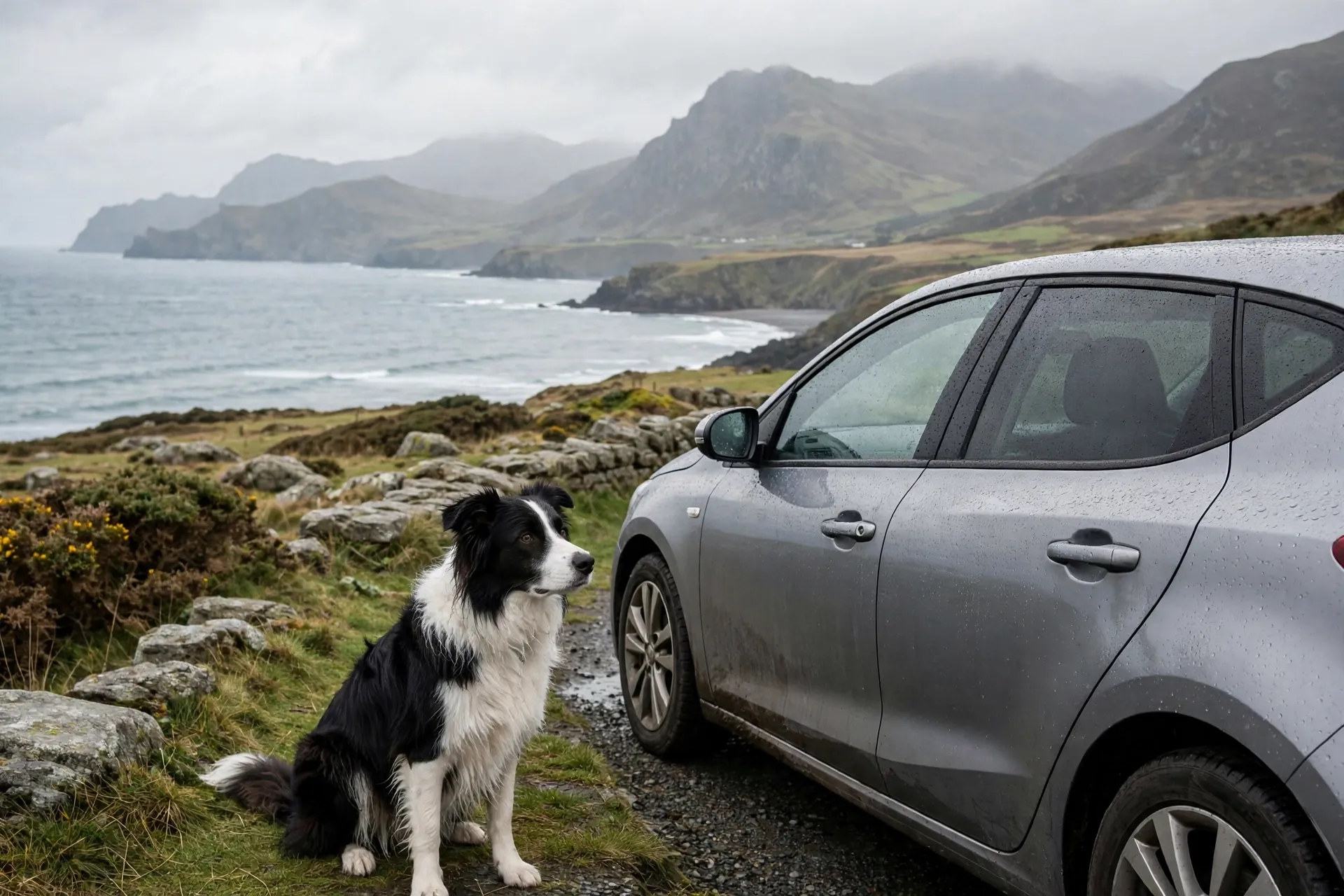
Parking in the village is straightforward but limited. The village car park near the seafront is the most convenient base for a beach day, and it puts you within a short walk of the sand, the jetty and the shops. It fills up on sunny summer weekends and during school holidays, so arrive before late morning if you can, and have a backup plan: the station area and the streets on the edge of the village offer a longer walk in, but they are quieter and often have space when the main car park is full. Charges and time limits can change, so read the signs when you arrive, and never leave a dog in a parked car, even for a few minutes: a car in the sun heats up far faster than most people realise, and a shaded car in winter is no place for a dog either.
Once you are in the village, the best transport is your own feet. The beach, the dunes, the jetty, the shops and the station are all within a short walk, and a dog that has run on the beach does not need a car to reach lunch. If you want to explore further afield, the train and the local bus open up the coast in both directions, and the road trip routes of North Wales are an easy drive away. Our North Wales road trip guide sets out a loop through the Conwy coast, the Eryri foothills and the Llyn Peninsula, with drive times and dog stops, if you want to turn a village stay into a wider tour.
A two-day plan that works with the tide
Aberdovey rewards a plan that follows the tide rather than fighting it, and two days is enough to see the best of the village without rushing the dog. The plan below assumes a low tide in the late morning, which is the most common pattern in summer; shift it earlier or later to match the tide times on your dates, and the structure still works.
Day one is the beach day. Arrive the evening before if you can, so the dog can settle into the cottage and you can walk the seafront in the quiet of the evening. On the first morning, take a short lead walk around the village to learn the layout, then head for the beach as the tide drops. Let the dog run on the firm sand, paddle in the shallows and work off the journey, and keep the walk to an hour or so before the dog gets tired or cold. Lunch on a seafront terrace, an afternoon doze back at the cottage, and an evening stroll along the jetty as the light fades over the estuary: that is a full day, and the dog will sleep well.
Day two is the walking day. Start with the coast path south towards Tywyn, walking out for an hour or ninety minutes and turning back when the dog is ready, or walking one way and catching the train back. The path gives the dog a completely different workout from the beach: hills, grass, lanes and views, with plenty of sniffing and a slower pace. In the afternoon, drive or walk inland for a short woodland walk, or simply return to the beach for a second, shorter session at low tide. The combination of a beach day and a walking day is what makes Aberdovey work as a short break: the dog gets variety, you get the views, and neither of you is exhausted by the end of it.
If you have a third day, use it for the wider area. Take the train along the coast to Barmouth or Harlech, drive into the hills for a valley walk, or cross the estuary to the dunes and nature reserve on the Borth side, where the landscape is wilder and the birdlife is spectacular. The point of a third day is not to do more of the same but to see how different this corner of Wales can feel within an hour of the village. Keep the day short, keep the dog's energy in reserve for the journey home, and finish with a last walk on the beach at low tide, because that is the memory you will both take home.
What to pack for an estuary village
Packing for Aberdovey is packing for two different environments at once: a sandy beach and a Welsh hillside, with a village in between. The beach kit is the bigger half. Bring a long line for recall practice on the open sand, a ball or a toy that floats and is easy to spot, a towel for every beach session, and a drying coat for the dog, because a wet dog in a sea breeze gets cold fast. Bring more poo bags than you think you need, and a small bottle of fresh water for rinsing sandy paws before the dog gets back into the car or the cottage.
The walking kit is the smaller half, but it is the half that gets forgotten. Bring a lead you can trust on a cliff path, a harness that fits well and does not rub on a long walk, water and a collapsible bowl for the coast path, and a basic first-aid kit for the dog: tick remover, antiseptic wipes, bandages and any regular medication, plus the number of the nearest vet saved in your phone before you travel. The nearest vet is a drive away, not a walk, so save the number on the first evening rather than searching for it in an emergency.
Clothing for the humans is worth a paragraph of its own, because the estuary weather changes fast. Pack a windproof layer and a waterproof jacket even on a sunny forecast, and bring footwear that can handle wet sand, muddy lanes and a woodland path in the same day. A pair of wellington boots earns its place in the car boot on this coast, and a dry change of clothes in the car saves the journey home after a wet walk. For the dog, a drying coat and a spare towel matter more than a wardrobe: a dog that can be dried quickly is a dog that stays warm, and a warm dog is a happy dog.
Finally, pack for the evenings. A familiar bed or blanket helps the dog settle in a strange cottage, a chew or a puzzle feeder keeps a young dog occupied while you cook, and a torch is essential for the last toilet walk, because the village lanes are dark and the beach is darker. The evenings in Aberdovey are quiet, and that is the point: a tired dog, a warm cottage and the sound of the estuary outside the window is the whole holiday, and it needs very little equipment to enjoy.
Estuary safety: mud, currents and livestock
The Dovey estuary is beautiful and it is also a working tidal environment, and the safety rules for dogs are different from the rules for a landlocked park. The first rule is about the water: never let a dog swim in the river channel or try to cross the estuary mouth. The current is fast, the water is cold, and the sandbanks shift with every tide. A dog that swims out confidently can be carried sideways faster than you can run along the bank, and the water that looks calm on the surface can be moving hard underneath. Paddling in the shallows is fine; swimming in the channel is not.
The second rule is about the mud. The estuary mudflats look firm from a distance and can be soft and deep up close, and a dog that runs onto soft mud can sink to its belly before you can reach it. Keep the dog on the firm sand and out of the muddy creeks, and if the dog does get stuck, do not wade in after it without thinking: call the dog back calmly, use a long line to guide it, and ask for help if you cannot reach it safely. The coastguard and the lifeboat station exist for exactly this kind of emergency, and there is no embarrassment in calling them.
The third rule is about livestock. The fields and hills around Aberdovey are working farmland, and sheep graze the coastal slopes and the hills inland. A dog that chases sheep can cause serious harm in seconds, and the farmer is entitled to protect the flock. Keep the dog on a lead in any field with livestock, keep the lead on where you cannot see what is over the next rise, and never let the dog off in a field with lambs in spring. The same caution applies to ground-nesting birds in the dunes and on the marshes: a lead costs you nothing and saves a nest.
The last rule is the simplest and the one most often forgotten: tell someone where you are going. The coast path and the inland hills have stretches with no phone signal and no other walkers, and a twisted ankle or a lost dog becomes a much bigger problem when nobody knows where you started. Leave a note at the cottage, tell the campsite warden or the hotel reception, and carry a charged phone and a whistle. Most walks in Aberdovey are easy and safe, and these small habits are what keep them that way.
Practical questions
Before you go
Is Aberdovey beach dog-friendly all year?
Aberdovey beach is generally welcoming to dogs, and the wide sands at low tide are one of the best places in southern Snowdonia for a long off-lead run. Beach rules in Wales can change, and seasonal restrictions apply on some nearby beaches, so check the official guidance before you travel and look for the signs at the beach entrances on the day. Keep your dog under control around other beach users, pick up after them, and remember that a dog that is fine on the sand still needs a lead near the jetty, the car park and the village streets.
When does the tide cover Aberdovey beach?
The tide comes in and out twice a day, and at high tide the beach narrows to a much smaller strip of sand against the sea wall and the dunes. Check the tide times for Aberdovey before you set out and plan the long beach walk for the two or three hours either side of low water, when the firm sand is at its widest. Never try to cross the estuary mouth or wade the river channel: the current runs fast, the sand shifts, and the water comes back quicker than it looks. If you are unsure, ask locally or check the official guidance before you travel.
Can dogs walk the Wales Coast Path from Aberdovey?
Yes. The Wales Coast Path passes through Aberdovey, and you can walk south towards Tywyn along the coast or head inland and north around the estuary on longer routes. The southern section is the easier day walk: a mix of beach, low cliffs and quiet lanes. Keep your dog on a lead where the path runs beside livestock, near cliff edges or through the golf course, and carry water because there are stretches with no shops or taps. The path is waymarked, but check the official guidance before you travel if you are planning a long linear walk, so you can arrange the return by train or bus.
Are dogs welcome in Aberdovey pubs and cafes?
Many of the village pubs and cafes welcome dogs, usually in the bar area or on the terrace rather than in the main dining room. Policies vary from place to place and can change with the season, so ask before you settle in and keep your dog on a lead under the table. Bring a blanket for your dog to lie on, order at the bar where that is the house style, and avoid peak lunch hours if your dog is unsettled by crowds. If you want a guaranteed dog-friendly meal, ring ahead the day before rather than assuming.
Where is the best place to park with a dog in Aberdovey?
The village car park near the seafront is the most convenient base for a beach day, putting you a short walk from the sand, the jetty and the village shops. It fills up on sunny summer weekends and school holidays, so arrive before late morning if you can. Charges and time limits can change, so check the signs when you arrive and check the official guidance before you travel if you need a long stay. The railway station is a short walk from the village centre, and arriving by train is a good option in peak season because it avoids the parking scramble altogether.
Can I take my dog on the train to Aberdovey?
Yes. Aberdovey has its own station on the scenic Cambrian Coast line, which runs along the coast from Shrewsbury through Machynlleth and on to Pwllheli. Dogs are generally allowed on these trains, but the rules and any conditions can change, so check the official guidance before you travel. Keep your dog on a lead, sit in a quieter carriage if you can, and bring a blanket and water for the journey. The walk from the station to the beach takes only a few minutes, which makes the train a genuinely practical way to arrive with a dog.