This guide is independent and contains no paid placement. If affiliate links are added later, they will be clearly marked and will not change our editorial checks.
Snowdonia is superb with the right dog and the right plan: keep your dog on a short lead around sheep, treat Yr Wyddfa as a serious mountain day rather than a stroll, build the trip around lower valley, lake and forest walks, and book parking and dog-welcoming bases in advance. Always check the latest official guidance before you travel.
Is Snowdonia right for your dog?
Snowdonia — Eryri in Welsh — is not one walk but a whole mountain region in north-west Wales: slate peaks, glacial lakes, river valleys, forests and working farmland, all threaded with villages such as Llanberis, Beddgelert, Betws-y-Coed and Capel Curig. That variety is exactly why it works so well for dogs. You do not need to climb the highest summit to have a mountain holiday. A dog that would struggle on a long, exposed ridge can still have a brilliant week on valley floors, lakeshores and forest trails, with the big peaks as the backdrop rather than the test.
Start, as always, with the dog in front of you. An adult dog that is fit, steady on uneven ground, calm around sheep at a distance and happy in changeable weather will cope with far more of Snowdonia than a puppy, a senior dog with stiff joints, a short-nosed breed that overheats easily, or a dog that finds narrow paths and passing strangers stressful. Be honest about fitness in both directions: a dog that normally walks forty minutes on flat pavement is not ready for a five-hour mountain route, however keen they look at the car park. Build up distance and climbing gradually in the weeks before the trip if you can, and plan the holiday around the easiest version of each day, with a harder option only if the dog is fresh, the weather is kind and you started early.
Timing shapes the trip too. Summer brings long days but also the busiest car parks, the fullest paths and the greatest heat risk on exposed slopes with little shade or water. Spring and autumn often suit dogs better — cooler air, quieter trails and softer light — but bring shorter days, muddier ground and, in spring, lambing, when extra care around sheep is essential. Winter in Snowdonia is a different proposition altogether: summits can carry snow and ice, daylight is short and valley walks can flood. Whatever the season, treat mountain weather as changeable within the hour, check a mountain-specific forecast on the morning of any higher walk, and check the latest official guidance before you travel for any path closures, livestock notices or local restrictions.
Yr Wyddfa with a dog: rules and realism
Yr Wyddfa — Snowdon — is the highest mountain in Wales and the one most visitors picture first. Dogs are generally welcome on its main walking paths on a lead, and many fit dogs complete a summit route happily. None of that makes it an easy day. Every walking route to the summit is long, steep in places and exposed to weather that can turn from sunshine to wind, rain and poor visibility with very little warning. There is no casual bail-out halfway up, no water supply to rely on for your dog, and no shade on the upper mountain. Judge it as you would a serious hike for a person, then judge it again for a dog that cannot tell you when a paw is sore or when they have had enough.
Route choice matters enormously. The Llanberis Path is the longest but generally the most gradual and the easiest to follow, roughly following the line of the mountain railway, which is why it is often considered the most dog-manageable of the main routes in good conditions. The Miners' Track and Pyg Track from Pen-y-Pass involve rougher, rockier ground, and other routes involve sustained steep sections or scrambling that are unsuitable for most dogs — a dog cannot scramble safely, cannot be carried easily on exposed rock, and a lead between two scramblers helps neither. If a route description mentions scrambling, exposure or a knife-edge ridge, choose a different walk. That is not a failure; Snowdonia rewards the lower routes generously.
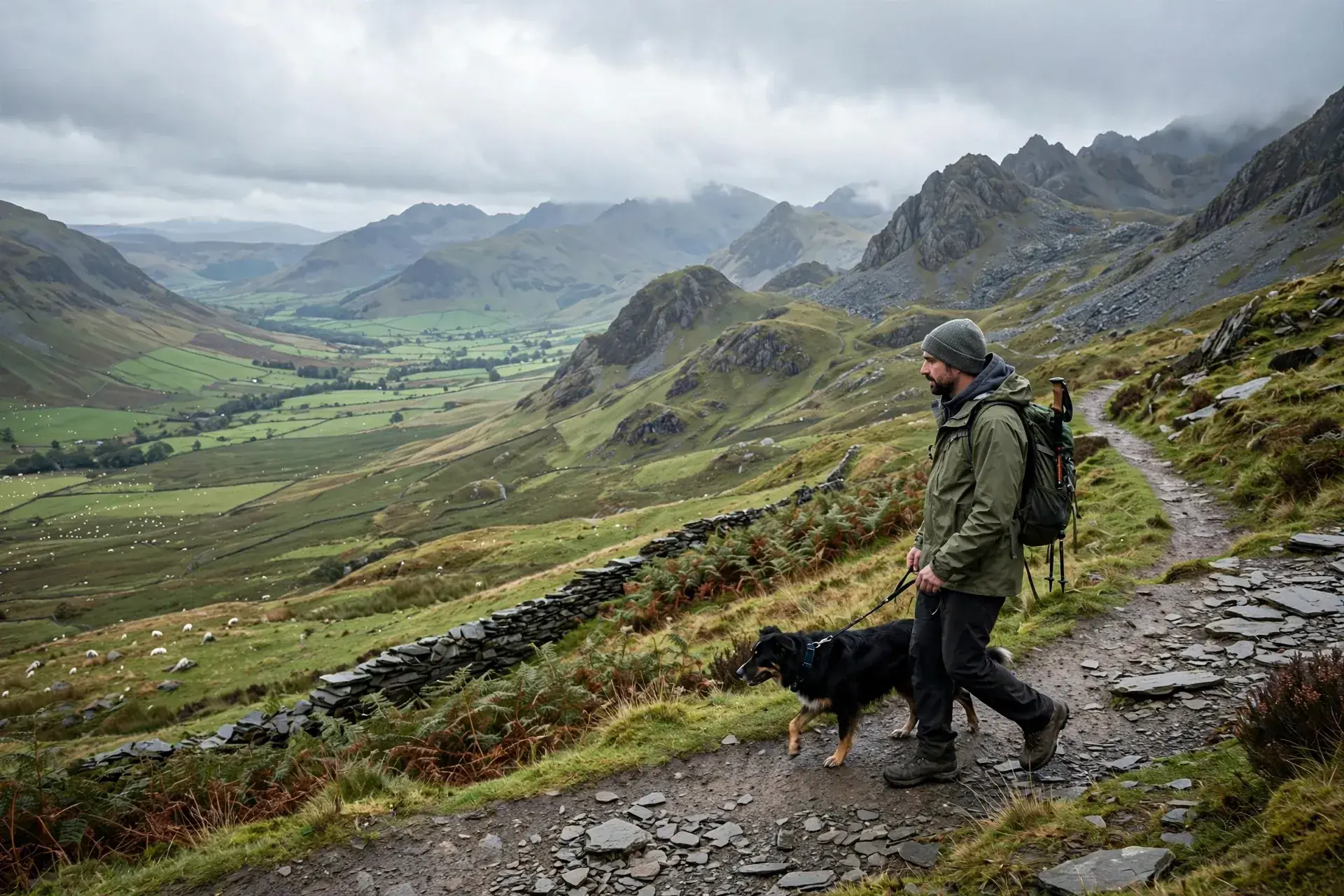
On the day, apply simple mountain discipline. Start early to avoid both heat and crowds, carry water and a collapsible bowl for the dog as well as for yourself, and offer drinks little and often rather than letting a thirsty dog gorge at a stream. Keep the lead short on steep, narrow or busy sections and near any drops, and step aside calmly to let others pass rather than letting dogs greet on a cliff-edge path. Check paws at every stop: grit, sharp slate and long descents wear pads quickly. Watch for the quiet signs of a dog reaching their limit — lagging, repeated sitting, excessive panting, seeking shade that is not there, or pulling towards the descent. Turning back with a healthy dog is always the right call, and the mountain will still be there next year. Above all, check the latest official guidance before you travel and again on the day: summit building opening, railway running, path conditions and weather warnings all change, and none should be taken for granted.
Sheep, livestock and leads: the rule that shapes everything
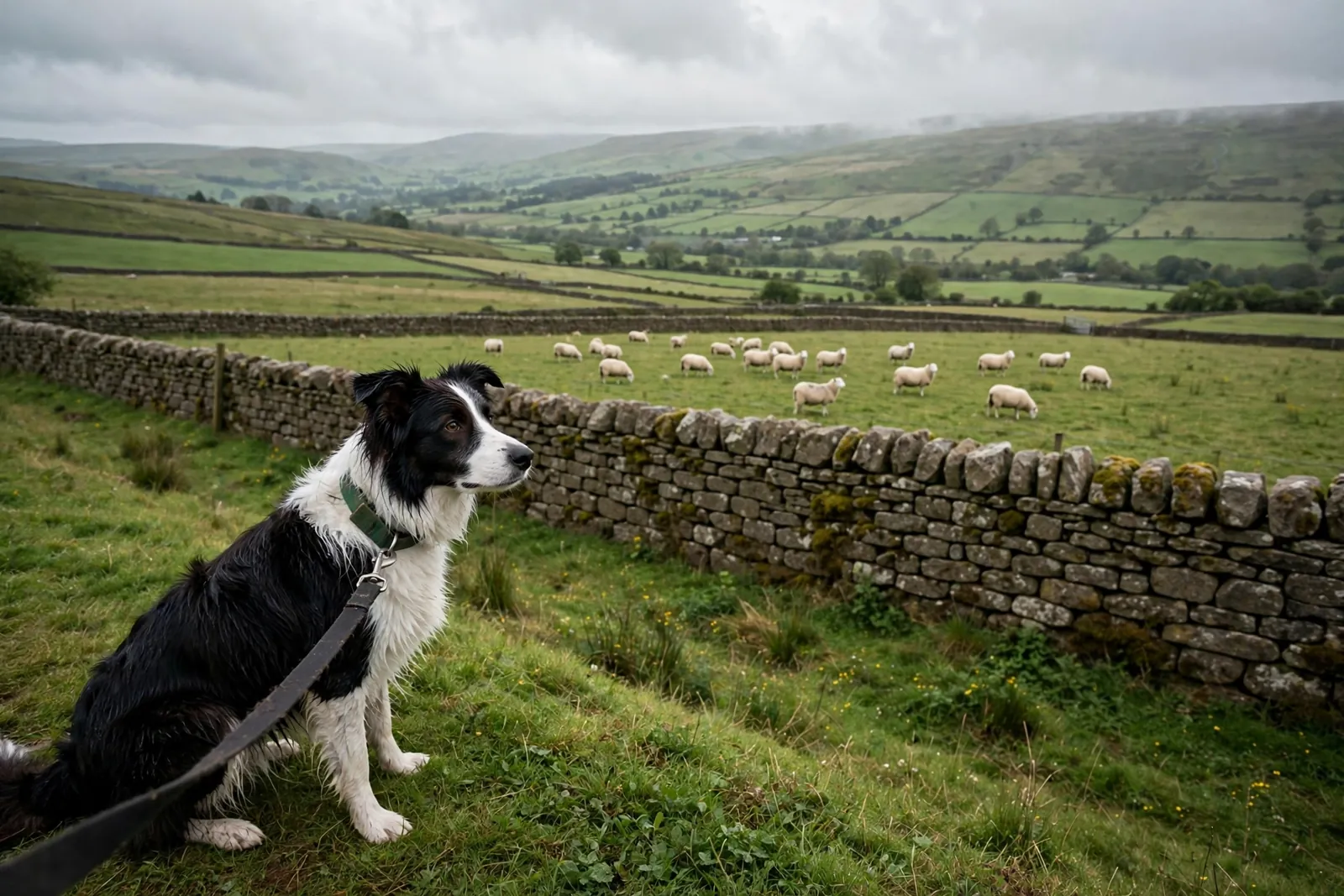
Much of Snowdonia is not empty wilderness. It is a lived-in, worked landscape where sheep graze widely across open hillsides, often unfenced and often exactly where the footpath goes. Cattle, ponies and goats appear in places too. For a dog owner, this is the single most important fact about walking here: you should expect to meet livestock on almost any walk, at almost any time of year, sometimes with no warning around a bend or over a rise. The safe default is a short lead whenever livestock are visible, whenever you approach a field boundary or gate, and whenever signs ask for it — which in sheep country is effectively most of the walk.
This is not only courtesy; it is law and livelihood. A dog chasing sheep can cause panic, injury, miscarriage in pregnant ewes and fatal exhaustion, even if the dog never makes contact, and farmers have legal rights to protect their animals. Our detailed guide to the livestock worrying law explains what counts as worrying, what penalties apply and why “my dog was only playing” is no defence. Lambing season, broadly in spring, raises the stakes further: keep well away from ewes with young lambs, give any sheep that is lambing or in distress a very wide berth without intervening yourself, and if you are concerned about an animal, note the location and tell a farm or the national park rather than approaching. Around cattle, the advice differs in one important respect: if cattle approach aggressively and you feel threatened, letting the dog off the lead so you can both escape is generally considered safer than holding on — check the latest official guidance before you travel for the current countryside-code wording, and wherever possible simply route around cattle with calves altogether.
Technique helps as much as rules. Use a standard, non-extending lead on hill paths — a retractable lead gives a dog enough rope to lunge at a sheep before you can react and tangles dangerously on rocky ground. Practise a reliable “leave” and a calm walk-past at home and on easier walks before you need them beside a flock. Keep treats for rewarding attention on you, not for scattering near livestock. Close every gate you open, even if it was the wind that seemed to have opened it, stick to the path where waymarking asks you to, and take all dog waste away with you: bag it and bin it in the village, because waste left on grazing land is a health risk to animals as well as an eyesore. A dog on a short lead that walks past sheep without fuss is welcome almost everywhere in Snowdonia; a dog off the lead among sheep puts the walk, the flock and future access at risk.
Easier dog-friendly walks that still feel like Snowdonia
The best Snowdonia dog holiday is usually built from lower-level walks, with one bigger day at most. Valley, lake and forest routes give you mountain scenery, water to paddle in and room to turn back at any point — and they suit puppies building confidence, older dogs, hot days and the morning after a long drive far better than a summit bid. Choose distances well within your dog's normal exercise, and grade the day by climbing and surface as much as by miles: two miles of rocky lakeshore can tire a dog more than four miles of forest track.
Around Llanberis, the circuit and shores of Llyn Padarn offer flatter walking with Yr Wyddfa views, water access in suitable spots and an easy return to the village for food and rest. Around Beddgelert, river and valley paths give gentle, beautiful walking under steep hillsides, with the village itself as a natural halfway pause — keep leads on near grazing and take particular care where paths run close to the river after rain. Around Betws-y-Coed, forest trails provide shade, shelter on wet days and softer ground for paws and joints, making them the classic bad-weather plan that still feels like a real walk rather than a compromise. Waterfall and gorge paths in the area are spectacular but can be slippery, stepped and crowded at pinch points; they suit steady, sure-footed dogs in quieter hours and are best skipped with a nervous dog or after heavy rain. Further afield, coastal sections and estuary walks towards the edges of the national park add variety on a longer stay, with the usual need to check tides, beach rules and grazing before you set off.
Build each walk the same careful way. Read the route grade, distance, ascent and surface before you go, not at the trailhead. Screenshot or save the route, because signal drops in the valleys. Tell someone your plan on higher or longer walks. Start with the easiest walk of the week on day one — travel tiredness is real for dogs — and keep one very short, familiar loop near your accommodation for first and last outings of the day. If your dog loves water, plan for a wet, muddy return: a towel and a change of footwear in the car save the pub-stop argument, and a rinse matters where lakes carry algae warnings in warm weather — if the water looks bright green, scummy or smells odd, keep the dog out entirely and check the latest official guidance before you travel for any local warnings.
Parking and getting around without the stress
Parking is the practical pinch point of a Snowdonia trip, especially in summer, on bank holidays and at the famous trailheads. Popular car parks such as Pen-y-Pass fill very early in peak season, some operate pre-booking or firm time limits, and roadside parking outside marked bays can result in vehicles being ticketed or towed where it blocks lanes and gates. The dog-friendly approach is also the stress-free one: arrive early or walk later in the day, pre-book where the system offers it, pay for a full day rather than guessing, and always have a second, quieter walk planned if your first car park is full. Never leave a dog alone in a parked car while you check a route — mountain car parks in sun become hot cars quickly, even in Wales, even with a window cracked.
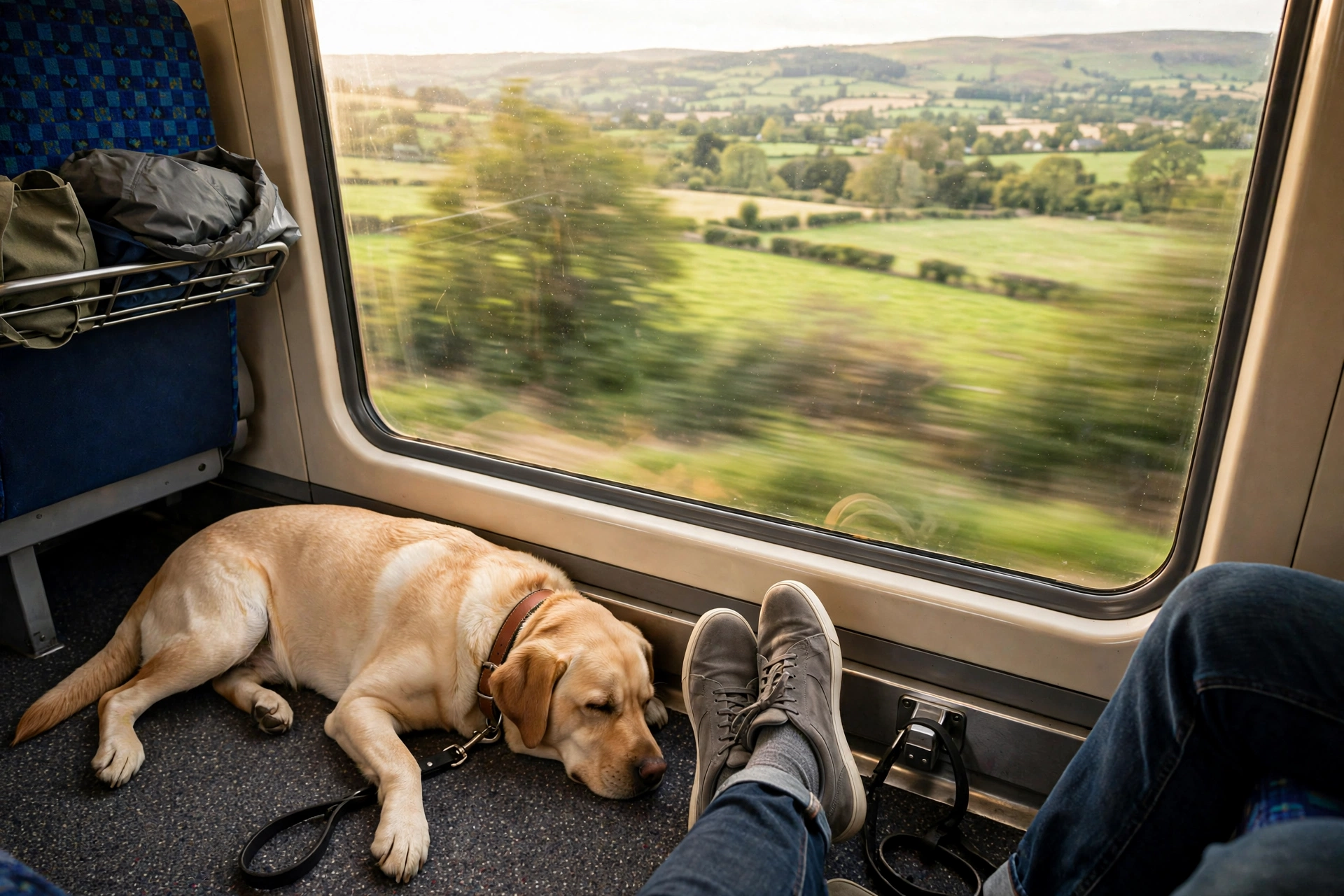
Consider not driving to the busiest honeypots at all. Local buses serve many trailheads and villages, and park-and-ride style services operate in season on the busiest corridors — routes, dog policies and timetables change, so check the latest official guidance before you travel and confirm that dogs are carried on the specific service you plan to use. Arriving by train is a genuine option for a car-free Snowdonia base too: the Conwy Valley line serves Betws-y-Coed, and mainline stations on the coast connect with local buses into the hills. If train travel is new to your dog, our guide to taking a dog on UK trains covers lead rules, quiet-coach etiquette and settling a dog on board. The Snowdon Mountain Railway deserves its own warning: do not plan a day that depends on riding it with your dog. Dog carriage on mountain railways and similar attractions is restricted and changes by service and season, and may be limited to assistance dogs, so check the operator's current policy directly before you travel and keep a walking plan that works without it.
Wherever you park, apply countryside common sense. Do not block farm gates, field entrances or passing places — a blocked gate in lambing season is a serious problem, not an inconvenience. Take litter and dog waste to a bin rather than leaving bagged waste on a wall, which helps nobody. Keep the dog on a lead in the car park itself: traffic, livestock in adjacent fields and other dogs arriving excitedly make car parks a common place for avoidable incidents. Finally, note where the nearest vet is for the area you are walking in, not just near your accommodation, because mountain valleys are long and rural practices can be a significant drive apart.
Bases, pubs and staying over
Choosing one base for several nights beats moving around Snowdonia, for the dog as much as for you. Llanberis is the practical Yr Wyddfa base, with Llyn Padarn on the doorstep, the widest choice of services and the easiest early starts for mountain days. Beddgelert is the prettiest village base, ideal for valley and river walks and for owners who want a short evening stroll rather than a drive. Betws-y-Coed is the forest and wet-weather base, with the best shelter when the summits are in cloud and good onward options by road and rail. Capel Curig and the Ogwen side suit experienced hill households who want quieter, higher walking and accept fewer facilities. Any of them works; what matters is matching the base to the walks you will actually do with your dog, not the walks in the brochure.
Accommodation needs the usual honest checks. “Dog-friendly” can mean anything from dogs welcomed with a bed, bowl and enclosed garden to dogs tolerated in one room for a fee. Confirm where the dog may sleep, whether there is a genuinely enclosed outdoor space for the last outing of the day, whether sheep graze immediately beyond the garden fence — a real issue in Snowdonia villages — and what the per-dog charge and maximum are. If you are comparing park-style stays across Wales as part of a longer trip, our guide to dog-friendly holiday parks in the UK sets out the booking questions that matter, and many of them apply word for word to a Snowdonia cottage. Ground-floor or easy-access rooms help older dogs and muddy returns alike, and a hard-floored entrance area for drying a wet dog is worth more than a stylish rug.
Pubs and cafés are one of the pleasures of the area, and many Welsh pubs welcome dogs in the bar or garden with water bowls provided. The etiquette is simple and universal: keep the dog on a lead, settled under or beside your table, out of walkways and away from other diners' dogs unless both owners agree to a greeting, and wipe muddy paws before coming in where a mat or towel is provided. Ask before assuming the dog can come into a restaurant room rather than the bar, and never let a dog beg at other tables — one muddy lunge at a stranger's lunch damages the welcome for every dog that follows. Plan food stops around the dog's day, not just yours: a pub lunch after the morning walk, with a settled, tired dog, is a different experience from dragging an under-exercised young dog into a busy bar at peak hour. In small villages, popular dog-welcoming places fill at weekends, so an early lunch or a booked table protects the plan, and carrying a backup picnic for a lakeshore is never wasted in Snowdonia.
Weather, safety and the kit that earns its place
Snowdonia weather deserves respect in every season. Rain is frequent, cloud can close over the tops while the valleys stay clear, wind is stronger and colder with height, and underfoot conditions change from dry rock to slippery slate and bog within a single walk. Dress and pack for the worst plausible version of the day, not the version in the car park: waterproofs for you, a planned turnaround time, a map you can use when the phone battery fades, a torch in the darker months, and a charged phone with the route and your accommodation details saved offline. Check a mountain forecast for any higher route and a general forecast for valley days, and be willing to swap the plan — the forest walk you do in rain beats the summit you abandon in cloud.
Dog-specific kit is short and practical. A well-fitting collar with an up-to-date ID tag and a lead you trust, plus a harness if your dog walks better in one on steep descents. Water and a collapsible bowl, even on walks that pass streams, because not all water is safe or reachable. Poo bags in more than one pocket, and a small bag to carry used bags out. A towel and, for short-coated or older dogs in winter, a dog coat for stops and the summit pause, when a working dog cools fast. Paw checks need no kit at all, but a small first-aid kit covering cuts, ticks and a torn nail earns its space on a week's holiday, as does the number of a local vet saved before you need it. After wet walks, dry the dog properly, check between the toes for grit and grass seeds, and check for ticks after bracken, long grass and sheep pasture — remove any tick promptly with a proper remover or seek vet advice if you are unsure how.
Finally, plan the shape of the week, not just the walks. Alternate a longer day with a shorter one, protect sleep — dogs need far more rest on holiday than the itinerary usually allows — and keep feeding, last outings and bedtime close to the home routine. Leave one plan deliberately empty for the day the weather wins. Snowdonia with a dog is at its best unhurried: one good walk, one good pub, a dog asleep under the table and the mountains still there in the morning. Do that, keep the lead short around sheep, and check the latest official guidance before you travel whenever rules, transport or conditions may have changed, and Eryri will look after the rest.
Keep exploring
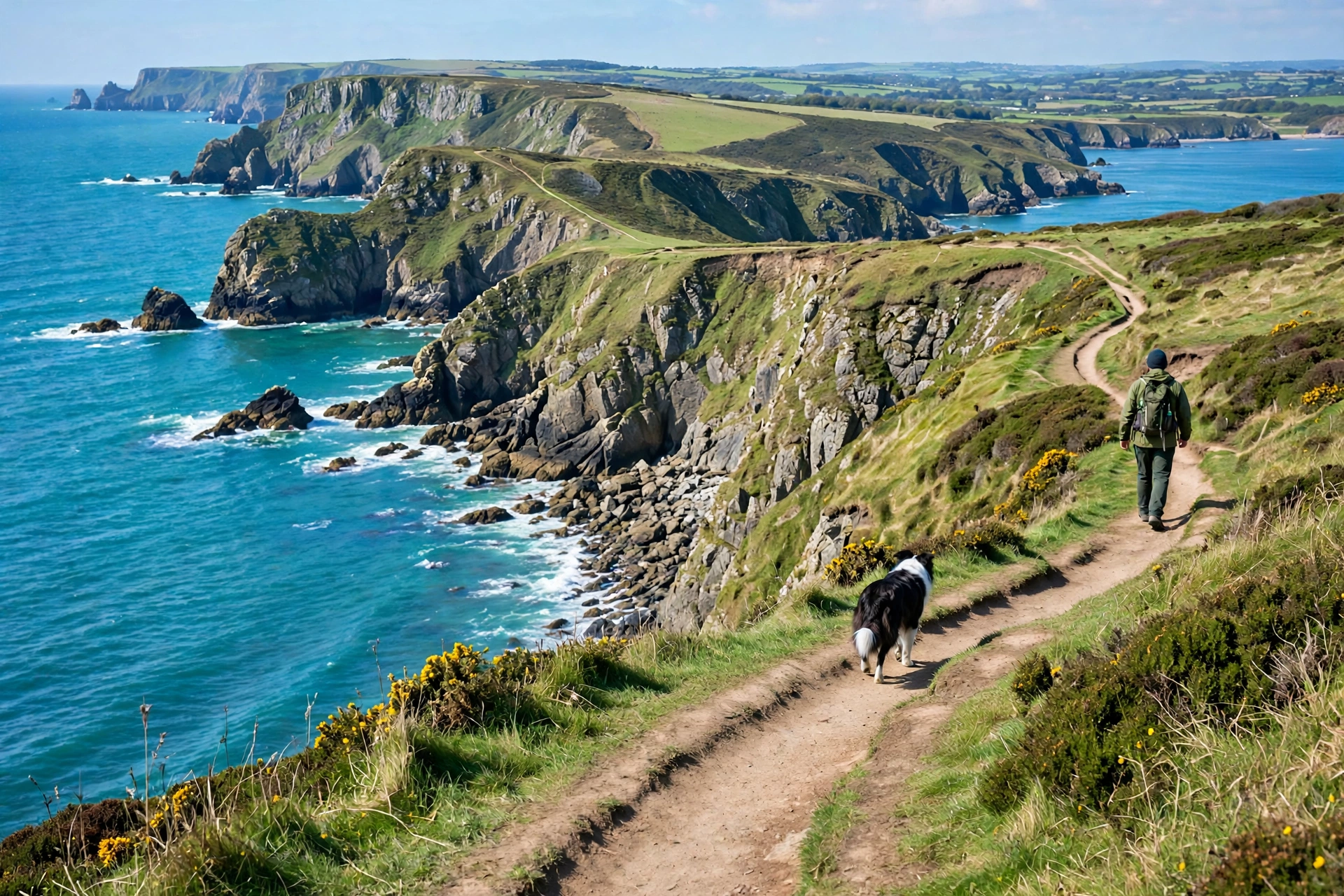
Walking Wales with your dog next? The Pembrokeshire Coast Path offers a very different, sea-cliff version of the Welsh coast. See: Pembrokeshire Coast Path with a dog.
Practical questions
Before you go
Are dogs allowed on Yr Wyddfa (Snowdon)?
Dogs are generally welcome on the main Yr Wyddfa paths on a short lead, but the summit is a serious mountain walk, not a stroll. Only attempt it with a fit, adult dog in suitable weather, carry water for both of you, and be ready to turn back. Check the latest official guidance before you travel, as conditions and any local restrictions can change.
Does my dog have to be on a lead in Snowdonia?
Keep your dog on a short lead around sheep and other livestock, near cliffs and steep drops, and wherever signs ask for it. Much of Snowdonia is working farmland crossed by paths, and even a friendly dog off the lead near sheep can cause serious harm and legal trouble.
Can I take my dog on the Snowdon Mountain Railway?
Do not assume you can. Mountain railway and other local transport policies for dogs change and may exclude all but assistance dogs on some services. Check the operator's current dog policy and book accordingly before you travel, and have a walking or driving plan B.
What are the easier dog-friendly walks in Snowdonia?
Look for lower-level valley, lake and forest routes around places such as Beddgelert, Betws-y-Coed and Llyn Padarn rather than starting with a summit. Choose a distance well within your dog's normal exercise, avoid steep scrambling sections, and check the route grade and livestock notes before you set off.
Where is the best base for visiting Snowdonia with a dog?
Llanberis suits Yr Wyddfa and lake walks, Beddgelert suits valley walks and a village feel, and Betws-y-Coed suits forest walks and wet-weather options. Pick one base for several nights, confirm the accommodation truly welcomes your dog, and plan parking and pub stops in advance for busy weekends.