This guide is independent and contains no paid placement. If affiliate links are added later, they will be clearly marked and will not change our editorial checks.
Amble works best as a harbour-first visit: walk the quayside on a lead, cross to the beach at low tide, eat at a dog-friendly cafe, then take the flat coast path towards Warkworth or Hauxley. Check tide times and seasonal beach notices before you travel, because the tide and the working harbour set the day here more than any timetable.
Start at the working harbour
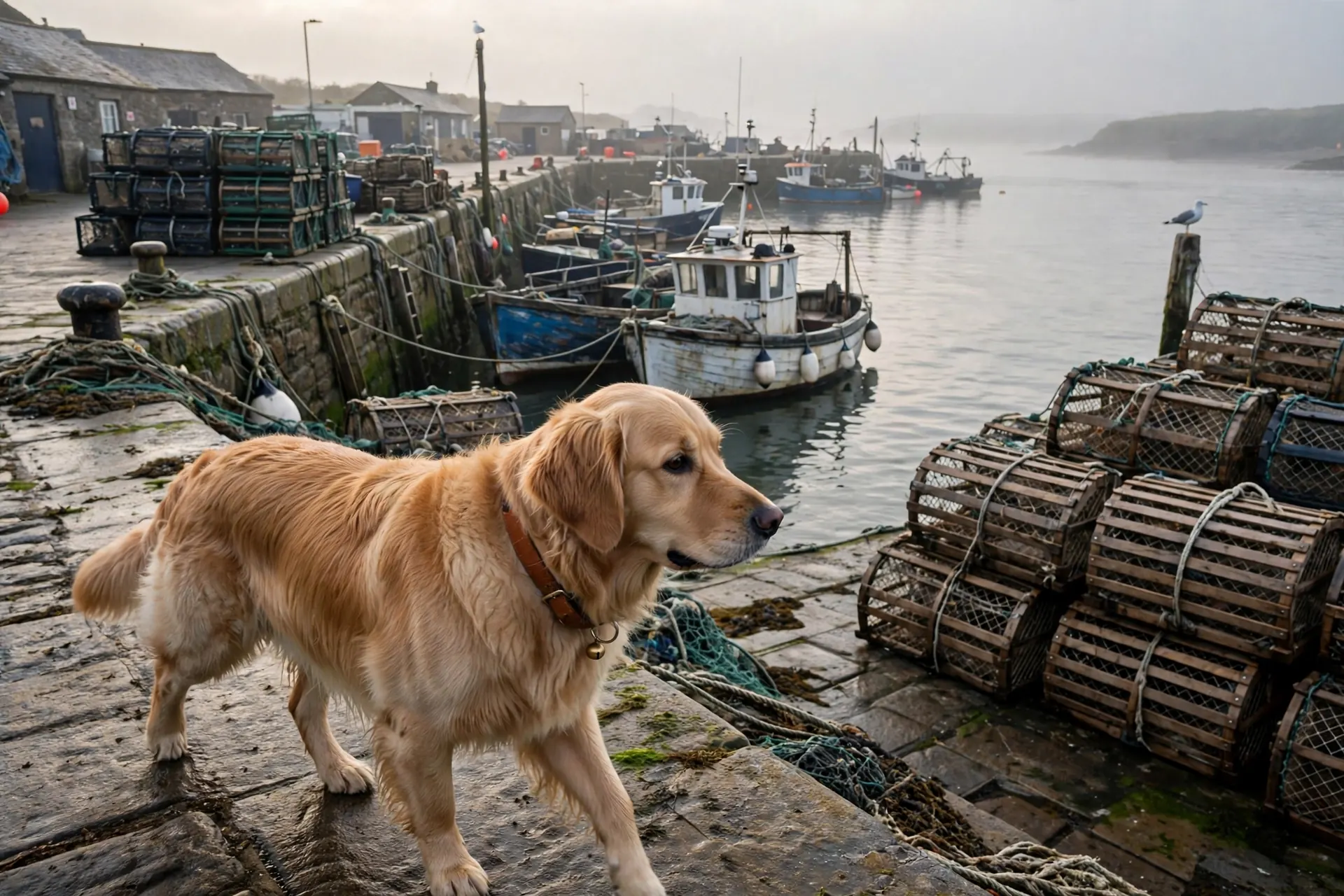
Amble is not a polished resort town, and that is exactly why dogs suit it. The harbour is still a working place: fishing boats come and go, lobster pots are stacked on the quayside, nets dry in the wind, and gulls argue over the day's catch. A dog arriving here gets a full sensory briefing in the first five minutes — salt air, fish, rope, diesel, seaweed and the sound of water slapping against hulls. The sensible response is to slow down, keep the lead short, and let the dog take it in from the quayside rather than rushing straight onto the sand.
The quayside walk itself is short, flat and easy to read. Start near the marina and the harbour village, where small shops and cafes cluster around the water, then follow the quay past the boats towards the pier. The surface is mostly hard standing, which suits older dogs, puppies and dogs that struggle with deep sand, and there are plenty of places to pause while a boat moves or a vehicle passes. Keep your dog on the landward side when a forklift, trailer or fishing vehicle is working, and do not let them duck under ropes or between stacked pots. Lobster pots look like an adventure to a curious dog and a trap to everyone else: the gaps, wire and rope can snag a lead, a paw or a collar, so give them a wide berth.
Watch the water edge with the same care you would give a road. The harbour wall drops straight into deep water in places, and the steps and ladders down to the pontoons are not dog routes. A dog that loves to jump in after a ball needs a firm rule here: no swimming in the harbour channel, no chasing gulls off the pier end, and no leaning over the edge to sniff the water. The beach, a few minutes away, is the place for paddling and running; the harbour is the place for watching, sniffing and walking on a lead.
Morning is the best time to meet the working harbour. Boats are being prepared, the light is softer, and the quayside is busy enough to feel alive without being crowded. If your dog is nervous around noise, engines or large vehicles, an early start also helps: you can do the quayside loop before the day-trippers arrive, then move on to the quieter beach or coast path. If your dog is excitable, the harbour is a good training ground in miniature — short lead, frequent stops, rewards for settling while boats and people pass — before you give them more freedom on the open sand.
Look for the small details that tell you how the town works. The harbour village shops sell local fish, crab and lobster when the boats have landed, and the notice boards and chandlery windows often carry the most useful local information: tide times, weather warnings and harbour notices. Take a photograph of the tide board if there is one, and note the time of high water before you plan a beach walk. Amble rewards visitors who read the harbour first and plan second, because the tide decides which routes are open, which parts of the beach are firm underfoot, and how long you can stay out before the water comes back in.
Dogs that live inland sometimes find the harbour overwhelming at first, and that is normal. Salt air carries scent much further than a park does, and every rope, crate and puddle tells a different story. Build in a settling stop: find a bench away from vehicle routes, offer water, and let the dog watch the harbour for ten minutes. A calm start makes the rest of the day easier, especially if you plan to eat outside later or walk the coast path where other dogs, walkers and cyclists will pass.
Amble beach, tides and sand
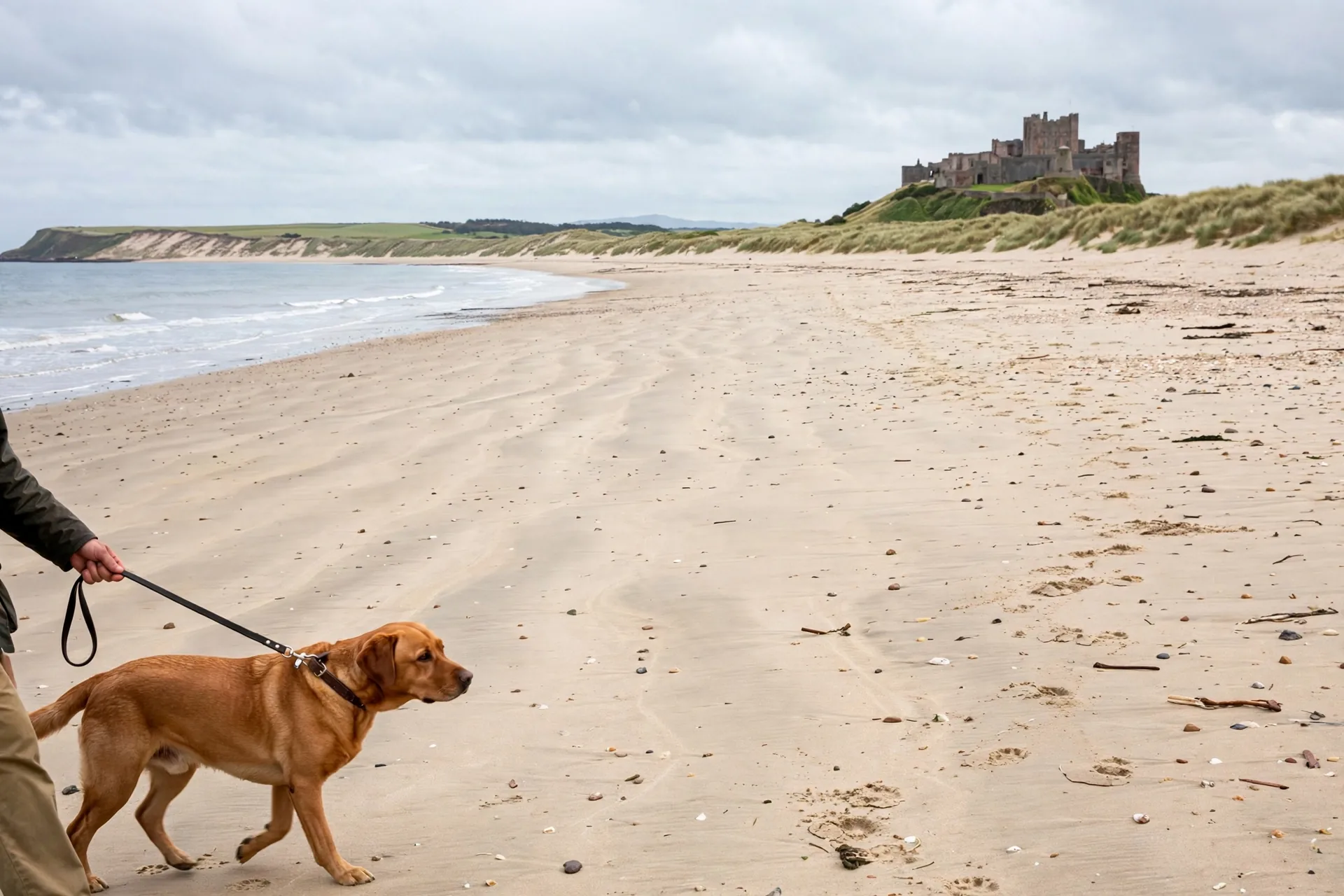
Amble beach sits just south of the harbour, a broad stretch of sand that runs towards Hauxley and, in the other direction, towards the mouth of the River Coquet and Warkworth. It is the kind of beach that suits dogs who like space: firm sand at low tide, shallow pools for paddling, and room to run without crowding other beach users. The trade-off is that it is an open North Sea beach, exposed to wind and weather, with a tide that moves fast across flat sand. Treat the tide as the main planning tool, not an afterthought, and check the official guidance before you travel for the latest seasonal rules and any local notices.
At low tide the beach opens up into a wide, flat playground. The sand near the water is usually firm enough for a comfortable walk, while the softer, drier sand higher up the beach is harder work for older dogs and small legs. Rock pools and shallow channels appear as the tide drops, and they are excellent for sniffing and paddling, but they can also hide sharp shells, broken crab claws and the occasional fish hook. A quick scan before you let a dog off the lead, and a habit of checking paws after a beach session, prevents most minor injuries. Bring fresh water for drinking, because dogs that drink seawater often end up with an upset stomach, and salt water on a cut or sore paw stings.
Seasonal rules matter here, as they do on many Northumberland beaches. Some stretches have restrictions during the bird breeding season, and local notices can change from year to year, so do not rely on a rule you remember from a previous visit. Look for signs at the beach access points, keep your dog under close control near nesting areas and the dunes, and respect any signed exclusion zones even if the beach looks empty. The dunes behind the beach are fragile and important for wildlife, so keep dogs on paths through them rather than letting them crash through the marram grass.
The tide at Amble deserves respect. The beach is flat, which means the water can cover a long distance quickly, and channels in the sand can cut off a return route sooner than expected. Plan beach walks on a falling tide when you can, keep an eye on the water line, and always know which access point you will use to leave the beach. If you walk south towards Hauxley, agree a turn-back time before you set off; if you walk north towards Warkworth and the River Coquet, remember that the river mouth adds its own current and depth, and the crossing is not a casual paddle. When in doubt, stay on the beach you arrived on and enjoy the space you have.
Wind is the other force that shapes a beach day in Amble. A north-easterly can drive sand and spray across the beach, which some dogs love and others hate, and it can make a long lead into a sail. A lightweight windproof layer for you, a drying coat for the dog, and a sheltered spot behind the dunes for a rest all make the difference between a bracing walk and a miserable one. On calmer days the beach is a natural training ground: recall practice with plenty of space, gentle off-lead play, and long, sniffy walks along the waterline where the scent trail changes with every wave.
After the beach, plan for sand everywhere. Amble has the usual seaside problem of sand in paws, coats, cars and pockets, and a wet dog plus sand makes a gritty combination. A towel, a brush and a bottle of fresh water for rinsing paws help, and many visitors rinse dogs at the beach edge before the short walk back to the car. Check your dog's paws and ears after a beach session, especially after a windy day, and dry the coat before a long car journey home. A dog that has had a good run on Amble beach will usually sleep all the way home, which is the best possible review of the day.
Coastal walks from Amble
The coast path from Amble is flat, open and generous, which makes it one of the easiest long walks in Northumberland with a dog. The two classic directions are north towards Warkworth and south towards Hauxley, and both can be done as out-and-back walks or, with a bit of planning, as one-way walks with a bus or a lift back. The Northumberland Coast Path runs through this stretch, and the waymarking is generally clear, but the exact line can shift with the tide, the dunes and the season, so carry a map or a charged phone and check the official guidance before you travel.
North to Warkworth is the more popular route, and it is easy to see why. The walk follows the beach and the coast path past the mouth of the River Coquet, with Warkworth Castle appearing ahead as you approach the village. The distance is roughly two to three miles each way, depending on whether you stay on the beach or take the inland path, and most walkers with a dog should allow two to three hours for the return trip with stops. Warkworth itself is a good halfway point: a village with pubs, cafes and a castle, and a useful place to rest, water the dog and decide whether to walk back or find another way. For a longer day, the coast path continues beyond Warkworth towards Alnmouth, but that is a bigger undertaking and deserves its own plan. If you are thinking of linking Amble with the wider county, our Northumberland dog guide sets out how the castle coast fits together.
South to Hauxley is quieter and wilder in feel. The beach stretches away from the town, the dunes thicken, and the birdlife becomes more noticeable, especially around the nature reserve at Hauxley. This direction suits dogs that prefer space to company, and walkers who like a long, straight beach walk without many other people. The trade-off is fewer facilities: there is less shelter, fewer places to stop for water or food, and the return walk is the same distance back, so carry water and plan your turn-back point carefully. Keep dogs under control near the reserve and the dunes, and watch for ground-nesting birds in the breeding season.
Shorter loops suit many dogs better than a long linear walk. One easy option is a harbour-to-beach loop: quayside, beach access, a stretch of sand, then back through the town past the cafes. Another is a beach-and-dunes loop that stays close to Amble, giving the dog a good run without committing to the full distance to Warkworth. A third is a town loop that takes in the harbour, Queen Street and the riverside, which works well on a wet or windy day when the open beach is less appealing. The best walk is the one that matches the dog you have on the day, not the longest one on the map.
Other dogs, walkers, cyclists and horse riders all use this coast, so lead discipline matters. A long line is a useful compromise on the beach: it gives the dog room to run and sniff while keeping them under control near other people, livestock or wildlife. Recall needs to be reliable before a dog goes fully off lead on a busy beach, and even a well-trained dog should go back on the lead near the harbour, the river mouth, the dunes and any signed sensitive area. If your dog is reactive, the early morning or late afternoon is kinder than midday, and the quieter Hauxley direction is usually calmer than the Warkworth route on a sunny weekend.
Pack for the coast path as you would for any exposed walk: water and a collapsible bowl, poo bags, a towel, a lead and a spare, and a layer for yourself. There is little shade on the open beach, so on a warm day plan for sun and heat as well as wind, and watch for signs of overheating in thick-coated or older dogs. In winter the same path can be cold, wet and slippery underfoot, and the light fades early, so start earlier than you think you need to and carry a torch if you might finish near dusk. The coast path rewards preparation and punishes optimism, which is a fair trade for the views.
Seafood, cafes and pubs
Amble is a fishing town first and a visitor town second, and the food reflects that order. The harbour village and Queen Street hold the cluster of places where a dog owner can eat well without leaving the dog behind: fish and chip shops, seafood cafes, bakeries and pubs, many with outdoor seating where dogs are welcome. The town is small enough that you can walk the whole food circuit in twenty minutes, which makes it easy to check a menu, ask about dogs, and choose a place that suits the dog as well as the appetite.
Fish and chips is the obvious harbour meal, and it is also the most dog-friendly in practice, because it is usually eaten outside, on a bench or on the quayside, with the dog at your feet. Buy the food, find a sheltered spot away from vehicle routes, and keep the dog on a short lead while you eat. Fish bones, batter scraps and chip salt are not dog food, and gulls will try to steal anything left unattended, so keep the food close and the dog closer. A dog that has just had a long beach walk will usually settle happily for twenty minutes with a chew or a sniffing game while you eat, especially if they have already had water and a toilet break.
Seafood cafes and restaurants around the harbour vary in their dog rules, and the variation is worth checking rather than assuming. Some welcome dogs inside in a specific area, some are terrace-only, and some change their policy between lunch and dinner or between summer and winter. The practical approach is to ask at the door, look for a water bowl or a dog sign, and choose a place that clearly expects dogs rather than one that merely tolerates them. A cafe that puts out water bowls, has a dog menu or keeps treats behind the counter is telling you something useful about how the visit will go. Policies can change, so check the official guidance before you travel if a particular restaurant matters to your trip.
Pubs in Amble follow a similar pattern. Many Northumberland pubs welcome dogs, often in the bar area or on a terrace, and a harbour pub after a coast walk is one of the pleasures of the town. The rules that matter are the same everywhere: keep the dog on a lead, settle them under or beside the table, and do not let them wander between tables or beg from other diners. A tired dog is a good pub dog, so time the visit after the walk rather than before it, and bring a mat or blanket for the dog to lie on if the floor is cold stone or tile. If your dog barks at strangers or other dogs, choose a quieter corner or an outdoor table, and be ready to leave if the dog cannot settle.
For a lighter stop, the bakeries and coffee shops on Queen Street are useful for a takeaway coffee and a cake, eaten on a bench with the dog. The harbour village shops also sell local fish, crab and lobster to take home, which is worth doing if you are staying nearby with a kitchen, but remember that raw fish, shells and fish waste are hazards for dogs, so keep shopping bags out of reach and dispose of shells and bones carefully. A dog that has smelled fresh crab all afternoon will be very interested in your shopping, and a secure bag and a short lead are the answer.
Eating with a dog in a small town works best when you keep the meal simple and the dog's needs first. Water before food, a toilet break before you sit down, a mat to settle on, and a plan for what to do if the dog cannot settle all matter more than the menu. Amble's food is at its best when it is eaten slowly, outside, with the harbour in view and the dog asleep at your feet, and the town's size means you are never far from the next bench, the next cafe or the next stretch of beach if the first plan does not work.
Parking, toilets and practical bits
Parking in Amble is straightforward on a normal weekday and competitive on a sunny weekend, which is the usual Northumberland pattern. The main car parks around the harbour and the town centre put you within a short walk of the quayside, the beach and the cafes, and that short walk matters when you are carrying a dog, a towel, water and a picnic. Arrive early on weekends and school holidays, read the signs for charges, time limits and payment methods, and keep a note of which car park you used, because the harbour area has more than one and they can look similar after a long walk.
Never leave a dog in a parked car in warm weather, even for a few minutes, and be cautious in any weather when the car is in direct sun. If you need to wait in the car — for a shop to open, for a tide to turn, for another member of the party — park in shade, open the windows, offer water, and keep the wait short. A dog that is hot, stressed or bored in a car will tell you quickly, and the harbour is a better waiting room than a car park. On a cold day the opposite problem applies: a wet dog in a cold car cools down fast, so dry the dog before the drive home and keep a blanket in the boot.
Public toilets in Amble are close to the harbour and the town centre, and it is worth knowing where they are before the dog's walk turns into your emergency. The harbour area also has the usual seaside facilities: bins for dog waste, water points and taps in some locations, and benches where you can pause. Carry your own poo bags even when bins are provided, because a bin that is full or a dispenser that is empty is not an excuse, and the harbour and beach are places where other people, children and wildlife all share the space. Pick up after your dog on the quayside, the beach, the dunes and the coast path, and use the bins provided rather than leaving bags on walls, fences or dunes.
Water is a practical detail that is easy to forget. The beach and coast path have long stretches without a reliable drinking-water supply, so carry a bottle and a collapsible bowl even on a short walk. The harbour has taps in places, but they may be for boat use rather than drinking, so do not rely on them. A dog that has been running on sand in the wind will drink more than you expect, and a dog that has been swimming in the sea will need fresh water to rinse the salt from their mouth and coat.
Mobile signal around the harbour and the beach is generally usable, but it can be patchy on the coast path and in the dunes, so download a map and the tide times before you set off. A charged phone, a lead, a spare lead, poo bags, a towel, water and a basic first-aid kit for paws cover most of what a day in Amble needs. If you are staying overnight, add a drying coat, a spare set of bedding and a familiar blanket, because a dog that has been on a Northumberland beach in November needs warmth and dryness as much as food.
Finally, remember that Amble is a small town with a working harbour, not a theme park. Shops and cafes have real opening hours, some close early in winter, and the harbour can be quiet on a weekday out of season. That quiet is part of the appeal, but it means you should check opening times before you travel if a particular cafe, shop or attraction matters to your visit. A little planning — parking, toilets, water, tide times and a backup cafe — turns a good day in Amble into an easy one.
Staying over with a dog
Amble makes a good base for a short break, and it also works as a single night on a longer Northumberland tour. The town itself has a small range of dog-friendly places to stay, including guesthouses, holiday cottages and bed-and-breakfasts, and the surrounding area adds caravan sites, holiday parks and farm stays within a short drive. The choice depends on the dog: a cottage with a garden suits a dog that needs a secure toilet area at night, a guesthouse with a ground-floor room suits an older dog, and a site near the coast path suits a dog that wants a long walk first thing in the morning.
Ask the same questions you would ask anywhere, and ask them before you pay. How many dogs are allowed, and is there a charge per dog or per stay? Is there a secure garden or a nearby toilet area, and is it lit at night? Are dogs allowed in the lounge, the dining room or only in the bedroom? Is there a surcharge for cleaning, and what happens if the dog damages something? The answers vary widely, and a place that is genuinely dog-friendly will answer them clearly and in writing. A vague answer is a warning, not a reassurance.
Location matters as much as the room. A stay within walking distance of the harbour means you can do the quayside walk before breakfast, the beach at low tide, and the coast path without moving the car, which is a calmer day for the dog. A stay a few miles inland, towards Warkworth or Alnwick, gives you a quieter night and a different set of walks, but it adds a drive to the beach and the harbour each day. For a multi-day trip, consider splitting the stay: a night in Amble for the harbour and the beach, then a night further north for the castles and the dunes. Our guide to Alnwick with a dog covers the castle town inland, and our Bamburgh with a dog guide covers the next great beach and castle stop up the coast.
Pack for the stay as well as the walk. A familiar bed or blanket, the dog's usual food, a water bowl, a lead and a spare, poo bags, a towel and a drying coat all belong in the overnight bag. If the accommodation has a garden, check the boundary before you let the dog off the lead: a low wall, a gap in a fence or a gate that does not latch can turn a toilet break into a chase. If there is no garden, plan the last walk of the evening and the first walk of the morning, and keep them short, familiar and close to the accommodation.
Noise is worth thinking about in a small town. A harbour can be busy early in the morning, with boats, vehicles and gulls, and a dog that is a light sleeper may wake early. A familiar bed, a white-noise app or a radio left on low, and a tired dog after a long beach walk all help. If your dog barks at unfamiliar sounds, ask for a room away from the road or the harbour, and warn the host honestly about the dog's behaviour rather than hoping the problem will not arise.
Finally, leave the accommodation as you found it. Cover furniture if the dog is allowed on it, wipe paws at the door, and clean up any mess promptly. A good guest with a dog makes it easier for the next dog owner to be welcomed, and in a small town like Amble, where hosts talk to each other, that reputation matters. The best review a dog owner can leave is a host who says they would welcome dogs again.
Tides, boats and harbour safety
Safety in Amble is mostly about water: the tide, the river, the harbour channel and the sea. The beach is safe and enjoyable when the tide is understood, and it becomes risky when it is ignored. The rule that covers most situations is simple: check the tide times before you go, plan your walk on a falling tide when you can, and always know how you will get off the beach. If you are unsure, ask at the harbour, look at the notice boards, and check the official guidance before you travel.
The harbour mouth and the River Coquet add a second kind of water hazard. The river channel is deeper and faster than the beach, and the current near the mouth can be strong even when the sea looks calm. Dogs should not swim in the harbour channel or the river mouth, and they should be on a lead near the quayside where the water is deep and the wall is high. A ball thrown towards the water can end up in the channel, and a dog that jumps in after it can struggle to climb out, so keep balls and toys on the beach, away from the harbour edge.
Fishing gear is the other harbour hazard. Hooks, lines, bait and fish waste are all attractive to dogs and all potentially harmful. A discarded hook can lodge in a paw, a mouth or a stomach, and fish waste can carry bacteria that cause sickness. Keep dogs away from anglers' gear, from fish-cleaning areas and from piles of bait or offal, and check the dog's mouth and paws after a walk around the harbour. If a dog eats something suspicious, note what it was and when, and seek veterinary advice promptly rather than waiting to see what happens.
Boats and vehicles need the same respect as traffic on a road. The quayside is a working area, not a pedestrian zone, and boats, trailers, forklifts and lorries move without warning. Keep your dog on a short lead, stay on the pedestrian side of the quay where there is one, and step aside early when a vehicle approaches. Children and dogs should both be kept away from moving boats and from the edge of the quay, and a dog that is off lead near a working harbour is a risk to itself and to the people working there.
Seals, birds and other wildlife add a further reason to keep control. Grey seals are seen along the Northumberland coast, and a dog that chases a seal into the water or disturbs a hauled-out seal can be injured or can cause the seal to abandon a pup. Keep dogs on a lead near seals, give hauled-out seals a wide berth, and do not let a dog approach a seal on the beach. Ground-nesting birds in the dunes and on the beach need the same consideration in the breeding season, and a dog that chases birds can disturb a nest in seconds.
First aid for a beach and harbour day is mostly common sense: fresh water for drinking and rinsing, a towel for drying, a check of paws for cuts, shells and hooks, and a watch for signs of sickness after swimming or eating something found on the beach. Save the number of the nearest vet before you travel, and know where the nearest emergency vet is, because rural practices can be some distance away and may close early. A small kit — saline for rinsing, tweezers for hooks and thorns, a bandage and a muzzle for a painful dog — fits in a pocket and is worth carrying on any coast walk.
A harbour-to-beach day plan
A good day in Amble does not need a rigid timetable, but it does need a shape, and the harbour gives it one. Start early at the quayside, when the light is soft and the boats are moving. Walk the harbour loop on a lead, let the dog sniff the boats and the pots, and stop for a coffee at a harbour cafe. This first hour is the settling hour: the dog learns the smells and sounds of the town, you learn the tide times and the weather, and the day finds its rhythm.
From the harbour, cross to the beach as the tide falls. Give the dog a long, sniffy walk along the waterline, a paddle in the shallows, and a run on the firm sand if the beach is quiet and recall is reliable. Keep the first beach session to an hour or so, then rest in the dunes or on a bench with water and a snack. A dog that has had a good run and a rest is ready for the next part of the day; a dog that has been pushed too hard on the first beach will be tired and grumpy by lunchtime.
Lunch is the natural break. Choose a dog-friendly cafe or pub near the harbour, settle the dog on a mat, and eat slowly. This is also the moment to reassess the afternoon: is the dog tired or still full of energy, is the wind rising or dropping, is the tide turning? A tired dog and a rising wind suggest a short afternoon walk and an early finish; a fresh dog and a falling tide suggest the coast path to Warkworth or a longer beach walk south.
The afternoon walk is the main event. If you choose Warkworth, walk the beach and coast path north, rest in the village, and walk back or arrange a lift. If you choose Hauxley, walk south along the beach, turn back at an agreed point, and enjoy the quieter dunes. Either way, keep the pace relaxed, stop for water, and watch the tide. The return walk is often the best part of the day, because the light changes, the dog is settled, and the harbour comes back into view ahead of you.
Finish the day back at the harbour. A short quayside loop, a fish and chip supper eaten outside, and a last toilet walk before the drive home make a clean ending. Dry the dog, check paws, offer water, and let the dog sleep in the car. The day has a beginning, a middle and an end, all within a mile of the harbour, and the dog has had boats, sand, a coast path and a pub — which is a fair summary of what Amble does best.
This plan also works as a template for a longer stay. Repeat the shape with a different direction each day — Warkworth one day, Hauxley the next, a town loop on a wet day — and the town stays fresh without becoming complicated. The harbour is the anchor, the beach is the playground, and the coast path is the adventure, and the dog will learn the shape of the day faster than you will.
Wet weather and winter visits
Amble in the rain is a different town from Amble in the sun, and it is worth visiting in both. The harbour looks its best in low, grey light, the beach empties, and the cafes fill with walkers drying out. The practical challenge is not the rain itself but the wind, the cold and the wet dog at the end of it. A waterproof coat for you, a drying coat for the dog, and a plan for warming up afterwards make a wet day enjoyable rather than miserable.
On a wet day, shorten the beach and lengthen the town. The quayside is still walkable in the rain, the harbour village shops are still open, and the cafes are warmer and quieter than in summer. A short beach walk for a paddle and a sniff, followed by a long cafe stop, suits most dogs better than a long, exposed coast walk in driving rain. If you do take the coast path in wet weather, expect muddy sections, slippery wooden steps and strong gusts on the open beach, and keep the dog on a lead where the path runs close to the cliff or the water.
Winter brings its own rewards and risks. The light is low and beautiful, the town is quiet, and the beach can be empty for miles, which is ideal for a dog that likes space. The risks are cold, short days and rough seas, and a dog that swims in winter can chill quickly, so keep swimming short or skip it altogether on a cold day. Check the forecast, start early, and carry a torch if you might finish near dusk. A winter walk that ends with a warm pub and a dry dog is a good winter walk; a winter walk that ends with a cold, wet dog in a cold car is not.
Drying out is the skill that makes wet and winter visits work. A towel at the car, a drying coat for the dog, and a blanket for the journey home all help, and many visitors keep a second towel for the car seat. At the accommodation, dry the dog in a warm room, check paws for cracks and salt, and offer water and food before the dog settles. A dog that is dried and warmed after a wet walk will sleep well; a dog that is left damp will shiver, and a shivering dog is a cold dog.
Storms deserve a separate warning. When the sea is rough, the waves can reach the top of the beach and the harbour wall, and the spray can make the quayside slippery. Do not walk the pier or the harbour wall in a storm, do not let a dog near the water's edge when waves are breaking over the beach, and check the official guidance before you travel if a storm is forecast. The sea is the reason Amble exists, and it is also the reason to respect it, especially with a dog that does not understand what a wave can do.
Finally, remember that Amble is a year-round town, not just a summer destination. The harbour works through the winter, the cafes stay open, and the coast path is walkable in every season with the right clothing and the right expectations. A dog that has walked Amble in winter, in rain and in sun, knows the town properly, and the owner who has planned for all three will enjoy it in all three.
Practical questions
Before you go
Is Amble beach dog-friendly all year?
Amble beach is generally welcoming to dogs, but seasonal rules and local notices can change, so check the official guidance before you travel. Keep your dog under close control near the harbour mouth, pick up after them, and respect any signed restrictions near nesting birds or the car park end of the beach.
Can dogs walk on the quayside at Amble harbour?
Yes, dogs can walk the quayside on a lead, and it is one of the best short walks in town. Stay clear of working boats, ropes, lobster pots and vehicle movements, keep your dog away from the water edge at the pier ends, and step aside for harbour workers and anglers.
Are there dog-friendly cafes and pubs in Amble?
Amble has several cafes and pubs around the harbour and Queen Street that welcome dogs, often on the terrace or in a specific dog-friendly area. Policies can change with the season and the time of day, so check the official guidance before you travel and ask staff where dogs are welcome when you arrive.
How long is the coastal walk from Amble to Warkworth?
The beach and coastal path from Amble to Warkworth is roughly two to three miles each way, depending on the exact route and tide. Allow two to three hours for a relaxed return walk with a dog, including sniffing stops and a break at Warkworth, and check tide times before you set off.
Where can I park in Amble with a dog?
The main harbour and town car parks put you within a short walk of the quayside, the beach and the cafes. Arrive early on sunny weekends and school holidays, read the signs for charges and time limits, and leave your dog with shade and water if you need to wait in the car.
What should I watch out for with tides and harbour traffic in Amble?
Check tide times before beach and estuary walks, keep dogs on a lead near the harbour mouth and the river channel, and watch for boats, vehicles and fishing gear on the quayside. Never let a dog swim in the harbour channel, and keep them away from fish waste, bait and discarded hooks.