This guide is independent and contains no paid placement. If affiliate links are added later, they will be clearly marked and will not change our editorial checks.
Appletreewick is a slow, small-village visit: arrive early, park considerately, keep the dog on a lead on lanes and near livestock, and choose the short riverside loop unless your dog is genuinely fit for the moorland climb.
Arriving by the narrow lane
The first thing to understand about Appletreewick is the road in. It is narrow, it bends, it is shared with farm traffic, walkers and cyclists, and it does not forgive a driver who is looking at a map instead of the road. For a dog, that means the journey into the village is part of the visit, not a blank interval before it. Keep the dog secure in the car, keep the windows in a safe position, and do not let excitement build by opening doors at every passing place. When you arrive, give the dog a few minutes to settle before the walk: a toilet break in a sensible spot, a drink of water and a short sniff around the car will do more for a nervous dog than an immediate march towards the river.
The lane also sets the tone for the whole day. Appletreewick is not a place with a high street to browse or a car park to absorb a crowd, and that is its charm. Houses are close to the road, gardens are private, and farmyards are working places rather than photo stops. Walk on the side that gives you the best view of oncoming traffic, keep the dog on the pavement side where there is one and on a short lead everywhere else, and step into a gateway or a verge when a tractor or a delivery van needs to pass. If you meet another dog on a narrow lane, the polite move is to shorten the lead, move to one side and wait, rather than trying to squeeze past with two excited dogs. Small courtesies like this keep a tiny village welcoming to dog owners.
Plan your arrival time around the lane as well as the weather. Early morning is quietest, and a weekday visit can feel almost private, while a sunny weekend afternoon brings more cars, more walkers and more pressure on the few parking places. If you are staying in the village, arrival is easier, because you can walk from your cottage and leave the car parked for the day. If you are visiting for a few hours, consider walking in from a nearby village instead of driving into Appletreewick itself. That choice turns the narrow lane from a problem into a pleasant approach, and it gives the dog a proper walk before the village green even comes into view.
The green and the pub
Appletreewick's green is small, informal and easy to miss if you are expecting a grand village square. That modesty is useful for dogs, because it gives you a contained place to pause, let the dog sniff and decide the next step without the bustle of a larger village. Keep the dog on a lead on the green, because roads, other dogs and private gardens are all close by, and do not treat it as an off-lead exercise area. A few minutes of calm sniffing here, with water offered and a chance to watch the village wake up or wind down, will settle most dogs far better than a hurried dash to the river path.
The village pub is the social centre of Appletreewick, and it is the natural end point for a walk. Dogs have been welcomed in the bar and outdoor areas, but pub rules change with seasons, staffing and events, so ask on arrival rather than assuming a welcome that may have changed. Choose a table where the dog can lie under or beside you without blocking a walkway, bring a blanket for the dog to lie on, and keep the lead short enough that the dog cannot wander to other tables. A dog that has walked and drunk water will usually settle quickly, especially if the routine is familiar. If the pub is busy, a shorter stop is kinder than a long lunch in a crowded room, and an outdoor seat in good weather can be easier for a dog that is still learning pub manners.
Respect for the village also means respecting its quiet. Appletreewick is a place where people live and work, not a theme park for walkers, so keep barking to a minimum, pick up after your dog everywhere, and do not let the dog wander into gardens, farmyards or private drives. If you are taking photographs, keep the dog close and do not block the lane for a shot. The reward for this care is a village that stays welcoming: a dog that behaves well on the green and in the pub is a dog that will be welcomed back, and a visitor who leaves no trace is a visitor the village is glad to see again.
The riverside loop to the Wharfe
From the village, the walk down towards the River Wharfe is the heart of an Appletreewick visit. The path is not a grand promenade; it is a valley path that changes with the ground, the season and the farming year, and it rewards a walker who pays attention. Start slowly, keep the dog on a lead until you can see the path ahead, and let the dog sniff the hedgerows and field edges. The pleasure of this walk is in its variety: stone walls, open meadow, wooded shade and then the open riverbank, each with different smells and different footing. A dog that is allowed to investigate each change will be mentally tired long before it is physically tired, which is ideal for a short village visit.
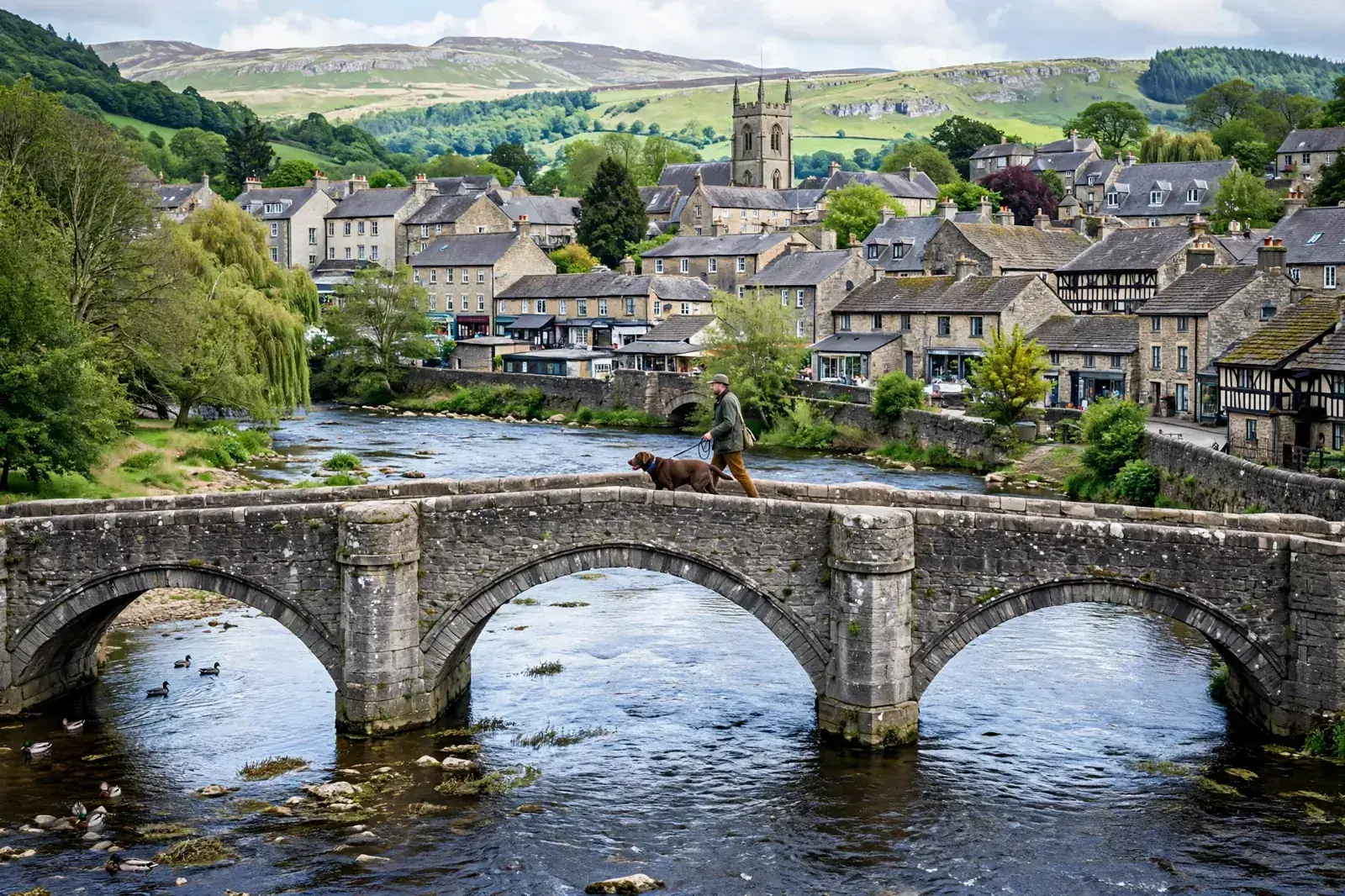
At the river, the same caution that applies anywhere on the Wharfe applies here. Check the water level and speed before letting the dog near the edge, keep the dog on a lead if the bank is steep or the current is fast, and do not let the dog swim in water you have not assessed. Paddling at a shallow, calm edge is a different matter from swimming in a deep channel, and most dogs are perfectly happy with the former. Carry water for the dog, because river water is not a reliable drink, and bring a towel for a muddy return. If the path is busy with other walkers, step aside at a wide spot and let people pass, rather than creating a bottleneck on a narrow bank. The river is a shared space, and a dog on a lead is easier to manage there than a dog running free among strangers.
The return to the village is the part of the walk that is easiest to rush, and the part where a dog is most likely to pull. Slow down, keep the lead short on the lane, and give the dog a final sniffing stop before the green. If the dog is tired, do not add a second loop just because the weather is fine; a short walk that ends well is better than a long walk that ends with a sore, muddy or overstimulated dog. For a fit dog that still has energy, the route towards Burnsall is an option, but treat it as a separate decision, with its own check of river levels, livestock and the dog's condition, rather than as an automatic extension. Appletreewick's riverside loop is complete in itself, and there is no need to lengthen it to prove anything.
Should you climb to Simon's Seat?
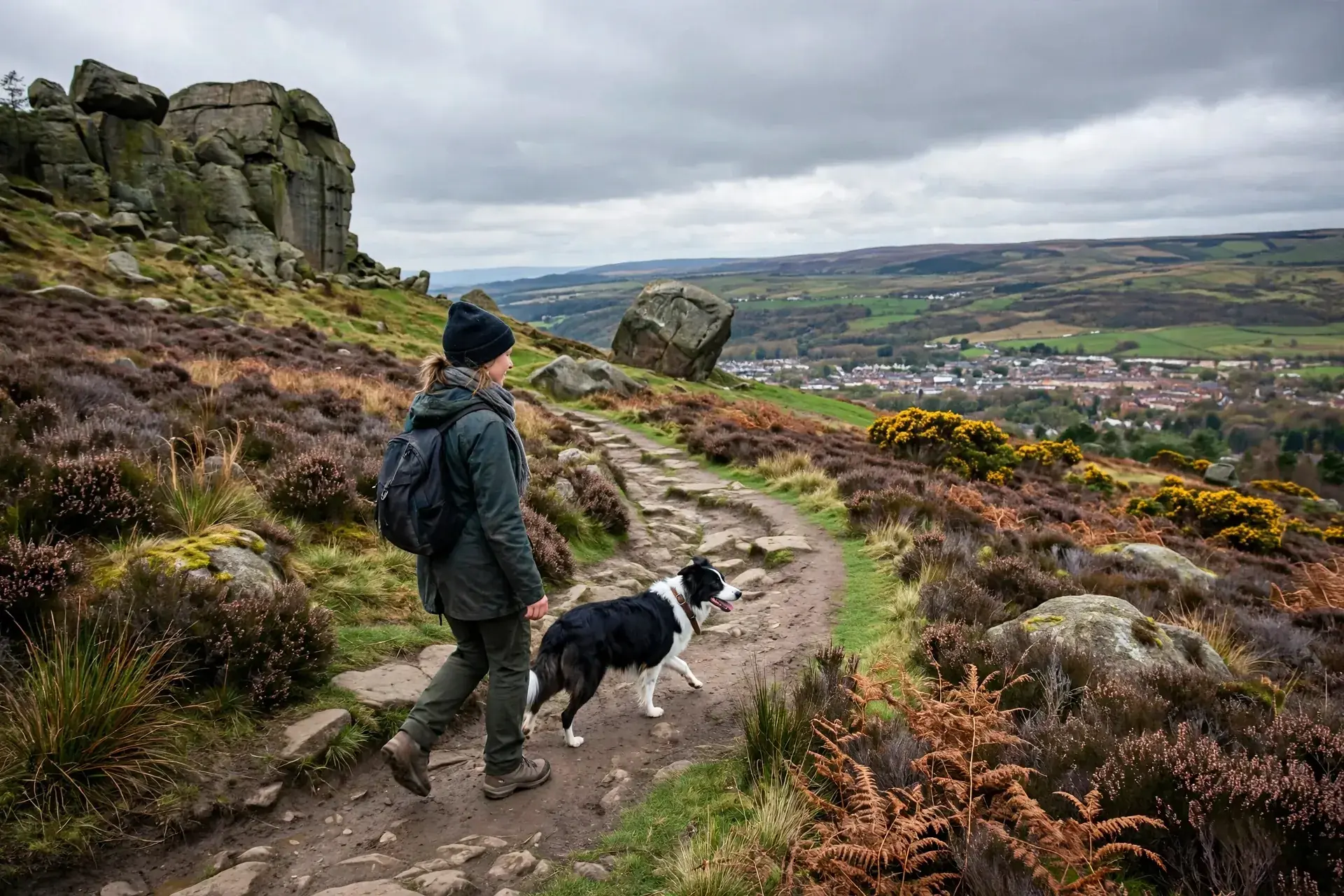
Simon's Seat is the big, tempting walk above the valley, and it is the decision that most separates a village stroll from a moorland expedition. The climb is steep in places, the ground is open and exposed, and the route needs navigation, good footwear and a realistic sense of time. For a fit, confident dog with reliable recall, it can be a superb walk, with wide views and long stretches of open moor. For a small dog, an older dog, a nervous dog or a dog that has already had a village walk, it is simply too much, and choosing the village loop instead is not a failure. The mountain will still be there, and the dog will enjoy the valley far more than a forced climb.
If you do decide to climb, prepare as you would for any moorland walk. Carry water for both of you, food, a map, a charged phone and a lead that you can use for the whole route if needed. Keep the dog on a lead near roads, livestock and cliff edges, and be ready for sudden weather changes, because moorland weather can turn quickly even on a fine morning. Watch the dog for signs of tiredness, heat or sore paws, and turn back early if the dog is struggling. A dog that is carried part of the way down is not a dog that enjoyed the walk, and a dog that is exhausted at the top still has to get down again. The descent is often harder on joints than the ascent, so allow extra time and take it slowly.
For most visitors, the better use of Simon's Seat is as a view to admire from below, or as a walk for a separate, dedicated day when the dog is rested and the weather is settled. A village day and a moorland day are different kinds of pleasure, and mixing them into one rushed outing usually spoils both. If you want a longer valley walk without the climb, the riverside route and the field paths around the village give you distance without the height, and they leave the dog with energy for a pub stop afterwards. That balance, a walk that suits the dog rather than the guidebook, is the heart of travelling well with a dog in the Dales.
Limestone, walls and paws
The limestone country around Appletreewick shapes every walk, and it shapes a dog's feet as well. Limestone pavements, rocky outcrops and stone walls are beautiful, but they can be slippery when wet, uneven underfoot and sharp at the edges. Dogs that run freely over limestone can cut pads, twist a leg in a gap or slip on a wet slab, so keep the dog on a lead on narrow or rocky sections and choose the smoother path where one exists. After a walk on limestone, check paws for cuts, grit and redness, and wash off mud before it dries into the coat. A dog that is limping after a limestone walk should rest, and the next walk should be shorter and softer.
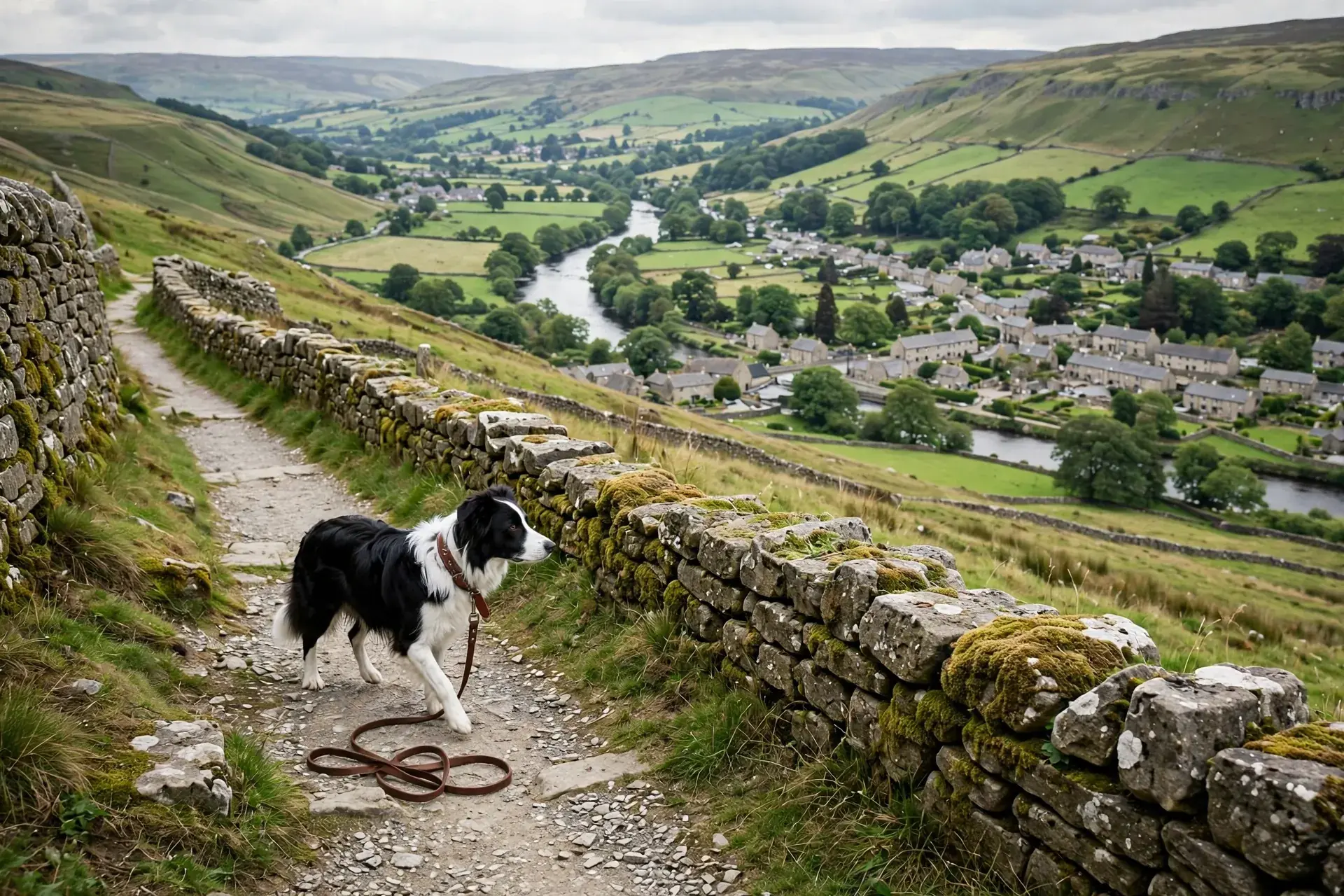
Dry stone walls are a feature of the Dales, and they deserve respect from dog owners. Do not let a dog climb on walls, scramble over them or chase livestock along them, because walls can collapse, dogs can fall, and livestock on the other side can be frightened. Use gates rather than climbing walls, and close every gate behind you. Walls also mark field boundaries, so a wall is a useful reminder to check whether livestock are present before letting a dog off the lead. In open country, a wall line can help you judge distance and direction, but it is not a fence for your dog; a determined dog can jump or squeeze through gaps, so a lead remains the reliable control.
Seasonal conditions change limestone walking. In summer, pale stone can be hot underfoot and glaring in bright sun, so walk in the cooler parts of the day and carry water. In winter, shaded limestone stays icy long after the lanes have thawed, and a dog that slips on ice can injure a leg or a hip. In wet weather, every slab is a potential slide, and a slower pace with a lead is the sensible choice. None of this should put you off the valley, but it should shape the route you choose. A village and riverside loop on softer ground is often the kindest walk for a dog, while the rockier paths are best saved for a dry day and a fit, confident dog.
Farm tracks and livestock
Appletreewick is surrounded by working farms, so farm tracks are part of the walking network, not an optional extra. Treat every track as a working road: keep the dog on a lead, keep to the track, close gates, and give farm vehicles plenty of room. Sheep are often close to the path, and a dog that chases sheep, even playfully, can cause serious harm and legal trouble. Cattle, especially cows with calves, deserve even more distance, and a dog that barks at cattle from behind a gate is still a disturbance. If livestock block the path, wait, give them space and pass slowly, or turn back and choose another route rather than forcing a way through.
Farm tracks also bring practical hazards that town walkers may not expect. Mud, manure, puddles and loose stones are normal, and they are hard on paws and coats. A towel and a rinse, where a tap or a clean stream edge allows it, will help, but the best preparation is a route choice that avoids the muddiest tracks on a wet day. Farm dogs may also be present, and they are working dogs with a job to do; keep your dog close and do not let it approach a farmyard dog, a flock or a pen. If a farmer asks you to keep the dog on a lead or to use a different path, follow the request without argument. Farmers who feel respected are farmers who keep paths open, and a dog owner who argues about a lead is a dog owner who makes the next visitor's walk harder.
Think about the seasons on farm tracks. Lambing time in spring calls for particular care, and some paths may be temporarily diverted; follow diversions and check the official guidance before you travel if you are unsure. Harvest time brings large vehicles and dust, while winter brings ice and short days. In every season, the rule is the same: a lead, a closed gate and a dog that is under control. That simple discipline lets you enjoy the valley without disturbing the work that keeps it looking the way it does, and it is the reason the Dales remain so welcoming to walkers with dogs.
Parking without spoiling the village
Parking is the least glamorous part of an Appletreewick visit and one of the most important. The village has very limited parking, and a car left badly can block a lane, a farm gate or a resident's access for hours. Do not park on grass verges that turn to mud, do not block passing places, and do not assume that a quiet-looking lane is a car park. If the village is full, the kindest choice is to park in a signed area nearby and walk in, or to visit at a quieter time. Check the official guidance before you travel for current parking options, because arrangements change and this guide cannot guarantee a space that may not exist on the day.
Arriving on foot, by bus or from a nearby village solves the parking problem and often improves the walk. A walk into Appletreewick from Burnsall or Grassington, for example, gives the dog a proper outing before the village, and it means you arrive without adding a car to a narrow lane. If you must drive, arrive early, park once and leave the car for the day, rather than moving it between short stops. That single decision reduces traffic in the village and gives the dog a calmer day, because the car is a base rather than a shuttle. For staying visitors, the same logic applies: park at your cottage, walk everywhere, and enjoy the village at walking pace.
Inside the car, the usual rules apply. Never leave a dog alone in a car in warm weather, and keep any wait short and shaded in cooler weather. Before setting off, check that the dog has had a toilet break, water and a chance to settle, and that you have waste bags, a lead, a towel and water for the walk. A car that is prepared for the walk makes the village easier, because you are not improvising at the roadside. Appletreewick rewards visitors who arrive prepared and park considerately, and it is noticeably less welcoming to visitors who treat its lanes as a free-for-all. Park well, walk well, and the village will welcome you back.
Water, shade and rest stops
Water is the simplest piece of kit for a valley walk and the easiest to forget. Carry a bottle and a bowl for the dog, even on a cool day, and offer water at regular stops rather than waiting for the dog to pant heavily. River water, puddles and troughs are not reliable substitutes, and a dog that drinks a lot of stagnant water can become unwell later. Shade is the other half of the equation: on a warm day, choose a route with trees, walls or hedgerows to rest beside, and avoid long, exposed stretches at midday. A dog that can rest in shade, drink and sniff for a few minutes will recover far better than a dog that is marched from one sunny field to the next.
Rest stops should be planned, not accidental. A quiet field edge, a wide part of the path or a bench away from the main flow are all better than the busiest viewpoint, where dogs, children and cyclists arrive together. Let the dog lie down if it wants to, offer water, and check paws and coat for grass seeds, burrs or mud. Grass seeds are a particular nuisance in summer, and a quick check after a meadow walk can prevent a sore ear or paw later. If the dog is panting hard, lagging or seeking shade repeatedly, the walk is too long or too hot, and the right move is to shorten it, find shade and head back. A rest stop is not wasted time; it is part of the walk, and dogs that rest well walk better.
For older dogs, small dogs and brachycephalic breeds, water and shade matter even more. These dogs overheat faster, tire sooner and may not show distress until they are already struggling, so build in more stops, walk in the cooler parts of the day and keep the route short. A cooling coat can help on a warm day, but it is not a substitute for shade, water and a shorter walk. If you are unsure whether your dog is coping, the safe answer is always to stop, rest and turn back. Appletreewick's short loops make that easy, because you are never far from the village, and a dog that comes home happy is the measure of a good walk, not the distance recorded.
Staying in a village cottage
Staying in Appletreewick, rather than visiting for a few hours, changes the visit completely. A cottage gives the dog a base, a routine and a place to rest between walks, and it lets you enjoy the village at quiet times when day visitors have gone. When choosing a cottage, ask the practical questions first: is the garden enclosed, and how high is the fence or wall? Is the dog allowed in all rooms, or only some? Is there a charge per dog, and what does it cover? Is there a suitable place for a wet dog to dry, and is the cottage close to a toilet walk for the last outing at night? Answers to these questions matter more than a pretty photograph, because they shape every day of the stay.
Settle the dog into the cottage as you would at home. Put the dog's bed, bowl and a familiar blanket in a quiet corner, walk the garden boundary on a lead first, and check for gaps, low walls and gates that a small dog could slip through. Keep the first evening calm, with a short walk, a familiar feeding time and a settled night, rather than a long exploration that leaves the dog overstimulated. If the cottage is close to livestock, keep the dog on a lead in the garden until you know the boundaries, and do not let the dog bark at sheep or cattle from the garden. A dog that settles well on the first night will enjoy the whole stay more, and so will you.
A cottage stay also lets you explore the wider valley at a gentle pace. One day can be a village and riverside day, another can be a short drive to a town for a different kind of walk, and a third can be a rest day with only short loops. Our Ilkley with a dog guide is a useful town contrast, with moor and riverside walks that suit a day when you want more choice and more shelter, while Harrogate with a dog offers gardens and a spa-town stroll for a gentler day after a long valley walk. Returning to Appletreewick after either, to a quiet green and a familiar cottage, is a reminder of why a small village base works so well. Keep the rhythm slow, one good walk a day, and the valley will give you more than a packed itinerary ever could.
Practical questions
Before you go
Is Appletreewick quieter than Burnsall for a nervous dog?
Usually yes, because Appletreewick is smaller, has fewer visitors and no busy bridge bottleneck. Arrive early, keep the dog on a lead on the lanes, and use the village green and quiet field paths for a calm start.
Where do I park for Appletreewick with a dog?
Parking is limited, so do not rely on finding a space in the village itself. Park considerately in a signed area nearby, never block farm access or narrow lanes, and check the official guidance before you travel for current options.
Can I walk from Appletreewick to Burnsall with a dog?
Yes, there is a riverside route between the villages, but check river levels, livestock and path conditions first. Keep the dog on a lead near livestock and the road, carry water, and turn back if the dog tires.
Is the walk to Simon's Seat suitable for dogs?
It is a much bigger, steeper walk than a village loop and suits only fit, confident dogs with good recall and an owner happy with moorland navigation. Choose the village and riverside loops instead for small, older or nervous dogs.
Are dogs welcome in the pub at Appletreewick?
The village pub has welcomed dogs in its bar and outdoor areas, but rules can change, so ask before you sit down. Keep the dog on a lead, bring a blanket and water, and choose a quiet corner away from the main doorway.
What should I watch for on limestone paths around Appletreewick?
Limestone can be slippery when wet, uneven underfoot and sharp in places, so keep the dog on a lead on narrow sections, check paws afterwards, and avoid letting the dog scramble on loose rock or near unfenced drops.