This guide is independent and contains no paid placement. If affiliate links are added later, they will be clearly marked and will not change our editorial checks.
Base yourself near the town centre, walk the Stray in the morning, Valley Gardens and the Pinewoods in the afternoon, and use Harlow Carr and Nidderdale for longer days. Check each venue's current dog policy before you go, since gardens and attractions change their rules.
First impressions and arrival
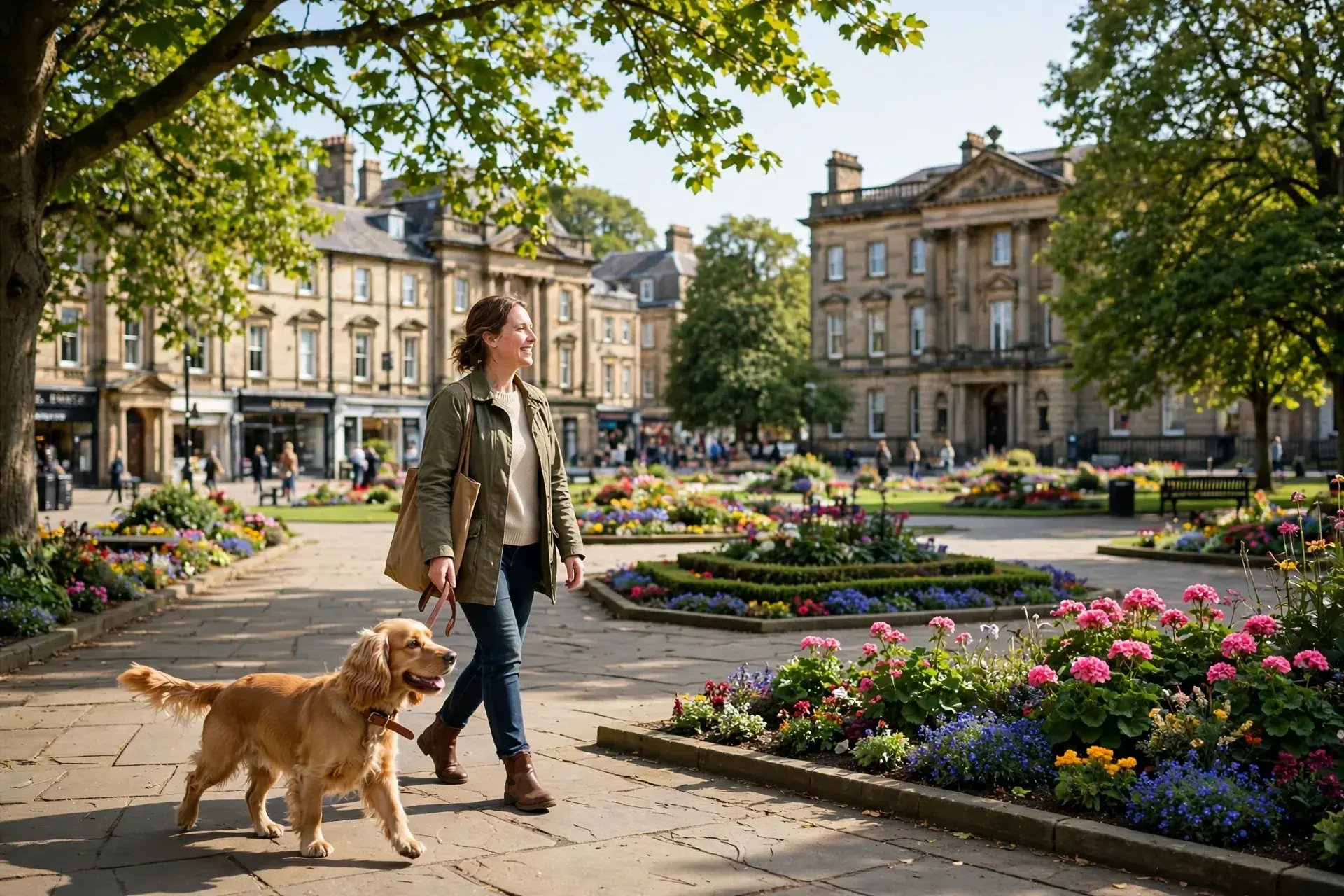
Harrogate grew up around its mineral springs, and the town still feels like a place built for promenading. Wide streets, flower beds, elegant stone buildings and large open greens give it a spaciousness that many historic towns lack, and that spaciousness is exactly what makes it work with a dog. Pavements are generally wide, crossings are frequent, and the main green spaces sit close to the centre rather than on the far edge of town, so a dog does not have to endure a long urban slog to reach grass.
Arriving by car, choose parking to suit the dog rather than the shops. If the dog has travelled a long way, park near Valley Gardens or the Pinewoods so the first thing the dog experiences is a walk, not a busy high street. Town centre car parks are convenient for shopping and for the promenade, but a restless dog does better with grass first and shops second. Check charges, maximum stays and payment methods before you set out, and remember the golden rule: never leave a dog in a parked car in warm weather, even for a few minutes, and in cold weather keep the wait short and the car ventilated. Harrogate station, in the centre of town, makes a car-free visit realistic too, with trains from Leeds and York; a dog on a lead travels free on most trains, though a busy commuter service is no place for a large or nervous dog, so travel off-peak where possible.
First-time visitors often make the mistake of treating Harrogate as a single afternoon stop. It rewards a slower pace: a morning walk, a cafe stop, an afternoon garden or woodland walk and an evening pub visit fill a day comfortably, and a second day for Nidderdale or Knaresborough turns a stop into a break. Dogs, too, settle better on the second day, when the smells are familiar and the routine is known, so if you can stay overnight, do.
The Stray: the town's great green
The Stray is Harrogate's defining open space: roughly 200 acres of open grassland wrapping around the southern side of the town centre, protected by an Act of Parliament and grazed in the traditional way. For a dog owner, it is the perfect town walk: flat, open, easy to navigate and large enough for a proper outing without leaving town. A circuit of the Stray, or a there-and-back along its length, gives a dog of most abilities a satisfying walk, and the open sightlines make it easy to see other dogs, cyclists and joggers coming, which helps owners of reactive dogs manage encounters.
Lead rules on the Stray are a matter of local signs and seasonal conditions, so check them on the day rather than assuming. In general, open grassland suits a long line for dogs whose recall is unproven, and the flat terrain makes a long line easy to manage. Keep an eye out for grazing animals where they are present, and keep the dog on a lead around them without exception. In summer, the Stray hosts events and fairs that change its character completely: a quiet morning green becomes a busy festival ground, so check the events calendar if your dog dislikes crowds, and choose an early walk on event days.
The Stray also works as a social walk. Dog owners gather here throughout the day, and a sociable dog will meet plenty of others, while a nervous dog can be walked at the quieter edges and at off-peak times. Bring water on warm days, since shade is limited on the open grass, and carry poo bags: a popular green stays popular only if owners clean up. After the walk, the town centre is minutes away, which makes the Stray an ideal start to a day that continues with coffee and shopping.
Valley Gardens and the Pinewoods
Valley Gardens, at the northern end of the town centre, is Harrogate's prettiest walk: a sheltered valley of lawns, flower beds, mature trees and a stream, with paths that suit dogs of all ages and abilities. The gardens feel enclosed and calm compared with the open Stray, and the tree cover gives shade on warm days and shelter on windy ones. A circuit of the gardens is a gentle outing, and it links naturally with the Pinewoods, a woodland area immediately beyond, where paths climb gently through pines and offer a wilder, quieter contrast to the manicured gardens.
The Pinewoods deserve a slower pace. Paths are wooded, sometimes muddy after rain and occasionally steep, so they suit a dog that enjoys sniffing and exploring rather than one that needs a flat sprint. Keep the dog on a lead where signs require it, watch for cyclists on shared paths and check for ticks after woodland walks in spring and summer. The combination of Valley Gardens and the Pinewoods makes an ideal afternoon: gardens for a sociable stroll, woods for a proper sniff, and a cafe stop in between. Dogs that are nervous in open spaces often prefer the enclosed feel of the woods, while dogs that love open running prefer the Stray, so Harrogate lets you match the walk to the dog rather than forcing one type of outing.
Both areas are close to parking and to the town centre, which makes them practical for a short break or a wet-weather fallback. In rain, the Pinewoods paths stay usable longer than open grass, and the tree cover keeps a walk pleasant when the Stray would be bleak. In autumn, the woodland colour is a genuine highlight, and in winter the gardens are quiet and atmospheric, with the added advantage of fewer visitors and easier parking.
RHS Garden Harlow Carr
RHS Garden Harlow Carr, on the western edge of Harrogate, is one of the town's major attractions and a question every dog owner asks about: can the dog come in? Garden dog policies change, and they vary between indoor spaces, planted areas and catering areas, so the only safe answer is to check the official guidance before you travel. As a general pattern, many large gardens now welcome dogs on short leads in outdoor areas while excluding them from glasshouses, plant collections or food areas, but Harlow Carr's current rules, lead requirements and any restricted zones should be confirmed on the day, not assumed from a general pattern.
If dogs are welcome on your visit, plan the visit around the dog's needs. Gardens are stimulating places: new smells, other dogs, children, water features and tempting plants. Keep the dog on a short lead, watch for plants the dog might eat, and bring water, since a garden walk on a warm day is thirsty work. If dogs are not welcome, or are welcome only in part of the garden, plan a split visit: one person visits while the other walks the dog in the Pinewoods or on the Stray, then swap. A split visit is not a disappointment but a practical way to enjoy a garden without leaving a dog in a car, which is never acceptable in warm weather.
Harlow Carr also illustrates a wider Harrogate lesson: check before you go, every time. Attractions, cafes and gardens update their dog policies, and a guide written months earlier may be out of date. A quick check of the official website or a phone call takes two minutes and prevents a wasted journey with a dog in tow. For other Yorkshire days out, our guides to York with a dog and Leeds with a dog follow the same check-first approach.
Town centre and split visits
Harrogate town centre is a pleasure to walk with a dog: wide pavements, elegant shopfronts, flower displays and plenty of places to pause. The main shopping streets, Montpellier Quarter and the area around the Royal Hall offer a mix of independent shops, cafes and historic buildings, and most of the interest is outdoors, which suits a dog far better than an indoor shopping centre. Window shopping with a dog is a genuine activity here, and a slow wander with frequent stops is a good way to tire a dog gently without a long walk.
Indoor attractions are where split visits come in. The Turkish Baths, a beautifully restored Victorian bathhouse, do not admit dogs inside, and the Royal Hall and many historic interiors are similarly dog-free. Rather than skipping these places entirely, plan a split: one person visits while the other walks the dog, then swap and compare notes over coffee. The dog's walker gets a Stray or Valley Gardens walk, the visitor gets the attraction, and nobody has to leave a dog in a car or a hotel room. Check each attraction's current policy before travelling, since rules change, and allow enough time for both halves of the split without rushing either.
Shopping with a dog requires the same check-first habit. Some independent shops welcome dogs warmly, others do not, and a shop that welcomed dogs last year may have changed its policy. Look for a water bowl by the door or a dog-friendly sticker, ask politely if unsure, and keep the dog on a short lead inside. A dog that settles on a mat by the door while its owner browses is welcomed back; a dog that pulls through a shop full of breakables is not. If the dog is restless, take a short walk and return later rather than persisting.
Cafes, pubs and eating out
Harrogate's cafe and pub culture is one of its strengths for dog owners. Many pubs, particularly those with gardens, welcome dogs, and cafes with outdoor seating are generally dog-friendly, but policies vary and change, so check before you go rather than assuming. The town's famous tea rooms are a special case: historic tea rooms often have specific rules about dogs, and those rules may differ between rooms, times of day and seating areas. If afternoon tea with the dog matters to you, confirm the position in advance and book accordingly, rather than arriving with a dog and hoping.
In any venue, the routine is the same: choose a corner table with room for the dog to lie flat, bring a mat and a water bowl, settle the dog before ordering, and keep the lead short but slack. Order water for the dog when you order for yourselves, and keep the dog's head out of other people's food. Staff who meet a calm dog on a mat tend to be generous with fuss and treats, and a dog that lies quietly under a table is often remembered fondly on a return visit. If the dog cannot settle, take a short walk and try again, or choose takeaway and a park bench, which is often more enjoyable for everyone than a stressful meal indoors.
Evening dining with a dog needs a little more planning. Some restaurants welcome dogs at lunch but not at dinner, and some welcome dogs only in a bar area rather than a dining room. Ask when booking, mention the dog's size and temperament honestly, and confirm whether the dog may stay under the table or must remain in a specific area. A dog that has had a good evening walk will settle far better in a restaurant than one taken straight from the car, so build the walk into the evening plan.
Where to stay with a dog
Harrogate offers a full range of dog-friendly stays, from hotels and guest houses to self-catering cottages and apartments, and the right choice depends on the dog. A nervous or vocal dog suits a self-catering cottage with a garden and no neighbours behind thin walls, while a calm, sociable dog may enjoy a hotel with a dog-friendly bar. Whatever the type, the booking questions are the same: is there a weight or size limit, is there an extra charge per dog per night, may the dog be left briefly unattended, is the room on the ground floor or served by a lift, and is there a garden or a nearby toilet area for last thing at night?
Location within Harrogate matters. A stay near the Stray or Valley Gardens puts the dog straight onto a walk in the morning, while a stay on a busy main road means a walk through traffic before grass. A stay with parking is worth a premium if you travel by car, since town centre parking adds cost and hassle to every outing. Check the cancellation terms too, since a dog's health or a change in circumstances can alter plans, and a flexible booking is worth a small extra cost. If you travel with more than one dog, confirm the total number allowed, since limits are usually per booking.
For a longer stay, consider a self-catering base in Harrogate and day trips from it, rather than moving every night. Dogs settle better with a consistent base, and Harrogate's position, between Leeds, York, the Dales and Nidderdale, makes it an excellent hub. A week in one place, with a different day trip every other day and a quiet town day in between, suits most dogs far better than a tour of a different town every night.
Day trips: Nidderdale and Knaresborough
Nidderdale, the valley that runs north-west from Harrogate, is the outstanding day trip with a dog. Designated an Area of Outstanding Natural Beauty, it offers quiet lanes, reservoir walks, riverside paths and villages where dogs are part of everyday life. Walks around the reservoirs and along the River Nidd suit dogs of most abilities, though reservoir paths can be exposed and windy, so check the weather and carry water. Villages such as Pateley Bridge offer cafes and pubs for a lunch stop, and the valley is quiet enough that a nervous dog can walk without the crowds of a honeypot destination. Keep dogs on leads around livestock, as always, and check local signs for any restrictions.
Knaresborough, a few miles east of Harrogate, is a shorter and very different day trip: a historic market town on a gorge above the River Nidd, with a castle, a riverside walk and a famous viaduct. The riverside path is the dog highlight, with flat, scenic walking and plenty of places to pause, while the castle grounds and town centre reward a slower wander. Knaresborough is compact enough for a half-day trip, and it pairs well with an afternoon back in Harrogate. For a longer day, York is under an hour away by train or car, and our guide to York with a dog covers its walls, riverside and split visits in detail.
The Yorkshire Dales, to the north-west, offer a third direction: more dramatic walking, more space and more weather. A Dales day trip suits an active dog and a confident owner, with valley walks, waterfalls and villages that welcome dogs. Choose a valley walk rather than a high fell route for a first Dales day, carry water and a map, and check the weather, since Dales weather changes fast. However far you go, plan the return journey so the dog is not travelling tired and hungry at the end of a long day.
Seasons in Harrogate
Harrogate works year-round, but each season changes the dog experience. Spring brings flower displays, lambs in surrounding fields and busy gardens, and it is an ideal time for a first visit, with mild weather and longer days. Summer brings events on the Stray, busy cafes and warm days when shade and water matter: walk early, rest at midday and choose the Pinewoods over the open Stray in heat. Autumn brings woodland colour in the Pinewoods, quieter streets and excellent walking weather, and it is arguably the best season for a dog visit. Winter brings quiet streets, festive lights, fireside pubs and the need for coats for short-coated dogs, dry paws after gritted paths and shorter daylight for woodland walks.
Events deserve a check before any visit. Harrogate hosts flower shows, festivals, markets and sporting events that fill the town and change parking, walking routes and the atmosphere. A dog that loves crowds will enjoy a market day, while a nervous dog will prefer a quiet weekday. Check the events calendar when booking, and if an event coincides with your visit, plan walks for early morning or for the quieter edges of town. School holidays also change the town, with busier cafes and gardens, so a term-time visit is calmer for a sensitive dog.
Whatever the season, pack for Harrogate's changeable weather: a waterproof coat for the dog if it is short-coated, a towel for wet paws, a water bowl for every outing and a mat for settling in cafes. British weather rewards the prepared owner, and a dog that is dry, warm and settled enjoys Harrogate in any season.
Practical details and a two-day plan
A practical Harrogate break starts with a few details. Carry poo bags everywhere, since the town's green spaces are popular and well used. Keep the dog on a lead in town centre streets, around livestock and where signs require it, and use a long line on open grass if recall is unproven. Save the number of a local vet before you arrive, since even a minor issue is easier with a practice already identified, and our guide to finding an emergency vet on holiday explains how to prepare. If the dog takes medication, pack a spare supply and keep it labelled.
A two-day plan that works for most dogs looks like this. Day one: arrive, park near Valley Gardens, walk the gardens and the Pinewoods, lunch at a dog-friendly cafe, an afternoon stroll on the Stray, and an evening pub visit after a short evening walk. Day two: a morning visit to Harlow Carr or a split visit to an indoor attraction, lunch in town, and an afternoon day trip to Knaresborough or a Nidderdale village, returning for a quiet evening. Day three, if you have it, is a longer Nidderdale walk or a day in York. Adjust the pace to the dog: a young, energetic dog will want more walking, an older dog will want shorter outings and longer rests, and a nervous dog will want the same walk repeated rather than a new one every day.
Harrogate's charm for dog owners is not a single attraction but the combination: open greens, sheltered gardens, woodland, a walkable centre, welcoming pubs and a position that opens up Yorkshire in every direction. Come for a weekend, walk at the dog's pace, check each venue before you go, and you will understand why so many dog owners return to this spa town again and again.
Practical questions
Before you go
Where is the best dog walk in Harrogate?
The Stray is the classic choice: a large open green space south of the town centre, ideal for a long, easy walk. Valley Gardens offers a prettier, more sheltered stroll, and the Pinewoods give shaded woodland paths. Combine two of the three for a varied day, and check local signs for any lead or seasonal rules.
Can dogs go into RHS Garden Harlow Carr?
Dog rules at gardens change, so check the official guidance before you travel. Gardens commonly allow dogs on short leads in outdoor areas with some indoor or planted areas excluded. Confirm the current policy, lead length and any restricted zones before you set out.
Are dogs welcome in Harrogate cafes and pubs?
Many are, especially pubs with gardens and cafes with outdoor seating, but policies vary by venue and can change. Check before you go, bring a mat and water bowl, and settle the dog under a table. Venues that welcome dogs usually say so clearly, and a calm dog on a mat is welcomed far more readily than a loose, excitable one.
Where should I park in Harrogate with a dog?
Choose a car park close to your first walk rather than the town centre if the dog is restless after a journey. Town centre car parks serve the shops and promenade, while parking near Valley Gardens or the Pinewoods puts the dog straight onto a walk. Check charges and maximum stays before you set out, and never leave a dog in a parked car in warm weather.
What is a good day trip from Harrogate with a dog?
Nidderdale is the obvious choice: quiet valleys, reservoirs and villages within a short drive, with walks that suit dogs of most abilities. Knaresborough, with its riverside and castle views, is a shorter option, and York and the Yorkshire Dales are both within day-trip distance for a longer outing.
Is Harrogate good for a dog in winter?
Yes, with the usual winter care. The town walks are usable year-round, cafes and pubs with fires are welcoming, and the town is quieter outside school holidays. Pack a coat for short-coated dogs, dry paws after wet or gritted paths, and check daylight hours, since woodland paths get dark early.