This guide is independent and contains no paid placement. If affiliate links are added later, they will be clearly marked and will not change our editorial checks.
Aysgarth is a waterfall stop first and a village second. Park at the National Park Centre, walk the wooded loop past the Upper, Middle and Lower Falls, keep your dog on a lead by the river, and check the water level after rain before you let anyone near the edge.
Start at the falls, not the village
Most Dales villages ask you to work out what to do once you arrive. Aysgarth does the opposite: the reason to come is obvious within five minutes of parking, because the River Ure drops over a series of broad limestone steps right beside the visitor centre. The village itself is small and quiet, a scattering of stone houses, a church and a pub or two along the A684 between Leyburn and Hawes. The falls are the main event, and planning your visit around the water rather than the village makes the day work better for a dog, too.
That matters because dogs do not queue for viewpoints or read information boards. A dog wants a walk with things to sniff, ground that is kind to paws, and somewhere to rest. The Aysgarth loop delivers all three: a wooded riverside path, three distinct viewpoints where the river changes character, and flat grassy areas near the car park where a dog can settle while you sort out boots and leads. Treat the falls as the walk and the village as the optional extra afterwards, and you will not end up dragging a bored dog around a village that has very little for them to do.
The other reason to start at the water is timing. The falls look different at every water level, and the light in the wood changes through the day. An early start gives you a quieter car park and calmer paths, which helps a nervous dog settle before the midday visitors arrive. A late afternoon visit, on the other hand, catches softer light through the trees and a quieter riverbank. Either way, build the day around one unhurried loop rather than a checklist of sights, and let the dog set the pace between viewpoints.
Aysgarth sits in the middle of Wensleydale, which makes it a natural base for a wider day out. Leyburn, a few miles to the east, has the market square, shops and pubs that Aysgarth lacks, while Hawes to the west adds a market town with more places to eat and stay. If you are staying in the dale for several days, Aysgarth works best as a half-day anchor: falls in the morning, a longer walk or a drive to one of the neighbouring towns in the afternoon, and a pub stop on the way home.
The three falls, step by step
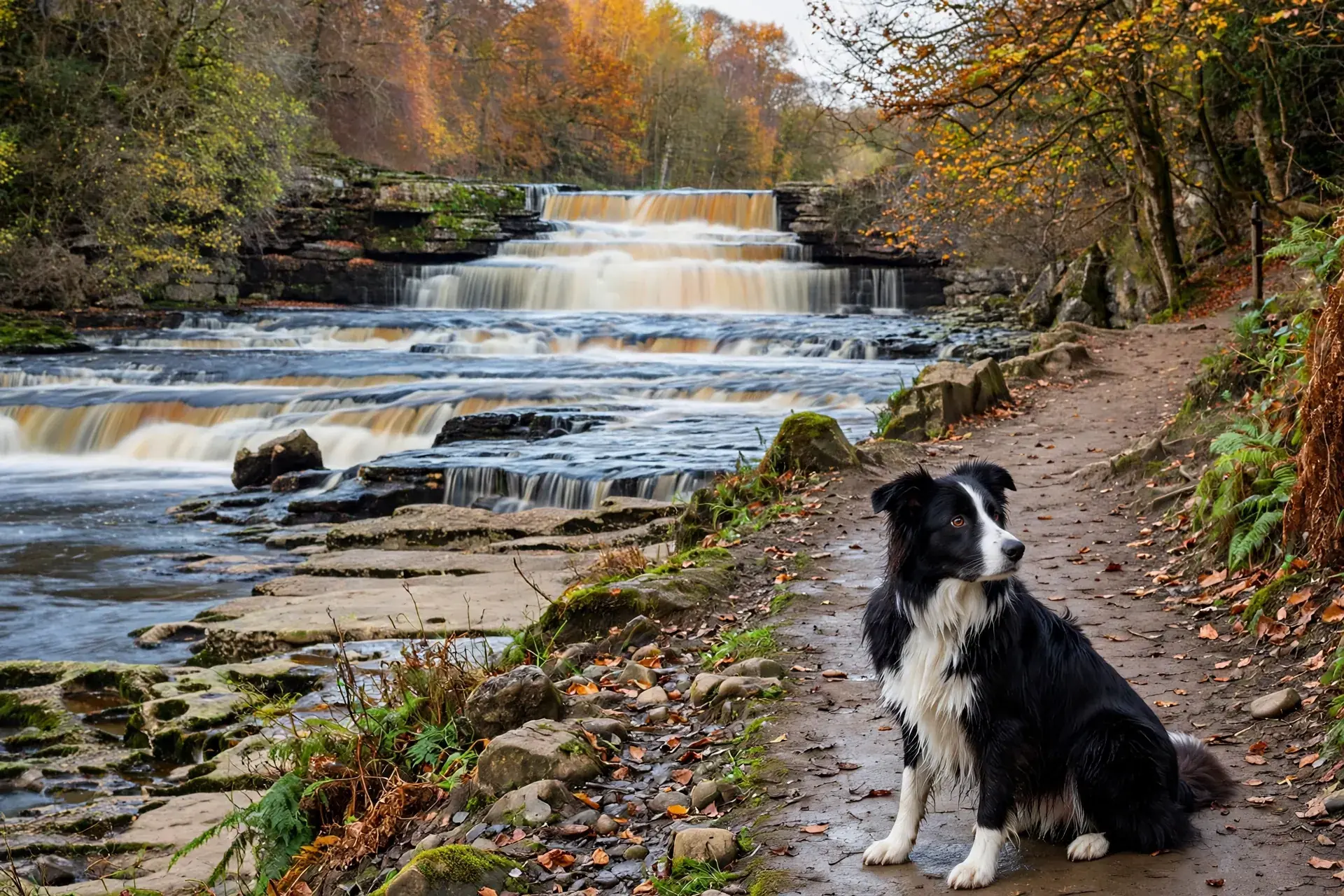
Aysgarth Falls is not one waterfall but three, spread along a short stretch of the River Ure: the Upper Falls, the Middle Falls and the Lower Falls. Each is a broad, stepped cascade where the river slides and tumbles over shelves of limestone rather than plunging from a cliff. That stepped character is what makes Aysgarth distinctive among British waterfalls, and it is also what makes the place photogenic in every season, from low summer water threading between pale rock to a full, brown, thundering river after rain.
The Upper Falls are the first you reach from the visitor centre, and they set the tone: wide, shallow steps of rock with the river spreading across them. In low water the falls are a lacework of small channels, and you can see the shape of the rock clearly. In high water they merge into a single powerful sheet, and the sound carries through the wood before you can see the river at all. There is a viewing area here, and it is worth pausing even if your dog is impatient, because the upper section is the easiest place to appreciate how the limestone shelves shape the water.
The Middle Falls are the most dramatic of the three, and the ones most people picture when they think of Aysgarth. Here the river drops in a series of deeper steps, and the pool below churns even in moderate conditions. The path drops down through the wood to viewpoints that look across and slightly down at the cascade. Keep your dog close here: the viewpoints are fenced or railed in places, but the bank is steep, the rock is slick, and an excited dog pulling towards the water is the most common avoidable problem at Aysgarth. A short lead and a calm wait are worth more than any photograph.
The Lower Falls, furthest downstream, are the widest and in some ways the gentlest, with the river spreading over broad shelves before continuing on its way down the dale. This stretch is the one many visitors associate with the film Robin Hood: Prince of Thieves, scenes from which were filmed at the falls. Whether or not that matters to you, the Lower Falls are a good place to end the loop: the ground opens out, the noise softens, and there is room to let a dog sniff and settle before the walk back through the wood.
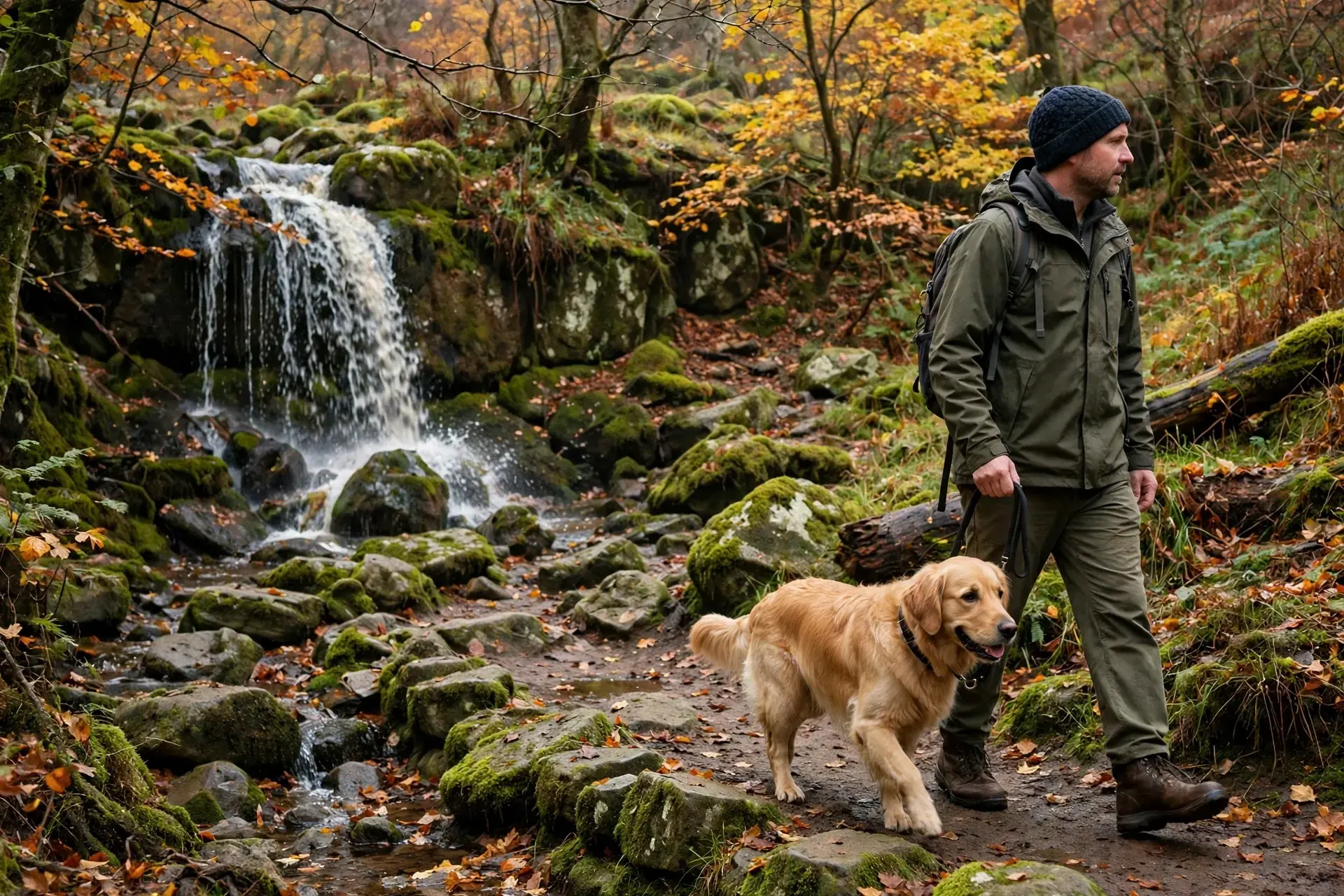
Between the three falls the path follows the river through Freeholders Wood, and the walk between viewpoints is as much a part of the visit as the falls themselves. The wood is mixed broadleaf, with beech and ash and oak, and the ground is rich with ferns and wild garlic in spring. The path is mostly surfaced or well trodden, but tree roots and muddy patches appear after rain, so wear boots with grip rather than trainers if the weather has been wet. Dogs on a lead are welcome throughout, and the shade makes the wood a kind option on a warm day when open moorland would be too hot.
One practical note: the falls are free to view from the paths, and there is no ticket or timed entry for the walk itself. That keeps the visit simple, but it also means the site can be busy on summer weekends and bank holidays. If your dog struggles with crowds, aim for a weekday or an early start, and be ready to shorten the loop to the Upper Falls only if the paths are packed.
The National Park Centre and parking
The Aysgarth Falls National Park Centre sits beside the car park at the top of the falls walk, and it is the natural starting point for a visit. It is run as a Yorkshire Dales National Park visitor centre, with information about the falls, the wider dale and walking routes, plus toilets and a small shop. Staff can usually advise on current path conditions and river levels, which is worth asking about before you set off, especially after a wet spell. Check the official guidance before you travel for current opening times, as hours vary by season.
The car park is pay-and-display and sits close to the centre and the start of the falls path, which makes arrival straightforward with a dog: no long walk from the car before the walk itself begins. It can fill up on busy days, particularly in summer and on autumn weekends when the colours draw visitors, so an early arrival is the simplest way to avoid circling. There is also parking in the village, but the centre car park is the sensible choice if you want toilets, information and the shortest route to the falls in one place.
Dogs are welcome in the outdoor areas around the centre and on all the falls paths, but access inside the visitor centre itself may be restricted, so do not plan on taking your dog in with you. The usual arrangement is that one person stays outside with the dog while the other goes in for maps and advice, or you pick up what you need from the outdoor information boards and skip the interior altogether. The same applies to any cafe or refreshment point attached to the site: check the official guidance before you travel, and carry water and a bowl so the dog does not depend on indoor facilities.
Facilities at the centre are basic but well placed: toilets, drinking water, bins, and picnic tables where you can sit with a dog on a lead. There is no dedicated dog-wash station, so after a muddy walk you will be towelling the dog down at the car. Pack a towel and a spare blanket for the car, and a waterproof sheet for the boot if your dog likes to find every puddle on the riverside path. A lead, a long line for the open grassy areas, poo bags, and water are the essentials; everything else is optional.
If the centre car park is full, resist the temptation to park on verges or in passing places along the A684. The road through the village is narrow in places, and inconsiderate parking causes real problems for local traffic and farm vehicles. Wait for a space, use village parking if it is signed, or come back later in the day when the morning crowd has thinned. A short delay is a better start to a dog day out than a parking row.
The riverside loop through Freeholders Wood
The classic Aysgarth walk is a loop of roughly a mile to a mile and a half from the National Park Centre, dropping through Freeholders Wood to the three falls and returning along the riverbank. At a dog-walking pace with stops at each viewpoint, allow 45 minutes to an hour. The route is waymarked and easy to follow, which is part of its charm: you can relax and watch the dog instead of navigating, and you can shorten or extend it at several points without getting lost.
From the centre, the path leads downhill into the wood, with steps in places and a surfaced track for much of the way. The first viewpoint is the Upper Falls, then the path continues downstream to the Middle and Lower Falls. The ground underfoot is a mix of surfaced path, woodland earth and, near the river, exposed limestone that can be extremely slippery when wet. Keep dogs on a lead throughout, not only for their safety near the water but because the paths are narrow and other visitors, including children, will be coming the other way.
The loop back to the centre climbs gently through the wood, away from the river for a stretch, which gives the dog a change of scent and surface. This return leg is quieter than the riverside path, and it is a good place for a steadier, calmer walk after the excitement of the falls. If your dog is older or less mobile, note that the loop involves steps and slopes, and the descent to the Middle Falls viewpoints is the steepest part. You can still enjoy the Upper Falls with a much shorter, gentler out-and-back walk from the centre if the full loop is too much.
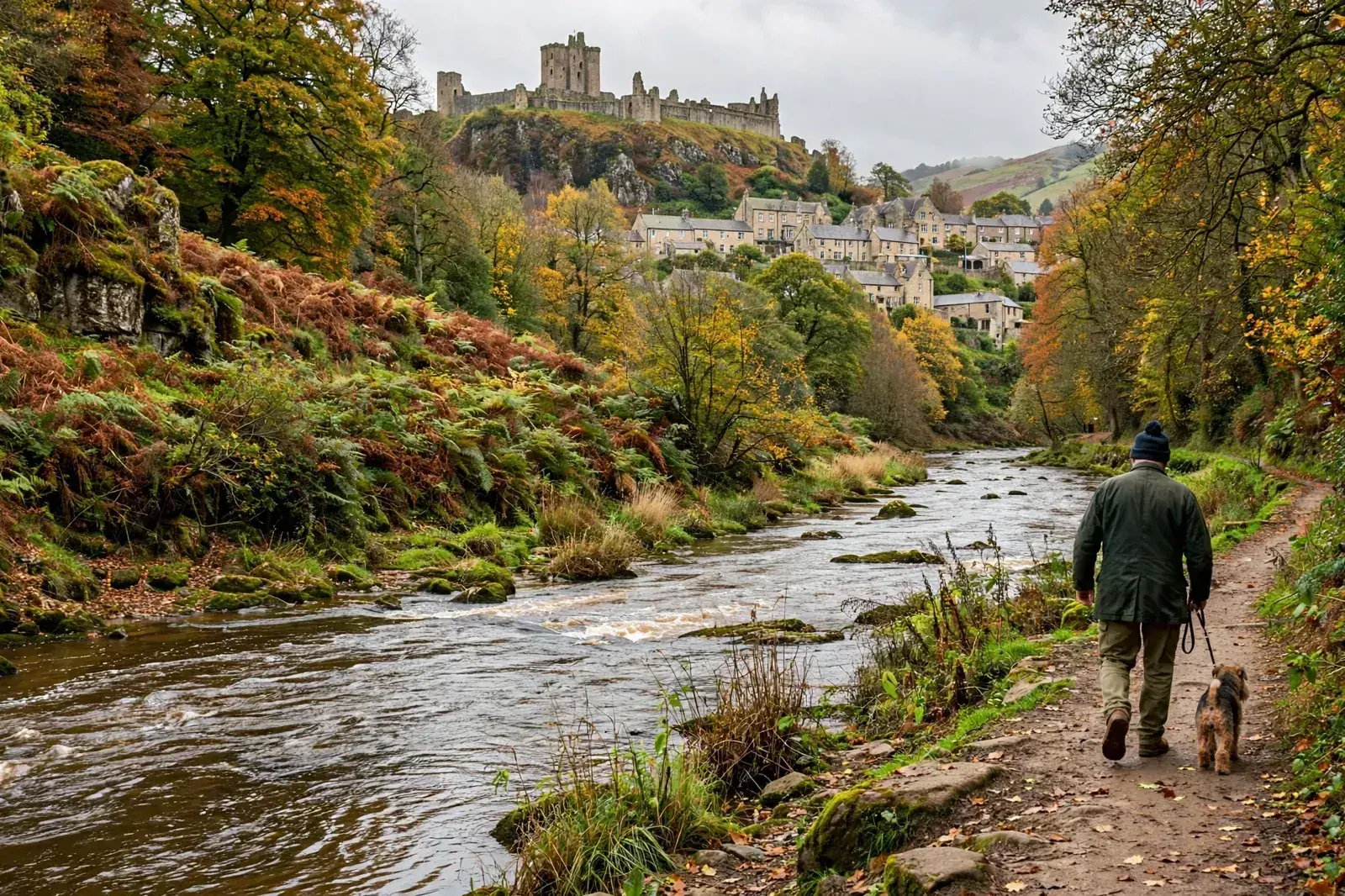
For dogs that need more than an hour, the riverside path continues beyond the falls in both directions. Downstream, the River Ure continues through meadows and woodland towards the lower dale, and upstream the path leads towards the quieter stretches above the village. These extensions are less waymarked and less busy, so they suit confident walkers with a map or a downloaded route. Tell someone your plan if you head off the main loop, and keep the dog on a lead near any farmland or livestock.
Whatever version of the loop you choose, build in a pause. Dogs enjoy a walk more when it includes a few minutes of doing nothing: sitting on a bench, watching the river, sniffing a patch of grass. The falls walk is short enough that a pause does not cost you anything, and it makes the difference between a dog that arrives back at the car settled and one that arrives overstimulated. Bring a small treat pouch and use the viewpoints as natural training stops: a sit, a wait, a reward, and then on to the next fall.
Rain, river levels and safety
The River Ure is the single most important safety consideration at Aysgarth, and it deserves its own section because the falls look inviting in a way that hides how powerful the water can be. The Ure rises in the high fells above the dale and gathers water quickly after rain, so the river at Aysgarth can change from a gentle, stepped cascade to a fast, brown torrent within hours of heavy rainfall. The falls are at their most dramatic in high water, but that is exactly when the banks are most dangerous.
After heavy rain, three things change at once. First, the limestone shelves that look like flat stepping stones become slick with algae and spray, and a slip on wet limestone can be serious for a person and a dog alike. Second, the water level rises over the lower paths, and stretches of riverside path can flood or become deep mud. Third, the current below each fall strengthens, so a dog that slips in or jumps in after a stick can be carried downstream faster than you can reach them. The rule is simple: after rain, stay on the path, keep the dog on a short lead, and do not let them enter the water near the falls at all.
Before you travel, check the weather for the upper dale as well as for Aysgarth itself, because rain on the high fells affects the river even if the village is dry. Local visitor information and river level services can give a sense of conditions, and the National Park Centre staff can advise on the day. If you arrive and the river is high, enjoy the falls from the viewpoints, take your photographs, and skip any idea of paddling. The falls are spectacular in spate, and watching them from a safe distance is the whole point.
Swimming is not a sensible activity at the falls for dogs or people. The pools below the steps hide uneven rock, the current is deceptive, and water temperature is cold even in summer. Further along the river, away from the falls, there are quieter stretches where the water is slower and shallower, and some dog owners use these for a paddle on a hot day. Even there, check the depth and current first, keep the dog on a long lead, watch for broken glass or fishing tackle on the bank, and never let a dog swim where you cannot see the bottom or the far bank clearly. After heavy rain, avoid the water entirely and stick to the woodland paths.
Blue-green algae is a risk in slow-moving water during warm weather, and the River Ure is no exception in hot summers. If you see a green scum or paint-like bloom on the surface, keep the dog out of the water and do not let them drink from the river. Carry fresh water from the car, and if a dog does drink from a suspicious stretch, watch for vomiting or lethargy and contact a vet promptly. Check the official guidance before you travel for any current warnings.
Other seasonal hazards are the usual Dales ones: ticks in long grass and woodland from spring to autumn, so check the dog after every walk; adders on sunny banks in warm weather, rare but worth knowing about; and livestock in the meadows beside the river, where dogs must be on a lead and under close control. A dog that chases sheep is a danger to the sheep, to itself and to your day, so keep the lead on whenever you are near grazing land.
Aysgarth village beyond the falls
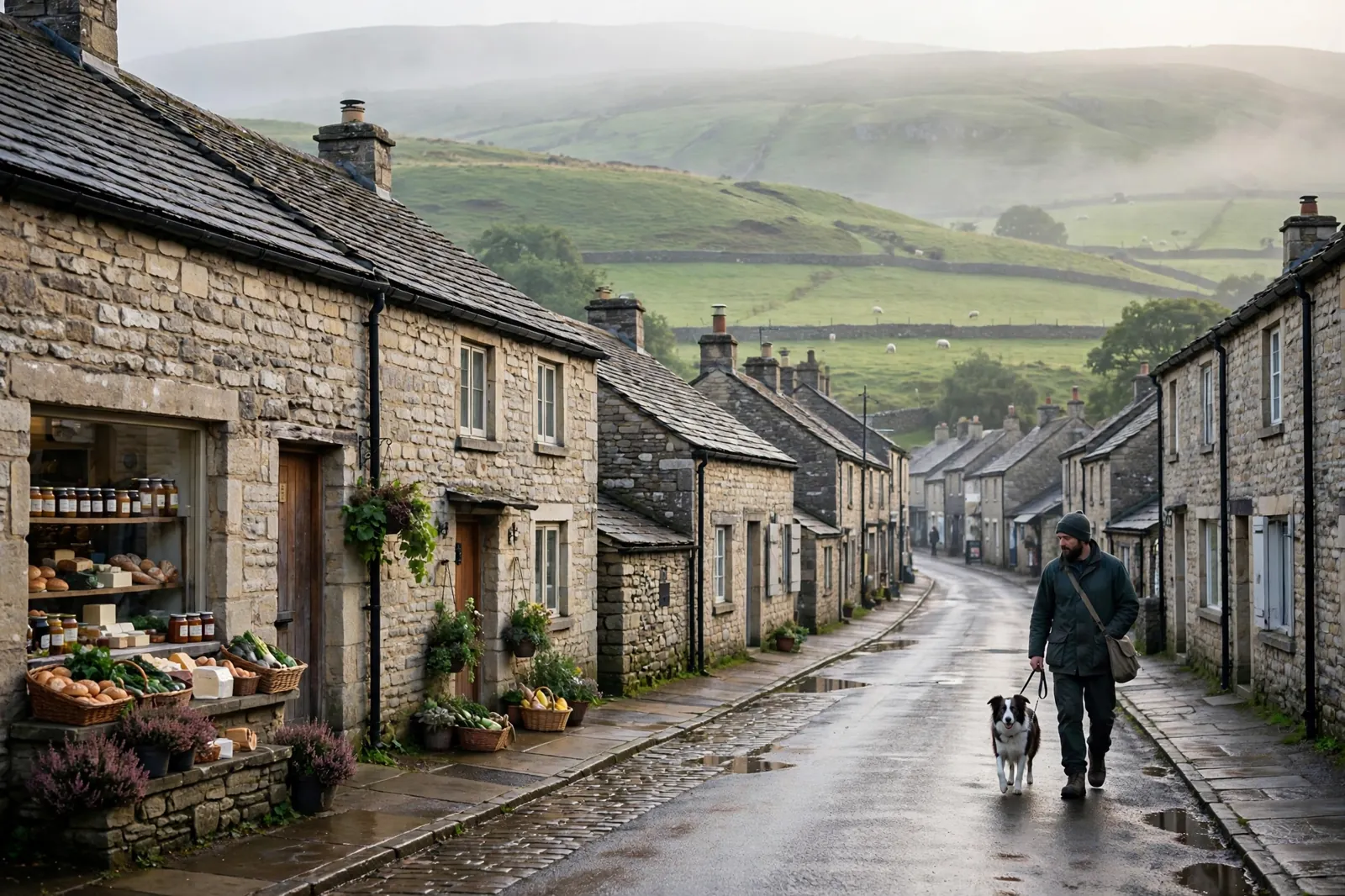
Once you have walked the falls, Aysgarth village itself is a short, gentle wander rather than a destination in its own right. The village is spread along the A684, with stone cottages, a village green, and St Andrew's Church, which is worth a look from the outside even if you do not go in. The church is one of the larger parish churches in Wensleydale, with a notable medieval rood screen inside, and its churchyard is a peaceful place to sit for a few minutes with a dog on a lead, provided you are respectful of the setting.
There is a pub in the village, and like many Dales pubs it may welcome dogs in some areas, often the bar or a beer garden rather than the dining room. Policies change, so check before you travel or ask when you arrive, and do not assume a dog can come inside just because the village is small. If the pub does not take dogs indoors, the beer garden on a fine day is a good alternative, and a dog that has just walked the falls loop will usually settle happily under a table.
Shopping and services in Aysgarth are limited, which is worth knowing before you arrive. There is no large shop in the village, so bring dog food, treats and any supplies you need rather than expecting to buy them locally. For a proper shop, a vet, or a wider choice of places to eat, Leyburn is the nearest town, a short drive east along the A684. That is one reason Aysgarth works best as part of a day built around the falls and the dale, rather than as a self-contained base.
The village also makes a good starting point for exploring the surrounding dale by car. The A684 runs the length of Wensleydale, linking Aysgarth to Leyburn in one direction and Hawes in the other, with side roads climbing to the high moors and dropping to the river. If you are driving between the two towns, Aysgarth is the obvious place to break the journey, stretch the dog's legs on the falls loop, and reset before the next stop. A half-hour loop is enough to make the stop worthwhile, and a full hour lets you take the walk at the dog's pace.
Longer walks from Aysgarth
The falls loop is the warm-up. For a half day or a full day, Aysgarth is the start of several longer riverside walks, and the valley floor here is gentler than the high fells, which makes it a good choice for dogs that enjoy distance without steep climbs. The most popular extension is the walk west to West Burton, a pretty village with its own small waterfall, Cauldron Falls, and a village green. The route follows the River Ure and field paths, and the round trip from Aysgarth takes two to three hours at a walking pace, depending on stops.
Heading east from Aysgarth, the river path leads towards Leyburn and the lower dale, passing through meadows and riverside woodland. This is a quieter direction, with fewer visitors and more open ground, which suits dogs that like to move at a steady pace on a long line. The full walk to Leyburn is a longer undertaking, so most people walk out for an hour and retrace their steps, or arrange a lift back. Whichever direction you choose, carry a map or a downloaded route, because the field paths beyond the falls loop are not all waymarked, and stiles and gates come thick and fast.
For a bigger day, the high ground south of the village offers views across the whole dale. The climb to the moor edge is steeper and more exposed, so it suits fit dogs and settled weather rather than a first visit. The reward is a panorama of Wensleydale with the river winding through it, and on a clear day you can pick out the villages you have walked between. Keep the dog on a lead near any grouse moor or grazing land, and carry more water than you think you need, because there is little shade or surface water on the high ground.
Another option is to pair Aysgarth with a visit to Hawes, at the head of the dale, where the market town and the surrounding waterfalls, including Hardraw Force, make a natural second stop. The drive between the two is short and scenic, and the contrast is instructive: Hawes is a working market town with shops and cafes, while Aysgarth is a quiet village built around a river. Together they show both sides of Wensleydale in a single day, and a dog that has walked the falls in the morning will usually be content with a shorter stroll and a pub garden in the afternoon.
Whatever length of walk you choose, plan for the return journey as carefully as the outward leg. Dogs that have walked for three hours need water, shade and a rest before the drive home, and a tired dog in a hot car is a welfare problem, not a minor inconvenience. Build in a final ten minutes at the car park or on the village green, offer water, check paws for grit and thorns, and only set off when the dog has cooled down. In summer, leave the car in shade if you can, and never leave a dog in a parked car on a warm day.
Seasons: when the falls look their best
Aysgarth is a year-round destination, but the falls reward different seasons in different ways, and choosing when to visit is part of planning the trip. Spring brings the wood to life: wild garlic carpets the floor of Freeholders Wood, bluebells appear in the drier banks, and the river runs clear and lively after the winter rains. The paths can be muddy, and the weather is changeable, but the wood is at its freshest, and the crowds are still thin.
Summer is the busiest season, and the falls are at their gentlest, with lower water threading between the limestone steps. That makes summer the easiest time to see the shape of the rock and to walk the loop with a dog that dislikes slippery ground, but it also brings the biggest crowds, the fullest car park and the warmest conditions. Start early, carry water for the dog, and use the shade of the wood rather than the open riverside in the middle of the day. Check the official guidance before you travel for any warm-weather water warnings.
Autumn is, for many people, the best time to visit Aysgarth. The beech and oak in Freeholders Wood turn gold and copper, the light slants low through the trees, and the river often runs higher after autumn rain, so the falls are fuller and louder than in summer. The car park is busy on fine October weekends, but weekdays are calm, and a dog walking through fallen leaves on a crisp morning is the very picture of a Dales autumn. Bring a towel, because the paths are muddy and the dog will find every puddle.
Winter strips the wood back to bare branches and gives the falls a stark, dramatic look. After heavy rain or snowmelt the river can be in full spate, and the falls are at their most powerful, but the paths are also at their most treacherous, with ice on the limestone and mud on the slopes. A winter visit is best kept short: the Upper Falls and a careful look at the Middle Falls, then back to the car for a warm-up. Check the forecast, wear boots with proper grip, and do not attempt the full loop in icy conditions.
Whatever the season, the falls are worth visiting more than once. The same viewpoint in low summer water and in autumn spate looks like two different places, and a dog that knows the loop will still find new scents after every change in the weather. If you live within driving distance, Aysgarth is the kind of place to return to through the year rather than ticking off once.
Practical planning for a dog day out
Getting to Aysgarth is straightforward by car: the village sits on the A684 between Leyburn and Hawes, with the National Park Centre car park signed from the road. Public transport is limited, as it is across much of the Dales, so most visitors arrive by car, and the car park is the practical base for the day. If you are relying on buses, check the official guidance before you travel, because services are infrequent and may not run on Sundays or in winter.
Pack for a riverside woodland walk, not a moorland hike. The essentials are a lead and a long line, poo bags, fresh water and a bowl, a towel, and treats. Add a drying coat in wet weather and a spare blanket for the car, and consider a dog first-aid kit with tick removers and a small bandage, since the nearest vet may be in Leyburn or Hawes and some distance away. Save the number of a local vet before you set off, and note that mobile signal in the dale can be patchy, so do not rely on looking it up on the spot.
Lead rules at Aysgarth are a matter of judgement and courtesy rather than a single posted rule. Keep the dog on a lead on the falls paths, in the car park and around the visitor centre, and anywhere near the river edge or livestock. On open grassy areas away from the river, a long line gives the dog freedom without risk, and off-lead time is best saved for enclosed spaces or the wider meadows where you can see what is around you. Always pick up after your dog, and use the bins provided rather than leaving bags on the path or hanging them from trees.
Eating and staying near Aysgarth takes a little planning because the village is small. The pub may take dogs in some areas, and there are dog-friendly pubs, cafes and accommodation spread across the dale in Leyburn, Hawes and the villages between them. Book ahead in peak season, confirm the dog policy in writing, and ask specifically about the number of dogs allowed, any pet charge, and whether dogs can be left alone in the room. Many smaller places welcome one well-behaved dog and ask that the dog stays on a lead in shared areas, and a tired dog that has walked the falls loop is usually the easiest guest they will have all day.
Finally, leave the place as you found it. The falls are a protected landscape and a working river valley, and the limestone shelves, the woodland and the riverside meadows are sensitive to erosion and disturbance. Stay on the paths, keep the dog out of the water near the falls, and take all litter home. Aysgarth is free to visit and easy to love, and keeping it that way is the price of the next visit.
Practical questions
Before you go
Can dogs go to Aysgarth Falls?
Yes. Dogs are welcome on the riverside paths and viewing areas around Aysgarth Falls, and the falls walk through Freeholders Wood is a popular dog walk. Keep your dog on a lead near the river, the car park and the visitor centre, and keep them well back from the water at the stepped falls, especially after rain when the River Ure runs fast and the limestone is slippery.
Is there a car park at Aysgarth Falls, and can dogs go in the visitor centre?
There is a pay-and-display car park beside the Aysgarth Falls National Park Centre, with toilets and visitor information. Dogs are welcome in the outdoor areas and on the paths, but access inside the centre itself can be restricted, so plan for one person to stay outside with the dog if you want to go in. Check the official guidance before you travel for current opening times and charges.
Is Aysgarth Falls safe for dogs after rain?
Take extra care after heavy rain. The River Ure rises quickly, the stepped limestone shelves become very slippery, and riverside paths can flood or become muddy. Keep your dog on a lead, do not let them swim or paddle near the falls, and turn back if the path is under water. If in doubt, check the official guidance before you travel.
How long is the Aysgarth Falls walk with a dog?
The short loop from the National Park Centre through Freeholders Wood to the three falls takes around 45 minutes to an hour at a dog-walking pace, depending on how long you stop at each viewpoint. Longer riverside options extend downstream or upstream along the River Ure for two to three hours, and the walk to West Burton and back is a popular half-day route.
Can dogs swim in the River Ure at Aysgarth?
It is not a good idea near the falls. The current above and below the stepped limestone shelves can be strong, the rock is slippery, and water levels change quickly after rain. Further along the river, away from the falls, some quieter stretches are used for paddling, but you should still check the depth and current first, keep your dog on a long lead, and avoid the water entirely after heavy rain.
Where can dogs stay and eat near Aysgarth?
Aysgarth itself is a small village, so most dog-friendly places to stay and eat are spread across Wensleydale in nearby Leyburn, Hawes and the villages between them. Look for pubs and cafes with outdoor seating or a dog-friendly bar area, and confirm the dog policy when you book, as many smaller places only take one or two dogs and ask that dogs stay on a lead indoors.