This guide is independent and contains no paid placement. If affiliate links are added later, they will be clearly marked and will not change our editorial checks.
Banbury is a canal town first and a market town second. Start at the Oxford Canal, walk the towpath north or south for the dog’s proper exercise, cross the market place on foot, and climb Crouch Hill for the view. The canal is lead-only water; the hill is the off-lead reward.
Arrive by the canal
Most visitors reach Banbury by car or by train, but the town makes the most sense if you arrive, in your head at least, by the canal. The Oxford Canal has run through Banbury since the late eighteenth century, and it shaped the town’s streets, its wharves and its working life in a way that the railway and the ring road never did. The canal still runs through the centre, past the station and under the town’s bridges, and its towpath is the single best dog walk in Banbury — flat, traffic-free and long enough for any dog.
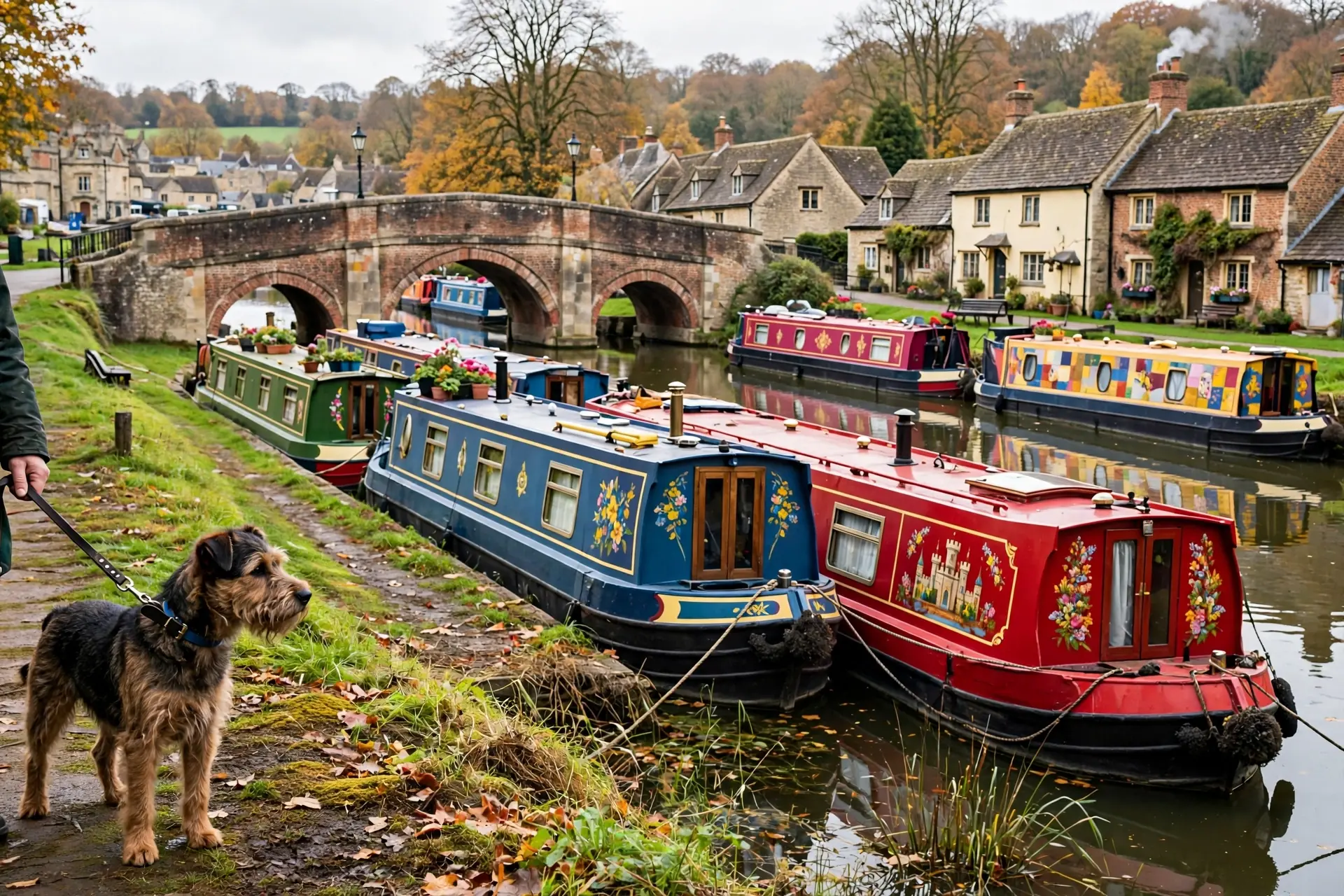
Start at the canal basin near the town centre, where the moored narrowboats line the water and the towpath begins its run north and south. The basin is the place to let the dog settle: there is space to sniff, the boats give the dog something to look at, and the first stretch of towpath is wide enough to find your rhythm before the path narrows. The first bridges are the busiest pinch points, shared with cyclists and the occasional angler, so keep the lead short until you are past them.
The canal’s character is gentle, but it is still deep water with an unfenced edge, and that sets the rules for the whole day. Dogs stay on a lead on the towpath, always, and a dog that loves water needs a long line rather than freedom near the bank. The canal is not a swimming spot: the water is cold, the banks are steep in places, and a dog that falls in may struggle to climb out. The towpath is a walking route, not a beach, and the dogs that enjoy it most are the ones that treat the water as scenery.
What makes the canal such a good arrival point is that it connects everything else in this guide. From the basin you can walk to the market place in ten minutes, to the station in five, and to the open countryside in twenty. The town’s one-way system, which confuses every first-time driver, becomes irrelevant once you are on foot beside the water. Park once, walk the canal, and let the town come to you.
Tooley’s Boatyard and the working canal
A short walk along the canal from the basin brings you to Tooley’s Boatyard, one of the oldest working boatyards on the canal network and a place where the canal’s history is still visible in the tools, the dry dock and the blacksmith’s forge. The yard has been building and repairing narrowboats since the nineteenth century, and the smell of coal smoke, paint and hot metal is part of the experience. For a dog owner, the boatyard is a look-and-sniff stop rather than a destination: the outside areas around the canal and the dry dock can be viewed with a dog on a lead, while the workshop buildings and museum spaces do not admit dogs except assistance dogs.
Plan a split visit if you want to go inside. One person stays with the dog on the towpath or in the small yard outside while the other looks around, and the building is compact enough that the wait is short. Check the official guidance before you travel for current opening times, because the yard’s hours change with the season and with volunteer availability, and a wasted trip with a dog waiting outside is nobody’s idea of a good morning.
The boatyard is also the place to understand how the canal works. The dry dock, the lock gates and the narrowboats moored along the wharf all show a working waterway rather than a museum piece, and a dog will find the smells — rope, tar, coal, canal water — endlessly interesting. Keep the dog on a short lead here, because the yard has open water, moving boats and the usual hazards of a working site: ropes underfoot, chains, uneven ground and the occasional forklift. None of this makes the yard off-limits; it makes it a place to walk attentively, with the dog close.
From the boatyard, the canal continues south towards the town centre, and the towpath here is at its most urban: the water runs beside warehouses, back gardens and the backs of shops, and the path narrows between the water and the buildings. This is the stretch where a reactive dog needs the most management, because the sightlines are short and other walkers appear suddenly around corners. Walk it briskly, keep the dog on the inside, and save the long, slow sniffing for the open stretches outside the town.
The towpath north: villages, pubs and open fields
North of Banbury the Oxford Canal shakes off the town and becomes a country walk. The warehouses give way to hedgerows, the towpath widens, and within twenty minutes the only sounds are birdsong, the water and the occasional cyclist’s bell. This is the direction the local dog walkers choose when they want a proper walk rather than a stroll, and it is easy to see why: the path is flat, the walking is unhurried, and the villages along the way give the route its shape.
Each village is a small reward. The canal passes close to several of them, and each has its own character — a church tower, a pub with a garden, a lock where the boats queue. A village pub at the far end of the walk is the natural turning point: the dog rests in the garden, you rest with a drink, and the walk back feels shorter for having a destination behind it. The pubs vary in their welcome, so check before you count on one, and carry water in case the garden is closed.
Wildlife is the northward walk’s other pleasure. Herons stand in the shallows, moorhens pick along the banks, and the hedgerows hold the small birds that keep a dog’s nose busy for hours. The canal here is also a working waterway: narrowboats move slowly through the locks, and a dog that has never watched a boat rise and fall in a lock chamber will find it fascinating — from a safe distance, on a lead, well back from the edge, because a working lock is no place for a loose dog.
How far you go is up to the dog. Two miles out and back suits an older dog or a puppy; five or six miles to the next village and back suits a fit adult, and the flat ground makes the distance easy. The locks mark the way — each one is a pause, a new set of smells and a reason to turn around without the walk feeling cut short. In summer the open stretches have little shade, so walk early or late; in winter the towpath can stay muddy for days after rain, so pack a towel.
The towpath south: locks and villages
South of Banbury, the canal drops through a flight of locks towards the Cherwell valley, and the walking takes on a different character. The locks come closer together here, the canal winds more, and the landscape opens out into the wide, flat valley of the River Cherwell. It is a prettier walk than the northward one, and a busier one, because the locks attract walkers and the villages south of Banbury draw day-trippers.
The locks are the feature of this stretch, and they are also its main hazard for dogs. A lock chamber is deep water with vertical sides, and a dog that falls in cannot climb out without help. Keep the dog on a short lead at every lock, and never let a dog run ahead on the towpath where a lock is coming up around a bend. The lock gates, the balance beams and the water rushing through the paddles are all things a dog should meet on a lead, not loose.
Beyond the locks, the canal runs through open countryside towards the villages of the Cherwell valley, and the walking becomes easier again. The towpath widens, the hedgerows give way to open fields, and the river Cherwell runs close by in places, adding a second waterway to the walk. This is the stretch where a long line works best: the sightlines are good, the path is broad, and you can see other walkers coming from a long way off.
The southward walk is also the best direction for a longer day out. The canal continues towards Oxford, and a fit dog can walk for hours without ever leaving the water. The villages along the way — each with a pub, a church and a lock or two — make natural rest stops, and the walk back is always different, because the light changes and the boats you passed on the way out have moved on. A full day on the southward towpath is one of the best canal walks in Oxfordshire, and it starts from Banbury’s town centre.
The market cross, the Fine Lady and the town centre
Banbury’s market cross is the town’s meeting point and its best-known landmark. The cross stands in the middle of the market place, and nearby the statue of the Fine Lady on her white horse recalls the nursery rhyme that made Banbury famous far beyond Oxfordshire. It is a handsome, compact square, and on market days the stalls fill it with local produce, crafts and hot food, and the atmosphere turns friendly and bustling.
Dogs on leads are a normal sight around the market, but the square is a working space rather than a park. The aisles between the stalls are narrow, the smells are intense for a dog, and the crowds on a Saturday morning can be thick. Visit early, keep the lead short, and let the dog look from the edges rather than pushing through the middle of the stalls. A short visit is enough — the market is a flavour of the town, not a day out in itself.
The streets around the square hold the town’s shops, and they are worth a wander if your dog is comfortable on a busy pavement. The High Street and the shopping centre are functional rather than pretty, and they are best crossed briskly rather than lingered in, because the pavements are narrow and the traffic is steady. The older streets south of the square, towards the church of St Mary and the canal, are quieter and more rewarding: lower buildings, less traffic, and a sense of the town’s history in the brickwork.
Come back to the water to finish. The walk from the market place down to the canal basin is short, and the contrast is the point: the bustle of the square gives way to the slow water, the moored boats and the towpath. It is a short walk, but it is the one that stays in the memory, and it is the reason most visitors come back to Banbury.
Crouch Hill: Banbury from above
South of the town, the land rises to Crouch Hill, and the climb is the one moment in this guide when Banbury stops being flat. The hill is a steep grassy slope, open to the sky, and from the top the whole town lies below: the market place, the church tower, the canal threading through the streets, and the Cherwell valley opening out to the south. It is the best view in the area, and it takes about twenty minutes to earn.
The climb itself is short and sharp. The grass is slippery when wet, the path is rough underfoot, and there is no shade and no water on the way up, so save the hill for a dry day and a fit dog, and carry water in summer. A dog with sore joints or a puppy that is still growing should skip the climb and stay on the canal — the hill will still be there next year, and the towpath is the kinder walk today.
At the top, the open grass is the reward. A dog with reliable recall can run here in a way the towpath never allows, and the sightlines are good enough to spot other walkers from a long way off. But the hill is farmland, not parkland: sheep and cattle graze the fields around it, and the paths that cross them are working tracks. Keep the dog on a lead wherever stock is in sight, and be ready to shorten it on the narrow paths where a sheep might appear without warning.
Descend slowly — going down is harder on a dog’s joints than going up — and finish with a gentle stretch along the canal to cool off. The pairing of a flat canal morning and a hill afternoon is the best of Banbury in a day, and a dog that has done both will sleep well.
Eating and drinking: where the canal walkers stop
The canal decides where you eat in Banbury. The pubs beside the basin and along the towpath are the natural end of a walk: you arrive muddy, the dog arrives thirsty, and a flagstone floor with a water bowl by the door is exactly what both of you need. These are working pubs as much as eating places, and their welcome for dogs is part of the routine rather than a policy — but policies still change when the management does, so a quick phone call before you settle in is worth the minute it takes.
Lunch is the meal that works best. The canal-side pubs serve food through the middle of the day, and a table in the garden at noon, with the narrowboats going past and the dog asleep under the bench, is the best seat in town. The gardens fill on a sunny Saturday, so an early lunch buys you the quiet table; the dining rooms, by contrast, are at their calmest midweek, when the towpath walkers are the only customers and the staff have time to fuss over the dog.
The market place offers the other kind of lunch. Its cafes have outdoor seating that suits a dog in good weather, and the stalls on market days sell food that is easy to eat on the move — useful when the dog is restless and a sit-down meal would be a struggle. The square is exposed, with little shade, so bring water and watch where the sun falls across the table. When neither a pub nor a cafe fits, takeaway eaten on a bench by the canal is a perfectly good dinner, and often a better one than a crowded dining room.
Evenings need more care. The town-centre pubs get louder after six, and a dog that was happy at lunchtime may find the evening crowd hard work, so look for the quieter pubs on the streets away from the High Street, or eat early and let the dog rest. If you are staying over, ask your host where they eat with their own dog — hosts hear about policy changes weeks before any guide does.
Where to stay: town rooms, valley cottages and canal-side quirks
Sleeping in Banbury comes down to how far you want to be from the water. A room in the town centre puts the canal, the market and the pubs within a few minutes’ walk, which is convenient — but it also means a lead walk for every toilet trip, street noise at night, and a dog that has to cope with the town’s sounds. A cottage out in the Cherwell valley is the opposite: quiet, usually with a garden, and a drive into town for every meal. The right choice depends on the dog, not the price.
Canal-side cottages have a quirk that town rooms do not: the water is right there. A garden that runs down to the canal is lovely to look at and risky for a dog that swims or wanders, so ask whether the garden is fenced on the water side before you book, and whether the dog can be kept away from the bank without constant watching. A walled garden is worth paying more for if your dog is a swimmer, because the alternative is a weekend spent watching the dog every minute.
Then there are the ordinary questions, and they are worth asking in this order: how many dogs are allowed, and what is the charge — per dog, or per stay? Where is the night-time toilet walk, and is it lit? Are dogs allowed in the breakfast room, or only in the bedroom? Can the dog be left alone in the room, and for how long? Ask by email, keep the reply with your booking confirmation, and do not rely on a cheerful assurance given on the phone — it is hard to argue with when you arrive tired at six in the evening.
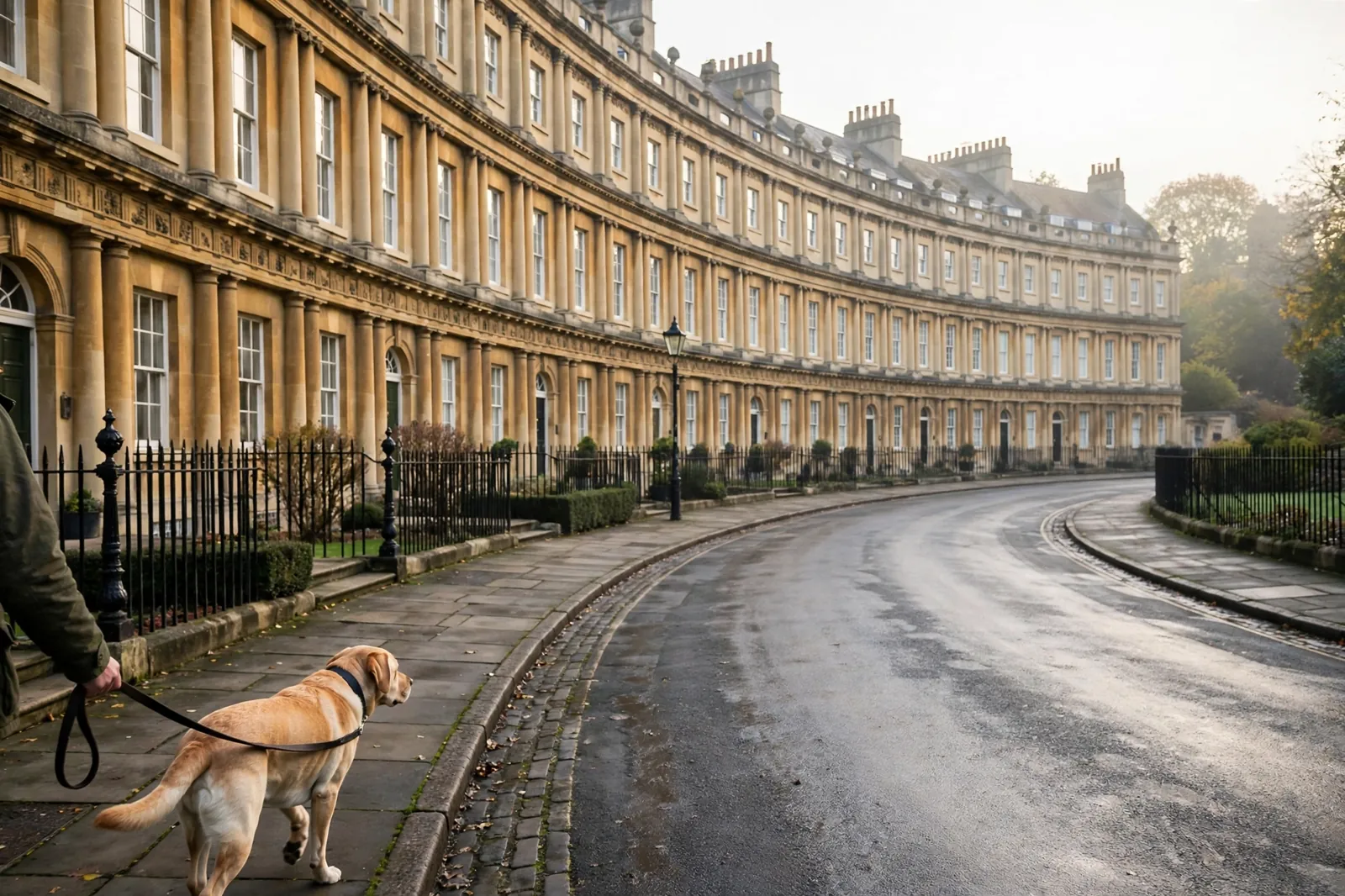
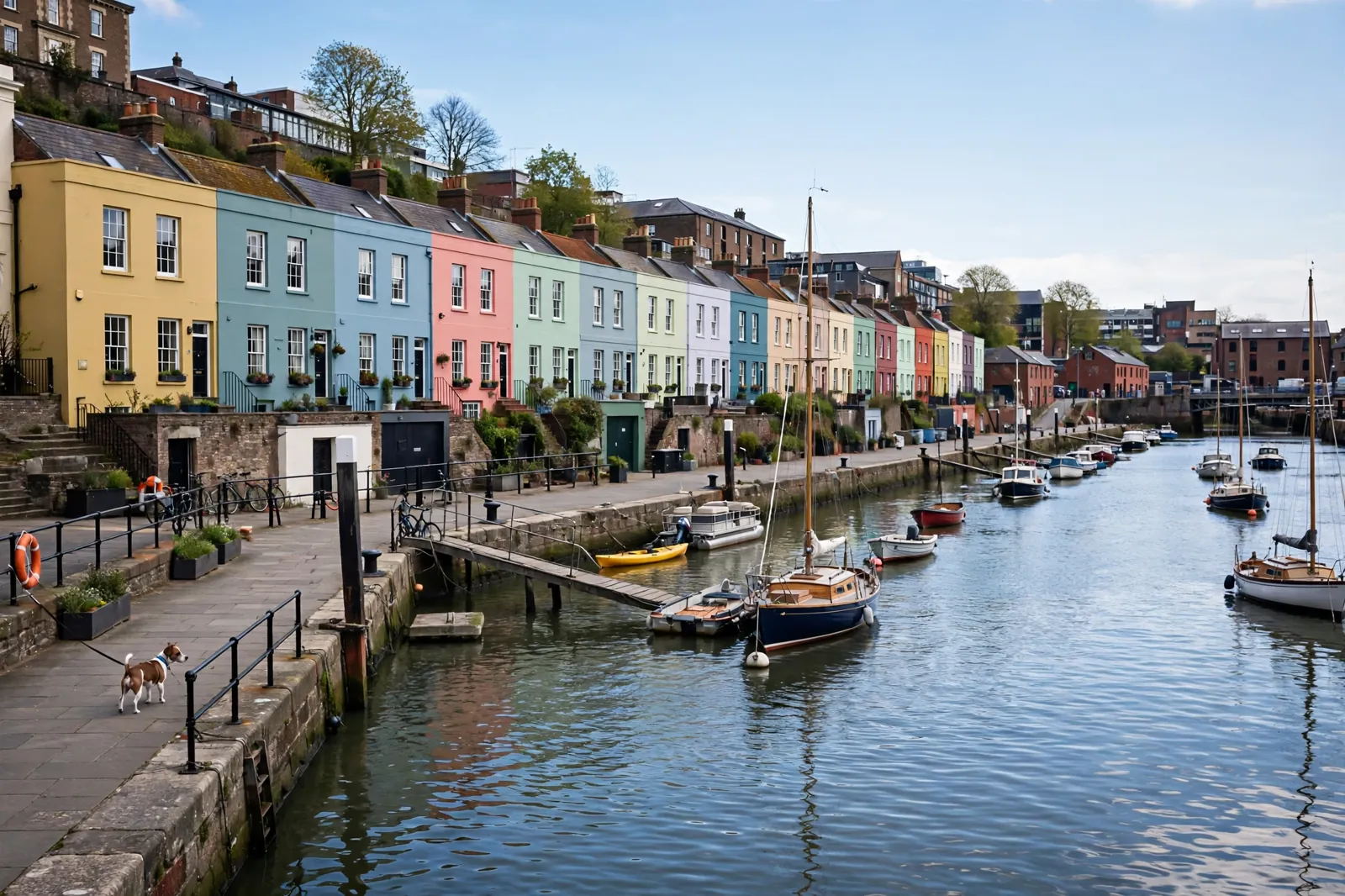
Banbury makes a good base for a longer trip, too. Bath is a longer drive west for a city day, Bristol is further still for a harbourside trip, and the Cotswolds begin a short drive to the west. For a stay of several days, consider splitting it: a couple of nights in town for the canal and the market, then a couple of nights out in the valley for the quiet. The dog will enjoy the change of pace as much as you will.
A full canal day, hour by hour
Begin at Tooley’s Boatyard, just after breakfast, when the yard is quiet and the canal is still. Look at the dry dock and the moored boats from the towpath, let the dog sniff the ropes and the tar, and then set off north along the canal while the morning is still cool. Walk for an hour, turn at a lock, and come back the same way — the return leg always looks different, and the dog will find a whole new set of smells on the way home.
By ten o’clock you will be back at the basin. Cross to the market place, look at the stalls if the market is running, and wander the older streets south of the square towards St Mary’s church. An hour in the town is enough: the shops are functional, the square is the sight, and the dog will be happier back beside the water than on the pavements.
Lunch belongs to a canal-side pub. Sit in the garden, order at the bar, and let the dog sleep under the bench while you eat properly for the first time that day. Then, in the afternoon, drive or walk to the foot of Crouch Hill and climb it slowly. The view from the top is the reward, and the open grass gives the dog the running it has been waiting for since the morning’s towpath.
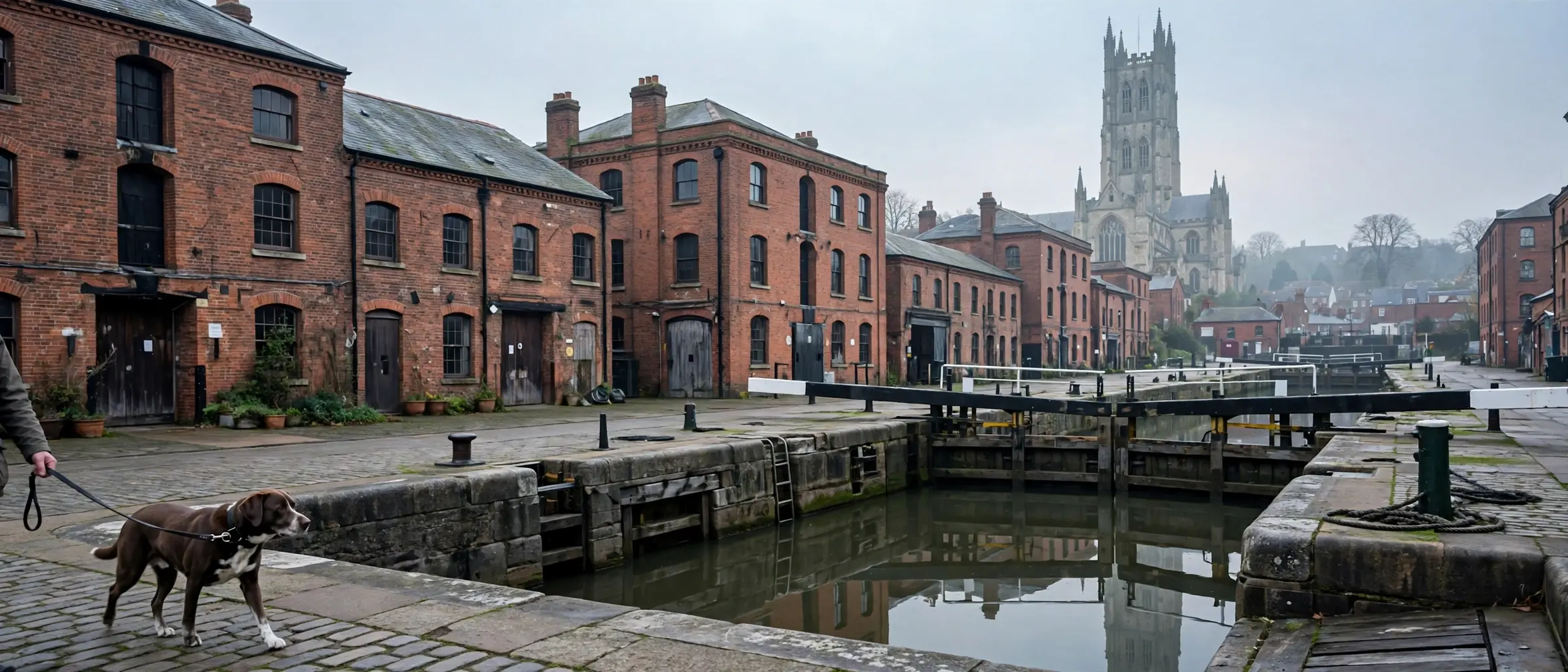
The evening is quiet. Walk back down the hill, take a gentle stretch along the canal to cool off, and finish with a short loop past the moorings as the light fades. A dog that has seen the boatyard, the market, the hill and the canal in one day has had a full Oxfordshire education. If you have a second day, spend it further south: our guides to Gloucester and the dog-friendly holiday parks of the UK cover the docks, the Severn and the practicalities of a longer stay.
Practical questions
Before you go
Can dogs walk the Oxford Canal towpath at Banbury?
Yes, the towpath is a public route and is one of the best dog walks in Banbury, but it is narrow in places, shared with cyclists, and passes close to the water with few fences. Keep the lead short near bridges and locks, and use the quieter stretches north and south of the town if your dog is reactive.
Is Crouch Hill in Banbury good for dogs?
Crouch Hill is a short, steep climb south of the town with open grass and views back over Banbury, and it suits a fit dog that likes a hill. The paths are rough and there is livestock nearby, so keep dogs on a lead, watch for the steep drop on the town side, and save the climb for a dry day when the grass is not slippery.
Can dogs visit Tooley's Boatyard in Banbury?
The boatyard is a working historic site, and the outside areas around the canal and the dry dock can be viewed with a dog on a lead. The workshop buildings and museum spaces do not admit dogs except assistance dogs, so plan a split visit if you want to go inside, and check the official guidance before you travel for current opening times.
Is Banbury market dog-friendly?
The outdoor market around the market cross is a public space and dogs on leads are a normal sight, but the aisles between stalls are tight and the smells are intense for a dog. Visit early, keep the lead short, and avoid the busiest Saturday morning crowds if your dog is reactive or nervous around food stalls.
Where can I park in Banbury with a dog?
Banbury has several long-stay car parks within a short walk of the canal and the town centre, including near the station and the shopping areas. The car parks near the canal fill first on market days, so arrive before ten in the morning, and walk the dog from the car park rather than driving between stops in the one-way system.
What is the best time of year to visit Banbury with a dog?
Spring and autumn are the easiest: the canal towpath is firm underfoot, the market is lively without being packed, and the climb up Crouch Hill is pleasant in cool air. Summer brings busy towpaths and hot, exposed stretches, while winter can leave the towpath muddy for days after rain, so pack a towel and a drying coat.