This guide is independent and contains no paid placement. If affiliate links are added later, they will be clearly marked and will not change our editorial checks.
Walk the Floating Harbour loop early, use Clifton Downs and the Avon gorge paths for proper exercise, take the ferry and attractions as individual checks because dog policies vary, treat major indoor attractions as split visits, and base yourself near the Downs or the harbour for the easiest morning walks. Check each venue on its official site before you go.
The harbourside loop: your orientation walk
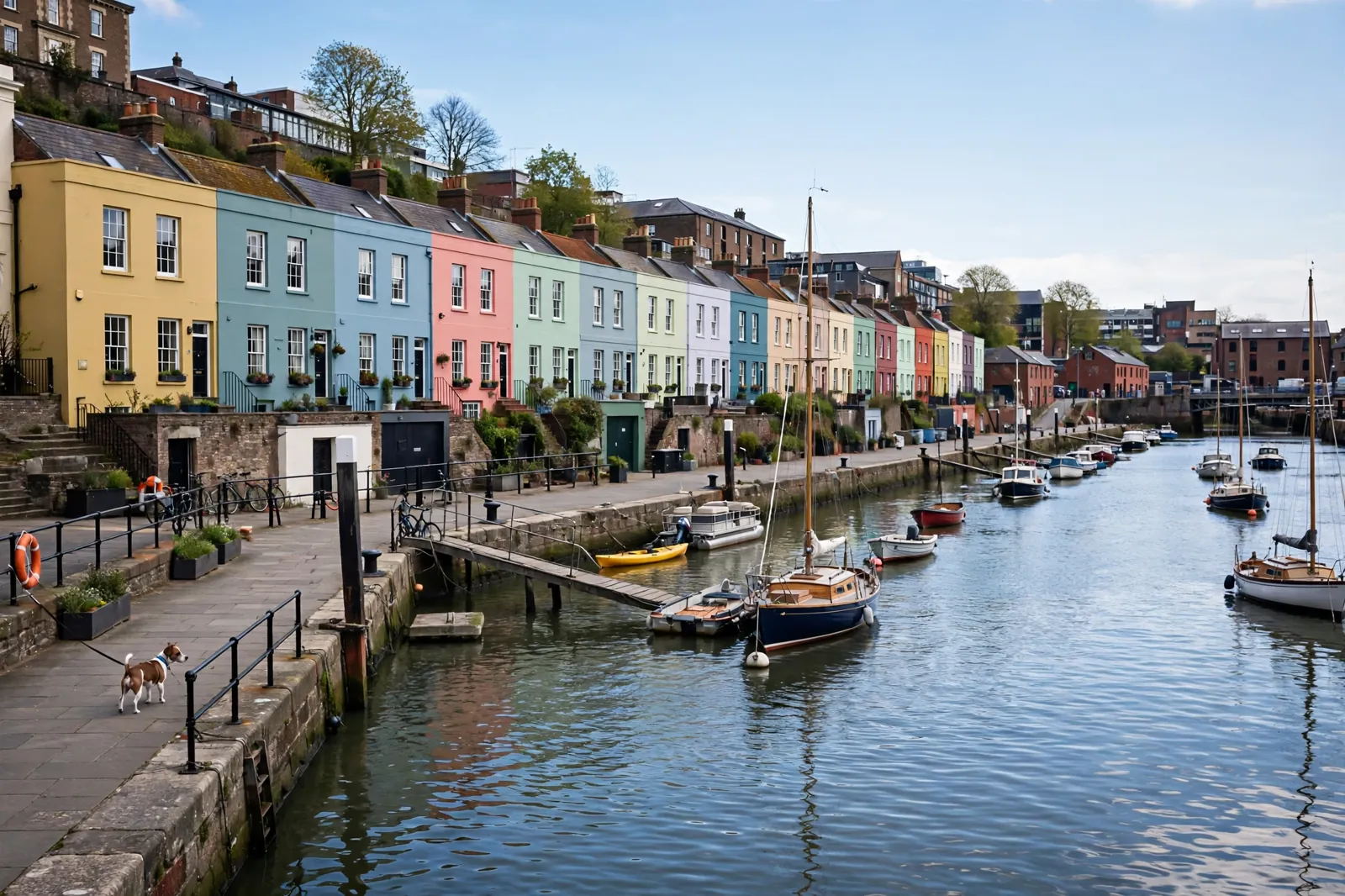
Bristol's Floating Harbour is the natural first walk: a circuit of historic water in the city centre, linking the quays by the old docks, the museum quarter, the ferry landings and the neighbourhoods on both banks. For a dog it is flat, legible and interesting — boats, bridges, gulls and waterside life at close quarters — and the full loop can be shortened at several bridges, which makes it a forgiving route for a dog's first city morning. Go early for the calm version. The harbourside is Bristol's living room on a fine afternoon, and by lunchtime on a sunny weekend the popular stretches carry the crowds to match.
Water discipline is the main skill here. The harbour edges are drops into deep water, swans and other waterbirds are resident, and a dog that swims needs to understand that this water is not for swimming: no launching from quays, no drinking harbour water, and a short lead near edges, ferry queues and the busiest cafe terraces. The same applies along the river sections downstream, where mud banks and tides change the picture by the hour. Gulls and dropped food are the second discipline, as in every harbour city; a rehearsed leave-it cue and a lead held short around food stalls will save repeated negotiations.
Use the harbour as your hub rather than your whole walk. From it, the city fans out: uphill to Clifton and the Downs, along the river towards the gorge and the suspension bridge, or into the old city and its markets. A dog that has done the harbour loop in the morning, with a cafe stop at a welcoming waterside table, has the measure of Bristol and the exercise base for a more ambitious afternoon. In wet weather the harbourside stays walkable when hill paths muddy, though the wind funnels along the water in winter and the stone surfaces polish slippery — sensible footwear and a short lead near edges apply.
Clifton Downs and the gorge
Clifton Downs — the Downs, as Bristol calls them — are the city's great green ceiling: a large area of open downland and wooded gorge edge above Clifton, with views across the Avon Gorge to the Clifton Suspension Bridge. For dogs this is the main exercise ground of a Bristol stay: extensive grass for proper off-lead time under reliable recall, woodland edges for shade and sniffing, and a scale that absorbs weekend crowds better than any smaller park. Leads or close control belong near the roads that cross and border the Downs, around the gorge edge paths, near any grazing or wildlife signage, and around sports, picnics and the cafe areas; the gorge edge itself demands respect, because the drops are real and a chasing dog must never be a possibility there.
The suspension bridge is the set piece, and it is walkable with a dog on a lead — the footways cross high above the gorge with views that justify every photograph — but judge your individual dog honestly: some love it, some dislike the height, the vibration of traffic and the exposure, and a dog that freezes mid-bridge helps nobody. Cross early in the day when footways are quieter, keep to a short lead, and treat turning back as a normal decision rather than a defeat. On the Leigh Woods side, National Trust woodland offers shaded gorge-side walks; dog rules there follow the site's own guidance, so check the official information before you go, keep to paths and expect leads in sensitive areas.
Below the bridge, the river path along the Avon gives a different Bristol: a long, tidal riverside walk under the gorge cliffs towards the city or out towards the coast path connections, best timed with the tides in mind and unsuitable in places after heavy rain or on the highest tides — check conditions before you go. Clifton village itself, between the Downs and the bridge, is one of the city's most pleasant lead-walk neighbourhoods, with independent cafes and pubs where dogs are commonly welcome at off-peak times; verify each venue, because the village's popularity means policies and queues both change fast at weekends.
Ashton Court, the Avon and neighbourhood parks
Ashton Court Estate, across the gorge from Clifton, is Bristol's country park inside the city: a large historic estate of meadows, woodland and deer park that gives dogs a genuinely rural-feeling day out without leaving town. The deer change the dog rules fundamentally — this is lead country around the deer enclosures and anywhere deer may be, with close control everywhere and absolute respect for signage, because a dog chase here is a welfare incident, not a mishap. Check the estate's official information before you go for current dog guidance, event closures and parking arrangements; Ashton Court also hosts major events, including the city's balloon fiesta season activity, which transforms access. For the right dog, walked on a lead with an owner who enjoys landscape, it is one of the finest urban park days in England.
Back in the city, the neighbourhood parks do the daily work. Brandon Hill, the small steep park by the centre with its tower and squirrels, makes a short, characterful lead walk and a picnic spot. St George Park and Eastville Park in the east, with lakes and broad paths, serve stays that side of the city, and the Frome valley paths give eastern Bristol a green walking corridor of its own. The River Avon trail connects several of these worlds for owners who like linear walks: pick a section, walk out, bus back, and vary it daily rather than repeating one circuit.
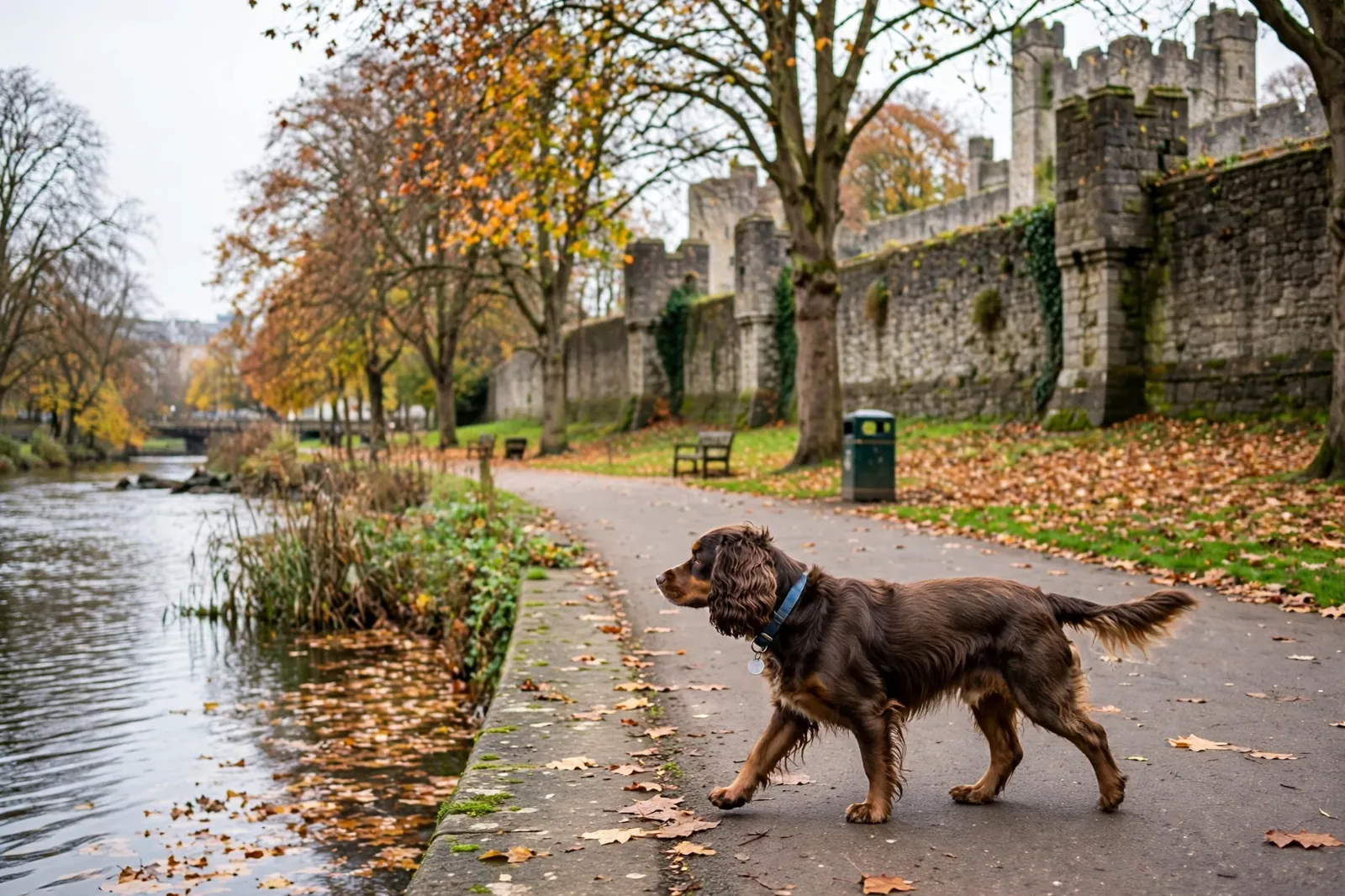
The pattern to notice is that Bristol's green spaces each carry one specific caution — gorge edges on the Downs, deer at Ashton Court, tides on the river, waterbirds on every lake — and none of those cautions is a reason to stay away. They are the reason to read the signage, keep the lead decision ahead of the dog's enthusiasm, and carry the long line for dogs whose recall fades around wildlife. A Bristol dog holiday run on those terms is varied, safe and genuinely beautiful. For more stays-and-planning groundwork, our dog-friendly hotels in the UK guide covers the booking questions that pair with choosing between a Clifton, harbourside or eastern base.
Attractions, boats and the split visit
Bristol's headline indoor attractions — its major museums, the famous historic ship in its dry dock, aquarium-style and science venues — generally admit assistance dogs only in their interiors, with pet dogs not permitted, but the city varies more than most, and some outdoor, harbour and heritage elements set different rules for their outdoor areas. The only safe method is the standing one: check the official site before you go for each attraction individually, note exactly which parts a dog may enter, and plan the visit around that answer rather than around hope. The historic ship's surrounding dockyard atmosphere and the harbourside generally are dog-walking territory; the interiors are the human half of a split visit.
Boats deserve their own check. Bristol's harbour ferries and trip boats each set their own dog policy, and policies on small vessels depend on space, the skipper and the day's loading — many harbour boats in Britain welcome a well-behaved dog on a lead, but verify with the operator before you queue, travel off-peak if you go, and keep the dog settled and off seats. A short harbour hop can be the highlight of a dog's day and a practical shortcut across the water; a crowded sailing with a stressed dog is neither. The same verify-first approach applies to the city's markets, festivals and seasonal events, where dog admission ranges from welcome to prohibited within the same weekend.
Build the split visits around Bristol's geography and they stop feeling like a compromise. One adult at an indoor attraction on the harbourside while the other walks the harbour loop or the gorge paths is an exchange most dogs would choose. If you are travelling solo, either book trusted local dog care for one window or design the trip outdoors — harbour, Downs, gorge, Ashton Court and the cafe scene fill three days without an interior. Our guide to assistance dog access rights in the UK explains the assistance-dog position that venue signage refers to, which helps decode the door notices you will meet across the city.
Where to stay with a dog in Bristol
Bristol is a city of hills pretending to be compact, and where you stay decides how much climbing your dog holiday contains. Clifton is the dog-first base for many: the Downs at the top of the road, the village cafes, the bridge minutes away and a quieter, residential feel at night, with a downhill walk to the harbour and an uphill one home. The harbourside and centre put the water, the stations and the attractions at your feet and suit confident city dogs, with the morning walk along the quays. Stokes Croft, Gloucester Road and the eastern neighbourhoods offer an independent, local Bristol with park access and lower prices, at the cost of a bus ride to the Downs. Choose with the 7am walk in mind and the rest follows.
Then apply the standard interrogation: which rooms take dogs, what fee per dog per night or per stay, any size or number limits, where the dog may go in the building, whether it can be left alone in the room, and what the stairs and lift situation is — Bristol's handsome converted townhouses in Clifton and beyond can involve several flights, a genuine factor for older dogs and for anyone carrying luggage up worn steps. Self-catering flats often suit dogs best, with hard floors and a routine you control, but confirm the nearest grass and whether any garden is enclosed and dog-proof rather than merely private. Our national hotels guide lists the full question set.
Book ahead for the city's peak moments — summer weekends, festival periods and balloon fiesta time in particular — when dog-welcoming rooms in Clifton and on the harbourside go first and rates reflect the demand. Bring the settling kit: the dog's own bed or blanket, a chew for the first evening, bags in every coat, and a towel by the door. Bristol's hills shed water fast and its parks hold it in the hollows; between gorge mud, harbour spray and Downs grass, the towel-and-paw routine will be used daily in any season outside a dry summer spell.
Cafes, pubs and eating together
Bristol's independent food scene is one of its dog-friendly strengths. Cafes in Clifton village, along Gloucester Road and around the harbourside commonly welcome dogs, pubs with bar areas and gardens do the same across the neighbourhoods, and the city's market and street-food venues are worth checking individually — outdoor and shared-seating formats are often the most flexible, but admission is set venue by venue and changes, so check the venue's own website or phone before setting out. Formal dining rooms remain the least likely welcome. The etiquette in our UK dog-friendly cafes guide travels well here: walked and toileted first, short lead out of walkways, off the seats, settled on a mat if you use one.
Hills and timing shape the Bristol version. A harbourside lunch at the weekend peak means queues and full terraces; the same meal at 11.30am or mid-afternoon is relaxed, and the waterside tables with a settled dog are among the city's pleasures. In Clifton, village cafes fill with Downs walkers after fine mornings, so the post-walk coffee works best slightly off the hour. Evenings in the nightlife districts are a human plan; eat earlier with the dog or base the evening in the quieter neighbourhoods. In summer, favour gardens and terraces and carry water regardless of promises — provided bowls vanish on busy days.
Picnic Bristol is a strong fallback and often a first choice: deli supplies from Clifton or Gloucester Road eaten on the Downs, harbour walls with takeaway coffee, or Ashton Court's meadows on a lead-walk day. Keep the dropped-food vigilance that every harbour city demands, watch gulls around waterside food — Bristol's gulls are professionals — and rinse paws after winter walks when the hill streets are gritted. A dog that arrives at the table exercised and empty is, as everywhere, the dog that gets welcomed back.
Getting around: buses, trains and hills
Bristol's public transport is bus-led in a way that surprises visitors expecting a tram. Dogs travel on city buses at the driver's discretion in the usual British pattern — on a lead, well behaved, off the seats and out of the aisle — so travel off-peak, have a plan B for a full bus, and check the operator's latest official guidance before you travel. The hills make the bus genuinely useful with a dog: ride up to Clifton or the Downs, walk down through the city, and a route that would be a climb becomes a pleasure. Temple Meads station is the main arrival point, a handsome but busy terminus a walk or bus ride from the harbourside; give a nervous dog a pause after the platform, and consider arriving or departing outside the commuter peak.
Trains follow the national pattern in our guide to taking a dog on UK trains, and local services open up day trips — to Bath, to the Severn-side towns and to the Somerset coast — each worth its own dog-policy checks at the destination. Taxis and private hire vary by operator and driver; declare the dog at booking and carry a blanket. Harbour ferries, covered in the attractions section, double as transport across the water where the operator's dog policy allows. Cyclists share many of Bristol's paths, including the famous railway path out of the city; on shared routes keep the dog close on the inside of the path and step aside early.
Drivers should park once and walk or bus. Central and Clifton parking is limited and priced, the clean-air arrangements affect some vehicles, and the city's pleasures are mostly reached on foot once you accept the hills as part of the design. One Bristol-specific tip: plan routes by gradient as well as distance. A map-flat mile that crosses the Clifton hill twice is a different walk for a senior dog or a puppy, and the bus-up, walk-down pattern exists precisely to solve it. Build that into each day and Bristol's topography becomes scenery instead of effort.
Seasons, balloons and finishing well
Spring may be Bristol's best dog season: the Downs in fresh green, the gorge woodland in leaf, harbour terraces reopening and long evenings before the summer crowds. Summer brings the harbour festivals and the balloon fiesta period, when Ashton Court and the city's viewpoints fill and early-morning balloon launches become a spectacle — beautiful for humans, but check event arrangements before planning dog walks near the fiesta site, keep crowd-sensitive dogs away from the busiest launch fields, and remember that balloons overhead can unsettle some dogs even at a distance. Walk early, rest the dog through hot middays and treat shade on the Downs as a located resource, not an assumption.
Autumn colours the gorge and Leigh Woods superbly and quietens the harbour to a local rhythm; it is the connoisseur's season for a Clifton base. Winter shortens the gorge and river paths with early darkness, muddies the Downs' unsurfaced tracks and puts wind along the harbour — but it also empties the suspension bridge footways in the morning, makes the pub lunches the point of the day and gives the city a clarity that summer visitors miss. In every season, tide and weather checks govern the river paths: high tides and flood conditions close or cover sections, and the official guidance on the day outranks any guidebook, including this one.
Leave the usual slack: one unplanned half day, vet and out-of-hours details saved near your base, tick checks after gorge woodland and Ashton Court walks in season, and paws checked after cliff-edge and towpath grit. Bristol asks a little more planning than a flatter city — gradients, tides, deer, gorge edges and event weekends all belong in the notebook — and repays it with one of the most varied dog holidays any British city offers: harbour, down, gorge and country estate, all inside a single postcode area.
Practical questions
Before you go
Can dogs cross the Clifton Suspension Bridge?
Dogs on leads can generally use the footways of the Clifton Suspension Bridge, but judge your own dog carefully, as some dislike the height, exposure and traffic vibration. Cross at quieter times, keep a short lead, and be ready to turn back if your dog is unhappy. Check the latest official guidance before you go, as maintenance or events can affect footway access.
Are dogs allowed at Ashton Court?
Dogs can enjoy much of Ashton Court Estate, but deer live in the park, so leads and close control are essential around deer areas and wherever signage requires, and dogs must never chase deer. Events, including balloon fiesta activity, can change access and parking. Check the estate's official information before you go for current dog guidance and any closures on your dates.
Can dogs go inside Bristol museums and attractions?
Most major indoor attractions in Bristol admit assistance dogs only rather than pet dogs, though policies vary between venues and between indoor and outdoor areas. Check the official site before you go for each attraction individually. Travelling pairs often split the visit, with one person touring while the other walks the dog around the harbour, the Downs or the gorge paths.
Are dogs allowed on Bristol buses and harbour ferries?
Dogs are generally carried on Bristol buses at the driver's discretion, on a lead, well behaved and off the seats; travel off-peak and check the operator's latest guidance before you travel. Harbour ferry and boat operators each set their own dog policy, which can depend on space and loading, so verify with the operator before you queue and keep the dog settled and on a short lead.
When is the best time to visit Bristol with a dog?
Spring and autumn usually offer the best balance of daylight, milder weather and manageable crowds, with the Downs and gorge at their most beautiful. Summer brings harbour festivals and balloon fiesta crowds, so walk early and check event arrangements. Winter suits hardy dogs and quiet bridge crossings, but expect mud on the Downs, wind on the harbour and early darkness on gorge and river paths.