This guide is independent and contains no paid placement. If affiliate links are added later, they will be clearly marked and will not change our editorial checks.
Barmouth rewards visitors who plan around the tide. At low water the beach is enormous and the estuary opens up for long, easy walks; at high water the same town is about the bridge, the trail and the harbour. Check the tide times first, then choose between the beach, the bridge crossing and the Mawddach Trail.
Plan the day around the tide, not the clock
Barmouth sits where the River Mawddach meets Cardigan Bay, and the tide is the single fact that shapes a dog day here more than the weather forecast, the season or the traffic on the approach roads. At low tide the beach stretches far out into the bay and the estuary becomes a wide sheet of sand, mud and shallow channels. At high tide the water comes right up to the sea wall and the beach all but disappears, leaving the promenade, the harbour and the bridge as the places to be. Two visits on the same day can feel like two different towns, and the dogs that enjoy Barmouth most are the ones whose owners checked the tide table before they left the house.
Start by looking up the tide times for Barmouth on the day you plan to visit, and build the day backwards from them. A falling tide in the morning gives you the longest beach window, with firm sand near the waterline and plenty of space to spread out away from other dogs. A rising tide in the afternoon is the moment to move off the sand and onto the Mawddach Trail or across the bridge, because the water returns faster than it looks and the soft sand near the dunes is the first ground to cut off. If low water falls in the middle of the day, plan a slow morning in town, take the beach at its best, and finish with a harbour walk as the tide comes back in. If high water falls at midday, reverse the order: walk the trail in the morning, cross the bridge, and save the beach for the late afternoon when the sand reappears.
The estuary adds a second reason to respect the water. The Mawddach is a fast tidal river, and the channels that cross the sand at low tide fill quickly. Never let a dog swim in the estuary channels or chase a ball across wet mud, and never walk out onto the mudflats themselves. The sand that looks firm under your boots can be soft and deep a few steps further on, and a dog that runs ahead onto the mud can get stuck faster than its owner can reach it. Keep dogs on the beach sand, keep them out of the channels, and treat the edge of the water as the boundary, not the middle of the estuary.
Wind matters here too, because Barmouth faces west into Cardigan Bay and the estuary funnels the wind straight through the town. A bright day with a strong westerly can feel cold on the beach and on the bridge even in summer, and a dog that is happy running on sheltered sand can be miserable standing still in an exposed wind. Pack a windproof layer for yourself and a drying coat for the dog, and use the sheltered spots behind the dunes and along the harbour wall when the wind picks up. The same wind is also what keeps the beach feeling wild and empty, so it is worth working with rather than fighting: walk into the wind on the way out so the return leg is easier, and let the dog run on the outward stretch while it still has energy.
Finally, remember that tide times are local and specific. The times for Barmouth are not the same as the times for Aberdyfi across the bay or for Harlech up the coast, so use a tide table for Barmouth itself and check the official guidance before you travel if anything about the day looks unusual, such as a spring tide or a storm surge warning. A spring tide covers more of the beach and returns faster than a neap tide, and after heavy rain the river runs higher and faster than the tide table alone suggests. Five minutes with the tide table at home saves an hour of improvising on the sea wall.
The beach: where dogs run and where to be careful
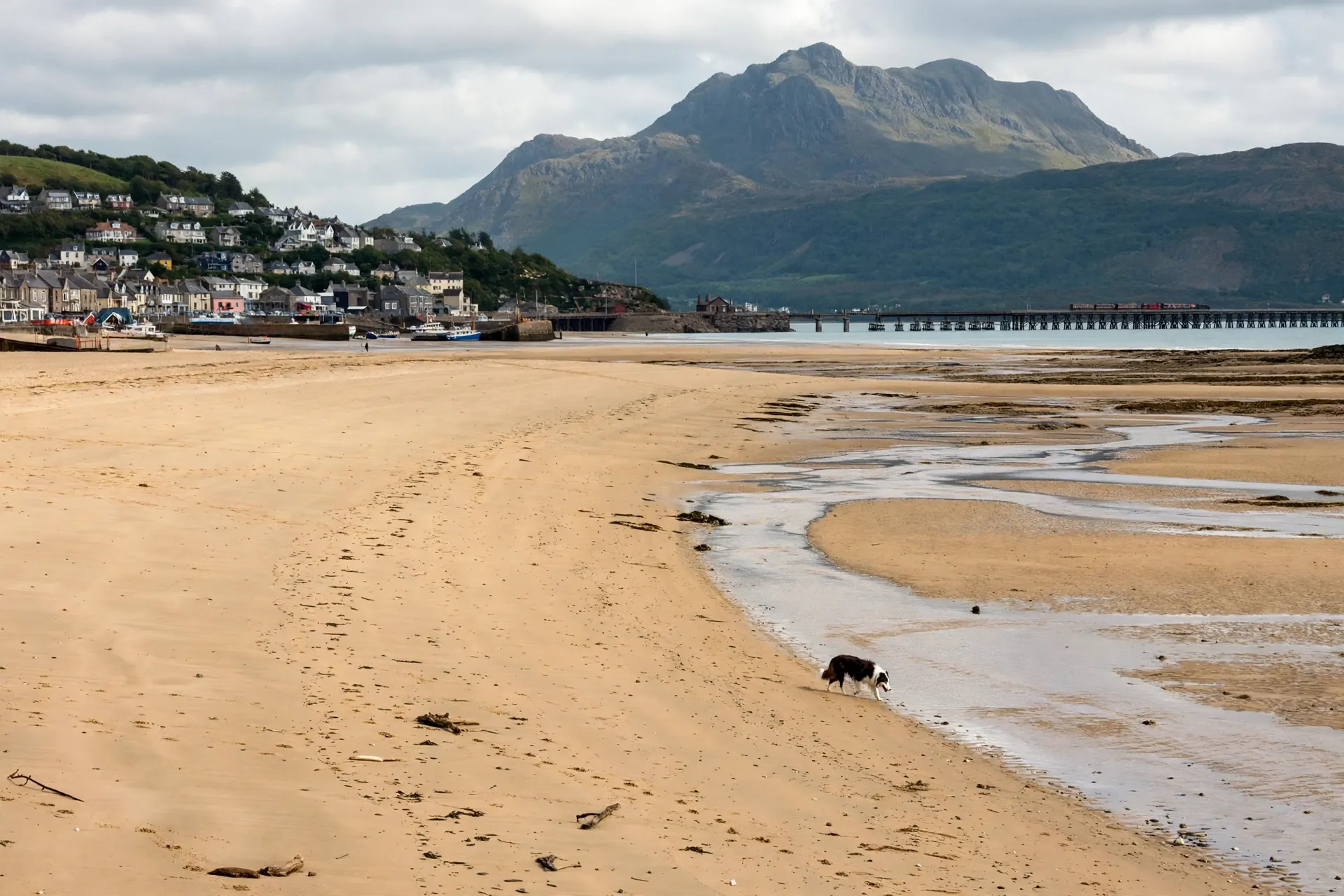
Barmouth beach is the reason most dogs come here, and it is easy to see why. It is a long, wide stretch of golden sand that runs south from the harbour towards the dunes, with room for a proper run even on a busy day. The sand is mostly clean and firm near the waterline, which suits dogs that like to sprint, and the gentle slope means the water stays shallow for a long way out at low tide, which suits paddlers and nervous swimmers. There is also a quieter northern stretch beyond the harbour towards the estuary mouth, where the beach narrows and the crowds thin out, and that is often the better choice for dogs that need space from other dogs or from children playing ball games.
Dog rules on the beach are seasonal, and this is where visitors most often get caught out. Restrictions apply to the main beach near the town during the summer months, while other stretches stay open to dogs, and the exact boundaries and dates are set by the local council and can change from year to year. Do not rely on what a blog post from two years ago said, and do not assume that because dogs are on the sand in front of you the rules allow it. Read the signs at every beach entrance, note which section you are in, and check the official guidance before you travel so you know the current dates and the map of the restricted zone. Our guide to dog-friendly beaches in the UK explains how seasonal bans, public space protection orders and fines work in general, and why the sign at the entrance is the document that matters on the day.
Within the rules, a few practical habits make the beach work better. Walk to the waterline before letting a dog off the lead, because the firm sand there is kinder on joints than the soft dry sand higher up, and because it keeps the dog away from the dune edges where ground-nesting birds and other wildlife are most easily disturbed. Carry fresh water and a bowl even on a cool day, because dogs drink seawater when they are thirsty and then feel sick, and the nearest tap may be a long walk back. Bring a long line as well as a lead: it gives a young or unreliable dog room to run without the risk of it disappearing towards the dunes or into a group of picnickers. And take poo bags for the whole walk, not just the first stretch, because there are fewer bins on the far end of the beach than near the town.
Watch the other beach users as well as your own dog. Barmouth beach attracts kite surfers, windsurfers and land yachts when the wind is up, and a dog chasing a kite or a sail can be in danger before its owner realises what is happening. Keep dogs well away from anyone launching or landing a kite, and recall the dog before it reaches a group setting up equipment. The same applies to the RNLI lifeboat station near the harbour: it is an active working station, so keep dogs clear of the slipway and the crew areas, and never let a dog swim near the station or the harbour entrance where boats are moving.
After the beach, the routine matters as much as the run. Sand gets everywhere, including between toes, in ears and in the car, so rinse paws with fresh water before the drive home and check between the toes for grit that can cause soreness on the next walk. A dog that has been running on sand and drinking seawater may be thirsty and tired in a way that looks like nothing much, so offer water, a short rest in the shade and a quiet drive rather than a second long walk straight away. The beach will still be there tomorrow, and a dog that finishes the day tired but sound is a dog that will enjoy the next one.
Crossing Barmouth Bridge with a dog
Barmouth Bridge, the long wooden railway viaduct that crosses the Mawddach estuary, is the town's most famous landmark and one of the best dog walks in Wales, provided you approach it with realistic expectations. The bridge carries the Cambrian Coast railway line across the estuary from Barmouth to Morfa Mawddach, and alongside the track runs a pedestrian and cycle walkway that is open to walkers. Crossing on foot gives you a view across the whole estuary that you cannot get from anywhere else: the river below, the sandbanks, the mountains rising on both sides and the open sea behind you. It is a walk to do slowly, not a shortcut to rush.
The practical details are worth knowing before you step onto the walkway. The bridge is long, roughly three quarters of a mile, and the walkway is narrow in places, so a dog on a long lead or a flexi lead is a hazard to cyclists coming the other way and to other walkers. Use a short lead, keep the dog on the landward side of the walkway where there is room, and be ready to step aside and hold the dog close when a train passes. Trains are not frequent, but they are loud and close, and a noise-sensitive dog can panic if it is not prepared. Walk the dog up to the bridge end first, let it hear and see a train from solid ground if one is due, and only cross if the dog is settled. A dog that is frightened on the bridge has nowhere easy to go, so the decision to cross should be made before you start, not halfway across.
Wind and weather change the crossing more than distance does. The bridge is completely exposed, and a strong wind across the estuary can push a small dog sideways and make a large dog uneasy on the wooden decking. Check the forecast for wind as well as rain, and skip the crossing on a gusty day in favour of the sheltered Mawddach Trail on the southern shore. The decking itself can be slippery when wet, so walk at the dog's pace and watch for gaps or uneven boards, especially with older dogs or dogs with sore paws. In hot weather, test the decking with your hand before you set off: dark wood in direct sun can be hot enough to be uncomfortable for paws.
There is a toll for pedestrians and cyclists on the bridge, and the arrangements for paying it and for any closures can change, so check the official guidance before you travel rather than relying on a fixed figure in a guide. The walkway can also close for maintenance or in severe weather, and the railway operator may restrict access during engineering works, so a quick check on the morning of your visit avoids a wasted walk to the bridge end. If the bridge is closed, the Mawddach Trail gives you the same estuary views from the southern shore without the exposure, and the harbour walk gives you the boats and the town instead.
One more thing the bridge gives you is a choice of endings. Cross to Morfa Mawddach and you can walk on towards Fairbourne, catch the train back from Morfa Mawddach station, or simply turn around and cross back with the light behind you, which is a different walk in the other direction. The return crossing is often the better half, because the view opens towards the mountains and the town, and the dog, having done it once, usually walks more calmly the second time. Either way, treat the bridge as a walk in its own right rather than a means of getting somewhere, and give it the time it deserves.
The Mawddach Trail: the estuary walk to Dolgellau
The Mawddach Trail is the walk that turns Barmouth from a beach town into a proper walking base. It follows the southern shore of the estuary from Barmouth to Dolgellau, about 9 miles (15 kilometres) along the route of a former railway line, and it is one of the flattest long walks in Snowdonia. The surface is mostly firm and surfaced, the gradient is gentle throughout, and the views change constantly: open water and sandbanks near Barmouth, wooded slopes and quiet bays further inland, and the mountains closing in as you approach Dolgellau. For dogs, it is the opposite of a mountain path: no scrambling, no steep drops beside the trail and plenty of places to stop.
Most dog owners do not walk the whole trail in one go, and there is no need to. The classic dog walk is an out-and-back section from Barmouth, turning around when the dog has had enough, which gives you the estuary views without the logistics of a one-way walk. A gentle first hour takes you past the best of the open water, and the further you go the quieter it gets, so even a two-hour round trip feels like a proper day out. If you do want the full route, the train back from Dolgellau to Barmouth is the usual answer, and dogs are welcome on the train, but check the timetable and the current arrangements before you commit, because services are not frequent and a missed connection can leave you with a long walk back or a long wait at a small station.
The trail has its own rules and habits. It is shared with cyclists, and some of them move fast and quietly, so keep the dog on a lead or under close control on the narrower sections, and teach a reliable recall before you let the dog off at all. The best off-lead stretches are the open, straight sections with good sightlines, where you can see a cyclist coming well in advance. Near the road crossings and the bridges, and where the trail passes close to fields with sheep, the lead goes back on without discussion. Sheep graze on the hills and marshes around the estuary, and a dog off the lead near livestock is a risk to the sheep, to the dog and to the farmer's livelihood. Our Snowdonia dog guide covers sheep, livestock and lead rules for the wider mountains in detail, and the same principles apply on every step of the trail.
Water and shade are the two things to plan for on a warm day. The trail is mostly open to the sun, and the sections near the water are not always accessible for a dog to drink from, because the estuary water is salty and the banks can be steep or muddy. Carry more water than you think you need, and a collapsible bowl, and stop in the wooded stretches where the shade is better. In winter the same openness works in your favour: the trail stays walkable when the mountain paths are snowbound or dangerously icy, and the low light across the estuary on a clear winter afternoon is one of the best sights in the area. Check the trail surface after heavy rain, though, because the lower sections can flood or become very muddy, and a flooded path beside a fast river is not a place to let a dog run ahead.
There are good stopping points along the way that break the walk into manageable pieces. Penmaenpool, roughly halfway, has a toll bridge, a car park and a place to rest, and it makes a natural turning point for a shorter walk or a lunch stop. The small bays and inlets along the shore are worth pausing at, not just for the view but because they are where wading birds gather, and a dog that is kept on a lead and watched carefully can enjoy watching them without disturbing them. The trail is also a good place to practise the unglamorous skills that make a dog holiday work: walking calmly past cyclists, settling at a rest stop, and walking on a loose lead for a long distance without pulling. By the time you reach Dolgellau, or turn for home, the dog will have had a better workout than a mountain climb would have given it, and you will have seen the estuary properly.
Around the town: harbour, streets and quiet corners
Barmouth itself is a small town, and that is part of its appeal for dog owners. Everything is within walking distance, the streets are mostly flat near the harbour and the seafront, and the town has the practical things a dog trip needs: a vet practice within reach, shops that sell dog food and supplies, and places to sit outside with a dog. The harbour is the natural centre. It is a working harbour with fishing boats and pleasure craft, and the quayside is a good place for a slow walk on a lead, with the dogs watching the boats and the owners watching the water. Keep dogs on a lead around the harbour, because the quayside has open edges, moving vehicles and ropes and equipment that a loose dog can trip over or get tangled in.
The streets behind the harbour are narrow and steep in places, and the older part of town climbs quickly away from the water. That is worth knowing if your dog is older or struggles with hills, because a walk that looks short on the map can be a stiff climb in practice. Stick to the flat streets near the front for an older dog, and save the higher streets for a younger dog that enjoys a climb. The town's lanes are also where you will find the quieter corners: small squares, churchyards and back streets where a nervous dog can walk without meeting every other dog in town at once. A nervous or reactive dog does better with a route that avoids the busiest frontage at the busiest time, so walk the harbour early, do the town in the middle of the day when the beach is the main attraction, and return to the front in the evening when the crowds thin out.
Shopping with a dog in Barmouth is mostly a matter of asking and being flexible. Some shops welcome dogs inside, some prefer dogs to wait outside with one person while the other goes in, and some will hold a purchase at the door for you. The polite approach is to ask at the doorway, keep the dog close and short on the lead, and not to assume that a shop that welcomed dogs last year still does. The same applies to the small galleries and craft shops that make the town worth browsing: a calm dog on a short lead is welcome in far more places than a bouncing dog on a long lead, and a dog that settles quickly at your feet will be offered a treat far more often than one that pulls towards every shelf.
There are also a few places in town that are worth seeking out with a dog even if they are not the obvious attractions. The walk around the harbour at dusk, when the boats are lit and the estuary is calm, is one of the quietest pleasures in Barmouth. The short climb to the viewpoint above the town, for dogs that can manage steps, gives you the whole layout at once: the beach, the bridge, the estuary and the mountains. And the walk along the front in the early morning, before the shops open, is when the town belongs to the dog walkers, with the sand still patterned from the night tide and the gulls the only other early risers. These are the moments that make a small town feel like a holiday rather than a stopover.
If you are staying for more than a day, the town also works as a base for exploring the wider area without moving the car. The train runs along the coast in both directions, the buses serve Dolgellau and the surrounding villages, and the walks from the town itself are enough for several days before you need to repeat one. That is the real test of a dog-friendly town: not whether it has one good walk, but whether it has enough different walks, at different lengths and on different surfaces, to fill a week. Barmouth passes that test, because the beach, the bridge, the trail and the harbour each give you a different day, and each of them starts from the same front door.
Shorter walks when the mountain weather turns
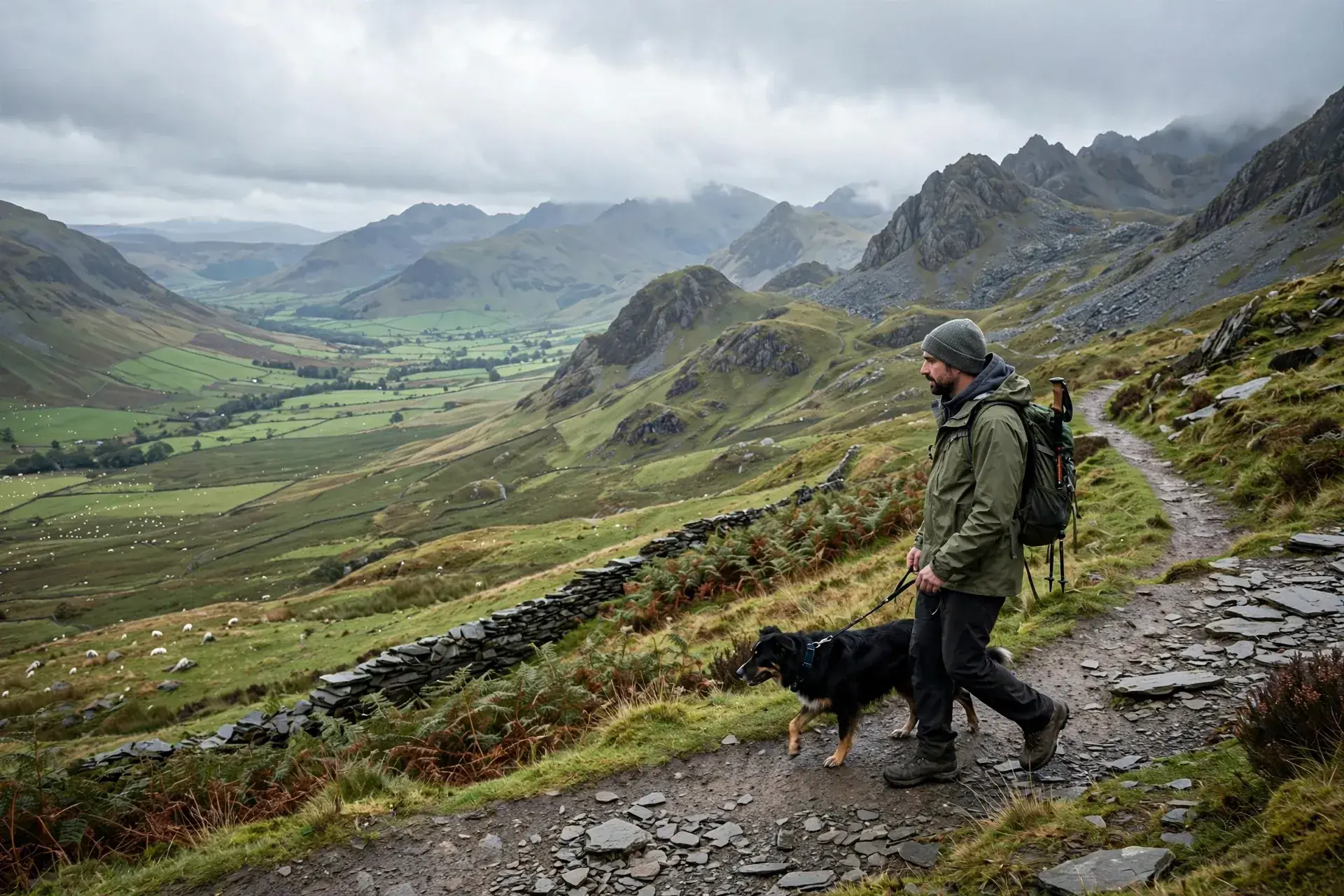
Cader Idris, the mountain that dominates the skyline behind Barmouth, is a serious walk and not a casual dog outing. The main routes are long, steep and exposed, with rocky ground that is hard on paws and weather that can change in minutes. An experienced, fit dog with a fit owner can enjoy the lower slopes and the foothill paths, but the summit is not a target to set for a dog that has never climbed a mountain, and it is not a walk to attempt in poor weather, in heat, or with a dog that is unfit, elderly or very young. The honest advice for most visitors is to admire Cader Idris from the estuary and to walk its foothills instead, which give you the mountain scenery without the mountain risk.
The foothill walks around Barmouth are the ones that fill the gap between the flat estuary trail and a mountain climb. The paths that rise gently from the town into the lower hills offer views back across the estuary and the bay, and they are short enough to fit into a morning. Keep dogs on a lead on these paths, because the hillsides are grazed by sheep, the ground is uneven, and the paths cross farmland where a loose dog can cause real damage. Carry water, because there are no shops or taps on the hills, and check the ground before you let a dog run: the rocky sections and the bracken-covered slopes can hide holes and sharp stones that injure paws.
Weather is the deciding factor on every hill walk around Barmouth. The mountain creates its own weather, and a clear morning in town can become a wet and windy afternoon on the hills. Check the mountain forecast, not just the town forecast, and turn back at the first sign of deteriorating conditions rather than pushing on to a viewpoint. A dog that is wet, cold and tired on a hillside is a dog in trouble, and the walk back is always longer than the walk out. Pack a drying coat and a towel in the car, and have a warm, dry place to return to. The hills will still be there on a better day, and a dog that comes home sound will enjoy them far more than one that was pushed too far.
For dogs that cannot manage hills at all, the flat alternatives around Barmouth are genuinely good, not consolation prizes. The Mawddach Trail is the obvious one, but the promenade, the harbour and the quiet lanes of Fairbourne across the estuary, reached by the bridge, give you flat walking with completely different views. A dog with arthritis or a heart condition can have a full and interesting week in Barmouth without ever climbing a hill, and that matters more than ticking off a summit. Choose the walk that fits the dog you have, not the walk that looks best in a photograph.
Eating and drinking with your dog in Barmouth
Barmouth has a good range of cafes, pubs and takeaways for a town of its size, and several of them welcome dogs, particularly on terraces, in bar areas and in outdoor seating. The pattern is familiar from other Welsh seaside towns: the places that welcome dogs do so warmly, with water bowls and sometimes treats, but the welcome is usually for the terrace or the bar rather than the main restaurant, and it can change with the season, the management and how busy the place is. Ask before you sit down, and accept the answer gracefully. A pub that says no to dogs in the dining room may still be happy to serve you at a table outside, and a cafe that cannot take a dog inside may do a takeaway that you can eat on the harbour wall with the dog beside you.
The practical approach is to plan meals the way you plan walks: with a backup. Identify two or three dog-friendly options before you need one, rather than wandering the town hungry with a tired dog. Look for places with outdoor seating in good weather, because that is where the dog will be most comfortable and where you will be least in anyone's way. In bad weather, a takeaway eaten in the car, in your accommodation or on a sheltered bench is often kinder to the dog than a crowded indoor room where the dog has to lie still under a table for an hour. Bring a mat or blanket for the dog to lie on, because a familiar mat helps a dog settle in a new place, and a dog that settles quickly is a dog that gets invited back.
Feeding the dog while you eat needs a little thought too. A dog that has had a long beach run will be hungry, and a dog that is hungry and watching you eat is a dog that begs, steals and gets into trouble. Feed the dog before you sit down to eat, or bring a stuffed chew or a long-lasting treat to keep it occupied while you eat. Keep the dog's food and water bowl to one side, away from other tables, and keep the lead short and under your chair so the dog cannot wander into the path of staff carrying hot food. These are small courtesies, but they are the ones that keep a place dog-friendly for the next visitor.
Self-catering visitors have an easier time of it, because the town has shops for supplies and the accommodation usually has a kitchen. A picnic is often the best meal of a Barmouth day: sandwiches and a flask on the Mawddach Trail, or fish and chips eaten on the harbour wall as the tide comes in. If you do eat out, remember that the dog's routine matters more than the menu. A dog that is fed, watered, exercised and rested will lie quietly under any table. A dog that is overtired, thirsty and hungry will not, however good the restaurant is. Get the dog's needs sorted first, and the meal will sort itself out.
Arriving and parking without the stress
Getting to Barmouth is straightforward, but the last few miles deserve a little planning. The town sits on the A496 coast road, and the approach from the north or the south is scenic and winding, with single-carriageway sections and slow traffic in summer. If your dog is a nervous traveller, allow extra time and plan a stop before the final stretch, because a car-sick or anxious dog that arrives stressed will not enjoy the first walk. Bring water for the journey, keep the car cool, and never leave a dog in a parked car, even for a few minutes, because a car in the sun heats up far faster than most people expect.
Parking in Barmouth is concentrated near the harbour and the seafront, within a short walk of the beach, the bridge and the town centre. The main car parks fill quickly on sunny weekends, bank holidays and school holidays, and the streets near the front can be congested at peak times. The simple solution is to arrive early, before the day visitors, or to arrive by train. Barmouth station is on the Cambrian Coast line and is a short walk from the seafront, and dogs travel on the train, which makes the railway a genuinely practical option for a day trip. If you do drive, check the signs at each car park for charges, time limits and payment methods, because these can differ between car parks and can change, and check the official guidance before you travel if you need accessible parking or a longer stay.
Where you stay matters as much as how you arrive. Barmouth has hotels, guesthouses, holiday cottages and caravan sites, and many of them welcome dogs, but the details vary widely: some allow one dog, some allow two, some charge a fee per dog per night, and some restrict dogs to certain rooms or require them to be left in the car, which is not acceptable. Book accommodation that states its dog policy clearly, confirm the policy in writing before you pay, and ask about the practical things: is there a place to wash a sandy dog, is the garden enclosed, and is there a quiet toilet walk nearby for the last outing at night. Our guide to dog-friendly holiday parks in Wales covers the booking checks that matter for park stays across the country, and the same questions apply to any accommodation in Barmouth.
Arriving by public transport deserves a note of its own. The train journey along the Cambrian Coast is one of the most scenic in Britain, and it is a good way to arrive with a dog because the dog can settle on the train and step off a short walk from the beach. Check the timetable in advance, because services are not frequent, and have a plan for the return journey that does not depend on the last train. Buses also serve the town, but dogs on buses are at the driver's discretion, so check before you rely on a bus. However you arrive, the first thing to do is the same: give the dog water, a short toilet walk and a few minutes to sniff the new place before you start the day properly.
Barmouth through the seasons
Spring is the gentlest season in Barmouth, and often the best for dogs. The beach is quiet, the seasonal restrictions have usually not yet begun, the air is cool enough for a long run, and the estuary is full of returning birds. The town is waking up after winter, the cafes and shops are opening for the season, and the parking is easy. The trade-off is the weather: spring on the Welsh coast can be wet and windy, and a dog that hates rain will not enjoy a spring day as much as a dog that loves puddles. Pack waterproofs and a drying coat, and treat a sunny spring day as a bonus rather than a promise.
Summer is the busiest and the most restricted season, and it needs the most planning. The beach restrictions apply to the main stretch, the car parks fill early, the town is crowded, and the heat can be a real problem for dogs. A dark-coated dog running on hot sand in direct sun can overheat quickly, so walk early in the morning or late in the evening, carry water, watch for the signs of heatstroke, and use the shade of the dunes and the harbour wall. Summer also brings the most visitors, which means more dogs on the beach and more chances of an encounter with an off-lead dog that is not under control. Keep your dog on a lead in the crowded sections, and use the quieter northern stretch or the Mawddach Trail when the main beach is at its busiest.
Autumn is the season that regular visitors love most. The summer crowds leave, the beach restrictions lift, the light across the estuary turns golden, and the walking is at its best. The Mawddach Trail in October, with the leaves turning and the estuary calm, is one of the finest easy walks in Wales. The weather can still be kind well into October, and the town stays open later into the autumn than many seaside towns. The risk is the storms: autumn brings the first of the winter gales, and a stormy day on an exposed beach is not a dog walk at all. Check the forecast, and have an indoor plan for the worst days.
Winter in Barmouth is quiet, wild and not for everyone, but it has its own rewards. The beach is empty, the light is low and dramatic, and the town belongs to the locals and the few visitors who make the trip. Some cafes and attractions close or reduce their hours, so check what is open before you travel, and pack for cold, wet and windy weather. The bridge crossing in winter, on a clear, calm day, is spectacular, but in a gale it is a place to avoid. A winter dog break in Barmouth is a good test of whether you actually like the Welsh coast or just like the idea of it, and the dogs that love it are the ones that do not mind rain, wind and mud.
Kit, safety and the estuary rules that matter
The kit for a Barmouth trip is not complicated, but it is different from the kit for a mountain walk or a city break, because the estuary and the beach set the terms. Start with the lead: bring a short lead for the bridge, the harbour and the town, and a long line for the beach and the open sections of the trail. A flexi lead is a poor choice here, because it gives you no control when a cyclist, a train or a flock of sheep appears suddenly. Add a harness that fits well and does not rub when wet, because a dog that swims or paddles will be in and out of the water all day, and a wet collar can chafe. Bring two towels and a drying coat, because one towel will be soaked before the morning is over, and a dog that is dried properly is a dog that does not chill on the drive home.
Water and food are the next items, and they matter more here than in most places because fresh water is not always where you need it. Carry a bottle and a collapsible bowl on every walk, and offer water regularly rather than waiting for the dog to look thirsty. Bring the dog's normal food if you are staying overnight, because a change of diet on top of a long day and seawater can upset a stomach. Poo bags are essential, and you should carry more than you think you need, because there are long stretches of the beach and the trail with no bins. Take the bags with you until you find a bin; leaving them beside the path is littering, and it is the habit that gets dogs banned from places.
Safety on the estuary comes down to a short list of rules that are worth repeating. Never let a dog swim in the estuary channels. Never walk on the mudflats. Keep the dog on a lead near the harbour, the slipway and the lifeboat station. Keep the dog on a lead near sheep, always, and remember that a dog that chases livestock can be shot by a farmer under the law, which is a risk no holiday is worth. Watch for adders on the dunes and the dry grass in warm weather, and for ticks in the bracken and long grass from spring to autumn. Check the dog for ticks after every walk, and remove any you find promptly and correctly. Know where the nearest vet is before you need one, and save the number in your phone. Barmouth has veterinary care within reach, but the nearest emergency cover may be further away, especially at night, so check the arrangements when you arrive.
Finally, think about the dog's fitness for the walks you plan. The beach and the trail are flat and forgiving, which makes them suitable for most dogs, but a long day on sand is still tiring, and a dog that is unfit will feel it in its joints the next day. Build up the distance over the first day rather than doing the longest walk first, and watch for the signs of tiredness: lagging behind, lying down, refusing to walk on. An older dog may manage a shorter beach walk and a harbour stroll far better than a full trail day, and a puppy should not be walked for long distances at all, because its joints are still developing. The estuary will be there tomorrow. Let the dog's body, not your itinerary, decide how far you go.
A relaxed one-day plan that actually works
A good Barmouth day starts early and does not try to do everything. Arrive before the crowds, or stay overnight and start at first light, and let the tide decide the order. If low water is in the morning, start on the beach. Walk to the waterline, let the dog run on the firm sand, and give it a full hour before the beach fills up. Then move to the harbour for a coffee and a rest, with the dog settling on its mat while you watch the boats. If low water is in the afternoon, reverse the plan: start on the Mawddach Trail in the morning, when the light is soft and the path is quiet, and save the beach for the afternoon when the sand appears.
Midday is the time for the bridge or for a rest, not for a long beach walk in the heat. Cross the bridge in the late morning, when the wind is usually lighter than in the afternoon, and take your time over it. Stop halfway, look across the estuary, and let the dog take in the view. Cross to Morfa Mawddach, walk a little way towards Fairbourne if the dog is still fresh, and then come back. Alternatively, use the middle of the day for lunch and a proper rest, especially with an older dog or a puppy. A dog that sleeps for an hour in the middle of the day will enjoy the afternoon far more than one that is dragged from walk to walk without a break.
The afternoon belongs to whichever walk you have not yet done. If you started on the beach, take the trail in the afternoon, when the sun is behind the hills and the estuary is at its calmest. If you started on the trail, take the beach in the afternoon, when the tide has gone out and the sand is at its widest. Finish the day with a slow walk around the harbour as the light fades, and a meal in a dog-friendly pub or a takeaway eaten on the sea wall. The dog will be tired, sandy and happy, and the drive home or the evening in your accommodation will be quiet.
The one thing not to do is to pack the day with every walk in this guide. Barmouth is a small town, and its pleasures are slow ones: the tide coming in, the light changing across the estuary, the dog finding a favourite stretch of sand. A day that includes the beach, the bridge and the trail is already a full day, and a day that includes only two of them, done properly, is better than a day that rushes through all three. Leave something for the next visit. Barmouth rewards the visitors who come back, because the estuary is never the same twice, and the dog will remember the beach long after you have forgotten the timetable.
Practical questions
Before you go
Can dogs go on Barmouth beach all year round?
Not on every stretch in the summer months. Seasonal restrictions apply to the main beach near the town, while other stretches stay open to dogs. The boundaries and dates can change, so read the signs at the beach entrance and check the official guidance before you travel.
Is Barmouth Bridge safe to cross with a dog?
Yes for most dogs, with care. The bridge has a separate pedestrian walkway beside the railway, but it is long, narrow in places and exposed to wind, and trains pass close by. Keep your dog on a short lead, walk on the landward side where possible, and check the current toll and access arrangements before you travel.
How long is the Mawddach Trail and can dogs walk all of it?
The trail runs about 9 miles (15 kilometres) from Barmouth to Dolgellau along the southern shore of the estuary, following a former railway line. It is mostly flat and surfaced, so dogs can walk the whole route, though most owners walk a shorter out-and-back section and return by train or car.
Where can I park in Barmouth with a dog?
The main car parks sit near the harbour and the seafront, within a short walk of the beach and the bridge. They fill quickly on sunny weekends and school holidays, so arrive early or use the train. Check the signs at each car park for charges and time limits, and never leave a dog in a parked car.
Are there dog-friendly places to eat in Barmouth?
Yes, several cafes and pubs in Barmouth welcome dogs, especially on terraces and in bar areas, and some offer water bowls and treats. Policies change with the season and the management, so ask before you sit down and have a takeaway or picnic plan as a backup.
What should I do if my dog meets sheep near Barmouth?
Put your dog on a lead immediately, move calmly away from the flock, and keep the lead short until you are well past the field. Sheep graze on the hills and marshes around the estuary, and dogs worrying livestock is a serious matter for farmers. If your dog is not reliable around sheep, keep it on a lead on every open stretch.