Written without sponsorship or paid placement. One beagle is not every beagle: scent drive, voice and stamina differ, and health points here are general only. Your vet can advise on your dog specifically; for rules, check the official latest guidance before setting off.
A beagle holiday works when scent is planned for, not fought: use secure gardens and enclosed fields, keep the dog on a lead or long line where recall is unproven, guard food relentlessly, expect baying and manage it kindly, and choose rural stays where a hound's voice and nose cause least friction. Freedom comes from secure spaces, not from hoping a scent trail will wait.
It begins, as it always begins, with a scent
Picture the first morning. The cottage door opens, the air carries rabbit from the hedge, deer from the field beyond, and last night's badger along the lane — and your beagle's whole body reorganises around information you cannot smell at all. That is the defining fact of travelling with a beagle: you are holidaying with a scent hound whose ancestors were bred to follow a trail for miles and announce it, loudly, while doing so. Every good beagle plan in this guide flows from respecting that nose rather than resenting it.
Scent work is not naughtiness. A beagle that pulls towards a hedge, zigzags across a path, or goes deaf to its name mid-trail is doing the job the breed was shaped for, in a brain where a fresh scent can outrank a familiar voice. Owners who accept this plan differently: they build sniffing time into walks as a legitimate activity, choose routes where stopping to investigate is safe, and never stake the dog's safety — or the holiday — on recall working in a high-scent environment where it has never been proofed.
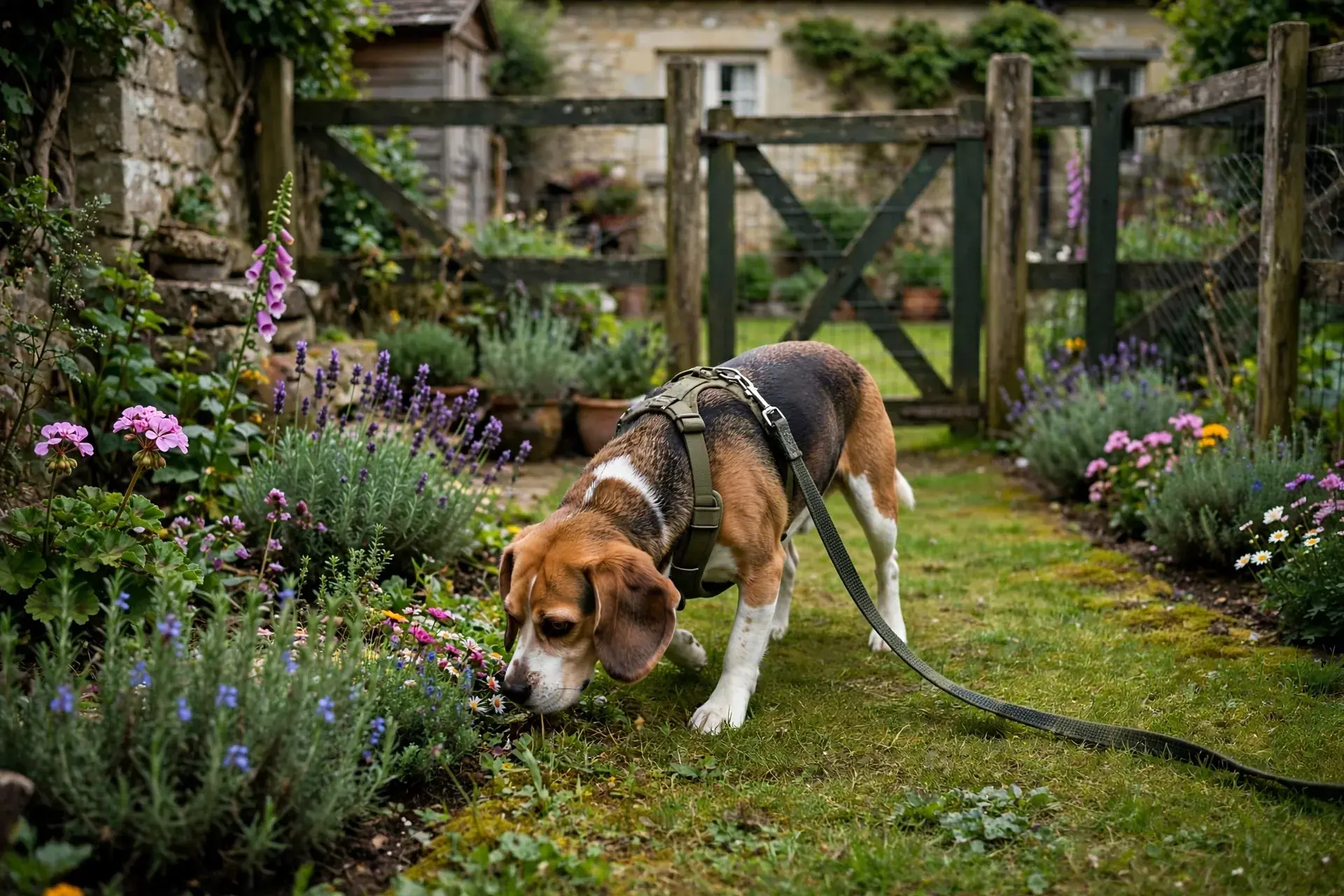
Give the nose a job and the rest of the day gets easier. Scatter a few treats in long grass to find, hide a favourite toy in the garden, play scent games in the stay on rainy afternoons, and let the first ten minutes of every walk be slow, sniffy and dog-led. A beagle whose scenting needs are met on purpose settles better, scavenges slightly less desperately, and bays somewhat less from sheer frustration than a beagle dragged at heel past every interesting smell in Britain.
Recall: be honest before you unclip
Recall is the subject beagle owners most need honesty about, starting with their own. A beagle that returns reliably in your garden or training class may still be unrecoverable on a grouse moor, a rabbit-rich common or a beach carrying fox scent along the tideline. The question is never whether the breed can learn recall — many beagles do, with long, careful training — but whether this dog, in this place, on this scent, today, will. If the honest answer is not certain, the lead stays on. That is not defeat; it is the decision that brings the dog home.
Use the tools that make lead-on freedom generous. A well-fitted harness with a long line, handled carefully so it never tangles around legs, trees or other walkers, lets a beagle range, sniff and trot on suitable open ground while you keep the final say. Practise long-line handling at home first, never attach a long line to a neck collar, and drop the line only in genuinely secure spaces. Our guide to what to do if the worst happens, lost dog on holiday in the UK, is worth reading before you travel — an unfamiliar area is the worst place to improvise that plan.
Proof recall where the stakes are low and celebrate it there: enclosed fields you can hire, secure dog paddocks near your stay, and genuinely escape-proof gardens. Book enclosed-field sessions as a holiday highlight rather than a compromise — for many beagles, forty-five off-lead minutes following scent in a safe field is the best hour of the trip. Search for secure fields before you book the stay, not after you arrive, because in popular areas the good slots go early.
Secure gardens: check them like a beagle would
Listings say enclosed garden the way menus say hearty portions — generously and without measurements. For a beagle, enclosed must mean a continuous fence or wall the dog cannot jump, dig under, squeeze through or unlatch, checked by you on arrival at beagle height and beagle determination. Walk the boundary before the first off-lead moment: look for gaps under gates, loose boards, compost corners that form a launch step, low sections beside raised beds, and any gate that opens directly onto a lane.
Our guide to self-catering stays with a secure garden gives a full checking routine that pairs well with this breed guide. Add beagle specifics to it: secure or move bins and food waste, because a scent hound will find the chicken carcass in a supposedly closed bin; check for gaps at ground level where a following nose becomes a following body; and supervise early garden sessions even in a garden you have passed, because a motivated beagle re-tests fences that a casual dog accepts.
If the garden fails your check, adapt without sulking: lead or long line in the garden, off-lead time moved to hired secure fields, and toilet trips treated as short walks. Tell the owner politely and factually what you found — good owners fix gaps when they are shown them — but do not let politeness or the listing's wording override what your own eyes saw at fence level. The dog will certainly do its own inspection; yours simply needs to happen first.
Food scavenging: assume it will be attempted
Beagles are famously food-driven, and a holiday multiplies opportunity: picnic scraps on beaches and commons, dropped chips in pub gardens, bins at the stay, other guests' shopping bags, and the mysterious, irresistible contents of hedgerows. Scavenging is not only a manners problem. Cooked bones, chocolate, xylitol-containing products, mouldy food and many picnic leftovers can make a dog seriously ill, so prevention matters far more than the leave-it cue you hope will land at distance on a windy beach.
Manage the environment first. Keep food at the stay in closed cupboards or the fridge, never in bags on the floor; clear plates promptly; use bins with lids the dog cannot open; and brief everyone in the party — especially children and generous grandparents — that the beagle gets fed from its own bowl, on its own schedule, and nothing else. On walks, scan ahead at known picnic spots, give litter and barbecue areas a wide berth, and consider a vet-discussed basket muzzle, properly introduced at home, if your dog is a determined grazer in high-risk places.
Portion control needs the same vigilance, because a beagle that scavenges successfully all week comes home heavier and with rehearsed habits. Measure holiday food, count training treats within the ration, and use part of the normal allowance for scent games and settling rewards. If your beagle does eat something unknown or worrying while away, contact a vet promptly for advice rather than waiting for symptoms, and keep any packaging — what was eaten, and how much, are the first questions you will be asked.
Baying, neighbours and the thin-walled problem
A beagle's voice is part of the breed: a carrying bay designed to tell followers where the trail has gone, plus the full range of whines, barks and mournful commentary in between. At home your neighbours may be used to it. In a terraced holiday let, a hotel corridor or a caravan with fabric-thin walls, the same voice at dawn can define everyone else's holiday too. Choosing the right kind of stay is therefore a noise decision as much as a space decision — detached or well-separated properties, ground-floor rooms away from lobbies, and rural settings all lower the stakes.
Reduce the triggers you can control. Beagles commonly voice from boredom, frustration, separation and exciting sounds outside — other dogs, delivery vans, seagulls, a cat on the fence. A dog that has walked, sniffed, eaten and settled with a chew bays less than an under-occupied dog listening at a door. Avoid leaving a beagle alone in an unfamiliar stay for long stretches, build alone-time gradually if the property allows dogs to be left at all, and use familiar blankets, background radio and curtains closed over an exciting street view to soften the environment.
If your beagle does find its voice, respond with management, not apology marathons. Move the dog away from the trigger, add an activity, and adjust the next day's plan — an extra secure-field session often buys a quieter evening. Be upfront with hosts when booking if your dog is vocal; properties that still welcome you are a better match than a perfect cottage whose owner expects silence. And check your cover for third-party complaints and damage questions in our guide to dog travel insurance in the UK before you need it.
Routes that suit a hound: woods, lanes and long sniffs
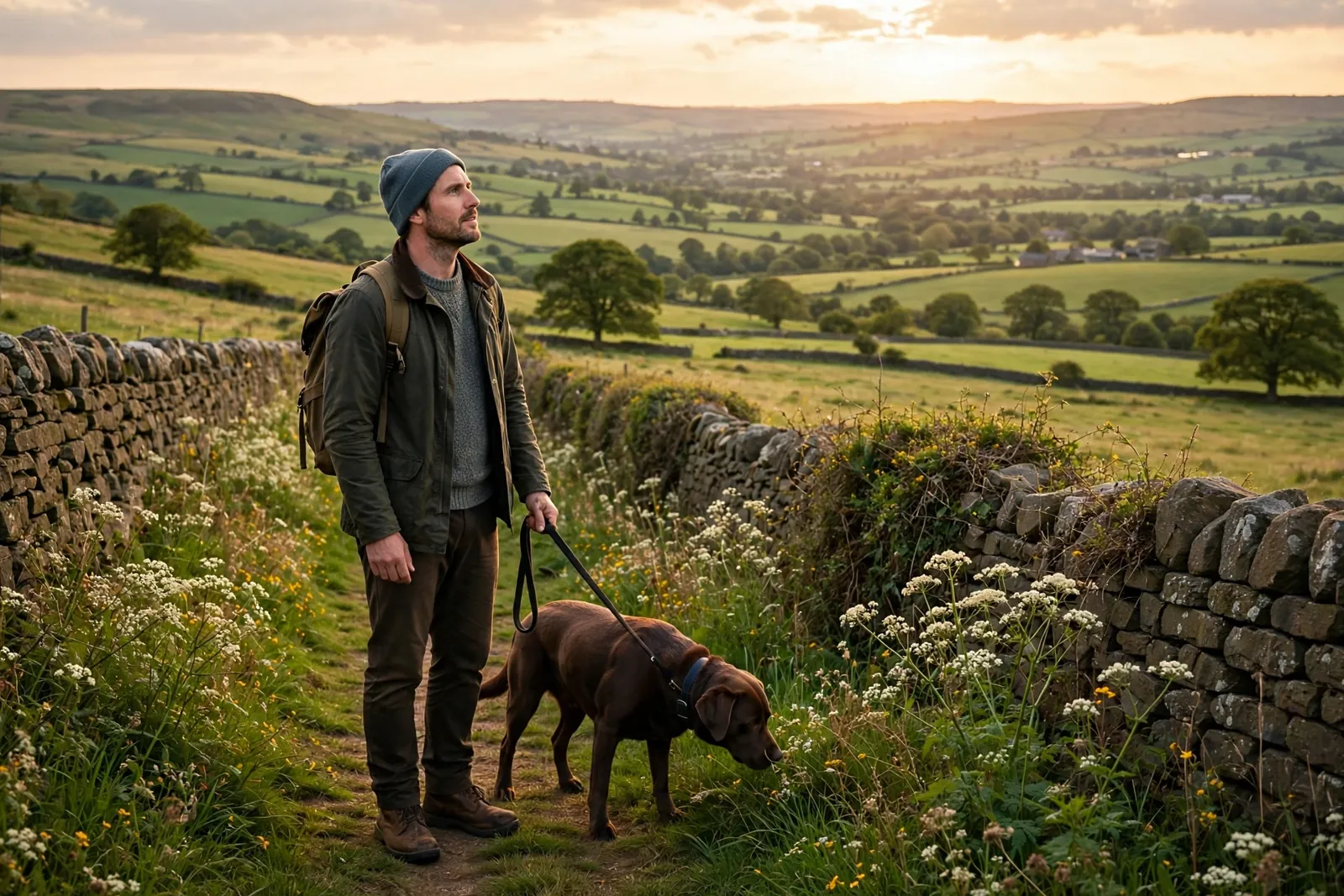
The best beagle routes offer rich, changing scent at a pace the dog can process: ancient woodland with leaf litter and animal paths, quiet lanes with hedgerows, heathland tracks, canal towpaths and farmland footpaths where livestock rules are respected and leads used around animals without exception. Coastal paths add gull, seaweed and crab-pot temptation in equal measure, and beaches in summer add picnic risk to every rock pool. Choose the route for its sniffing value and its safety together, and keep to paths where the dog's zigzagging will not damage crops, disturb ground-nesting birds or worry sheep.
Time on feet matters as much as distance. A fit adult beagle can enjoy substantial walks, but a holiday week of daily long hikes, on top of travel and novelty, produces a tired dog whose recall, manners and stomach all deteriorate. Alternate a longer route day with a secure-field and garden day, watch for the dog that stops enjoying the sniffing and starts merely enduring the walk, and remember puppies, older beagles and dogs with health conditions need a very different scale — ask your vet if you are unsure what suits your dog.
Carry the beagle kit without turning into a quartermaster: harness and ordinary lead plus a long line for suitable ground, water for a dog that works hard with its nose, high-value treats in a sealed container the dog cannot smell its way into in your bag — accept that it can, and keep the bag closed and off the ground — poo bags, a towel for mud-season returns, and an up-to-date ID tag with a mobile number you will actually answer on a hillside, plus microchip details kept current as the law expects.
Hotels, cottages and caravans through beagle eyes
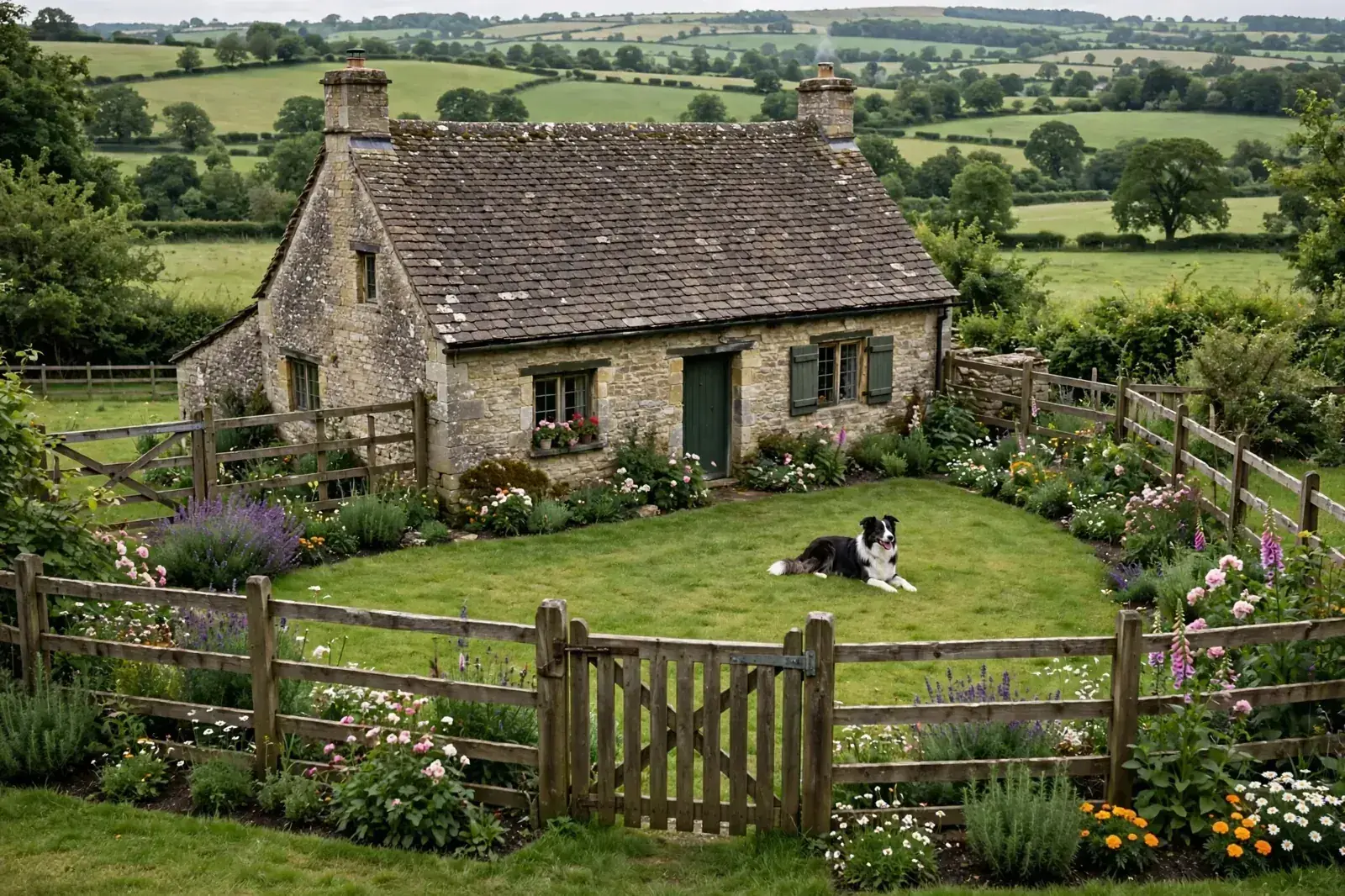
Cottages usually suit beagles best when the garden genuinely passes inspection and food can be stored behind real doors. Hotels suit a settled, quieter beagle whose owners will manage corridor encounters, lift smells and breakfast-room separation honestly — many hotels require dogs to stay out of dining areas, so plan who eats when. Caravans and lodges on holiday parks need extra thought: close neighbours for noise, decking gaps and under-van gaps for escapes, and park rules on leads and walking areas that may be strict.
Ask beagle questions before paying: Is the garden enclosed on all sides, and to what height? Are there ground-floor rooms away from reception? What is the policy on dogs being left alone, barking complaints, and dogs in communal areas? Can food waste be put somewhere the dog cannot reach on bin night? Hosts who answer specifically are telling you the property has hosted hounds before; hosts who answer with a breezy of-course-darling may be picturing a handbag dog asleep in a basket.
For dogs that find new people, dogs and doorways intensely exciting — or worrying — the calmer-stay principles in our guide to reactive dog holidays transfer surprisingly well to beagles, even though the underlying emotion is usually joy rather than fear. Distance from triggers, routines that repeat daily, and walks timed to quiet hours make a scent hound's week smoother in exactly the same way.
The first forty-eight hours with a beagle away
Arrive like you mean to stay. Boundary-check the garden, store food securely, set up bed, water and chew in the room the dog will actually rest in, and take a short, sniffy lead walk around the immediate area so the new smells become known smells. Keep visitors, explorations and pub trips modest on day one. A beagle that has mapped its home base settles, eats and sleeps better — and a dog that sleeps well on night one is dramatically less vocal on night two.
Day two is for the first secure off-lead session and one moderate route, not for testing recall on the moor because yesterday went well. Keep a short training thread running through the holiday — rewarding check-ins, name responses and calm lead work in low-distraction moments — so that the cues you rely on do not dissolve entirely by Thursday. Short, well-rewarded repetitions in easy places are worth more than frustrated drilling where the scent is overwhelming and everyone loses.
By the journey home, most beagles have perfected one new skill — opening a particular cupboard, working a gate, or locating the one weak fence panel — so do a final boundary and food-storage sweep before the last night, not just the first. Travel home on the usual car routine, with water stops and no food experiments at service stations. Then write down, while you remember, what the garden, the noise and the recall were really like at this stay. The next beagle holiday you plan will be better for that honest paragraph than for any star rating.
Practical questions
Before you go
Can I let my beagle off the lead on holiday in the UK?
Only where recall is genuinely reliable for that dog in that kind of place, or inside a truly secure space such as an enclosed field or a garden you have checked yourself. Scent can override training in unfamiliar, animal-rich environments, so a lead or a carefully handled long line on a harness is the default for most beagles in new places. When in doubt, keep the line on.
How can I stop my beagle scavenging food on holiday?
You manage the environment rather than relying on willpower — the dog's or yours. Store food behind closed doors, use lidded bins, brief everyone not to feed the dog, scan ahead at picnic spots, and keep distance from litter and barbecue areas. Practise a rewarded leave-it at home, consider a properly introduced basket muzzle if your vet agrees it suits your dog, and seek veterinary advice promptly if something worrying is eaten.
What makes a holiday garden truly secure for a beagle?
A continuous boundary the dog cannot jump, dig under, squeeze through or open, checked by you at ground level on arrival — including under gates, at fence bases, beside raised beds and compost corners, and at any low section. Enclosed in a listing is a claim, not a measurement. Supervise the first garden sessions even after checking, and use a lead or long line if anything fails your inspection.
Will my beagle's baying upset people at a holiday stay?
It can, especially in terraced lets, hotels and caravans where walls are thin and neighbours are close. Choose detached or ground-floor, well-separated stays, exercise and occupy the dog well, avoid long alone periods in a strange place, and be honest with hosts about noise when booking. A tired, settled beagle with a routine is usually far quieter than a bored one listening at the door.
Are enclosed dog fields worth booking for a beagle holiday?
For most beagles, yes — they provide the one off-lead freedom you do not have to gamble on. A secure field lets a beagle follow scent, run and investigate at its own pace while you relax about roads, livestock and recall. Book popular fields early, check fencing and gate arrangements on arrival as you would a garden, and bring water, because a busy nose is thirsty work.