This guide is independent and contains no paid placement. It offers general planning information, not behaviour or veterinary advice. If your dog has bitten, or you are worried about safety, work with a qualified behaviourist and your vet before travelling.
Book a standalone, quiet stay with a genuinely enclosed private garden and parking by the door. Travel midweek and out of school holidays, walk early or late, pre-plan wide routes with escape options, and keep each day short and familiar. Tell the host the truth in advance — most will actively help you stay out of everyone’s way.
Redefine what a good holiday means
If you live with a reactive dog, you already know the feeling other owners rarely see: scanning every horizon, rehearsing road crossings, and measuring a walk not in miles but in near misses. A holiday can either magnify that vigilance or deliberately dial it down. The secret is to stop judging the trip by how much you do. For a reactive dog, a successful break is usually repetitive, spacious and slightly boring — and there is nothing second-rate about that. A cottage lane walked happily three mornings in a row is a better holiday memory than a famous beauty spot endured at full alert.
Start by writing a short, honest profile of your dog before you look at any listings. Note the main triggers — unfamiliar dogs, people approaching head-on, children, cyclists, traffic, livestock or sudden noise — and the distance at which your dog can notice a trigger and still respond to you. Note also what genuinely settles your dog: sniffing on a long line, a familiar chew, a quiet field, a car ride, or simply being left in peace. That profile becomes your filter for every decision that follows, from the type of property to the hour you set out for a walk. It also helps you travel with companions who may not fully understand reactivity; a written profile is easier to share than a stressful explanation in the moment.
Set expectations for the humans, too. Someone in the group may have pictured pub lunches, busy markets and a packed sightseeing list. Agree in advance that the dog’s comfort sets the ceiling for the day, that splitting up is allowed — one person can visit the attraction while another stays for a quiet walk — and that turning back early is a decision, not a failure. Holidays with reactive dogs go wrong most often not because the dog “misbehaves”, but because the humans keep pushing a plan the dog clearly cannot enjoy. Build slack into every day and the whole group relaxes.
Choose quiet accommodation first
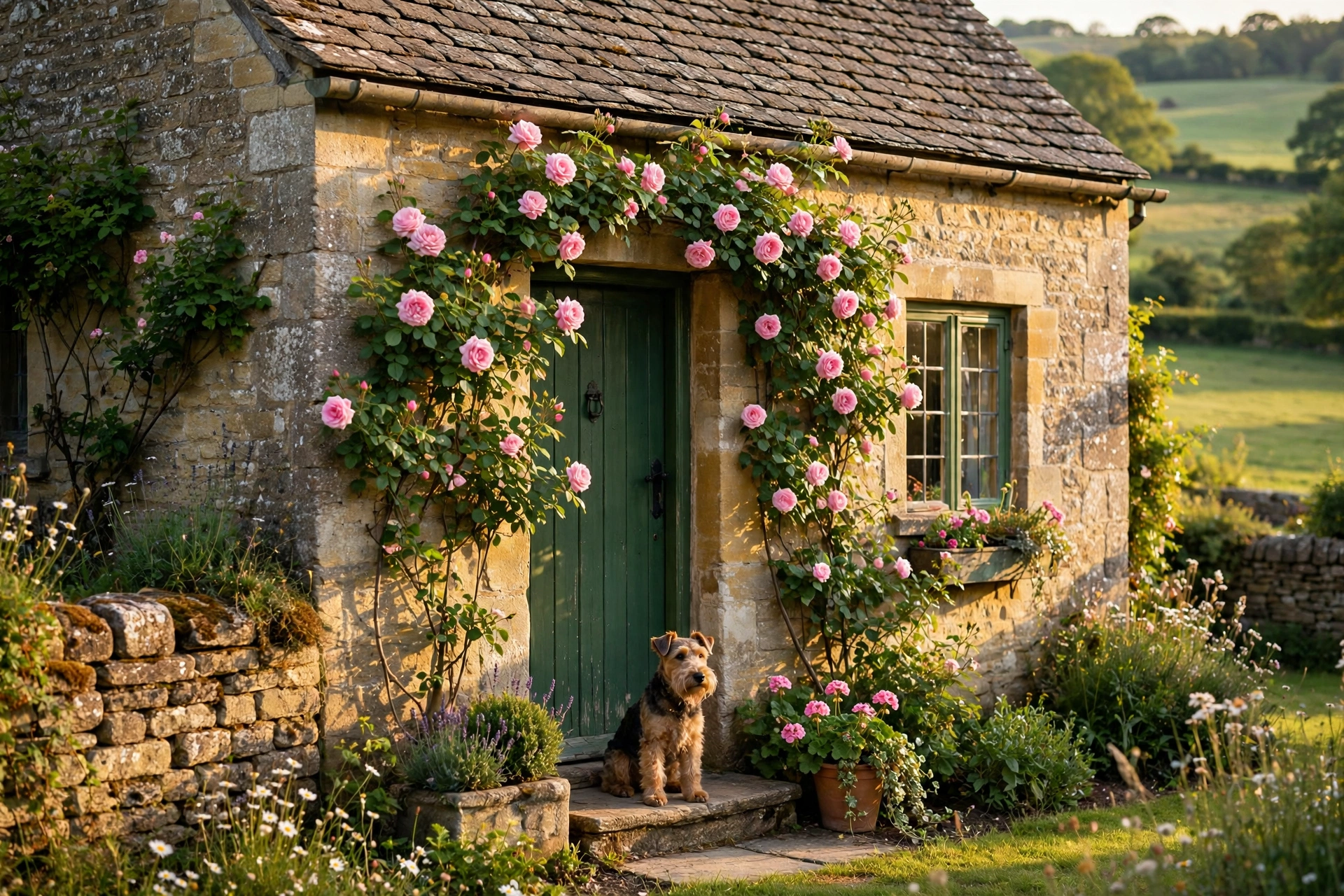
Accommodation matters more than destination. A reactive dog will cope far better in an ordinary village with a private, quiet base than in a spectacular location where every doorway opens onto a crowd. As a rule, standalone beats attached, edge beats centre, and rural beats resort. Detached cottages, converted barns, shepherd’s huts on private land and lodges at the far end of a site all reduce the two things reactive dogs struggle with most: unpredictable close encounters and noise through walls.
Interrogate the listing like an investigator. Is the garden truly private, or shared with the neighbouring unit? Is parking beside the door, or across a communal car park where you will unload next to strangers and their dogs? Are there shared corridors, stairwells or entrances — a classic pinch point in apartment conversions and hotel-style stays? How close is the nearest footpath to your windows, and does a public right of way cross the garden or the access lane? None of these questions are unreasonable, and a good host will answer them precisely. Vague reassurance is a warning sign; measurements and a site plan are what you need.
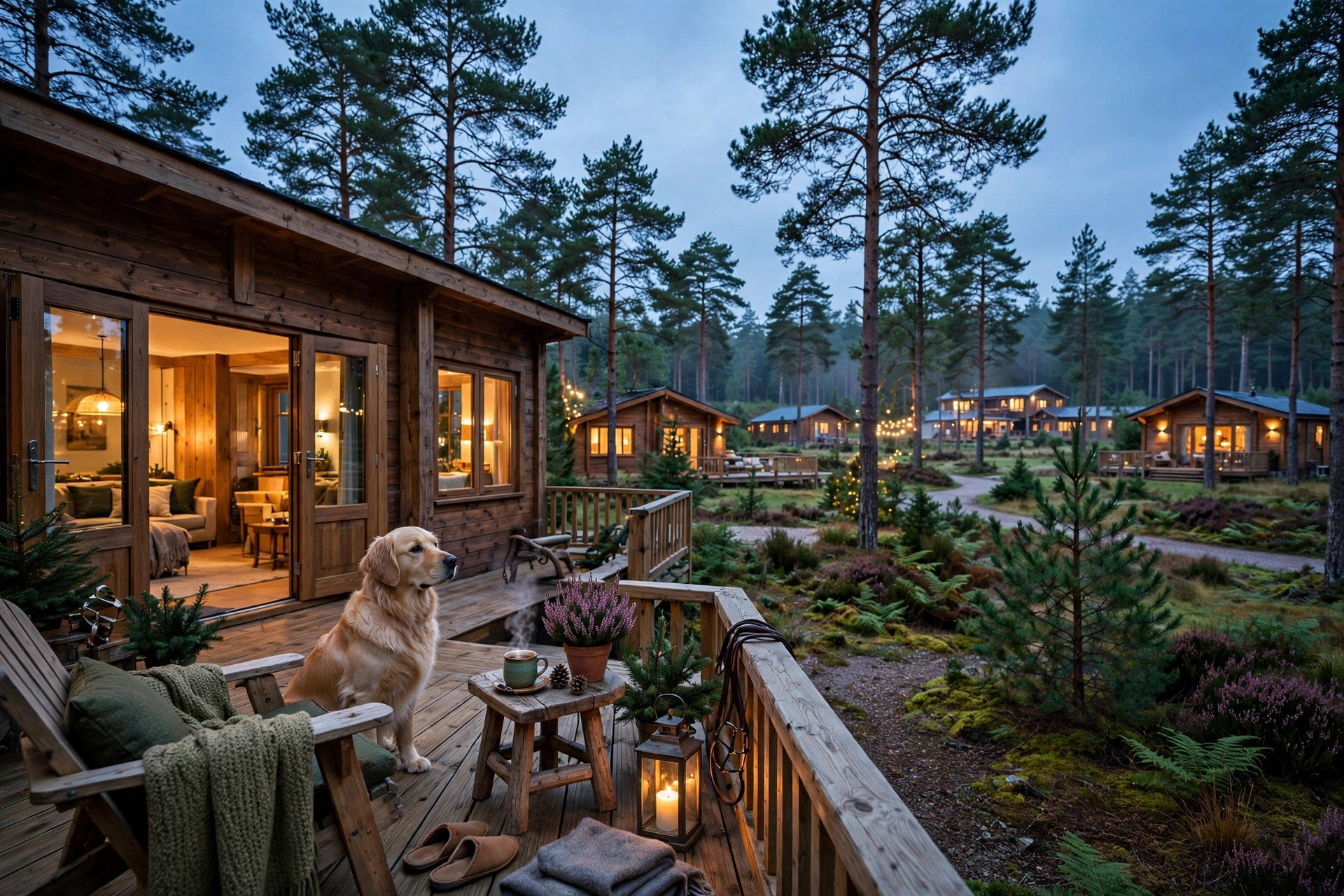
Busy group sites need extra care. Our guide to dog-friendly holiday parks in the UK explains how to read a site map, choose an edge unit away from play areas and bin stores, and ask about barking policies before you pay. If you do choose a park or a campsite, ask for the quietest pitch, arrive when reception is calm, and accept that communal facilities may simply not be usable at peak times. Many owners of reactive dogs conclude that self-catering suits them best, precisely because it removes shared entrances, set meal times and corridors from the equation entirely.
Finally, check the practical rules in writing before booking: maximum number of dogs, whether dogs may be left unattended (plan as if the answer is no), any breed or size conditions, and what happens if a noise complaint is made. Rules vary widely between properties and can change, so always check the latest information on the provider’s official listing or website before you travel, rather than relying on a review written two summers ago.
Why an enclosed garden changes everything
If there is one feature worth paying extra for, it is a genuinely enclosed private garden. It gives your dog a toilet break without a lead, a decompression space after travel, and a safe outdoor option on days when a full walk feels like too much. It also gives you, the owner, a rest from constant scanning — and owner rest is a legitimate holiday goal. A dog that can potter, sniff and settle outside the door often needs fewer “proper” walks than you expect, which takes pressure off the whole itinerary.
“Enclosed”, however, is one of the most stretched words in holiday advertising. Ask for the fence or wall height — many owners look for around 1.2 to 1.5 metres for a medium dog, more for a determined jumper — the material, and whether there are gaps under gates or between fence panels that a small or determined dog could push through. Hedges alone are rarely secure. Ask whether the gate latches properly and whether any side of the garden is shared with a neighbouring dog run, because fence-line barking at close quarters can undo an otherwise perfect property. Our guide to self-catering stays with secure gardens works through these boundary checks in detail, including the questions to ask before a deposit leaves your account.
On arrival, walk the boundary yourself before letting your dog explore off the lead, checking gates, gaps and anything hazardous left at dog height. For the first outing, stay out with your dog rather than watching from the kitchen window: a new garden is exciting, and your calm presence helps it become familiar quickly. If the enclosure turns out to be weaker than described, contact the host straight away and keep using a long line in the garden — disappointing, but far better than a lost dog in unfamiliar countryside.
Travel and walk off-peak
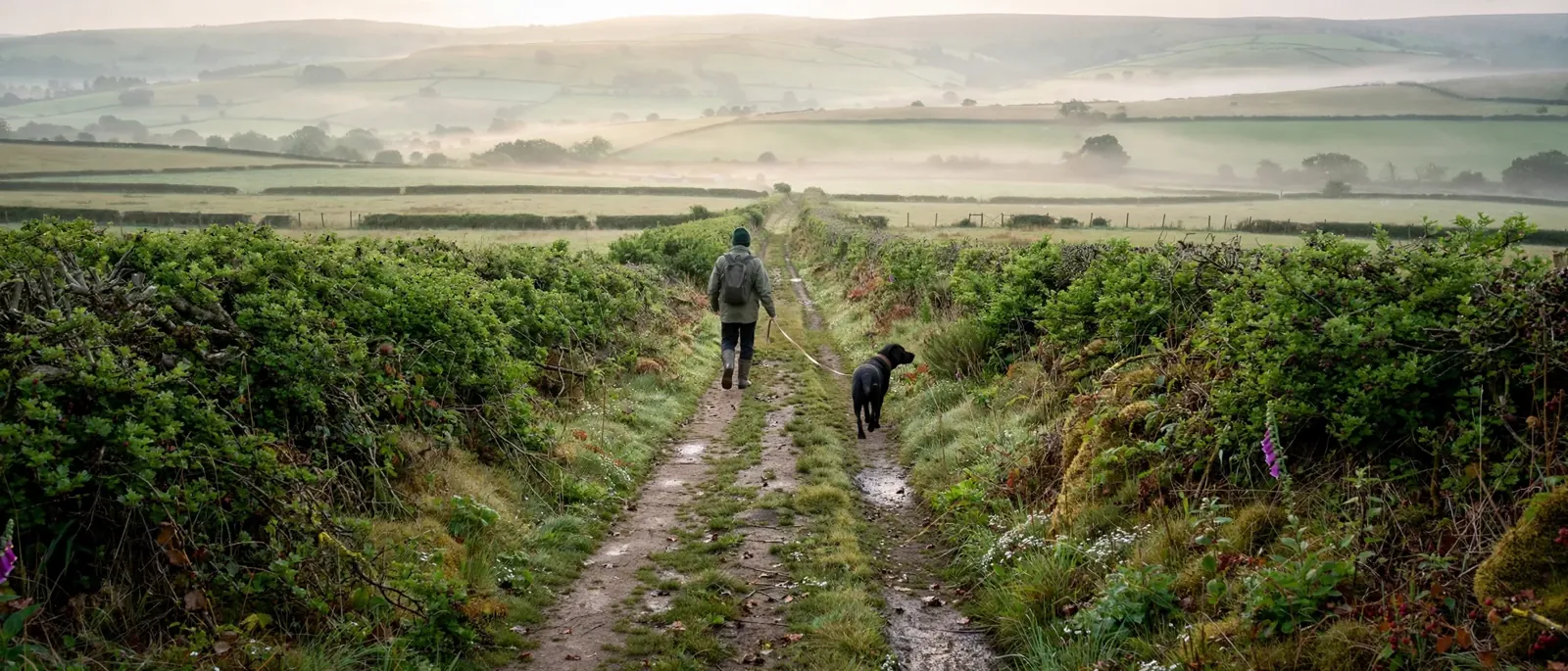
Timing is the cheapest management tool you own. The same beach, woodland or village that is overwhelming at midday on a Saturday can be peaceful at seven in the morning on a Tuesday. Build your days around that difference. Walk early, before breakfast, when paths are empty and the light is kind. Take a second, shorter outing in the early evening if your dog needs it, and treat the middle of the day as indoor time: rest, enrichment, training games and sleep. Reactive dogs often arrive home from a trigger-heavy walk more wired, not less; a quiet day structure protects the next morning’s walk as well.
Choose your dates with the same logic. Midweek stays outside school holidays are quieter almost everywhere in Britain, and they are usually cheaper, which can fund the better, more private property your dog actually needs. Shoulder seasons — spring and autumn — suit many reactive dogs well: cooler weather, emptier paths and, on many beaches, the lifting of seasonal dog restrictions. Always check local beach rules before you travel, because restrictions and lead requirements vary by council and by date; our guide to dog-friendly beaches and their rules in the UK explains how to check them properly. Avoid, where you can, known pinch points in the calendar: bank holiday weekends, local festivals, firework displays around early November, and the first sunny weekend after a wet spell, when every path fills at once.
Apply off-peak thinking to the journey itself. Travel outside rush hour, plan one calm stop at a quiet location rather than several busy service stations, and never leave a dog alone in a warm car while you improvise a break. If your dog finds car travel stressful, speak to your vet well before the trip about travel routines and options — sudden experiments on departure day help nobody. Arriving in daylight, unhurried, with time to walk the garden boundary and settle the dog before dark, sets the tone for the entire stay.
Plan crowd-free routes, not famous ones
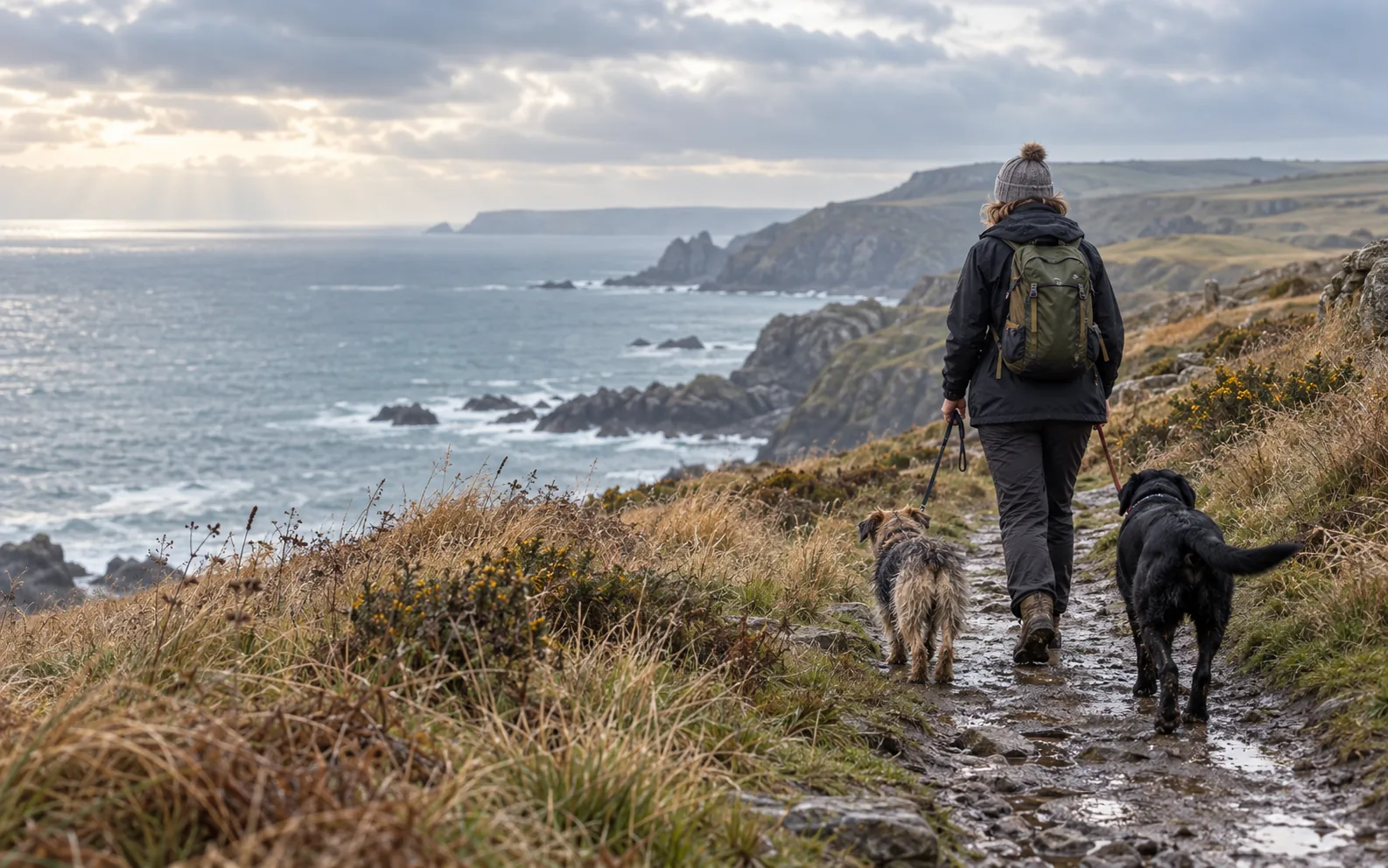
Reactive-dog route planning has one golden rule: width beats beauty. You want paths where you can see other walkers early, step well aside, and let them pass with distance to spare. Wide forestry tracks, quiet lanes with grass verges, canal towpaths with passing places (used at quiet times), disused railway trails on weekdays, and large open commons where sightlines are long all tend to work well. Narrow walled footpaths, blind bends, stiles that force close contact, and single-track bridges are where stress concentrates — scout them on a map before you commit a nervous dog to a route with no exit.
Do your reconnaissance from the sofa. Use mapping and satellite views to check path width, gates, road crossings and where a route funnels walkers together. Search for recent local information, but treat blogs and reviews as a starting point rather than a guarantee, and check official sources — council, National Park, Forestry England, the National Trust or the landowner — for closures, livestock notices and lead rules before you travel. Grazing animals change everything: a field that was empty in a photograph may hold cattle or sheep on the day, and the correct decision is always to give livestock a wide berth or turn back. Keep your dog on a lead around livestock, as the official countryside guidance advises.
Plan every walk with an escape option. Know where you can step off the path, which side turning shortens the route, and where the car is if you need to end the walk early. Walk a new route once at the quietest time before using it again later in the week; familiarity is calming for dogs and owners alike. And keep a “rescue walk” in reserve — one short, known, boring loop near your accommodation for days when energy, weather or confidence runs low. Short breaks benefit most from this approach: our plan for weekend breaks with dogs in the UK shows how a loose 48-hour structure with a weather backup keeps a trip feeling spacious rather than rushed, which is exactly the rhythm a reactive dog needs.
Management tools that earn their place
Good management is not a failure of training; on holiday, it is the training plan. Pack the equipment that gives you distance and control without confrontation. A well-fitted harness with a front and back attachment, a standard lead plus a longer line for open spaces where leads are permitted, and a lead sleeve or bandana signalling that your dog needs space can all help — while remembering that signals only work if other people notice and respect them, so never treat them as protection on their own. Carry high-value treats your dog will eat even when mildly stressed; a dog too aroused to take food is telling you the situation is too hard, and the right response is distance, not more cues.
If your dog is muzzle trained, a properly fitted basket muzzle that allows panting and drinking can add a layer of safety and, just as usefully, encourages strangers to give you room. Introduce or refresh muzzle training gradually at home, weeks before the trip, so the muzzle predicts good things rather than signalling a stressful outing. There is no general law requiring pet dogs to be muzzled in public in the UK, apart from specific banned types subject to exemption conditions, but individual venues and transport operators may set their own rules — always check the latest official guidance and the venue’s own policy before you travel.
Bring the familiar, not the new. Your dog’s usual bed or blanket, food, bowls, medication, a chew routine for the evenings, and a worn item that smells of home all lower the novelty load of a strange house. Set up the sleeping area exactly as at home on the first evening and keep feeding and last-walk times consistent. Save the number of the nearest veterinary practice and an out-of-hours provider in your phone before you need them, and carry your vet’s details and insurance information if you have it. None of this is glamorous, and all of it is what turns a theoretically dog-friendly booking into a genuinely restful week.
Arrival, eating out and rest days
Make arrival deliberately dull. Let your dog toilet, offer water, walk the garden boundary together, then settle them with their bed and a familiar chew while you unload the car in stages. Resist the tour of the village, the celebratory pub visit and the long exploratory walk until the next day. Dogs read routine as safety, and a quiet first evening buys you a calmer first morning. Photograph any existing damage in the property, move cleaning products and welcome treats out of reach, and check doors and low windows before the dog is loose indoors.
Eating out requires honesty about your dog’s limits. Many reactive dogs are happier staying at the accommodation with a settled routine than enduring a busy beer garden at close quarters — and since most properties do not allow dogs to be left unattended, the kind solution is often a rota: takeaways eaten in the garden, a picnic in a quiet spot you have already scouted, or the group splitting so nobody misses out entirely. If you do try a pub or café, choose off-peak hours, ask for an edge table with space behind you, keep the visit short, and leave before your dog’s coping runs out rather than after. A successful twenty minutes beats a miserable two hours, every time.
Finally, schedule rest days — and mean it. A day with only garden time, sniffing games, gentle training and sleep is not a wasted day of the holiday; for many reactive dogs it is the day that makes the rest of the week possible. Watch for the cumulative signs of stress: poorer sleep, reduced appetite, scanning that does not switch off, or reactions at distances that were fine earlier in the week. Respond by doing less, not more. The owners who enjoy these holidays most are the ones who let go of the itinerary and notice, often with some surprise, how much they enjoy the slower version themselves.
Be honest with hosts — it helps
Many owners worry that mentioning reactivity will lose them the booking. In practice, a short, factual message usually does the opposite. Explain what your dog reacts to, that your dog stays on a lead outside the garden, that you will not leave the dog unattended, and that your whole plan is built around keeping distance from other guests. Hosts hear competence in that message. In return, they often offer exactly the help you need: their quietest unit, a later or earlier arrival slot to avoid other guests, local knowledge of the emptiest walks, and warnings about the neighbour’s dog, the delivery day or the wedding booked in the barn next door.
Keep the same honesty during the stay. If a shared area becomes difficult, or another guest’s off-lead dog repeatedly rushes your fence, tell the host early and factually rather than enduring it in silence until departure day. If something is damaged, report it promptly. And when you leave, a brief thank-you that names what helped — the solid fence, the early arrival, the quiet lane tip — encourages that host to welcome the next reactive dog with confidence. Quietly, booking by booking, that is how holidays with reactive dogs in the UK get easier for everyone.
A reactive dog does not need a perfect holiday, and neither do you. Distance, routine, an enclosed garden, off-peak timing and a plan with exits will carry most trips. Choose the stay that gives you those things, let the famous sights wait for another year, and enjoy the version of Britain that opens up at seven in the morning: empty lanes, long light, and a dog finally walking with a loose lead beside you.
Practical questions
Before you go
Can a reactive dog enjoy a holiday at all?
Yes, if the holiday is designed around distance and predictability rather than novelty. Choose a quiet base with an enclosed garden, keep routines familiar, walk at off-peak times and accept a slower pace. Many reactive dogs relax noticeably when triggers are rare and every day looks much like the last.
What type of accommodation is best for a reactive dog?
Standalone cottages, converted barns and detached lodges on the edge of a site usually work best. Look for a private enclosed garden, parking beside the door, no shared corridor or communal entrance, and a host who will confirm fence height and distance from neighbours in writing before you book.
Should I tell the host that my dog is reactive?
Yes, briefly and honestly. Explain what your dog reacts to, how you manage it on a lead, and that you will not leave the dog unattended. Most hosts prefer an honest guest with a management plan to a surprise, and many will suggest their quietest unit or best arrival time.
What if my dog reacts to another guest or dog on holiday?
Increase distance calmly, use a visual barrier such as a parked car or hedge if one is nearby, and do not apologise at length while standing still. Note the time and place so you can avoid that pinch point for the rest of the stay, and tell the host if a shared area has become difficult to use safely.
Are muzzles required for reactive dogs in public in the UK?
There is no general law requiring pet dogs to wear a muzzle in public in the UK, except for specific banned types subject to exemption conditions. Some venues and transport operators set their own rules. Always check the latest official guidance and the venue policy before you travel.