This guide is independent and contains no paid placement. Property rules, fence details and local restrictions change, so always confirm the latest information with the owner, agency or official source before you travel.
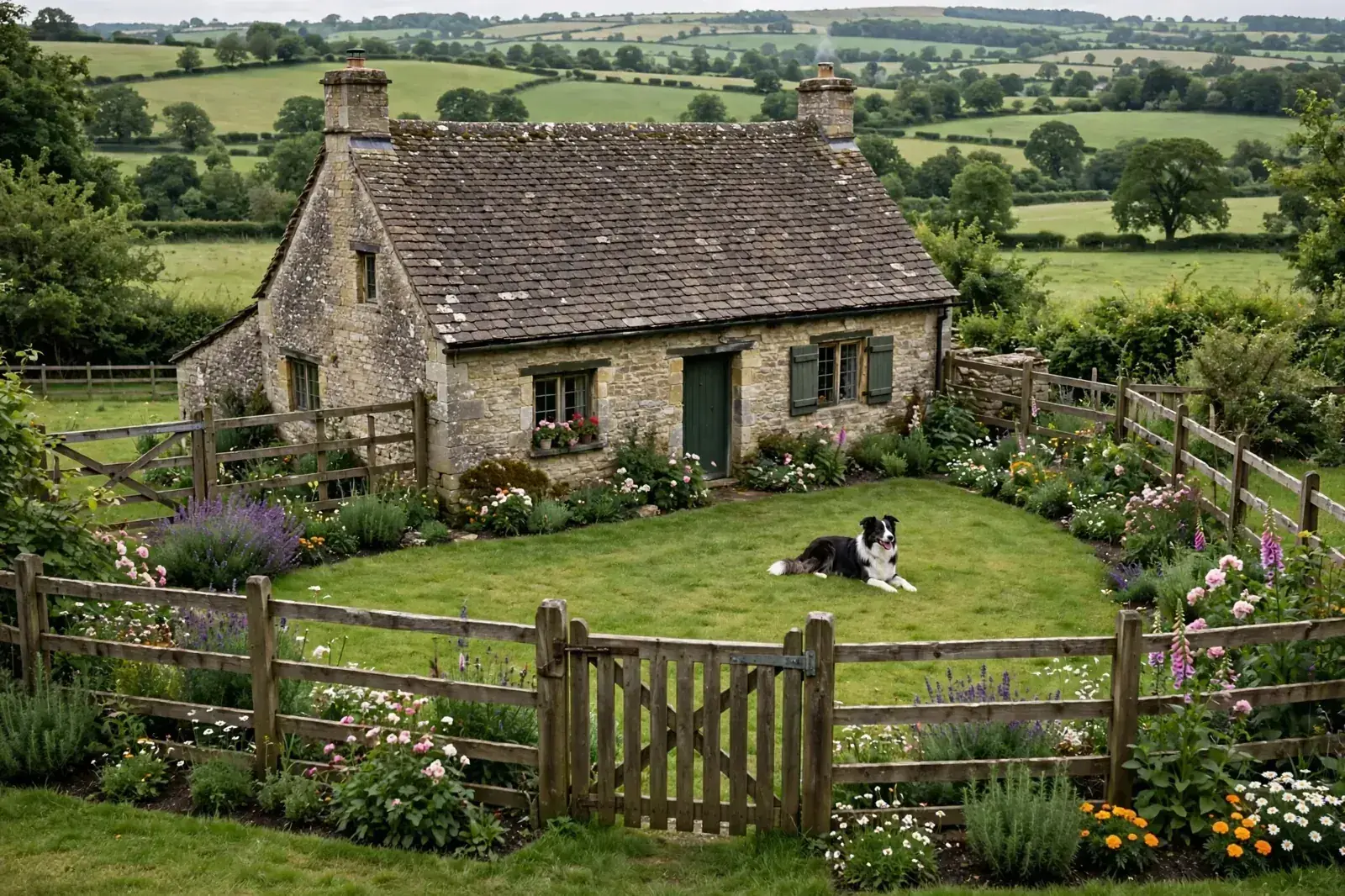
A dog friendly cottage secure garden is a private, sole-use garden enclosed on every side by a fence or wall your dog cannot jump, climb, dig under or slip through, with a gate that closes and latches. Never trust the label alone — confirm height, material, gate and gaps in writing before you book.
What secure really means
The phrase secure garden sounds precise, but in UK cottage listings it is used loosely. For one owner it means a fully fenced garden with a tall boundary and a bolted gate. For another it means a pleasant private garden with a low stone wall, an open driveway and a hedge a small dog could push through in seconds. Both may be advertised with the same words, which is why the label should start your questions rather than end them. The same checks apply on Airbnb — our dog friendly Airbnb guide covers garden security, dog numbers and the true pet fee.
A useful working definition has five parts. First, the garden is private and for your sole use during the stay, not shared with other cottages, a farmyard or a public footpath. Second, every side is enclosed, including the side most listings do not photograph: behind sheds, along a stream, or where the garden meets a lane. Third, the boundary suits your particular dog, not an average dog — a jumper, a digger, a squeezer and a calm older dog all test a fence differently. Fourth, the gate closes fully and latches at dog height, ideally with no gap underneath. Fifth, there is no direct unbarriered access to a road, livestock, a pond or a cliff edge. If any one of those five fails, treat the garden as a lead-on space until you have seen it yourself.
Self-catering raises the stakes compared with a hotel or a park. You are in sole charge of the door, the gate and the routine for the whole stay, often in a rural spot where the nearest neighbour keeps sheep and the lane has no pavement. That freedom is exactly why many dog owners prefer cottages — early-morning garden access without a lead-and-lift routine is a genuine luxury — but it only works when the boundary is honest. If you are comparing cottages with other stay types, our guide to dog-friendly holiday parks in the UK explains how park rules and designated dog units differ from a private cottage let.
Fence height and materials
Height is the number most owners quote, so start there — but interpret it against your dog. As a broad working guide, a boundary of around 1.2 metres will contain many small, calm or older dogs that do not jump. Around 1.5 metres is a more reassuring minimum for medium dogs in reasonable fitness. For large, athletic or known jumping dogs, look for 1.8 metres and ask specifically whether the dog has anywhere to launch from: a bench, log store, raised bed or compost bin beside the fence effectively lowers it.
Material matters as much as height. Close-boarded wooden fencing and solid walls give the fewest footholds and block sightlines that can wind up reactive dogs. Post-and-rail fencing with stock wire is common in rural cottages and can be secure for larger dogs, but the mesh size decides whether a small dog can push through, so ask for the gap size rather than assuming. Chain-link and weld mesh are strong but climbable for some agile dogs if the top is unfinished. Hedges, dry-stone walls with loose sections and picket fences look charming in photographs and are the boundaries most often involved in escapes, because each can hide a gap at ground level where a dog’s nose finds it first.
Visibility cuts both ways. A solid fence calms a dog that reacts to passers-by, other dogs or livestock, while a see-through boundary in a quiet setting may be fine for a settled dog that enjoys watching the world. Match the boundary to temperament as well as size, and be wary of a listing that gives a single height without saying what the fence is made of. Heights can also vary around one garden: the figure that matters is the lowest point, including where the ground slopes away or where a gate sits lower than the fence line. Always confirm the current height and material with the owner or agency for the specific cottage you are booking, and check the owner’s latest listing information before you travel, because fences are repaired and replaced.
Gates, gaps and escape routes
More cottage-garden escapes happen at gates and gaps than over the top of fences. Walk the boundary in your mind before you book, then walk it in person when you arrive. The classic weak points are a gap under the gate wide enough for a small dog, a latch that lifts with a nose or a paw, a gate that springs open because it does not sit square in its frame, and a second pedestrian gate — to a lane, a bins store or a neighbouring garden — that the main description never mentions.
Digging deserves its own check. Terriers and determined young dogs test the base of fences, especially where soil is soft, where gravel boards are missing, or where a previous dog has already started a hollow. A secure set-up for a digger has boards or mesh at ground level and hard standing or paving along the most tempting stretch. Squeezers test corners, the junction between fence and house wall, and the space behind oil tanks, sheds and hot tubs. If your dog falls into either category, say so plainly when you enquire. Owners would rather hear it in advance and tell you honestly whether the garden suits your dog than deal with a lost dog in unfamiliar countryside.
Think beyond the garden gate too. Does the gate open onto a quiet cul-de-sac, a farm track, or a B-road with no verge? Is there a cattle grid, which dogs cannot cross safely and which changes how you come and go? Rural hazards are ordinary rather than dramatic: livestock in the next field, game birds in season, and neighbours’ cats that have used that garden as their own territory for years. None of this should put you off a cottage break. It simply means the first garden outing should be on a lead or long line until you have confirmed, with your own eyes, that the boundary holds.
Hazards inside the garden
A garden can be perfectly enclosed and still need a safety sweep. Ponds, even shallow ones, are a risk for puppies, elderly dogs and dogs that launch themselves at water without checking depth, so ask whether a pond is fenced separately. Steep drops, retaining walls, decking with wide gaps, and unfenced steps down to a lower lawn all deserve a question in advance and a look on arrival. Hot tubs should have a lockable hard cover, and chemicals should be stored out of reach, ideally in a locked store rather than under the tub surround.
Plants and garden chemicals are the quieter risk. Common UK garden plants including lilies, foxgloves, laburnum and some bulbs are toxic to dogs if eaten, and slug pellets, fertilisers and weedkillers may be present in borders or sheds. You do not need to memorise a toxicology list before a holiday; the practical steps are simpler. Ask whether the garden is treated with chemicals and when, keep a young or scavenging dog on a lead in the garden until you have seen what is in the borders, and stop grazing on plants, compost and fallen fruit. Compost heaps and bonfire piles can also hide sharp or hot material, and both attract wildlife that may unsettle a dog at night.
Finally, consider comfort as a safety issue. A south-facing paved garden with no shade is hard on dogs in a heatwave, while a completely exposed coastal garden may be too windy for a nervous dog to toilet comfortably in winter. Look for at least one sheltered, shady corner, access to fresh water outdoors, and a surface your dog will actually use in rain — many dogs refuse a flooded lawn but will use a gravel or paved area happily. These details rarely appear in listings, which is why one direct question before booking is worth more than ten photographs.
Self-catering details that matter
Because you are cooking, cleaning and living in the space, the inside of the cottage affects the garden routine more than people expect. Hard floors or washable rugs near the garden door make wet evenings manageable; pale carpets and a white sofa in a dog-accepted cottage are a stress you do not need. An enclosed porch, utility room or boot room is close to essential in Britain: it is where wet coats, towels and muddy paws get sorted before they reach the living space, and it gives you a buffer so the dog is never pushing straight out of an open front door onto a lane.
Check the sleeping arrangements honestly. Some owners allow dogs throughout, some restrict them to downstairs, and some prohibit dogs in bedrooms or on furniture — all reasonable positions, as long as you know before you arrive and the rules suit how your dog actually sleeps. A dog used to sleeping beside a bed that is suddenly shut downstairs in a strange house may bark all night, which helps nobody. Similarly, confirm the maximum number of dogs, any size or breed conditions, the pet charge per dog or per stay, and whether there is a refundable damage deposit. Get the all-in figure in writing, as you would for any other stay.
Practical supplies separate a genuinely dog-ready cottage from one that merely tolerates dogs. Useful signs are an outside tap or hose for muddy paws, a spare lead and bowls that do not matter, dog towels provided, a stairgate available on request, and clear information about the nearest vet, including out-of-hours cover. You should still bring your own familiar items — bed, blanket, food, medication and a long line — because familiar smells settle a dog faster than any welcome hamper. For shorter trips where a full cottage week is more than you need, our plan for weekend breaks with dogs in the UK shows how to fit the same checks into a 48-hour stay.
Questions to ask before booking
Send these questions by email or through the booking platform so the answers form part of your record. Specific answers are a good sign; vague reassurance is not.
- Is the garden private and for sole use, and is it enclosed on every side? Ask what encloses each side, not just whether it is enclosed.
- How high is the fence or wall at its lowest point, and what is it made of? Include the gate height in the same question.
- Is there a gap under any gate, and does every gate latch securely? Ask about second gates to lanes, fields or shared areas.
- Does the garden give direct access to a road, livestock, water or a public footpath? Each one changes how you use the space.
- Are there ponds, steep drops, hot tubs or chemical stores in the garden? Ask how each is fenced, covered or locked.
- How many dogs are allowed, what is the total pet charge, and are dogs restricted to certain rooms? Confirm deposit and cleaning terms at the same time.
- Where is the nearest vet and what is the out-of-hours arrangement? Save the number before you travel, not after you need it.
Judge the reply by its detail. “Fully enclosed, 1.8-metre close-boarded fence, lowest point 1.6 metres at the top gate, bolted gate with no gap, no pond, sheep in the field beyond the far fence” is information you can plan a holiday around. “Lovely secure garden, dogs love it here” may be entirely true for the dogs who have stayed before — and still wrong for yours. If an owner answers honestly that the garden suits calm dogs but not jumpers, thank them and keep looking. That honesty has just saved your deposit and your weekend.
The arrival boundary walk
Arrive in daylight if you possibly can, and keep your dog on a lead or in the car while you do the first circuit. Walk the entire boundary slowly, pushing gently at gates, checking the base of fences, and looking behind sheds, stores and planting. Check the points listings never show: the corner behind the hot tub, the junction where the fence meets the house, and any place where the ground drops away outside the fence, making the effective height less than it looks from inside.
Then bring your dog into the garden on a lead or long line for the first outing, even if everything looks solid. Let them sniff the perimeter, notice livestock, cats and neighbouring dogs, and learn where the gate is, before any off-lead time. Set up the indoor routine in the same first hour: water bowl in its place, bed where it will stay all week, towels and a paw-washing station by the garden door, and any forbidden rooms closed off from the start rather than negotiated later. Move cleaning products, firelighters and welcome-pack food out of reach, and photograph any existing damage or fence defects and send them to the owner the same day, politely and in writing.
Keep the first evening deliberately dull. A short lead walk, a meal at the usual time, and an early settle will teach your dog that this house follows the same rules as home. If the garden check has revealed a weakness — a low section, a sticky latch, a gap you missed in the photographs — use the long line in the garden for the whole stay and tell the owner. A long line used calmly is not a failed holiday; a lost dog on the first night is.
Choosing the right area
The best garden in Britain cannot rescue a badly chosen location. Balance garden security against the walks you will actually do twice or three times a day. A cottage with a perfect fence but only a fast road walk from the door will frustrate an energetic dog, while a slightly smaller garden beside footpaths, a river walk or open common land may suit you both far better. Check the first walk from the door on a map, including whether the route crosses livestock fields, and plan a wet-weather option that does not depend on a car.
Coastal cottages need one extra check: seasonal dog restrictions on the nearest beach. Many popular UK beaches restrict dogs on all or part of the beach during the summer season, with dates and rules set locally, so a cottage five minutes from the sand may still mean a drive to the nearest dog-welcoming stretch in July. Our guide to dog-friendly beaches in the UK and their rules explains how to read local signs and seasonal bans before you book, and you should always check the local council or official beach information for the latest rules for your exact dates.
Price the whole stay, not the headline week. Add pet charges, a possible damage deposit, fuel for daily drives to walks if the location needs them, and the cost of eating in more often if local pubs do not welcome dogs inside. Shoulder seasons — typically spring and autumn outside school holidays — often give the best combination of quieter lanes, fewer beach restrictions and lower cottage prices, though the trade-off is shorter days and more mud. Whatever the season, the right cottage is the one whose garden, location and house rules all fit the same dog: yours.
Practical questions
Before you go
What fence height counts as secure for most dogs?
As a working guide, 1.2 metres suits many small and calm dogs, while 1.5 to 1.8 metres is safer for medium, large or athletic dogs that jump. Height alone is not enough: the fence must have no climbable rails, no gaps at the base and a gate that latches. Always confirm the exact height and material with the owner or agency for the specific cottage, and check the latest listing details before you book.
Does “secure garden” always mean fully enclosed?
No. Listings use “secure”, “enclosed”, “private” and “dog-friendly garden” inconsistently. Some gardens are fully fenced with a locking gate, while others are private but open on one side, or enclosed only by a low wall or hedge with gaps. Ask for a plain answer in writing: is every side fenced, how high is the lowest point, and can a dog get out without passing a closed gate?
Can I leave my dog alone in the cottage or garden?
Usually you should plan not to. Many owners prohibit dogs being left unattended inside the property, and leaving a dog alone in the garden is rarely appropriate because of escape risk, weather, wildlife and barking. Check the house rules for the exact property before you book and follow the owner’s latest instructions during your stay.
What if the cottage garden is shared with other guests?
A shared garden is not a secure garden for off-lead use unless the owner explicitly says so. You will normally need a lead, you cannot control other dogs or children entering, and you must clear up immediately. If off-lead garden time matters, filter for “sole use” or “private enclosed garden” and confirm sole use in writing.
How can I check a garden is secure before I book?
Ask for recent photos of all four boundaries and the gate, the fence height at its lowest point, and whether there are gaps under gates, ponds, or direct access to a road or livestock field. Read recent reviews from other dog owners for mentions of escapes or gaps, and get the answers by email so they form part of your booking record. Check the owner’s or agency’s latest information before travelling, as boundaries can change.