This guide is independent and contains no paid placement. If affiliate links are added later, they will be clearly marked and will not change our editorial checks.
Beccles works best as a slow, river-shaped day out: park near the quay, walk the riverside meadows on a lead, take a short Angles Way stage if your dog still has energy, then finish in the old town for food and a browse. Keep dogs on leads around moorings, livestock and nesting birds, and check the official guidance before you travel for parking charges, boat hire rules and any seasonal restrictions.
The river is the town's living room
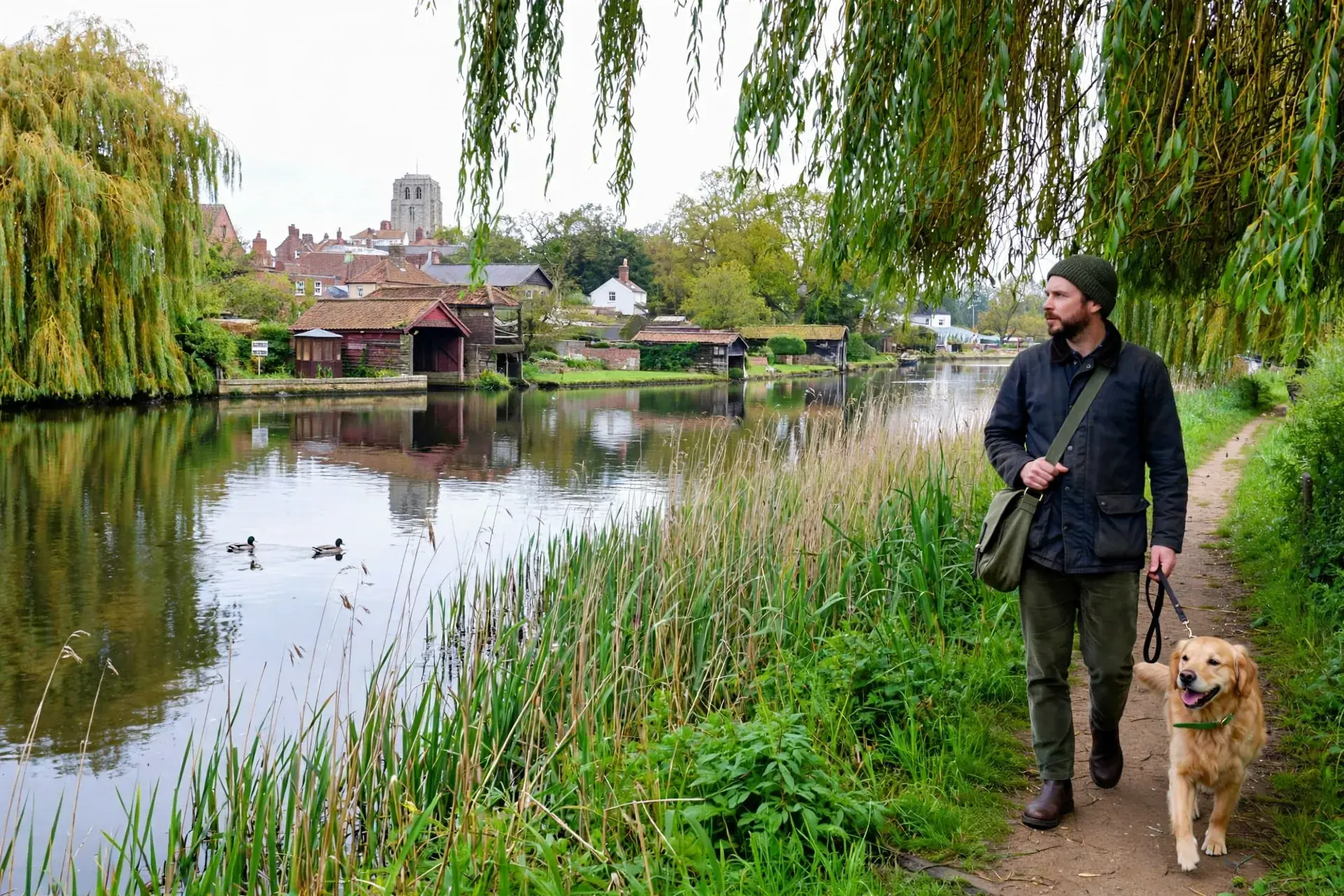
Beccles does not keep its river at arm's length. The River Waveney runs right up against the town, and the quay, the meadows and the moorings feel less like an attraction and more like the place where everyday life happens: people launching boats, walking dogs before work, fishing from the bank, eating lunch on a bench while swans patrol past. That is the first thing to understand about visiting with a dog, because it sets the pace of the whole trip. This is not a resort with a single dog beach and a queue for it. It is a working market town on the edge of the Broads, and the best days here are unhurried ones, built around a walk, a sit-down and another walk.
The geography helps. Beccles sits on the Suffolk side of the Waveney, which forms the county boundary with Norfolk for much of its length, and the town marks a natural gateway between the market towns of the Waveney valley and the wider Broads network to the east. From the quay you can watch cruisers heading downstream towards Oulton Broad and the sea, and narrowboats and day boats pottering upstream towards Bungay and the quieter, narrower reaches. For a dog, that means a constant supply of interesting smells, moving water and other dogs to watch from a polite distance, and it also means a few rules that are worth taking seriously from the first minute: leads near moorings, distance from fishing lines, and no charging up to boats whose owners may be asleep below deck.
Plan the day around the dog you actually have, not the dog in the brochure photographs. A young spaniel will want the meadows, a sniff-heavy hour and probably a paddle somewhere quiet. An older dog will want the flat quay path, a bench in the shade and a short loop back to the car. A nervous rescue will want the quieter end of the meadows and the town streets at a calm hour, not the busiest stretch of the quay on a sunny Saturday. Beccles can give all three dogs a good day, but rarely on the same route at the same hour, so it pays to decide in advance which dog you are planning for and to build in an exit. The town is compact enough that you can always shorten a walk, cut back through the streets and be sitting with a drink within ten minutes.
One more thing shapes a Beccles visit: the seasons change the ground under your feet more than they change the view. In summer the meadows are firm, the quay is busy and shade matters. In winter the same meadows can be soft, puddled or partly flooded after heavy rain, and the river runs higher and faster. Neither season is a reason to stay away, but each asks for different kit, which is why the practical section at the end of this guide covers wet weather in detail rather than treating it as an afterthought. Check the official guidance before you travel if river levels or flood warnings could affect the riverside paths on the day.
The quay and the riverside walk
Start at Beccles Quay, because everything else in town makes more sense once you have seen it. The quay is a broad, open stretch of riverside with moorings, a slipway, open grass and a surfaced path that suits dogs of all ages, including stiff older dogs and puppies on their first proper outing. Park, give the dog a drink and a few minutes to take in the ducks, the moored boats and the smell of the river, and then walk. The path along the river is the town's easiest walk, and it is also its most sociable: you will meet other dog walkers, anglers, rowers and families, often several times on the same loop, so a dog that is still learning manners gets plenty of gentle practice at passing others calmly.
From the quay, the natural walk runs along the river towards the open meadows that stretch beside the Waveney. The ground here is mostly level, which is a gift for dogs with sore joints and for owners pushing a buggy or using a wheelchair alongside the dog, but level does not mean uniform. The surfaced quay path gives way to grass tracks across the meadows, and after rain those tracks can be muddy, rutted or slippery, especially where cattle have grazed. A long line is often the best compromise on the meadows: it gives a keen dog room to run and sniff while keeping you in control near the water's edge, other walkers and any livestock. Keep the dog out of the river itself unless you have found a quiet, shallow bank well away from moorings, and remember that river currents, underwater weed and slippery banks are harder for a dog to judge than a still lake.
Mooring etiquette is the part of quay life that first-time visitors most often get wrong, and it is worth spelling out. Moored boats are people's homes and holidays, not scenery. Keep your dog on a short lead as you pass moorings, do not let them nose around ropes, fenders, gangplanks or cockpit covers, and never let a dog relieve itself on a mooring bank, a boat rope or a slipway where someone will be handling lines with bare hands. Anglers deserve the same courtesy: give a wide berth to rods, lines and keepnets, keep the dog from splashing near a swim where someone is fishing, and do not let a loose dog chase the ducks and swans that gather near the quay. A dog that can walk politely past boats, anglers and waterfowl is a dog that will be welcomed back, and the quay is an ideal training ground because the distractions arrive one at a time rather than all at once.
Beccles Common is another open space worth knowing about, a short walk from the town centre, with rough grassland and paths that feel wilder than the manicured quay. It suits a longer, sniffier walk when the meadows are busy, and it is a good place to let a dog work off energy on a long line before heading into town. As with any common, the details matter: grazing animals may be present, ground-nesting birds use rough grass in spring and summer, and paths can be uneven or wet. Keep the dog under close control, pick up after them, and carry a bag even when you think you will not need one, because commons rarely have a bin exactly where you want it. Check the official guidance before you travel for any local notices about grazing or seasonal restrictions on the common.
Time your quay walk to the dog, not just to the weather. Early morning is quiet, cool and best for reactive dogs and for summer heat, when the open meadows offer little shade and the surfaced path can warm up. Late afternoon brings softer light, fewer crowds and dogs that have had their main walk already, which makes passing other dogs easier. Midday on a hot summer weekend is the hardest slot: busy moorings, hot ground, excited dogs and picnics with dropped food all arrive together. If that is the only slot you have, keep the walk short, stay on the surfaced path, carry water and a portable bowl, and plan a shaded stop. In winter, the same walk is a different pleasure: big skies, fewer people, and a dog that comes home properly tired from a brisk hour in cold air, provided you towel them dry and check their paws for mud, grit and small cuts afterwards.
Water safety deserves a paragraph of its own, because the Waveney looks gentle and usually is, but rivers are not swimming pools. The depth beside the quay wall and near slipways can change quickly, the current strengthens after rain, and weed can tangle a swimming dog's legs. A dog that loves water still needs a safe entry and exit point, a bank they can climb out on without help, and an owner watching the whole time. Dogs that are new to rivers should start with a paddle at a shallow, quiet bank, not a leap from a wall. After any swim, rinse off river water if you can, dry ears and coat, and watch for coughing or unusual tiredness. If your dog falls in unexpectedly, do not jump in after them unless you are certain it is safe; call them to the nearest shallow bank or steps instead, and contact a vet promptly if they have swallowed a lot of water or seem unwell. Check the official guidance before you travel if you are unsure about current water quality or any local warnings.
Angles Way and longer routes
If the quay walk is Beccles at its most sociable, the Angles Way is Beccles at its most expansive. The Angles Way is a long-distance trail that follows the Waveney valley and links the Broads country with the market towns and farmland further west, passing through Beccles on its way. You do not need to walk the whole trail to enjoy it; the sensible way to use it with a dog is to borrow a single stage, walk out for an hour or so, and return the way you came or loop back through lanes and field paths. That out-and-back honesty suits dogs far better than a forced march to a distant bus stop, because you can turn around the moment the dog tells you they have had enough.
The stages in either direction from Beccles show off different sides of the valley. Heading one way, the path follows the river through water meadows and marshy ground towards the next riverside villages, with wide skies, reedbeds and grazing marshes that feel properly Broads-like even though you are still inland. Heading the other way, it leads through the valley towards Bungay and the rolling farmland beyond, with a mix of riverside stretches, field-edge paths and quiet lanes. Both directions share the same practical character: mostly flat walking, which is kind to older dogs and to owners who dislike hills, but with surfaces that change from surfaced track to grass, farm track and occasionally muddy holloway, so footwear and paw care matter more than fitness. Check the official guidance before you travel for the current route, any diversions and any seasonal closures, because long-distance paths are rerouted more often than guidebooks suggest.
Livestock is the main reason to keep a dog on a lead or a long line on Angles Way stages. The Waveney valley is working farmland, and cattle, sheep and horses graze the meadows the path crosses. Even a friendly dog can worry livestock, and a dog that chases is a danger to itself, to the animals and to your liability. The rule that keeps everyone safe is simple: dog on a lead through fields with livestock, dog under close control near any animals even when they look calm, and gates left exactly as you found them. Spring brings lambs and calves, which deserve extra distance, and summer brings ground-nesting birds in the marshes, which deserve the same courtesy. A dog that has learned a solid recall and a calm lead walk will enjoy these stages far more than a dog that spends the whole walk straining at the end of a short lead.
Pack for a longer route as if the weather will change, because on the open marshes it often does. Water for the dog and a collapsible bowl are non-negotiable on a warm day, since river water is not a reliable drinking supply and marsh ditches are worse. A towel or drying coat earns its place in the bag on any day when the path may be muddy, and a basic first-aid kit, including a tick remover, is worth carrying after marshy or wooded sections. Ticks are a genuine consideration on valley and marsh paths from spring into autumn, so check your dog thoroughly after the walk, paying attention to ears, armpits, groin and between the toes, and remove any ticks promptly and correctly. If your dog develops a sore, swelling or unusual lethargy after a walk, contact a vet and mention the tick exposure.
Navigation on a long-distance path is part of the fun, but it is also where dog walks go wrong. Waymarks are usually clear on the Angles Way, yet field paths can be faint after harvest, meadow grass can hide the line of the path, and a dog that darts ahead can pull you off route at a junction. Carry a charged phone with an offline map, note the name of the village you are heading for, and agree a turn-around time before you set out rather than discovering at four in the afternoon that the dog is tired and the car is five miles away. A good rule for a first Angles Way outing from Beccles is to plan a walk of no more than two to three hours including stops, with a pub, cafe or village shop as a natural halfway point where the dog can rest, drink and settle. If the dog is still bouncing at the turn-around point, you can always add a loop on the way back; if they are flagging, you are already heading home.
For dogs that need more than a riverside stroll but cannot manage a long stage, there are shorter combinations worth trying. Walk out along the Angles Way for thirty or forty minutes, then cut back into town through lanes or the common, giving the dog a change of surface and scent without a long commitment. Or pair a short morning stage with a lazy afternoon at the quay, so the dog gets one proper walk and one gentle potter rather than two demanding outings. Older dogs, puppies and dogs recovering from illness or surgery should stick to the flat quay and meadow paths rather than a full stage, and any dog with a medical condition should have its routine checked with a vet before a longer walk. The Angles Way will still be there next time, and a dog that comes home happy and unfootsore is a dog that will enjoy the next visit more.
The old town: bell tower, market and streets
After the river, climb gently into the old town, and Beccles changes character completely. The streets here are narrow, handsome and full of the details that make a market town worth a slow wander: Georgian and earlier frontages, independent shops, cafes with tables on the pavement, and the quiet confidence of a place that has been trading for centuries rather than dressing up for visitors. For a dog, the old town is a different kind of outing from the meadows: shorter distances, more smells at nose height, more people to greet politely, and more chances to practise settling under a table while you have a coffee. Plan it as a potter, not a route march, and let the dog set the pace between stops.
The landmark to look for first is St Michael's church and its separate bell tower, one of the most distinctive sights in the town. The tower stands apart from the church itself, a tall, elegant structure that dominates the skyline and makes an excellent meeting point if your party splits up between shops and cafes. Dogs are generally welcome to enjoy the churchyard from the paths, but churchyards are places of quiet and remembrance, and not every church interior welcomes dogs, so keep the dog on a lead, keep them off graves and memorials, and check the notices at the door before assuming you can take them inside. Even from outside, the tower and the church make a fine pause in the walk: a shady spot, a water break, and a moment to look back towards the river and get your bearings.
The market is the old town at its liveliest, and it is worth timing a visit around it if you can. Beccles holds a weekly market in the town centre, where stalls sell food, plants, household goods and local produce, and the atmosphere is friendly rather than frantic. Markets are wonderful for socialising a dog, but they are also full of dropped food, low stalls at nose height, and feet that a dog can easily trip over, so keep the lead short, keep the dog close to your side rather than weaving ahead of you, and be ready to step aside into a doorway if a stallholder is unloading or a crowd builds up. If your dog is nervous in crowds, visit the market at its quietest hour, or skip the densest rows and enjoy the surrounding streets instead; there is no prize for pushing a worried dog through a busy market when the same town offers quiet lanes a minute away.
The streets themselves reward a wander without a fixed plan. New Market, Smallgate, Hungate and Blyburgate each have their own feel, from the broader market area to narrower lanes with small shops and old doorways, and the whole centre is compact enough to explore on foot without ever being far from the car or the quay. Many independent shops welcome well-behaved dogs, but policies vary and a shopkeeper's welcome is a courtesy, not a right, so ask at the door, keep the dog from nosing stock at tail height, and be gracious if the answer is no. Pavement cafes are often the easiest old-town stop with a dog: a table outside, a bowl of water, and a dog that can watch the world go by without being in anyone's way. Carry a blanket for the dog to lie on, which helps them settle and keeps them off cold or wet flagstones, and keep the lead tucked so passers-by do not trip over it.
A word about the town's hills and surfaces, because Beccles is not entirely flat once you leave the quay. The climb from the river into the old town is gentle but real, and the older streets mix flagstones, cobbles and kerbs that can be awkward for very small dogs, arthritic dogs and dogs with sore paws. If your dog struggles with uneven ground, stick to the smoother pavements of the main shopping streets, take the climb slowly with rests, and consider carrying a small dog for the steepest or roughest stretches rather than letting them scramble. In wet weather the old flagstones can be slippery, and in icy weather they are worse, so shorten the town walk and favour the surfaced quay path instead. A dog that arrives in town already tired from a meadow walk will enjoy the streets far more than a dog that is expected to do the town first and the river second.
Finish the old-town wander with a practical habit: note where the public toilets, water points and bins are, and where you would shelter if rain arrived suddenly. Beccles is small enough that this takes five minutes, and it saves a frantic search later when the dog is wet and you are carrying shopping. A relaxed old-town hour, with a cafe stop, a browse and a look at the bell tower, is often the part of the day visitors remember most fondly, precisely because it feels like ordinary town life rather than a staged attraction, and a dog that can settle in a cafe and walk politely through a market has learned skills that will serve them in every town you visit afterwards.
Broads-edge day trips and boat hire
Beccles earns its keep as a base because the Broads begin, in practical terms, almost as soon as you leave the quay. Downstream, the Waveney widens towards Oulton Broad and the connected waterways of the southern Broads, and within a short drive or a longer boat trip you are in a landscape of open water, reedbeds, grazing marshes and big skies that feels entirely different from the market town behind you. That makes Beccles an excellent place to sample the Broads without committing to a full boating holiday, and a dog-friendly sample at that, provided you understand how boats, wildlife and water safety change the rules.
Day boat hire from Beccles is the most direct way to get a dog onto the water, and it is worth understanding before you book. Day boats are typically hired by the day or half day, need no licence or prior experience for the smaller craft, and are usually happy to carry a well-behaved dog, but each hire company sets its own rules about dogs on board, so check the official guidance before you travel and confirm the dog policy in writing when you book. Ask about lifejackets for dogs, which are strongly recommended even for strong swimmers, because a dog that falls overboard in deep, weedy water or near a busy channel needs buoyancy and a handle to lift them back aboard. Ask too about the route: a first trip should be a gentle downstream potter with easy mooring stops, not a long push against wind and current, and you should agree a turn-around time that leaves a comfortable margin for the return journey.
Boating etiquette with a dog is mostly common sense, sharpened by the fact that a boat is a small space shared with other people's holidays. Keep the dog on a lead or settled on a blanket while passing moorings and other boats, never let them bark at every passing cruiser, and plan toilet stops at proper moorings with grass ashore rather than expecting the dog to manage on deck. Wash matters: pass moored boats slowly, keep your distance from anglers and canoes, and remember that a dog leaning over the side changes the boat's trim and can unbalance a small craft if they lunge at a duck. Pack water and a bowl, a towel, a spare lead and a blanket, and keep the dog's routine as close to normal as possible, with food, water and rest at familiar times. If the dog is nervous on water, start with a short trip tied up at the mooring, engine off, so they learn that a boat is a safe, boring place before it ever moves.
Wildlife is the other reason Broads trips need care. The reedbeds and marshes of the southern Broads are home to marsh harriers, bitterns, bearded tits and a host of wintering wildfowl, and the grazing marshes hold breeding waders in spring and summer. Dogs must not be allowed to crash through reedbeds, chase birds or disturb nesting areas, and on nature reserve paths the rules are often stricter than on a public footpath, with dogs on leads or excluded from sensitive areas altogether. Check the official guidance before you travel for the reserves you plan to visit, keep to marked paths, and treat a marsh harrier quartering over the reeds as something to watch quietly from a distance, not something to pursue. A dog that walks calmly through a reserve is welcome back; a dog that flushes birds is not, and the damage to a breeding season can outlast any single visit.
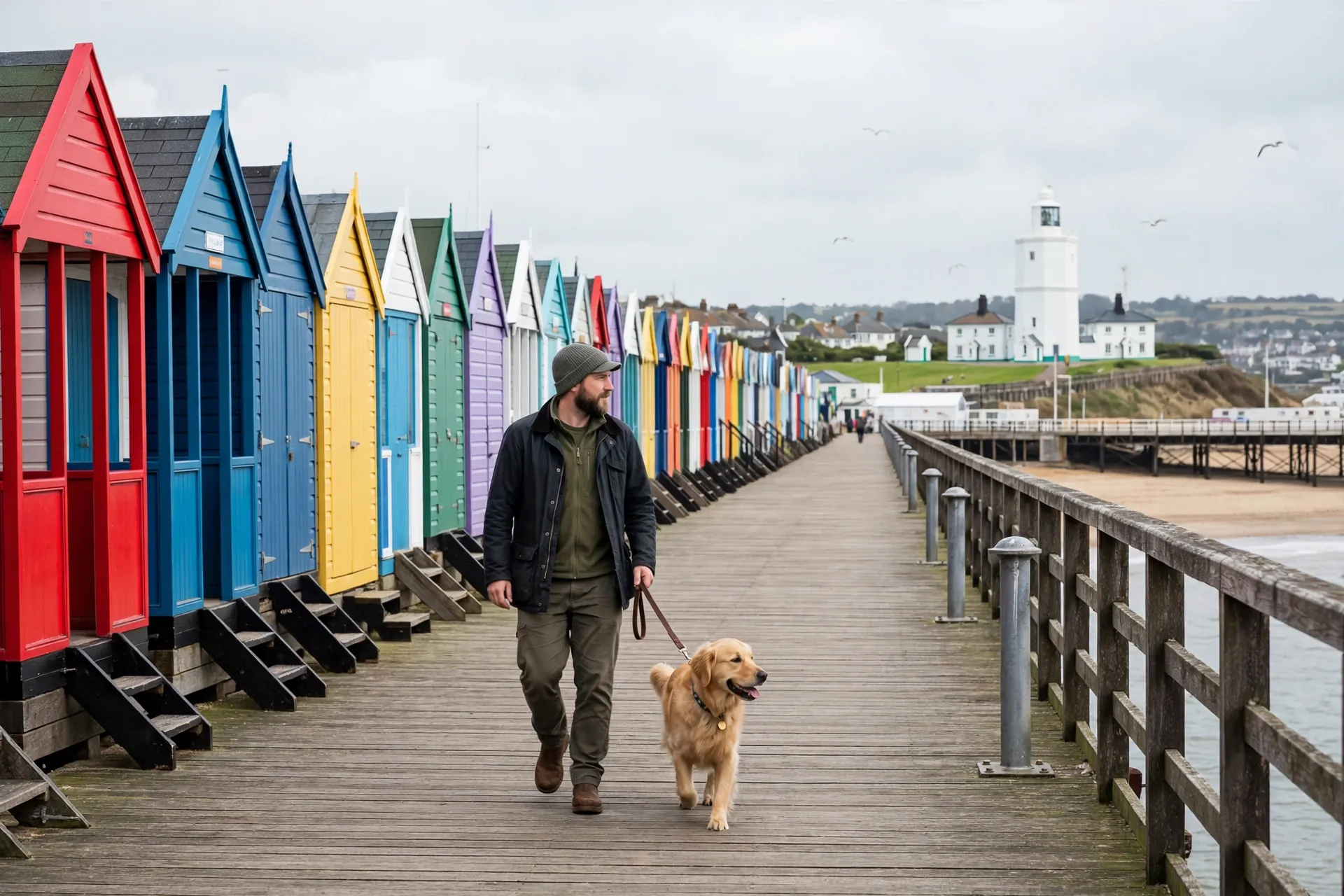
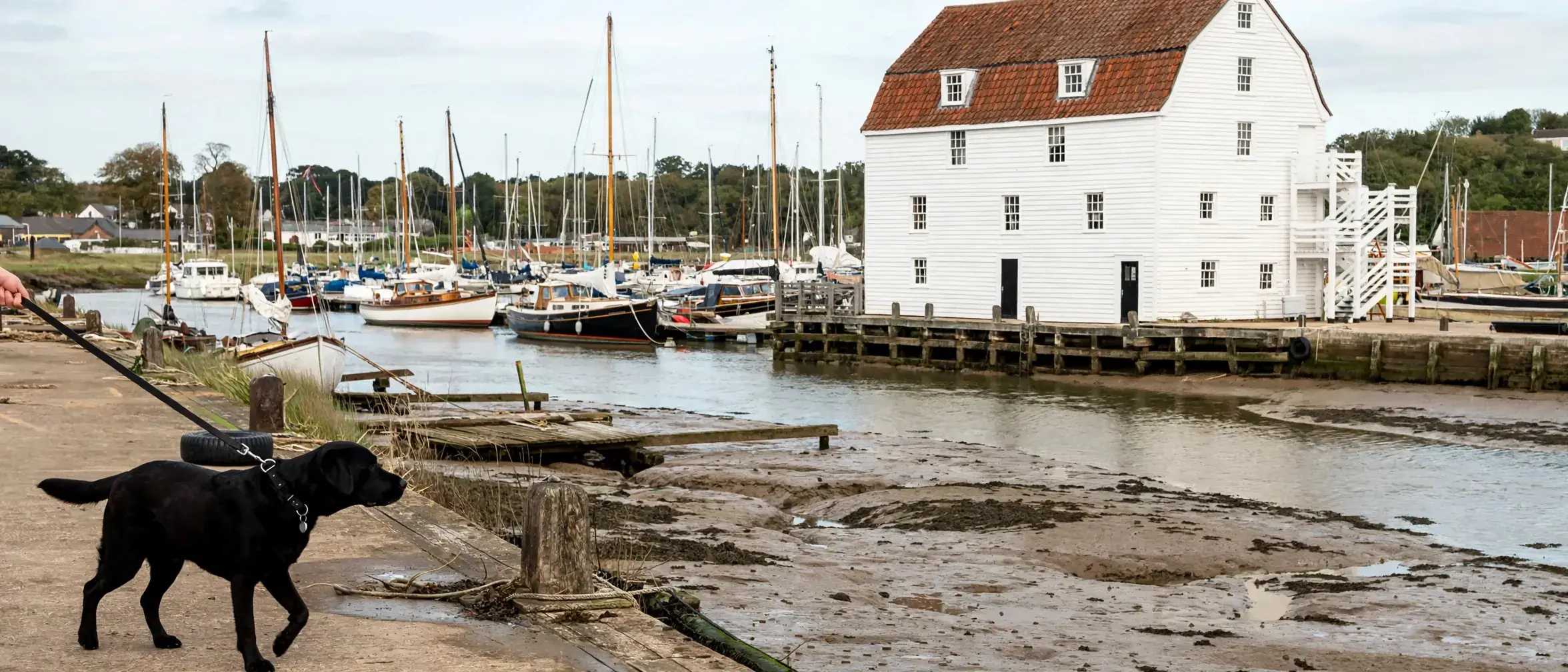
If the Broads feel too watery for one day, Beccles also works as a base for a Suffolk coast contrast. A drive east brings you to the coast, where the rules change completely: beaches have seasonal dog restrictions, tides matter, and the walking is sand, shingle and promenade rather than meadow and reedbed. Our Southwold with a dog guide covers pier walks, lighthouse trails and beach-by-beach rules for that coast, and is worth reading before you swap river for sea, because a dog that is free on a Beccles meadow may be on a lead on a summer beach. Closer to home, the market-town pleasures of the Deben valley offer another contrast, and our Woodbridge with a dog guide covers tidal quay walks, market-town streets and mud safety there. Either trip pairs well with a Beccles morning: river walk first, coast or Deben town second, and home before the dog is overtired.
For a Broads-edge day that stays on land, consider combining a short boat trip or a quay walk with a drive to a nearby broad or marsh walk, choosing paths that are waymarked and dog-friendly rather than pushing into sensitive habitat. The pattern that works best is the same one that works in Beccles itself: one proper walk, one sit-down, and a second gentle outing if the dog still wants it. Do not try to pack a boat trip, a reserve walk, a town visit and a coastal beach into a single day with a dog; the dog will be overtired, you will be driving more than walking, and the Broads will still be there tomorrow. Beccles is at its best when it is used as a slow base, and the Broads reward exactly that pace.
Practical planning: parking, pubs, vets and wet weather
Parking is the least glamorous part of a Beccles day and the easiest to get wrong, so sort it first. The quay car park is the natural starting point for riverside walks, putting you straight onto the path and the meadows, while town-centre car parks suit a day built around the old town and the market. Charges, time limits, payment methods and any seasonal changes vary, so check the official guidance before you travel rather than relying on memory or an old guidebook. Whatever you choose, never leave a dog in a parked car on a warm day, even for a quick errand, and on a cold day do not leave a dog in a car for longer than a brief stop either; the safest rule is that the dog comes with you or the trip waits. If you are staying overnight, check the accommodation's parking and dog rules together, because a dog-friendly room with no nearby parking can mean a long carry of bags and a nervous dog across a busy car park at dusk.
Pubs and cafes are where a Beccles day either relaxes or unravels, and the difference is usually preparation. Many Beccles pubs welcome dogs, especially in bar areas and on terraces, and riverside pubs are an obvious finish to a quay walk, but policies vary by venue, by room and by season, and a pub that welcomes dogs at lunchtime may prefer them outside in the evening. Ask before you settle, keep the dog on a lead and under the table, bring a blanket and a chew or a quiet toy, and order only once the dog has had water and a chance to settle. A dog that has just come off a long walk, had a drink and been given a familiar blanket will usually drop off to sleep within minutes; a dog that is still buzzing, thirsty and expected to lie on a cold floor will fidget, whine and draw attention. If a venue is busy, food-focused or clearly uncomfortable with dogs, thank them and move on rather than arguing; Beccles has enough options that you will find a welcome elsewhere, and the dog will enjoy the quieter stop more anyway.
Vets are the planning item nobody wants to need and everybody is glad to have sorted. Before you travel, save the details of a veterinary practice in Beccles and the nearest out-of-hours emergency service, and keep them on your phone alongside your dog's vaccination record, insurance details and any medication notes. Rural practices can be a drive away, may close early, and may run reduced hours at weekends, so do not assume you can walk in and be seen immediately. If your dog has a medical condition, is on medication, or is recovering from treatment, discuss the trip with your own vet beforehand and carry enough medication for the trip plus a spare day. After river walks, check paws for cuts, grit and weed, check ears after swimming, and watch for limping, coughing or unusual tiredness; any of these after a river outing is worth a prompt call to a vet rather than a wait-and-see approach overnight.
Wet weather is not a reason to cancel a Beccles trip, but it is a reason to change the route. After heavy rain the riverside meadows can be waterlogged, the flood meadows may hold standing water, and the river itself can run higher and faster, so the surfaced quay path and the town streets become the sensible walk while the meadows dry out. Pack a drying coat or two towels, a waterproof mat for the car boot, a spare lead and a lidded bag for muddy kit, and accept that the dog will come home dirty; the goal is a dog that is dirty and happy, not a dog that is dirty, cold and miserable because nobody brought a towel. In persistent rain, a short quay walk followed by a long cafe stop and a browse of the old town beats a forced march across sodden meadows, and a dog that has been dried, fed and settled in a warm pub will remember the day fondly even if the walk was brief.
Seasonal notes round out the planning. Summer brings heat, shade and water as the priorities: walk early or late, carry water, watch for hot pavements and sun on open meadows, and never leave a dog in a car. Autumn brings mud, shorter days and the start of the fireworks season, when noise-sensitive dogs may need a quieter route and an earlier finish. Winter brings cold, wet ground, early darkness and the chance of flooded meadow paths, so carry a torch, keep to surfaced paths after dark, and dry the dog thoroughly. Spring brings lambs, nesting birds and ticks, so leads, distance from livestock and a tick check become the routine. None of these seasons closes Beccles to dogs; each simply asks for a slightly different version of the same day, and the visitors who enjoy the town most are the ones who adjust the plan to the season rather than fighting it.
Finally, pack for the dog as carefully as you pack for yourself. A lead and a long line, a harness that fits over a wet coat, a collapsible bowl and water, poo bags and a spare roll, a towel or drying coat, a blanket for pub floors, a tick remover, any medication, and a charged phone with the vet's number saved will cover almost every Beccles contingency. Add a muzzle if your dog wears one in busy places, a coat if they feel the cold, and a familiar toy or chew for settling in cafes. With that kit, a car parked near the quay and a plan that starts at the river, Beccles gives a dog one of the most satisfying days in Suffolk: water to watch, meadows to sniff, a long-distance path to borrow, an old town to potter through, and a pub to fall asleep in at the end of it all.
Practical questions
Before you go
Can dogs swim at Beccles Quay?
Dogs do paddle and swim in the Waveney, but the quay is a working mooring area with boats, ropes, slipways and deep water beside the bank, so it is not a safe free-swimming spot. Keep your dog on a lead around moorings and slipways, choose a quiet grassy bank away from boats for any paddle, and check the official guidance before you travel if you are unsure about current water conditions.
Is the Angles Way suitable for dogs?
Yes, for dogs that are comfortable on a lead or a long line. The Angles Way follows field edges, flood meadows and river banks where livestock, ground-nesting birds and other walkers are common, so off-lead freedom is not guaranteed. Carry water, check for ticks after marshy sections, and pick a short stage for a first visit rather than committing to a full day.
Are dogs welcome in Beccles pubs and cafes?
Many Beccles pubs and cafes welcome dogs, especially in bar areas and on outdoor terraces, but policies vary by venue and can change with the season. Ask before you settle in, keep your dog on a lead and under the table, and carry a blanket for the floor. If a venue is busy or food-focused, a quieter riverside stop usually works better for everyone.
Where can I park in Beccles with a dog?
The quay car park is the most convenient starting point for riverside walks, and there are town-centre car parks a short walk from the old town streets. Charges, time limits and payment methods can change, so check the official guidance before you travel. Never leave a dog in a parked car on a warm day, even for a quick errand in town.
What should I do if my dog falls in the River Waveney?
Do not jump in after your dog unless you are certain it is safe. Call your dog to the nearest shallow bank, slipway or set of steps, and use a lead or a long line as a guide if you can do so without entering deep water. Once out, towel your dog dry, keep them warm, and watch for coughing, lethargy or vomiting. If anything worries you, contact a vet promptly.