This guide is independent and contains no paid placement. If affiliate links are added later, they will be clearly marked and will not change our editorial checks.
Arrive early, walk Arlington Row and the River Coln first while the village is quiet, spend the busy middle of the day at the trout farm or on a valley walk, and return to the river in the late afternoon. Keep the dog on a lead, respect private homes, and never let the dog swim or drink unsupervised in the Coln.
Dawn logic: why early changes everything
Bibury is one of the most photographed villages in England, and that fame changes the dog walk completely depending on the hour. At dawn and in the early morning, the village belongs to residents, birdsong and the river, with empty paths, soft light and space for a dog to sniff without meeting a crowd at every corner. By midday on a fine weekend, the same paths fill with visitors, coaches and cameras, and a dog walk becomes an exercise in navigating people rather than enjoying a village. The difference is not subtle, and it is the single most important planning decision for a Bibury visit with a dog.
An early start suits dogs for reasons beyond crowd avoidance. Dogs are often at their keenest in the morning, the air is cooler, the river light is at its best, and a morning walk leaves the rest of the day flexible. Arrive, walk Arlington Row and the river first, and then decide, based on the dog's energy and the growing crowds, whether to stay for the trout farm, take a valley walk, or move on to a quieter village for lunch. A dog that has had a calm, early village walk will cope far better with a busier midday than a dog that arrives into the thick of the crowds with no prior walk at all.
Early does not have to mean a crack-of-dawn alarm for everyone. Even arriving an hour before the main visitor peak changes the experience noticeably, and a weekday visit is quieter than any weekend, however early you arrive on a Saturday. If an early start is impossible, choose a late afternoon instead, when day visitors thin and the light softens again, and treat the middle of the day as a time for a valley walk or a quiet cafe rather than a village-centre stroll. The goal is the same in both cases: give the dog the village at its calmest, not at its busiest.
Arlington Row: a home, not a backdrop
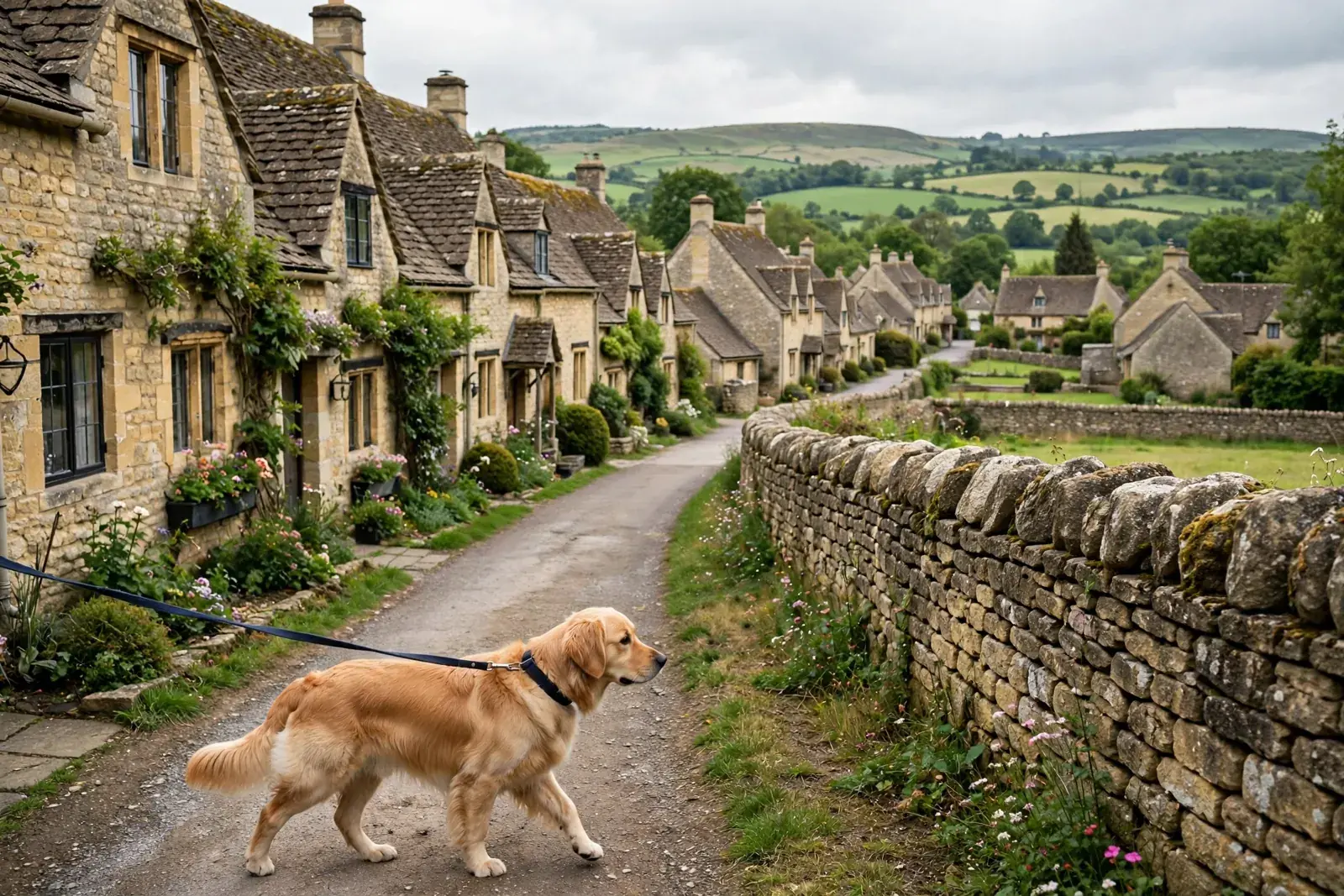
Arlington Row is a row of honey-stone cottages beside the River Coln, originally built as weavers' cottages, and now one of the most recognisable views in the Cotswolds. For a dog walker, the row is best experienced as a short, respectful pass along the public path, not as a prolonged photo shoot. The cottages are private homes, with residents who live with a stream of visitors outside their doors every day, and the kindest visit is a quiet one: walk past on the path, look, take a brief photograph, and move on, rather than lingering, peering into windows or stepping into gardens.
Dogs add a specific responsibility to an Arlington Row visit. Keep the dog on a short lead on the path, keep it from gardens, doorways and planted areas, and clean up immediately, because a small village path is judged by the behaviour of its dog walkers. A dog that barks at other dogs on a narrow path, pulls toward the cottages or toilets near a doorway will quickly sour the experience for residents and other visitors. A dog that walks calmly past, with a brief sniff and a steady lead, is a welcome guest in a famous place, and it will enjoy the walk far more than a dog that is allowed to become overexcited by crowds and cameras.
The view across the river to Arlington Row, from the opposite bank, is often more rewarding than the close-up pass, because it shows the cottages, the water and the trees together. Walk to a viewpoint on the far bank, let the dog sit or lie on the grass verge while you look, and take your photograph from there, without blocking the path for others. That approach gives the dog a rest, gives other visitors room to pass, and gives you a better picture than a crowded close-up. It also respects the residents, because a viewpoint across the water is a public space rather than someone's front garden.
Walking the River Coln with a dog
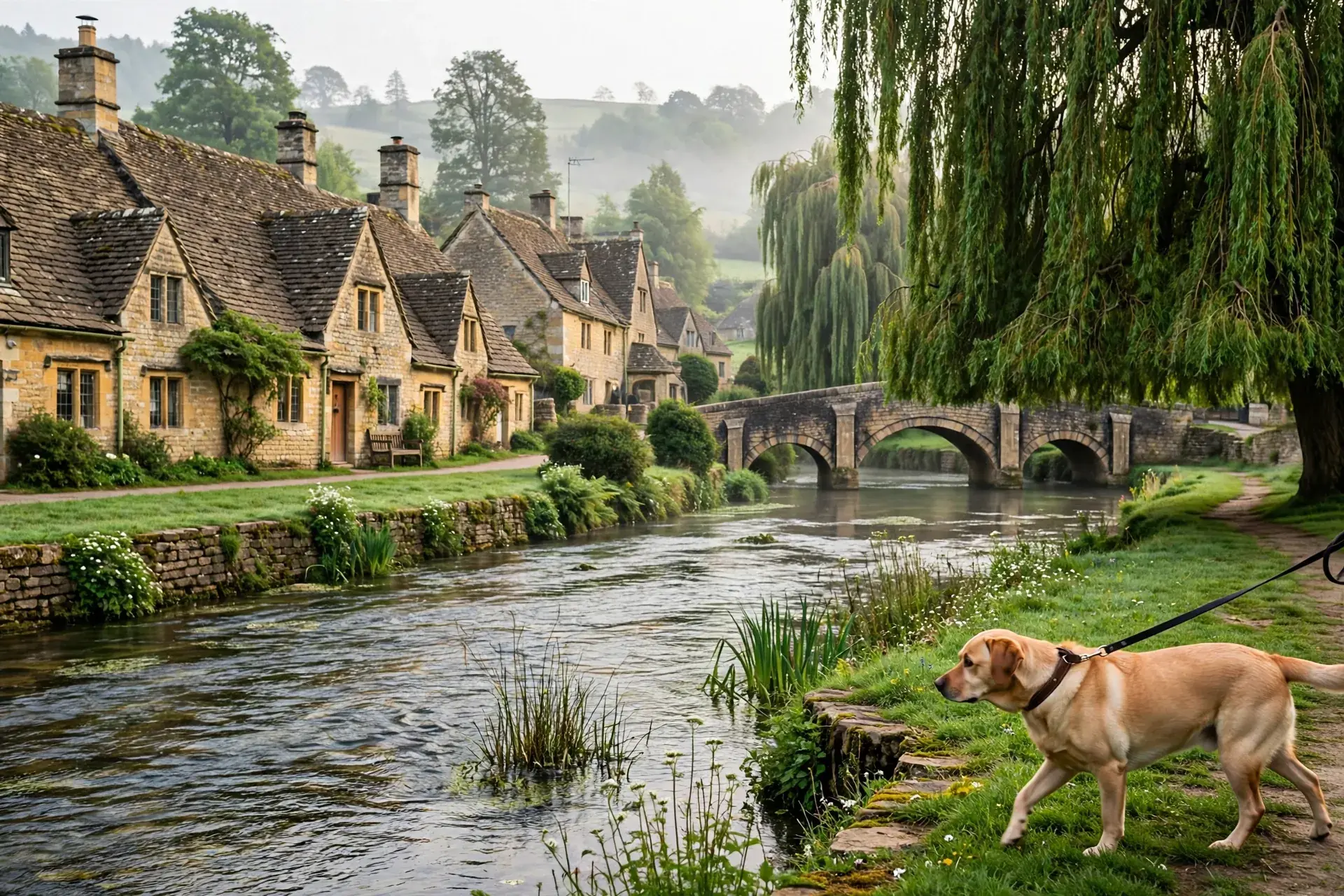
The River Coln runs through Bibury as a clear, shallow stream, with willows, stone bridges and grassy banks, and it is the thread that ties the village walk together. A riverside walk in Bibury is short, gentle and full of interest for a dog: water smells, birdlife, bridges to cross and grass to sniff. It is also a walk that needs lead discipline, because the river attracts dogs, children and photographers in equal measure, and a loose dog near water quickly becomes a problem for everyone. Keep the lead on, keep the dog on paths and banks, and offer drinking water from your own bottle rather than letting the dog drink from the river.
Swimming in the Coln at Bibury is not a good plan for most dogs, even though the water looks inviting. The river is shallow in places but has currents, slippery stones and banks that are hard to climb, and it is shared with anglers, wildlife and other visitors who do not expect a swimming dog. A dog that paddles at the edge on a hot day, under close supervision and on a lead, is a different matter from a dog that is allowed to swim freely, chase ducks or shake water over picnickers. If your dog loves water, give it a proper swim elsewhere, on a dog-friendly beach or lake, and keep the Bibury river walk as a walking and looking experience.
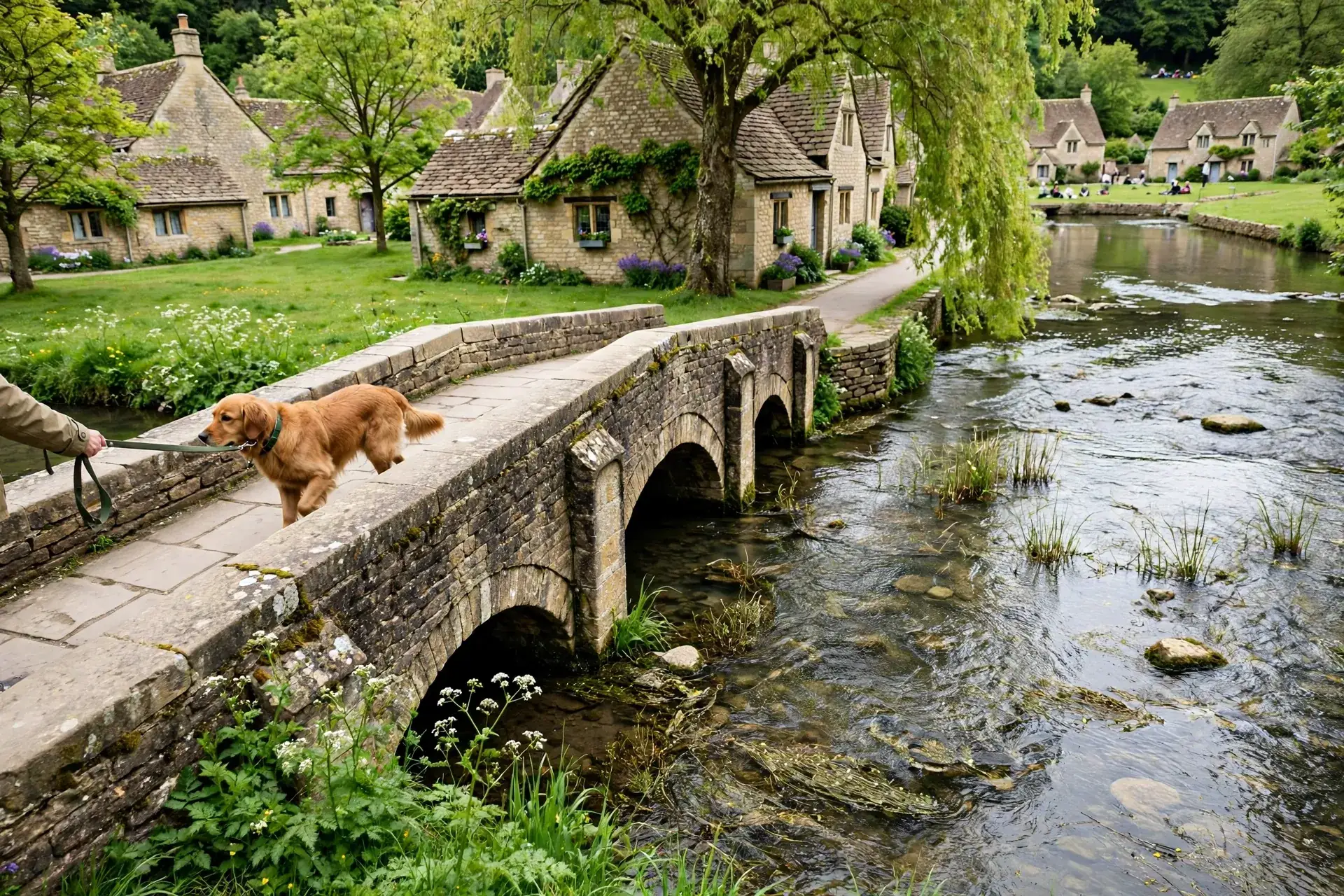
Bridges in Bibury deserve care, because they are narrow, historic and busy with photographers. Cross them on a short lead, step aside for oncoming walkers, and do not stop in the middle of a bridge for a photograph if others are waiting to cross. A bridge is a pinch point for dogs as well as people, because leads tangle, dogs meet nose to nose, and a nervous dog has nowhere to step aside. Cross steadily, praise calmly, and pause on the far bank, where there is room to look back at the view without blocking the way.
Bibury Trout Farm with a dog
Bibury Trout Farm, one of the oldest trout farms in England, sits a short walk from the village centre, with ponds, raceways and fishing areas set in a valley landscape. It makes a good middle-of-the-day stop for a Bibury visit, because it gives the dog a different kind of walk after the village paths, and it gives owners a chance to see trout farming, try fishing or simply enjoy a valley setting. Dog policy can vary by area, season and activity, so check the official guidance before you travel, and plan around the areas that welcome dogs rather than assuming the whole site is equally dog-friendly.
Water safety dominates a trout farm visit with a dog. Ponds and raceways are open water with slippery edges, and a dog that is fascinated by fish can quickly become a dog in the water. Keep the dog on a short lead at all times near ponds, keep it from drinking from raceways, and supervise it closely around fishing areas, where hooks, lines and other anglers' equipment pose hazards. Children and dogs together near open water need particular attention, because excitement and water are a combination that rewards calm adult supervision rather than relaxed inattention.
Fishing with a dog is possible, but it needs a plan. A dog that can lie quietly on a mat beside an angler for an hour is a good fishing companion, while a dog that barks at fish, pulls toward the water or chases birds will spoil the fishing for everyone nearby. Bring a mat, water and a chew for a settled dog, choose a quiet fishing spot away from other anglers if possible, and be ready to cut the session short if the dog cannot settle. A trout farm visit that ends with a calm dog and a pleasant walk is a success, even without a catch, while a visit that ends with a wet dog and a tangled line is a lesson for next time.
The village loop and St Mary's church
Beyond Arlington Row, Bibury offers a compact village loop that takes in lanes, the church and quieter corners away from the famous view. The loop suits a dog well, because it mixes pavements, grass, lanes and riverside paths in a short distance, and it can be walked in under an hour including pauses. Start at Arlington Row, follow the river for a stretch, loop through the village lanes, pass the church, and return to the river, so the dog gets variety without a long distance. The loop also reveals the working village behind the postcard: houses, gardens, a church and lanes that residents use daily.
St Mary's church in Bibury, with its Saxon origins and riverside setting, adds a quiet, historic stop to the loop. The churchyard suits a short, calm dog walk on a lead, provided graves and other visitors are respected, and the church interior may or may not welcome dogs, so check notices before entering. A churchyard pause is a good moment to let the dog rest, drink and settle, especially on a warm day, because the shade and quiet contrast with the busy river paths. Keep the visit brief, keep the lead short, and move on if a service or a private moment is taking place.
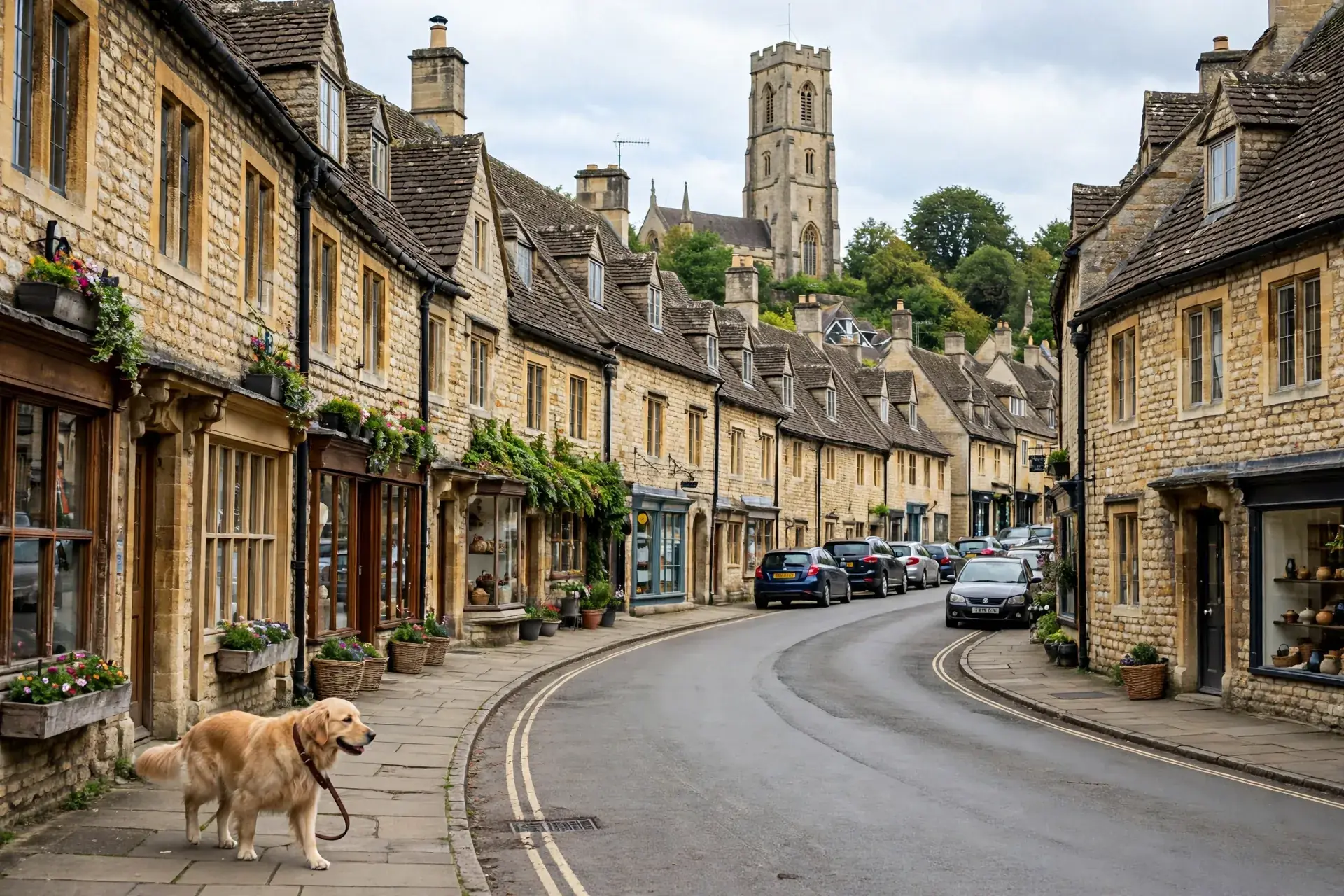
Village lanes in Bibury are narrow and shared with residents, delivery vehicles and other walkers, so the same etiquette as Arlington Row applies throughout: short lead, step aside, clean up promptly, and do not let the dog investigate private gardens or open doorways. The lanes are at their best early and late, when the light is warm and the crowds thin, and a lane walk at those hours often feels like a different village from the midday version. Use the lanes as a way to escape the crowds without leaving Bibury, because a quiet lane is often only a minute's walk from a busy viewpoint.
Coln Valley walks beyond the village
The Coln Valley beyond Bibury offers longer, quieter walks for dogs that need more than a village loop. Valley paths follow the river, cross fields and lanes, and pass through smaller hamlets, with a sense of countryside that contrasts with Bibury's fame. A valley walk suits a fit dog and a clear day, and it is the best choice for the middle of a busy Bibury day, when the village centre is crowded and the dog would prefer open paths to pavements. Choose a loop that matches the dog's stamina, carry a map, and agree a turn-back point before you set off, because valley paths fork at field corners and can become muddy after rain.
Livestock, field gates and river crossings all feature on valley walks, so lead discipline matters throughout. Keep the dog on a lead near livestock and on narrow lanes, leave gates as found, and do not let the dog swim in the river at crossings or chase wildlife along the banks. Valley paths also change with the farming year: a path that is clear in winter may run through a crop in summer, and a field that held sheep in spring may hold cattle in autumn, so follow waymarked routes and check the official guidance before you travel for current access information.
For a broader Cotswold river comparison, our Bourton-on-the-Water with a dog guide follows a shallow river through a busier village centre, while Bibury's valley walk feels like an escape from the village into the countryside. Both teach the same lesson: rivers are best enjoyed by dogs on leads, with drinking water from a bottle, and with respect for anglers, wildlife and other walkers sharing the bank.
Photography etiquette in a famous village
Photography in Bibury is unavoidable, and it deserves a little etiquette when a dog is involved. The classic picture, a dog sitting on a bridge or a bank with Arlington Row behind it, is lovely, but it should be taken quickly, without blocking a path, a bridge or a resident's doorway. Ask another visitor to take the picture rather than tying the lead to a fixture, keep the session to a minute or two, and move on so others can enjoy the same view. A dog that is asked to sit for a long photo session in a crowd will become restless, and a restless dog in a famous village quickly becomes a barking dog in a famous village.
Respect for residents is the core of Bibury photography etiquette. Do not photograph into windows, do not step into gardens for a better angle, and do not use a drone over private homes, because all three intrude on people who live with tourism daily. Photograph from public paths and viewpoints, keep voices low near cottages, and avoid flash or loud equipment that disturbs the quiet of the village. A photograph taken respectfully, from a public viewpoint, with the dog sitting calmly beside you, is a better memory than a photograph taken by intruding on someone's home.
Dogs themselves photograph best when they are calm and comfortable, not when they are posed stiffly in a crowd. Let the dog sit naturally, with a treat or a quiet word as encouragement, and take the picture while the dog is relaxed rather than forcing a pose. Early morning light flatters both stone and fur, and a quiet bank or bridge at dawn gives a far better picture than a crowded midday viewpoint. If the dog will not sit, skip the posed picture and take a walking picture instead, because a dog walking happily beside the Coln is a truer memory of Bibury than a forced sit in a crowd.
Cafes, pubs and a riverside lunch
Bibury's cafes and pubs are small and popular, and they reward early or late visits rather than midday queues. Look for venues with gardens, terraces or dog-friendly interiors, and check the policy on arrival, because dog rules can differ between areas of the same venue. A mat, a water bowl and a quiet corner are the basics, and a venue that offers them without fuss is usually a venue that understands dogs. Bring the dog's own treats, avoid feeding from the table, and keep lunch to an hour or so, because a small venue with a restless dog quickly becomes uncomfortable for everyone.
A riverside picnic is a good alternative when cafes are full or the dog prefers open air. Choose a grassy bank away from Arlington Row cottages and other picnickers' dogs, keep the dog on a lead, and pack the dog's food and water alongside your own. A picnic lets you control the timing of lunch around the dog's walk, and it avoids the queue for a table at midday, when Bibury is at its busiest. Keep rubbish contained, clean up promptly, and leave the bank as you found it, because a famous village is judged by how its visitors treat its green spaces.
For a wider Cotswold village lunch comparison, our Cotswolds with a dog guide covers pubs, gardens and parking across the region, and it pairs well with a Bibury visit. The shared advice is consistent: a dog that has a mat, water and a quiet corner will settle in any venue, while a dog that is hungry, thirsty or overexcited will struggle, however welcoming the venue claims to be.
Parking, coaches and crowd timing
Bibury's parking is within walking distance of the village, and the simplest plan is to park once, walk the village and river on foot, and drive only if you add a valley walk or a nearby village later. Arrive early on weekends and in peak season, when parking fills and the village paths become crowded, and note the parking terms on arrival. Coaches add to the midday crowds, so a morning or late-afternoon visit avoids both the coach peak and the car park peak. Never leave a dog alone in a parked car in warm weather, even for a brief photograph, because a car heats quickly and a famous village is no place for a distressed dog.
Crowd timing is a skill in Bibury, and it repays practice. Watch the village fill from a quiet lane, note when the main viewpoints become crowded, and use that knowledge to plan the next visit. A dog that arrives early, walks the village, visits the trout farm and then leaves before the midday peak will have a better day than a dog that arrives at midday and spends the afternoon navigating crowds. If you find yourself in Bibury at peak time unexpectedly, escape to a valley path or a quiet lane rather than persisting in the centre, because a short escape often rescues the whole day.
The return to the car should mirror the arrival: final toilet walk, drink, paw wipe and calm loading, with any purchases secured so they cannot slide onto the dog. A tired dog may sleep quickly in the car, so keep the journey calm and stop for a break on a long drive home. The drive home is part of the day for the dog, and a calm finish to a Bibury visit leaves the dog with a positive memory of a famous village, rather than a memory of crowds and queues.
Seasons, water levels and weather
Spring in Bibury brings blossom, longer days and lively riverbanks, but also wet paths and nesting birds along the Coln, so keep dogs on leads and stick to paths. Summer brings the fullest village, the warmest pavements and the clearest river, so early starts, shade and water matter most, and the trout farm and valley walks become essential escapes from the centre. Autumn brings colour in the valley, quieter streets and cooler walking, but also wet leaves, muddy banks and higher river levels after rain, so watch footing on bridges and banks. Winter brings frost, clear light and empty lanes, but short days and cold water, so plan shorter walks and warmer layers for short-coated dogs.
Water levels in the Coln change with rainfall, and they affect dog walks more than owners often expect. After heavy rain, banks become slippery, paths flood in low spots, and the river runs faster and higher than its postcard appearance suggests. Check the weather and river conditions before a Bibury visit after rain, choose lanes and higher paths over riverside banks if the river is high, and keep the dog well away from fast water. In hot weather, the opposite problem appears: shallow water looks inviting but may be warm, low and shared with many visitors, so keep the dog on a lead and offer water from a bottle rather than letting it drink from the river.
Weather in the Coln Valley can differ from the forecast for the wider Cotswolds, because valleys hold mist in the morning and shelter from wind during the day. Morning mist in Bibury is beautiful, and it often burns off by mid-morning to reveal clear light, so an early misty walk can become a sunny late-morning visit without any change of plan. Carry a waterproof layer even on a fine day, because a valley shower can arrive quickly, and a wet dog in a crowded village is harder to manage than a wet dog on a quiet lane.
Shaping the Bibury day from dawn to dusk
A Bibury day shaped from dawn to dusk might look like this: arrive early, walk Arlington Row and the river while the village is quiet, loop through the lanes and church, and then choose between the trout farm and a valley walk for the middle of the day. Lunch follows the walk, either in a cafe or as a riverside picnic, and the late afternoon returns to the river for a final quiet stroll as the crowds thin and the light softens. That shape gives the dog exercise, novelty and rest in balance, and it gives the owner the famous views at their best, without the stress of a midday crowd.
A shorter Bibury visit can follow the same shape in miniature: early village and river walk, a cafe stop, and home, without the trout farm or valley walk. That short visit is a complete Bibury experience, and it leaves the trout farm and valley as reasons to return, rather than boxes to tick on a single crowded day. A longer visit, combining Bibury with Cirencester or another nearby village, should treat Bibury as one stop with a car move and a rest in between, not as a rushed add-on to an already full day, because a famous village deserves an unhurried visit, however short.
End the Bibury day with a simple test: did the dog sleep well, eat normally and greet the next morning with enthusiasm. If so, the balance of early village, river, valley and rest was right, whatever the number of photographs taken. If the dog came home tired, reluctant or unsettled, shorten the village-centre element next time and lengthen the valley and riverside elements, because Bibury's quiet corners are as rewarding as its famous row, and the best visit is the one the dog would happily repeat.
Practical questions
Before you go
Can I walk a dog along Arlington Row in Bibury?
Yes, you can walk a dog on a lead past Arlington Row on the public paths, but the cottages are private homes, so keep the dog on the path, do not enter gardens or doorways, and keep the visit brief and quiet. Early mornings and late afternoons are calmer, and a short, respectful pass suits both residents and dogs better than a long photo session.
Are dogs allowed at Bibury Trout Farm?
Bibury Trout Farm welcomes many visitors with dogs, but its dog policy can vary by area, season and activity, so check the official guidance before you travel. Keep the dog on a lead near ponds, raceways and fishing areas, do not let it drink from or enter the water, and supervise children and dogs closely around open water.
Is the River Coln safe for dogs to swim in at Bibury?
The River Coln at Bibury is shallow and clear in places, but it is not a designated dog swimming spot, and currents, slippery banks and other visitors all need care. Keep the dog on a lead near the river, offer drinking water from your own bottle, and do not let the dog swim where other visitors, anglers or wildlife could be disturbed.
When is the quietest time to visit Bibury with a dog?
Early mornings, late afternoons and weekdays are quietest, while midday on weekends and in peak holiday season is busiest. Arrive early, walk Arlington Row and the river first, and save cafes and the trout farm for later, so the dog experiences the village at its calmest rather than at its most crowded.
Where do I park for a dog walk in Bibury?
Bibury has car parking within walking distance of the village centre, and arriving early helps on busy days. Park once, walk the village and river on foot, note the parking terms on arrival, and give the dog a toilet walk and water before the Arlington Row pass, so the famous view is enjoyed calmly.