This guide is independent and contains no paid placement. Access rules, parking charges and dog policies change, so check the official latest guidance before you travel for every venue and walk mentioned.
The Cotswolds work brilliantly with a dog if you plan in layers: short Cotswold Way sections in the morning, a short lead in busy villages, real caution around grazing cattle on open commons, pubs for lunch rather than formal gardens, and early arrival to beat parking pressure. Check each garden and pub policy before you set off.
Plan around villages, not postcards
The Cotswolds cover a large, mostly rural area across Gloucestershire, Oxfordshire and neighbouring counties, and the first planning mistake is treating the whole area as one small place. Distances that look short on a map can mean twenty or thirty minutes on narrow lanes, and a day that tries to combine four famous villages, a long walk and a booked lunch will feel rushed for people and dogs alike. Choose one base, one main walk and one village focus per day, and the trip changes character completely. Your dog gets proper sniffing time, you get lunch without clock-watching, and a wet-weather change of plan stops being a crisis.
Base choice matters more than cottage prettiness. A base on the edge of a village with a pavement walk for the last outing, a pub within walking distance and parking at the property will beat a stunning but isolated barn conversion if your dog needs a calm late-night toilet walk or reacts to passing dogs at a garden gate. Ask direct questions before booking: is the garden genuinely enclosed and to what height, are there livestock in the field immediately beyond it, can dogs go on the ground floor only, and is there a hose or boot room for muddy paws? Cotswold stone looks timeless in photographs, but stone floors, steep cottage stairs and open-plan living areas shape daily life with a dog far more than the view does.
Build the dog into the budget and the timetable from the start. Many cottages and inns charge a per-dog fee, limit numbers to one or two dogs, or restrict dogs to certain rooms, so confirm the total in writing. Plan driving in shorter hops, with a leg-stretch every ninety minutes or so, and keep water, a bowl, poo bags and a towel in the car rather than buried in luggage. Autumn and winter bring glorious empty lanes but also early darkness and mud on limestone paths that can be surprisingly slippery; spring brings lambs and ground-nesting birds, which raises the lead discipline required everywhere. None of this should put you off — it simply means the best Cotswolds dog trip is planned around seasons and livestock, not just a list of pretty streets.
Cotswold Way sections for dogs
The Cotswold Way runs for roughly one hundred miles along the western escarpment from Chipping Campden towards Bath, and most visitors with dogs should enjoy it in short, satisfying sections rather than attempting long linear days that need complicated car shuffles. Escarpment sections reward you with wide views, beech woods and iron-age hillforts, but they also cross working farmland, pass through kissing gates and stiles, and share ground with sheep and cattle. A fit adult dog may happily manage five to eight miles on cooler days, while an older dog, a puppy or any dog in warm weather will do better with two to four miles and plenty of stops. Always carry water for the dog as well as yourself: streams are unreliable on limestone country and troughs are for livestock, not drinking bowls.
Choose sections for their logistics as much as their scenery. Circular walks that join and leave the Way from a village with parking, toilets and a pub make the simplest dog days, because you can shorten the route if paws, weather or livestock make the original plan unwise. Woodland stretches can be cooler in summer and more sheltered in wind, while exposed ridge sections are wonderful on a clear morning and bleak in driving rain. Check stile types if your dog is large, elderly or cannot be lifted: a route of ladder stiles that looks fine on paper can end a walk for a heavy dog. Where a section uses road walking, keep to the verge on a short lead and be visible, because lanes are narrow and drivers may not expect walkers around bends.
Lead rules on the trail are practical, not decorative. Keep dogs on a lead around livestock, on request on signed land, and whenever you cannot see what is over the next brow or through the next gate. Our guide to the livestock worrying law in the UK explains why farmers can act to protect their animals and why a dog that is merely chasing, not biting, is already a serious problem. On quiet, open sections away from stock, follow any local signs and recall honestly: if your dog will not return instantly around sheep, deer or game birds, the long line stays on. Check the official latest guidance before you travel, because temporary diversions, forestry work and path closures do occur and are not always obvious from older walking books.
Villages and lead etiquette
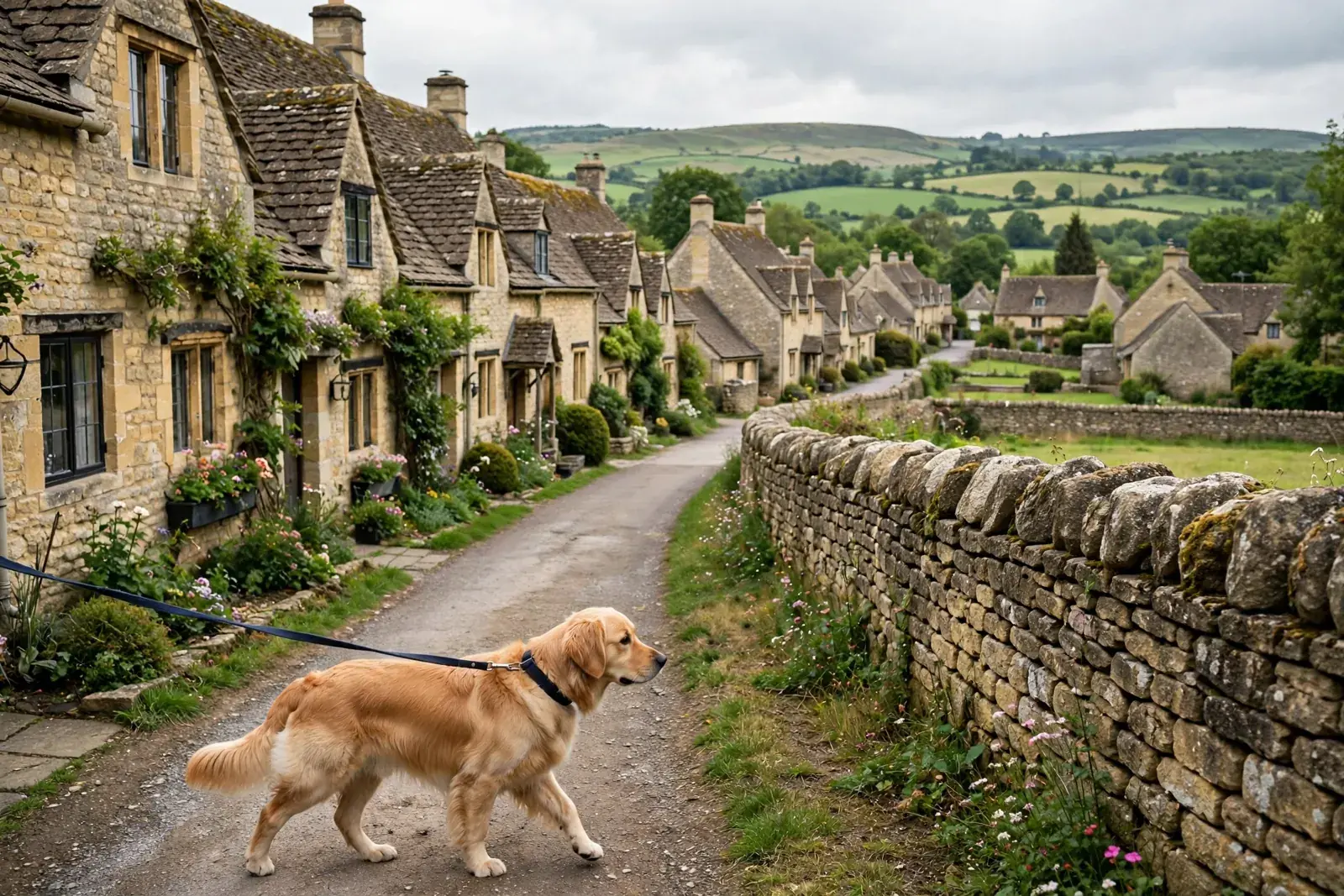
Bourton-on-the-Water and Bibury deserve their fame — low stone bridges over the River Windrush in one, the famous row of weavers' cottages in Arlington Row in the other — but both can be intensely busy on sunny weekends and bank holidays. For a dog, the challenge is not malice but density: pushchairs, ice creams at nose height, ducks and moorhens at the water's edge, picnics on small greens, and pavements where two dogs cannot pass without close contact. Use a short, fixed lead rather than an extending lead in every busy village, walk at the edge of the flow rather than down the middle, and be ready to step aside and let groups pass. Early morning and late afternoon transform these places; the same street that felt like a queue at midday can be a peaceful ten-minute stroll before breakfast.
Etiquette is mostly about reading the space. Do not let your dog drift into cafe doorways, shop thresholds or other people's picnic rugs, and never assume a village green is an off-lead exercise field — many have signs, bylaws or simply heavy use by children that make free running inappropriate. Keep dogs out of shallow rivers in crowded spots if signs ask you to, both to protect banks and wildlife and to avoid the classic wet-dog shake over strangers. Take every poo bag away with you until you find a bin; bins in famous villages fill quickly at peak times, and a bag left beside a full bin is still litter. If your dog finds crowds stressful, choose the quieter neighbours instead: smaller villages with a church, a green and a pub but no coach parking often give you the same honey-stone pleasure with a fraction of the pressure.
Shops and tearooms vary widely. Some welcome dogs inside with water bowls by the door, others allow dogs only in a garden, and some cannot accept dogs at all because of space or food rules. Our round-up of dog-friendly cafes in the UK explains the questions to ask and the behaviour that keeps welcomes open for the next dog. A settled dog that lies under the table, stays off seats and does not beg from neighbouring tables will be invited back almost everywhere; a dog allowed to roam the room on a long lead will not. Carry a small mat or blanket for hard stone floors, take your dog out promptly if they begin to whine or bark, and treat every welcome as a privilege earned in the moment rather than a right advertised online months earlier.
Commons, cattle and open land
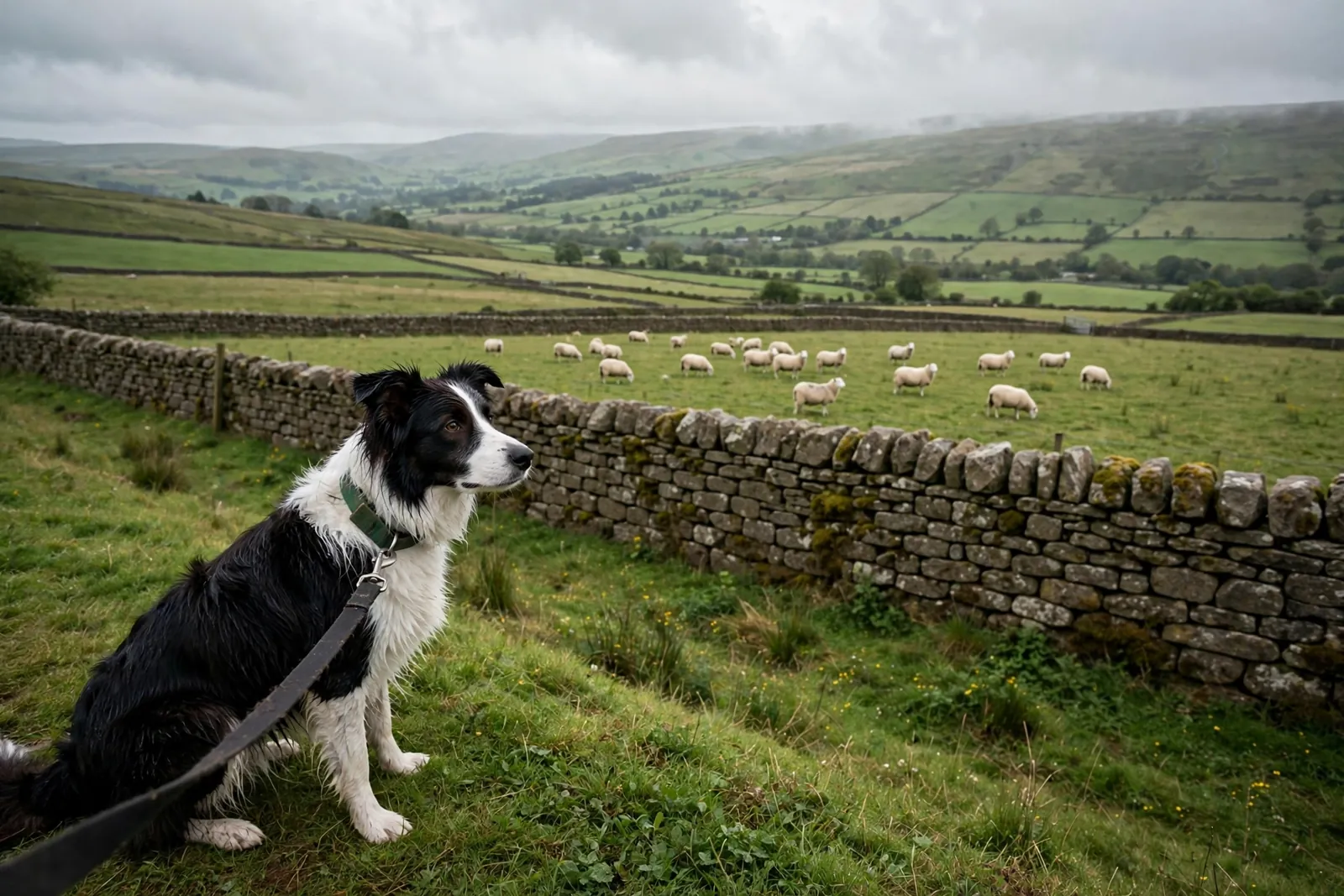
Some of the best Cotswolds dog walking is not in villages at all but on the high open commons, where wide grassland, long views and big skies give dogs and people room to breathe. Commons in the style of Minchinhampton and Rodborough, above Stroud, are famous examples of grazed common land where cattle — and in places horses — roam freely across unfenced grass crossed by roads and tracks. That freedom is exactly what makes them wonderful and exactly what demands judgement. Grazing animals may be resting in hollows, calves may be hidden in longer grass, and a herd that looks distant can drift across your line of walking faster than you expect. Read signs at car parks and entry points on arrival, scan the whole area before unclipping anything, and default to a lead whenever cattle are present or nearby.
The safe pattern on any grazed common is simple and consistent. Keep your dog on a short lead near livestock, give herds a genuinely wide berth rather than threading between animals, and stay calm and quiet as you pass. Never place yourself between a cow and her calf, and avoid surrounding or cornering animals against fences, roads or water. If cattle begin to move towards you with interest, the standard countryside advice is to let go of the dog's lead so the dog can run away and you can move to safety separately, then regroup once clear — a dog held tight beside you makes you both a single, slower target. Leave through the nearest gate or boundary and choose a different line rather than pushing through a herd to stick to a planned route. No photograph and no circular walk is worth a livestock incident.
Commons also carry seasonal layers to plan for. Ground-nesting birds such as skylarks raise chicks in open grass in spring and summer, which is another reason to keep dogs close to paths and under close control even where no cattle are visible. Golf courses share some common land, so watch for play and keep to obvious tracks near fairways. Roads crossing commons may have cattle grids and wandering stock, so drive slowly and expect animals on the tarmac, especially at dawn and dusk. In winter the same openness means wind chill and fast-changing weather; in summer it means little shade and heat reflecting off dry grass. Treat commons as upland-style walking in miniature — rewarding, spacious and entirely manageable, provided livestock always set the terms of the visit.
Dog-friendly pub lunches
The Cotswolds pub lunch is a highlight of any trip here, and dogs are part of the tradition in many inns — muddy boots by the fire, a bowl of water appearing without fuss, and bar areas where a settled dog under the table bothers nobody. The reliable pattern is that dogs are most often welcome in the bar, snug and garden, and least often in formal dining rooms and restaurants, so book with the dog declared rather than arriving hopefully with a large, wet dog at a busy service. Ask where exactly dogs may sit, whether booking a dog-friendly table is possible, how many dogs the pub allows per table, and whether there are resident pub dogs or cats that your dog needs to handle calmly. A pub that answers these questions precisely is usually a pub that genuinely welcomes dogs.
Timing improves everything. An early lunch, arriving as food service opens, means a choice of tables, a quieter room for a nervous dog to settle in, and staff who have time to show you the dog-friendly area. At peak Sunday times even welcoming pubs can be standing-room only, which is no place for a dog that dislikes legs, noise and dropped roast potatoes. Feed and walk your dog before lunch rather than expecting them to settle hungry beside plates of food, and build in a proper toilet break so nobody is whining at the door halfway through the meal. Keep leads short and out of walkways, bring the mat so your dog has a defined place to lie, and keep treats and chews for your own dog only — feeding other people's dogs, however friendly, is never your call.
Evenings need the same honesty. A dog that settles beautifully for a lunchtime hour may not manage a long, loud evening session, and many inns ask that dogs stay out of bedrooms or particular lounges overnight. If you are staying in a pub, confirm the full picture before paying: which room types accept dogs, any per-night charge, whether dogs may be left alone in the room (often the answer is no), and where the last-outing walk runs after dark. If the answers do not fit your dog, a cottage plus a pub within walking distance for lunch is often the happier combination. Check the official latest guidance before you travel as well as the pub's own current policy, because ownership, menus and dog rules all change between seasons.
Gardens: terrace and grounds only
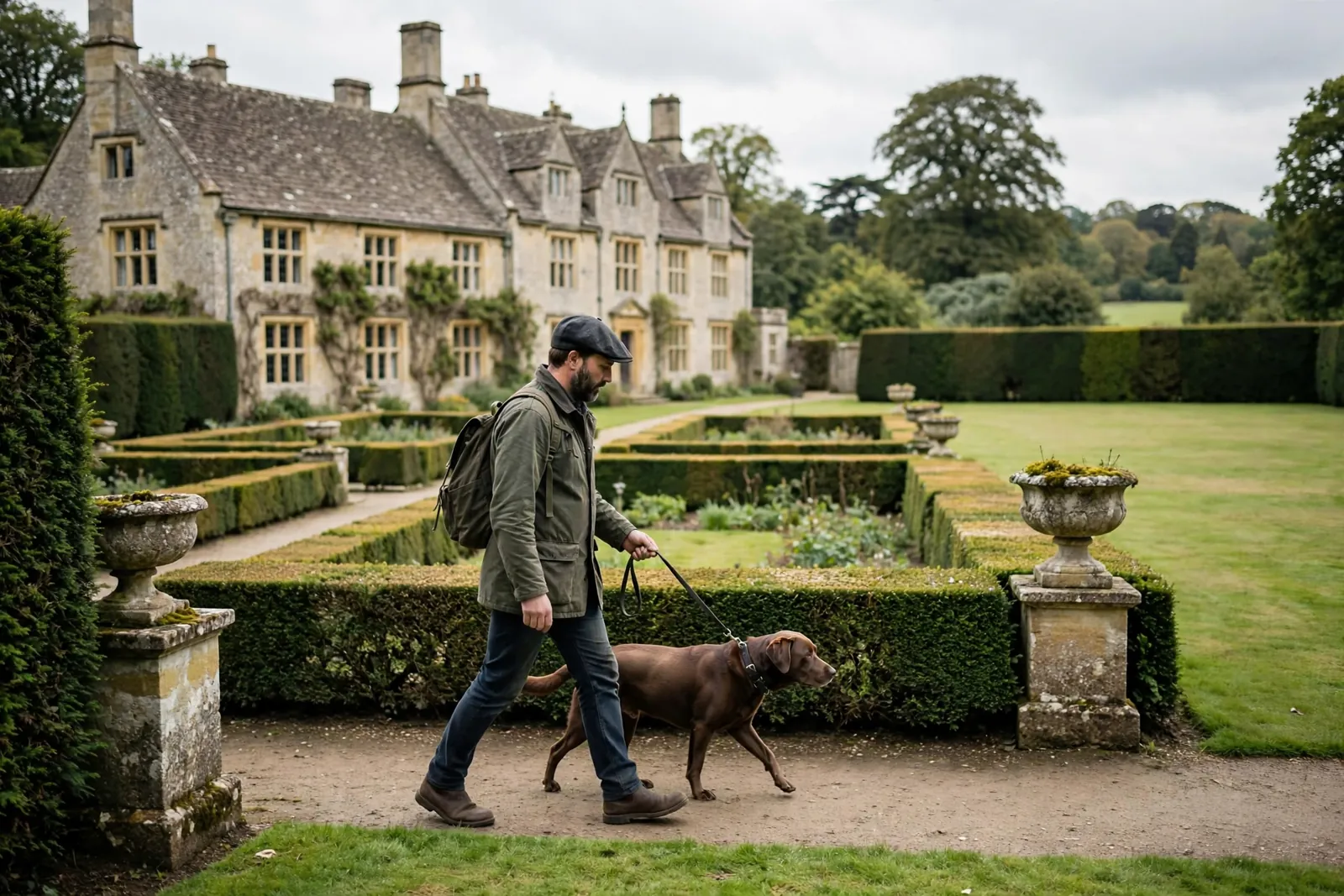
Garden visiting is the area where dog owners most often meet disappointment in the Cotswolds, because a famous garden being open to the public says nothing about dogs. The common pattern at formal gardens and grand houses is that dogs, if they are admitted at all, are restricted to terraces, parkland or designated grounds on a short lead, and are not allowed into planted garden rooms, glasshouses, shops or cafes. Some venues admit only assistance dogs. Others welcome dogs in wider estate parkland while keeping the ornamental garden itself dog-free, which can still make a lovely half-day if you plan the visit as a parkland walk with a terrace coffee rather than a garden tour with the dog trailing behind.
Plan garden days as split visits where needed. Two adults can take turns inside a dog-free garden while the other enjoys the grounds with the dog, which is far better than leaving a dog in a car — something that should never happen in warm weather and is a poor plan in any weather. Before travelling, check each venue's own dog page for the current rules on leads, areas, water points and seasonal closures, and check the official latest guidance before you travel if anything is unclear. Our guide to dog-friendly National Trust places explains the paw-print rating system used at many properties and how to read it, which is a helpful model for judging venues generally: a top rating means dogs are woven into the visit, a low rating means the dog experience is essentially the car park and the perimeter.
Where dogs are allowed into grounds, keep the same discipline as in villages: short leads near planting, cafes and other visitors, no entering flower beds or long grass borders, and bags carried out to a bin. Garden staff judge all dog owners by the last one they met, and access for dogs at historic venues has been withdrawn at properties in the past after fouling and off-lead incidents. If a venue is dog-free, accept it gracefully and build the day around nearby common or riverside walking instead — the Cotswolds rarely leave you short of an alternative within a short drive.
Parking and peak-season pressure
Parking is the unglamorous detail that decides whether a Cotswolds day starts calmly or in a queue. Famous villages have finite car parks that can fill by mid-morning on summer weekends, bank holidays and during school holidays, and narrow lanes offer little safe overflow. Arrive early — before ten on a peak day is a sensible working rule — or visit headline villages late in the afternoon when day-trip coaches have gone and the light on the stone is at its best anyway. Have a payment method ready, as machines and apps vary, display tickets clearly, and note closing times for car parks that lock gates in the evening. If a car park is full, move on to your alternative plan rather than circling lanes with a hot, impatient dog in the back.
Heat makes parking a welfare issue, not just a logistics one. Never leave a dog in a car on a warm day, even briefly with windows cracked, and be cautious even on mild days if the sun is strong — a lunch that requires the dog to wait in the car is a lunch to rebook somewhere dog-friendly instead. Choose shaded parking where it exists, walk dogs on grass verges rather than hot tarmac at midday, and carry extra water in summer because village taps and bowls cannot be relied upon. In winter the pressures reverse: fewer crowds but muddy overflow parking, flooded lanes after heavy rain and limited daylight for afternoon walks, so a torch and a towel in the car earn their place.
A calmer strategy is to park once and walk more. Basing a day around one car park, one circular walk that passes through a village and one pub removes repeated parking stress entirely and gives the dog a joined-up day rather than a series of car journeys. market towns with larger car parks, rail stations and proper facilities can make better hubs than the smallest famous villages, with quieter lanes radiating out to the countryside most visitors never reach. Whichever pattern you choose, save the car park location and closing time in your phone before you walk away — signal is patchy in valleys, and a tired dog at dusk is no companion for a navigation muddle.
A calmer two-day pattern
Putting it together, a relaxed two-day pattern might run like this. On day one, start early with a short Cotswold Way escarpment section while the air is cool and the paths are empty, aiming to be off the hill by late morning. Follow it with a village stroll on a short lead before the crowds build, coffee somewhere your dog can sit in a garden, and a booked pub lunch where you have already confirmed the dog-friendly tables. Keep the afternoon deliberately light — a gentle common walk if no cattle are close to your line, or a shaded woodland circuit if they are — and finish with an early evening and a familiar routine at your base. The dog gets one substantial walk, several interesting short ones and long rests in between, which suits most dogs far better than a single exhausting march.
On day two, reverse the emphasis. Begin with a slow village morning in a quieter settlement, visit a garden or estate as a split visit if dogs are grounds-only, and save the longer walk for the afternoon when day visitors thin out. Build in the checks this guide keeps returning to, because they are the difference between a smooth trip and a stressful one: confirm pub and garden dog policies before you travel, check the official latest guidance before you travel for walks and venues, scan every common for livestock before relaxing the lead, and keep an alternative car park and an alternative village in mind for peak days. None of these habits takes more than a few minutes, and together they protect the things people actually come to the Cotswolds for — unhurried lanes, long views, good lunches and a dog asleep under the table at the end of the day.
Finally, pack for the Cotswolds you will actually meet rather than the one in the brochure. A fixed short lead and a long line, a mat for pub floors, towels for limestone mud, water and a bowl that live in the car, poo bags in every pocket, and a printed note of your accommodation, vet and parking details will cover most surprises. Add tick awareness after woodland and long-grass walks, paw checks for grit and thorns on stony tracks, and a plan to rinse muddy legs before cottage carpets, and you are ready. The Cotswolds reward exactly this kind of quiet preparation: dogs are woven into rural life here, and owners who respect livestock, villages and venues will find the welcome is genuine and lasting.
New Cotswolds town guides, published 2 November 2026
For town-by-town detail, the new guides below cover walks, parking and pubs for five Cotswolds towns, and link back to this overview.
Practical questions
Before you go
Can dogs walk the Cotswold Way?
Yes, dogs can walk most of the Cotswold Way, but keep them on a lead through farmland, near livestock and on busy village sections. Break the route into short sections, carry water, and check the official latest guidance before you travel, as diversions and livestock moves can change conditions.
Do I need to keep my dog on a lead in Cotswolds villages?
Use a short lead in villages such as Bourton-on-the-Water and Bibury, especially beside rivers, roads, cafes and crowds. It protects ducks and other visitors, prevents pavement tangles, and keeps your dog clear of dropped food. Save long lines for quiet, open ground away from traffic and livestock.
What should I do if cattle are grazing on a common?
Give cattle a wide berth, keep your dog on a short lead and stay calm and quiet. If cattle move towards you, let go of the lead so your dog can move away, and leave by the nearest gate or boundary. Never place yourself between a cow and her calf, and check signs on arrival.
Are dogs allowed in Cotswolds pubs and gardens?
Many pubs welcome dogs in the bar or garden, but lounges and dining rooms are often dog-free. Formal gardens usually allow dogs only on terraces or in grounds, if at all. Policies vary by venue and season, so check each venue directly before you travel and do not assume access.
When is the best time to visit the Cotswolds with a dog?
Late spring and early autumn usually offer the calmest balance of open pubs, manageable parking and mild walking weather. Summer weekends in famous villages can be very crowded and hot. Whatever the season, arrive early, walk in the cooler parts of the day and check the official latest guidance before you travel.