This guide is independent and contains no paid placement. If affiliate links are added later, they will be clearly marked and will not change our editorial checks.
Blairgowrie is one of the most practical dog-friendly bases in Perthshire: the River Ericht path starts in the town centre, the Cateran Trail begins here, and the High Street has cafes and pubs where dogs are welcome. Walk the river first, eat in town second, and use the town as a base for the glens, Dunkeld and Pitlochry.
Why Blairgowrie works with a dog
Blairgowrie sits on the edge of the Highlands in Perth and Kinross, where the River Ericht runs through the town on its way south towards the River Isla and, eventually, the Tay. It is a working market town rather than a resort, which is exactly what makes it useful for a dog trip: there are supermarkets, vets, a choice of places to eat, and proper pavements, but you can still be on a riverside path within minutes of parking the car. The town grew up around textile mills powered by the Ericht, and the river remains the centre of its geography and its best walk.
For a dog, the appeal is the mix of walk lengths. A short loop along the river suits an older dog or a puppy that is still building stamina, while the same path connects to much longer routes into the surrounding farmland and the lower glens. Dogs that need a proper run can burn off energy on the open stretches, and dogs that prefer a gentle sniff can take the same path at their own pace. The ground underfoot varies: surfaced paths near the town centre, grassy banks further out, and rougher woodland tracks where the river cuts through a gorge. That variety is worth planning around, because a dog that is comfortable on a smooth riverside path may struggle on a steep, rooty bank after rain.
The town is also a sensible base rather than a single stop. Perth is roughly a forty-minute drive to the south, Dunkeld and Pitlochry are within easy reach up the A9, and the road north through the glens leads towards Glenshee and the Cairngorms. That means a weekend in Blairgowrie can combine a town day, a long trail day and a scenic drive day without repacking or changing accommodation. If you are travelling with a dog that dislikes long car journeys, the fact that the best walk starts in the town centre matters more than any of the day trips: you can have a full day out without the dog spending hours in the car.
Finally, Blairgowrie is dog-friendly in the practical sense rather than the decorative one. You will see dogs in the town every day, on the riverside path, outside the shops on the High Street, and in the bar areas of pubs. That does not mean every venue welcomes dogs, and policies do change, so the habit of asking at the door is worth keeping. But the general atmosphere is welcoming, the pace is unhurried, and the town rewards the kind of slow, observant walking that suits dogs best.
The River Ericht riverside walk
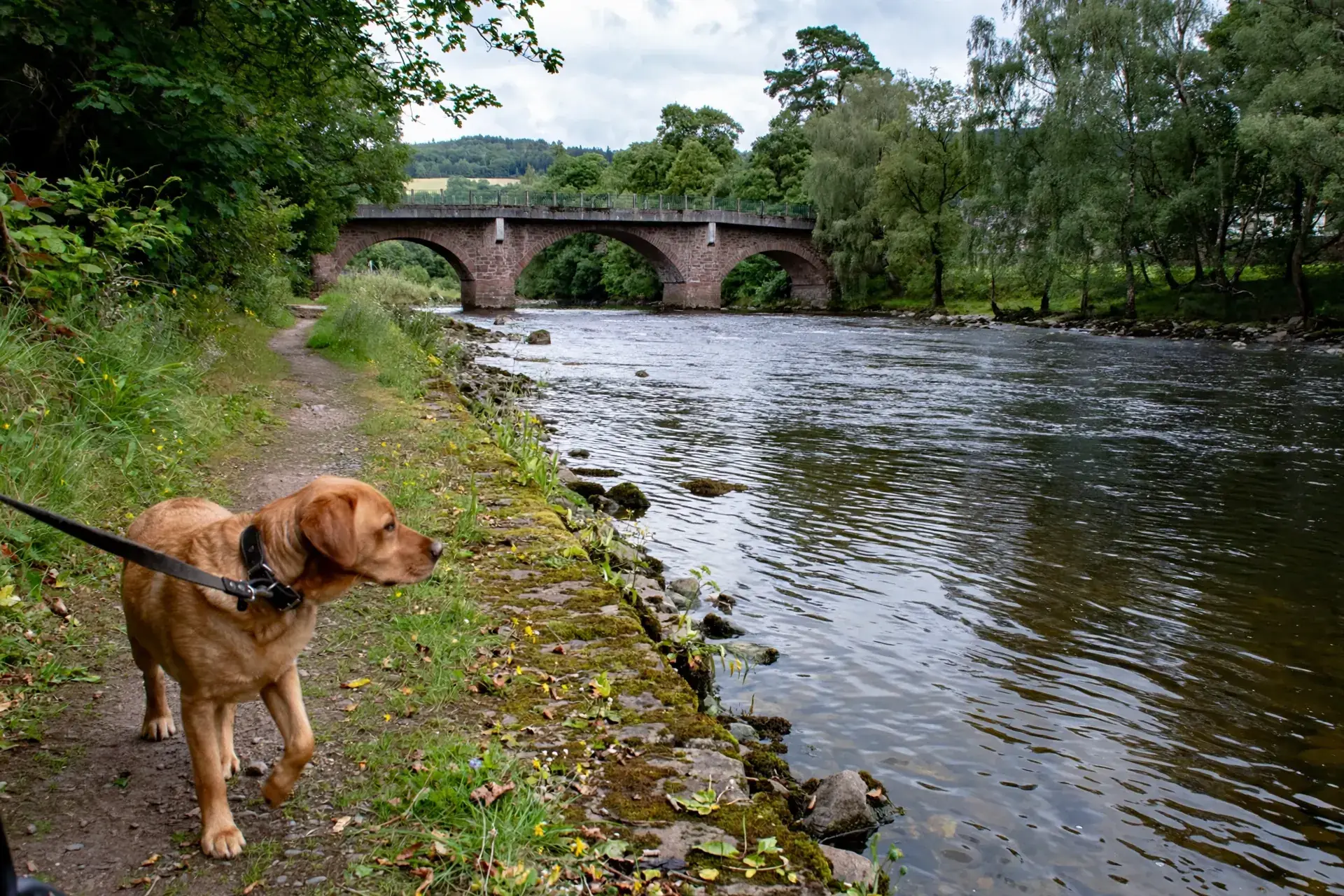
The River Ericht is the walk to do first, and it is the one that tells you whether Blairgowrie suits your dog. Start from the town centre and follow the river downstream, where the path runs beside clear, fast water between tree-lined banks. The Ericht is a lively river: it drops through a series of rapids and small falls as it leaves the town, and after heavy rain it runs high, brown and loud. That is part of its character, and it is also the main safety consideration. Keep your dog on a lead wherever the bank is steep, the path narrows, or the water is running fast, and never let a dog swim in the river after rain, when the current is far stronger than it looks from the bank.
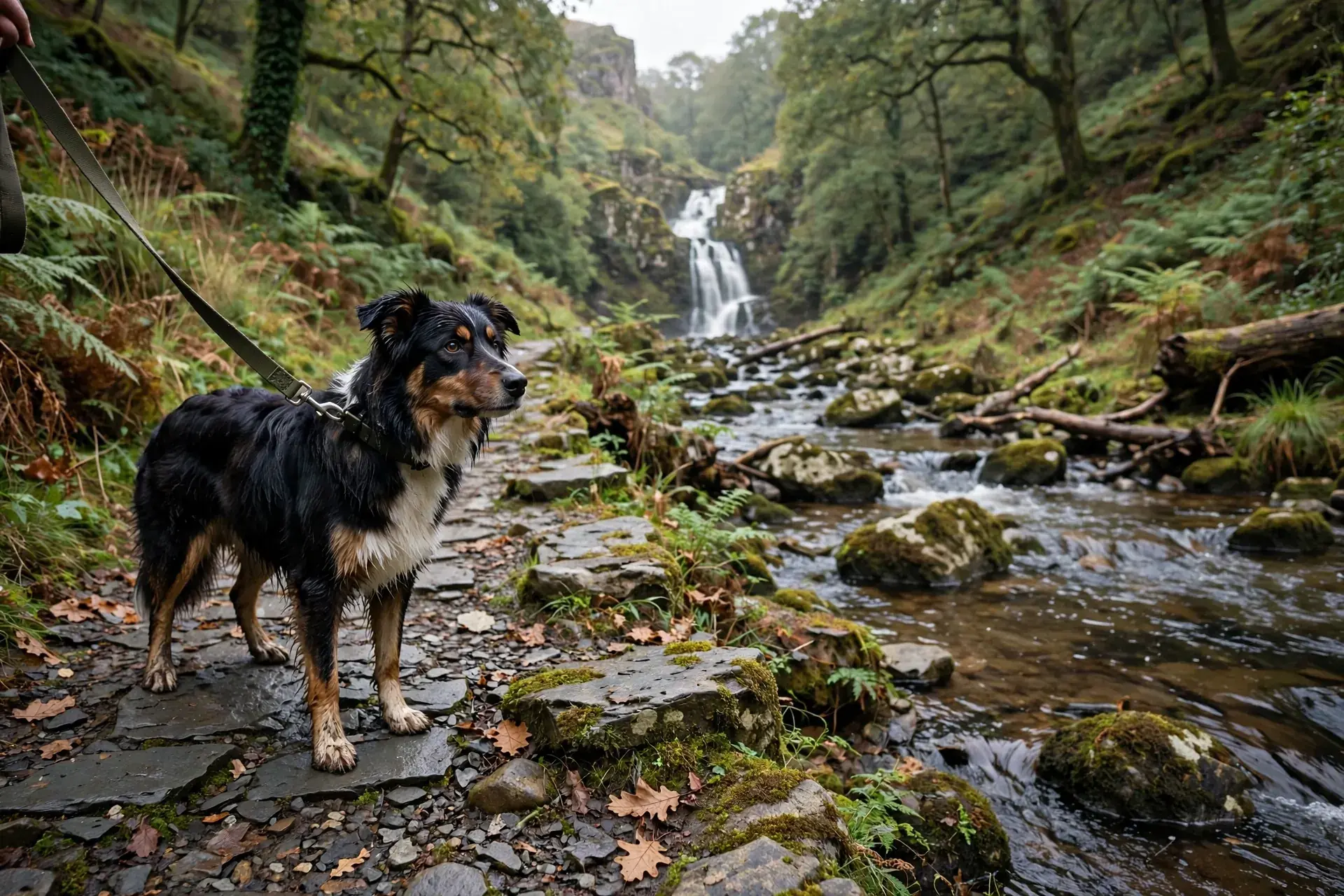
The most photographed spot on the walk is the old stone bridge over the Ericht, where the river passes under a single arch and the banks rise on either side. It is a good place to stop for a photograph, but take the picture from the path rather than scrambling down the bank: the stones at the water's edge are slippery even in dry weather, and a dog that slips in near a bridge pier can be swept downstream before you can react. The same caution applies to the small waterfalls and weirs along the river. Dogs are naturally drawn to moving water, and the sound of it masks the noise of approaching people, cyclists and other dogs, so keep your attention on the dog rather than the view at these points. Our guide to dogs at waterfalls in the UK covers slippery rocks, rising water and safe viewing distances in more detail, and the same principles apply on a river walk like this one.
Further along the path the river calms, the banks open into grass, and there are stretches where a dog with reliable recall can enjoy a longer lead or, where appropriate, a period off lead. Judge each stretch as you reach it rather than deciding in advance. A quiet weekday morning is very different from a busy Sunday afternoon, when the path carries walkers, runners, cyclists, children and other dogs. If your dog is reactive, or if you are walking two dogs together, the busier stretches are easier on a short lead with space to step aside. The grassy sections also attract anglers in the fishing season, so give anyone with a rod a wide berth and keep your dog out of the water near them.
Plan the walk around the weather and the season. In summer the riverside is shaded and cool, which suits dogs that overheat, but midges can be a nuisance near still water and long grass in the evenings, so a morning walk is usually the better choice. In autumn the trees along the Ericht turn, the path is covered in leaves, and the light is at its best, but the leaves hide mud and uneven ground, so watch your footing and your dog's paws. In winter the daylight is short, the path can be icy where it runs in shade, and the river runs high after rain; a shorter, well-lit loop is the sensible option. In spring the water is cold and fast with snowmelt and rain, and ground-nesting birds are active in the riverside scrub, so keep dogs close to the path through the breeding season.
A practical tip: walk the river loop before you decide how far to go. The first half-hour tells you how your dog is coping with the terrain, the water noise and the other users of the path. If the dog is relaxed and the ground is dry, extend the walk along the quieter stretches. If the dog is pulling towards the water, barking at the rapids, or tiring on the uneven ground, turn back at the bridge and finish with a gentle loop through the town instead. A walk that ends well is worth more than a walk that goes too far.
Exploring the town centre on foot
Blairgowrie town centre is compact and walkable, built around the High Street and the Wellmeadow, the open green at the heart of the town. A slow circuit of the centre takes well under an hour on foot, which makes it a good second walk of the day after the river, or a gentle option for an older dog. The pavements are wide enough for a dog on a lead in most places, though the High Street can be busy with delivery vans and shoppers on a Saturday, so keep the lead short and your dog on the inside, away from the road.
The Wellmeadow is the town's natural meeting point, a grassy open space where you can pause, let the dog have a drink, and get your bearings before heading on. It is also the place where the town's events and markets happen, so if you visit on a market day, expect crowds, stalls, food smells and other dogs, all of which can overstimulate a nervous dog. On a quiet weekday it is simply a pleasant green in the middle of town. Either way, treat it as a pause point rather than an off-lead exercise area: it is an open public space next to roads, and it is shared with children, picnickers and other dog walkers.
Walking the town centre with a dog is also a good way to sort out supplies. There are supermarkets and independent shops on and around the High Street where you can pick up dog food, treats and anything you forgot to pack, and a pet shop is worth finding early in the trip rather than late. If your dog needs a particular food, buy it before you head out to the glens, where shops are smaller and choice is narrower. The town centre also has cash machines, a pharmacy and a post office, which are the unglamorous details that matter on a trip with a dog: a forgotten lead, a cut paw or a lost poo-bag supply is much easier to fix here than twenty miles up a glen.
Take the town centre at a dog's pace. Stop at the corners, let the dog sniff the lamp posts, and watch how they react to the traffic and the crowds. A dog that is relaxed in the town centre will be relaxed everywhere else in Blairgowrie, and a dog that is stressed by the High Street is telling you to plan the rest of the day around quieter paths. The town rewards that kind of attention: look up at the old mill buildings, notice where the river disappears behind the shops, and you will see a town that was built around water, wool and work, not around visitors.
Longer walks around Blairgowrie
Blairgowrie is best known to walkers as one of the starting points of the Cateran Trail, a long-distance circular route of around sixty-four miles through Perthshire and Angus. The full trail takes several days and is far too much for a single outing with most dogs, but it is designed to be walked in sections, and the stages around Blairgowrie make excellent day walks. The trail runs through farmland, woodland and open moor, crosses burns on small bridges, and passes through villages where you can stop for water and a rest. Before you set out, check the official guidance before you travel for current route conditions, any diversions, and livestock on the route: the trail crosses working farmland, and sheep and cattle are a regular feature, so dogs should be on a lead wherever livestock is present, even if the dog has never chased anything.
For a first longer walk, choose a section of the Cateran Trail that starts and finishes in or near Blairgowrie, and arrange transport back if you walk a one-way stretch. A circular route of six to eight miles is a full day for most dogs, including stops, and you should carry water for the dog as well as for yourself: burns and streams along the route are not always safe to drink from, particularly after rain or where livestock graze upstream. Pack a small first-aid kit, a spare lead, poo bags and a towel, and check the forecast before you leave, because the weather in the glens can change fast and there is little shelter on the open sections. If your dog is young, old, or unfit, start with a shorter section and build up over the trip rather than attempting the longest stage on the first day.
Beyond the Cateran Trail, the countryside around Blairgowrie offers quieter country lanes, farm tracks and woodland paths that suit a shorter, gentler walk. The villages of Rattray, just across the river, and Bridge of Cally and Kirkmichael to the north, are all worth a visit, and the lanes between them are generally quiet, with grassy verges where a dog can walk comfortably. Keep to the verges, keep the dog on a lead on the lanes, and step well off the road when a vehicle approaches: country drivers do not always expect a dog walker around the next bend, and a dog on a long lead can drift into the road without warning.
To the north, the road climbs towards Glenshee and the Cairngorms, where the walking becomes hillier and more exposed. The lower glens offer a good middle ground: riverside paths, birch woodland and open hillside, with views that open up as you climb. If you plan a hill walk with your dog, think about the dog's fitness honestly. A fit, experienced dog will enjoy a long climb, but a dog that is used to flat park walks will struggle, and the descent is often harder on joints than the ascent. Start early, carry more water than you think you need, and have a plan for turning back if the weather closes in or the dog tires. The hills will still be there tomorrow.
Dog-friendly cafes and pubs
After a riverside walk, the question is where to sit down with a dog, and Blairgowrie answers it reasonably well. Several cafes and pubs in the town welcome dogs, most commonly in a bar area, on a terrace, or in a specific dog-friendly section, and a few have water bowls and dog treats at the counter. Policies vary by venue and by season, and they can change without warning, so the single most useful habit is to ask at the door before you settle in. A quick "are dogs welcome inside?" takes five seconds and avoids the awkward business of unpacking a dog under a table and then being asked to move.
Choose your venue with your dog in mind, not just your appetite. A quiet cafe with a corner table and a mat on the floor suits a dog that settles quickly, while a busy pub at lunchtime, with food being carried past and other dogs under nearby tables, suits a confident, well-socialised dog and will overwhelm a nervous one. If your dog barks at strangers or lunges at passing dogs, pick a table near the door or outside, where you can leave quickly and where the dog has fewer triggers. Bring a mat or blanket for the dog to lie on, a water bowl, and something to chew: a dog that has a job to do under the table is a dog that is not watching every person who walks past.
Terrace seating is the easiest option in good weather, and Blairgowrie has pavements and outdoor areas where a dog can sit beside you without being in anyone's way. In poor weather, the indoor dog-friendly areas matter more, and they are worth identifying in advance rather than discovering in the rain. If you are staying for several days, try one venue on the first day and, if it works, return there: staff remember regular dogs, the dog learns the routine, and the whole visit becomes easier each time. A cafe that works for your dog is worth more than a cafe with a better menu that does not.
On the practical side, keep your dog on a lead at all times inside a cafe or pub, even if the dog is asleep, and keep the lead short enough that it cannot trip a member of staff carrying hot food. Do not feed your dog from the table, do not let the dog beg from neighbouring tables, and clean up any mess promptly and without fuss. If the dog becomes restless, whines or barks, take it outside for a short walk and come back only if it settles; a dog that is not coping is telling you the visit has gone on long enough. Most venue staff are dog owners themselves and will be sympathetic, but their first responsibility is to all of their customers, and a dog that is looked after well is a dog that will be welcomed back.
Where to stay with a dog
Blairgowrie has a useful range of dog-friendly places to stay, from hotels and guest houses in the town to self-catering cottages and lodges in the surrounding countryside. The right choice depends on your dog. A hotel room with a ground-floor entrance and a garden to step into suits a dog that needs frequent toilet trips, while a self-catering cottage with an enclosed garden suits a dog that needs space to stretch and a family that wants to cook. A lodge on the edge of town suits a dog that barks at hallway noise, because there are fewer neighbours to disturb. Think about the dog first and the building second.
When you book, ask the questions that the listing does not answer. Is there a limit on the number of dogs, and does the pet charge apply per dog or per stay? Are dogs allowed in the bedroom, or only in a specific room? Is there a garden, and is it fully enclosed, and how high is the fence? Can the dog be left alone in the room, and if so, for how long and under what conditions? Is there a charge for cleaning, and is there a damage deposit? Get the answers in writing with your confirmation, because "dog-friendly" on a listing can mean anything from "dogs are genuinely welcome everywhere" to "one small dog is tolerated in a single room at the back".
On arrival, make the first hour boring. Walk the garden or the nearest green before you unpack, check the boundaries for gaps a dog could slip through, and set up the dog's bed, water bowl and familiar blanket in the place where the dog will sleep. Photograph any existing damage to the room, move anything chewable or dangerous out of reach, and keep the dog on a lead until you know the layout. If you are staying in a cottage, find the nearest practical toilet spot after dark and the nearest vet, and save both in your phone. The first evening sets the pattern for the whole stay: a dog that settles on night one will settle every night.
If you are staying in the countryside outside Blairgowrie, add one more check to your arrival routine: the drive to the nearest shop and the nearest vet. A cottage ten miles up a glen is a wonderful base, but a forgotten tin of dog food or a cut paw becomes a forty-minute round trip. Stock up in Blairgowrie before you drive out, keep a torch by the door for the last walk of the day, and be ready for the fact that mobile signal can be patchy in the glens, so download offline maps and save the accommodation's address and phone number before you leave the town. A little preparation in Blairgowrie saves a lot of improvisation later.
Getting there, parking and arrival
Blairgowrie is reached by road from Perth, which is the nearest city, and from Dundee to the east. The drive from Perth takes roughly forty minutes on a good day, and the route runs through pleasant farmland and small villages, so it is an easy drive for a dog that travels well and a manageable one for a dog that does not. If your dog gets travel sick, keep the car cool, stop once on the way, and avoid feeding a large meal just before you set off. A familiar blanket on the seat, a window cracked for fresh air, and a calm voice do more for a nervous traveller than any gadget.
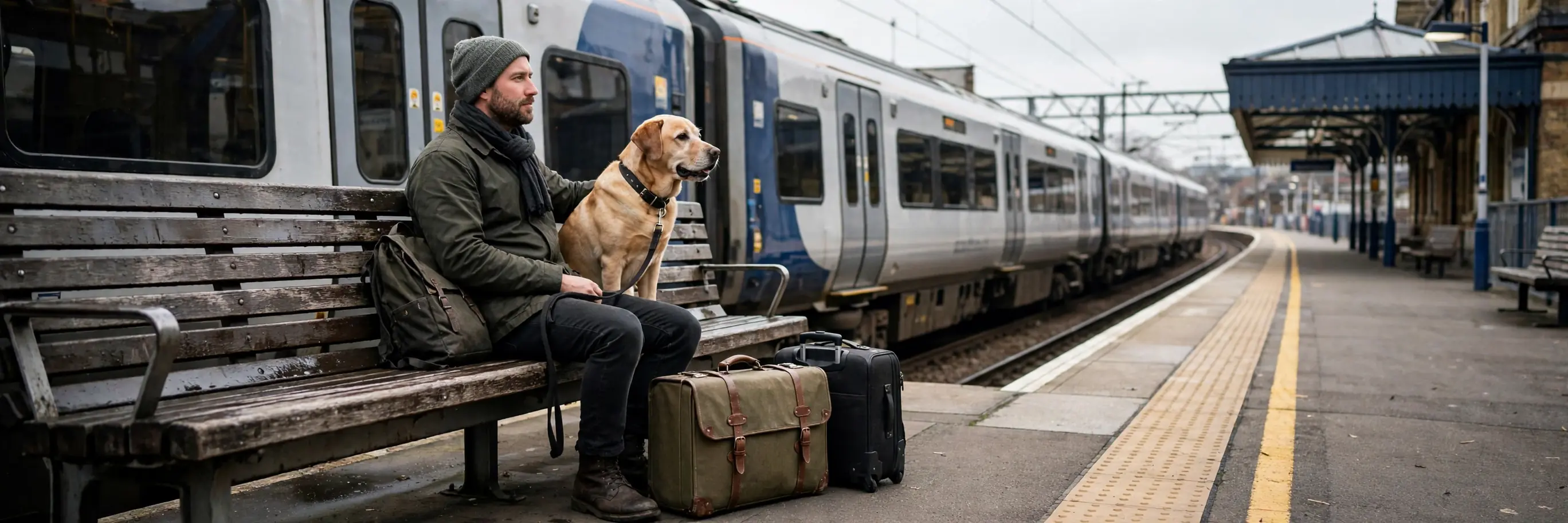
There is no railway station in Blairgowrie itself, so rail travellers usually come through Perth or Dunkeld and Birnam, then take a bus or a taxi for the last leg. If you are arriving by train, plan the connection in advance rather than hoping for a taxi at the station: services are less frequent in the evenings and on Sundays, and a dog adds a complication to any unplanned wait. Our guide to dog-friendly train stations in the UK covers waiting rooms, platform changes and the practical side of travelling with a dog by rail, which is worth reading before you book tickets. Once you are in Blairgowrie, the town is small enough to explore on foot, and the bus services to Perth and the surrounding villages are useful for a dog that is comfortable on public transport, though you should check the operator's rules before you travel.
Parking in Blairgowrie is straightforward. There are car parks around the town centre, including near the Wellmeadow and the High Street, and on-street parking on the quieter side streets. Check the signs at each car park for time limits and charges, because these change, and do not assume that a car park that was free on your last visit is still free. Arrive early on summer weekends, market days and school holidays, when the town centre fills up and the riverside paths are at their busiest. If you are staying overnight, ask your accommodation about parking: some places have their own spaces, and some expect you to use a public car park, which matters when you are unloading a dog, luggage and a week's worth of supplies.
On arrival, give the dog a proper walk before you do anything else. Park, walk the riverside path for half an hour, let the dog drink, and then sort out lunch, shopping or check-in. A dog that has had a walk and a drink is a dog that will settle in a cafe, a shop or a car, and the town will make more sense to you once you have seen it from the river. If you arrive in the rain, keep the first walk short and the drying routine ready: a wet dog in a car or a cafe is a miserable companion, and a towel in the boot is worth more than an umbrella.
Day trips from Blairgowrie
Blairgowrie makes a good base for day trips because the drives are short and the destinations are varied. Dunkeld, about half an hour to the west on the A9, is a small cathedral town on the River Tay with riverside walks, a historic centre and a well-known loch nearby where ospreys nest in the summer. The walks around Dunkeld are wooded and gentle, which suits dogs that prefer shade and soft ground, and the town has cafes where dogs are welcome. Pitlochry, further up the A9, offers a busier small town with a dam and fish ladder, woodland walks and a theatre, and it is a good choice for a day when you want a town with more to do and more places to eat.
Perth, to the south, is the nearest city, and it is worth a day for its riverside walks along the Tay, its parks and its museums. The North Inch and South Inch are large open greens where dogs can be exercised, and the riverside paths are long and flat, which suits older dogs and dogs that need a steady, unhurried walk. Perth also has the practical advantage of being a city: more vets, more pet shops, and more choice of places to eat, so it is a good place to restock or to spend a wet day when the glens are not appealing. Keep your dog on a lead in the busier parts of the city, and remember that city pavements in summer can be hot underfoot, so walk early and check the ground with your own hand before you set off.
To the north, the road through Glenshee climbs into the Cairngorms, and the scenery changes completely: open moorland, high passes and long views. This is a driving day as much as a walking day, and it suits a dog that travels well and is happy to hop in and out of the car for short walks at viewpoints and picnic spots. Stop often, keep the dog on a lead near the road, and be aware that the weather at the top of the pass can be very different from the weather in Blairgowrie: wind, rain and low cloud can arrive in minutes, and a dog that is comfortable in the valley may be cold and unhappy on an exposed hillside. Carry a coat for the dog if yours feels the cold, and have a warm, dry car to come back to.
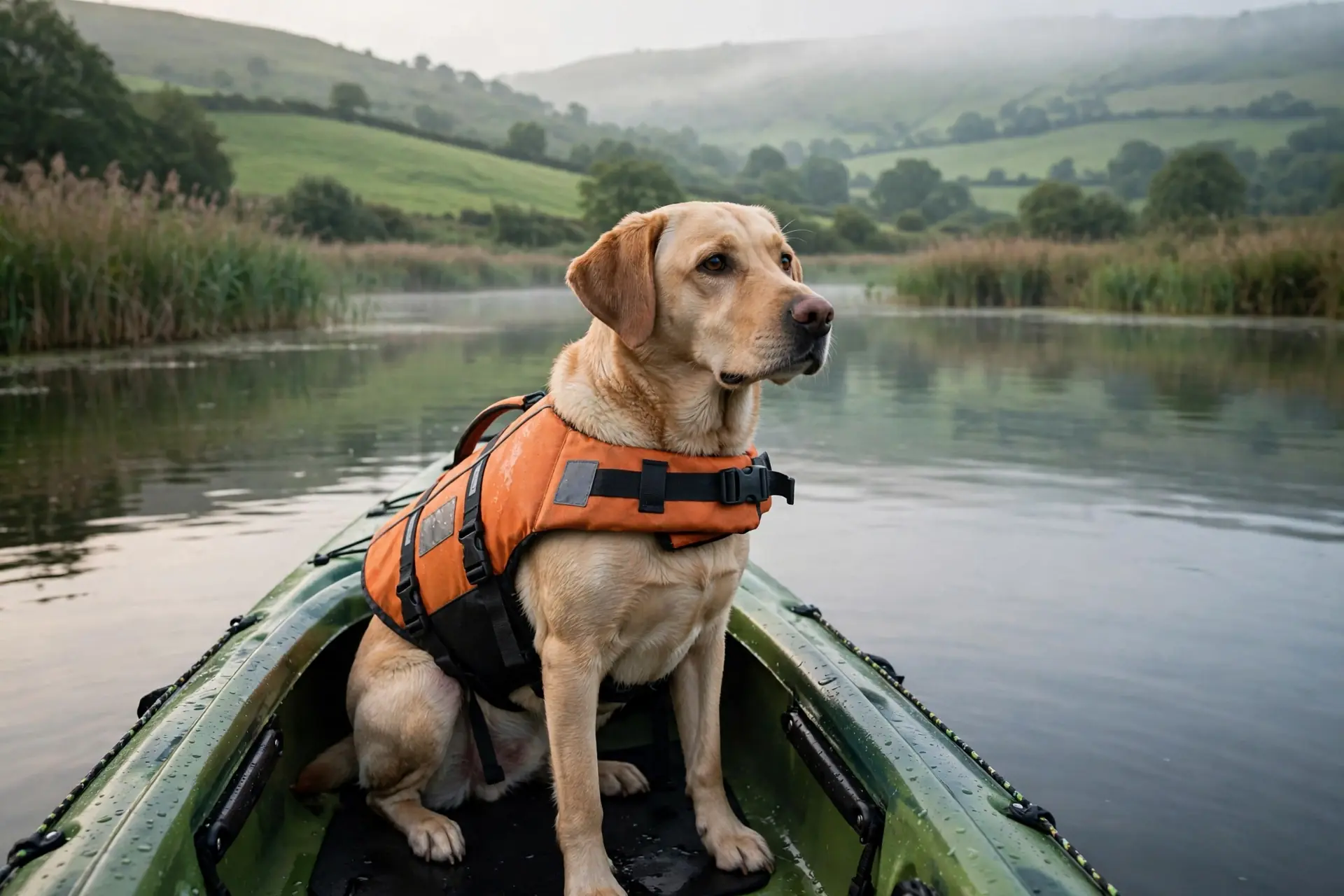
For a different kind of day, the River Tay offers calm-water paddling near Perth, and if your dog is comfortable on the water, a short, sheltered trip can be a memorable change from walking. This is not something to attempt without preparation: the dog needs a properly fitted life jacket, the water needs to be slow and the weather settled, and you need to know how your dog reacts to being on a boat before you commit to a long stretch. Our guide to dogs on kayak trips in the UK covers life jackets, boarding training and capsize safety, and it is worth reading before you book anything on the water. If paddling is not for your dog, a riverside walk along the Tay gives you the same scenery with both feet on dry land.
Practical tips: vets, shops and seasons
Before you travel, save three numbers in your phone: the nearest veterinary practice in Blairgowrie, the nearest out-of-hours emergency vet, and your own vet's number in case you need your dog's records. Blairgowrie has veterinary practices in and around the town, and Perth has larger practices a short drive away. If your dog is on medication, bring more than you need for the trip and keep it in its original packaging with the prescription, because replacing a specific medication in an unfamiliar town can take time. If your dog has a medical condition, tell your accommodation in advance: a dog that needs a fridge for medication, a quiet room to recover in, or a ground-floor room for mobility reasons is easier to accommodate when the host knows in advance.
Packing for Blairgowrie is packing for Scottish weather, which means layers for you and a drying routine for the dog. Bring a dog coat if your dog feels the cold, a drying coat or two large towels, a spare lead, poo bags, a water bowl and a bottle, and a familiar blanket or bed. A torch is useful for the last walk of the day in winter, when it is dark by late afternoon, and a pair of old shoes for wading through muddy paths will save your best walking boots. In summer, bring a cooling mat or a damp towel for the car, and never leave the dog in a parked car in warm weather, even for a few minutes: the inside of a car heats up far faster than most people realise.
Think about the seasons when you choose your dates. Late spring and early autumn are usually the best time to visit with a dog: the paths are firm, the daylight is long, and the town is quieter than in the school holidays. Summer brings warmer weather and busier paths, and the river is at its most inviting, but it also brings midges, particularly near still water in the evenings, and the sun can be strong on the open stretches. Winter days are short and the Ericht can run high after rain, so plan shorter walks, wear good footwear, and carry a head torch. Autumn is arguably the prettiest season in Blairgowrie, with the riverside trees turning and the light low and golden, but the fallen leaves hide mud and the paths can be slippery, so take your time.
Finally, leave Blairgowrie as you found it. Pick up after your dog everywhere, including on the riverside path and the country lanes, and use the bins provided or take the bag home with you. Keep your dog out of the river near anglers, on a lead near livestock, and under control on the town's pavements. The town welcomes dogs because dog owners, on the whole, look after the place, and a little care from each visitor keeps it that way. If you enjoyed the trip, the best thank-you is to come back in a different season and see the river, the town and the glens change around you.
Practical questions
Before you go
Can dogs go off lead on the River Ericht path?
In places, yes, but the riverside path is not a fully enclosed off-lead area. Keep your dog on a lead near the road crossings, the bridge, and any stretch where the bank drops steeply to fast water. Use a long line on the open grassy sections if your dog has reliable recall, and clip the lead back on before the path narrows or meets other walkers, cyclists and anglers.
Is Blairgowrie a good base for walking the Cateran Trail with a dog?
Yes, Blairgowrie is one of the main starting points for the Cateran Trail, a long-distance circular route through Perthshire and Angus. The full trail is far too long for a single day with most dogs, so walk it in day-sized sections and arrange transport back to town. Check the official guidance before you travel for current route conditions, livestock on the trail, and any seasonal diversions.
Where can I park in Blairgowrie with a dog?
Blairgowrie has car parks around the town centre, including near the Wellmeadow and the High Street, and on-street parking on the quieter side streets. Check the signs at each car park for time limits and charges, as these change. Arrive early on summer weekends and market days, and leave the dog in the car only for the briefest moments, never in warm weather.
Are dogs welcome in Blairgowrie cafes and pubs?
Several cafes and pubs in Blairgowrie welcome dogs, usually in a bar area, on a terrace, or in a designated dog-friendly section, but policies vary by venue and by season. Always ask at the door before settling in, keep your dog on a lead under the table, and bring a mat and water bowl. If a venue has changed its policy, a polite check saves an awkward walk back out.
What should I do if my dog needs a vet near Blairgowrie?
Blairgowrie has veterinary practices in and around the town, and Perth has larger practices and an out-of-hours service a short drive away. Save the number of the nearest practice and the nearest emergency vet before you travel, and note their opening hours. If your dog is injured on a walk, keep them warm and still, carry smaller dogs if you can, and phone the practice for advice before driving.
When is the best time of year to visit Blairgowrie with a dog?
Late spring and early autumn are usually the sweet spot: the riverside paths are firm, the daylight lasts long enough for a proper walk, and the town is quieter than in the school holidays. Summer brings warmer river water and busier paths, while winter days are short and the Ericht can run high and fast after rain, so check the official guidance before you travel and plan shorter, safer routes in poor weather.