This guide is independent and contains no paid placement. If affiliate links are added later, they will be clearly marked and will not change our editorial checks.
Make the Boxing Day walk the fixed point of the day: a familiar, daylight, circular route you can finish before dark, with a pub stop only if you have checked it is open. Most shops stay shut or open late, trains barely run, and the biggest risks are indoors — cooked bones, chocolate and raisins left within reach. Walk early, feed carefully, and skip the sales crowds entirely with a dog.
Why the walk is the whole point of Boxing Day
Most festive days are organised around a table. Boxing Day is organised around a doorway. After a day and a half indoors — visitors, rich food, wrapping paper, a dog doing its best to be polite about all of it — the traditional walk on 26 December is not an extra to squeeze in. It is the reset that makes the rest of the day bearable, for the humans as much as for the dog. Start there, and every other decision gets simpler: lunch can be late, guests can come after, and nobody needs to negotiate with a restless dog in a crowded kitchen.
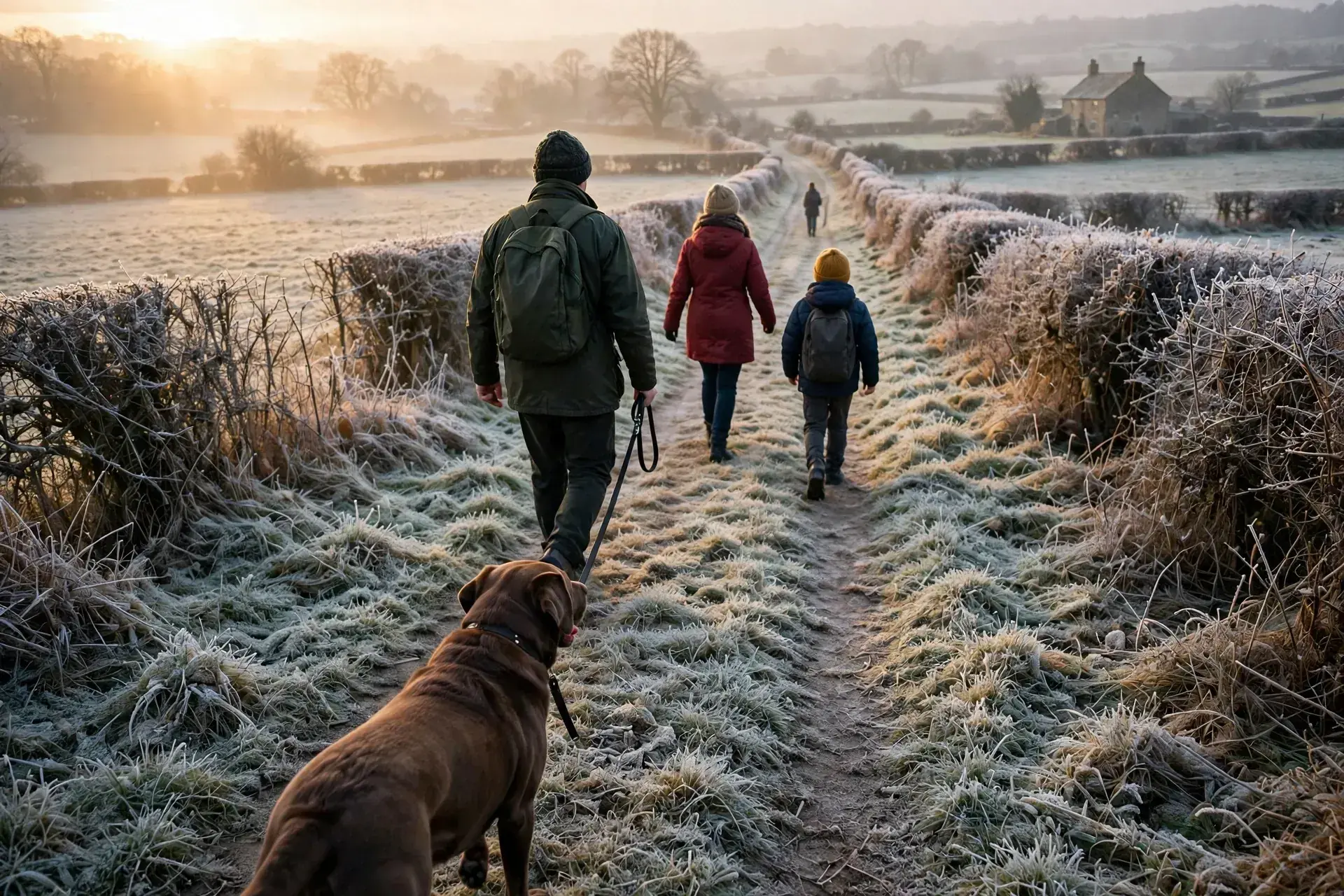
There is a practical reason to put the walk first, beyond tradition. Daylight is at its scarcest at the end of December, with sunset in much of Britain falling between about 3.45pm and 4.30pm depending on how far north you are. A walk left until after a long lunch is a walk that finishes in the dark, on icy lanes, with a dog that has spent all morning watching food it cannot have. A walk taken in the late morning, by contrast, uses the best light, the quietest paths and the frost at its most beautiful, and it returns a tired, settled dog to the house just as the slower part of the day begins.
It also solves the visiting problem. If family or friends are joining you, invite them on the walk rather than around it. A mixed group that would fill a living room uncomfortably spreads out happily along a towpath or a park circuit, children burn off energy alongside the dog rather than in competition with it, and conversation that stalls indoors rarely stalls outdoors. If you are staying away over Christmas, the same logic applies doubly: a proper Boxing Day walk is the fastest way to learn the ground around your accommodation. Our guide to dog friendly Christmas accommodation in the UK covers choosing a base with a good walk from the door, which matters more on 26 December than on almost any other day of the stay.
One caution before you commit to an epic: Boxing Day is not the day to double a dog's usual distance out of festive enthusiasm. Dogs that have eaten rich scraps, slept badly in a noisy house or missed a walk on Christmas Day itself are not primed for a hill expedition. A longer, slower, sniff-heavy version of a walk your dog already knows will do more good than a heroic new route. The sections below work through route choice, timing, what is open, transport, food hazards, cold weather and crowds, in the order you will meet them if you build the day walk-first.
Choose the right kind of route for 26 December
Not every good walk is a good Boxing Day walk. The best routes for 26 December share four qualities: they are circular or there-and-back, so you are never committed to a distant endpoint; they are on ground you can judge in frost or after rain; they have a bail-out option that shortens them if the weather turns or a paw gets sore; and they start somewhere you can reach without depending on public transport. Within those limits, five types of route consistently work well.
- Canal towpaths and riverside paths. Flat, easy to follow in low light, and naturally there-and-back, so distance is entirely in your hands. Towpaths can be icy on shaded stretches and very muddy after rain, and narrow sections mean frequent passing of other dogs and cyclists, so they suit sociable dogs better than nervous ones. Keep dogs out of the water: winter currents are strong, banks are slippery, and a wet dog in December cold is a welfare issue, not a funny photo.
- Country parks and large urban parks. The reliable all-rounders. Surfaced paths hold up in frost, there is usually parking, toilets where facilities are open, and space to give other dogs room. Parks are at their busiest between about 11am and 2pm on Boxing Day, when every household has the same idea, so an earlier start buys you a noticeably quieter circuit. Check car park opening times rather than assuming: some park gates and barriered car parks run holiday hours.
- Woodland circuits on forestry tracks. Gravelled forestry tracks stay passable when field paths turn to porridge, and woods give shelter from wind that makes open ground feel far colder. The trade-offs are gloom — woods get dark well before sunset — and deer, which are active and easily startled in winter. If your dog's recall wobbles around wildlife, keep the lead on and treat the wood as an on-lead walk, however empty it looks.
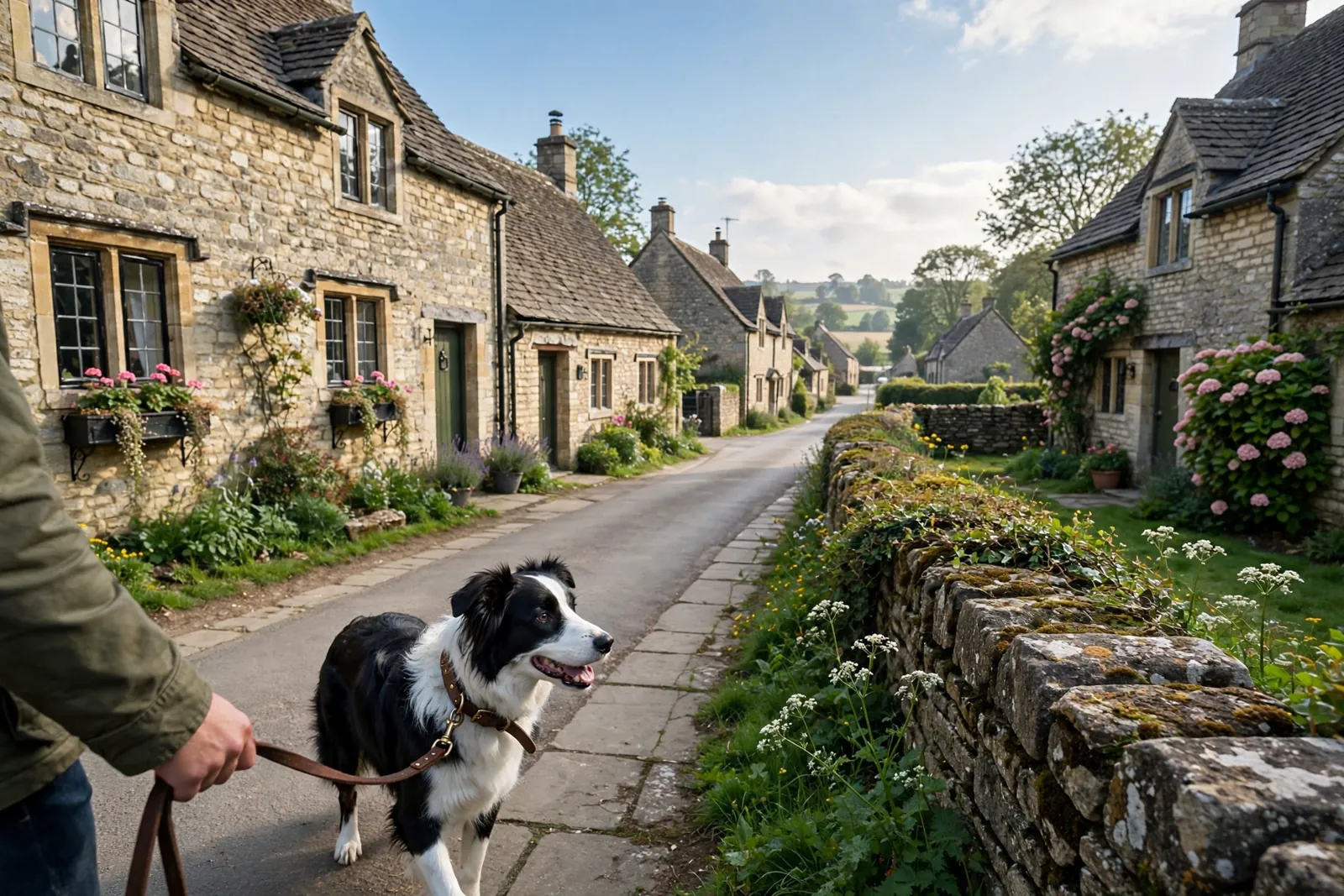
- The local loop, done properly. Do not underestimate the walk from your own front door, extended. A familiar neighbourhood, village or coastal-promenade loop has no travel risk at all, your dog knows every smell, and you can add the field, the common or the beach section that you normally skip for time. For older dogs, puppies and anyone staying with relatives in an unfamiliar town where driving feels like a chore, the local loop is often the kindest choice of all.
- A beach walk, with winter caveats. Many beaches that restrict dogs in summer are open to them in winter, which makes Boxing Day a genuine treat — but always check the local rules for the specific beach before you travel, as restrictions and lead zones vary. Winter seas are rough, tides cut off coves quickly, and cliff paths are exposed. A beach walk in settled, calm weather with a checked tide time is wonderful; the same walk in a gale is not a tradition worth keeping.
Whichever type you choose, walk the route mentally the day before. Where is the icy dip, the flooded gate, the field that held livestock last time? Are there organised events to avoid — many places host Boxing Day swims, fun runs, hunts in areas where they still meet, and football matches, all of which bring crowds, horses, traffic or noise to otherwise quiet routes? A five-minute think on Christmas evening prevents most Boxing Day walk problems. If a route involves farmland, keep to paths, keep dogs under close control around any livestock still out, and remember that wet winter ground damages easily: stick to the line of the path rather than cutting across waterlogged fields.
Timing the day around light, frost and lunch
A workable Boxing Day shape for most households looks like this. A short early toilet walk as normal, because routine matters to dogs even on holidays. Breakfast for everyone, with the dog fed its normal food at its normal time — not a festive fry-up substitute. The main walk starting between about 10am and 11am, once any overnight frost on pavements has had some sun but before park car parks fill. Home by early afternoon for a late, unhurried lunch, with the dog settled first. Then a final short outing in daylight if you can manage it, rather than one long after-dark walk on untreated ice.
Frost deserves specific respect. The slipperiest moment is often not first thing but mid-morning, when a thin melt over ice makes paths treacherous, and again at dusk when wet surfaces refreeze. On pavements, the gritted main road may be safer than the picturesque untreated lane. Build in the option to shorten the walk without feeling you have failed at Christmas: a dog that has had ninety good minutes in daylight has had a proper Boxing Day, whatever the plan said.
Feeding times interact with walking more than people expect. Avoid a vigorous walk immediately after a large meal, for the dog as for the humans, and be especially careful with deep-chested breeds, where exercising on a full stomach is a recognised risk factor for gastric problems. If lunch will be the big meal, walk before it and let the afternoon be genuinely restful. If your household eats early and walks later, keep the dog's lunch small and normal, and wait a sensible interval before setting off. Before any festive trip, check the latest official advice for your exact plans: opening hours, event arrangements and transport timetables for 26 December change year to year, so treat every specific time in this guide as a pattern to verify, not a promise.
What is actually open: pubs, shops and facilities
Boxing Day in Britain is a bank holiday with a split personality. The sales suggest a normal shopping day; the reality for dog owners is closer to a quiet Sunday with extras closed. Plan on the basis that you need nothing, and treat anything open as a bonus.
Pubs are the bright spot. A great many pubs open on Boxing Day, because walkers are their trade, typically for a shorter session centred on lunchtime and sometimes again in the evening. Food service may be a reduced menu, a set festive menu requiring booking, or cold food only, and popular walking pubs fill up fast. Dog welcome, however warm generally, is specific: some pubs allow dogs in the bar but not the restaurant area, some are terrace-only, and a pub that welcomed your muddy dog in October may reasonably ask for clean, towelled dogs in a packed Boxing Day bar. Check the individual pub's website or social media page for its 26 December hours and dog policy before you build it into a route, and take a towel and a settle mat so your dog can be a good guest on a wet floor. Never assume a pub stop as your only source of water for the dog; carry water regardless.
Shops are mostly shut or on short hours. Large stores and supermarkets commonly open for limited hours on Boxing Day where they open at all, small independent shops and most village shops usually stay closed, and many cafes run reduced hours or close. Some large retailers remain closed on Boxing Day as policy. In Scotland and elsewhere, local patterns differ, and Sunday trading rules still shape hours for larger shops in England and Wales. The dog-relevant consequences are mundane but real: do not rely on buying forgotten poo bags, dog food or a replacement lead on the day, and do not rely on a cafe toilet or a shop doorway for shelter. Pack the day before as if nothing will be open, including cash for an honesty-box car park and a flask if a hot drink en route matters to you.
Facilities and attractions sit in between. Many National Trust, English Heritage and similar places open on Boxing Day with winter hours, and their parklands can be excellent walks, but admission arrangements, dog rules by area and cafe opening all vary by property — check the property page for 26 December specifically, not the general winter page. Leisure centres, libraries and council facilities are generally closed. Public toilets in smaller towns may be locked for the holiday. None of this spoils the day if you expect it; all of it spoils the day if you discover it with a full bladder, human or canine, in a full car park.
Getting there on a skeleton service
The simplest Boxing Day transport plan is to not need one: walk from the door, or drive a short distance on quiet roads. If you do need public transport, go in with your eyes open, because 26 December runs one of the thinnest timetables of the year.
On the railways, the longstanding pattern is that most National Rail services do not run at all on Boxing Day. A small number of routes operate a limited service — historically including some airport services and a handful of routes in the south east and elsewhere — but the network is also a major engineering-works window, so even routes that sometimes run may not run in a given year. There is no safe generalisation to plan by. If a train is essential, check the operator and National Rail journey planner for 26 December specifically, allow for last-minute change, and have a driven or walked alternative. Where trains do run, dogs are generally carried under the usual National Rail conditions, but engineering buses replacing trains may have different arrangements, so check that too. For the full picture of travelling with a dog by rail at normal times of year, see our guide to taking a dog on UK trains — then apply a heavy Boxing Day discount to everything it describes.
Buses are a local lottery. Most operators run no service or a Sunday service on Boxing Day, some run special timetables on core city routes only, and rural services often do not run at all. London runs a reduced service with no night-service pattern matching a normal day, and other cities vary. Taxis and private hire may be scarce and priced at holiday rates. The practical rules are these: never plan a one-way walk that depends on a bus home; confirm the return journey, not just the outward one; screenshot timetables the day before in case signal is poor; and keep the dog's walk within a distance you could, at a push, walk back.
Driving brings its own Boxing Day pattern. Roads are quiet early, then busy around retail parks, football grounds and family-visit routes from late morning. Car parks at popular walking spots fill by midday and some operate holiday tariffs or close early. Frost and low sun are the real hazards: glare on a low sun line can be blinding on east–west roads in the morning, and shaded lanes stay icy all day. Give the car a proper de-ice rather than a porthole, keep the dog secured as you would on any journey, never leave a dog in a cold car for a long sales stop — and, as the next sections argue, there is a better use for the day than a sales stop anyway.
The leftover table: what must stay out of reach
Statistically, the most dangerous place for a dog on Boxing Day is not the icy path. It is the kitchen, the low coffee table and the bin. Christmas leftovers concentrate almost every common festive food hazard in one house, at exactly the moment when guests are relaxed, doors are open and nobody is quite sure what the dog just picked up in the hallway. A little system beats a lot of vigilance.
The foods to treat as hard noes are well established. Cooked bones — turkey, goose, ham and rib bones — splinter in ways raw bones do not, and can injure the mouth, throat and gut or cause blockages; never offer them as a treat, however traditional the idea feels. Chocolate is poisonous to dogs, with darker chocolate and cocoa the most dangerous, and Boxing Day adds hidden sources: selection boxes at dog height, chocolate coins in stockings, liqueurs and the tub nobody remembers opening. Raisins, currants, sultanas and grapes can cause serious kidney injury even in small amounts, and they hide in Christmas pudding, Christmas cake, mince pies, panettone and the cheeseboard. Onions, garlic, leeks and chives — in stuffing, gravy, pigs in blankets and cold cuts — damage red blood cells. Add rich fatty scraps and gravy, which can trigger pancreatitis; alcohol, including in sauces and desserts; cooked foods sweetened with xylitol, also listed as birch sugar; macadamia nuts; and mouldy food from fridge clear-outs, where bin-raiding dogs meet blue cheese and old bread at once. If you are unsure about an ingredient, the safe assumption is that the dog does not get it. A dog does not need a Boxing Day dinner; its normal food, perhaps with a small amount of plain cooked meat and vegetables with no onion, garlic, salt-heavy gravy or bones, is celebration enough.
System, then. Clear low tables before people drift to sofas. Put chocolate and puddings in closed cupboards or a shut room, not on a worktop a tall dog can counter-surf. Use a bin with a lid that closes, or put food waste straight into the outside bin, and tell every guest — kindly, once, and clearly — not to feed the dog from plates, however soulful the expression under the table. Children in particular need a simple rule they can succeed at: dog treats come from the dog's own tub, handed over by an adult. Give the dog something legitimate to do while humans eat leftovers: a filled food toy, a lick mat or a long-lasting chew in its own bed, in the room if it settles well or behind a stair gate if the table is too much temptation.
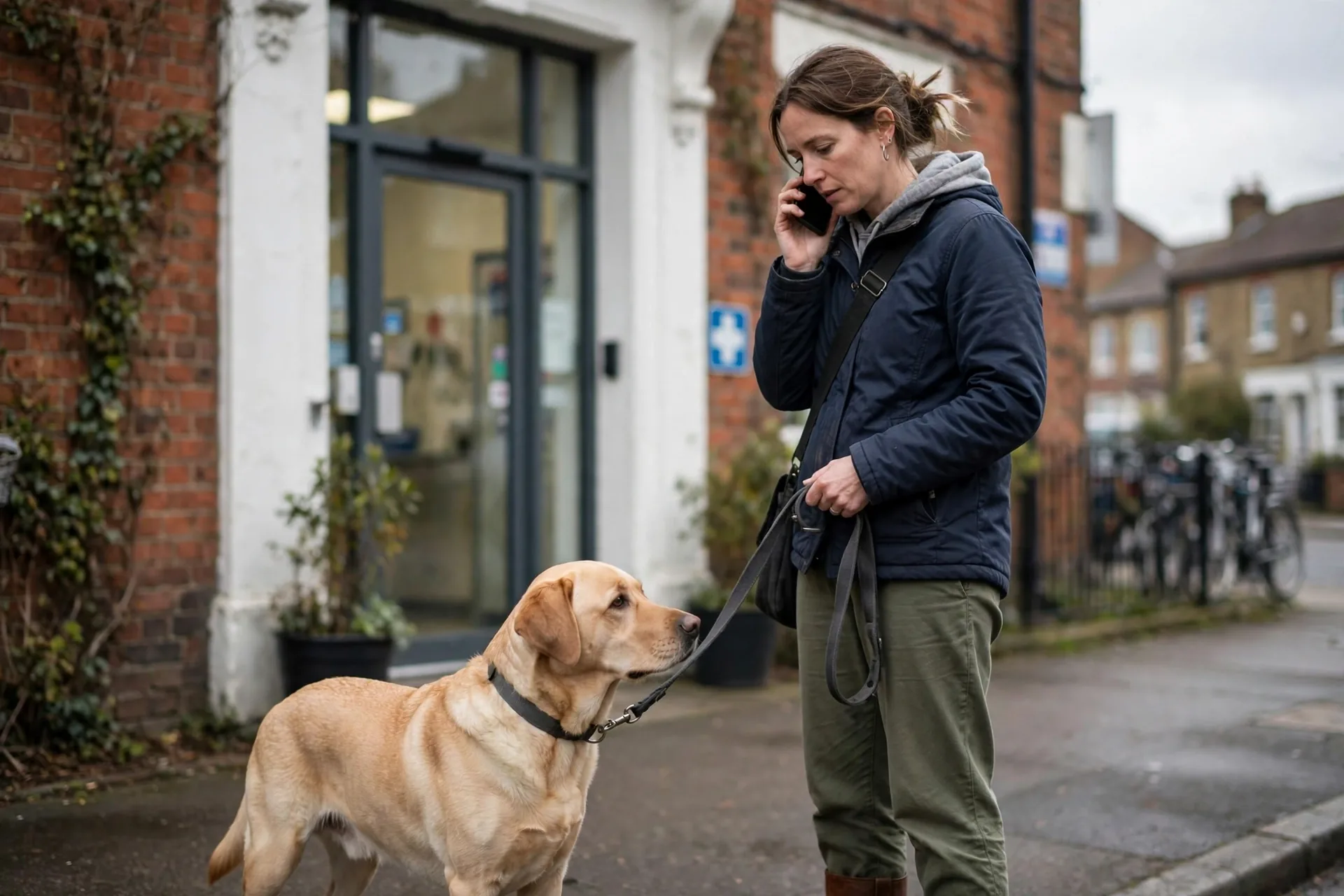
If the worst happens, speed matters more than certainty. Note what was eaten, roughly how much, and when, keep the packaging, and phone your vet or the out-of-hours service straight away rather than waiting for symptoms; for suspected chocolate, grape or xylitol ingestion, early advice changes outcomes. Do not try to make the dog sick unless a vet tells you to. Holiday out-of-hours cover is exactly what our guide to finding an emergency vet on holiday is written for — save your practice's out-of-hours number in your phone before Christmas, not during an emergency on Boxing Day evening. Vets consistently report festive food cases among their most common holiday emergencies; a tidy kitchen is the cheapest insurance you will arrange all year.
Cold, dark and muddy: dressing dog and humans
British Boxing Day cold is rarely extreme, but it is damp, penetrating and paired with wind, which is the combination that chills dogs standing around while humans chat. Whether your dog needs a coat depends on the dog, not the date. Small dogs, thin-coated breeds, short-legged dogs whose bellies sit close to cold ground, puppies, older dogs and dogs with health conditions or a recent clip generally benefit from a well-fitting waterproof coat that covers the chest without restricting the shoulders. Double-coated, active, healthy adult dogs often need nothing but a thorough dry afterwards. Either way, fit matters: a coat that slips, rubs or soaks through and stays on wet is worse than no coat.
Paws take the Boxing Day punishment. Frost, ice balls between toes on long-haired feet, road grit and pavement salt all add up. Trim the fur between pads before the festive period if your dog grows it, check paws at the end of the walk and rinse or wipe salt and grit off rather than letting the dog lick it away, and watch for limping on icy ground, which can mean a strain rather than a cut. On very cold pavements, a dog that keeps lifting or holding up paws is telling you the surface hurts; move to grass or shorten the walk. Balling snow or ice in the coat of long-haired dogs should be melted off with lukewarm water at home, not pulled out.
Humans need the same unglamorous preparation, because a cold, slipping human shortens a dog's walk one way or another. Boots with grip beat trainers on frost, layers beat one heroic jumper once you start climbing, and a headtorch in the pocket is cheap insurance if the walk overruns towards a December dusk: even finishing at 4pm can mean a gloomy last mile under trees. Add a high-visibility element or a light for the dog if any part of the route follows a lane, because low sun blinds drivers in both directions. At home, the drying routine is part of the walk, not an afterthought: towel or drying coat on, wet kit off the radiators the dog's bed sits near, water offered, and a warm room to sleep in. An older dog that has done a longer walk in the cold will often be stiff that evening and the next morning; a shorter second outing, a gentle warm-up potter rather than a ball game, and their usual joint care routine will serve them better than festive exuberance. As ever with health specifics, if your dog has a condition that cold or exercise affects, ask your vet before the holidays what their Boxing Day should look like.
Sales crowds, town centres and why to give them a miss with a dog
The Boxing Day sales are the one part of the day that genuinely does not mix with dogs, and it is worth being blunt about why. Retail parks and high streets on 26 December combine the densest crowds of the year with queues spilling across pavements, automatic doors, dropped food, excited children at dog-face height and a level of noise and jostling that most dogs experience as pure stress. Many shops that open for the sales do not admit dogs anyway — policies vary by retailer and branch, and a dog-friendly policy on a quiet Tuesday does not guarantee entry to a heaving Boxing Day store — so the common outcome is one person shopping while another waits outside in the cold with a miserable dog, which is a poor trade for a discounted kettle.
If someone in your party genuinely needs to shop, split the day honestly rather than compromising both halves. The dog household walks in the morning as planned; the shopper goes separately, by car or on whatever transport is running; nobody leaves a dog in a car in a retail park for an extended stop, even in winter, because theft risk does not take a bank holiday and a cold car with a stressed dog listening to a busy car park is not a neutral place to wait. Dogs that are nervous, reactive, elderly or in season should not be near sales crowds at all, and even a confident dog gains nothing from the trip.
There is a quieter version of Boxing Day town life that does work with a dog, if you want a destination beyond the walk itself: an early potter through a town centre before shops open or in a place where most stay shut, a look at the lights while streets are empty, and home before the crowds build. Market towns and seaside towns on the morning of the 26th, before any sales start, can be at their most atmospheric. Football is the other crowd to plan around: Boxing Day fixtures are a national fixture in their own right, so check whether a local match affects your route, your parking or your drive home, and give stadium surroundings a wide berth with a dog at kick-off and full-time. For more on handling peak-day crowds with a dog generally, the planning approach in our bank holiday weekend breaks guide — go early, go local, keep an exit — is exactly the Boxing Day method too.
Ending the day well: tired dog, calm house
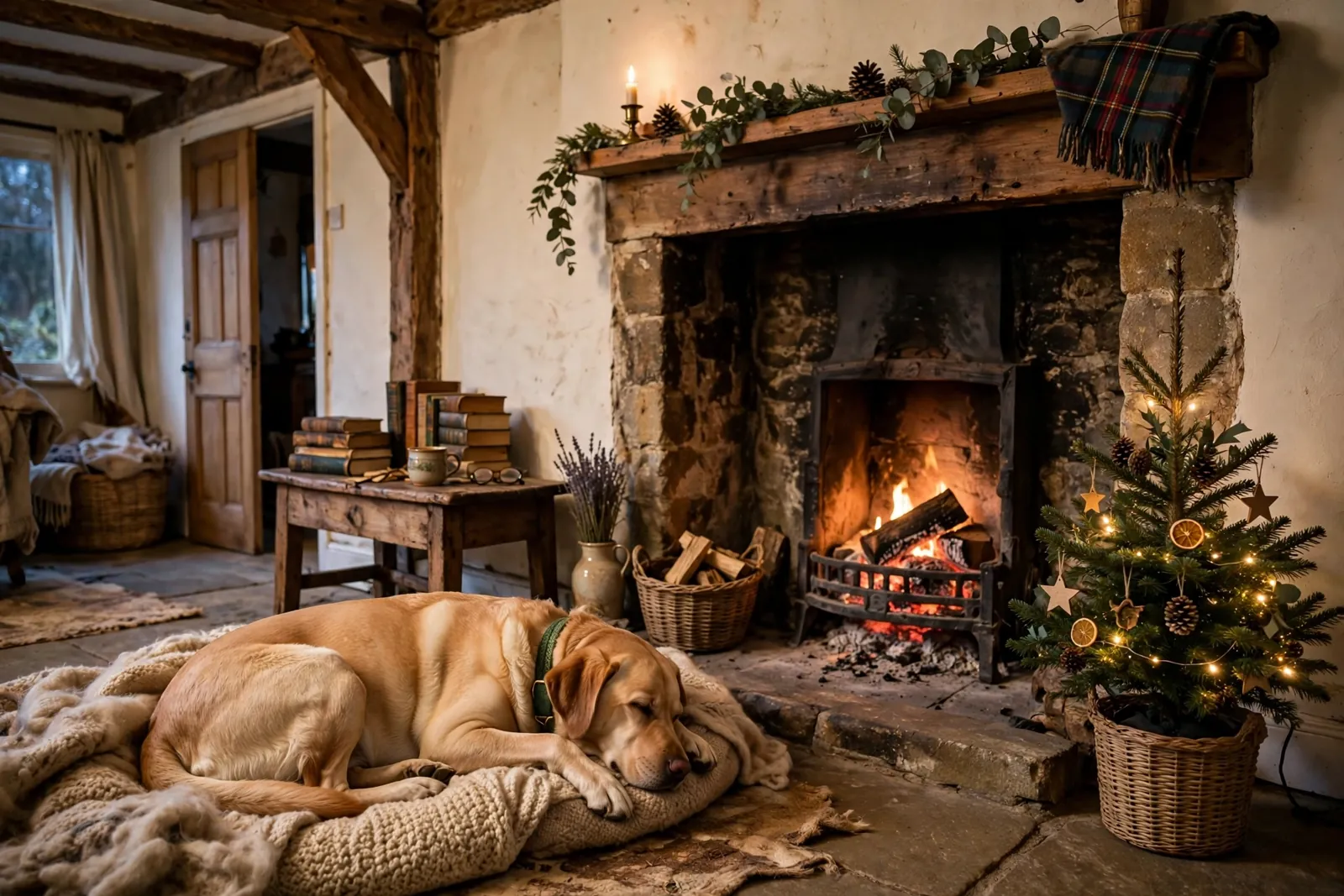
A good Boxing Day ends boringly, and that is a compliment. Home in daylight or just after, dog dried, fed its ordinary dinner at its ordinary time and given a last short outing before the frost hardens, while humans eat leftovers at a table the dog has already learned is not its business. If guests are staying, the evening is when boundaries slip — doors left ajar to rooms where chocolate lives, a well-meaning relative saving the dog a cooked bone — so a two-minute reset of gates, doors and low surfaces before everyone settles is worth more than an evening of shooing.
Expect the dog to sleep deeply, and let it. Puppies and older dogs in particular may be more tired and more stiff than the walk alone explains: festive houses are work for dogs, all that self-control around food, visitors and noise. A quiet day after Boxing Day, with normal walks and normal food, is not a wasted day of the holiday; it is how the dog you take into the new year stays sound and keen. If stiffness, limping, vomiting, diarrhoea or unusual tiredness persists beyond a day, or you know risky food was eaten, speak to your vet rather than writing it off as Christmas excess.
Finally, steal a moment for next year while this year is fresh. Note what worked: the route that was quiet at 10.30am, the pub that needed booking, the cupboard the dog could open, the service that did not run. Boxing Day rewards households that treat it as a small annual expedition with a standing plan, and punishes improvisation in exactly the same places every year. Write the notes on the calendar for next December, put the dog's coat and the headtorch away together, and enjoy the smugness — you have earned the easiest win of the festive week by doing the simple thing first: you went for the walk.
Practical questions
Before you go
Is Boxing Day a good day to walk my dog for longer than usual?
Yes, for most healthy adult dogs, provided you build up sensibly. Boxing Day suits a longer, slower walk with plenty of sniffing rather than a sudden double-distance hike. Puppies, older dogs and dogs recovering from illness should keep to a familiar distance, and every dog needs water, rest stops and a warm car or room to recover in afterwards.
Are pubs open on Boxing Day and can I take my dog inside?
Many pubs do open on Boxing Day, often with shorter hours around lunch and early evening, and walkers with dogs are a core part of the day. Dog rules vary by pub and by room, so check the pub website or social page before you set off and expect busier, muddier bars than usual. If in doubt, plan for a garden or terrace stop only and carry a towel.
What Christmas leftovers are dangerous for dogs?
Keep cooked bones, chocolate, Christmas pudding, mince pies, currants, raisins, sultanas, onions, garlic, rich gravy, alcohol and xylitol-sweetened foods away from dogs. Cooked poultry bones can splinter, and chocolate and dried vine fruits can cause serious poisoning even in small amounts. Bin scraps securely, clear low tables and call a vet promptly if your dog eats something risky.
Do trains and buses run on Boxing Day with dogs allowed?
Services are heavily reduced. Most National Rail trains do not run on Boxing Day, with only a limited service on some routes, and local buses usually run a Sunday or special timetable, if they run at all. Dogs are generally carried under the usual rules where services operate, but you must check the operator timetable for 26 December before relying on any journey.
How cold is too cold for a Boxing Day dog walk?
There is no single temperature, because breed, coat, age and health matter more than the thermometer alone. Watch for shivering, lifting paws, slowing down or seeking shelter, and shorten the walk if you see them. Thin-coated, small, young and older dogs benefit from a fitted coat, while all dogs need paws checked for ice, grit and salt after frosty pavements.