This guide is independent and contains no paid placement. If affiliate links are added later, they will be clearly marked and will not change our editorial checks.
Learn the seasonal beach map first: dogs are banned from the busiest central beaches in summer and welcome on other stretches and outside the season, always under the local signs. Walk the promenade and undercliff path, use Preston Park, Stanmer Park and the South Downs for real exercise, and check each venue and the official council guidance before you go.
The beach rules come first: seasons, zones and signs
Brighton and Hove runs one of the clearest seasonal dog regimes on the south coast, and it still catches visitors out every summer. In broad terms, dogs are not allowed on the busiest designated beaches between the piers and along the central seafront during the summer season, roughly from the start of May to the end of September, while other stretches of beach welcome dogs all year and the restricted beaches open to dogs outside the season. The exact boundaries, dates and wording are set by the council and shown on signs at the beach access points, and they can change, so treat this section as the method rather than the law: check the official council guidance before you go, then read the sign at the steps on the day and obey it even if it differs from anything you read here, including this guide.
Why the split exists is worth understanding, because it makes the rules easier to remember. The central beaches in summer carry the city's whole holiday load — swimmers, families, paddleboarders and sunbathers on shingle that offers very little space to spread out. A dog ban there protects water quality designations, reduces conflict and keeps the swimming beaches workable. Outside those zones, Brighton is a genuinely dog-friendly seafront: dogs on the promenade on leads, dogs on the dog-welcome beaches, and a long undercliff walk east toward the marina and beyond that many local owners treat as their default exercise route. The mistake is assuming the whole seafront shares one rule; it does not, and fines for breaching local orders are real.
Practical beach craft matters on shingle. Pebbles are hard on paws in hot weather and treacherous when algae slicks the groynes, so keep dogs off the groynes and away from the waterline in rough seas, when waves can snatch a ball — and a dog chasing it — without warning. There is no shade on the open beach, the shingle reflects heat, and summer midday visits should be short with water carried for the dog. Tides cut off sections beneath the cliffs east of the marina at high water, so check tide times before committing to the undercliff or beach route east, and keep an exit in mind. Our national guide to UK beach dog rules, bans and fines explains how these seasonal orders and fines work across the country, and it is the right background read before any British beach holiday.
In winter, the bargain flips: the restricted beaches open up, the promenade empties, the sea is dramatic and the city belongs to its residents and their dogs. A winter weekend with storm-watching from a safe distance, long shingle walks and a warm pub afterwards is, for many owners, the best Brighton trip of all — provided you respect closed sections, cliff-fall warnings after heavy rain and the simple rule that a beach in a storm is for looking at, not walking under cliffs.
Promenade, piers and the undercliff walk
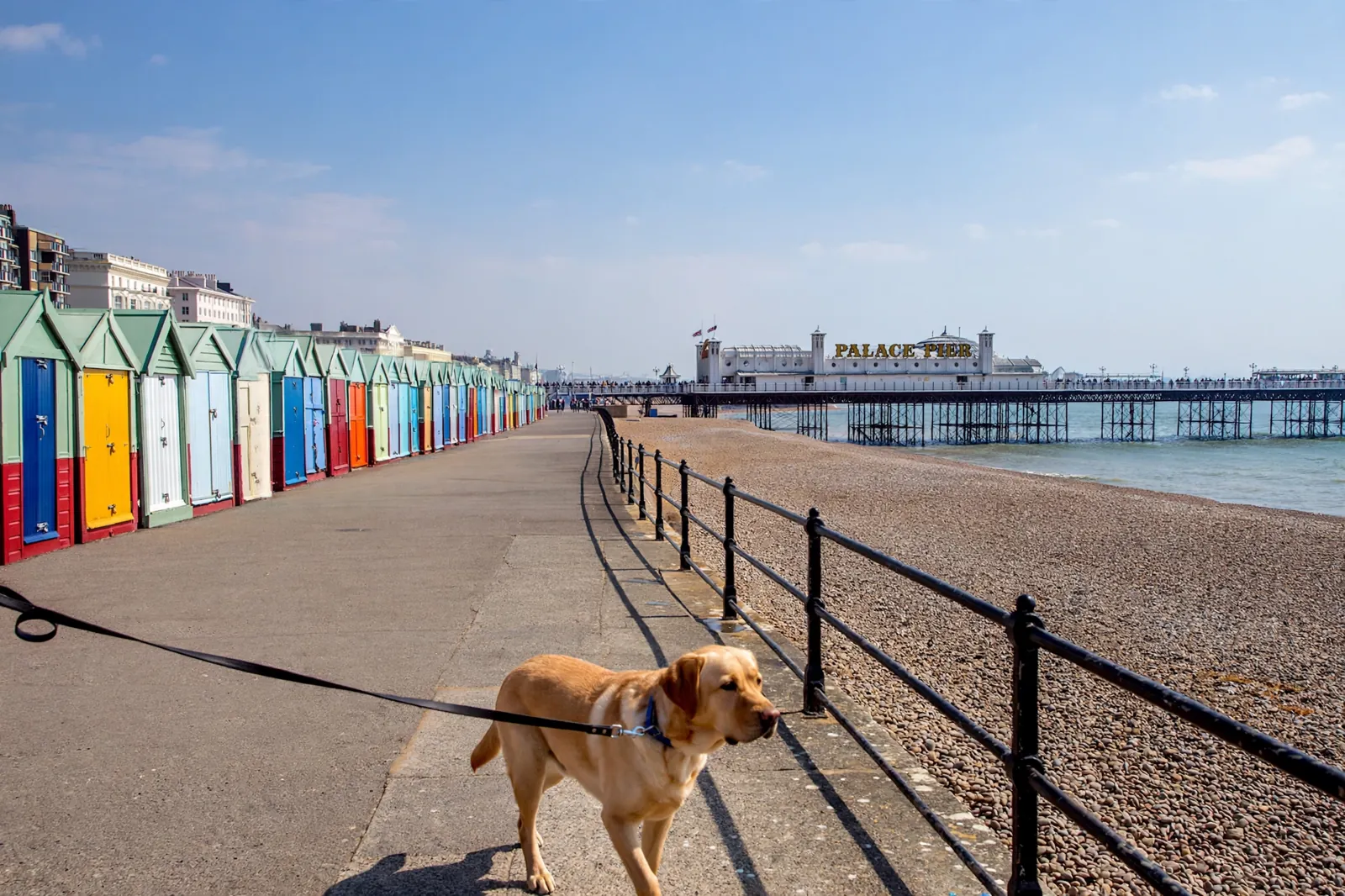
The promenade is Brighton's dog highway. Dogs on leads are welcome along the seafront promenade, past the bandstand, the i360 viewing tower, the artists' quarter under the arches and the remains of the West Pier standing in the sea. It is busy — cyclists, runners, skaters and crowds heading for the Palace Pier — so treat it as a lead walk at heel rather than exercise, go early or in the evening for space, and keep leads short around the pier entrances and the seafront road crossings. The Palace Pier itself does not admit pet dogs onto the pier, so plan it as a split visit or admire it from the beach like most owners do, and check the official site before you go if a pier visit matters to your trip.
East of the Palace Pier, the seafront changes character. The road climbs, the Volk's Electric Railway runs along the beach toward the marina, and the undercliff walk begins: a level, white-walled path running beneath the chalk cliffs toward Rottingdean and Saltdean, with the sea on one side and the cliff on the other. It is one of the great urban dog walks in England — long, flat, dramatic and mostly free of traffic — but it demands respect for its conditions. Sections close after cliff falls and in severe weather, shade is scarce on hot days, the white walls reflect heat, and high tides can splash or cover parts of the route. Check conditions and tides, carry water, and turn back at any closure sign without debate.
Westward, the promenade runs to Hove, where the lawns behind the beach huts give dogs a greener pause and the pace slows noticeably. Hove's wide streets, slower cafes and the lawns themselves suit dogs that find central Brighton intense, and many owners base themselves in Hove and walk into Brighton along the front as a daily ritual. The beach huts are private and the lawns have their own local rules, so keep dogs under control, clear up immediately and read the signs; the lawns are shared with picnics, games and toddlers.
Build the seafront into loops rather than marches. A classic dog day runs: morning on a dog-welcome beach east or west of the centre, promenade coffee mid-morning, a park or Downs walk in the afternoon when the beach crowds peak, and an evening promenade stroll as the pier lights come on. That rhythm keeps the dog's exercise in the cooler, quieter hours and keeps you out of the worst of the summer crush.
South Downs, Devil's Dyke and Stanmer Park
Brighton's back garden is a national park. The South Downs rise directly behind the city, and for a dog that needs real miles they change the trip completely. Devil's Dyke, the famous dry valley a short bus ride or drive north-west of the city, offers chalk grassland, huge views and proper hill walking; the Dyke's slopes and the surrounding access land carry grazing sheep and cattle for much of the year, so leads near livestock are essential, and the exposed ridge is no place for a dog in extreme wind or heat. Buses from the city serve the Dyke in season — check whether dogs are carried and the latest timetable before you rely on them.
Closer in, Stanmer Park, at the city's northern edge beside the university, is the local owner's answer to almost everything: a large historic park with woodland, open downland behind it, a village with a cafe and church inside the park boundary, and room for a dog to have a genuine run away from the crowds. It connects onward to the Downs and to the university-side paths toward Falmer, so a Stanmer morning can stretch into a full downland day for fit dogs. Parking fills on sunny weekends; arrive early, and keep dogs under control around the park's roads, cyclists and horse riders.
Preston Park, the city's largest formal park north of the centre, plays the everyday role: lawns, a velodrome, rose gardens, sports pitches and a steady community of local dogs. It suits off-lead play for dogs with reliable recall in its open areas, with leads near the roads that edge it, the play areas and any sports in progress. Hollingbury, Withdean Park and the wooded slopes of Hollingdean add neighbourhood options, and the Downs Link and the paths around the Chattri, the Indian war memorial on the Downs above Patcham, give quieter routes with remarkable views back over the city and sea.
Downland craft is its own discipline. Chalk grassland is fragile and full of ground-nesting birds in spring, grazing animals in most seasons and rabbit holes in every season. Keep dogs on paths and on leads around stock, carry water because the Downs have almost no natural supply away from the valleys, and remember that a sea breeze at the pier can be a serious wind on the ridge. In return you get the landscape that makes sense of Brighton: a seaside city pressed between the water and the hills, with a dog walk in each direction.
The Lanes, North Laine and a dog in the shopping city
Brighton's shopping quarters are a test of temperament. The Lanes, the tight grid of old fishing-town streets near the seafront, are narrow, crowded and full of jewellers' windows, cafes and doorways at dog height; North Laine, the larger independent quarter north of the centre, is broader, quirkier and generally easier with a dog, with vintage shops, record stores and cafes on wider streets. Many independent shops in both quarters welcome a well-behaved dog, and many do not; the rule is to ask at the door, never assume, and keep visits short in busy shops. A dog that finds crowds, music and narrow pavements stressful will be happier on the seafront while a partner browses.
The Royal Pavilion, the city's onion-domed showpiece, does not admit pet dogs inside — only assistance dogs — and its gardens are a pleasant, central green pause where dogs on leads can walk the lawns' edges and paths while their owners admire the building from outside; check the latest official guidance before you go, as garden arrangements and event closures change. Treat the Pavilion like Oxford's colleges or Edinburgh's castle: a split visit, with the gardens and the nearby Pavilion Gardens cafe culture as the dog's half of the deal.
Markets and street food need the same judgement. Weekend crowds, dropped food, hot pavements and loud busking corners can overwhelm a dog quickly; go at opening time, keep the lead short, watch paws on hot tarmac in summer and have an exit route to the seafront or a park. Brighton's famous openness extends to its dogs — you will see them in pubs, cafes and shops across the city — but a welcome in one doorway is not a promise about the next, and the owners who ask first keep the welcome alive for everyone.
If shopping is the point of the trip, consider basing the dog's day around it honestly: a big Downs or beach walk first, a settled hour in a dog-welcoming cafe while one person shops, a park break, then a second short browse. Solo travellers who want the Pavilion interior or a long Lanes session should arrange trusted dog care rather than leaving a dog tied outside a shop or alone in accommodation — neither is acceptable, and Brighton has local pet-sitting services precisely for this pattern.
Where to stay with a dog in Brighton
Choose your base by its walk, not its postcode prestige. Seafront hotels put the promenade at the door but add noise, crowds and a morning toilet walk along a busy road; Hove offers quieter streets, the lawns and an easier daily rhythm at a gentler price; Kemp Town, east of the centre, mixes guest houses, cafes and quick access to the undercliff walk and the marina-side beaches; and the streets behind the station and around Preston Park give the best value with the park itself for exercise. Self-catering flats are plentiful, but Brighton stock means basement and upper-floor flats, steep stairs and small or shared outdoor spaces — ask precisely.
The booking questions are the national ones, sharpened for this city. Which rooms accept dogs, and are they on the ground floor or up several flights of Regency stairs? What is the fee, and are there size or number limits? Can the dog join you in the bar or for breakfast, and may a dog be left alone in the room at all? Is there any genuinely enclosed outdoor space, or is the late-night walk a lead walk to the square or the front? Our guide to dog-friendly hotels in the UK sets out the full checklist; Brighton adds event pricing, since Pride weekend, the marathon weekend, the Festival in May and party conferences lift prices and fill dog-accepting rooms early.
Pride deserves a specific note. Brighton Pride is one of the biggest weekends in the city's year, with a parade, ticketed park events, road closures and crowds that fill the centre from morning to night. It is a wonderful human weekend and a hard dog weekend: noise, crowds, heat and closed routes are exactly what most dogs do not need. If you come for Pride, base in Hove or Preston Park, walk early and late, and consider whether the dog would honestly prefer a trusted sitter at home. The same logic applies, scaled down, to marathon day and the biggest festival weekends.
Bring the kit that makes a seafront stay work: a towel and paw rinse for shingle and sea days, a familiar bed or blanket, a chew for the first evening, bags in every coat, and a plan for drying a dog that has been in the sea before it meets a hotel carpet. Salt water needs rinsing off coats and paws, and dogs should be discouraged from drinking sea water, which can make them properly ill — carry fresh water on every beach walk.
Eating with a dog: cafes, pubs and beachfront lunches
Brighton may be the easiest city in England in which to eat with a dog, which is not the same as every door being open. Independent cafes across North Laine, Kemp Town and Hove welcome dogs in large numbers, many pubs — especially the traditional locals away from the busiest seafront strip — are properly dog-positive, and the beachfront cafes and arches venues offer outdoor seating made for a post-walk lunch. Verify each venue on its own site or by phone, because policies change, and keep the etiquette that protects the welcome: a walked, toileted dog, settled under the table on a short lead, off the furniture, with a mat if you have one. Our UK dog-friendly cafes guide covers the routine in full.
Timing is the local skill. Seafront and Lanes venues queue hard at summer lunchtimes, and a dog that settles happily at eleven may not cope at one in a packed room with a queue at its back. Eat early or late, choose the bigger rooms and gardens, and in good weather favour the Hove lawns cafes, the Kemp Town terraces and the under-arches spots where there is space between tables. In winter the calculation reverses: a fireside pub after a Downs walk, arriving before the evening rush, is one of the great pleasures of a Brighton dog trip.
Fish and chips on the seafront with a dog at heel is a Brighton ritual — do it properly. Choose a spot away from the densest gull territory, because Brighton's herring gulls are bold, practised food thieves that will dive at chips held at dog height; keep food covered, never feed the gulls, and move away rather than letting a dog lunge at birds. The same applies to picnics on the lawns and the beach: gulls here are a genuine management task, not background colour.
Carry the contingency kit — portable bowl, water, a long-lasting chew for waits, bags — and have a takeaway plan for the days when indoor settling is not going to happen. Brighton's bakeries, delis and market stalls make a promenade picnic a first-choice lunch rather than a compromise, and on a dog-welcome stretch of shingle, in season and under the signs, it may be the best seat in the city.
Getting there, parking and choosing your season
Brighton is built for the train. Direct services from London Victoria and London Bridge take around an hour, the station is a ten-minute downhill walk from the seafront, and dogs travel free on National Rail services under the standard conditions — on a lead, off seats, maximum two dogs per passenger. Our guide to taking a dog on UK trains covers the detail. The station is large and busy; give a nervous dog a pause before the descent into town, and consider Hove or Preston Park stations for quieter arrivals if you are staying on those sides of the city. Local buses generally carry dogs at the driver's discretion; check the operator's latest guidance before you travel.
Driving into central Brighton is the option to plan hardest. Seafront and central car parks are expensive and fill early on any fine weekend, on-street parking is heavily restricted, and event days close roads across the centre. If you drive, accommodation with parking in Hove or the outer districts keeps the car useful for Downs and coastal day trips — to the Seven Sisters, the Cuckmere Valley or west toward Shoreham and Worthing — without paying central prices every night. Never leave a dog in a car on the seafront or in a car park; summer shingle heat reflects into vehicles fast.
The seasons in brief. Spring brings the Festival and Fringe in May, longer days and beaches still open to dogs until the summer restrictions bite — check the exact changeover dates each year. Summer is peak Brighton: glorious, crowded and rule-bound on the central beaches, best handled with early walks, dog-welcome stretches and Downs afternoons. Autumn is the connoisseur's season, with warm seas, thinner crowds and the beaches opening up again as restrictions lift. Winter is for storm light, empty shingle, cosy pubs and the Burning the Clocks lantern parade in December, with short days and cliff-path caution after heavy rain.
Before you go, save a local vet and the out-of-hours service near your stay, carry your own vet's number and insurance details, and check dogs after Downs walks for ticks in season. Read our Kent dog guide if you are extending the trip east along the coast, since the same seasonal logic applies with different local signs. And hold the golden rule for the whole trip: the sign at the beach steps and the venue's own current policy outrank any guide — including this one — every time.
Practical questions
Before you go
When are dogs banned from Brighton beaches?
Dogs are banned from the busiest designated central beaches during the summer season, broadly from the start of May to the end of September, while other stretches of Brighton and Hove beach welcome dogs all year and the restricted beaches allow dogs outside the season. Boundaries and dates are set by the council and posted at each beach access point, so check the official council guidance before you go and obey the sign at the steps on the day.
Are dogs allowed on the Palace Pier in Brighton?
Pet dogs are not allowed onto the Palace Pier; only assistance dogs are admitted. Most owners treat the pier as a split visit or enjoy it from the promenade and beach. Policies can change, so check the official site before you go if visiting the pier is an important part of your trip.
Where can dogs go off lead near Brighton?
Good off-lead opportunities include Preston Park and Stanmer Park in their open areas, quieter sections of the South Downs away from livestock, and the dog-welcome beaches outside any signed restrictions, always where a dog is under reliable recall. Keep leads on along the promenade, in the Lanes, near sports, play areas and grazing animals, and follow local signage everywhere.
Are dogs allowed on trains and buses in Brighton?
Yes, dogs travel free on National Rail trains to Brighton under the standard conditions: on a lead, well behaved, not on seats and no more than two dogs per passenger. Local buses generally carry dogs at the driver's discretion on the same terms. Travel off-peak where possible and check the latest official guidance before you travel, as conditions can change.
When is the best time to visit Brighton with a dog?
Late spring before the summer beach restrictions begin, and autumn after they lift, usually give the best balance of weather, open beaches and manageable crowds. Summer is lively but rule-bound and busy on the central seafront, while winter offers empty beaches and cosy pubs for hardy dogs. Avoid the busiest event weekends, such as Pride, unless your dog is genuinely crowd-proof.