This guide is independent and contains no paid placement. If affiliate links are added later, they will be clearly marked and will not change our editorial checks.
Choose Crooklets for space and a longer run, Summerleaze for town-centre convenience and a shorter visit, then use the canal towpath or Breakwater Road when the tide or the surf rules out a long beach session. Check the official guidance before you travel, because beach rules, tides and surf conditions decide the plan more than any timetable.
Summerleaze vs Crooklets: which beach suits which dog
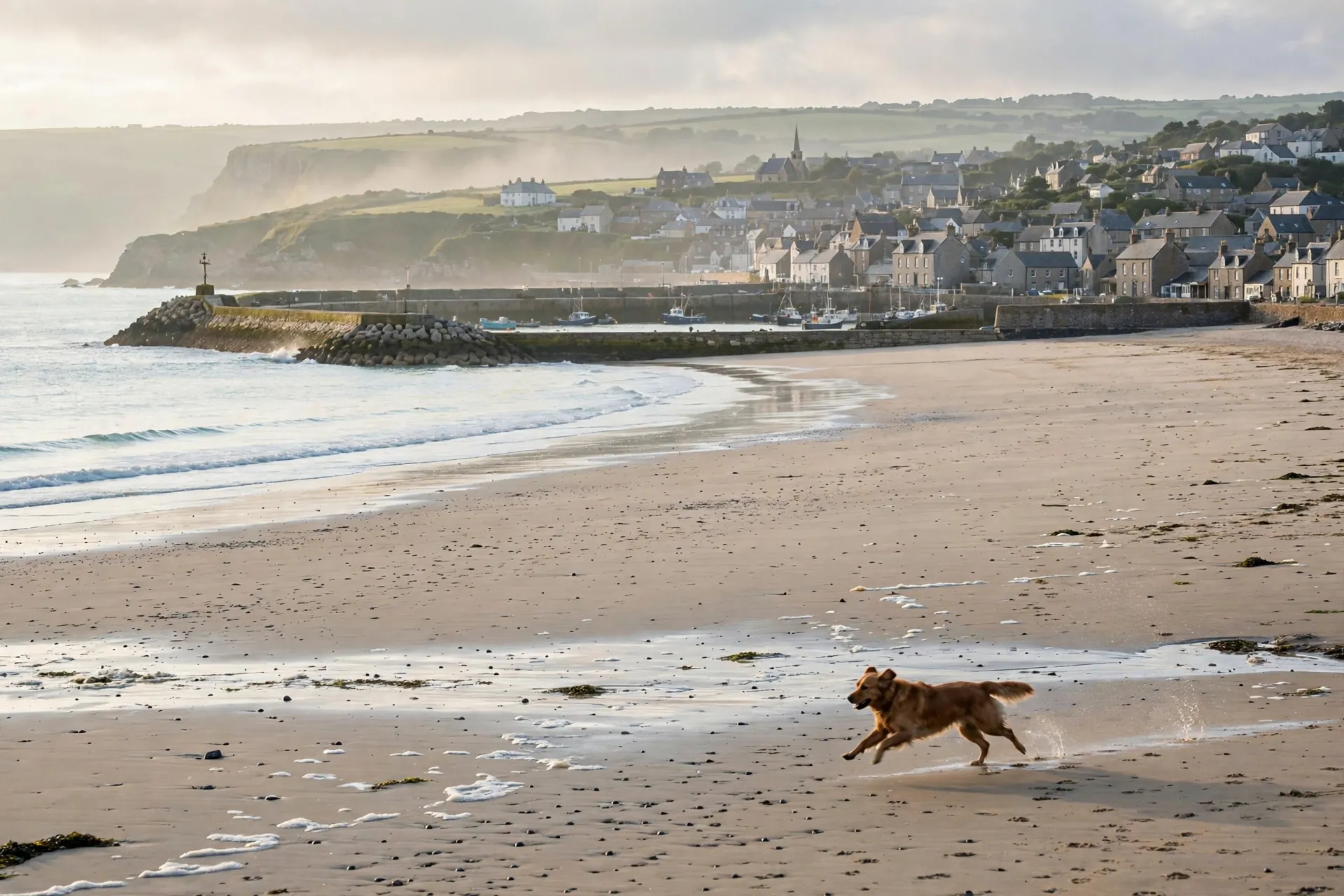
The first decision of a Bude day is not where to eat or where to park. It is which beach to start on, because Summerleaze and Crooklets sit close together yet give a dog a very different morning. Summerleaze is the town beach, right at the end of the main shopping street, with the river mouth on one side and the breakwater nearby. Crooklets is the next beach to the north, a little further from the centre, broader in feel and usually calmer in atmosphere. Both are sandy, both are shaped by the Atlantic, and both reward a dog that likes open space. The difference is in crowd, scale, access and how much room a lively dog has to run without meeting someone every few seconds.
Summerleaze suits a dog that is happiest in a compact, sociable setting. An older dog, a puppy still learning to settle around people, or a dog that tires after a short burst will often do well here, because the walk from car or town to sand is short, the facilities are close, and the outing can be kept brief without feeling like a wasted trip. The beach is also a good choice when the rest of the day is town-based: a morning paddle, a cafe stop, and then the canal towpath or a browse around the shops all fit together without moving the car. For dogs that get overexcited by space, the smaller scale can actually help, because there is less distance to build up speed and fewer long sightlines to other dogs.
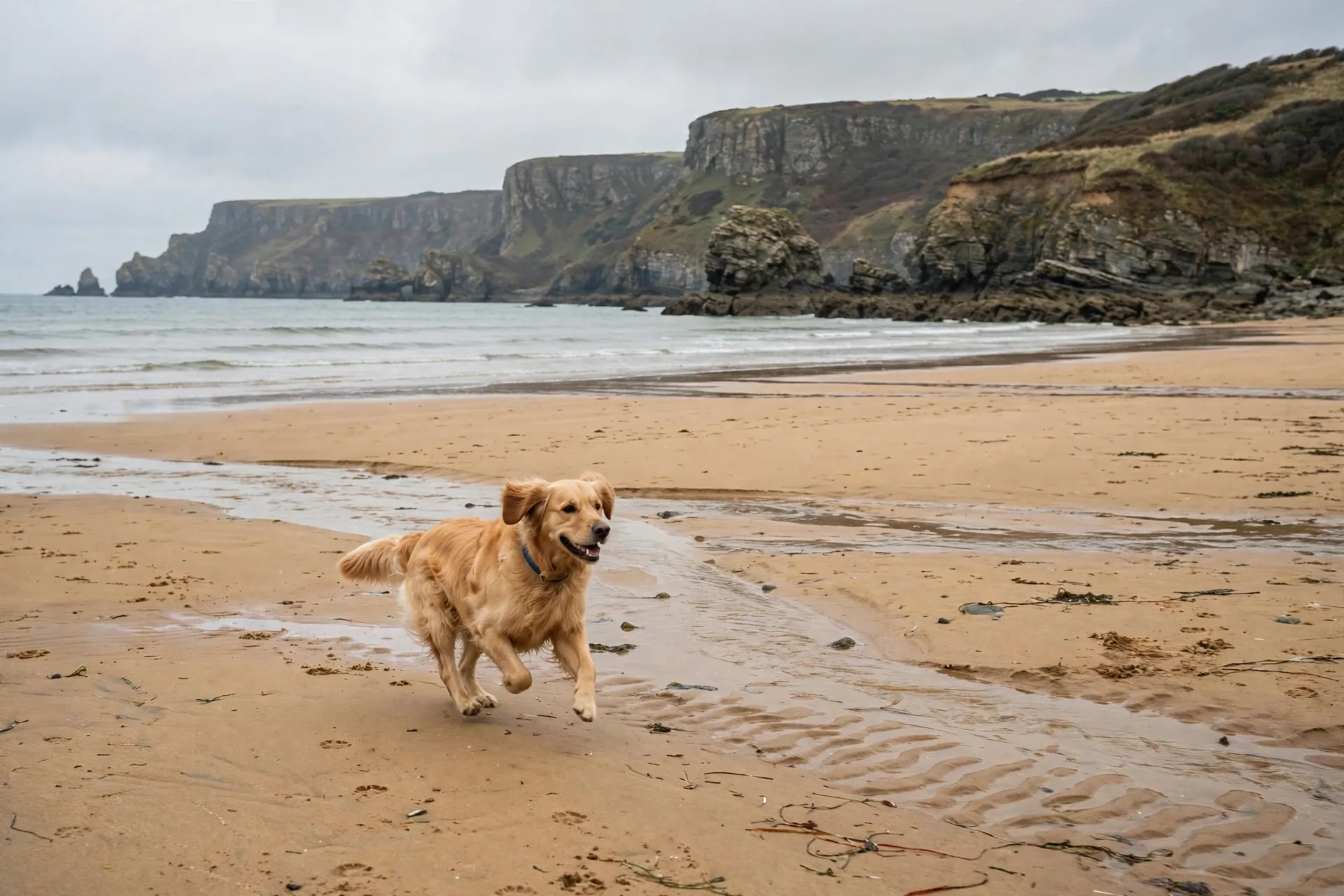
Crooklets suits a dog that needs to run properly. A young spaniel, a collie, a lurcher or any dog that relaxes only after a long, fast stretch will usually be happier on the wider sand, where a ball can be thrown without immediately landing near another family. The beach also suits dogs that are a little shy of crowds, because it is easier to find a quiet patch and to keep a comfortable distance from other groups. Dogs on a long line benefit too: there is more room to let the line out safely, and the walk to the far end of the beach can itself become the exercise, with sniffing, paddling and short sprints mixed together rather than forced into a single frantic game.
Think about your dog's recall before you choose. On a busy Summerleaze day, recall matters constantly: children, picnics, other dogs and the river mouth all compete for attention within a small area. If recall is still a work in progress, Crooklets at a quiet time, or Summerleaze at a quiet time, is kinder than either beach at its busiest. A long line is not a failure; it is the tool that lets an unreliable dog enjoy a beach safely. Use a harness rather than attaching a long line to a collar, keep the line clear of other walkers, and shorten it whenever you approach the water, the river mouth or a group of dogs.
Tide changes both beaches more than most first-time visitors expect. At low tide the sand stretches out and the walk feels generous, with firm wet sand for running and shallow pools for paddling. At high tide the usable sand shrinks, the water reaches further up the beach, and the space for a ball game can disappear almost entirely. That is why the beach decision should be paired with a tide check the evening before and again in the morning. A plan that says Crooklets at midday may need to become Crooklets at nine in the morning and the canal in the afternoon, and that is a better day, not a failed one. Dogs do not care about the timetable; they care about space, water and a calm handler.
Consider the journey to the sand as part of the choice. Summerleaze is reached through the town, which means traffic, pavements and other dogs on leads before the fun starts. For a dog that struggles with town walking, that approach can use up patience before the beach begins. Crooklets involves a slightly longer walk from most parking, but the approach is more open and less congested. Puppies, reactive dogs and dogs that pull hard on the lead often cope better when the exciting part of the day is not preceded by a gauntlet of distractions. Whichever beach you pick, arrive with the dog already toileted, water already packed, and a towel in the car, so the first ten minutes on the sand are relaxed rather than frantic.
Finally, remember that the two beaches can be combined. A calm morning at Crooklets followed by a short afternoon visit to Summerleaze, or the reverse, gives a dog variety without a long drive. The walk between them, along the coast and through the town end, is part of the experience, but check the official guidance before you travel for any seasonal rules that affect the route or the beaches themselves. The best Bude day is rarely the one with the most beach hours; it is the one where the beach matches the dog in front of you.
Beach rules through the seasons and how to check them
Beach rules in Cornwall are not a single national rule, and Bude is no exception. Seasonal restrictions, often set through a Public Spaces Protection Order, can limit where dogs are allowed during the busiest summer months, while the same beach may welcome dogs freely outside that period. The details matter: a restriction may cover the whole beach, or only part of it; it may apply during daytime hours only; and assistance dogs are normally treated differently from pet dogs. Because these orders are reviewed and renewed, a rule remembered from a previous holiday may no longer be accurate. Check the official guidance before you travel, and treat any guide, including this one, as background rather than a substitute for the current notice.
The most reliable checks take only a few minutes. Start with the local council pages for Cornwall, searching for the current dog rules for Summerleaze and Crooklets by name. Then look for the signs at the beach entrance on the day itself, because signs reflect the restriction in force at that spot, including any temporary closure for safety work, a surf event or wildlife protection. If the council page and the sign appear to disagree, follow the sign and ask locally if you need clarification. For a broader explanation of how seasonal bans, fines and exceptions work across the country, see our guide to dog-friendly beaches and UK rules, which explains the system behind the local notices.
Seasonal thinking also helps you plan around the rules rather than against them. In peak summer, an early morning or evening beach visit may fall outside restricted hours, while the middle of the day may be better spent on the canal towpath, in the town or on a coast path walk where dogs are welcome. Outside the main season, the beaches often feel like a different place: quieter, windier, sometimes muddier at the edges, but far more flexible for a dog that wants a long run. Winter visitors should still check, because a beach that is open to dogs in winter can still have local conditions, such as a closed access point or a landslip diversion, that change the practical route.
Good beach manners make the rules easier for everyone. Keep your dog in sight and under control, pick up waste immediately and use the bins provided, and keep dogs away from picnics, fishing gear and children's play areas even where no formal rule requires it. On a busy beach, a lead is a courtesy as much as a safety measure, especially near the waterline where a loose dog can surprise a swimmer or a surfer. If another dog approaches yours, a calm recall and a short lead, rather than a shouting match, usually resolves the moment fastest. Dogs that are nervous around strangers should be given space, and owners of friendly dogs should never assume that every other dog wants to say hello.
One more check is worth making before a summer trip: events. Surf competitions, beach cleans, lifeboat displays and school holiday activities can temporarily change access, parking and crowd levels. A quick look at local listings or the town noticeboard can save a wasted journey to a beach that is hosting an event. If an event does coincide with your visit, it can also be a bonus: a beach clean is a good way to see the town at its community-minded best, provided your dog is comfortable around groups and equipment. Again, check the official guidance before you travel, because event details and any temporary restrictions are announced locally.
The Bude Canal towpath walk
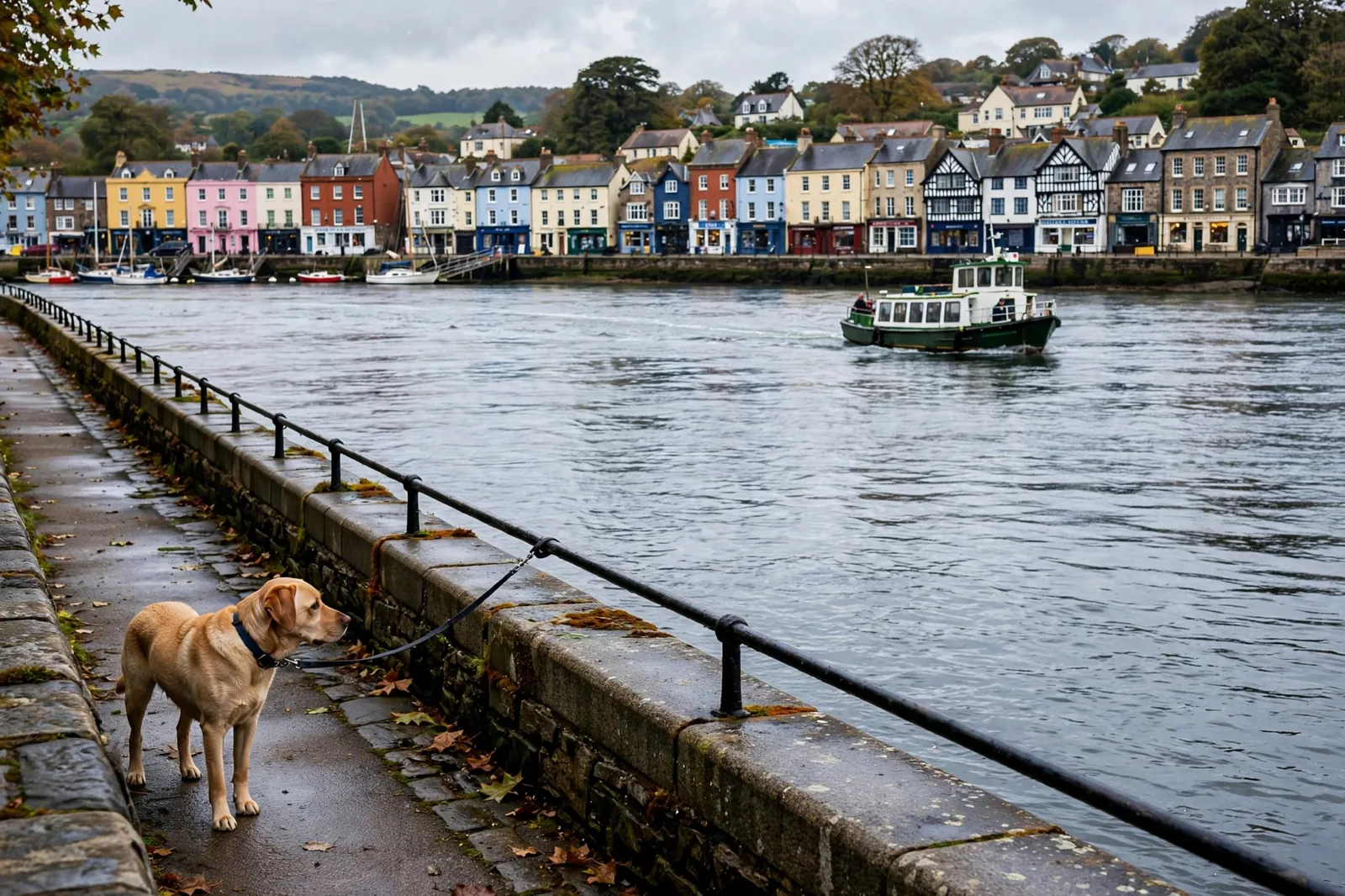
The Bude Canal is the calm counterweight to the surf beaches, and for many dogs it is the best walk in town. The canal runs inland from the sea lock near Summerleaze, and its towpath offers flat, largely traffic-free walking beside still water, reeds and trees. This is a walk that suits almost every dog: older dogs that need a level surface, puppies that need a short and interesting outing, reactive dogs that need distance and visibility, and energetic dogs that need a long, steady walk before they can settle. You can walk for ten minutes and turn back, or keep going for a much longer stretch, and the dog will have had a proper outing either way.
Start at the town end, near the lock and the wharf area, and let the dog settle into the rhythm of the towpath before you judge the walk. The first section is the most sociable, with other walkers, cyclists and dogs passing regularly, so keep your dog on a lead here and practise polite passing: move to the side, shorten the lead, and reward calm behaviour. Further along, the path usually quietens, and the walk becomes a sequence of water, hedgerows, bridges and open views. Dogs that love to sniff will be in their element, because the canal edge holds a changing cast of ducks, moorhens, rabbits and farm smells, and a slow sniffing walk can tire a dog as effectively as a run.
Water safety deserves attention even on a calm canal. Still water is not safe water for every dog. Some dogs will try to jump in at any gap in the bank, others will slip on muddy edges, and a dog that cannot swim well can get into difficulty quickly in water that looks harmless. Keep dogs on a lead near open water unless you are certain of the bank, the depth and your dog's swimming ability, and never let a dog drink large amounts of canal water, which may contain algae or agricultural run-off. If your dog does go in, rinse them afterwards and watch for stomach upset in the following hours. A towel and a spare lead in a small bag make the canal walk easy to manage, even if the dog comes back wetter than planned.
Cyclists are the main towpath hazard, because they approach quietly and sometimes fast. Teach your dog to walk on the side away from the cycle line, and step off the path with the dog on a short lead when you hear a bell or see a bike approaching. Children on scooters, joggers and horse riders may also use parts of the route, so the same habit applies: step aside, keep the lead short, and let the other user pass before you continue. This is also a good walk for practising recall in a controlled way, because the path is linear and sightlines are long, but only let a dog off the lead where it is permitted, safe and away from the water, and only if recall is reliable around wildlife.
Extend the canal walk by linking it to the town and the beaches rather than treating it as a separate outing. A morning canal walk followed by a beach paddle, or a beach morning followed by a late afternoon canal stroll, gives a dog two different kinds of exercise in one day: steady walking and open running. That combination often produces a calmer evening than a single long beach session, because the dog has used both body and nose. In hot weather the canal walk is also a useful shade option, although you should still carry water, avoid the hottest part of the day, and watch for overheating in thick-coated or brachycephalic dogs. In winter the towpath can be muddy and slippery, so choose footwear with grip and a lead you can hold securely in wet gloves.
Breakwater Road and the coast path in both directions
Breakwater Road is the walk that gives Bude its postcard view: the breakwater itself, the sea pool, the river mouth and the open Atlantic beyond. For a dog, it is a walk of wind, waves and wide horizons, and it needs a different kind of preparation from the sheltered canal. Start with the lead on, because the road carries vehicles, the path can be exposed, and the sea is close enough to tempt a dog that loves water. The walk is short enough to fit into a morning, yet dramatic enough to feel like a proper outing, and it links naturally to the South West Coast Path in both directions.
Heading north from the breakwater area takes you towards Crooklets and beyond, along cliffs and open coast that reward a fit dog and a confident walker. This direction suits dogs that enjoy a longer, more rugged walk, with climbs, steps and uneven ground in places. Keep the dog on a lead near cliff edges, even if the dog is normally reliable off the lead, because coastal paths have sudden drops, loose ground and livestock in some sections. Check the official guidance before you travel for any temporary coast path diversions, which can follow cliff erosion or storm damage and may change the route without much warning.
Heading south takes you towards the town, the beaches and the coast beyond Summerleaze, and is generally the gentler option for a shorter outing. This direction suits older dogs, families with pushchairs, and anyone who wants a coast walk that can be shortened easily by turning back to the town. The path still deserves respect: the sea can be rough, spray can make surfaces slippery, and a dog that chases waves can quickly be out of its depth. In both directions, the same rule applies: the coast path is a walk to enjoy with the dog on a lead near edges, water and livestock, and off the lead only where it is clearly safe, permitted and under control.
Weather changes the Breakwater Road walk more than it changes the canal. A calm morning can become a wild afternoon as the wind rises, and a dog that enjoyed the walk at nine o'clock may be miserable in driving rain and spray at three. Check the forecast, the tide and the surf report before you set out, and be ready to shorten the walk or swap it for the canal if conditions turn. Dogs with thin coats, small dogs and older dogs feel wind chill quickly on an exposed headland, so a dog coat, a towel and a warm car or cafe to return to are practical essentials rather than extras. If the wind is strong enough to make you unsteady, it is strong enough to make a small dog unsteady too.
The sea pool near the breakwater is worth a look, but it is not a dog swimming pool. It is a tidal pool used by swimmers, and dogs should not be assumed welcome in it. Enjoy it as a viewpoint, keep the dog on a lead around its edges, and let the dog paddle on the beach instead where that is permitted. The same courtesy applies to surfers and swimmers at the beaches: a dog running through a surf lesson or a swimming group is a safety issue, not just a nuisance. A little distance, a short lead near groups, and a calm recall make the breakwater area enjoyable for everyone, including the dog.
Sea safety for dogs
Bude is a surf town, and that fact should shape every sea decision you make for your dog. Surf beaches have currents, rips, dumping waves and shifting sandbanks that even strong human swimmers treat with respect. A dog that swims happily in a lake or a calm river may struggle in surf, because waves knock a dog off its feet, currents pull sideways, and salt water is tiring to swim in. Many dogs are safest paddling at the edge, chasing a ball in shallow water, and swimming only in calm conditions with a close watch and an easy exit to the beach.
Learn the basic signs of a rip current before you let a dog near deeper water. A rip often looks like a calmer, darker channel between breaking waves, with foam or debris moving steadily seaward. If you see that pattern, keep the dog out of that area entirely. Never throw a ball into or beyond breaking waves for a dog that will chase it regardless of conditions, because the dog will follow the ball into water you would not enter yourself. Choose a throw parallel to the shore, in shallow water, so the dog stays where it can stand or swim briefly and return easily. If a dog does get into difficulty, do not enter dangerous water yourself; call for the lifeguards and follow their instructions, because a second person in trouble helps nobody.
Sand itself needs attention. Hot sand in summer can burn paws, especially on dark, dry sand at midday, so test the surface with your hand and walk in the cooler morning or evening if it feels hot. Sharp shells, fishing line, broken glass and discarded food can cut paws or cause stomach problems if eaten, so scan the area where your dog plays and keep an eye on what a scavenging dog picks up. After a beach session, check paws for cuts, sand packed between toes, and salt irritation, and rinse the dog with fresh water if you can. Dogs that dig enthusiastically may also get sand in their eyes or ears, so a gentle rinse and a check afterwards are worth the minute they take.
Salt water is the other hidden cost of a beach day. Dogs that drink sea water can develop vomiting, diarrhoea and, in larger amounts, salt poisoning, which is a veterinary emergency. Carry fresh drinking water and offer it regularly, so a thirsty dog is not tempted to drink from the sea. Some dogs also swallow a lot of water while retrieving balls or playing in waves, so keep water games short, take breaks, and watch for vomiting, lethargy or wobbliness afterwards. If a dog has drunk a significant amount of sea water or is showing concerning symptoms, contact a vet promptly rather than waiting to see if it passes.
Other sea hazards are less dramatic but still worth knowing. Jellyfish can wash up on Cornish beaches, and a sting to a nose or paw is painful and frightening for a dog; keep dogs away from stranded jellyfish and rinse any sting with sea water, not fresh water, while seeking veterinary advice if the dog is distressed. Algae, especially after storms, can be toxic if eaten, so keep dogs away from thick, brightly coloured beach deposits. Cold water is a factor too: a dog that swims for a long time in a cold sea can become chilled, particularly a small, thin-coated or older dog, so limit swim time, dry the dog afterwards, and watch for shivering or reluctance to move. A dog that loves the sea can still have a wonderful Bude holiday, provided the sea is treated as a powerful natural environment rather than a large bath.
The town centre with a dog
Bude town centre is compact, walkable and well suited to a dog that is comfortable in a busy small town. The main shopping area runs towards Summerleaze, with cafes, bakeries, surf shops, bookshops and galleries within a short stroll of each other. This is a town to explore on foot with the dog on a lead, at a pace that allows sniffing, sitting outside a cafe, and a browse in a shop that welcomes dogs. Dogs that are nervous in crowds will cope better outside peak hours, when the pavements are quieter and the cafes have more space.
Cafes are the heart of a Bude dog day, and many welcome dogs in at least part of their seating, often with water bowls and treats. Policies vary by venue and can change, so check before you travel for any specific cafe you are relying on, and look for signs at the door on the day. A dog that settles under a table is welcome almost everywhere that allows dogs; a dog that barks, pulls towards other tables or begs from strangers will test even a friendly venue. Bring a mat or blanket for the dog to lie on, so the dog has a defined place, and choose a table near the edge rather than in the middle of a busy room. If the weather is fine, outside seating is usually the easiest option for everyone.
Shops vary more than cafes. Some surf shops, gift shops and bookshops welcome dogs warmly, others prefer dogs to wait outside, and a food shop may have hygiene rules that exclude dogs entirely. A quick question at the door, a short lead, and a willingness to take turns outside if one person wants to browse, keeps shopping stress-free. Dogs should not be tied up outside a shop and left unattended for long, because a tied dog can become anxious, tangled or a target for unwanted attention. If you are travelling alone with a dog, plan shopping as a series of short visits rather than a long browsing session, and use the dog's tolerance as the limit.
Water points and practical facilities are worth locating early. Many cafes and some shops provide water bowls, and the town has public facilities where you can refill a bottle and give the dog a drink. Carry a portable bowl and a bottle of fresh water as a matter of routine, rather than relying on finding a bowl at the exact moment a thirsty dog needs one. Waste bins are provided around the town and beaches, but carry spare bags anyway, because a bin can be full on a busy day. A dog that is toileted before entering the town, watered regularly, and given a short break on a quiet side street will enjoy the town centre far more than a dog that is marched through it without pause.
Evening in Bude with a dog is usually quieter and easier than the daytime. The town settles, the beaches empty, and a short evening walk along the canal or the breakwater can be the most peaceful part of the day. If you plan to eat out in the evening, check dog policies in advance, because evening venues may differ from daytime cafes, and some restaurants welcome dogs only at lunchtime or in a bar area. A dog that has had a full day of beach, canal and town walking will often be ready to settle under a table, but a young or excitable dog may still need a calm walk first. Plan the evening around the dog's energy, not just the menu, and the town will reward you with a relaxed end to the day.
Parking, access and step-free options
Parking in Bude is straightforward outside peak times and competitive in school holidays, so timing matters more than technique. The car parks near Summerleaze and Crooklets are the natural starting points for beach days, because they put you close to the sand and to the coast path, while town-centre parking suits a canal walk, a shopping trip or a cafe morning. Arrive early in summer, especially at weekends, and have a second car park in mind so a full car park does not become a stressful search with a dog already excited in the back. Check the official guidance before you travel for current charges, payment methods and any seasonal changes, because prices and machines change more often than guides do.
Never leave a dog in a parked car in warm weather, even with a window open and even for a short errand. Cars heat up quickly, and a dog can overheat in minutes. In summer, park in shade where possible, use a sunshade, and take the dog with you or leave one person with the dog while the other runs an errand. In winter the opposite problem applies: a dog left in a cold car for a long period can become chilled, especially a small or older dog, so plan errands to be short and keep the dog's coat and blanket in the car. If you are travelling with a dog that cannot be left alone at all, plan the whole day around places where the dog can come with you, rather than hoping for a convenient exception.
Step-free access in Bude is mixed, as in most historic seaside towns. The canal towpath is the best step-free walk, being flat for long stretches, although the surface can be uneven or muddy after rain and some sections may be narrow. The town centre is largely level, with pavements and dropped kerbs, but individual shops and cafes may have a step at the door, so check ahead if step-free entry matters for you or for a dog in a pushchair or buggy. Beach access is the least step-free part of the town: beaches are reached by slopes, steps or ramps that vary in steepness and surface, and the sand itself is difficult for wheels and for dogs with mobility problems. Summerleaze, being closest to the town, is usually the easiest beach to reach, but check the official guidance before you travel for the current access points, because storm damage or maintenance can close a ramp temporarily.
Dogs with mobility problems deserve a plan of their own. An older dog, a dog recovering from surgery, or a dog with arthritis may enjoy Bude enormously on a canal walk and a short beach visit, while struggling on a long coast path or on deep sand. Deep, dry sand is hard work for any dog, and a dog with joint problems will tire quickly in it, so choose firm, wet sand near the waterline for a shorter session, or stick to the towpath and the town. A dog buggy or a ramp for the car can extend a holiday for a dog that can no longer walk far, provided the dog is comfortable in it and the route is suitable. Ask accommodation providers about ground-floor rooms, lift access and a nearby toilet area, because a first-floor room with a long corridor to the outside can turn a night-time toilet trip into a genuine problem.
Public transport to Bude with a dog is possible but needs planning, because Bude is not on the rail network and bus services vary by season. Check the official guidance before you travel for current bus routes, dog policies and timetables, and allow extra time for a dog that needs a toilet break before a long journey. If you are driving, the approach roads to Bude are rural and can be slow in summer, so build in a stop for the dog to stretch, drink and toilet before the final stretch. A dog that arrives calm, toileted and watered will start the holiday far better than a dog that has been in the car for hours without a break, and the driver will feel better too.
Where to stay with a dog
Where you stay shapes a Bude dog holiday as much as where you walk. The town offers a mix of hotels, guesthouses, self-catering cottages, holiday parks and campsites, and the right choice depends on your dog's habits rather than on star ratings. A dog that sleeps soundly in a new place will cope with almost any well-chosen accommodation, while a dog that barks at corridor noises, struggles with stairs, or cannot be left alone needs a much more specific brief. Write down the dog's needs before you search: number of dogs, size, alone-time tolerance, stair ability, and whether a secure garden or a nearby toilet area matters at night.
Self-catering cottages and apartments often suit dogs best, because they offer a kitchen, a defined living space, and usually a garden or yard, and the dog can follow a routine close to home. Check the details that booking filters hide: is the garden genuinely enclosed, and how high is the fence or wall? Is there a charge per dog, per stay or per night, and does it include cleaning? Are dogs allowed on furniture, or must they bring their own bed? Is there a limit on the number or size of dogs, and are there breed conditions? Get the answers in writing with the booking, because a friendly phone call is no help if the house rules on arrival say something different. For a sense of what a week in Cornwall can cost once pet fees, parking and food are added, see our guide to Cornwall dog holiday costs for a week, which breaks down the main budget items.
Hotels and guesthouses can work well for a settled dog, especially where dogs are welcome in the bar or terrace and the room is on the ground floor near an exit. Ask about the room location, the alone-in-room policy, and whether the dog can join you for breakfast or must wait in the room. A dog that cannot be left alone will struggle in a hotel where dogs are not allowed in the restaurant, because every meal becomes a logistical problem. Guesthouses with a small number of rooms are often more flexible than large hotels, but they may also have stricter noise rules, because a barking dog affects every guest. Honesty at booking, about barking, size and habits, prevents an awkward arrival.
Holiday parks and campsites around Bude suit dogs that enjoy outdoor living, but the same checks apply as anywhere else: pitch or unit location, distance to a toilet walk, noise from neighbours, and whether the site has a dog exercise area. A pitch near a play area or a busy path may be lively for children but stressful for a watchful dog, while an edge pitch may be calmer but further from facilities. Touring and camping with a dog also needs a wet-weather plan, because a wet dog in a small tent or caravan needs drying space, ventilation and spare bedding, or the whole unit becomes damp. Pack accordingly, and choose a site with a laundry or drying facility if the forecast is unsettled.
Whichever accommodation you choose, make the first hour boring. Walk the garden or the immediate area, check gates and fences, find the nearest toilet spot, and settle the dog with water, food and a familiar bed before unpacking everything. Photograph any existing damage, move cleaning products and medicines out of reach, and locate the nearest vet and out-of-hours number before you need them. A dog that settles on the first evening usually settles for the whole stay, and that first hour is the cheapest investment in a good holiday you will make.
Rainy-day and winter Bude
Rain does not cancel a Bude dog holiday; it changes it. The town is at its most atmospheric in wet weather, with a grey sea, empty beaches and steam rising from cafe windows, and many dogs enjoy rain far more than their owners do. The trick is to have a wet-weather system, not just a wet-weather hope. That system starts with gear: a dog coat for thin-coated or small dogs, a drying coat or several towels, a waterproof lead, and a bag for wet items in the car. It continues with route choices: the canal towpath, surfaced town walks and short beach visits in a lull, rather than an exposed coast path in driving rain and high wind.
Winter Bude has a different rhythm from summer Bude. The beaches are quieter, the town is calmer, and the dog rules are often more flexible outside the main season, although you should still check the official guidance before you travel for the current position. Winter light is short, so plan the main walk for late morning, when the light is best and the dog is most likely to be dry, and keep an evening walk short and well lit. Cold, wet dogs chill quickly, so dry the dog thoroughly after a winter walk, check paws for salt and grit, and watch for limping on cold, hard ground. Fireworks around early November and New Year can unsettle noise-sensitive dogs, so ask locally about displays and keep a nervous dog indoors with background noise and a safe den during display times.
Rainy days are also a good time to explore the town properly. Cafes, bookshops, galleries and surf shops become the main event, and a dog that settles under a table will enjoy a cafe crawl as much as a beach day. Choose venues where dogs are welcome, rotate between a cafe and a short walk so the dog does not have to settle for hours without a break, and use the time to plan the next dry window. Indoor attractions that welcome dogs are fewer than outdoor walks, so check policies before you set out, and do not assume that a dog-friendly cafe implies a dog-friendly museum or gallery. A rainy day spent well is often the day owners remember most fondly, because it forces a slower pace.
Storms deserve a separate warning. Bude faces the Atlantic, and winter storms can bring dangerous surf, overtopping waves, closed paths and debris on beaches. Never walk the breakwater or an exposed coast path in a storm, and keep dogs on a lead near the sea when waves are breaking over the promenade or the path. After a storm, beaches may hold driftwood, fishing gear and sharp debris, so check the area before letting a dog run freely. The sea after a storm is also more likely to hold strong currents and poor water quality, so a paddle is safer than a swim. Check the official guidance before you travel, and local forecasts on the day, because storm conditions change quickly and a guide cannot predict them.
A sample unhurried day plan
This plan is built for a dog that likes a mix of running, sniffing and settling, and it deliberately leaves gaps. A good dog day is not a timetable; it is a sequence of enjoyable outings with rest in between. Adjust the timings to the tide, the weather and your dog's energy, and be ready to drop a section entirely if the dog is tired. A tired dog that rests happily is a successful day, not a wasted one.
Start with an early beach visit, choosing Crooklets if your dog needs a run and Summerleaze if a shorter, town-centre outing suits better. Arrive before the crowds, let the dog run or paddle, and keep the session to the length that suits the dog, not the length that fills the morning. Offer fresh water, check paws, and towel the dog down before heading to a cafe. A cafe stop after the beach is not just a treat for the owner; it teaches the dog that excitement is followed by calm, and a dog that can settle in a cafe after a run is a dog that can enjoy a town holiday.
Midday is for the canal. Walk the towpath at a sniffing pace, letting the dog investigate hedgerows and water edges, and turn back when the dog's pace slows or the heat rises. This is the walk that settles a dog for the afternoon, because it uses the nose as well as the legs. If the day is hot, keep the canal walk short and shaded, and return to the accommodation for a proper rest, with water, a cool floor and a quiet room. Dogs, like people, need a break from stimulation, and an afternoon rest makes the evening walk enjoyable rather than frantic.
Late afternoon is for Breakwater Road and the coast, if conditions allow. A short, lead-on walk to the breakwater, with time to watch the sea and the surfers, gives the day a dramatic ending without demanding another long run. If the wind is high or the tide is wrong, swap this walk for a second short canal stroll or a town wander. Evening is for the town: a dog-friendly place to eat, a short last walk, and an early night. The dog should finish the day tired but not exhausted, clean enough to settle, and ready to do it all again tomorrow.
If you have more than one day, rotate the pattern rather than repeating it exactly. One day can be Crooklets and the canal, the next Summerleaze and a longer coast walk north, the next a quiet town day with a short beach visit. Variety keeps a dog interested, and rotation spreads the load on paws, joints and energy. A multi-day stay also allows you to learn the town: which cafe has the best dog treats, which canal section is quietest, which beach is best at which tide. That local knowledge, built slowly over a few days, is what turns a first visit into a place you return to.
Practical questions
Before you go
Which Bude beach is better for a dog that loves to run?
Crooklets usually suits a running dog better, because it is wider, quieter and further from the town-centre crowds, while Summerleaze suits dogs that are happier on a shorter, busier beach close to facilities. Check the official guidance before you travel, because seasonal rules and tide conditions can change which beach is practical on the day.
Are dogs allowed on Bude beaches all year?
Not necessarily on every beach at every time of year. Seasonal restrictions can apply in summer, and the exact dates, zones and exceptions differ between beaches. Check the official guidance before you travel, and look for the signs at each beach entrance on the day.
Is the Bude Canal towpath suitable for dogs on a lead?
Yes, the towpath is generally a good lead walk: it is flat, traffic-free for long stretches and easy to shorten or extend. Keep dogs on a lead near water, cyclists and other walkers, and be ready for narrow sections where you may need to step aside.
Is it safe for dogs to swim in the sea at Bude?
It depends on surf, currents, tide and your dog. Bude is a surf town with powerful water at times, so many dogs are safer paddling at the edge or swimming only in calm conditions with a close watch. Check the official guidance before you travel, rinse salt water off afterwards, and keep drinking water available.
Where is the best place to park in Bude with a dog?
The car parks near Summerleaze and Crooklets are the most practical starting points for beach days, while town-centre parking suits a canal or shopping walk. Arrive early in school holidays, check the official guidance before you travel for current charges, and plan shade and ventilation for the car in warm weather.