This guide is independent and contains no paid placement. If affiliate links are added later, they will be clearly marked and will not change our editorial checks.
Burnham Market is a green-and-shops village with the coast close by: walk the green on a lead, keep shop visits short, drive or walk to Holkham or Burnham Overy for the real dog walk, and return to the village for lunch.
The green and the shops
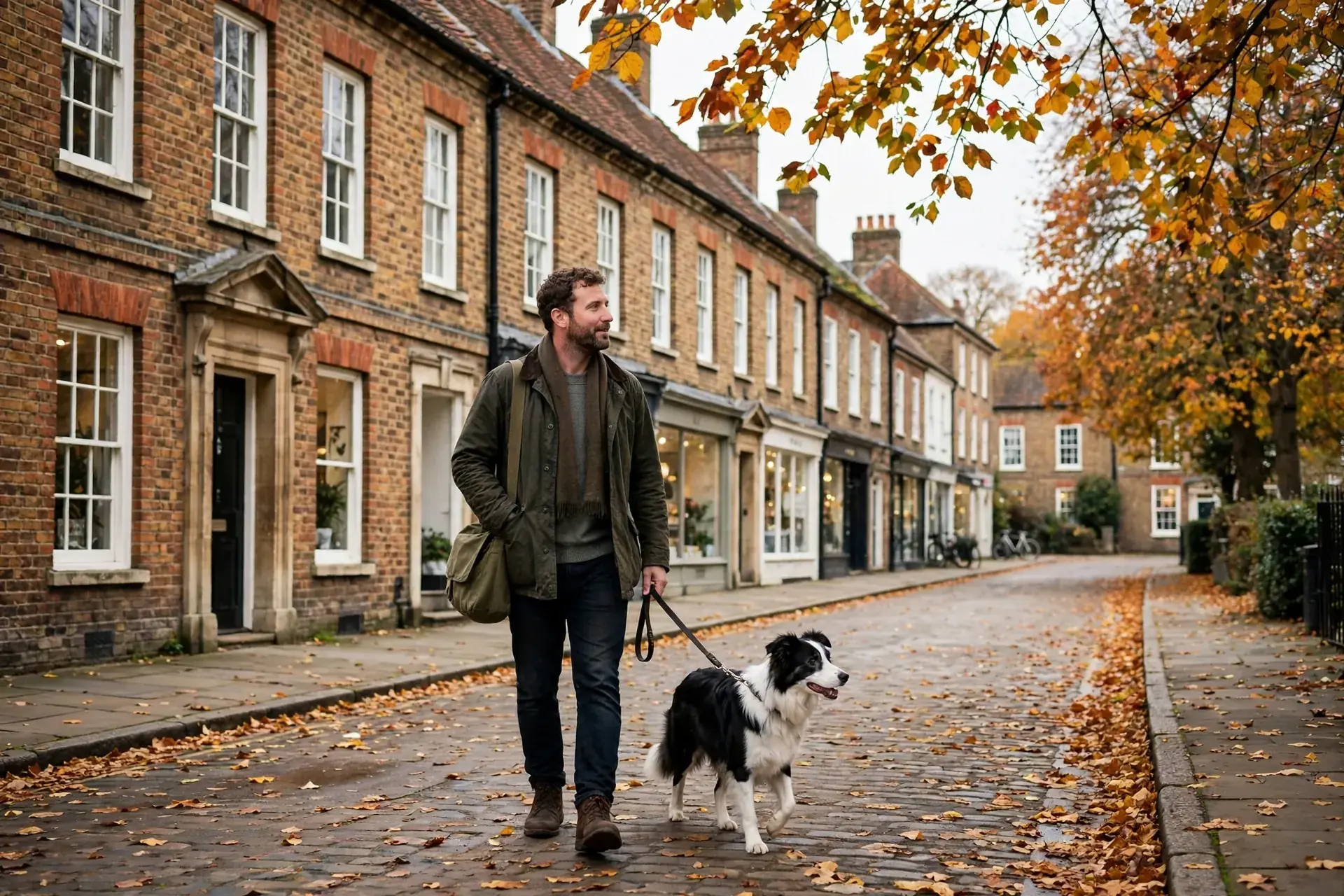
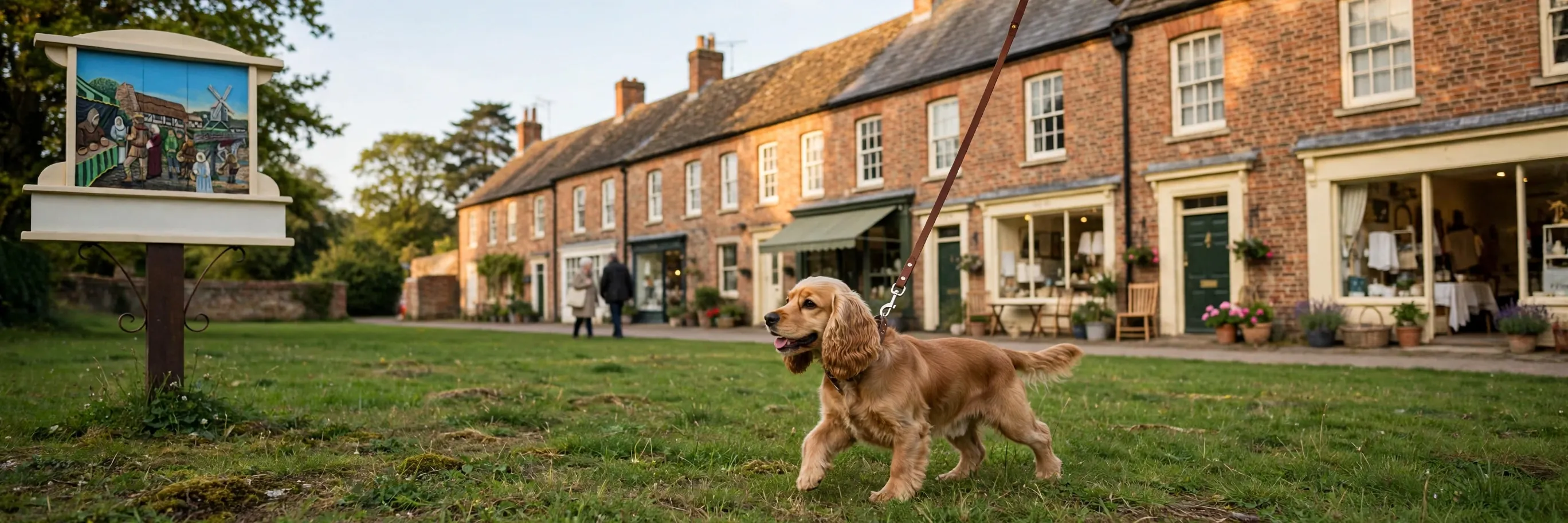
Burnham Market folds itself around its green, so a dog day here naturally starts on that open grass and keeps coming back to it. Georgian brick fronts stand around the edges, their proportions giving the whole village a settled, almost formal air, while independent shopfronts break the line with painted signs and window displays. A dog walking the green meets the village at its busiest and calmest at once: shoppers crossing from one side to another, children cutting across the grass, and quieter corners where a lead can slacken for a sniff at the verge. Nothing about the green invites a free run, and that suits the place, because the pleasure lies in looking slowly rather than covering ground.
The shopfronts around the green give Burnham Market its reputation, and their variety shapes how a dog experiences the village. Clothing rails, homeware displays and gift windows sit close together, so a dog passes from one set of smells to another within a few steps, and the scent drifting from a food shop doorway can stop even a well-trained nose in its tracks. Each doorway in the village sets its own terms, with some shopkeepers welcoming a dog inside among the shelves and others keeping the threshold dog-free, and the difference is part of the village rather than a surprise. Moving between shops with the green in between turns shopping into a stroll, with grass underfoot and open sky overhead between each enclosed room.
A slow circuit of the side streets behind the green shows why visitors photograph this village so often. The brickwork stays consistent from one frontage to the next, windows line up with a Georgian sense of order, and small lanes peel away from the main frontages into quieter residential corners where the noise of shoppers fades. For a dog, those lanes are a useful change of pace after the green, with fewer feet, fewer smells competing at once, and hedges and garden walls to investigate at walking speed. Staying on pavements and out of private drives matters here, because the houses are homes first and a backdrop second, and a dog trotting politely past a front gate leaves the street exactly as it was found.
Shopping with a dog, done well
Shopping in Burnham Market works best as a rhythm of shopfront and green rather than a single long trawl through every doorway. One shop, then a loop of the grass where the dog can sniff the verge and watch shoppers from a distance, then another shop if the dog still walks brightly, gives the village a shape that matches its geography. The distances help, because no shopfront sits far from the green, and the walk between them is short enough that a dog never spends long indoors without a breath of outside air. When the dog starts lagging at doorways or pulling hard toward the grass instead, that change of mood is the village itself suggesting a pause.
Inside, the details of a Burnham shop matter more than any general shopping rule. Narrow gaps between homeware displays leave little room for a broad dog to turn, smooth shop floors can unsettle an older dog that is used to carpet, and low shelves of food or gifts sit exactly at nose height for a curious spaniel. A short lead and a dog walking at heel keeps both the displays and the dog safe, and leaves the shopkeeper free to chat. Dogs that bark at strangers or crowd other shoppers will find the small rooms here unforgiving, and a shorter visit with the dog waiting in mind for the green outside is kinder than a long one.
The food shops around the green deserve their own pace, because their counters fill the pavement with smells that no dog can ignore. Cheese, bread and cooked meats behind a deli counter pull a dog's attention straight to the front of the shop, and a dog straining toward a counter can block the doorway for everyone coming in behind. Buying for a later picnic works well here, with purchases sealed and carried rather than opened on the green, so the reward waits until the pine shade at Holkham or a quiet lane beyond the village. That delay turns the shopping into part of the coastal day, and the dog, having smelled everything without tasting it, gets open sand and fresh air as the payoff.
A coastal day: Holkham
Holkham, a short drive from Burnham Market, is where the village day opens out into something much bigger. The walk in from the car park runs through pine woodland, where the ground softens underfoot and the air smells of resin, before the trees break and an enormous flat beach stretches away in both directions. Dogs have generous room here, yet one marked stretch of sand carries a seasonal exclusion, and horses are exercised across the same open ground, so the beach asks for attention as well as freedom. The sheer width of Holkham changes how a dog runs, because a ball thrown toward the tide line can carry a dog a surprising distance before the owner has taken a dozen steps.
The pine wood itself is worth treating as a walk in its own right rather than a corridor to the sea. Shade and shelter make it the kinder option for an older dog, a small dog, or any dog that wilts in wind on open sand, and the woodland floor gives paws a softer surface than the long trudge across dry sand. On the beach, the tide line decides the day: a retreating tide leaves wide firm sand for running, while a high tide pushes walkers into a narrower strip closer to the dunes. Drinking water carried from Burnham Market matters, because the open sand offers no tap and no shade.
Coming back to Burnham Market after Holkham gives the afternoon a satisfying shape. Sand still clings to paws on the walk back across the green, the village shops look smaller and more intimate after the scale of the beach, and a lunch table in the village feels earned rather than merely convenient. Reversing the order works too, with a morning among the shopfronts and the green followed by an afternoon under the pines, and the two halves balance each other whichever way round they fall. Over several days, Holkham rewards repeat visits, because wind, tide and light remake the same beach, and a dog that ran on firm sand one morning may paddle at a shallow edge the next.
Burnham Overy and the marsh edge
Burnham Overy Staithe, a short distance along the coast road from Burnham Market, trades polish for working character. Boats sit on the mud and in the channel, ropes and mooring posts crowd the edges of the staithe, and the smell of salt water and diesel replaces the deli aromas of the village green. A dog here watches a different kind of activity: fishermen moving gear, boats shifting with the tide, and gulls circling overhead while the creek water slides past the quay. The staithe is compact, and that compactness suits a dog that prefers a contained outing, with water to look at and a short walk that ends naturally at a waterside stopping place.
The paths leading away from the staithe toward the marshes and the coast need a slower reading than the green at Burnham Market. A firm track can narrow beside a tidal creek, soft mud can appear where the grass gives way, and a creek that looked crossable at low water can fill quickly as the tide turns. Sticking to the clear track and turning back when the ground softens or the route disappears into marsh grass keeps the outing pleasant, and the staithe itself remains a complete visit even without a long walk beyond it. A dog that has watched boats and sniffed the creek edge, then returned along the same firm path, has had a full coastal experience without ever stepping onto uncertain ground.
Taken together, the Burnhams show how much character can change within a few miles of north Norfolk coast road. Burnham Market offers the green, the Georgian brick and the shopfronts; Burnham Overy offers the working staithe, the creek and the marsh edge; and the smaller Burnhams between them offer quiet lanes and a slower, more residential feel. Moving between them by car, with a short walk and a pause in each, gives a sense of a coastline shaped by farming, fishing and trade rather than a single showcase village. The dog benefits from that variety too, because green grass, creek mud, pine shade and open sand all appear within one unhurried day.
Marsh paths and wildlife
The marshes between Burnham Overy and Holkham are alive with birds in a way that makes a dog walk feel like entering someone else's home. Waders pick through creek mud at low tide, geese graze the marsh grass in loose flocks, and reedbeds rustle with smaller birds that stay hidden even when their calls carry across the water. A dog walking the firm track through this landscape will smell far more than it sees, and that restraint is the point: the birds feed, rest and nest in ground that looks empty to a passer-by, and a dog ranging across open marsh would scatter them without ever meaning to. Watching from the track, with binoculars rather than a close approach, lets the marsh stay undisturbed.
Practical care on these paths comes from the ground itself rather than from any list of warnings. Reeds can hide a ditch, a creek bank can drop steeply into muddy water, and a track that felt firm in the morning can soften after rain or a high tide. Seeds and burrs catch in a long coat along the reed edge, and mud packs between toes after a walk on a damp track. After rain, the same track can stay soft for a day, and a dog that has crossed it will carry the marsh home in its coat. Insects gather over still marsh water in warm weather, and wind can cut across the marsh with nothing to break it.
Water is everywhere on the marsh and almost nowhere suitable for a dog to enter, which frustrates water-loving dogs more than any other part of a Burnham visit. Tidal creeks run deep between steep mud banks, drainage channels hide beneath reeds, and soft mud at a creek edge can hold a paw far longer than it takes to step in. The shallow tide edge at Holkham answers that frustration far better, because open sand gives a dog room to paddle and an easy way back out, while the marsh rewards a different pleasure altogether. Keeping the two landscapes separate in the day, marsh for watching birds and beach for water, lets a dog enjoy both without mistaking one for the other.
Crowds, seasons and timing
Summer changes the feel of Burnham Market more than any other season, and a Saturday in high summer shows the village at its fullest. Cars edge around the green looking for space, queues form outside the busiest food shops, and dogs meet nose to nose on pavements that suddenly feel narrow. The green itself absorbs much of the pressure, because its open grass gives shoppers and dogs room to spread out, but the shopfront pavements stay crowded, and a dog that loves people will have a very different afternoon from a dog that finds crowds tiring. Weekday mornings tell another story, with the same brick fronts and the same green under quieter skies and far fewer feet.
Out of season, Burnham Market settles into a village that belongs more to its residents than to its visitors. Winter light falls across empty grass, some shopfronts shorten their hours, and the streets between the green and the side lanes go quiet enough for a dog to hear its own paws. Autumn often gives the best balance, with the summer crowds gone, the coast still walkable, and the village shops open in their usual rhythm, while spring brings brighter days and the marsh birds returning without the full weight of summer traffic. Each season remakes the same green and brick, and a dog that visits twice in different months will recognise the place while meeting a different village.
For Holkham's seasonal stretch, the board beside the pine-wood car park and the shop-door notices in Burnham Market outrank anything written here. The marked zone moves with the season, and the way such zones are drawn across Britain is explained in our guide to how seasonal beach zones are drawn and enforced around Britain, and why Holkham's marked stretch shifts with the calendar. Reading that background before a coastal day helps make sense of the Holkham board on arrival, because the same pattern of summer exclusion and winter openness appears at beaches all along the coast, each with its own marked boundary and its own dates.
Pubs and a village lunch
Village lunch in Burnham Market belongs mostly to bar rooms and garden seating, where dogs are part of the lunchtime furniture rather than an exception. A dog that has spent the morning on Holkham sand or looping the green will often flop beside a table and sleep through the meal, while a dog fresh from the car may need a turn around the green first before it can settle. The rooms are small enough that one bark carries, so a dog that stays close to its own table fits the room better than a dog wandering to greet every newcomer. Pubs here suit dogs that can be dull for an hour, which is a higher compliment than it sounds.
The length of a Burnham lunch is best set by the morning the dog has already had. A long, multi-course meal after a short green walk can stretch a young dog's patience, while the same meal after Holkham sand and pine shade passes easily, with the dog asleep and the owners unhurried. Rich pub food at dog height tempts even a polite dog, and a familiar chew or toy on the floor gives the dog something of its own while plates come and go. When the meal ends, a loop of the green before the drive to the coast or home lets the dog stretch legs that have been folded under a table, and the village, rather than a car park, provides that final stretch.
When several visiting dogs share one small Burnham bar room, the room works when each dog stays at its own table and each owner watches their own animal rather than the room at large. A walkway blocked between tables trips staff carrying plates, and two dogs greeting each other across a narrow gap can turn a quiet lunch into a noisy one. A pub that turns dogs away is not a verdict on the village, because another bar room or garden a short walk away may welcome them, and the variety of rooms around the green means a refusal costs a short stroll rather than a ruined afternoon. Dogs that leave a Burnham pub quietly are the reason the next visiting dog finds a welcome at all.
Parking and the village streets
Parking around Burnham Market sits in signed car parks rather than on the green itself, and the walk in from a car park is part of the visit. Leaving the car and crossing toward the Georgian brick fronts on foot gives a first view of the green, the shopfronts and the day's crowds, and it avoids the friction of a car edging through streets where shoppers, dogs and delivery vans already compete for room. Farm vehicles and delivery vans use the same lanes, and a car left considerately in a marked bay keeps those working vehicles moving. The green stays a place for feet and paws rather than a parking surface, which is exactly why it photographs so well.
The village streets reward a car that stays put once it has arrived. Narrow lanes, pavements busy with shoppers, and dogs stepping out of shop doorways all make repeated short drives through Burnham Market more trouble than they are worth, while walking from the green to the side streets and back covers everything the village offers. For a coastal leg, the car earns its keep on the short drive to Holkham or Burnham Overy, and then returns to the village for lunch, so the day divides into walking stretches and one or two short drives rather than a constant shuffle. That shape keeps the dog's day calm, because the car becomes a base between walks instead of a repeated interruption.
A car prepared at Burnham Market makes the coastal legs easier. A towel left in the boot deals with Holkham sand and Overy creek mud on the way back, a bottle of water carried from the village covers the beach where no tap waits, and waste bags tucked into a coat pocket mean the green, the staithe and the pine wood all stay as clean as they were found. Shade matters on a warm day, because a car parked in full sun heats quickly even when the village breeze feels cool, and a short wait in a hot car is a poor end to a good walk. Arriving with those small items already in place means no roadside improvising between the green and the beach.
Staying and exploring the Burnhams
Staying overnight near Burnham Market gives a visitor the village at its two quietest hours, before the shops open and after the day visitors have left. Early morning on the green belongs to residents and their dogs, with dew on the grass and the brick fronts still in shade, while evening brings the same grass back to a hush after the last shoppers have gone. Accommodation around the village varies in how it treats dogs, with some places offering enclosed gardens and others expecting dogs to stay in particular rooms. A dusk loop of the green and the quiet side lanes makes a fitting end to a day that began at Holkham or Overy.
A second day in north Norfolk benefits from a contrasting market town, and Holt offers that contrast without a long drive. Our Holt guide, written from the town's woodland walks and high-street shopping rather than Burnham Market's green and coast shows how a Georgian high street, wooded paths and coastal days combine into a different kind of base. Visiting Holt after Burnham Market gives a break two distinct market-town characters, one arranged around an open green and the other along a busy high street, and the comparison becomes part of the pleasure. One coastal day, one village day, and a pub lunch in each town makes a rhythm that suits dogs better than a packed itinerary.
A day visit to Burnham Market needs no grand finale to feel complete. A morning looping the green and browsing the shopfronts, a coastal stretch at Holkham or a contained wander at Burnham Overy Staithe, and a village lunch before the drive home already add up to a full day. Dogs that have run on open sand, sniffed a working staithe and slept through lunch in a bar room will generally sleep through the journey home, and the north Norfolk coast will still be there for a return visit in another season. That sense of a place worth revisiting, rather than exhausting in one trip, is Burnham Market's quiet strength.
Practical questions
Before you go
Is Burnham Market good for dogs that like shopping villages?
Burnham Market suits dogs that enjoy a shopping village, with the green as a breathing space between shopfronts. The village rewards dogs that settle among deli smells and passing shoppers, and the grass gives every shopping trip a pause. Dogs that dislike busy pavements will prefer a weekday visit, when the same shops come with far fewer feet.
Can dogs walk on Holkham Beach from Burnham Market?
Holkham's open sand welcomes dogs across wide stretches, while one marked zone carries a seasonal exclusion that changes with the calendar. The pine-wood walk in, the tide line and horses on the sand make Holkham bigger than the green. Burnham Market makes a base, with the beach a short drive away and the green waiting for the return.
Are the marsh paths near Burnham Market safe for dogs?
Marsh paths are enjoyable when the walk stays on the firm track and away from soft mud and tidal creeks. Ground beside a creek can soften, reeds can hide a ditch, and a path clear at low tide may narrow as water returns. Turning back to the Staithe when the track fades still leaves a full coastal outing.
Where do I park in Burnham Market with a dog?
Signed car parks around the village edge serve Burnham Market, and the walk from a car park to the green is short. Parking on the green itself or in a narrow lane blocks shoppers, delivery vans and farm vehicles, and spoils the open grass that defines the village. Leaving the car in a marked bay keeps the day simple.
Is Burnham Market very crowded in summer?
Summer brings the fullest version of Burnham Market, with busy shopfront pavements, cars around the green and dogs meeting on every corner. Sunny weekends and school holidays fill the village most, while weekday mornings and months outside summer leave the same green and brick fronts far quieter. Holkham and the marsh paths offer an escape when village pavements feel full.
Are pubs in Burnham Market dog-friendly?
Many village pubs welcome dogs in bar rooms and gardens, though each room sets its own terms. A dog fresh from Holkham or the green will settle beside a lunch table, and the small rooms suit dogs that rest quietly while owners eat. Another pub a short walk away offers an alternative when one room is full.