This guide is independent and contains no paid placement. If affiliate links are added later, they will be clearly marked and will not change our editorial checks.
Use Holt as a small, walkable base: browse its independent high street shops with your dog in the morning, walk the woodland on the edge of town at midday, and drive a short distance to a different north Norfolk beach each afternoon. Check shop policies at the door and beach rules before you travel, because both change by season.
Start on the high street
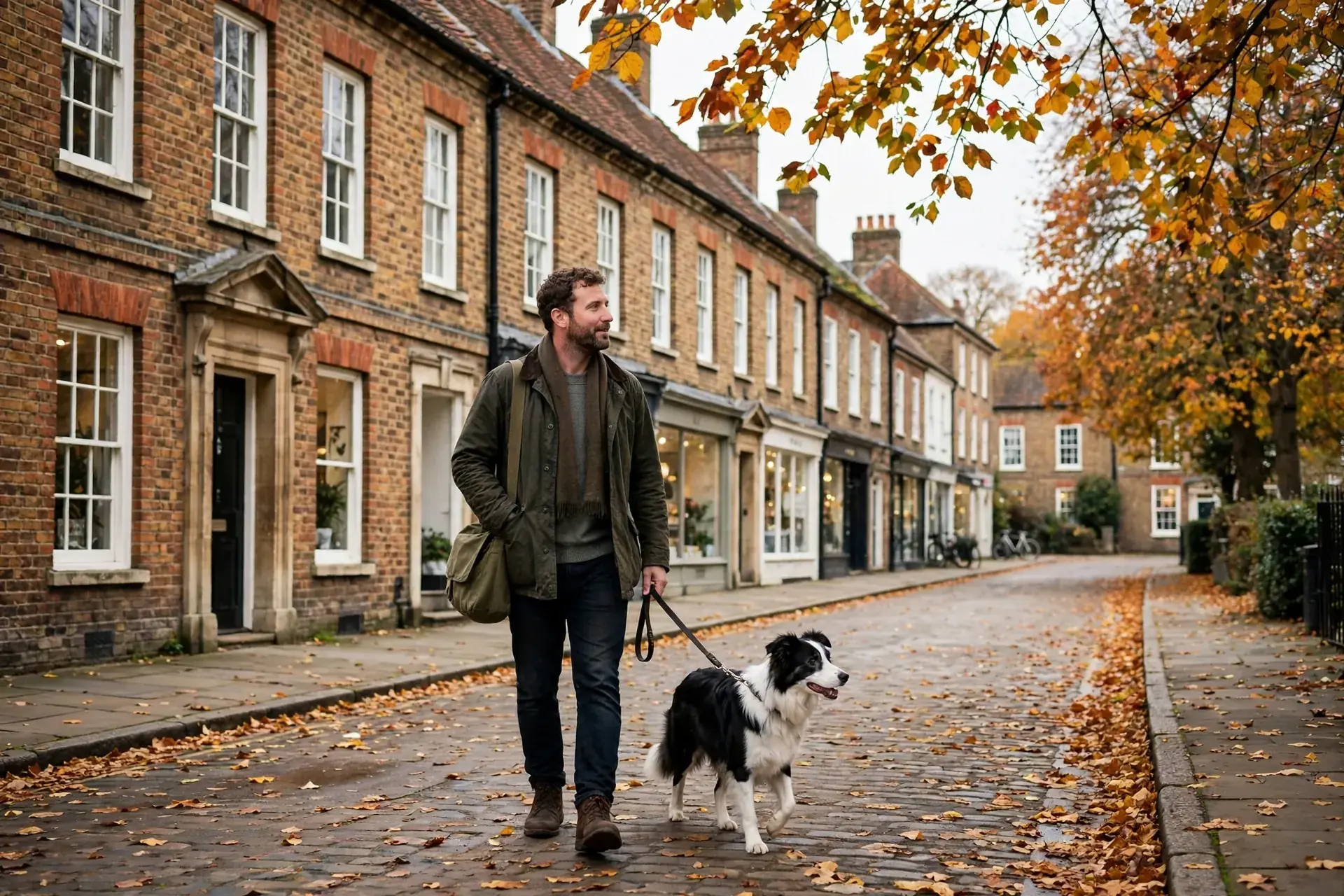
The best way to understand Holt is to start where the town does its daily business: the high street. Holt is a small Georgian market town in north Norfolk, rebuilt largely in brick after a fire in the eighteenth century, and that rebuilding is still visible in the neat rows of shopfronts, the wide pavements and the sense that everything worth visiting is within a short stroll. For a dog owner, that compactness is the whole point. You can park once, walk the length of the street at a dog's pace, and be back at the car with shopping, lunch and a tired dog before the afternoon has properly begun.
Begin at one end of the high street and work along it slowly, rather than darting between the shops you already know you want. Dogs enjoy a browsing pace: pauses to sniff a doorway, a drink stop outside a cafe, a patch of sun on a low wall. Holt rewards that pace because the interest is in the shopfronts themselves — independent retailers, food shops, galleries, antique and interiors shops, and the kind of small businesses that have survived precisely because they are not the same as every other high street. If your dog is the sort that pulls towards every doorway, a short lead and a few practice waits at kerbs will make the whole morning calmer, for you and for the shopkeepers.
It is worth being honest about what a shopping morning is for the dog. Some dogs love it: new smells, friendly attention, a treat from a shopkeeper, a cool floor to lie on while you browse. Others find repeated doorways, narrow aisles and the stop-start rhythm stressful, and show it by panting, yawning, pulling or refusing to settle. There is no failure in cutting a shopping morning short. Holt is small enough that you can split the street across two mornings, or leave the dog's favourite walk until after the shops so the day ends on a high note. The town works best when the dog's needs set the schedule, not the shopping list.
Why Holt works as a base
Holt sits a few miles inland from the north Norfolk coast, close enough that the seaside is an easy drive but far enough that the town keeps its own character. That position is what makes it a good base rather than just a pleasant stop. From Holt you can reach the coast in several directions: west towards the wide sands and harbour towns, east towards the resort seafronts, and north to the shingle ridges and nature reserves that define this stretch of coastline. Staying in one place for several nights and radiating outwards means the dog sleeps in the same bed every night, learns the same morning toilet route, and does not have to cope with a new accommodation every day.
The town itself is also a practical base in ways that matter more than scenery. There are food shops for self-catering, cafes and pubs for eating out with a dog, and vets within reach if something goes wrong. The surrounding lanes are quiet enough for a short evening walk, and the woodland on the edge of town gives you a proper off-street walk without driving anywhere at all. For a multi-day break, that combination — a walk from the door, a town to browse, and a coast to explore — is more useful than a single spectacular beach with nothing else nearby.
Compare that with basing yourself directly on the coast. A coastal base puts the beach on your doorstep, but in peak season it also puts traffic, parking pressure and crowds there, and a single beach's dog rules then shape your whole holiday. Holt lets you choose each day: a quiet woodland morning when the coast is busy, a big beach day when the weather is kind, a shopping and cafe day when it rains. If you are weighing up other parts of the county, our guide to the Norfolk Broads with a dog covers a very different Norfolk landscape — flat waterways and riverside paths rather than a market town and a shingle coast — and the contrast helps explain why Holt suits people who want variety within a short drive.
A morning route through town
A simple morning route works like this. Arrive early, while the high street is still quiet, and give the dog a short settling walk first — a loop around the quieter side streets or a stretch of pavement where there is little to react to. Dogs that have already had a toilet break and ten minutes of sniffing are far easier companions in shops than dogs taken straight from the car into a busy street. Early mornings in Holt are also the best time for photographs, because the brickwork catches low light and the pavements are empty enough to walk a dog without constantly stepping aside.
Then browse the high street in one direction, stopping for coffee when the dog's attention starts to wander. A cafe stop is not a reward for good behaviour so much as a reset: water for the dog, a seat out of the flow of shoppers, and a chance for the dog to lie down and watch the world instead of walking through it. After coffee, continue in the same direction or loop back along a parallel street, so the dog gets variety rather than retracing the same smells. Finish the morning with a proper walk — the country park, described below — so the dog's day is not only pavements and shop doorways.
If you are travelling with children as well as a dog, Holt's compactness helps again: the distances are short, there are places to sit, and nobody has to commit to a long walk to reach the next point of interest. If you are travelling with an older dog, the same compactness matters for a different reason. Short, level stretches with frequent stopping points suit stiff joints far better than a long coastal hike, and you can always return to the car or the accommodation for a rest in the middle of the day. Holt is a town that lets you scale the day up or down without replanning it.
Shopping with a dog in Holt
Holt's reputation rests on its independent shops, and for many visitors the shopping is the reason to come. Expect a mix that reflects a working market town rather than a tourist parade: food specialists, household and interiors shops, clothing and gift retailers, galleries and antique dealers, and bookshops and stationers. The pleasure is in browsing slowly and finding things you would not find at home, and a calm dog can be part of that pleasure — many shopkeepers keep treats behind the counter and are glad to see a well-behaved dog.
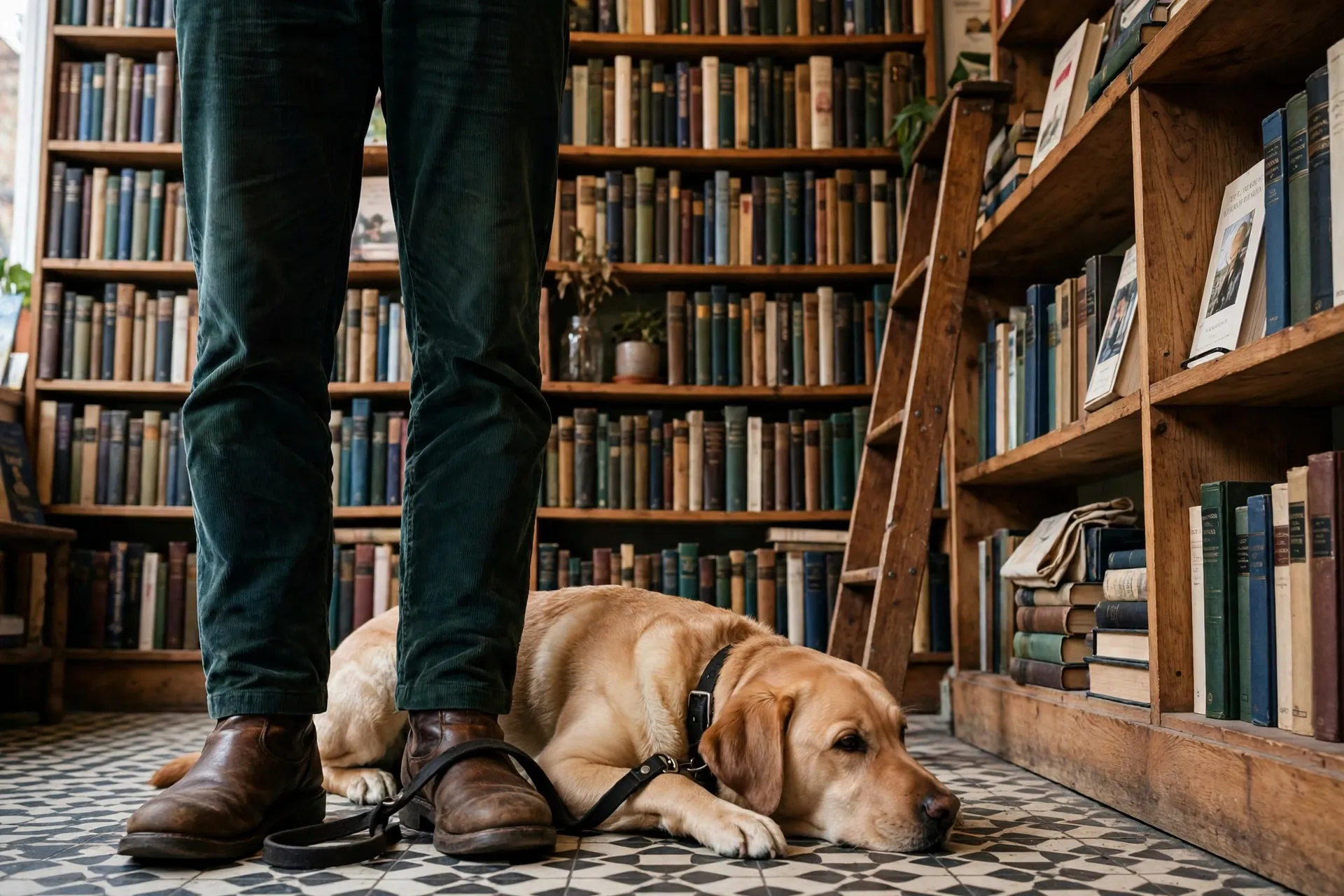
Dog policies, however, are set shop by shop, not by the town. One shop may welcome dogs with open arms while the next asks dogs to wait outside, and a third may allow dogs only if carried or kept on a short lead. The reliable approach is to look for a sign at the door, and if there is none, ask before entering. That takes five seconds and avoids the awkward moment of being asked to leave with an armful of goods. If one person is shopping while another waits with the dog, take turns rather than assuming every shop will say yes. Our wider guide to dog-friendly bookshops in the UK explains the same door-by-door etiquette in more detail, and the habits transfer directly to Holt's smaller retailers.
A few practical habits make shopping with a dog smoother. Keep the lead short inside, and hold it so the dog stays beside you rather than trailing into the next aisle. Avoid retractable leads in shops entirely: they tangle displays, trip other shoppers and give a dog exactly the freedom that narrow aisles cannot accommodate. Watch the dog's tail around low displays and its nose around food stalls, and carry a small towel if the weather is wet so muddy paws do not become the shopkeeper's problem. If the dog is barking, lunging or clearly unhappy, step outside and settle them before trying another shop — persistence rarely improves a stressed dog's behaviour.
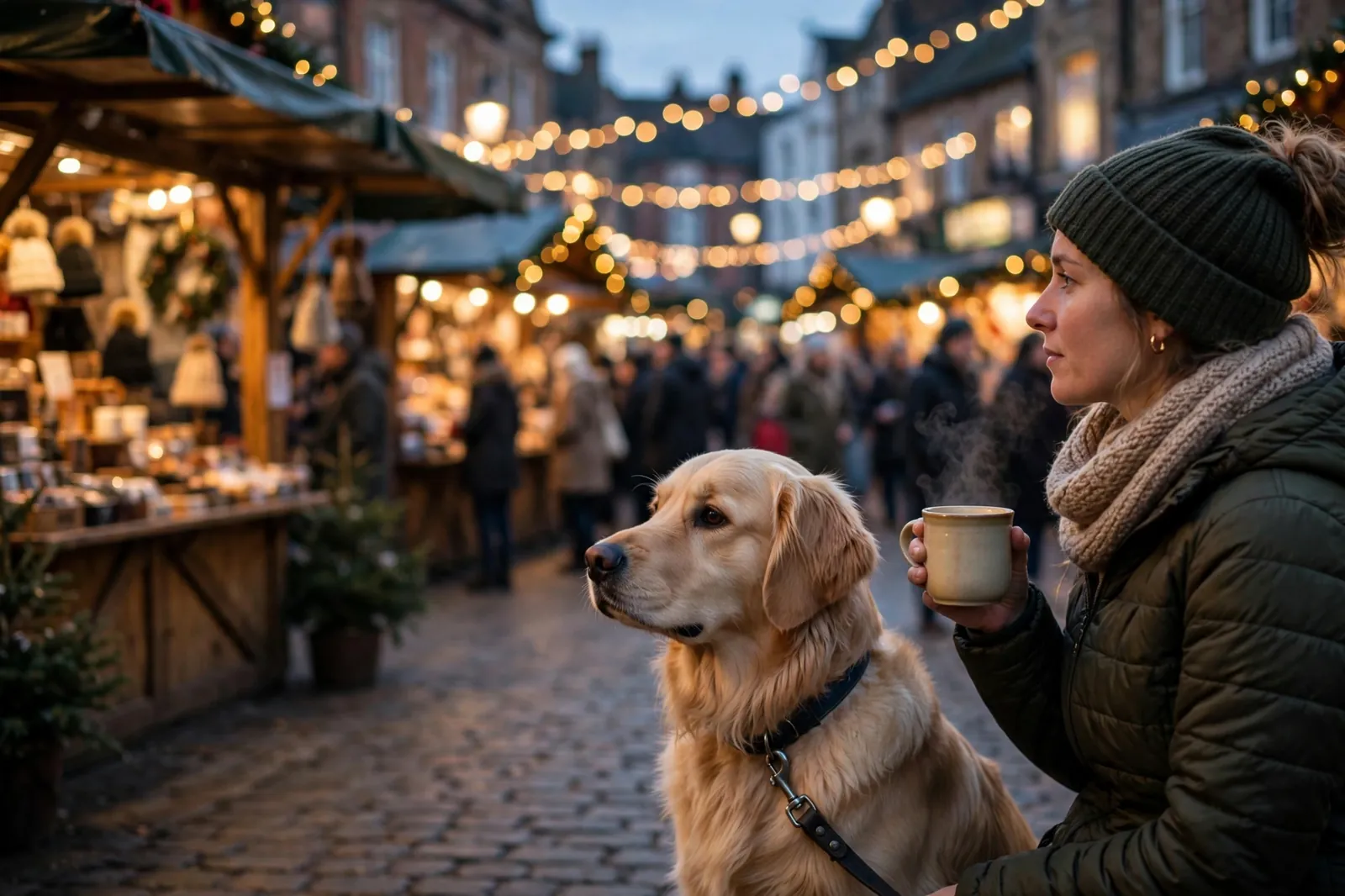
Market days and events add another layer. Holt's market tradition and seasonal events can fill the high street with stalls, crowds and food smells that some dogs love and others find overwhelming. If your dog is crowd-shy, treat a market day as a reason to walk the woods instead and browse the shops on a quieter weekday. If your dog thrives on bustle, a market morning is a wonderful outing, but keep the visit short, keep the dog close in the densest crowds, and watch for dropped food, which is the most common cause of a market-day stomach upset. Our guide to dog-friendly markets in the UK has a fuller crowd checklist that applies well here.
Cafes, pubs and lunch stops
Holt's cafes and pubs are where a shopping morning turns into a day out, and they are also where dog policies matter most in practice. Many places in a market town like Holt welcome dogs in at least part of their space, but the details vary: some welcome dogs throughout, some restrict dogs to a bar area or a terrace, and some change their policy between lunch and dinner. The pattern to check is always the same — which rooms, which hours, and whether water bowls and treats are provided or you should bring your own.
For lunch, a practical rule is to choose the place that suits the dog, not just the menu. A dog that settles under a table in a quiet corner will enjoy almost anywhere; a dog that watches every passer-by needs a table away from the door and the main walkway. Terraces are popular in summer, but a terrace beside a busy pavement can be harder for a reactive dog than a calm interior. In winter, an interior table near a draught-free corner is worth more than a fashionable room where the dog must lie in a cold draught by the door. If you are unsure, ask when you book whether dogs are welcome at the table you have in mind, not just in the building in general.
Mealtime manners repay a little preparation. Bring a portable water bowl and a small mat or blanket so the dog has a defined place to lie — dogs settle faster on their own mat than on a strange floor. Feed the dog before your own meal if that is your normal routine, so begging is less likely, and keep treats for rewarding calm lying down rather than for distracting a dog that is already overexcited. If the dog cannot settle after a few minutes, it is kinder to take lunch as a takeaway and eat it on a bench or back at the accommodation. Our guide to dog-friendly cafes in the UK sets out the same etiquette in full, including the important distinction between a cafe that tolerates dogs and one that genuinely welcomes them.
Holt Country Park woods
Holt Country Park, on the southern edge of town, is the walk that turns a Holt break from a shopping trip into a dog's holiday. The park is a tract of woodland with waymarked trails through pine and mixed broadleaf trees, and its paths are the kind that suit most dogs: shaded in summer, sheltered in wind, and interesting enough — with squirrels, scents and leaf litter — that a relatively short walk feels like a proper outing. Because it is close to town, it works as a morning walk, a post-shopping leg-stretch, or a last walk before the drive home.
Walk the trails with the usual woodland courtesies. Keep your dog under effective control and put them on a lead wherever the path is shared with cyclists or horse riders, or where other dogs are passing on a narrow track. Woodland in this part of Norfolk can be busy with families at weekends, and a dog that charges up to every other dog will not be popular even if it is friendly. If your dog has a strong chase instinct, the squirrel population is a genuine consideration: a long line gives the dog freedom to explore while keeping wildlife and other walkers safe, and it is far better than a recall you cannot rely on.
Seasonal details change the walk more than the map suggests. In autumn, the woodland floor is deep in leaves, which dogs love and which hides mud, puddles and the occasional sharp stick, so check paws afterwards. In winter, the trails can be dark under the canopy even at midday, and a light-coloured collar or a small light on the dog's harness helps other walkers spot them. In summer, the shade is a blessing, but bring water anyway: woodland walks feel cool to a walking human and still warm to a dog in a fur coat, and there may be nowhere for the dog to drink along the trail. After any woodland walk, a quick check for ticks is a sensible habit in this part of England, especially from spring into autumn.
Coast days from Holt
The north Norfolk coast, a short drive north of Holt, is a string of distinct places rather than one long beach, and that variety is what makes a Holt base so rewarding. West of Holt, the coast around Blakeney and Cley is shaped by marshes, shingle ridges and a famous seal-watching coastline, with big skies and a wilder feel. Eastwards, Sheringham and Cromer offer traditional seaside towns with promenades, piers and fish and chips, while Wells-next-the-Sea combines a harbour, a beach reached through pine woods, and a long stretch of sand. Each has a different dog character, and the best plan is to match the day's coast to the dog's mood and the weather.
For dogs, the practical differences are about surface, space and rules. Shingle beaches are harder on paws and less inviting for ball games than sand, but they are often quieter and give a dog room to run without disturbing sunbathers. Sandy beaches are wonderful for dogs that love to dig and chase, but they are also where seasonal restrictions are most likely to apply in summer, and where crowds concentrate on fine days. Marsh and harbour edges are rich in wildlife and therefore demand the closest control: ground-nesting birds in spring and seals hauled out on sandbanks are both easily disturbed by a loose dog, and the local guidance on keeping dogs on leads near wildlife is there for a reason, so check the official guidance before you travel.
Planning a coast day from Holt is straightforward if you keep three checks in mind. First, confirm the dog rules for the specific beach and the specific date, because seasonal restrictions change by beach and by year; a beach that welcomes dogs in October may restrict them in August, and a single resort front may have different rules from the quieter stretch a mile along the coast. Second, check parking and the walk from the car to the sand: some north Norfolk beaches involve a long walk through woods or across marsh, which is a delight for a fit dog and a problem for an older one. Third, check the tide. A beach that is generous at low tide can shrink to a narrow strip at high tide, leaving little room for dogs and walkers to pass each other comfortably. For a wider comparison of how Norfolk's coast stacks up against another famous coastline, see our guide comparing Northumberland and Norfolk coasts for dogs, which weighs beach rules, space and driving distances in a way that helps with multi-day planning.
A one-day Holt and coast plan
A good one-day plan keeps the dog's energy curve in mind: a settling walk first, activity in the middle of the day, and a calm finish. Start with a short town loop and breakfast, then browse the high street while it is still quiet, with a cafe stop halfway through. By late morning, drive to the country park for a woodland walk of forty minutes to an hour, which gives the dog proper exercise without the exposure of an open beach. Lunch can be a pub or cafe stop on the way to the coast, or a picnic eaten at the car if the dog is tired and would rather rest.
Spend the afternoon on the coast, choosing the beach to suit the weather and the season. On a calm, cool day, a longer beach walk with time for swimming — if the dog enjoys it and the beach allows it — is the highlight of the trip. On a hot day, keep the beach visit shorter, bring shade and plenty of water, and remember that sand can burn paws and that dogs overheat faster than people. On a windy day, a sheltered harbour walk or a marsh-edge path may be more comfortable than an exposed shingle ridge. Finish the day back in Holt with a short evening toilet walk and a quiet dinner, rather than squeezing in one more attraction. Dogs remember the rhythm of a day more than the number of places visited.
If you have two or three days, rotate the pattern rather than repeating it. One day can be a shopping and woodland day with a short coast visit; the next can be a full coast day with a harbour town for lunch; a third can head inland to the Broads or to another market town. That rotation is the real advantage of a Holt base: no single day has to carry the whole holiday, and a wet or windy day does not ruin the trip because the next day offers something different. Keep a list of the beaches and walks you liked, with notes on parking and dog rules, so a return visit starts from knowledge rather than guesswork.
Seasons and beach rules
North Norfolk changes character sharply with the seasons, and the dog rules change with it. Summer brings the warmest weather, the busiest beaches and the most seasonal dog restrictions, particularly on resort beaches where dogs may be limited to certain stretches or certain hours. Autumn is many dog owners' favourite season here: the crowds thin, the light is beautiful, the woodland is at its best, and many restrictions lift, though you should still check the official guidance before you travel because the exact dates vary. Winter is quiet and bracing, with long empty beaches and a town that feels local again, but shorter days and muddier paths mean walks need more planning.
Spring deserves a special note because it is when wildlife rules matter most. Ground-nesting birds on marshes and shingle ridges are at their most vulnerable, and dogs running loose through nesting areas can cause real harm even without meaning to. Keeping a dog on a lead near marked nesting areas in spring and early summer is not just a rule; it is the difference between a walk that the coast can absorb and one that damages it. Similarly, seal colonies along this coast are sensitive to disturbance all year, and a dog barking at seals hauled out on a sandbank can cause a stampede into the water. Enjoy the wildlife from a distance, keep the dog close, and treat any local signage as current even if an online guide says otherwise.
Seasonal planning also affects practical things. Accommodation that welcomes dogs may have different rules or charges in peak season, and the most dog-friendly cottages book early for school holidays. Parking at popular beaches fills by late morning in summer, so an early start or a quieter beach is the difference between a relaxed day and a frustrating one. In winter, check opening hours before relying on a particular cafe or attraction, because some coastal businesses close or reduce hours outside the main season. A Holt base softens all of this: the town's shops and cafes are open year-round, and the woodland walk is available whatever the season.
Parking and getting around
Driving is the easiest way to make the most of a Holt break, because the town, the country park and the coast are spread out and the most rewarding walks are not all on bus routes. Holt itself has car parks within easy walking distance of the high street, and coastal car parks vary from large pay-and-display sites at resort beaches to small, informal areas near quieter stretches. Arrive early at popular coastal car parks in summer, and always check whether a car park has a height barrier or a time limit that affects your plans. Never leave a dog in a parked car in warm weather, even with a window open: cars heat up far faster than most people expect, and a dog left in a hot car is in danger within minutes.
If you are not driving, Holt is still workable but needs more planning. Bus services connect Holt with nearby towns and the coast, but dogs on buses are at the driver's discretion in many cases, and a large or excitable dog may not be accepted on a busy service. Taxis that accept dogs exist, but they should be booked in advance and confirmed as dog-friendly when you book, not assumed. For walkers without a car, the best days are the ones that start and end in Holt: the high street, the country park and the lanes around town give a full day without any transport at all, and a single pre-booked taxi can open up one coastal day.
Walking between places deserves the same care as driving. Norfolk's lanes can be narrow, with fast traffic and no pavement, so a road walk that looks short on a map may not be pleasant or safe with a dog. Prefer waymarked trails, woodland paths and the coastal path where they exist, and keep the dog on a lead beside any road. If you are walking a stretch of the coast path, check the route and the tide before setting out, and carry a phone, water and a lead even on walks where you expect the dog to be off lead for most of the time.
Lead rules and countryside manners
The countryside around Holt is working countryside: farmland, grazing marshes, woodland managed for timber and wildlife, and a coast where birds and seals are part of the landscape. The manners that make a dog welcome here are simple and worth stating plainly. Keep your dog on a lead around livestock, always, without exception — a dog chasing sheep can cause serious harm and distress even if it never catches one, and farmers are entitled to protect their animals. Keep your dog on a lead near ground-nesting birds in spring and summer, near seals, and wherever signage asks for it, even if other dogs appear to be running free.
On open beaches and in woodland, the question is not whether your dog is friendly but whether your recall is reliable. A dog with a genuinely reliable recall, that returns at once even when another dog appears, can enjoy off-lead freedom in suitable places. A dog whose recall works in the garden but not on a beach full of distractions needs a long line until the recall is trained to that standard. That is not a punishment; it is how a dog earns freedom safely. Carry a lead at all times, and be ready to clip it on when another dog approaches, when a horse rider appears, or when the path narrows.
Clean up after your dog everywhere, including on beaches and woodland paths, and use the bins provided or take bags home if bins are full. Bagged waste left beside a path is worse than no bag at all, because it does not decompose and it signals to other walkers that the place is uncared for. If your dog fouls on a beach, the same rule applies: pick it up, bin it, and do not bury it in the sand. These small habits are what keep beaches and woodland open to dogs, and they cost nothing.
Finally, think about other people's dogs. Not every dog wants to meet yours, and an on-lead dog meeting an off-lead dog is a common source of tension. If you see an on-lead dog approaching, call your dog back and clip the lead on until you have passed, even if your dog is friendly. If your dog is the nervous one, a bright lead or a polite word to other walkers — "mine needs space, please" — prevents most awkward encounters. Holt and the north Norfolk coast are sociable places for dogs, and a little courtesy keeps them that way.
Wet-weather backups
Norfolk weather is changeable, and a dog break that depends entirely on sunshine will disappoint sooner or later. The good news is that Holt is one of the better wet-weather bases in the county, because its attractions are not all outdoors. A rainy morning is a shopping and cafe morning: browse the high street shops that welcome dogs, linger over a long lunch, and let the dog dry off and settle under a table. A rainy afternoon can be a woodland walk in a waterproof coat, which many dogs enjoy far more than their owners expect, provided the walk is not too long and the dog is dried thoroughly afterwards.
For a truly wet day, plan a short, sheltered walk rather than a long exposed one. Woodland paths give shelter from wind and some shelter from rain, but they become muddy, so choose paths with a firm surface where possible and avoid waterlogged fields where a dog can quickly become soaked and cold. After any wet walk, dry the dog properly — a drying coat, a towel rub and a warm room make the difference between a dog that bounces back and one that shivers for an hour. If the dog is older or small, a waterproof coat is worth packing even if the forecast looks dry, because Norfolk showers can arrive with little warning.
Wet weather also affects driving and parking. Coastal car parks on grass can become soft after heavy rain, and some rural car parks may be difficult for low cars. Check conditions before setting out, and have a town-based fallback for every coastal day: if the coast is windswept and raining, Holt's shops and cafes are a genuinely enjoyable alternative, not a consolation prize. The same flexibility applies to tides and light: a beach walk postponed to the next morning is usually a better walk, and a dog that has had a good woodland walk today will not mind waiting for the beach tomorrow.
Where to stay with a dog
Staying in or near Holt with a dog gives you a choice between town cottages, village rentals, farm stays and small guest accommodation, and the right choice depends on your dog as much as on your budget. A cottage with an enclosed garden is the gold standard for most dog owners: the dog can go out last thing at night without a walk, and a secure garden means you can relax without watching the gate. If a listing says "enclosed garden", check what that means in practice — height, gaps, gates and whether the garden is shared with other guests — because a low fence is no barrier to a determined jumper, and a shared garden is a different proposition from a private one.
When you book, confirm the dog details in writing before you pay: how many dogs are accepted, whether there is a charge per dog or per stay, whether dogs are allowed on furniture or must stay downstairs, and whether the dog can be left alone in the property at all. Many properties allow dogs but not unattended dogs, which matters if you plan to eat out in the evening. If you do plan to leave the dog, check whether the property has a crate-friendly space and whether neighbours are close enough to hear barking. A property that suits a calm older dog may not suit a young dog that barks when left, and honesty about your dog at booking time avoids an awkward conversation on arrival.
Location within Holt matters too. A cottage on or near the high street puts shops and cafes within a short walk, but may also mean street noise and less outdoor space. A cottage on the edge of town, nearer the country park, gives quieter walks from the door but a longer walk to breakfast. A village stay a few miles out gives space and countryside, but means driving for every meal and every walk. There is no single right answer; the right answer is the one that matches your dog's routine. If your dog needs a garden at midnight, prioritise the garden. If your dog settles anywhere, prioritise the town.
Self-catering has practical advantages for dog owners: you control mealtimes, you can leave a familiar bed and bowl in place, and you do not have to negotiate restaurant dog policies every evening. Whatever you choose, pack the dog's own bed and a familiar blanket, because a dog that sleeps on its own bedding settles faster in a new place. For a broader look at how beach rules vary around the country, our guide to dog-friendly beach rules in the UK explains seasonal restrictions and local variations that are worth understanding before you book any coastal stay.
What to pack
Packing for a Holt break is mostly about mud, water and flexibility. Start with the basics: a lead and a spare lead, a harness or collar with an ID tag, poo bags and a holder, a portable water bowl and a bottle of water, and the dog's usual food measured for the trip plus a day extra. Add a towel and a drying coat, because even a dry forecast can produce a muddy woodland path or a paddle in a stream. A familiar blanket or bed helps the dog settle in new accommodation, and a chew or enrichment toy gives the dog something to do during a long cafe lunch.
Seasonal additions are worth their weight. In summer, pack extra water, a shade cloth or a cooling mat for the car, and a paw check after hot sand or shingle. In winter, pack a dog coat if your dog feels the cold, a light for dark walks, and extra towels for the inevitable mud. All year round, pack any medication with a spare supply, the vet's phone number, and a basic first-aid kit that includes tick removers and a muzzle — not because you expect to need it, but because a muzzled dog is far easier for a vet to examine in an emergency. If your dog is on regular medication, keep it in hand luggage rather than in a bag that might be left in the car.
One packing habit saves more holidays than any gadget: a small bag kept by the door with the dog's essentials, so a spontaneous walk or a sudden change of plan does not mean repacking from scratch. Lead, bags, water, bowl, towel, treats and a spare poo bag holder go in the bag; everything else can stay in the car. Holt's compactness means you will rarely be far from the car or the accommodation, but having the essentials in one place means you actually use them instead of leaving them behind.
Practical questions
Before you go
Is Holt a good base for a dog-friendly north Norfolk holiday?
Yes, Holt works well as a base because it combines a compact, walkable high street with woodland on the edge of town and a short drive to several north Norfolk beaches. Staying in town means you can mix shopping, cafe stops and a proper walk in a single day without moving accommodation, and you can choose a different stretch of coast each day.
Are dogs allowed in Holt's shops?
Many independent shops in Holt welcome well-behaved dogs, but policies vary from shop to shop and can change, so check the sign on the door or ask staff before you go in. Keep your dog on a short lead, avoid blocking narrow aisles, and skip any shop that looks crowded or sells fragile goods at nose height if your dog is excitable.
Which north Norfolk beaches near Holt allow dogs?
Dog access varies by beach and by season, with some stretches restricted in summer and others open all year, so check the official guidance before you travel. As a general rule, the quieter shingle and sand stretches away from the main resort fronts tend to be the most dog-friendly, while busy town beaches are the most likely to carry seasonal restrictions.
Is Holt Country Park suitable for dogs?
Holt Country Park is a popular woodland walk close to town, with waymarked trails through pine and mixed woodland that suit most dogs. Keep your dog under control, watch for cyclists and horse riders on shared paths, and take water in warm weather because the trails offer shade but few places to drink.
Do I need a car for a dog-friendly break in Holt?
A car makes the trip much easier, because the best coastal walks and the most dog-friendly beaches are spread along the coast road and bus services can be awkward with a dog. Without a car you can still enjoy Holt itself and the country park on foot, but check bus and taxi rules for dogs before relying on public transport for coastal days.
What should I do if it rains during a Holt dog break?
Use Holt's covered strengths: browse the high street shops that welcome dogs, linger in a dog-friendly cafe, and save the open coast for a brighter window. Woodland paths drain better than open fields but can still be muddy, so pack a drying coat and a towel, and keep a short town loop in reserve for the wettest hours.