This guide is independent and contains no paid placement. Rules, seasons and access arrangements change — check the official latest guidance before you travel, and follow on-site signs and ranger advice on the day.
Base yourself near Aviemore, build most days around pine forest and lochside walks, keep your dog on a lead or close at heel where wildlife signs ask — especially in spring and summer — and treat the high plateau as a fair-weather extra, never the plan. In winter, shorten everything, protect paws and warmth, and be ready to stay low.
Why slower planning wins in the Cairngorms
The Cairngorms National Park is the largest national park in Britain, and its scale changes how a dog trip works. Distances that look short on a map become long single-track drives, weather can differ completely between a sheltered glen and the plateau above it, and the best walk for your dog is often not the most famous summit but a quiet forest loop where they can sniff, settle and enjoy the day at their own pace. Planning slowly — fewer places, more time in each, and a genuine bad-weather alternative for every ambitious day — is what turns a Cairngorms break from a checklist into a holiday.
Start with the dog in front of you. A young, fit dog who is reliable around wildlife may thrive on longer forest and lower hill days, while an older dog, a puppy whose joints are still developing, or a dog who finds new places exciting needs shorter outings with long pauses built in. Our guide to senior dog travel covers pacing, rest days and comfort checks that apply just as well in Highland forest as anywhere else, and it is worth reading before you set daily distances. Be honest about recall, too. The Cairngorms is home to rare birds, deer and livestock, and a dog who cannot be recalled reliably belongs on a lead or a long line in most places here, however empty the path looks.
Then plan around layers rather than single walks. For each day, hold three options in mind: a sheltered forest walk for poor weather, a lochside or riverside route for a middling day, and a higher walk only if the forecast, your navigation skills and your dog all suit it. That structure removes the pressure to push upwards because it is your only plan, which is where most mountain dog days go wrong. It also makes the trip kinder: dogs read routine and calm handling as safety, and a settled forest day after a long drive will do more for the rest of the week than an epic first outing.
Finally, leave room for local information. Ranger services, estate notices, visitor centres and accommodation hosts all carry up-to-date detail about path closures, forestry work, deer stalking seasons and wildlife protection areas that no guide written months earlier can match. Treat this article as the framework and the on-the-ground notices as the final word. Where this guide is uncertain about a specific rule, date or arrangement, it says so plainly: check the official latest guidance before you travel.
Choose your season honestly
No season is simply best in the Cairngorms; each one trades something. Spring brings lengthening days, returning birds and forests full of sound, but it is also the start of the most sensitive wildlife period, when ground-nesting birds and capercaillie need dogs kept close and disturbance kept to a minimum. Snow can linger on high ground well into spring even when glens feel mild, so a walk that starts in a t-shirt can end in winter conditions. Pack for both, and do not let a sunny breakfast talk you out of carrying warm layers.
Summer offers the longest days and the widest choice of low and mid-level walks, along with the busiest car parks, the warmest — though rarely truly hot — valley weather, and midges in sheltered, damp places on still days, especially near water and woodland edges. Keep a midge plan for dawn and evening toilet walks, carry water even on moderate days because burns and streams can run lower than expected, and start early to enjoy quieter paths. Summer is also when wildlife lead guidance matters most, and when river levels are usually, though not always, at their most forgiving. After heavy rain, that assumption fails quickly.
Autumn is many dog owners’ favourite compromise: cooler air for walking, quieter paths after the main holiday period, spectacular fungi and forest colour, and deer at their most active during the rut. That last point cuts both ways, because stags are less predictable in autumn and deer stalking takes place on many estates. Follow estate signs, use recommended paths where notices ask, and give deer far more space than usual. Daylight shrinks noticeably through autumn, so plan finish times rather than just start times, and carry a torch for the last mile long before you think you need one.
Winter is a different park again. Snow and ice can make even modest paths slow and slippery, daylight is short, and wind chill on exposed ground is severe. Low-level forest walks can be magical in snow — quiet, bright and sheltered — provided your dog is equipped for the cold. Thin-coated, small, very young and older dogs lose heat fast, particularly when they stop moving, so a well-fitting coat, shorter outings, regular food and water, and a warm, dry place to recover afterwards are essentials, not extras. Paws need attention too: check for ice balls between toes, wash off grit and salt from treated surfaces, and consider booties only if your dog is already comfortable wearing them. If you want higher winter ground with a dog, that is a specialist decision requiring proper winter skills and equipment for you both; for most holidaymakers, staying in the glens is the right call.
Pine forests and lochside walks: where most good days happen
If the high plateau is the Cairngorms on a postcard, the ancient Caledonian pinewoods are the Cairngorms your dog will actually live in. Forests around Rothiemurchus, Glenmore and Abernethy — remnants of a woodland that once covered far more of the Highlands — offer sheltered, waymarked paths in almost any weather, with soft ground under paw, shade in summer and some protection from winter wind. For most visitors, a rotation of forest and lochside walks is not a consolation for missing the summits; it is the best of the park.
Loch an Eilein, in the Rothiemurchus area, is the classic example: a forest-fringed loch with an island castle ruin, circled by a well-used path that suits a steady, half-day pace with plenty of sniffing stops. It is popular for a reason, so expect other dogs, cyclists and families, keep your dog close where paths are narrow or busy, and follow any seasonal wildlife notices at the entrance — this is exactly the kind of woodland where capercaillie and other sensitive species may be present. Parking, charges, facilities and any temporary diversions change over time, so check the official latest guidance before you travel rather than relying on an old listing.
Loch Morlich and the Glenmore Forest offer another style of day: a large loch with a sandy shore area, forest tracks behind it and mountain views when the cloud lifts. Shores attract picnics, paddlers and dropped food in summer, so a dog who scavenges needs close management, and the water itself deserves the cautions covered later in this guide. In winter the same area can feel properly Arctic when wind funnels down the glen, which is a useful reminder that lochside does not automatically mean sheltered.
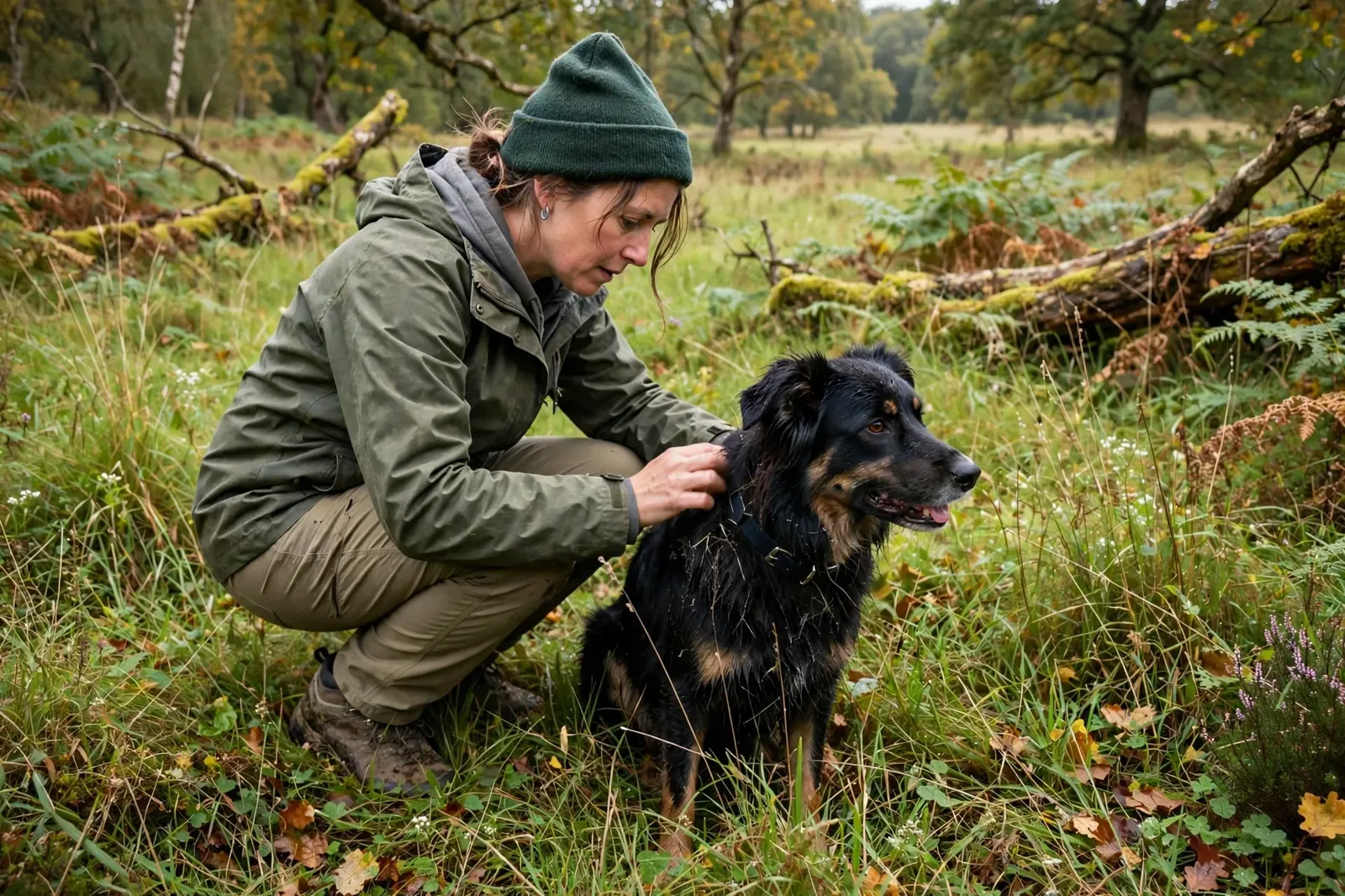
Build forest days properly and they repay you. Carry water rather than assuming your dog should drink from every burn, keep to clear paths where signs ask in sensitive habitat, and check your dog for ticks after woodland walks from spring through autumn — our guide to ticks on dogs in the UK explains what to look for, safe removal and the signs that need a vet. Take all dog waste away with you, including on forest tracks: bagging and leaving is worse than either carrying it out or, where official guidance for remote ground allows, flicking it well off the path. When in doubt, carry it out.
Wildlife first: capercaillie, ground-nesting birds and lead guidance
The Cairngorms holds wildlife found almost nowhere else in Britain at this scale, and dog owners share responsibility for it. Capercaillie — a large, ground-dwelling forest grouse — is among the rarest and most sensitive birds in the country, and the pinewoods around places such as Loch an Eilein and Rothiemurchus are the sort of habitat where it survives. Capercaillie and other ground-nesting birds can be flushed from nests or young by a dog ranging ahead off the path, even a dog who never chases and comes straight back. By then the disturbance has already happened.
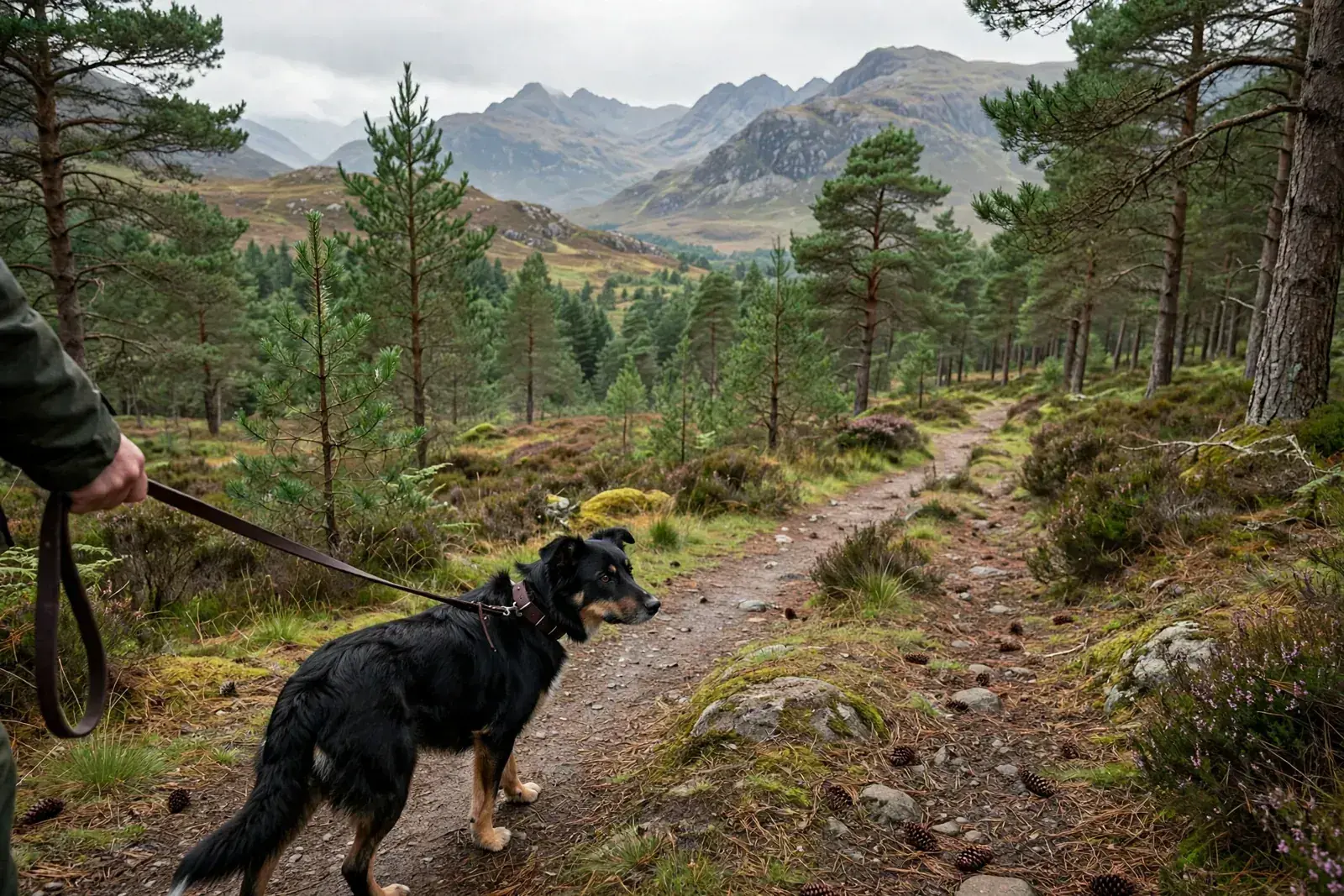
The practical rule is simple, but apply it generously. In spring and summer — the breeding and nesting season — keep your dog on a short lead, or close at heel on clear paths, in sensitive woodland and on open ground where birds may nest, and at any time of year whenever on-site signs, ranger advice or estate notices ask you to. Stick to paths, avoid letting your dog push through undergrowth or heather, and if you see a bird behaving as if it wants you to follow it away from a spot, leave the area calmly the way you came. Exact dates, zones and local arrangements vary by place and can change between seasons, so phrase your plan around the principle and confirm the detail locally: check the official latest guidance before you travel.
Scotland’s outdoor access rights come with responsibilities, commonly summarised in the Scottish Outdoor Access Code: take responsibility for your actions, respect the interests of others and care for the environment. For dog owners that means close control around wildlife and livestock is not optional politeness; it is the condition that makes access work. A long line dragging through nesting habitat is not close control, whatever the marketing on the packaging says. If your dog cannot walk calmly at heel or on a short lead in exciting places yet, choose wider, busier, less sensitive paths while you train, and treat that as part of the holiday rather than a failure.
Signs that ask for leads sometimes frustrate owners whose dogs are well-behaved, but they are written for the cumulative effect of every dog, every day, across a whole season. One quiet spaniel off the path rarely causes visible harm; a hundred across a breeding season can empty a wood of chicks. Following the strictest local notice, even when the path looks empty, is the single most valuable thing a visiting dog owner can do for this park — and it costs nothing but a shorter lead.
Reindeer, deer and other encounters
Few UK walks offer the chance of meeting reindeer, but the Cairngorms is home to a free-ranging reindeer herd that has lived in these hills for decades. Encounters on the hill are managed experiences at set times, and arrangements, locations and dog rules for any visit change over time — check the official latest guidance before you travel, and do not assume dogs can join every activity. If you meet reindeer or deer unexpectedly on a walk, the rule is distance: stop, put your dog on a short lead if they are not already, stay calm and still, and let the animals move away. Never allow a chase, and never position yourself between an animal and its young or its escape route.
Red and roe deer are far more common, and most encounters are a distant shape at a forest edge. The risk moments are predictable: a deer crossing the path at close range in woodland, calves hidden in long grass in early summer while their mother feeds nearby, and rutting stags in autumn who are distracted, vocal and less inclined to move away. In each case the answer is the same — lead on, space given, route changed if needed. A dog who lunges at deer needs management before the trip, not during it, because a chase across rough ground can injure dog, deer and owner in one sequence.
Other encounters are smaller but still shape the day. Red squirrels in the pinewoods will send many dogs into statue mode; keep hold of the lead around roads and car parks where excitement peaks. Adders — Britain’s only venomous snake — live in sunny, undisturbed spots across the Highlands and are most active in warmer months; they avoid people, but a curious nose in heather is how bites happen. Keep dogs on paths in likely habitat, and if a bite is suspected, keep the dog still and calm and get to a vet urgently. Mountain hares, ptarmigan and other high-ground species are a further reason the plateau demands close control in every season, not just spring.
Plan encounters rather than improvising them. Walk with the lead in your hand rather than buried in a pocket, scan ahead at forest edges and blind bends, and reward your dog heavily for noticing wildlife and choosing you instead. That training, repeated quietly across a week, is worth more than any piece of equipment — and it protects the very wildness you came to see.
Rivers, lochs and swimming cautions
Water is everywhere in the Cairngorms — the Spey and its tributaries, deep glacial lochs, burns that cross every forest path — and most dogs will vote for swimming at every opportunity. Your job is to be the cautious one. Highland rivers rise remarkably fast after rain in the hills, sometimes when the weather where you are standing feels fine, and a gentle crossing or paddling spot in the morning can be a genuine hazard by afternoon. If water is brown, swollen, noisy or moving fast, keep your dog out and on the lead nearby, without negotiation.
Lochs carry different risks. The water stays cold through the year, and cold water can overwhelm even a strong, keen swimmer, especially an older dog or one who has already walked a long way. Entry and exit points matter as much as the swim itself: steep, peat-soft or bouldery banks that are easy to slide down can be hard for a wet, tired dog to climb out of. Choose shallow, gently shelving entries, keep swims brief, and call your dog out while they still want more rather than when they are exhausted. If recall around water is unreliable, a long line held by a person who is paying attention — never tied to a tree or a belt and forgotten — keeps the fun without surrendering control.
Standing water in warm spells brings a further caution that applies across Britain: blue-green algae can form in still lochs and slow water in summer and can be highly toxic to dogs. It is not always visible, and official warnings are issued locally when it is detected, so check notices at the shore and check the official latest guidance before you travel. If water looks scummy, paint-like or unusually green, or a warning sign is posted, keep your dog out and away from the edge entirely — licking wet fur afterwards counts as exposure.
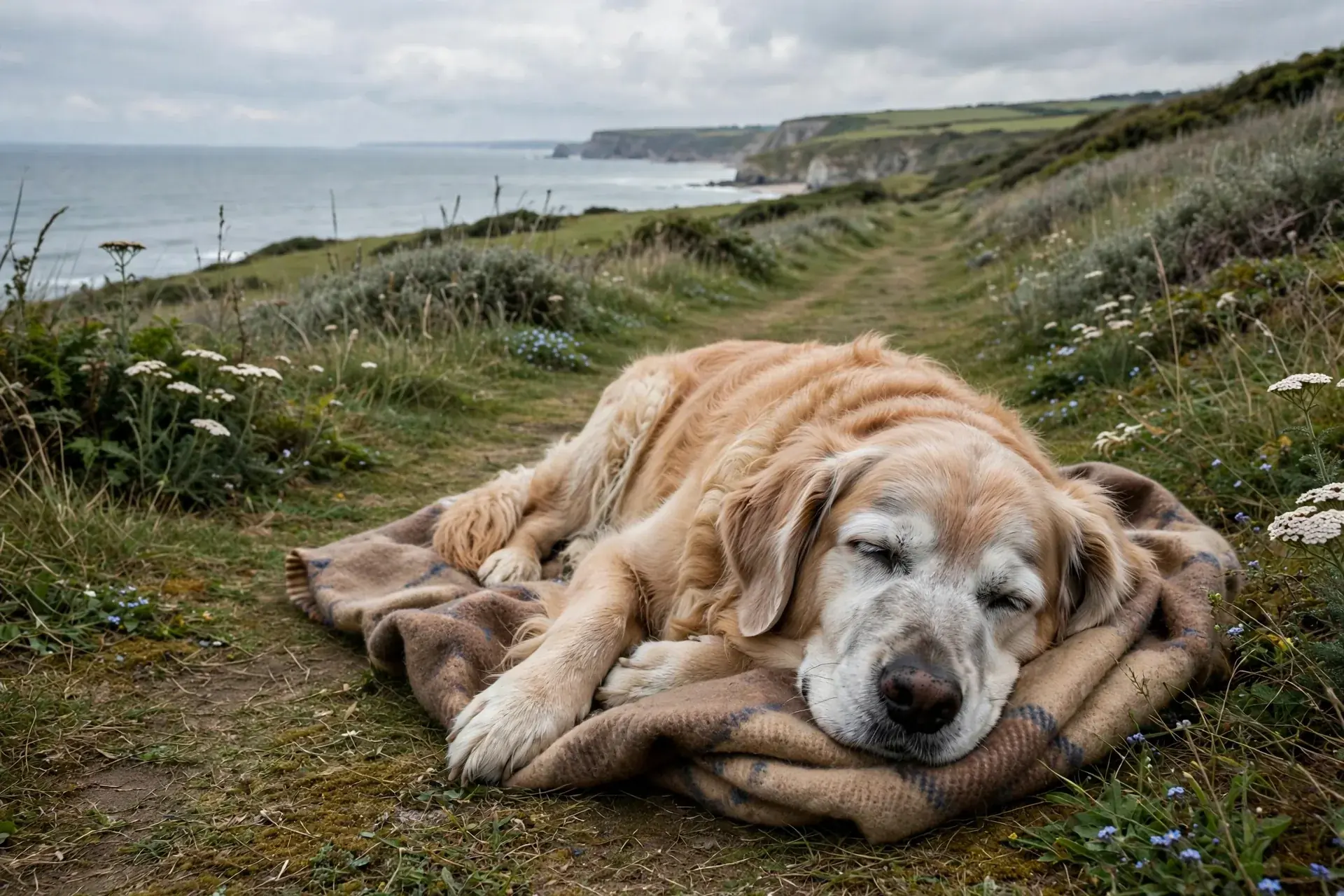
After any swim, dry your dog properly, especially in winter or on windy days when a wet coat strips heat fast, and check ears and paws for grit and cuts. Offer fresh drinking water from your bottle so a thirsty dog is less tempted by whatever is at the shore. Swimming can be a joyful part of a Cairngorms day, but it should always be the optional extra you approve on the day, in that place, in those conditions — never a habit the dog decides alone.
High ground: fast weather and when not to go up
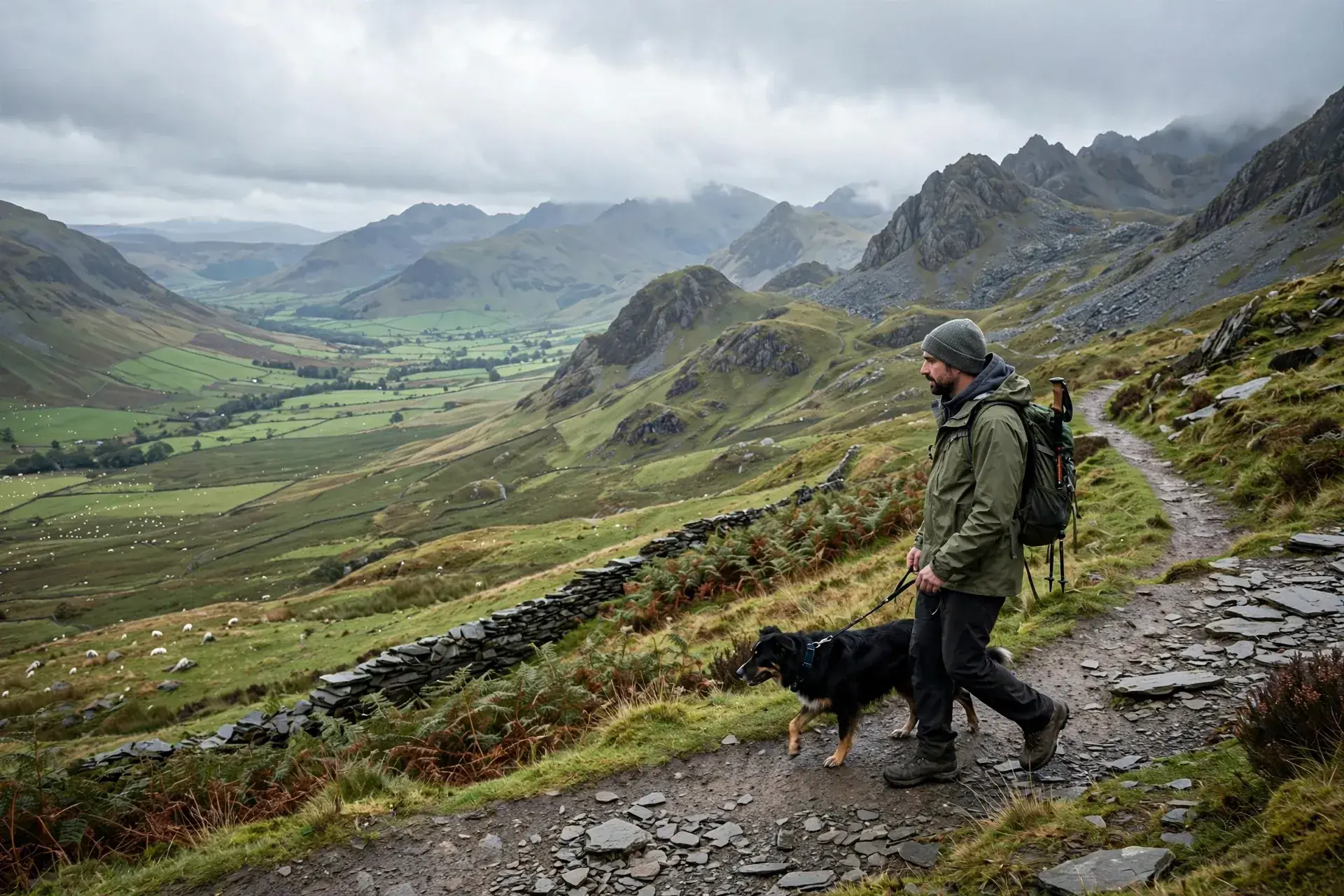
The Cairngorms plateau is one of the most serious mountain environments in Britain — a high, exposed, Arctic-like tableland where weather turns fast, navigation in cloud is genuinely difficult, and snow can lie in patches through much of the year. That seriousness is exactly why the honest headline for dog owners is this: most dogs, on most days, are better off in the glens. A high walk should be earned by a good forecast, proper equipment, confident navigation and a fit, adult dog — and abandoned without regret when any of those four is missing.
Weather here changes within the hour. A calm valley morning can become gale-force wind, driving rain or white-out conditions on the tops, and wind chill at height bears no resemblance to the temperature at the car park. Check a dedicated mountain forecast the night before and again on the morning, and check the official latest guidance before you travel for any warnings in force. If strong winds, poor visibility, snow or ice, thunderstorms or extreme heat are forecast, do not take your dog up high. Strong wind alone is a sufficient reason: it exhausts dogs, blows smaller dogs off balance on rough ground, makes communication impossible and turns a minor slip into a major problem.
Your dog’s limits matter as much as yours. Puppies and young dogs whose joints are still developing, older dogs, dogs recovering from illness or injury, and dogs who are simply unfit should stay on lower routes — a plateau day is long, hard under paw on granite and scree, and offers few early exits. Hot weather, when it comes, is also a stop sign: there is little shade or reliable water on the tops, and a dog cannot tell you early enough that they are overheating. If you do go up with a suitable dog in settled conditions, carry water and food for them as well as yourself, protect paws on rough ground, keep them on a lead near edges, cornices and wildlife, and set a turn-around time that you obey regardless of how close the summit feels. Our broader mountain guidance in the Snowdonia dog guide covers the same discipline in a Welsh setting, and the habits transfer directly.
Turning back, or never starting, is not a spoiled day. The forests, lochs and lower glens described in this guide will give your dog a full, satisfying outing in almost any weather, and they will still be there tomorrow if the forecast improves. Mountain rescue teams across Scotland repeatedly deal with incidents that began with a plan nobody wanted to abandon. Do not let your dog’s enthusiasm — most dogs will follow you anywhere, which is precisely the problem — make a decision that is yours to make.
Aviemore as a base, and what to pack
Aviemore is the practical heart of a Cairngorms dog trip. It sits within easy reach of the Glenmore and Rothiemurchus forests, Loch Morlich and Loch an Eilein, with a station, fuel, supermarkets, outdoor shops, cafes and veterinary services in one compact place. That concentration matters more than charm when the weather turns: a base with a shop for a replacement lead, a vet within reach and a warm, dry room to recover in makes the whole trip more resilient. Other villages and smaller settlements around the park offer quieter stays and their own local walks, but first-time visitors with a dog will usually find Aviemore the easiest logistics. Book dog-friendly accommodation early for school holidays and winter ski periods, and confirm in writing how many dogs are allowed, what the charge is, and whether dogs can be left alone in the room — assume they cannot unless it is stated.
Plan days from Aviemore in rings. Ring one is walk-from-the-door and short-drive forest and riverside routes for arrival days, poor weather and rest days. Ring two is the half-day loch and estate walks that form the core of the trip. Ring three — the high ground — is attempted only when everything lines up. Building the week that way means a bad forecast rearranges your days rather than cancelling them, and your dog gets variety without exhaustion. Save the numbers that matter before you lose signal: your accommodation, a local vet and an emergency vet route, because coverage in the glens is patchy and a crisis is the wrong time to discover it.
Packing for the Cairngorms is packing for two climates. For your dog, bring a well-fitting warm coat for winter and high or windy days, a drying coat or towels for after wet walks and swims, a spare lead and collar with up-to-date ID, enough of their usual food for the whole trip plus a buffer day, any medication with a clear margin, a tick remover, a basic first-aid kit, and waste bags in every pocket and pack rather than in one place you will forget. In summer add a plan for shade, extra water capacity and midge-time management; in winter add paw care, a torch with spare batteries for short days, and high-visibility gear for roadside and dusk walking.
Finish each day with the same quiet routine wherever you are based: check paws, toes, ears and coat for ticks, grit, ice or cuts; feed and water at familiar times; and let your dog sleep properly, because consecutive big days accumulate in dogs just as they do in people. A Cairngorms week paced like that — forests first, wildlife respected, water treated with caution, high ground kept in its place and Aviemore’s practical comforts doing the heavy lifting — is a trip most dogs will love in any season you choose.
Practical questions
Before you go
Can I walk my dog in the Cairngorms in winter?
Yes, but choose low-level forest and lochside routes, keep walks shorter, and protect paws and body heat. Snow, ice, short daylight and fast-changing weather make high routes a different undertaking. Fit a warm, well-fitting coat for thin-coated, small, young or older dogs, carry water and food, tell someone your plan, and turn back early if conditions worsen. Check the official latest guidance and mountain forecasts before you travel.
When should I keep my dog on a lead around capercaillie and ground-nesting birds?
Keep your dog on a short lead or close at heel in sensitive woodland and open ground through the breeding and nesting season in spring and summer, and whenever signs ask you to. Capercaillie and other ground-nesting birds can be disturbed by a dog ranging ahead, even without a chase. Follow on-site signs and ranger advice for the exact place and date, and check the official latest guidance before you travel.
Can my dog swim in Cairngorms lochs and rivers?
In calm, shallow entry points on a settled day, many dogs enjoy a brief paddle, but never assume water is safe. Rivers rise fast after rain, currents are stronger than they look, loch water stays cold even in summer, and steep or boggy banks can trap a tired dog. Keep swims short, use a long line if recall is unreliable, avoid flooded or fast water completely, and dry and warm your dog afterwards.
Is Aviemore a good base with a dog?
Yes, for most visitors it is the most practical base. It puts forest, lochside and lower-level walks within a short drive, with shops, fuel, vets and accommodation in one place, so you can change plans when weather closes in. Book dog-friendly accommodation early for peak periods, confirm charges and dog limits in writing, and plan parking and peak-time crowds into your day.
When should I not take my dog onto the high Cairngorms plateau?
Do not go up high if strong winds, poor visibility, snow or ice, thunderstorms or very hot weather are forecast, if your dog is young, old, unfit or recovering, or if you cannot navigate confidently if cloud drops. The plateau is exposed with few escape routes, and weather can turn within the hour. A forest walk on a bad-weather day is not a failed trip; it is good judgement.