This guide is general information for dog owners travelling in Britain, not veterinary advice. It does not diagnose any condition. If you are worried about your dog, contact a vet. For prevention products and treatment, follow your vet's advice and check the latest official guidance before you travel. Treatment bills like these are a good reason to review your dog travel insurance before the trip, especially cover for vet fees away from home.
Ticks are common in UK woodland, long grass and deer country, most active from spring to autumn. Check your dog after every countryside walk — especially ears, neck, armpits, groin and between the toes. Remove any tick promptly with a proper tick tool, never by squeezing or burning, note the date, and watch for tiredness, fever, appetite loss or lameness in the following weeks. Discuss prevention with your vet before a trip.
Where and when ticks occur in the UK
Ticks are small blood-feeding parasites that wait on vegetation for a passing animal or person to brush against them. In the UK the species most often found on dogs is the sheep tick, also called the castor bean tick. Ticks do not jump or fly. They climb to the tip of a blade of grass or a low leaf, hold on with their back legs and reach out with their front legs — a behaviour called questing — until a host passes close enough to grab onto.
Season matters, but it is not a guarantee. Tick activity is generally highest from spring through autumn, roughly March to October, and peaks after mild, damp weather when vegetation stays humid at ground level. A warm, wet spring can bring activity forward, while a hot, dry spell can push ticks back into leaf litter during the middle of the day. Ticks can still be active on mild winter days, particularly in sheltered woodland in southern Britain, so a winter holiday does not remove the need to check. Think of tick checking as a year-round habit that becomes more important between spring and autumn, rather than a task for one month only.
Geography matters too. Ticks are recorded across the whole of the UK, but numbers tend to be higher where there are plenty of hosts — deer, sheep, cattle, hedgehogs and small mammals — and where the ground stays damp. Parts of the New Forest, Dartmoor and Exmoor, the Lake District, the Scottish Highlands, Thetford Forest, the South Downs and many lowland woods are frequently mentioned by vets and public health bodies as higher-activity areas. That list is not exhaustive, and a quiet local wood can still hold ticks. The practical lesson is simple: judge risk by habitat and season on the day, not by county alone, and check the latest official guidance before you travel if your destination has had recent local warnings.
Higher-risk habitats: woodland, long grass and deer areas
Not every walk carries the same risk. Short, dry, closely mown grass in an open park with little wildlife is lower risk. The places that deserve extra care share three features: shade, humidity at ground level, and regular wildlife traffic. Woodland edges, bracken, heather moorland, rough pasture, hedgerows and the long grass beside footpaths all fit that pattern.
Woodland is the classic setting. Leaf litter keeps the ground damp, deer and squirrels move through regularly, and paths often funnel dogs through narrow gaps in vegetation where questing ticks are waiting at exactly dog height. Bracken deserves particular respect in late spring and summer: dogs love pushing through it, and it shelters ticks well. If a path is bordered by bracken, keeping your dog to the centre of the track and doing a careful check at the end of the walk is a sensible routine.
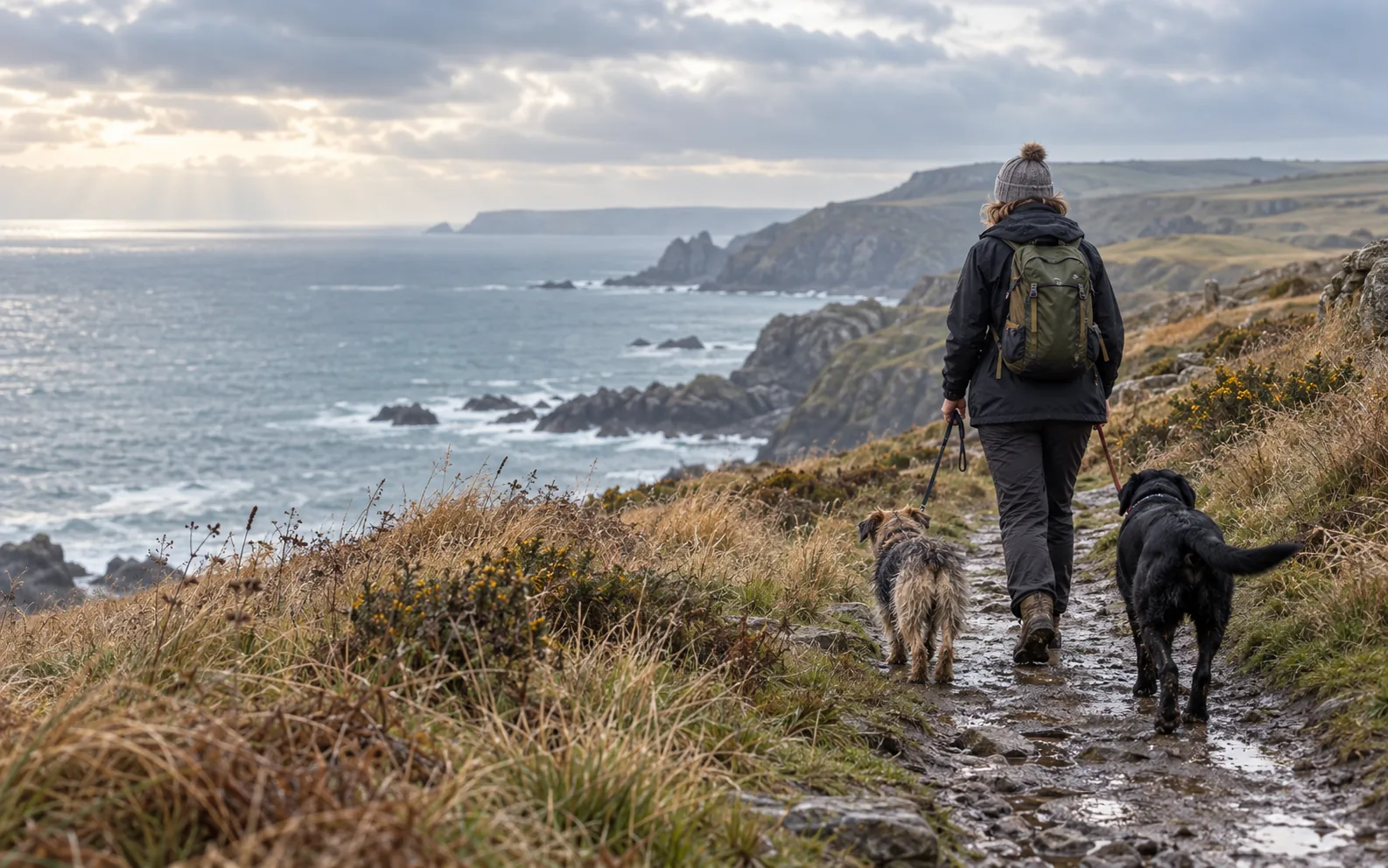
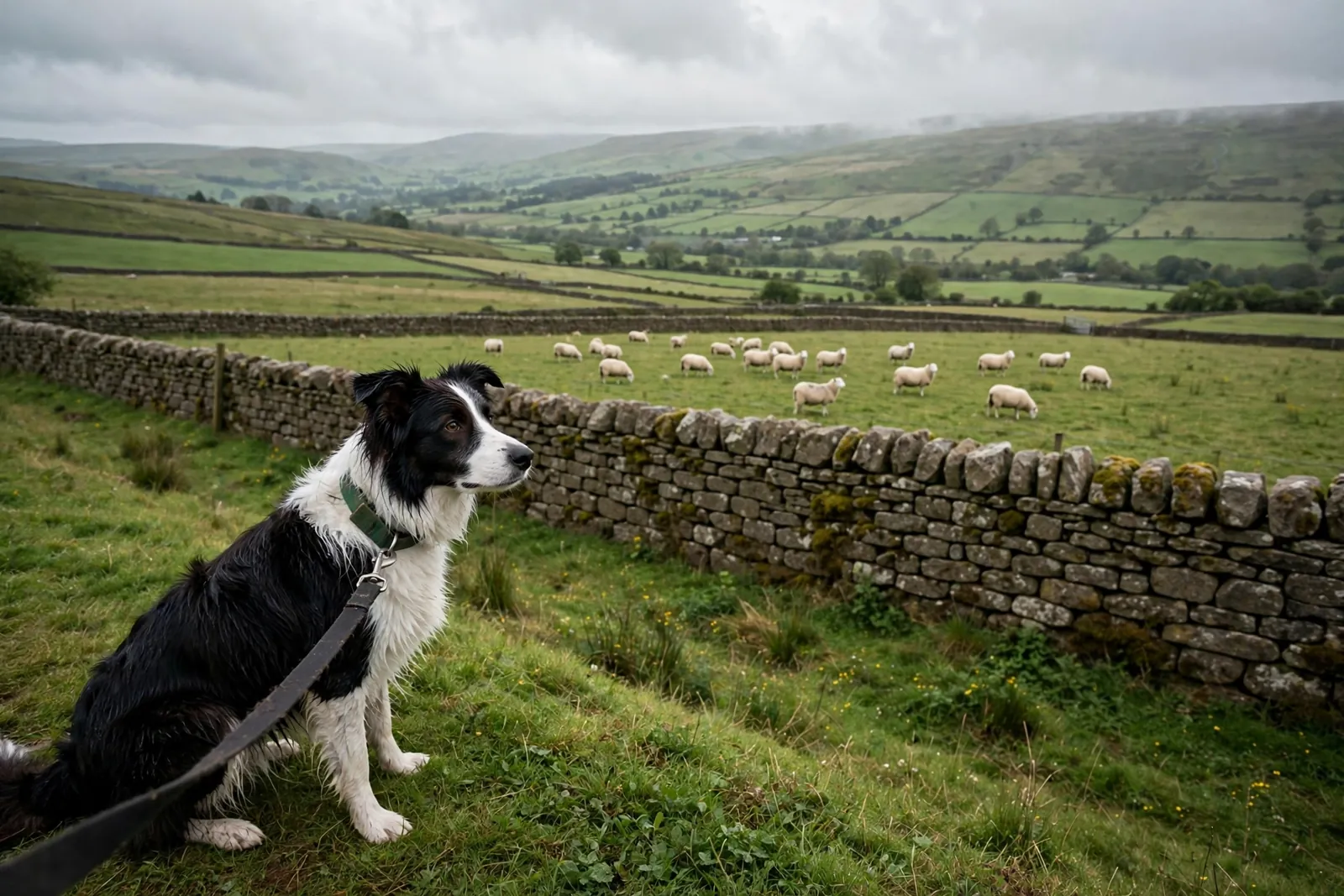
Long grass and rough grazing land come next. Meadow walks, nature reserves, coastal paths above cliffs and common land grazed by sheep or ponies can all hold ticks. Areas with deer are a strong signal — where deer graze or shelter, ticks usually complete their life cycle more easily. That includes deer parks, forest clearings and farmland next to woods. Coastal walks are not automatically low risk either: a short turf headland may be fine, while the sheltered, grassy combe just inland can be very different. Our guide to dog-friendly beaches and UK rules helps you plan the beach part of a trip, but remember to do the same tick check after the grassy path down to the sand as after any woodland walk. On farmland, keep to paths and keep dogs under close control around livestock — our explainer on livestock worrying law covers the legal side of countryside access with a dog.
Checking your dog after walks: a two-minute routine
Most ticks are found by fingers before they are seen. A tick that has only just attached may be no bigger than a poppy seed, while one that has fed for a day or more can swell to the size of a pea and turn greyish. Running your hands slowly against the lie of the coat, feeling for small lumps on the skin, will find far more ticks than a quick visual glance — especially on long-coated, dark or curly dogs.
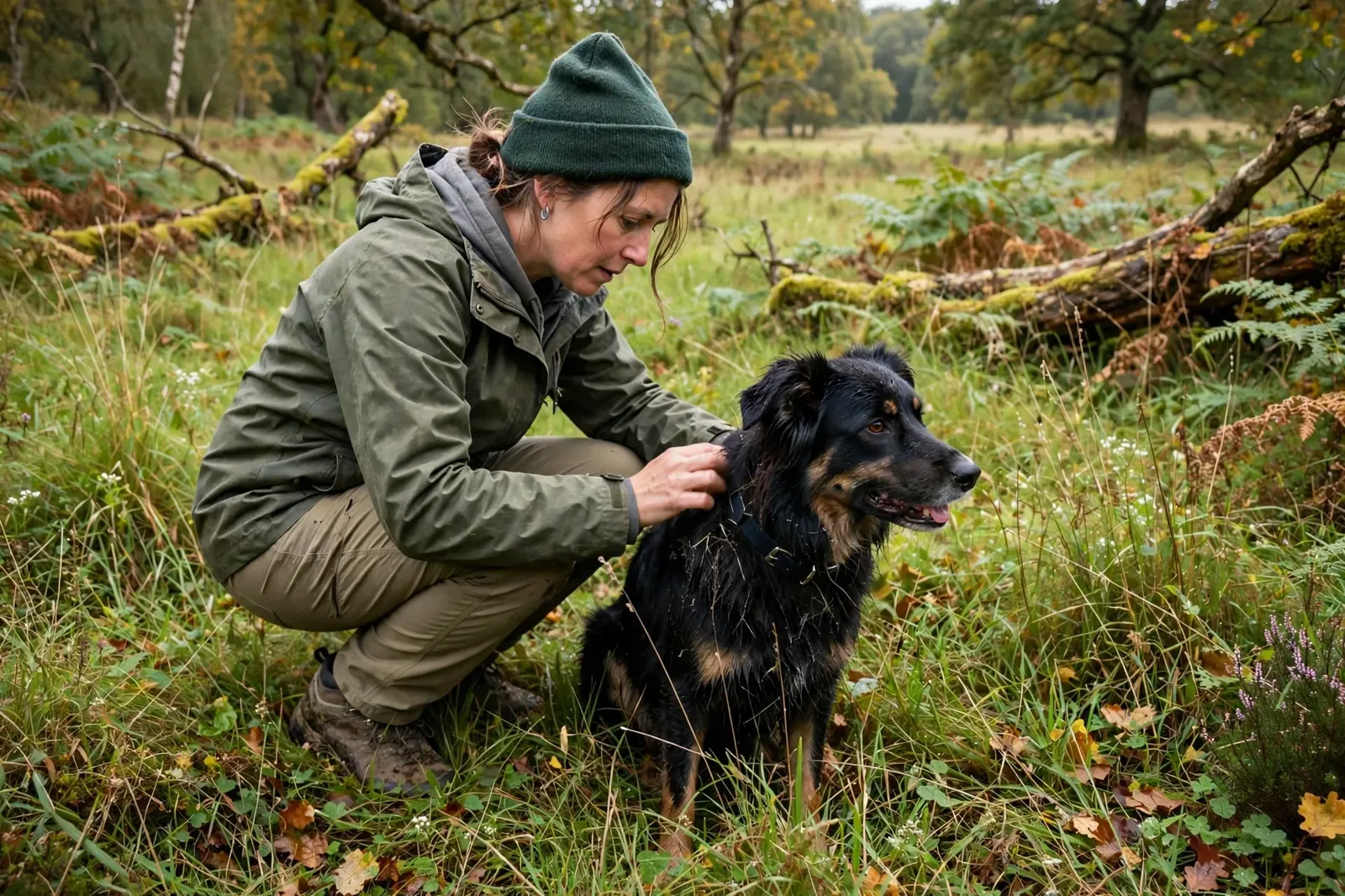
Work through the same order every time so nothing is missed. Start at the head: check inside and behind the ears, around the eyelids and lips, and under the chin. Move to the neck and under the collar — remove the collar for this part, because ticks favour the warm, protected skin beneath it. Run your hands down the front legs into the armpits, along the chest and belly, and into the groin. Check the tail base, the back legs, and finally the feet, spreading the toes to look between them and around the pads. Ticks also attach between the shoulder blades and along the back, so finish with a slow pass over the whole body.
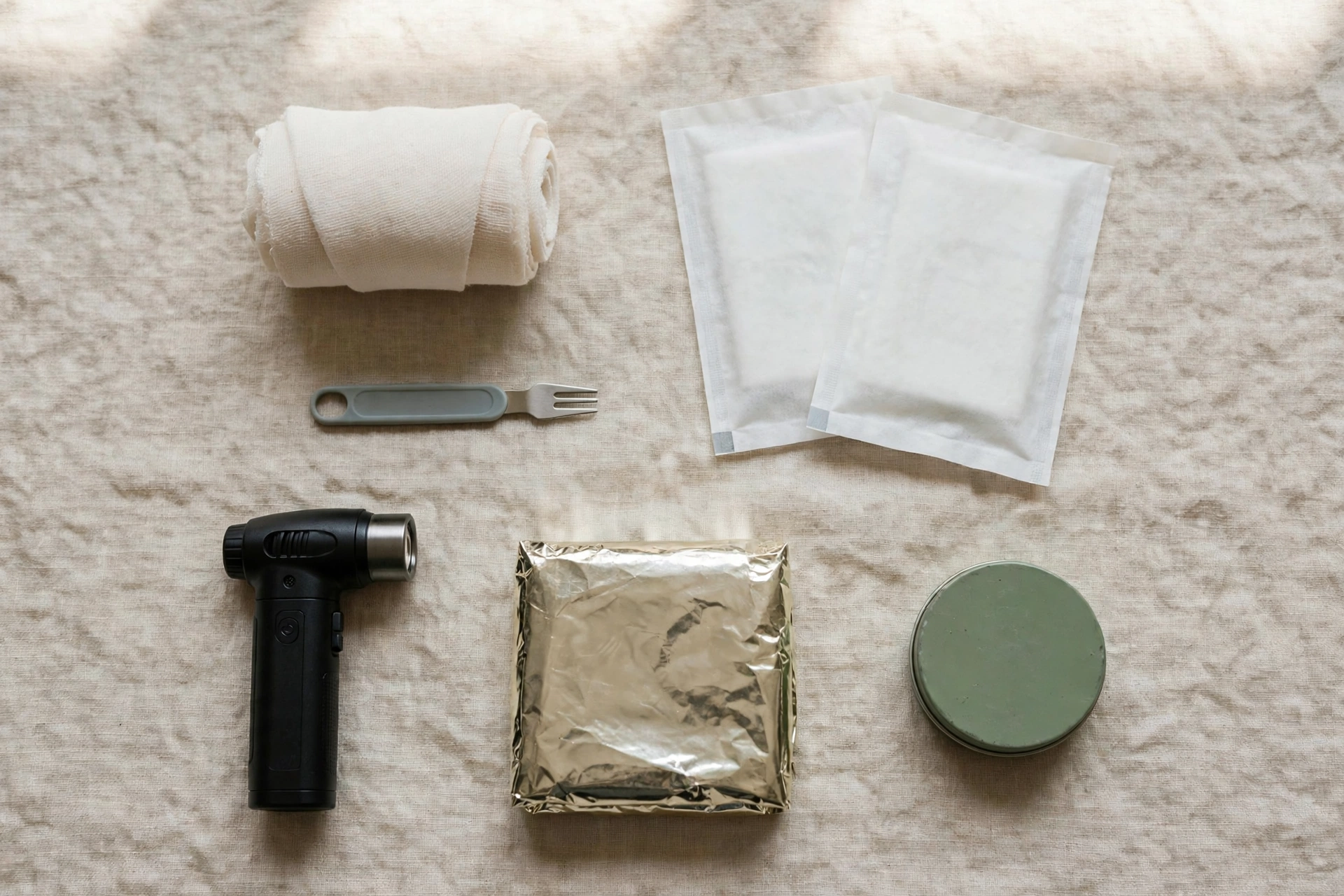
Timing helps. Do a quick check at the end of the walk before your dog gets into the car or holiday accommodation, when loose ticks that have not yet attached may still be brushed off, and a fuller check later the same day. If you find a tick crawling on the coat but not attached, remove it, dispose of it safely in a sealed container or tape, and wash your hands. Do not let a found tick become a forgotten one: note where you walked that day, because if your dog becomes unwell later, your vet will want to know the date, the place and when the tick was removed. Packing a tick tool and antiseptic wipes in your walking kit — alongside the basics in our dog travel first aid guide — means you can deal with a tick on the spot instead of waiting until you get home.
Safe removal with a tick tool, step by step
Prompt, correct removal matters because the longer a tick stays attached and feeding, the greater the chance it can pass on infections it may be carrying. You do not need to rush or panic, but you should aim to remove a tick as soon as you find it, ideally the same day, using a proper tick removal tool. These inexpensive plastic hooks are sold by vets, pet shops and pharmacies, and they are designed to grip the tick close to the skin without compressing its body.
First, settle your dog somewhere with good light and have a second person gently hold and reassure them if they are wriggly or sensitive around the spot. Part the fur so you can see where the tick meets the skin. Choose the hook size that fits snugly around the tick. Slide the tool in from the side, under the tick, as close to the skin as possible. Then follow the instructions for that tool exactly — most hook-style tools are twisted slowly and steadily, typically two or three turns, until the tick releases, while some fine-tipped tools are designed for a steady upward pull. Do not yank, jerk or crush the tick while it is attached.
Once the tick is out, check that the mouthparts have come away with it. Clean the bite area with pet-safe antiseptic or soap and water, and wash your hands and the tool. Place the tick in a sealed pot or on folded tape so it cannot reattach to anyone, and dispose of it as your local guidance advises, or keep it in a sealed container in the freezer with the date labelled if your vet has asked you to keep ticks for identification. Take a photo of the bite area if you can, and note the date and location in your phone. Then watch the area over the next few days for spreading redness or swelling, and keep an eye on your dog more generally for several weeks. If any part of the tick appears to remain in the skin, if the area becomes hot or painful, or if you could not remove the tick at all, contact a vet for advice rather than digging at the skin yourself.
What not to do: common mistakes that make things worse
Old folk remedies persist, and most of them increase risk or cause injury. Never burn a tick with a match or lighter, and never cover it with nail polish, surgical spirit, oil or petroleum jelly in an attempt to suffocate it. These methods do not reliably make a tick detach, they can burn or irritate your dog's skin, and they delay proper removal. A stressed tick may also be more likely to regurgitate into the bite, which is the opposite of what you want.
Avoid squeezing the tick's body with your fingers or with blunt household tweezers. Compressing a feeding tick can push its stomach contents towards the bite, and blunt tweezers often snap the tick, leaving mouthparts behind. Do not pull a tick straight out with fingernails, and do not twist a tick with ordinary tweezers if the tool guidance says not to. If you only have fine-point tweezers available and no hook tool, grasp the tick as close to the skin as possible and pull upwards with steady, even pressure, then clean the area thoroughly — but for regular countryside walking, buying the correct hook tool in advance is by far the better plan.
Two quieter mistakes matter as well. The first is assuming one found tick is the only tick: dogs that pick up one often pick up several, so always complete a full-body check after removing the first. The second is forgetting people. Ticks bite humans too, and walkers should check their own legs, waistband and socks after the same walks, tuck trousers into socks in high-risk habitat, and consider repellents for themselves as official guidance advises. Check the latest official guidance before you travel for current advice on tick awareness for people as well as dogs.
Lyme disease: signs to watch for afterwards
Lyme disease is a bacterial infection that can be passed to dogs — and to people — through the bite of an infected tick. Not every tick carries the bacteria, and not every bite from an infected tick leads to illness, which is why prompt removal and calm monitoring are the right response rather than alarm. It is also important to be honest about the limits of any guide: the signs described here overlap with many other conditions, they do not confirm or rule out Lyme disease, and only a vet who examines your dog and, where appropriate, arranges tests can advise on diagnosis and treatment.
Signs in dogs, when they appear, may develop weeks or even months after the bite. Owners and vets most often watch for a combination of general and joint-related signs: unusual tiredness or reluctance to exercise, a raised temperature, reduced appetite, stiffness, and lameness that may affect one leg and then another. Swollen or painful joints, general discomfort when touched, and swollen lymph nodes near the bite are also reported. Some dogs show very mild signs that pass quickly, while others become clearly unwell. A circular expanding rash, well known in people, is not a reliable sign to look for in dogs and is often hidden by fur, so do not wait for a rash before seeking advice.
Your job as an owner is observation and speed, not diagnosis. If, in the weeks after a tick bite, your dog goes off their food, seems feverish or flat, develops shifting lameness or cries out when a joint is moved, contact a vet promptly and say clearly: my dog had a tick on this date, in this place, and these signs started on this date. That timeline genuinely helps the vet decide what to test for. Keep the same note for yourself if you are bitten. Serious complications are uncommon but can affect the kidneys and other organs, which is another reason early veterinary advice matters far more than watchful waiting at home. If your dog collapses, struggles to breathe, has pale gums or seems severely unwell at any point, treat it as urgent and contact a vet or emergency service immediately.
Prevention options to discuss with your vet
No prevention method is complete on its own. The strongest plan layers three things: habitat awareness on the walk, a thorough check afterwards, and — for many dogs — a veterinary tick prevention product suited to their health and lifestyle. The right product choice depends on your dog's age, weight, health conditions, other medicines, swimming and bathing habits, and whether there are cats in the household, because some dog products are dangerous to cats. For that reason this guide does not recommend a specific brand or dose: that conversation belongs with your vet, ideally before a holiday rather than the night before you leave.
Options a vet may discuss include spot-on liquids applied to the skin, oral tablets given at intervals, and medicated collars that release their active ingredient over several months. These products work in different ways — some kill ticks on contact, others only after the tick has attached and started feeding — and they differ in how long they last and how water affects them. Ask your vet how quickly the product starts working, whether a tick could still attach before dying, what to do if you miss a dose while travelling, and whether the product also covers fleas or worms or needs to be combined with something else. Buy prevention from a vet or a reputable UK retailer, follow the packet instructions exactly, and never split doses between dogs or use a dog product on a cat.
On the walk itself, small habits reduce exposure without spoiling the day. Keep to the centre of paths where you can, be thoughtful about letting your dog push through bracken and long wet grass at peak season, and consider a shorter route through the woods on days when you cannot do a full check afterwards. A light-coloured blanket or towel in the car makes crawling ticks easier to spot during the post-walk check. If you are planning a longer trip — for example a weekend break with your dog in the UK — book the vet conversation at the same time as the accommodation, so prevention is in place and working before the first walk rather than bought in a hurry at your destination.
When to contact a vet — and what to tell them
Contact a vet for advice if you cannot remove a tick, if mouthparts appear to be left behind, if the bite area becomes increasingly red, hot, swollen or painful, or if your dog seems unwell in any way after a bite. Puppies, older dogs, pregnant dogs and dogs with existing health conditions or weakened immune systems deserve a lower threshold for calling — mention those factors when you ring. If you are on holiday, do not wait until you get home if signs are progressing: use a local vet near where you are staying, and have your home vet's details and your dog's vaccination and medication history available on your phone.
When you call, give the vet four facts in order: the date you found and removed the tick, where you had been walking, how the tick was removed and whether removal was complete, and exactly which signs you have noticed and when they started. A photo of the tick and of the bite area, plus the kept tick in a sealed pot if you still have it, can help with identification. Do not give your dog human painkillers or leftover antibiotics while you wait — both can cause harm or mask signs the vet needs to see. Follow the vet's advice on whether your dog needs to be seen that day, tested, or simply monitored at home with clear instructions on what to watch for next.
Finally, fold the lesson into your routine. One tick found on a favourite local walk means that walk goes on your mental higher-risk list for the rest of the season: same enjoyable route, but with a tick tool in the pocket, a two-minute check at the gate, and prevention kept up to date. That calm, repeatable habit — not worry — is what keeps UK countryside walks with a dog both safe and pleasurable. And if guidance changes, check the latest official guidance before you travel and let that, plus your vet's advice, override anything you read months earlier.
Keep exploring
Woodland tick habits matter in the Cairngorms too — the Cairngorms dog guide covers pine forest walks, seasons and wildlife. See: Cairngorms with a dog.
Practical questions
Before you go
What are the first symptoms of a tick bite on a dog in the UK?
Many dogs show no symptoms at all. You may feel a small lump when stroking them, or see local redness and swelling where the tick is attached. Some dogs scratch, lick or shake their head if a tick is near the ears. More general signs such as tiredness, loss of appetite or a raised temperature can have many causes, so contact a vet for advice rather than trying to diagnose the cause yourself.
How do I remove a tick from my dog safely?
Use a proper tick removal tool. Slide it under the tick close to the skin, then twist or lift exactly as the tool instructions describe until the tick releases. Avoid squeezing the body. Clean the area, note the date, keep the tick in a sealed container if your vet wants to see it, and check the latest official guidance before you travel if you are unsure.
What are the signs of Lyme disease in dogs to watch for?
Signs linked to Lyme disease can appear weeks later and may include tiredness, fever, loss of appetite, swollen or painful joints and lameness that shifts between legs. These signs overlap with many other conditions, so they do not prove Lyme disease. If you notice any of them after a tick bite, contact a vet promptly and mention when and where the tick was found.
When are ticks most active in the UK?
Ticks can be found throughout the year in the UK, but activity is generally highest from spring through autumn, roughly March to October, especially after mild, damp weather. Risk does not disappear in winter, so checking your dog after woodland and long-grass walks is a year-round habit.
Should I use tick prevention for a UK holiday with my dog?
Discuss prevention with your vet before you travel, especially if your trip involves woodland, moorland or deer country. Options vets may discuss include spot-on treatments, tablets and collars, but suitability depends on your dog's age, health, other medicines and lifestyle. Never use a product intended for another species, and check the latest official guidance before you travel.