This guide is independent and contains no paid placement. If affiliate links are added later, they will be clearly marked and will not change our editorial checks.
Carperby suits dogs that are happiest on quiet ground: a village green for a morning sniff and settle, lanes with almost no traffic, and fell paths that open up fast once you leave the last cottage behind. Keep a lead to hand at all times, because sheep graze right up to the village edge, and plan on walking from the village rather than driving between walks.
Start on the green, not the fell
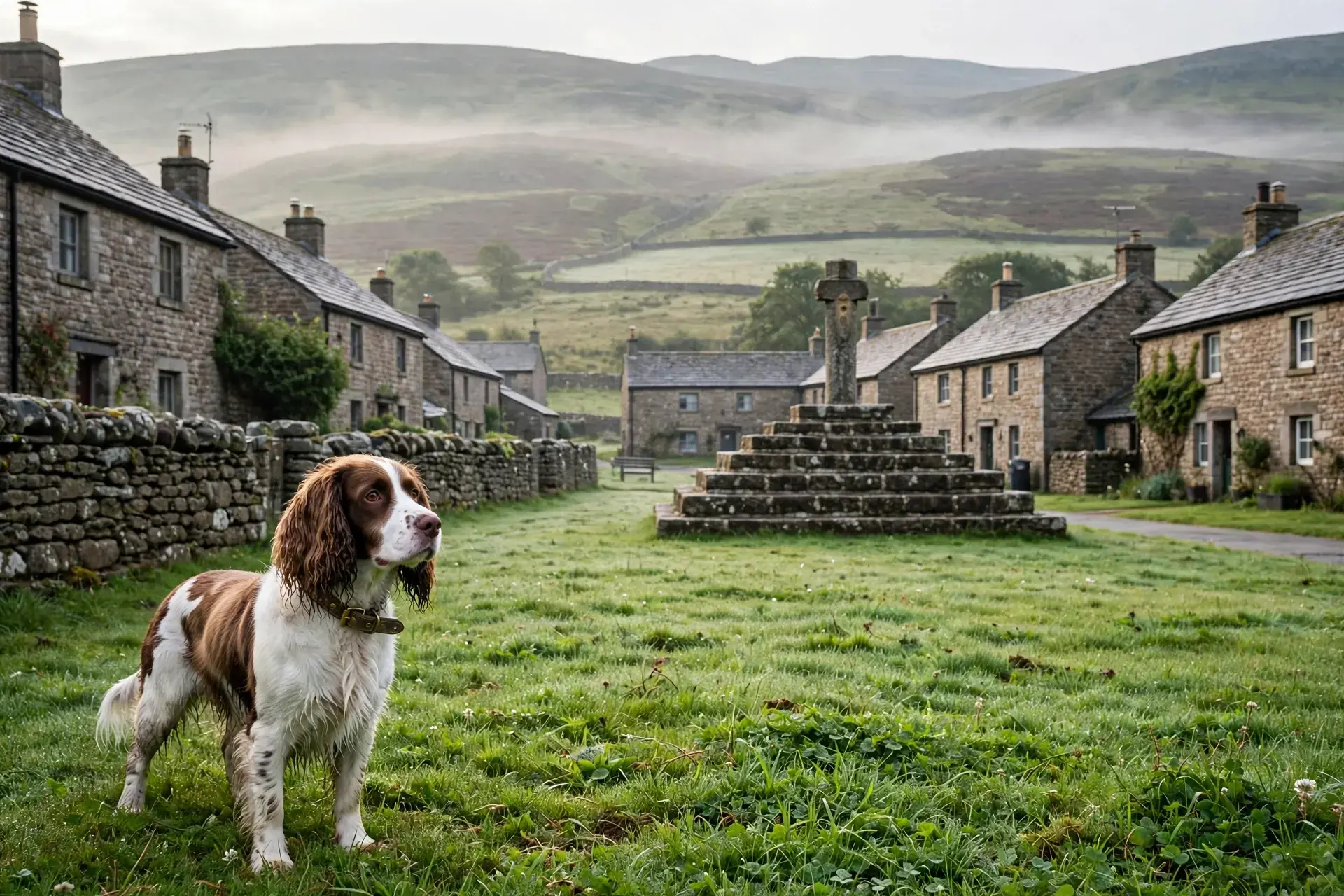
Most Wensleydale walking guides start with the big hills. Carperby asks you to start smaller, on the village green, and that is exactly what makes it a good dog destination. The green sits at the heart of the village, ringed by stone cottages, and it works as a natural settling ground: a place where a dog can stretch its legs after the car journey, take in the smells of a new place, and learn the pace of the village before anything more demanding is asked of it. A dog that has had twenty unhurried minutes on the green will walk the fell paths far more calmly than one unloaded straight onto a steep track.
The green is also the best place to read the village. Carperby is a working village in the Yorkshire Dales, not a purpose-built tourist stop, and the green is where that shows. Farm vehicles pass, neighbours stop to talk, and the rhythm of the place is slow and unshowy. Dogs notice that rhythm. A nervous dog will pick up on the absence of crowds and traffic; a lively dog will need a little more structure, because the green is open and inviting and the temptation is to let them charge around it. Keep the first visit short and on a long line, let the dog sniff the edges properly, and treat the green as a warm-up rather than a destination in itself.
Use the green as your morning routine for the whole stay. An early circuit before breakfast, a second visit in the late afternoon when the light drops behind the fells, and a last short outing before bed gives a dog a predictable shape to the day. Predictability is what settles most dogs in a new place, and Carperby's green supplies it without any planning at all. The fells will still be there after breakfast; the green is where the day should begin.
Where the green ends and the fell begins
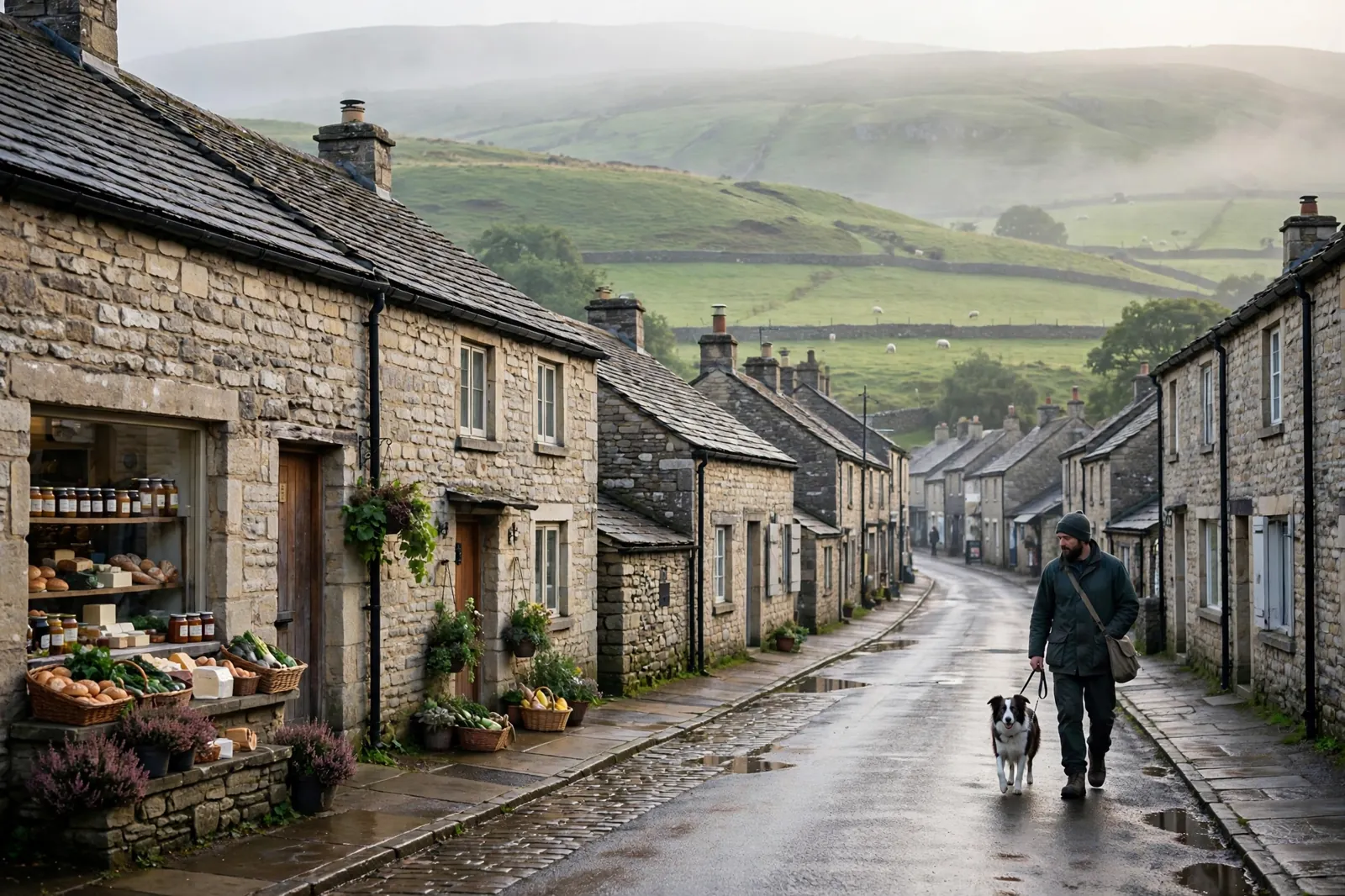
The most interesting thing about Carperby for a dog walker is how quickly the village gives way to open country. Walk to the edge of the green, follow a lane past the last cottages, and within minutes the stone walls, the sheep pasture and the rising fell are all around you. There is no grand gateway and no visitor centre marking the change; the village simply thins out and the Dales take over. That gradual transition is kind to dogs, because they can move from enclosed, familiar ground to open fell in stages rather than being dropped onto exposed moorland all at once.
This is also where the character of the walking changes. On the green and the lanes, the ground is flat, the distances are short and the dog can stay close. On the fell edge, the paths climb, the wind picks up, and the views open out across Wensleydale towards the higher fells. Dogs that are used to flat park walking will feel the difference in their legs after an hour of gentle climbing, so build up slowly: a short climb on the first day, a longer one on the second, and a proper fell walk only once you know how your dog handles the terrain. The reward for that patience is real. From the higher ground above Carperby the dale spreads out below in a patchwork of walled fields, and on a clear morning the whole of Wensleydale seems to belong to whoever is standing there.
Navigation matters more than it first appears. Fell paths above a small village are not always waymarked as clearly as the popular routes around Hawes or Aysgarth, and a dog that ranges ahead can easily pull you off the intended line. Carry an Ordnance Survey map of the area, or a downloaded offline map on your phone, and check the route before you set out. Keep your dog within sight on open ground, especially where paths cross, and remember that a dog running free on the fell can cover a surprising distance in the time it takes to check a map. Check the official guidance before you travel if you are unsure about the current state of any path.
Dry stone walls, sheep and lead rules
Dry stone walls are the defining feature of the landscape around Carperby, and they shape dog walking here more than any signpost does. The walls divide the fell into fields, mark the boundary between village and open country, and create the corridors along which paths run. They also create the main hazards for dogs. A low or tumbled section of wall is an invitation to a curious dog, and a dog that slips through a gap can find itself in a field of sheep before you have time to call it back. Teach your dog to treat walls as boundaries, not obstacles to climb, and keep a lead on whenever a wall separates your path from grazing land.
Sheep are not a background detail around Carperby; they are the working life of the fell, and they graze close to the village throughout the year. The rules here are simple and non-negotiable. Keep your dog on a lead or under very close control near livestock at all times, and use a short lead during lambing season, which generally runs from late winter into spring, and whenever sheep are in the same field as your path. A dog that has never shown the slightest interest in sheep at home can still react to a flock moving suddenly on a fell, and a single chase can cause serious harm to the animals and serious consequences for the owner. Farmers in the Dales are entitled to take action against a dog worrying sheep, so the only safe approach is prevention.
There is a practical side to the lead rules as well. A dog on a lead is a dog you can steer away from a wall gap, a lambing ewe or a sudden flock movement. A long line gives a dog freedom to sniff and explore while keeping you in control; a short lead is the right choice whenever sheep are visible. Carry both if you can, and switch between them as the ground changes. Many experienced Dales walkers also carry a spare lead, because a muddy fell walk has a habit of breaking clips and soaking straps, and a spare is cheap insurance against a long walk back with an unrestrained dog.
Finally, respect the walls themselves. Dry stone walls are maintained by hand, stone by stone, and a dog scrambling over one can dislodge coping stones that take real skill to replace. Do not lift your dog over a wall, do not let them dig at its base, and use stiles and gates rather than climbing. The walls have stood for generations; a few minutes of care on your part helps them stand for a few more.
The quiet village loop
Not every walk needs to be a fell expedition, and Carperby's quietest pleasure is the simple village loop: out from the green, along the lanes that thread between the cottages and the field edges, and back again without ever meeting more than the occasional farm vehicle. These lanes are narrow, grass-edged and almost traffic-free, which makes them ideal for dogs that are nervous around cars, for puppies learning to walk on a lead, and for older dogs that need a flat, gentle circuit rather than a climb.
The loop works best as a twice-daily habit. In the morning it is a toilet walk and a sniffing tour, a chance for the dog to read the overnight news in the hedgerows and to greet the village at its own pace. In the evening it is a wind-down, a slow circuit in the soft light with the fells turning gold behind the cottages. Because the route is short and familiar, the dog relaxes into it quickly, and that relaxation carries into the rest of the day. A dog that knows its local loop sleeps better, settles faster indoors, and copes better with the bigger walks that follow.
There are a few practical points worth knowing. The lanes have no pavements, so walk on the right-hand side facing oncoming traffic and keep your dog on the inside, away from the road. Farm traffic can appear suddenly around a bend, and a tractor driver may not expect a dog on a long line stretched across the lane, so shorten the lead on blind corners and at field entrances. Watch for mud and farm debris after rain, and carry a towel in the car or by the door, because a Dales lane in wet weather will coat a low-slung dog in mud within minutes. None of this is difficult; it is simply the small discipline that makes quiet-lane walking safe.
If you want to extend the loop slightly, the lanes towards neighbouring villages offer longer flat walking without the climb of the fell. The road towards Redmire and the lanes in the direction of Aysgarth both make good extensions for a fit dog, and they share the same character: stone walls, field gates, the occasional passing car, and long views across the dale. Keep to the lanes and the marked paths, respect private drives, and remember that a longer loop is still a village walk, not a fell walk, so there is no need to carry full hill kit for it.
Longer walks: Aysgarth, Bolton and Redmire
Carperby sits within easy walking distance of some of Wensleydale's best-known places, which makes it a useful base for longer days out with a dog. The walk towards Aysgarth is the most obvious of these. Aysgarth Falls, where the River Ure drops through a series of limestone steps, is one of the Dales' most visited natural features, and the paths around it are well used and well maintained. The walk from Carperby is a satisfying half-day for a fit dog, taking in lanes, field paths and riverside stretches before reaching the falls themselves.
At the falls, keep your dog on a lead. The paths are busy, the river is fast and the rocks beside the water are slippery even in dry weather. Dogs should not be allowed to swim in the river at the falls, where the current and the limestone ledges create real danger, and they should be kept well back from unfenced drops. The reward for that caution is a walk that most dogs remember fondly: the sound of the water, the cool air in the wooded valley, and the long riverside return with plenty of new smells. Check the official guidance before you travel, because access arrangements and path conditions around the falls can change with the seasons and after heavy rain.
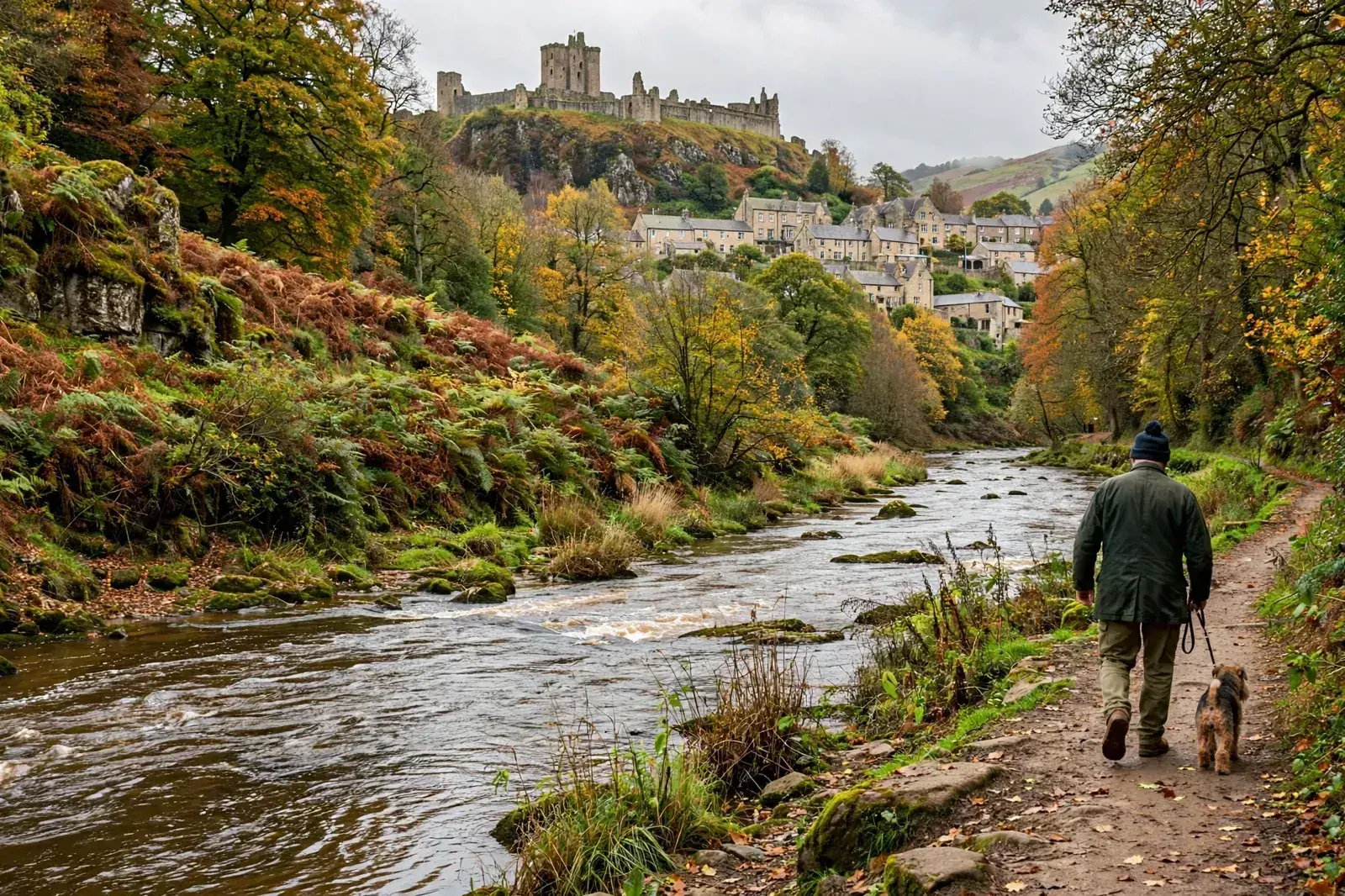
Castle Bolton, a short distance to the north, offers a different kind of day out. The village is small and quiet, the castle dominates the skyline, and the lanes and field paths around it make a pleasant circuit for a dog that enjoys a mix of village and open country. The castle itself has its own access rules for dogs, so check the official guidance before you travel rather than assuming your dog can go inside. Even if the castle interior is not an option, the walk to it and the views back across the dale are worth the effort, and the village is a calm place to pause for a rest.
Redmire, to the west, is another gentle extension. The village is smaller and quieter than Carperby, and the walk between the two makes a good half-day loop through classic Wensleydale farmland. It is also a useful reminder of how the dale works: a string of small villages, each with its own green and its own character, joined by lanes and field paths rather than by busy roads. Dogs that enjoy steady, unhurried walking will be happiest on exactly this kind of route. For a busier day, the market town of Leyburn is a short drive away, with its market square, the Leyburn Shawl viewpoint and woodland walks that suit a dog that has already had its fell time and wants a change of scene.
For any longer walk, plan the day around the dog's needs rather than the destination. Carry water and a collapsible bowl, because fell streams are not always safe or accessible, and pack a snack for a dog that will be working hard on the climbs. Check the weather before you leave: Wensleydale weather changes quickly, and a bright morning on the green can turn into a wet, windy afternoon on the fell. A waterproof coat for the dog is worth carrying in the colder months, and a towel in the car makes the journey home far more pleasant for everyone.
Seasons and weather on the fell edge
Carperby changes character with the seasons, and each one asks something different of a dog walker. Spring brings lambs to the fields around the village, which means lead discipline matters more than at any other time of year. The fell paths are soft underfoot, the hedgerows are full of new growth, and the village green dries out after the winter wet. It is a lovely season to visit, but it is also the season when a moment of inattention around livestock can cause the most harm, so keep the lead short and the dog close.
Summer is the easiest season for a Carperby break. The days are long, the fell paths are dry, and the green is at its best for a lazy evening sprawl. The main risks are heat and flies. Dogs should not be exercised hard in the middle of the day on a warm fell, where there is little shade and no easy water, so walk early and late and rest in the middle of the day. Keep an eye on the dog's paws on dry, stony tracks, and carry water on every walk, because a dog that has run up a fell in the sun will need to drink far more than you expect. Check the official guidance before you travel if a heatwave is forecast.
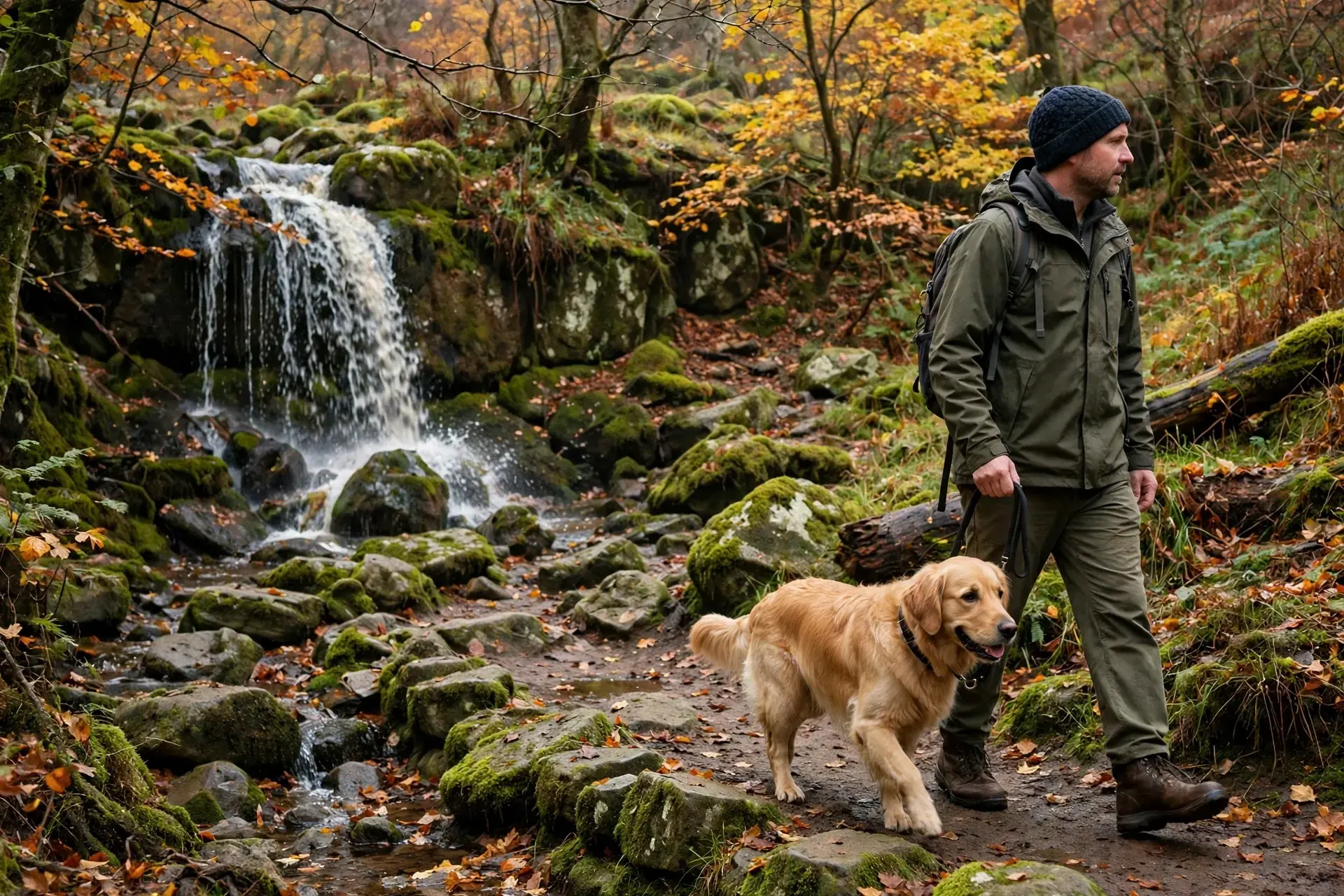
Autumn is, for many walkers, the finest season in Wensleydale. The light turns golden, the fells take on a russet colour, and the paths are quieter once the summer visitors have gone. The green is scattered with fallen leaves, the air is cool enough for a dog to run properly, and the longer walks feel comfortable rather than exhausting. Autumn also brings mud, and the field paths around Carperby can become heavy after rain, so pack a drying coat and a towel and accept that the dog will come home filthy. That is part of the pleasure of the season.
Winter in the Dales is beautiful and demanding in equal measure. Frost on the walls, snow on the high fells and a low sun over the dale make for memorable walks, but the fell paths can be icy, the wind can be bitter, and daylight is short. Keep winter walks shorter and closer to the village, stick to the lanes and the lower paths when the higher ground is icy, and watch for signs that the dog is cold: shivering, lifting paws, or reluctance to keep moving. A dog coat is a sensible addition in winter, and a warm, dry bed at the end of the day matters more than any walk. If snow is forecast, check the official guidance before you travel and be ready to change your plans.
Arriving, parking and the first hour
Arriving in Carperby with a dog is refreshingly simple, and that simplicity is part of the village's charm. There is no large car park, no ticket machine and no queue of coaches; there is a small village, a green, and a handful of lanes. That also means parking needs a little thought. On-street parking is limited, so arrive early on busy weekends, park considerately without blocking farm gates, passing places or residents' drives, and plan to park once and walk from the village for the rest of the day. Never leave a dog in a parked car in warm weather, even for a few minutes, and on a hot day leave the dog in the shade with water rather than in the car at all.
The first hour sets the tone for the whole stay, so make it boring on purpose. Start with the green: a short, calm circuit on a long line, a chance to sniff and settle, and a drink of water. Then walk the dog around the immediate area near your accommodation, showing them where the door is, where their bed will be, and where the nearest toilet spot is. Only then, once the dog has had a chance to take in the new surroundings, should you think about a longer walk. A dog that arrives and is immediately marched up a fell is a dog that will be tired, overstimulated and unsettled by the evening.
Before you travel, sort out the practical details that are easy to forget. Save the number of the nearest vet, because rural practices can be some distance away and may close early; the nearest options are likely to be in Leyburn or the surrounding towns, so check the official guidance before you travel. Pack the dog's usual food, because a change of diet on top of a change of place is a recipe for an upset stomach. Bring their bed or blanket, so the sleeping spot smells familiar, and keep the first evening's routine as close to home as possible: same feeding time, same last outing, same bedtime. Dogs read consistency as safety, and a calm first evening is the foundation of a good break.
It is also worth thinking about how you will get around during the stay. Carperby is best explored on foot, but the wider dale rewards a car: Hawes, at the head of Wensleydale, makes a good day trip with its market town streets and nearby waterfalls, and the drive there is part of the pleasure, winding through the dale past stone walls and field barns. If you drive between walks, keep the dog secure in the car, carry a towel for muddy paws, and remember that a dog that has walked all morning will sleep happily in the car while you drive to the next start point.
Eating and staying with a dog
Carperby is a small village, and that shapes the eating and staying options in a useful way. There is no long list of dog-friendly restaurants to work through; instead, there are a handful of places in the village and the surrounding dale where a well-behaved dog is welcome, and the honest approach is to ask before you arrive rather than to assume. A dog that is quiet, clean and on a lead is welcome in far more places than a dog that arrives unannounced, so a quick phone call or message in advance is always worth the effort. Check the official guidance before you travel, because opening hours and dog policies in small village pubs and cafes can change with the season.
When you do eat out with a dog, choose the setting with the dog in mind. A garden or terrace is almost always easier than a busy indoor dining room, and a quiet corner table beats a spot by the door where every arrival and departure passes the dog. Bring a mat or blanket for the dog to lie on, a chew or a stuffed toy to keep them occupied, and a small bowl of water. Order food that can be eaten calmly rather than a long, leisurely meal, and be ready to leave early if the dog becomes restless. The aim is a meal that works for everyone, including the other customers.
Overnight, Carperby offers a small number of self-catering cottages and farm stays, some of which accept dogs, and the surrounding dale has far more choice. The best approach is to search for dog-friendly stays in Wensleydale as a whole, rather than in Carperby alone, and to weigh the trade-offs: a cottage in the village puts the green and the lanes on your doorstep, while a stay in Leyburn or Aysgarth puts shops and pubs within walking distance. Whichever you choose, confirm the details in writing before you book: how many dogs are allowed, whether there is a pet fee, whether the garden is enclosed, and what the rules are about leaving a dog alone in the property. A garden that looks enclosed in a photograph may have a gate a terrier can slip through, so ask for the height and the condition of the boundary.
Inside the accommodation, a few habits make the stay smoother. Keep the dog's bed in a quiet corner away from the door, so they are not disturbed by every arrival. Wipe paws at the door, because Dales mud has a way of reaching every carpet in the house. Keep food and water bowls on a waterproof mat, and bring the dog's usual food rather than switching brands for the week. If the property allows the dog to be left alone for a short time, test it first with a brief absence rather than assuming the dog will settle immediately in a strange house. A dog that is happy in its accommodation is a dog that will enjoy the walks far more.
A gentler day for older dogs
Not every dog visiting Carperby will be a young spaniel bounding up the fell, and the village is a kind place for older dogs precisely because so much of it is flat and quiet. An older dog does not need a fell climb to enjoy Wensleydale; a slow circuit of the green, a gentle lane walk and a long lie in the sun outside a cottage can make a perfect day. The key is to let the dog set the pace, to stop when they want to stop, and to treat the walk as a sniffing expedition rather than an exercise target.
There are a few practical adjustments worth making for an older or less mobile dog. Choose the village loop over the fell paths, because the lanes are flat and the ground is even, while the fell paths are steep, stony and hard on arthritic joints. Shorten the walks and increase their frequency: three short outings are usually kinder than one long one. Bring a blanket or a padded mat for resting, because stone and cold ground are uncomfortable for stiff joints, and consider a dog coat in cooler weather, since older dogs lose heat faster than younger ones. If your dog struggles with steps, check the access to your accommodation before you book, because stone cottages often have narrow stairs and uneven thresholds.
Watch for the signs that a dog has had enough. Slowing down, lagging behind, sitting down on the path, or reluctance to continue are all clear messages, and the right response is to turn back without fuss. There is no prize for the longest walk, and a dog that is pushed too far will pay for it the next day with stiffness and soreness. Carperby's greatest gift to an older dog is permission to do less: the green is there in the morning, the lanes are there in the afternoon, and nobody is keeping score. A gentle day in a quiet village is a proper holiday, not a compromise.
What to pack for a Carperby break
Packing for a fell-edge village is different from packing for a city break, and the list below covers the items that make the biggest difference. Start with the leads: a short lead for livestock areas and village lanes, a long line for the green and open paths, and a spare lead in case one breaks or gets soaked. Add a harness that fits well and does not rub on a long walk, because a dog pulling in a collar on a steep fell path is a recipe for a sore neck and a tired owner.
For the dog's comfort, pack their usual food and a few extra portions, a collapsible water bowl and a bottle of water for every walk, and a towel or two for muddy paws. A drying coat is one of the most useful items for a Dales break, because it keeps a wet dog warm while it dries and protects the car and the cottage from the worst of the mud. In winter, add a dog coat; in summer, add a cooling mat or a damp towel for the car. A familiar blanket or bed helps the dog settle in new accommodation, and a chew or a favourite toy gives them something to do while you eat or rest.
For you, the essentials are a good map of the area, a phone with offline maps downloaded, and a small first-aid kit for the dog: tick remover, antiseptic wipes, bandages, and any medication the dog normally takes. A torch is useful for the last outing on a dark winter evening, when the village lanes have no street lighting. A plastic bag or two for waste is essential on every walk, because there are few bins on the fell paths and you will need to carry waste until you find one. Finally, pack patience: the Dales reward slow walking, and a dog that is allowed to sniff every wall and gate will enjoy the break far more than one that is hurried along.
One last note on preparation: check the weather forecast before you leave, and be ready to change your plans. Wensleydale weather can turn quickly, and a walk that looks easy on a sunny morning can become a wet, windy test by the afternoon. A flexible plan, a warm car and a dry cottage are worth more than any amount of determination, and the village green will still be there tomorrow.
Planning a wider Wensleydale trip? Our guides to Richmond and the market town walks around it cover castle views, river paths and a good change of scene after a quiet few days in Carperby.
Practical questions
Before you go
Can my dog run off the lead on Carperby village green?
The green is a shared village space, not a fenced dog field, so treat off-lead time as a judgement call rather than a right. Keep your dog on a lead when other people, children or livestock are nearby, and only let them off if recall is reliable and the green is clear. Always pick up after your dog and keep them off private gardens at the edge of the green.
Are dogs allowed on the fell paths above Carperby?
Yes, on public rights of way, but the fells above Carperby are working sheep country. Keep your dog on a lead or under close control near livestock at all times, and use a short lead during lambing season and whenever sheep are in the same field. Follow the Countryside Code and check the official guidance before you travel.
Where can I park in Carperby with a dog?
Carperby is a small village with no large public car park, so parking is limited to considerate on-street parking that does not block farm gates, passing places or residents' drives. Arrive early on busy weekends, park once and walk from the village, and never leave a dog in a parked car in warm weather.
Is the walk from Carperby to Aysgarth Falls suitable for dogs?
It is a popular and rewarding walk for fit dogs, following lanes and riverside paths towards Aysgarth Falls, but it crosses farmland and passes close to the River Ure, so a lead is essential in places. Keep dogs on a lead at the falls themselves, where paths are busy and the river is fast, and check the official guidance before you travel.
What should I do if my dog meets sheep on a Carperby walk?
Put your dog on a lead immediately, move calmly past the sheep without letting the dog fixate or chase, and give the flock plenty of space. Farmers may take action against a dog worrying sheep, so prevention matters far more than apology. If your dog has a strong chase instinct, keep them on a lead on every fell and field path.
Where can I stay overnight in Carperby with a dog?
Carperby has a small number of self-catering cottages and farm stays, some of which accept dogs, and there are more dog-friendly options in nearby Leyburn, Aysgarth and Hawes. Confirm the dog policy, the number of dogs allowed, any pet fee and the garden or boundary arrangement in writing before you book.