This guide is independent and contains no paid placement. Venue and event rules change, so where this guide flags a check, please confirm the latest official information before you travel.
Castleton with a dog is an above-ground holiday: the show caverns do not admit pet dogs, so plan them as split visits or skip them, and build the dog's day around Cave Dale, the walk towards Winnats Pass, village lanes and the lower slopes rather than a Mam Tor summit attempt in poor weather. Keep dogs on leads around sheep everywhere, carry water in limestone country, and check cavern, castle and parking arrangements on official sources before you go — seasonal hours and weather closures change the plan quickly here.
The underground question, answered first
Every Castleton plan starts with the same disappointment, so let us deal with it before the walks: the village's famous show caverns are underground attractions with steps, boats, guided groups or confined passages depending on the cavern, and pet dogs are not admitted to them as a rule. Assistance dog arrangements are a separate matter handled by each operator. Treat any cavern visit as a people-only activity, check the official latest guidance before you go for the specific cavern you want, and do not build a day that requires a dog to wait in a car park while you are below ground.
That honesty reframes Castleton correctly. Pairs can split a cavern visit — one underground, one walking the dog through Cave Dale, then swap if a second visit appeals — while solo travellers should simply choose the surface, and the surface here is magnificent. Castleton sits in a limestone amphitheatre of dales, passes and ridges, with more good dog walking within a mile of its pubs than many resorts offer in a week. The dog is not missing the best part. Arguably, the dog is getting it.
Peveril Castle, the Norman keep watching over the village from its hill, deserves the same upfront check. Access involves a steep climb, and dog admission to the site has specific rules that can change; confirm the current position on the official site before climbing up with a dog in tow. The view from outside and below is free, dramatic and available to everyone regardless.
Cave Dale: the walk that starts in the village
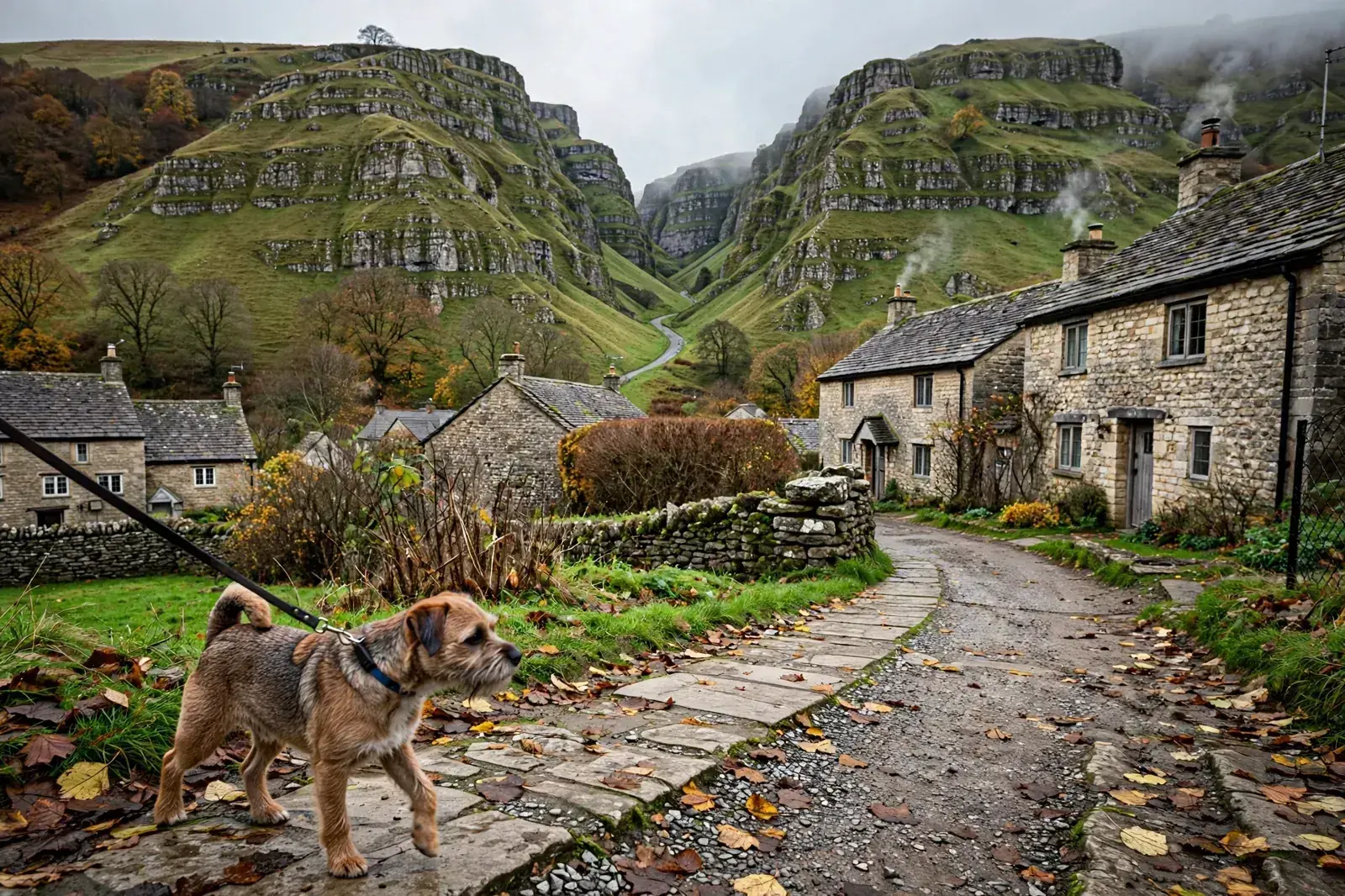
Cave Dale is Castleton's gift to dog owners: a dry limestone valley that begins almost in the village itself, below the castle crag, and climbs between towering rock walls into open country. The opening section feels like a secret corridor, narrow and shadowed, before the dale widens and the path works upwards towards the plateau and the routes beyond. It is the walk to do first, because it teaches you the terrain — limestone underfoot, sheep around, weather visible for miles — in a compact, retraceable form.
Underfoot conditions define Cave Dale's difficulty more than distance does. The rocky floor of the lower dale is polished by generations of boots and becomes genuinely slippery after rain, and in wet weather small streams can run down the path itself. Dogs cope with four-paw traction better than humans in boots, but older dogs and dogs with joint problems may struggle on the slick rock, and there is no shame in turning the dale into a there-and-back to the point where footing still feels secure.
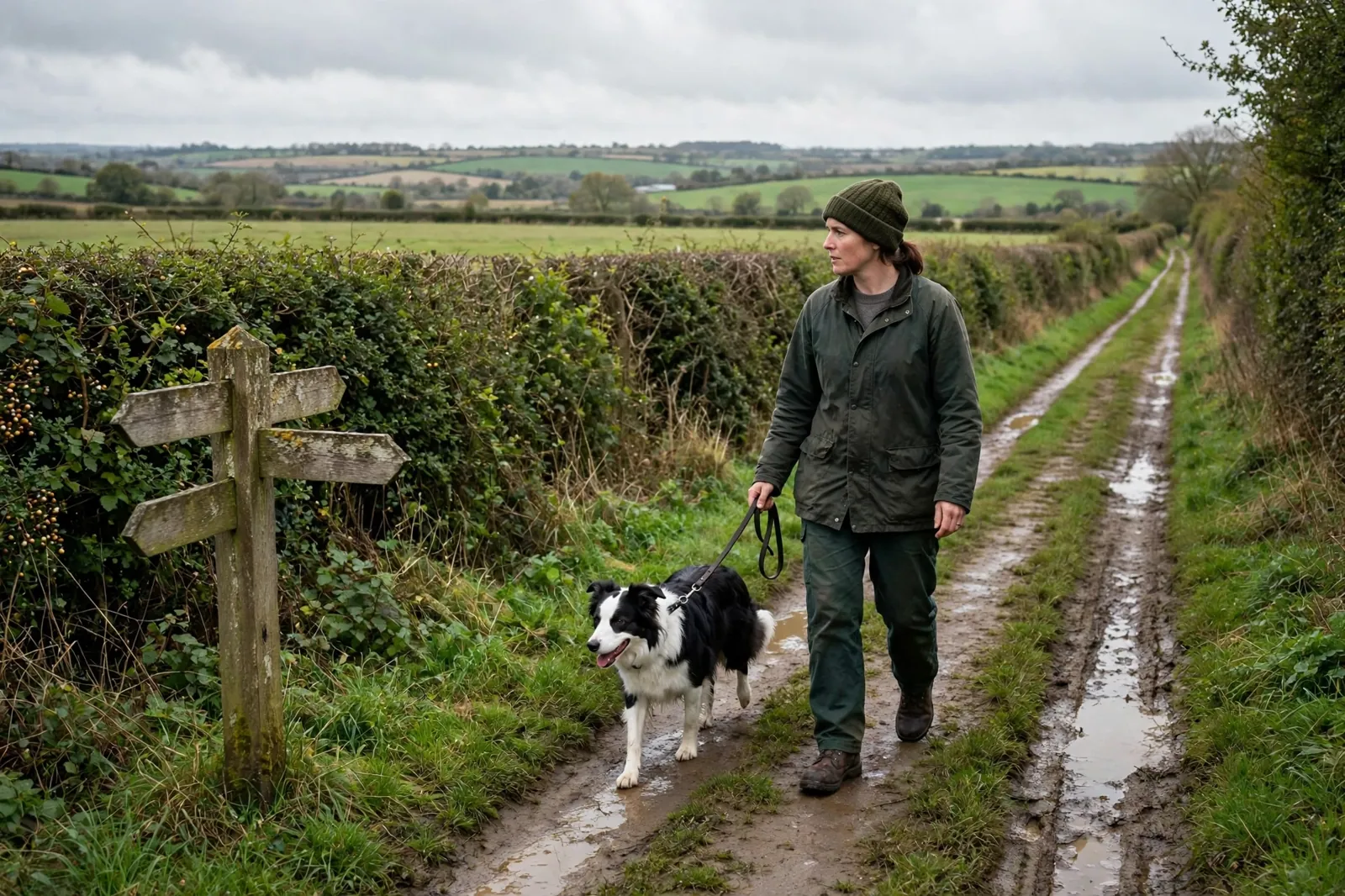
Livestock graze in and around the dale, so the lead rule is absolute from the village edge onwards, as our guide to dogs on leads and the law in the UK explains for grazing land generally. Gates, stiles and the occasional ladder stile appear as routes branch, and a dog who cannot be lifted safely sets a natural limit on which onward routes are sensible. Carry water: limestone country swallows its streams underground, and a dry dale offers a thirsty dog nothing at all.
Winnats Pass: look, walk the edges, respect the road
Winnats Pass is the photograph everyone brings home from Castleton: a steep, winding limestone gorge carrying the road up out of the village, its green slopes ribbed with rock. With a dog, treat the pass primarily as a landscape to walk beside and below rather than along. The road itself is narrow, steep, busy with cars, cyclists and coaches enjoying the same view, and entirely unsuitable as a dog-walking route; verges are minimal and sightlines are poor.
The better Winnats experience uses the footpaths on the slopes and around the pass's foot, where you get the gorge's scale without sharing a carriageway. From those paths the geology reads clearly — this was once a reef lagoon in a tropical sea, a fact that improves any walk once you know it — and the village below, the castle crag and the ridge beyond compose themselves into the classic view. Keep dogs on leads on the steep grass, where sheep graze and a slipped lead near the road below would be serious.
Weather transforms the pass. In high wind it funnels gusts that can stagger walkers; in ice or heavy rain the slopes become treacherous and the road itself can close. If conditions close the pass road, village access uses other routes and your walking plans should shrink to the valley floor without argument. Check conditions locally on the day, and never park on the pass itself to admire it: use the village car parks and walk in.
Mam Tor and the Great Ridge: a careful approach
Mam Tor, the Shivering Mountain, tops the ridge between Castleton and Edale, and its summit path with the Great Ridge stretching towards Lose Hill is one of the Peak District's classic walks. With a dog it is entirely possible in the right conditions — and a poor idea in the wrong ones, which is why this guide recommends an approach rather than a promise. The ridge is exposed, the paths are busy at weekends, sheep graze the slopes, and the summit offers no shelter when weather arrives, as it visibly does across open country here.
Choose your ascent honestly. Routes from the Castleton side climb steadily and can be shortened: walking part-way up towards the ridge and turning back still buys the views, and for puppies, older dogs or dogs new to hills it is the correct day out. The full ridge walk to Lose Hill and down is a substantial undertaking that should be planned as an out-and-back or with transport arranged, not improvised at the summit because the view is inviting. Carry more water than the distance suggests, for you and the dog, and a spare lead.
On the ridge, keep the lead on and keep it short at the busy pinch points and near other dogs, however good your dog's manners are at home. Ground-nesting birds in season, paragliders launching from nearby slopes, and sudden gusts all argue for close control. If your dog is frightened by crowds, wind or height exposure, the valley walks around Castleton will give you a better day than a summit photograph with a miserable dog in it. Compare the gentler town-based approach in our Bakewell with a dog guide if your dog is firmly a lowland animal.
Village life: pubs, cafés and the Blue John question
Castleton is a working village that receives resort volumes of visitors, and its pubs, cafés and tearooms are practised with walkers and dogs — muddy boots are the local dress code. Dog admission indoors varies by venue and by room within a venue, so ask at the door, towel the dog before entering, and settle in the area you are directed to. Several establishments trade on their walker-and-dog welcome, but policies change with refurbishments and ownership, so yesterday's blog recommendation is worth less than a cheerful question today.
The village's other famous product, Blue John, the rare purple-banded fluorspar mined only around Castleton, appears in jewellery and ornaments in local shops. Dogs will not be admitted to most small gift and jewellery shops, and the cavern shops attached to underground tours follow the caverns' rules. Plan Blue John browsing as part of a human rotation, and be wary of leaving a dog tied outside shops on a narrow, busy pavement: it is unfair on the dog, an obstruction to everyone else, and a theft risk that rural villages are not exempt from.
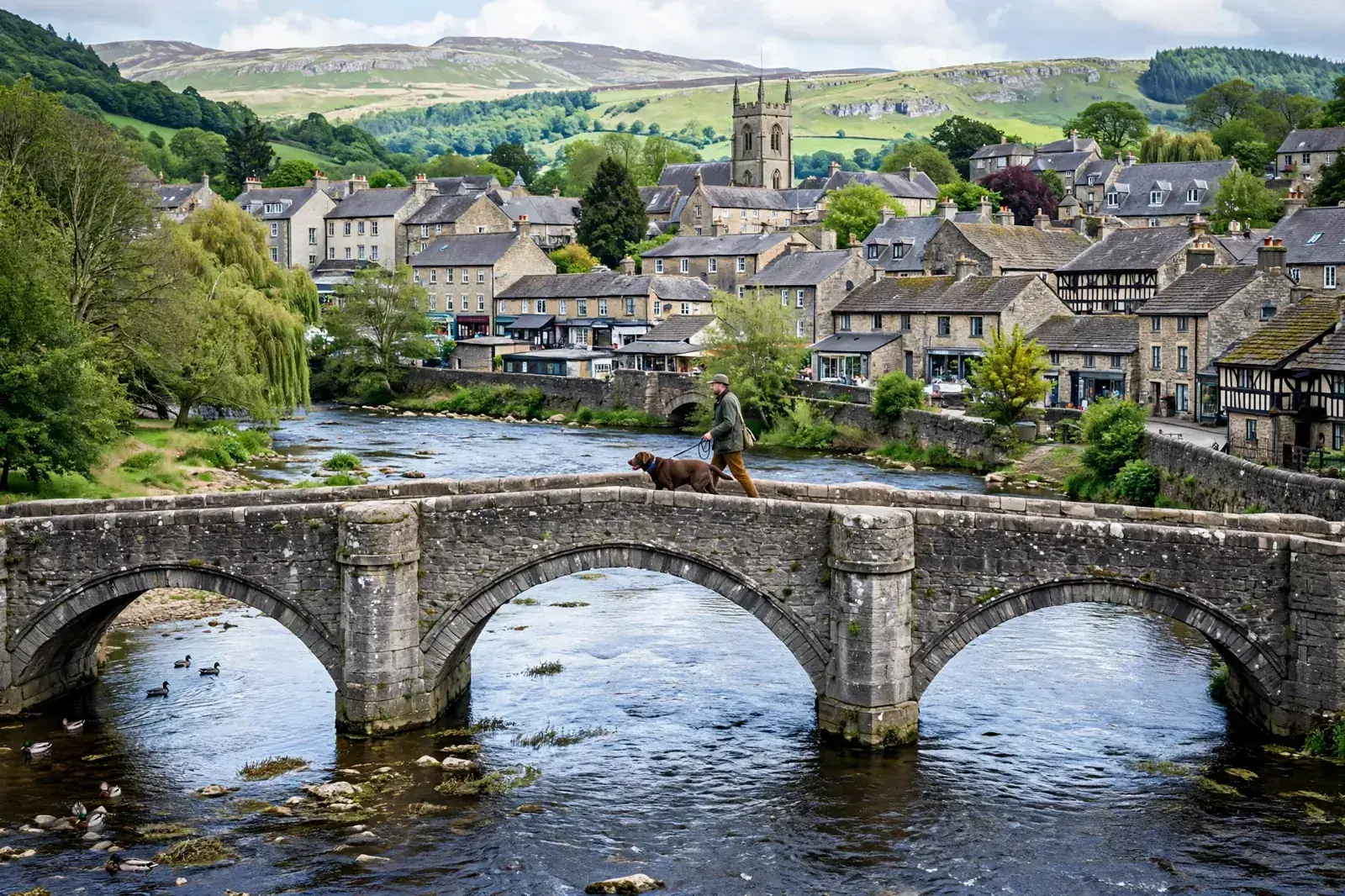
Evenings in Castleton are a pleasure of the place: day visitors leave, the limestone hills change colour, and a final leaded circuit of the village lanes lets a dog absorb the day. Keep to pavements where they exist, carry a torch on unlit lanes, and remember that the stream running through the village and the ducks upon it are not a dog swimming invitation — banks, private gardens and fishing interests deserve the same respect as in any Peak District village.
Using the Hope Valley: onward walks and transport
Castleton anchors the Hope Valley, and a stay here connects naturally to a wider web of dog walking without moving the car every day. The valley's villages link by footpaths along the River Noe and by the road and bus routes towards Hope and Hathersage, and the railway station at Hope, a walk or short bus ride away, opens the Hope Valley line between Sheffield and Manchester. Confirm train and bus arrangements before relying on them for a linear walk, and note that station access from Castleton itself involves that road or path journey first — there is no station in the village.
Linear walks suit this valley beautifully with a dog: walk one way along valley paths and return by bus or train where the service allows dogs, which UK trains generally do under the conditions in our train guidance — but always check the official latest guidance before you go, particularly for bus operators whose dog policies are their own. Build the plan around the last return service, not the ideal one, and carry the taxi number of a dog-accepting local firm as the honest backup.
Parking in Castleton is finite and fills on sunny weekends, bank holidays and during the village's famous garland and Christmas seasons. Arrive early, use the designated car parks, and read the current charges and restrictions on site rather than trusting any guide's figures. Coaches and events compress the centre further. A dog never waits in a parked car here while humans tour a cavern, whatever the season — in a limestone valley on a still summer day, car interiors heat lethally fast.
Staying in Castleton with a dog
Accommodation in and around the village spans pubs with rooms, bed and breakfasts, cottages, bunkhouses and campsites in the valley, many welcoming dogs. Apply the hill-country checks: is there a genuinely enclosed exercise space or at least a safe immediate toilet area; can a muddy dog be dried and contained before reaching carpet; are dogs allowed to be left alone in the room, and if the honest answer is no, how does that shape your cavern and castle plans; and what is the walk straight from the door, because in Castleton that walk can be Cave Dale itself, which is a considerable advantage.
Campsites and holiday parks in the valley add their own rules on leads, dog walks and facilities, and pitches near the river or under the hills are exposed to wind in a way sheltered lowland sites are not. Whatever the base, bring bedding, towels, food and medication as a self-sufficient kit, save the local vet's details and out-of-hours arrangements in your phone, and note that mobile signal in the dale bottoms can be poor — download maps and information for offline use before a big walk.
Length of stay rewards patience here. A single day gives you Cave Dale and the village. Two or three days let weather choose the Mam Tor day rather than forcing it, allow a split cavern visit without hurry, and open the valley walks towards Hope. Castleton's pleasure for dog owners is that its best experiences need no booking, no queue and no admission desk — just a lead, water, dry-ish weather and the honesty to let the underground go.
A Castleton day in the right order
Order matters in Castleton because the village fills from the edges inward. Arrive early enough to walk Cave Dale before the day's crowds discover it, and the dale will show you its best self: quiet rock walls, sheep settling to the morning, and the castle crag above you almost empty of people. Take the Winnats viewpoints on the same outward leg, while the light is still low and the road below is comparatively calm, and photograph the pass then rather than competing for the same moment at noon.
Give the middle of the day to the village itself, when the dale paths are at their busiest and a pub lunch, a slow browse on behalf of the humans and a shaded rest for the dog are the intelligent allocation of the hot or crowded hours. If a cavern is on your list, this is its slot: one adult underground in the cool, the other on a gentle village-and-river circuit, with a clear meeting point and time agreed before phones lose signal or attention. Nobody's dog benefits from a rushed cavern swap performed against a car park clock.
Save the lower slopes and the walk towards the ridge for late afternoon, when day visitors thin, the limestone changes colour and the sheep country empties. You need not go far or high: an hour out of the village on a clear path, with the whole Hope Valley arranging itself below, is a better ending than a forced summit. Finish with the lanes at dusk, torch in hand, and a dog who has been managed thoughtfully rather than merely exercised. That rhythm — dale early, village at noon, slopes late — is Castleton's whole secret, and it costs nothing but an alarm clock.
Practical questions
Before you go
Can dogs go into Castleton's caverns?
No, not as pet dogs. The show caverns are underground attractions and do not admit pet dogs; assistance dog arrangements are handled separately by each operator. Plan caverns as a split visit with another adult walking the dog above ground, or skip them, and never leave a dog waiting in a car. Always check the specific cavern's official information before your visit, as opening patterns are seasonal.
What is the best dog walk in Castleton?
Cave Dale is the signature walk: a limestone valley starting almost in the village, climbing between rock walls into open country. It is superb in dry weather but its polished rock floor becomes slippery after rain, so older or joint-sensitive dogs may need a shorter version. Keep dogs on leads around livestock, carry water, and turn back if the footing feels insecure.
Can dogs climb Mam Tor?
Many fit dogs manage Mam Tor and part of the Great Ridge in good conditions, on a lead, with water carried and an early turn-back if weather or crowds build. The ridge is exposed and busy, sheep graze the slopes, and there is no shelter at the summit. Puppies, older dogs and dogs unused to hills are better served by the valley and lower-slope walks around Castleton.
Can I walk my dog up Winnats Pass?
Do not walk a dog along the Winnats Pass road itself: it is steep, narrow and busy with traffic enjoying the same view. Use the footpaths on the slopes and around the foot of the pass instead, keeping your dog on a lead on the steep grazing grass, and use the village car parks rather than stopping on the pass.
Are dogs allowed at Peveril Castle?
Dog access at Peveril Castle has specific rules and the climb to the keep is steep, so check the official English Heritage information for the current position before setting out with your dog. If dogs are not admitted on your date, the castle crag and the views from Cave Dale below give you much of the drama with your dog beside you.