This guide is independent and contains no paid placement. Venue and event rules change, so where this guide flags a check, please confirm the latest official information before you travel.
Edale with a dog works best as a valley-first visit: arrive by train where you can, walk the River Noe and the Pennine Way's opening miles as your core experience, and treat Kinder Scout as a serious, weather-dependent expedition for fit, experienced hill dogs only — not a first-afternoon stroll. Keep dogs on leads around sheep and ground-nesting birds, carry all water, expect little or no signal on the plateau, and check train times, path conditions and official guidance before committing to any high route.
Arrive by train: the station is the strategy
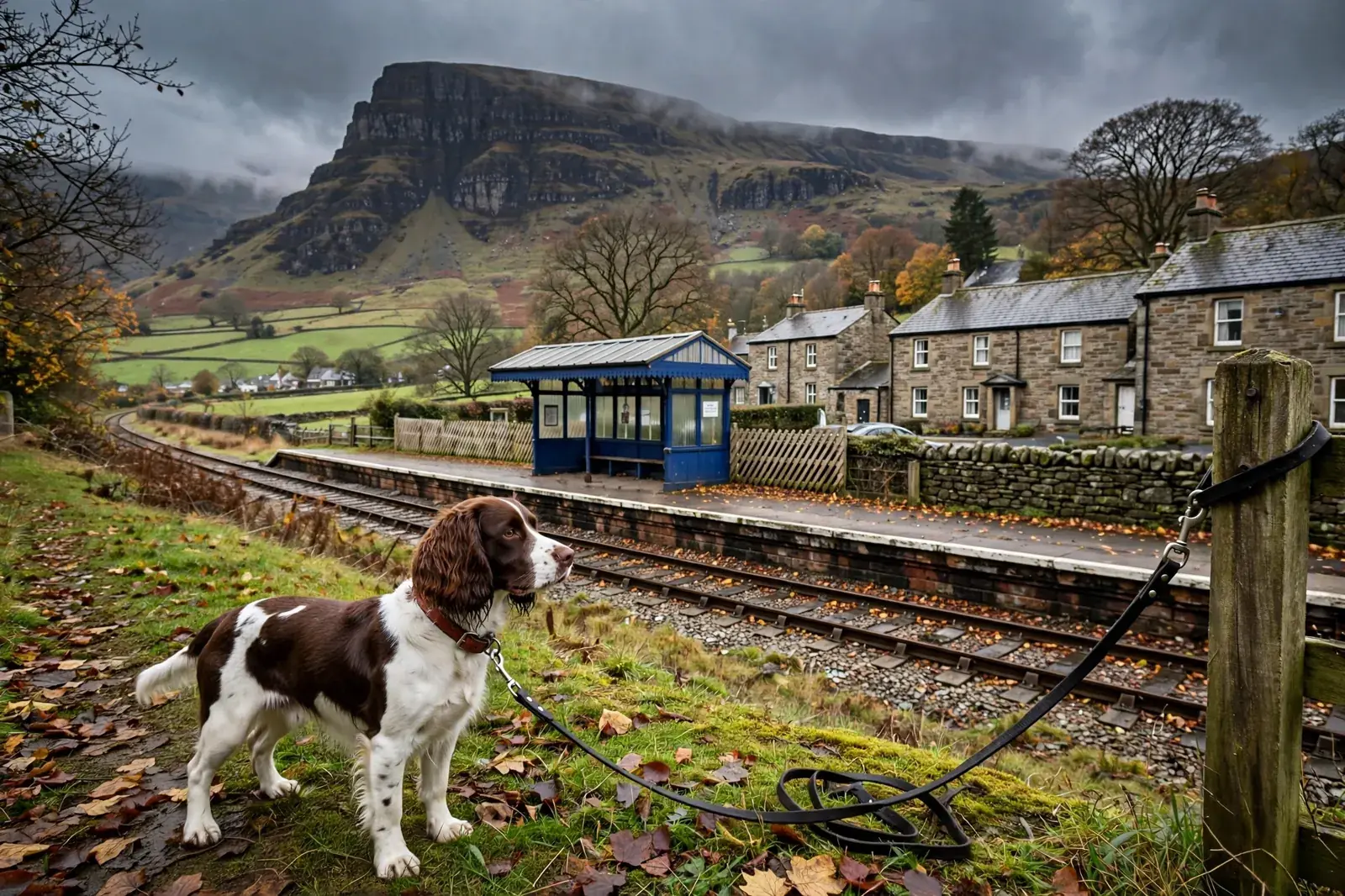
Edale is one of the few famous hill villages in England that a railway reaches directly, and for dog owners that is not a detail, it is the strategy. The station on the Hope Valley line between Sheffield and Manchester drops you in the valley with the dog already exercised by the novelty of travel, no parking hunt, and a built-in escape route if weather turns or a walk overruns. Dogs travel on UK trains under national conditions; check the official latest guidance before you go for the current rules, keep your dog off seats and out of aisles, and time your arrival for a train that leaves you daylight in hand.
Driving is possible — the valley road in is famously scenic and famously narrow — but parking in Edale is limited, fills early on fine weekends, and charges and restrictions change. If you drive, arrive early, use the designated car park, and never consider leaving a dog in the car while you walk: Kinder days are long, valley sun is real, and that rule has no trailhead exception.
The station start also shapes better walking. Linear thinking comes naturally when a railway runs through a valley: walk out along the Noe, return by train from Hope; or let a summit day end at a different point with a planned rail return. Build every such plan around the actual timetable for your date, carry it offline, and treat the last train as a cliff edge in your calculations rather than a detail to be discovered at a platform in the dusk.
The Pennine Way start: walk the opening, respect the whole
Edale is the traditional southern start of the Pennine Way, the long-distance trail running north to the Scottish border, and the village carries that heritage in its pubs, its signage and its walkers' atmosphere. With a dog, the opening section is a delight in itself rather than merely a photo at the trailhead: the path leaves the village, crosses the valley and begins its climb towards the Kinder plateau by way of Jacob's Ladder, a steep, stone-pitched ascent that has been the first honest test of many long journeys.
Walk as much of that opening as suits your dog, and be clear-eyed that you are sampling a serious trail, not completing it. Puppies should not be climbing pitched stone steps for sustained distances, older dogs may find the descent harder than the climb, and any dog's day should be measured by its energy and footing on the way down, not by enthusiasm at the start. Turning back at a chosen viewpoint is a complete Edale experience; thousands of Pennine Way walkers envy you the option.
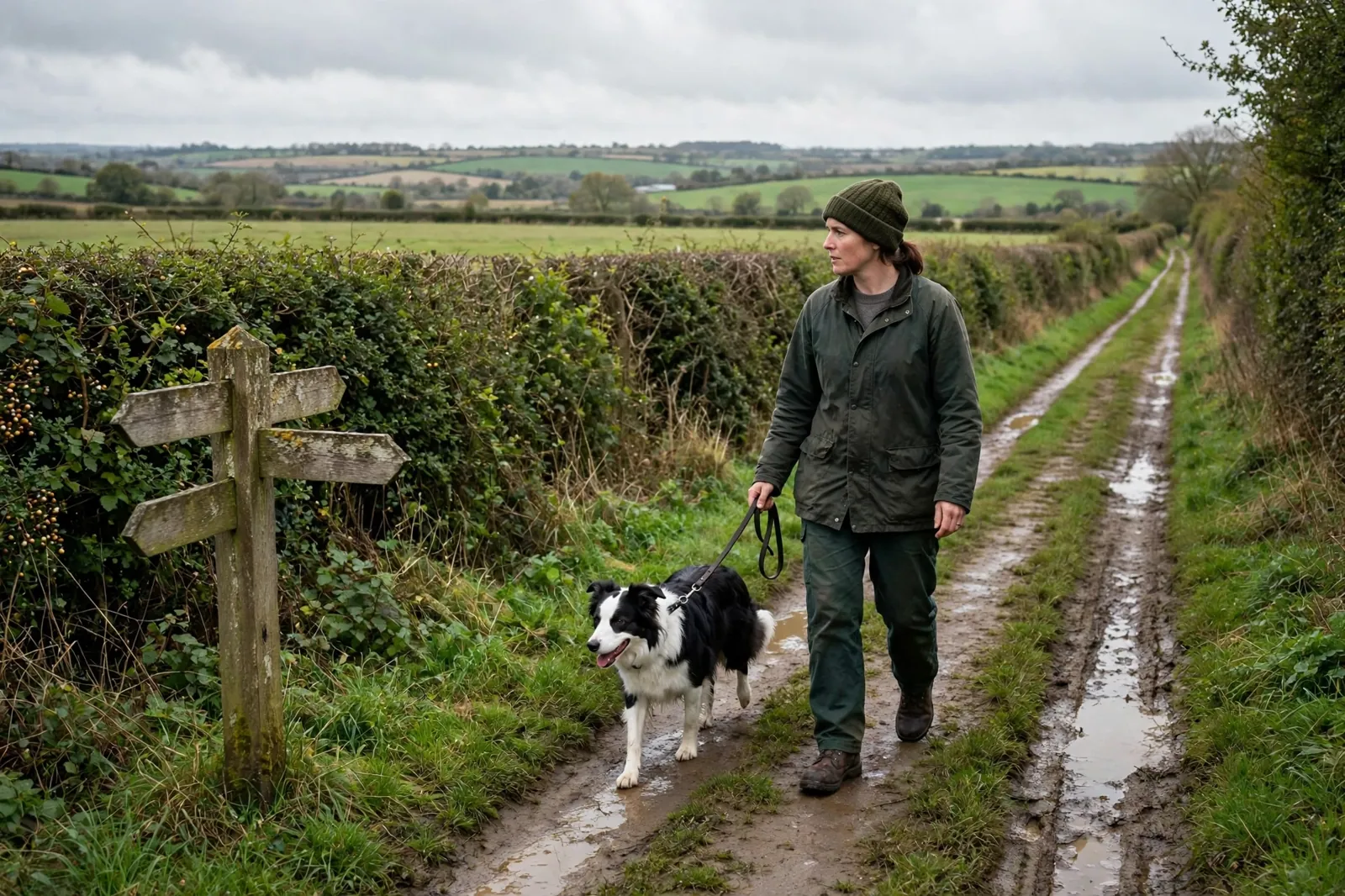
Trail etiquette matters from the first mile. Keep dogs under close control and on leads around the sheep that graze almost every field here, step aside for faster walkers on narrow sections, and carry out everything, including bags, to the village bins. Our guide to dogs on leads and the law in the UK sets out the grazing-land rules that apply across the whole Dark Peak, and Edale is a place to model them impeccably.
Kinder Scout: the caution this guide exists to give
Kinder Scout, the vast gritstone plateau above Edale, is the highest ground in the Peak District and the site of the famous 1932 Mass Trespass that helped open Britain's hills to walkers. It is also, bluntly, no place for casual dog walking. The plateau top is a maze of peat groughs and weathered rock where paths vanish, mist arrives in minutes, and navigation becomes a genuine skill rather than a phone app. Dogs have been lost, injured and exhausted up here, and rescue callouts involving dogs are a recurring part of local mountain rescue work.
Attempt Kinder only with a fit, adult dog experienced on rough ground, in a settled forecast you have checked that morning, with map and compass you can actually use, full hill kit, and more water than you think — the plateau streams run brown with peat and are no reliable dog supply. Keep the dog on a lead or long line: ground-nesting birds are a protected feature of these moors in season, sheep graze the edges, and a dog who chases anything across peat hags or down a clough can be in serious trouble faster than you can follow.
If any element is missing — the forecast is doubtful, the dog is young, old, small, recovering or unfit, your navigation is phone-only, or daylight is short — the correct Kinder day is a low one. The valley, the lower slopes and the views up at the plateau give you Edale's beauty without its risks. No summit is worth a frightened dog, a twisted paw on peat, or a benighted descent, and the hill will be there, indifferent and magnificent, next time.
Valley walks: the Noe, the fields and the lower slopes
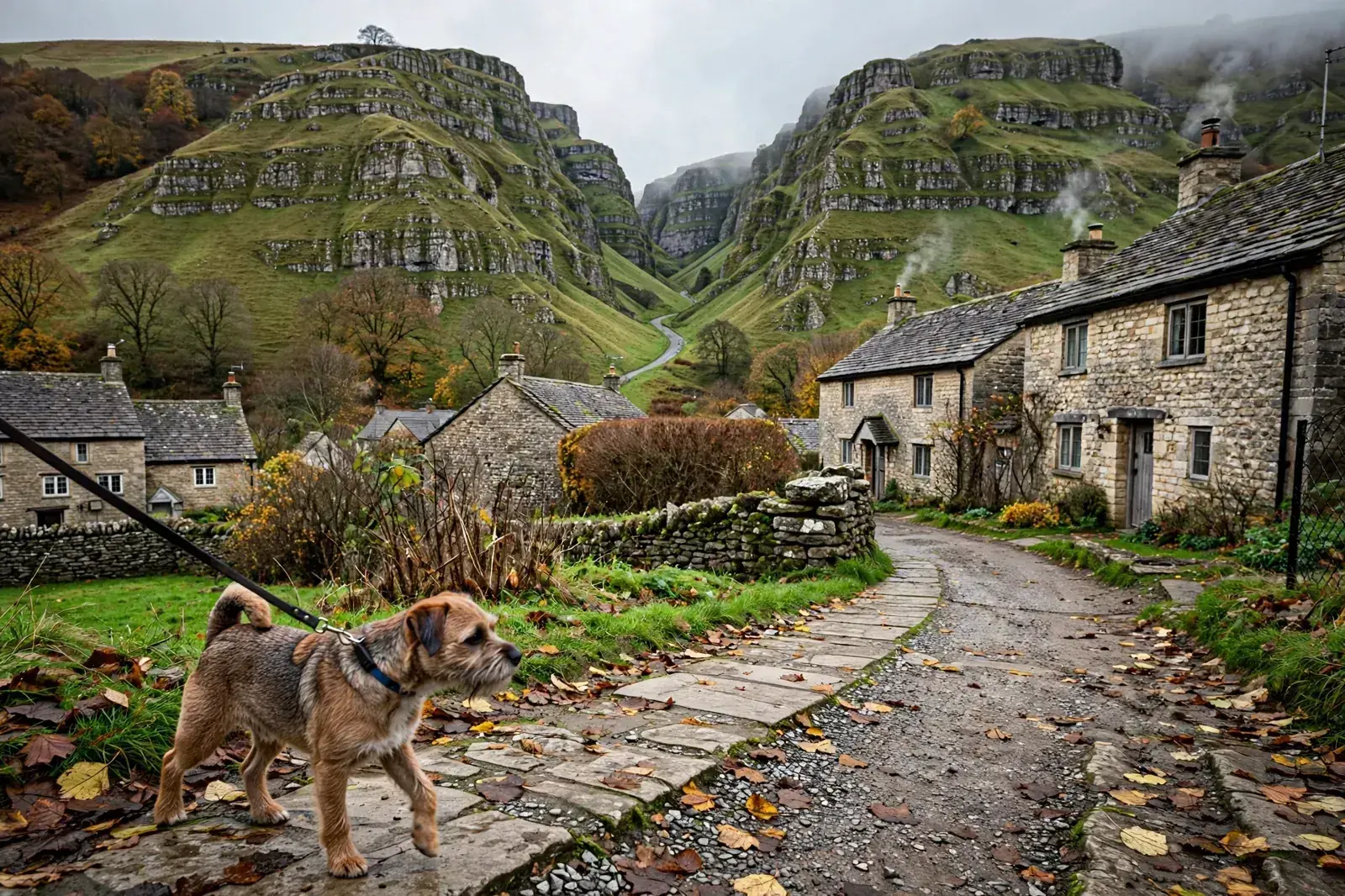
The Vale of Edale itself is the dog walk most visitors underestimate. The River Noe runs the valley floor, footpaths link the village's scattered hamlets — because Edale is properly a collection of small settlements, or booths, along the valley — and the lower slopes offer steady climbs to viewpoints that frame Kinder and the Great Ridge without committing you to either. A valley circuit with pub or café at the midpoint is a full, satisfying day for the majority of dogs.
Underfoot, expect the Dark Peak's honest mix: field paths that turn muddy after rain, stone stiles and gates, bridges over the river, and lanes with little traffic but no pavements. Livestock is the constant — cattle as well as sheep in valley fields — so leads on, gates closed, and a wide, calm detour around any herd with calves. Cattle and dogs are a combination to manage with particular care: if a herd approaches, the standard advice is to drop the lead and let the dog look after itself while you move to safety, however counterintuitive that feels.
Shorter options deserve listing because Edale days often need them: a station-to-village stroll with a long pub garden sit; a river path out-and-back measured by time rather than miles; a lower-slope loop on the sunny side of the valley in the morning while mist clears from the tops. A dog who has had two good valley hours and a settled afternoon is having a better holiday than one dragged up a plateau to be photographed in cloud.
The village: pubs, café and staying over
Edale's social centre is small and walker-shaped: pubs at either end of the village's life, a café culture built around trailheads, and a campsite and accommodation scene that understands muddy boots. Dog welcome in the pubs here is a long tradition, but which rooms, bars and gardens admit dogs changes with management and refurbishment, so ask, towel the dog, and settle where directed. After a wet hill day, a pub that welcomes a dog by a fire is not a luxury in Edale; it is part of the village's working infrastructure.
Staying options include campsites in the valley, bunkhouses and barns aimed at walking groups, bed and breakfasts and self-catering in the village and its hamlets, and a youth hostel in a grand house on the valley side. For dog owners the decisive questions are familiar but sharpened by location: enclosed space for a night-time toilet trip in the dark, drying facilities for kit and dog alike, whether dogs may be left alone — assume not unless explicitly told otherwise — and how far the morning's first walk actually is from the door.
Supplies in the village are limited and seasonal, so arrive with dog food, medication and essentials covered for the stay plus margin, and save the nearest vet's details, including out-of-hours arrangements, before you need them. The valley's mobile signal is unreliable even at village level. Download maps, timetables and booking confirmations for offline use, carry cash as a backup for small purchases, and let someone know your route on any day that leaves the valley floor.
Weather and seasons on the Dark Peak edge
Edale's weather is Kinder's weather, and it changes faster than valley appearances suggest. A still, bright morning in the village can sit below a plateau in cloud and wind, and the correct check is a mountain forecast for the area, read that morning, rather than the generic forecast for the nearest town. In winter, daylight is short, the pitched paths ice over, and a route that is a summer stroll becomes a mountaineering judgement; in spring, add ground-nesting bird restrictions and lambing to the lead discipline; in summer, the risk flips to heat on shadeless climbs and dogs overheating in still valley air.
Season also decides the village's mood. Bank holidays and fine summer weekends bring Pennine Way starts, charity challenges and full car parks; midweek in term time can feel like a private valley. The famous rainfall is real but so are the clear, cold, perfect days between fronts, which locals will tell you are the Peak District's best-kept secret. Pack for the full range in any month: waterproofs, warm layers, sun protection and water capacity coexist sensibly in an Edale rucksack.
Whatever the season, build the day with an exit. Know the point on any climb where you will reassess, the lower route you will take if the tops are wrong, and the time by which you will be descending regardless of the summit's proximity. Dogs cannot tell you they are at their limit until they are past it, and they will follow you loyally beyond their comfort because following you is their job. Yours is to turn around first. For a gentler Peak District base entirely, compare our Castleton with a dog guide, a few miles and one ridge away.
A realistic Edale weekend, without heroics
Picture the weekend as most dogs would design it, and Edale suddenly plans itself. Arrive Friday by train if you can, in daylight, and spend the evening on the smallest possible programme: a station-to-base stroll, a river path leg-stretch, food, and an early night in a valley that goes properly dark and properly quiet. That low-key arrival matters more than it looks. A dog who has slept well in a new place, eaten at a normal time and learned where the night-time toilet walk happens will start Saturday as a hill dog. A dog who arrived at midnight after a four-hour drive will start it as a passenger.
Saturday is the weather window day, and it should be chosen by the forecast rather than fixed by hope. If the morning is settled, take the bigger walk — the Pennine Way opening, a lower-slope circuit with real climbing in it, or, for the genuinely qualified partnership described earlier, a careful Kinder expedition with an early start and a conservative turn-back time. Keep the afternoon deliberately loose afterwards: a pub garden, a café, a second short valley walk at the dog's pace. Dogs asked for one big day usually give it gladly. Dogs asked for a big day followed immediately by a second expedition in the evening give you a stiff, tired animal on Sunday.
Sunday belongs to the valley floor and the journey home. Walk the Noe at the pace of a dog choosing its own sniffs, revisit the hamlet lanes you hurried through on Friday, and let the last walk end at the station rather than at a car park miles from your route out. Build the timetable backwards from a train that is not the last one, so a delayed lunch is an inconvenience rather than a crisis. Families will recognise the pattern: it is the same arc as any good weekend with children, in which the ambitious thing happens in the middle, cushioned by arrival and departure days that ask very little. Edale rewards that shape because its valley is not a waiting room for the plateau. Sampled slowly, at dog height, it is the destination.
One final piece of realism concerns other people's Edale. On the finest weekends the village hosts challenge events, long-distance starts and a great many hopeful summits, and the paths, pubs and car park all feel it. A dog who dislikes crowds, queues and close encounters with other dogs on narrow paths will have a better weekend midweek, in term time, or in the honest weather of early spring and late autumn. Choosing the quieter version of a famous place is not missing out. For a dog owner, it is usually the upgrade.
Practical questions
Before you go
Can dogs climb Kinder Scout from Edale?
Only fit, adult, hill-experienced dogs should attempt Kinder Scout, in a settled forecast, with an owner carrying map, compass and full hill kit. The plateau is trackless in places, mist arrives fast, and dogs must stay on leads around ground-nesting birds and sheep. For puppies, older dogs or doubtful weather, the valley and lower-slope walks are the right Edale day.
Can I take my dog to Edale by train?
Yes. Edale station is on the Hope Valley line between Sheffield and Manchester, and dogs travel on UK trains under national conditions — check the latest official guidance before you travel. Keep your dog off seats and out of aisles, plan around the actual timetable for your date, and treat the last train home as a fixed deadline in your walking plan.
Where does the Pennine Way start in Edale?
The Pennine Way traditionally starts in Edale village and climbs out of the valley towards Jacob's Ladder and the Kinder plateau. Walking the opening section and turning back at a chosen point is a satisfying day in itself. The pitched climb is steep for young or older dogs, so judge the distance by your dog's descent, not its enthusiasm at the start.
Where can I park in Edale with a dog?
Edale has a designated village car park, but spaces are limited and fill early on fine weekends, and charges and restrictions change — read the signs on arrival. Arriving by train avoids the problem entirely. Never leave a dog in a parked car while you walk, whatever the season or how cool the morning feels.
Are there dog-friendly pubs in Edale?
Edale's pubs have a long walker-and-dog tradition and dogs are commonly welcome in at least some areas, but policies vary by venue and room and change over time. Ask at the door, towel a wet dog before entering, and settle where you are directed. Confirm the current position with the pub if a meal there is central to your plan.