This guide is independent and contains no paid placement. If affiliate links are added later, they will be clearly marked and will not change our editorial checks.
Walk Cirencester in layers: museum first or last with a dog walk in between, Abbey Grounds for the central loop, Cirencester Park for the long walk, and the Market Place for lunch. Keep dogs on leads in the parks, check museum dog rules before you travel, and park once in the centre.
Reading the Roman town in modern streets
Cirencester was once Corinium, one of the largest towns in Roman Britain, and the modern street plan still carries traces of that past. Straight streets, a central market area and a churchyard that sits over older layers all hint at a town that has been continuously inhabited for nearly two thousand years. For a dog walker, that history is not an academic extra; it shapes the walk itself, because the centre is compact, walkable and full of corners where a short pause reveals a plaque, a fragment of wall or a street name that carries an older story.
Walk the centre slowly and look for the pattern rather than hunting for individual ruins. The main shopping streets run in confident lines, side lanes cut between them, and the church and Market Place anchor the whole arrangement. A dog will enjoy this kind of walk because it is full of variety: pavements, lanes, grass, water and shade in quick succession, with frequent chances to stop and sniff. Owners enjoy it because the town can be explored on foot without a car, and because every loop returns naturally to a cafe, a park or the museum.
History also explains why Cirencester feels bigger than a village but smaller than a city, and that scale suits dogs well. The town has enough cafes, shops and parks to fill a day, but it is not so large that a dog walk becomes a trek across traffic and suburbs. If you arrive with a plan that respects that scale, one central walk, one park walk and one indoor visit, the day will feel full without feeling forced, and the dog will finish the day tired in the good sense rather than overwhelmed.
Corinium Museum and the split visit
The Corinium Museum tells the story of Roman Cirencester through mosaics, sculptures, coins and everyday objects, and it is the indoor highlight of a Cirencester day. For dog owners, the museum needs a split-visit plan, because assistance dogs are welcome while pet dog admission can vary by area and event. Check the official guidance before you travel for the current position, and do not assume that a welcome on one visit applies to the next, especially during school holidays and special exhibitions when galleries are busier.
A split visit works like this: one adult visits the museum while the other walks the dog in Abbey Grounds or around the town centre, then you swap, or one adult visits while the dog rests in suitable accommodation. The museum is compact enough that a focused visit of an hour or so covers the highlights, and the dog walk in between keeps the dog happy and the visit unhurried. If you are travelling solo with a dog and pet dogs are not admitted, skip the interior on this visit and enjoy the town, parks and churchyard instead, because a museum visit is never worth leaving a dog unattended in a car or tied outside.
Inside, the mosaics deserve unhurried attention, and the galleries work best when visited in order, from the Roman town's origins through its prosperity to its later history. Even if you cannot take the dog inside, the museum visit enriches the outdoor walk that follows, because you will notice street alignments, building stones and place names with fresh eyes. Take a photograph of the museum plan or a note of the highlights, so the second adult's visit can be equally focused, and so the dog walk that follows can be a proper walk rather than a wait.
Abbey Grounds: the central dog walk
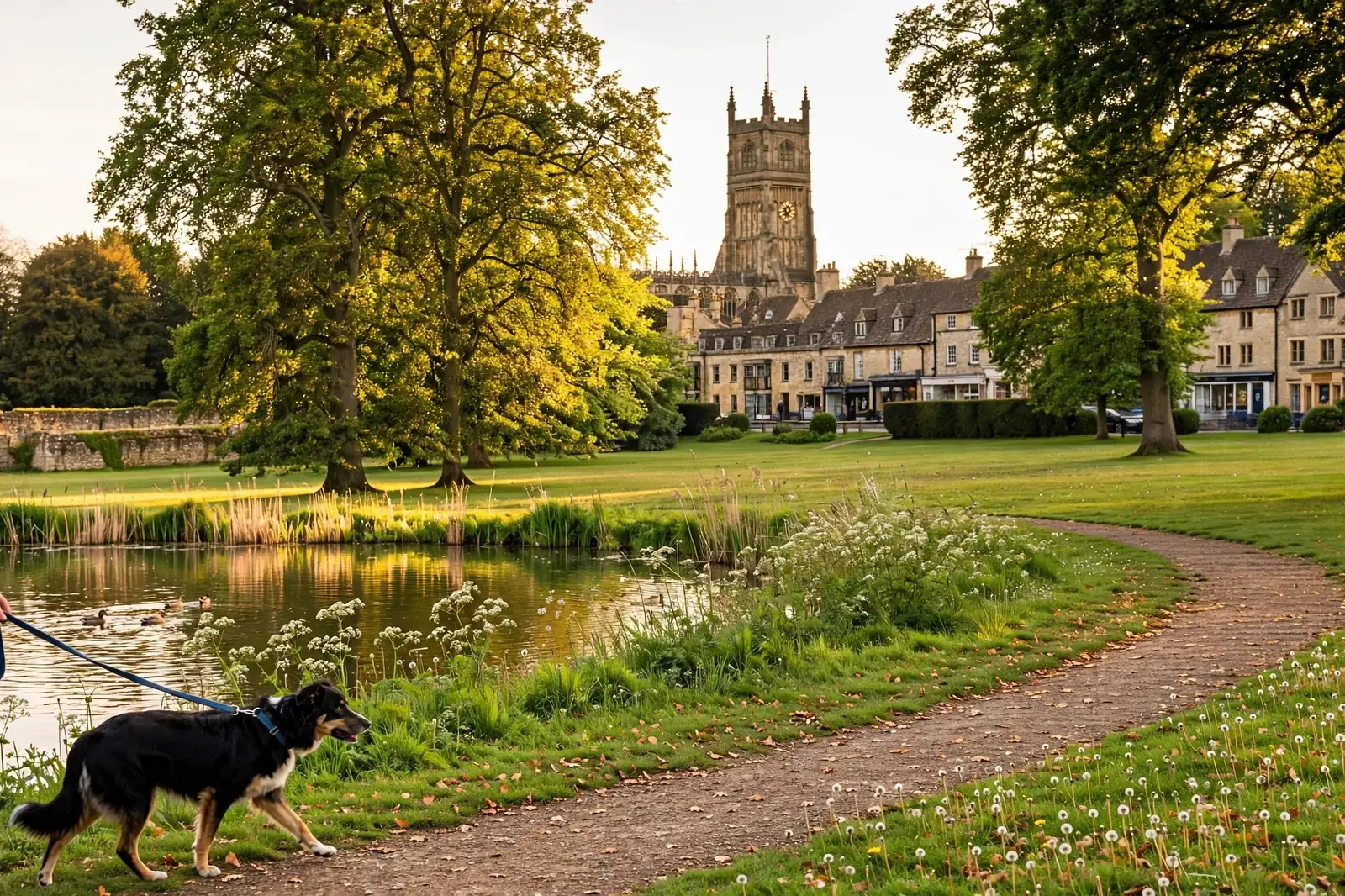
Abbey Grounds is the green heart of Cirencester, a public park close to the church and the town centre, with lawns, mature trees, paths and water. It is the most useful dog walk in town, because it is central, short and flexible: a ten-minute loop for a toilet walk, a thirty-minute wander for a proper break, or a rest stop between the museum and lunch. The grounds are shared with families, picnickers, joggers and other dog walkers, so keep the lead short, keep to paths where signed, and clean up promptly, because a central park is judged by how its dog walkers behave.
The water in and around Abbey Grounds adds interest and a hazard in equal measure. Dogs are drawn to water, but park water may not be safe for drinking or swimming, and banks can be steep or slippery after rain. Keep the dog on a lead near water, offer drinking water from your own bottle, and steer a water-obsessed dog toward the lawns and paths rather than the water's edge. Shade is plentiful under mature trees, which makes Abbey Grounds a good midday stop in summer, when pavements are hot and the dog needs a cooler place to rest.
Abbey Grounds also works as a meeting point and a decision point. Meet there after a split museum visit, pause there to decide between Cirencester Park and the shops, or use it as the final walk before driving home. Dogs learn places quickly, and a dog that has visited Abbey Grounds twice in one day will greet the second visit with recognition rather than novelty, which often means a calmer walk. End the park visit with a calm walk back to the pavement, rather than a sudden rush to the next attraction, so the dog carries the calm with it into town.
Cirencester Park avenues and woodland
Cirencester Park is a large landscaped estate on the edge of the town, famous for its broad avenues, woodland and open grassland, and it provides the long walk that balances a morning in town. The main avenue, a long straight ride lined with trees, is made for a steady dog walk: flat, open and easy to follow, with space to pass other walkers without tangling leads. Side paths lead into woodland and across grassland, offering variety for a dog that wants to sniff and explore, though the park is a private estate with public access on set paths, so keep to the waymarked routes and respect signed restrictions.
Access times and routes can vary, so check the official guidance before you travel for current opening arrangements, dog rules and any closures for estate work or events. Walkers should keep dogs on leads, stay on public paths, and avoid the immediate surroundings of the house and private gardens. The park rewards a longer, slower walk rather than a quick dash: allow an hour or more for a satisfying loop, carry water, and use benches and open grass as rest stops. A dog that has walked the avenue in the morning will often be content with a short town walk in the afternoon, which is exactly the balance a Cirencester day needs.
Wildlife and livestock add interest to a park walk, and they also demand lead discipline. Deer, birds and other animals may be present, and a dog that chases will quickly turn a peaceful avenue walk into a stressful incident. Keep the lead on, watch ahead for animals on the path, and give wildlife a wide berth. In autumn, the park's trees put on a fine display, but fallen leaves hide mud and roots, so watch footing, especially on woodland paths after rain. In summer, the avenues offer shade in patches rather than continuously, so walk early or late and carry water for a long loop.
Market Place, lanes and town centre
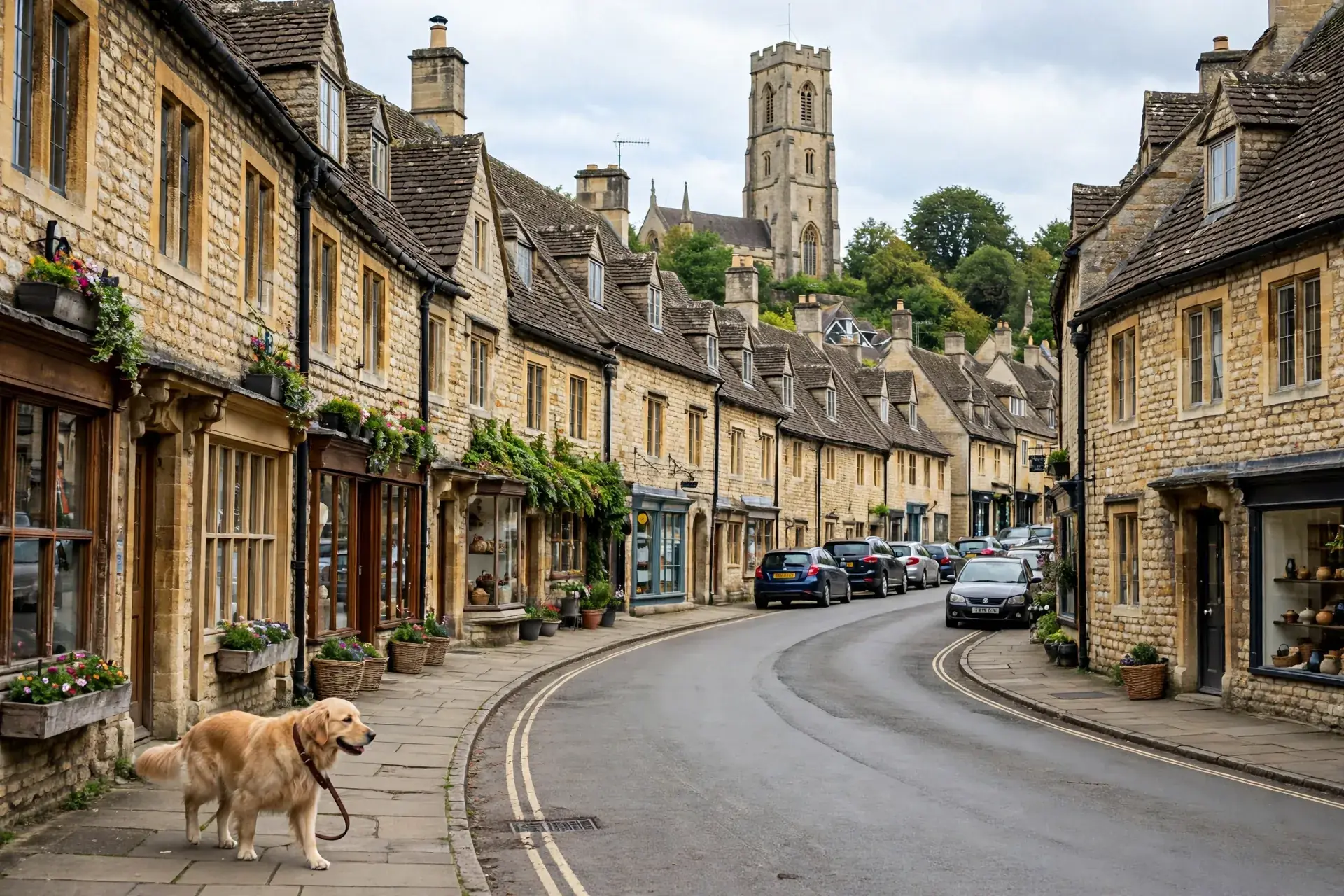
The Market Place is Cirencester's commercial and social centre, with shops, cafes and market stalls on market days, and it deserves a slow walk rather than a quick pass. The space is open enough for a dog on a short lead, but it can be busy, especially on Saturdays, so step aside for shoppers, keep the lead clear of stalls and pushchairs, and avoid letting the dog investigate food stalls at nose height. Side lanes, including the well-known Black Jack Street, offer narrower, quieter walking with historic buildings and small shops, and they make a good loop back to Abbey Grounds or the car park.
Shopping with a dog in Cirencester is easier than in a small village, because the town has a wider range of venues and more space to step aside. Even so, policies vary shop by shop, so look for signs and ask politely, and do not take a dog into a crowded shop if the dog is nervous or the aisles are narrow. A dog that can settle by a shop door for a few minutes while one adult browses is a useful compromise, and it keeps the visit calm for everyone. If you are buying something large, arrange delivery rather than carrying it with a lead in hand.
The town centre also offers practical services that dog walkers need: pet supplies, outdoor shops, pharmacies and cafes with water bowls. Use the centre as a resupply point, topping up water, bags and treats before the park walk, rather than discovering halfway around Cirencester Park that you have run out. A town walk that ends with a stocked bag and a rested dog is a walk that sets up the next part of the day properly, and Cirencester's compact centre makes that resupply easy.
St John the Baptist and the churchyard
The Church of St John the Baptist dominates the town centre with its tower and its large, light interior, and the churchyard around it offers a quiet green space for a short dog walk. The church is a place of worship and a historic building, so dog access inside may be limited, and visitors should check notices and ask before entering with a dog. The churchyard, by contrast, is a public space where a dog on a lead can walk calmly, provided graves, memorials and other visitors are respected, and provided the dog is kept from flower arrangements and freshly tended plots.
A churchyard walk suits a dog that needs a pause rather than a run: level paths, grass, shade and a slower pace than the shopping streets. Keep the walk short, keep voices low, and move on if the dog becomes restless or if a service or a private moment is taking place nearby. The churchyard also connects naturally to Abbey Grounds and the Market Place, so it can be woven into a central loop without adding distance, and it offers a different atmosphere from the park, quieter and more enclosed, which some dogs prefer.
Architecture lovers will enjoy the church's exterior details, from the tower to the porch and the stonework, and a slow circuit of the building with a dog is a pleasant way to appreciate them. Take photographs from the paths rather than stepping onto planted areas, and keep the dog close when other visitors are photographing the same views. A churchyard visit is a reminder that Cirencester's history is not confined to the museum; it is written into the stones of the town itself, and a dog walk is a good way to read it.
River Churn and the town edge
The River Churn flows through and around Cirencester, and its banks offer a different kind of walk from the parks and streets: narrower paths, waterside vegetation and a sense of leaving the town behind without driving anywhere. Riverside paths suit dogs that enjoy water smells and birdlife, but they also need care, because banks can be muddy, paths can be narrow, and water levels rise after rain. Keep the dog on a lead near the river, do not let it swim in fast or unclear water, and turn back if the path becomes flooded or overgrown.
A riverside walk pairs well with a park walk, because the two offer contrasting surfaces and scents: open avenue grass versus enclosed riverside green, broad views versus close planting. Combine them by walking from Abbey Grounds toward the river, following a bankside path for a stretch, and then looping back through quiet streets to the centre. The loop should be planned with a map, because riverside paths can fork, narrow or end at private land, and a dog walk that ends at a locked gate is frustrating for everyone.
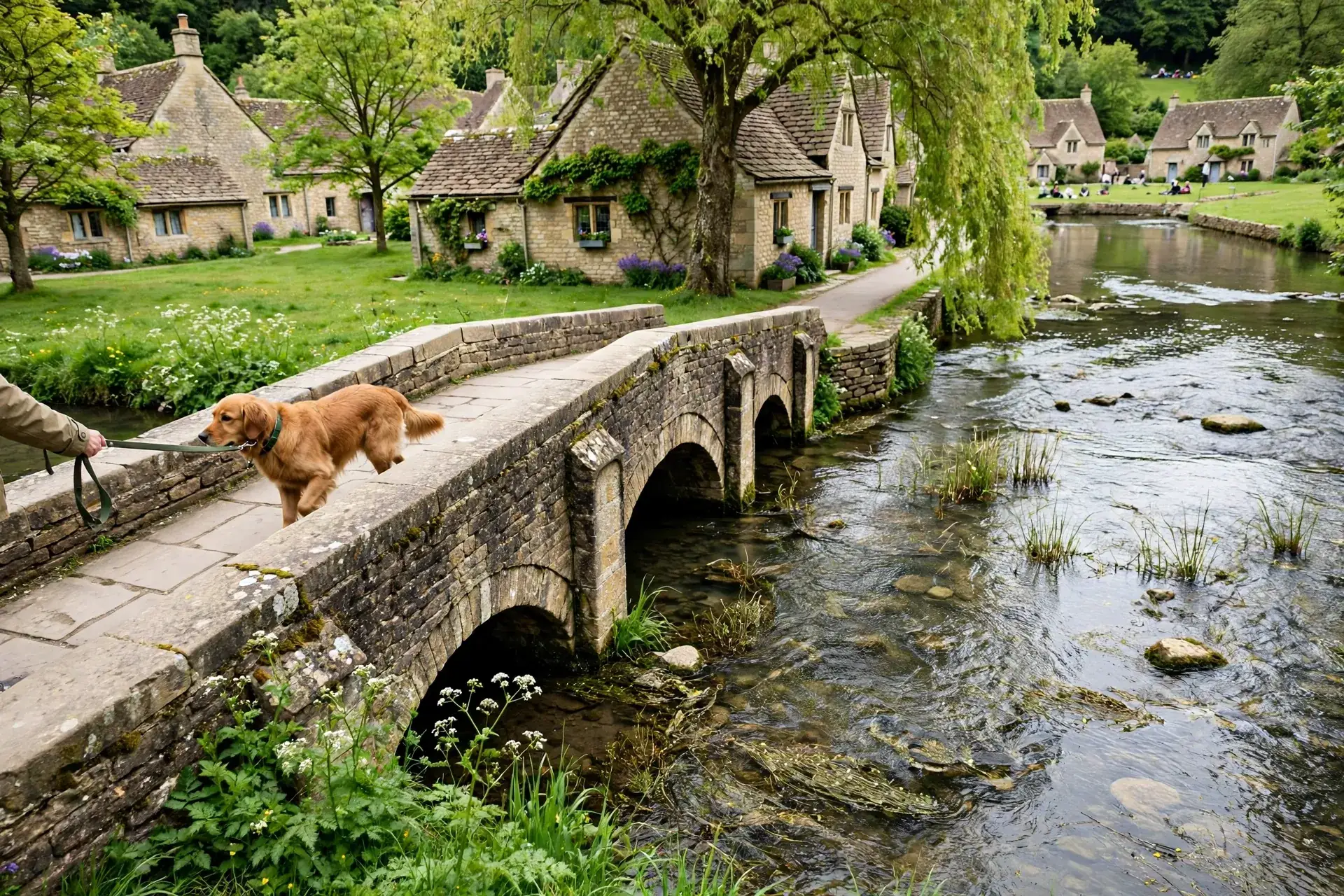
For a wider Cotswold riverside comparison, our Bourton-on-the-Water with a dog guide follows a shallow river through a village centre, while Cirencester's river walk feels more like a town-edge escape. Both teach the same lesson: rivers are wonderful for dogs when the dog is kept on a lead, given drinking water from a bottle, and kept away from fast water, litter and steep banks.
Cafes, pubs and a city-sized lunch
Cirencester's size means a wider choice of cafes, pubs and restaurants than a small Cotswold village, and that choice is a real advantage for dog owners. Look for venues with gardens, terraces or dog-friendly bars, and check the policy for each area of the venue, because a pub may welcome dogs in the bar but not in the restaurant. A mat, a water bowl and a quiet corner are the basics, and a venue that offers them without fuss is usually a venue that understands dogs. Bring the dog's own treats and avoid feeding from the table, since rich food upsets stomachs and teaches begging.
Lunch timing should follow the dog's walk, not the clock. A dog that has just finished Cirencester Park will be thirsty and restless, so give water, a toilet walk and a few minutes to settle before ordering. A dog that has had a quiet morning in town may settle immediately. If the dog cannot settle, a short walk before lunch often helps, and an outdoor table is usually kinder than a formal indoor room for a dog that is still full of walk energy. Keep lunch to a reasonable length for the dog: an hour is plenty for most dogs, and a two-hour lunch in a busy restaurant tests even a calm animal.
Market-day lunch needs extra planning, because cafes fill quickly and pavements are busier. Arrive early, choose a venue with outdoor space if the weather allows, and be ready to take lunch as a takeaway picnic in Abbey Grounds if indoor venues are full. A picnic in the park, with the dog on a lead and a mat to lie on, can be calmer than a crowded cafe, and it keeps the day flexible. Pack the dog's food and water, keep rubbish contained, and choose a spot away from other picnickers' dogs to avoid lead tangles over dropped food.
Parking, arrival and pacing the day
Cirencester has several car parks within walking distance of the centre, and the best plan is to park once and walk everywhere in town, driving only if you add a nearby village later in the day. Arrive early on Saturdays and market days, note the parking terms on arrival, and choose a space that gives a straightforward walk to Abbey Grounds and the museum. Shade matters in summer, and a dog should never be left alone in a parked car in warm weather, even for a brief museum visit, so plan split visits with two adults or skip the interior.
Pacing is the key skill for a Cirencester day, because the town offers more than a dog can comfortably do in one outing. A good pattern is museum and Abbey Grounds in the morning, lunch in town, and Cirencester Park in the afternoon, or the reverse if the dog prefers a long walk first. Build in a rest between the two halves, with water and a toilet walk, and watch for tiredness: a dog that stops sniffing, lags on flat ground or pants long after stopping is ready for a shorter walk, not a longer one.
The first ten minutes after parking should be calm and practical: toilet walk, drink, lead check, bag check and a glance at the map. The last ten minutes before driving home should mirror that routine: final toilet walk, drink, paw wipe and a calm load into the car. A day that starts and ends calmly is a day the dog will remember fondly, and Cirencester, with its parks and pavements close together, makes that calm start and finish easy to achieve.
Seasons, markets and busy days
Spring in Cirencester brings blossom in the parks, longer days and busy museum galleries, but also wet paths and nesting birds along the river, so keep dogs on leads and stick to paths. Summer brings the fullest Market Place, the busiest park avenues and the warmest pavements, so early starts, shade and water matter most, and Abbey Grounds becomes the essential midday refuge. Autumn brings colour in Cirencester Park, quieter streets and cooler walking, but also wet leaves and muddy riverside paths, so footwear and towels are important. Winter brings frost, clear light and empty paths, but short days, so check daylight before a park walk and carry a torch for a late finish.
Markets transform the Market Place, adding stalls, food smells and crowds that some dogs enjoy and others find overwhelming. On a market day, keep the lead short, avoid food stalls at dog height, and use Abbey Grounds or side lanes as breathing space when the centre becomes too busy. If your dog is nervous, reactive or young, choose a quiet weekday for the first Cirencester visit, and treat market days as a second visit once the dog knows the town. Special events in the town centre follow the same rule: enjoy them from a quiet edge if the dog is unsure, and leave early if the dog's body language says it has had enough.
For a general Cotswold overview that helps place Cirencester among its neighbours, our Cotswolds with a dog guide covers village hopping, commons and parking across the region. Cirencester works as a base for that kind of trip, because it has the services, parks and transport links of a town, while still sitting within easy reach of smaller villages.
Combining Cirencester with nearby villages
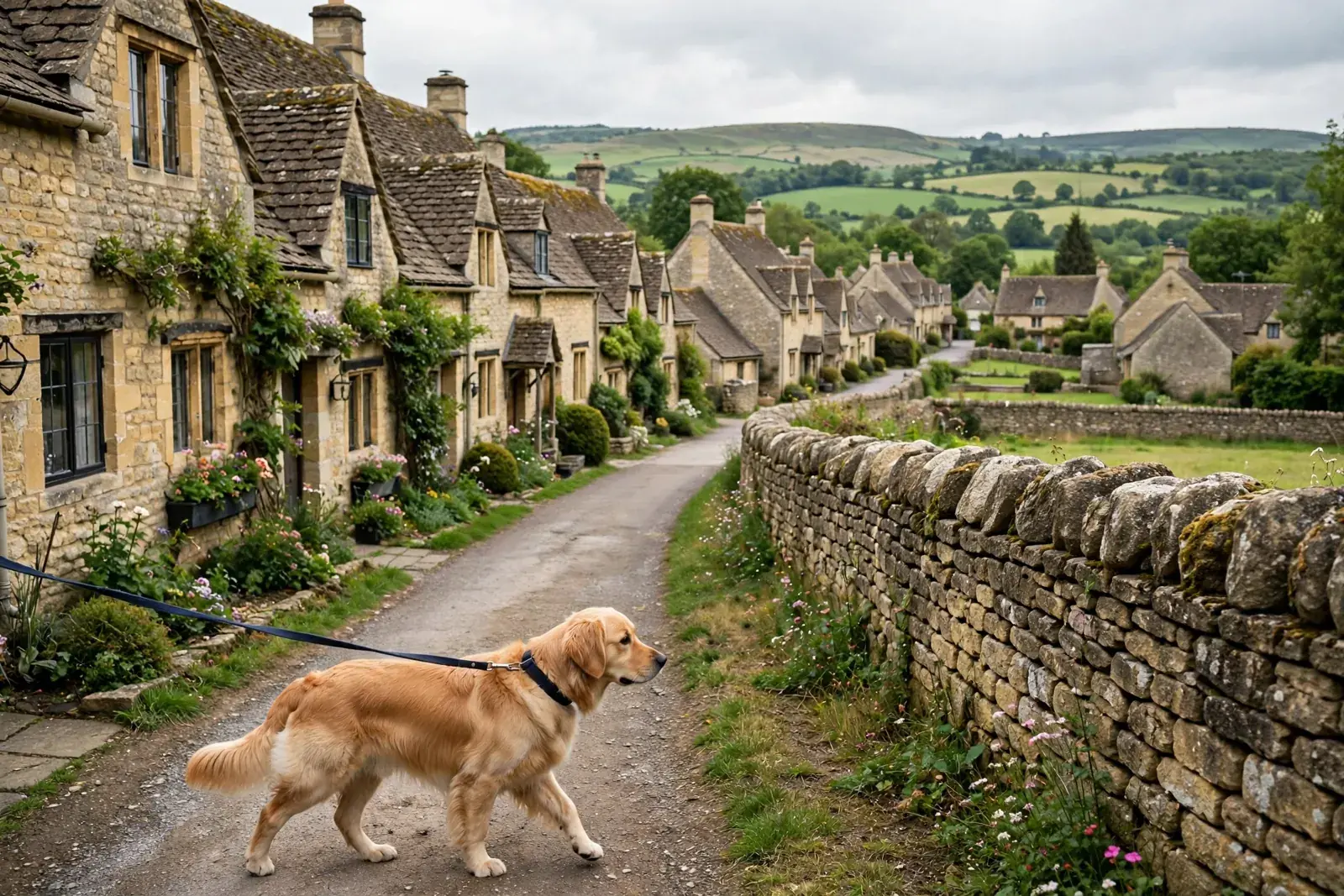
Cirencester pairs well with nearby Cotswold villages, but only if the combination is treated as two separate visits with a drive and a rest in between. Bibury, with its river and stone cottages, is the classic pairing, and it works best as a late-afternoon stop when the day-trippers thin and the light softens. Other nearby villages offer quieter lanes and smaller centres, and they suit a dog that has already had its main walk in Cirencester Park and now wants only a gentle stroll. Do not try to add two villages, a museum and a park walk to a single day, because the driving and the novelty will tire the dog more than the walking itself.
Transport between Cirencester and the villages is easiest by car, with parking in each village checked in advance, because bus services may not suit a dog walk timetable and taxis that accept dogs need booking ahead. If you are staying in Cirencester for several days, use the town as a base and visit one village per day, returning to familiar accommodation each evening. That pattern gives the dog a stable routine, a familiar bed and a predictable last walk, which matters more for a multi-day trip than cramming in extra villages.
End a combined day with the dog's needs in mind: a final toilet walk, water, a wipe-down if the village lanes were muddy, and a calm evening. A dog that sleeps well after a Cirencester day, eats normally and greets the next morning with enthusiasm has had the right amount of stimulation. If the dog comes home stiff or reluctant, shorten the park walk next time and lengthen the Abbey Grounds and town elements, because Cirencester has plenty to offer at a gentle pace as well as on a long avenue walk.
Practical questions
Before you go
Are dogs allowed in the Corinium Museum?
The Corinium Museum welcomes assistance dogs, and its policy for pet dogs can vary by area and event, so check the official guidance before you travel. If pet dogs are not admitted inside, plan a split visit with a walk in Abbey Grounds or the town centre in between, rather than leaving a dog unattended.
Are dogs allowed in Cirencester Park?
Cirencester Park welcomes walkers with dogs on leads on its public paths, and the broad avenues suit a calm, steady walk. Keep the dog on a lead, respect any signed restrictions near the house and gardens, and check the official guidance before you travel for current access times and route details.
Is Abbey Grounds in Cirencester good for a dog walk?
Abbey Grounds works well as a short, central dog walk, with lawns, paths, water and shade close to the town centre. It suits a gentle loop, a toilet walk and a rest stop between the museum and the shops, though it is a shared public space, so keep the lead short and clean up promptly.
Where should I park for a dog day in Cirencester?
Cirencester has several town-centre car parks within walking distance of the museum, Abbey Grounds and the Market Place. Park once, walk the centre on foot, and give the dog a toilet walk and water before the museum visit, so the day starts calmly rather than with a search for a closer space.
Can I combine Cirencester with Bibury in one dog day?
Yes, but only as a two-stop day with a car move and a rest in between, not as a rushed tour. Give Cirencester the morning, drive to Bibury for a late-afternoon riverside stroll when the crowds thin, and skip one stop entirely if the dog is tired, because a short day done well beats a long day that exhausts the dog.