This guide is independent and contains no paid placement. If affiliate links are added later, they will be clearly marked and will not change our editorial checks.
The Coast to Coast suits a fit dog that is good with livestock and stiles. Walk it in 13 to 15 days with a rest day in the middle, keep the dog on a lead through every farm, book dog-friendly stays and a baggage courier in advance, and carry a map: waymarking is still patchy in places.
Wainwright's route in numbers
The Coast to Coast was devised by Alfred Wainwright, the great Lakeland guidebook writer, and published in 1973 as a walk from St Bees on the Irish Sea to Robin Hood's Bay on the North Sea. It runs for 192 miles through three national parks — the Lake District, the Yorkshire Dales and the North York Moors — and it crosses some of the finest walking country in England. In 2022 it became an official National Trail, which brought better waymarking and a formal route, though the trail still keeps the character of Wainwright's original: a walk that joins villages, fells and moorland into a single crossing, rather than a path laid out by engineers.
The numbers are straightforward: 192 miles, around 7,000 metres of total ascent, and a typical completion time of 12 to 14 days. With a dog, 13 to 15 days is the more realistic target, with at least one rest day built in. The route is usually divided into 14 or 15 stages, each between 11 and 19 miles, and the stages are arranged around villages with somewhere to sleep. That structure is a help for dog walkers, because it means the overnight stops are known and the distances between them are manageable, though the stages in the Lake District are the hardest and the stages in the Vale of York are the easiest.
Unlike the Pennine Way, the Coast to Coast is a route of variety rather than a route of endurance. No single day is as punishing as a Pennine moorland day, but the variety itself is the challenge: a steep fell one day, a long farm track the next, a moorland crossing the day after, and a valley walk to finish. A dog that copes with all four kinds of ground will enjoy the route enormously; a dog that is only comfortable on one kind will find the others tiring. The best preparation is variety: walk the dog on fells, on farm tracks, on moorland and on valley paths before the trip, and build up the distance gradually.
One more number matters: the route passes through more than 30 villages, and most of them have at least a pub. That sounds reassuring, and it is, but the pubs are not all dog-friendly, the shops are not all open every day, and the distances between the villages can still be long. The Coast to Coast is a civilised trail by long-distance standards, but it is not a trail to walk without a plan. Check the official guidance before you travel for the current route, because the National Trail status has brought some changes to the line of the path, and older guidebooks may describe variants that no longer match the waymarks.
Three national parks, three kinds of walking
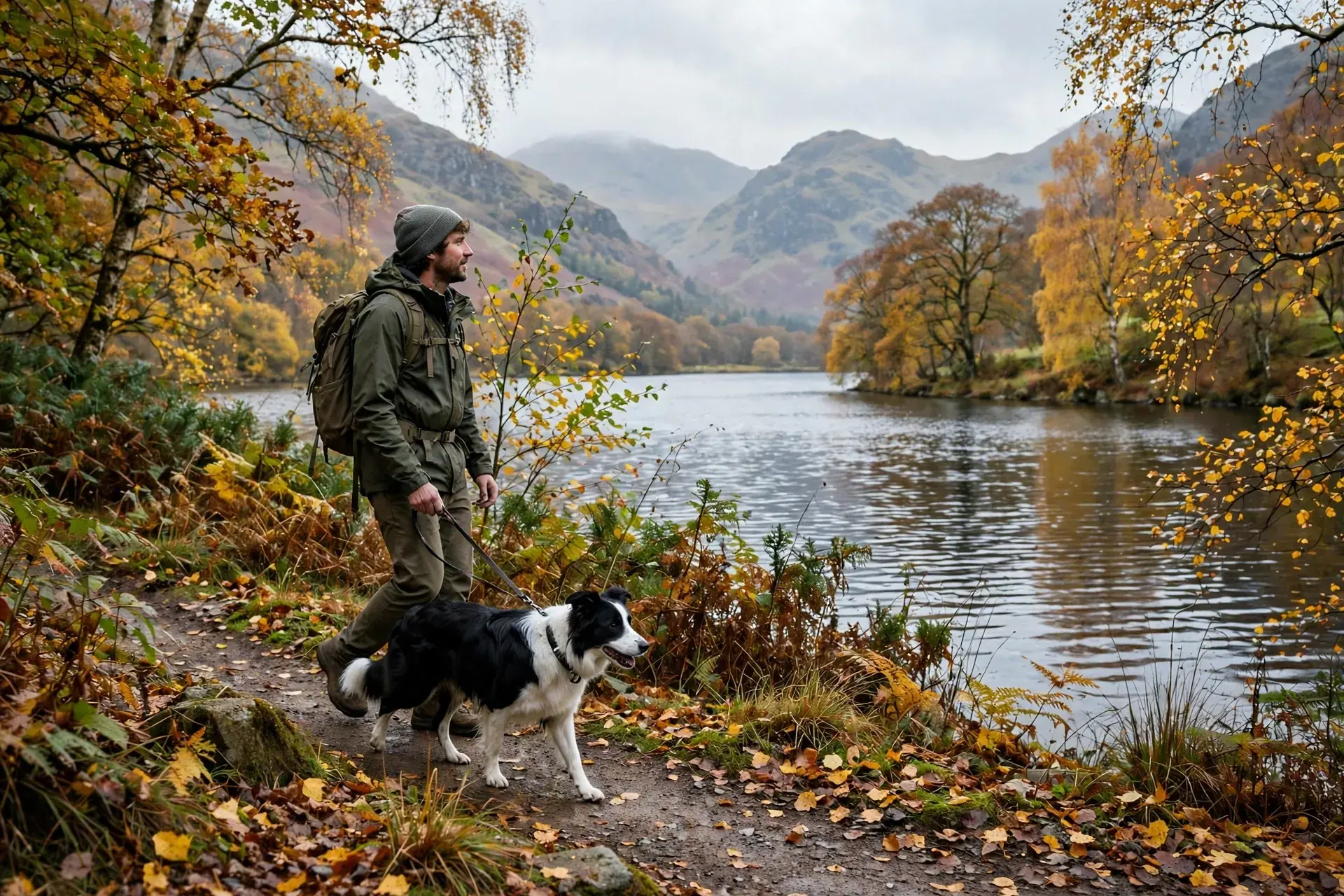
The Lake District section, from St Bees to Kirkby Stephen, is the most dramatic and the most demanding part of the route. It crosses the western fells, passes through Ennerdale, Borrowdale and Grasmere, and climbs over high passes that can be rough and exposed. The walking is steep, the ground is rocky, and the weather on the high fells can change in minutes. A dog that is fit and sure-footed will love these days; a dog that is nervous on steep ground or that tires quickly will find them hard. The lakes themselves are a reward: Ennerdale Water, Derwentwater and Grasmere all offer shore walks and swimming spots, though the water is cold and the dog should be kept out of any area with a blue-green algae warning.
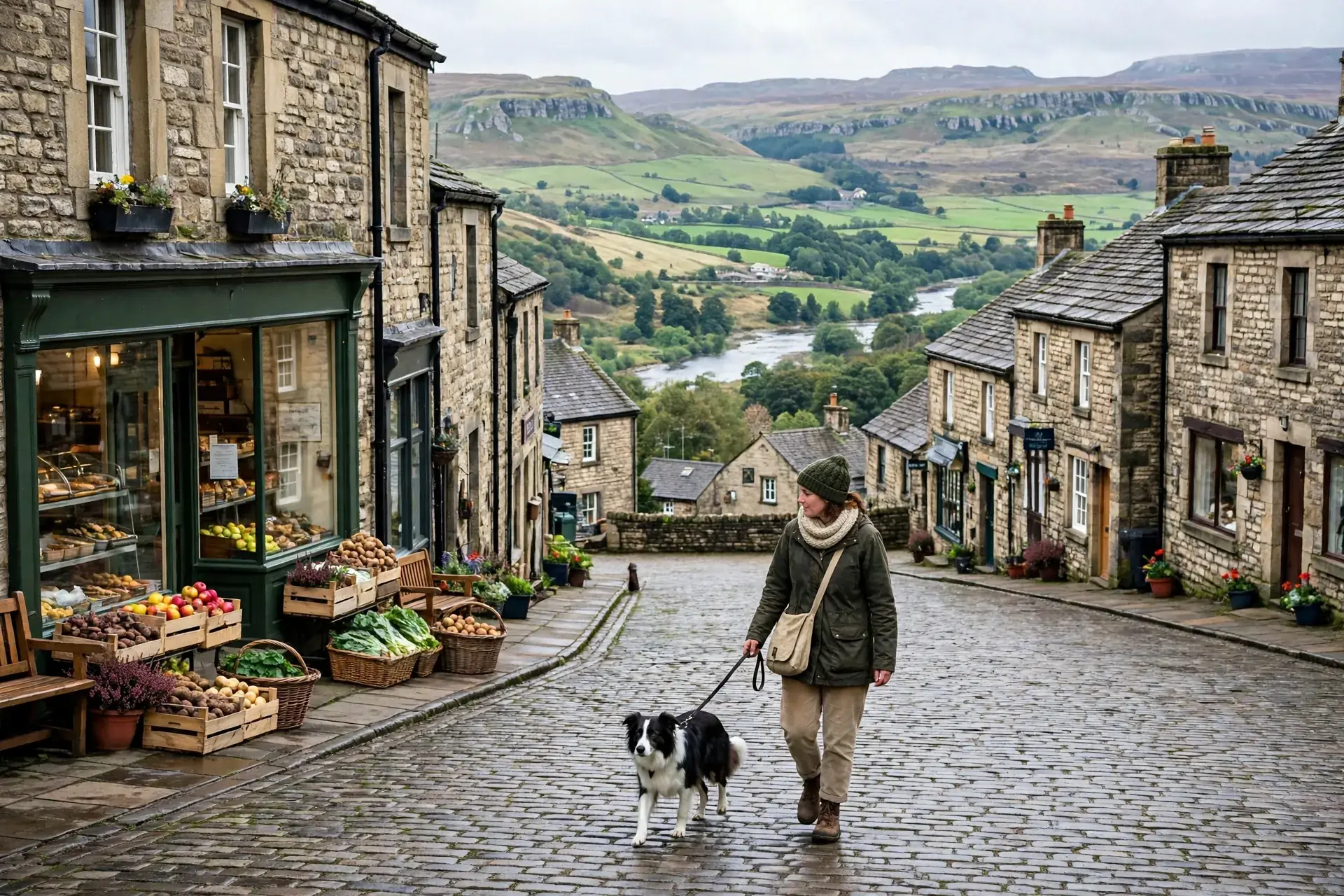
The Yorkshire Dales section, from Kirkby Stephen to the Vale of York, is gentler and more pastoral. The walking follows limestone valleys, dry-stone walls and riverside paths, with villages that are used to walkers and pubs that welcome dogs. The Dales are the section where the dog will meet the most livestock, and where the lead rules matter most, but they are also the section where the walking is easiest and the stays are most plentiful. Swaledale, with its barns and meadows, is one of the prettiest valleys on the whole route, and it is a good place to plan a rest day.
The North York Moors section, from the Vale of York to Robin Hood's Bay, is a return to open country. The walking crosses heather moorland, with long views and few facilities, and finishes with a dramatic descent to the sea at Robin Hood's Bay. The moors are quiet and spacious, and a dog that has been on a lead through the Dales farms will enjoy the freedom of the open heather, provided it is kept under control during the ground-nesting bird season in spring and the shooting season from 12 August. The final day, dropping down to the coast, is one of the finest finishes of any English trail, and the dog's traditional dip in the North Sea at the end is a moment worth savouring.
Each park has its own character, and the route's appeal is that it joins all three into a single journey. The practical consequence is that the kit, the food and the planning have to work for all three: the fell gear for the Lakes, the farm discipline for the Dales, and the moorland navigation for the North York Moors. A walker who prepares for only one of the three will be caught out by the others.
Fells, lakes and the first days
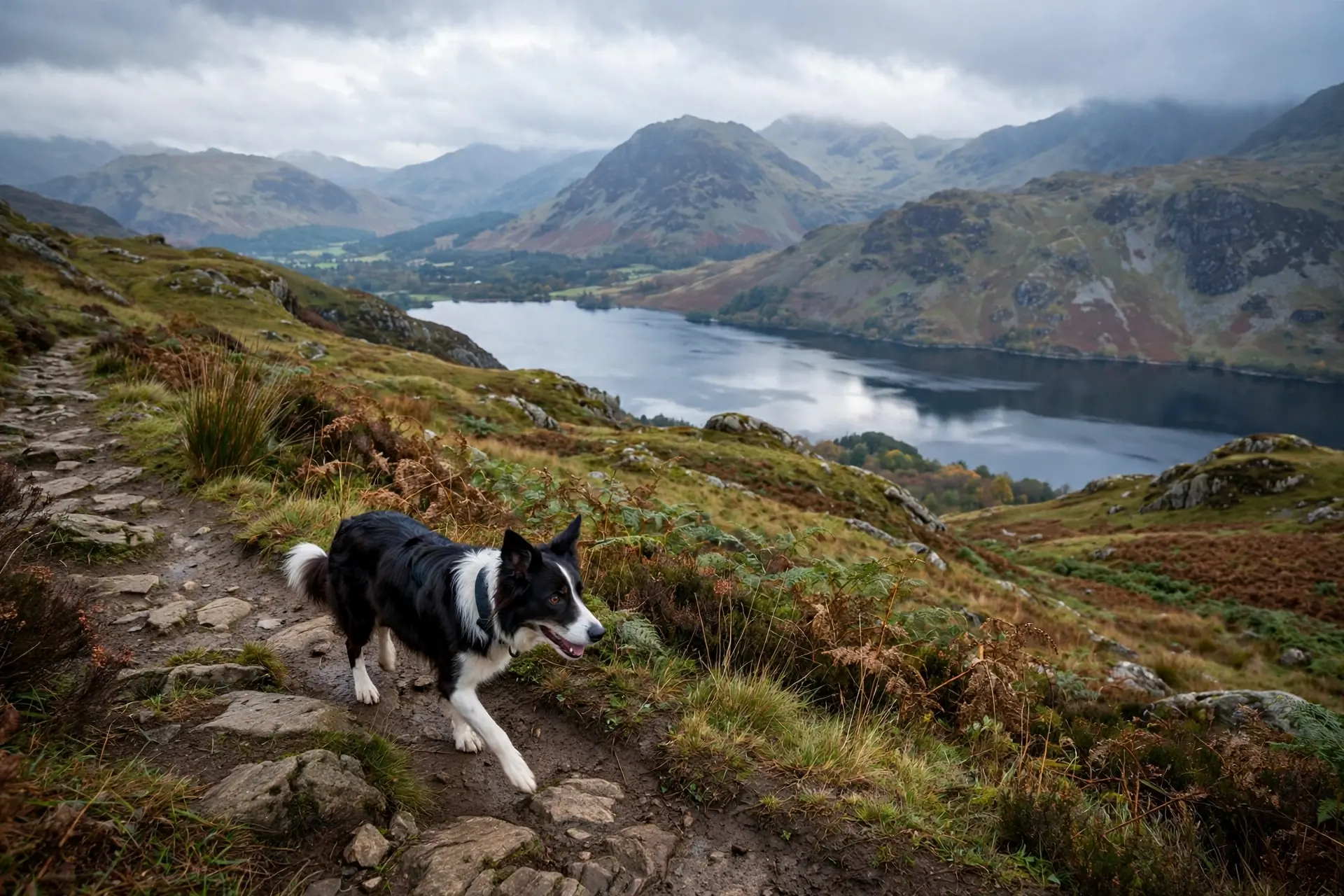
The first days of the Coast to Coast are the steepest, and they are the days that catch out the unprepared. From St Bees, the route climbs onto the cliffs and then heads inland across the western fells, with long climbs and descents that are hard on legs and paws. The second and third days, through Ennerdale and over the passes to Borrowdale, are among the finest walking on the route, but they are also among the most tiring. A dog that starts the route without proper fitness will be sore by the third day, so the training before the trip matters more than any single day's effort.
The lakes are the consolation. Ennerdale Water is quiet and wild, Derwentwater is the classic Lakeland view, and Grasmere is the prettiest of the three. Shore walks are generally easy and flat, which makes them good recovery walking after a hard fell day, and the water is tempting for a hot dog. Keep the dog out of the water if there is an algae warning, and never let a dog swim where there are boats or strong currents. After a swim, rinse the dog with fresh water if you can, and check the paws for cuts from the rocky shores.
Fell walking with a dog has its own etiquette. Keep the dog under control on the open fell, and clip it on when other walkers approach, because a loose dog can unnerve walkers on a narrow path. On the steep descents, keep the dog on a short lead and walk at a steady pace, because a dog that pulls downhill can unbalance a walker on loose rock. If the weather closes in on a high pass, descend to the valley rather than pressing on, and remember that the fells are no place for a dog in a thunderstorm. The fells will still be there tomorrow; the dog's safety will not wait.
Our guide to a three-day Lake District itinerary with a dog covers the lakes and fells around Windermere, Keswick and Grasmere in more detail, and it is a good way to build up the dog's hill fitness before attempting the full crossing.
Farmland, livestock and lead rules
Farmland is the Coast to Coast's defining feature for a dog owner, because so much of the route crosses working farms. The Dales section in particular is a landscape of fields, barns and dry-stone walls, and the path runs through farmyards, across pastures and along field edges for mile after mile. Dogs must be kept under control at all times, and on a lead near livestock, and the law is clear: a farmer may shoot a dog that is worrying livestock, and a dog owner can be liable for the damage. That is not a distant legal threat; it is a real risk on this route, and the lead is the only reliable answer.
The practical rule is simple: if you can see sheep or cattle, the dog is on a lead. If you are crossing a field with livestock in it, keep the dog close, move steadily, and do not stop to let the dog stare. If cattle block the path, take a wide detour rather than pushing through, and if a cow approaches, let go of the lead rather than being dragged; a dog can outrun a cow, a walker on a lead cannot. In lambing season, which runs roughly from March to May, the rules are stricter still, and some farmers will ask walkers to keep dogs on a lead at all times on their land. Respect that, even if the dog is well behaved.
Farmyards need care too. A farm dog may be loose in the yard, and a meeting between two dogs in a confined space can turn nasty quickly. Keep your dog on a short lead, move through the yard steadily, and do not let it investigate the farm buildings or the machinery. If a farm dog approaches aggressively, pick up a small dog or put yourself between the dogs and move on calmly. Most farm dogs are used to walkers and will leave you alone, but the ones that are not are worth avoiding.
Ground-nesting birds are the other reason for lead discipline on the farmland and moorland sections. Lapwings, curlews and skylarks nest on the ground in spring, and a loose dog can destroy a nest in seconds. Keep the dog on the path and on a lead in the breeding season, and do not let it run through the long grass or the heather. The Countryside Code is the authority here, and it is worth reading before the trip: keep to the marked path, keep the dog under control, and leave gates as you find them.
Stiles, rivers and wet feet
Stiles are the Coast to Coast's most persistent small annoyance, and for a dog they can be a genuine obstacle. There are hundreds of stiles on the route, including tall stone stiles in the Yorkshire Dales that are designed for people, not dogs. Small dogs can often be lifted over, but a large or older dog may struggle, and some stiles have no dog gate at all. The only answer is time and patience: plan extra minutes for the stile-heavy sections, carry a sling for a small dog, and ask local walkers about the worst stiles before each day. A dog that has practised stiles at home will cope far better than one that meets its first tall stone stile on a wet day in Swaledale.
Rivers and becks are the other feature of the route, and they are generally a pleasure rather than a problem. The path crosses the River Eden, the Swale, the Ure and a dozen smaller streams, and the crossings are usually by bridge or by stepping stones. After heavy rain, the stepping stones can be impassable, and the rivers can be dangerous, so check the weather and be ready to take a road alternative if a crossing is flooded. Never let a dog swim in a fast river, and never follow a dog into the water if it gets into trouble; throw a floating object and call for help instead.
Wet feet are a fact of life on this route. The valley paths can be muddy, the moorland sections are boggy, and the becks are there to be crossed. A dog that is used to wet ground will cope well, but a dog that is not may develop sore paws, so check the paws every evening and carry a paw balm and a towel. For the walker, waterproof boots and gaiters are worth their weight, and a change of socks at lunchtime can transform an afternoon. The route is at its best in dry weather, but it is walkable in the wet, provided both ends of the lead are prepared for it.
One more practical point: the route crosses a railway line and several busy roads, and the dog must be on a lead for every one of them. The A66 crossing near Penrith is the most notorious, and it should be treated with respect: wait for a clear gap, keep the dog close, and cross briskly. A dog that is used to roads will cope; a dog that is not should be carried across if it is small enough, or kept on a very short lead.
Beds and bags: booking the chain before you start
The Coast to Coast is a chain of overnight stops, and the chain is only as strong as its weakest night. The villages along the route have pubs with rooms, bed and breakfasts, bunkhouses, hostels and campsites, and the ones that take dogs are usually the first to fill, especially in summer and on bank holiday weekends. Book the whole chain before you set off, and do it in order, from St Bees to Robin Hood's Bay, so that a gap in the middle is spotted while there is still time to fix it. A single night without a dog-friendly bed can force a long detour or an expensive taxi, and that is a problem best found at home, not on the trail.
When you book, the questions to ask are practical ones. Is there a charge per dog, and is there a limit on size or number? Can the dog sleep in the room with you, or must it stay elsewhere? Is there somewhere secure for a last outing, and a tap or a hose for muddy paws? Is there somewhere to dry a wet dog and hang wet clothes? A host who answers these clearly has thought about dogs; a host who is vague probably has not. Keep every confirmation, with the dog noted on it, in one place on your phone, so that a check-in never becomes an argument about whether the dog was mentioned.
Baggage transfer is well established on this route, with several companies moving bags from one night's stay to the next for a fee per bag per day. The arrangement is simple: label the bags, leave them at reception by the set morning time, and walk with only a day pack. It is worth confirming two things before you pay: that every stay on your route is on the courier's list, and what the weight limit is, because a week's worth of dog food is heavy. Keep the dog's food and medicine in your own pack, not in the transferred bag, so that a delay never leaves the dog hungry.
Campsites are the cheapest way to walk the route, and many of the villages have one, though they need the same care as any other stay. Check whether dogs must stay on a lead at all times on site, whether there is a dog exercise area, and whether the site is exposed to the wind. A campsite with a pub next door and a shop within walking distance is a good base; a campsite on a windswept moor with no shelter is a poor one in bad weather. Whatever you choose, the rule is the same: book it before you leave, confirm the dog, and keep the confirmation.
Feeding two walkers: village shops and pub lunches
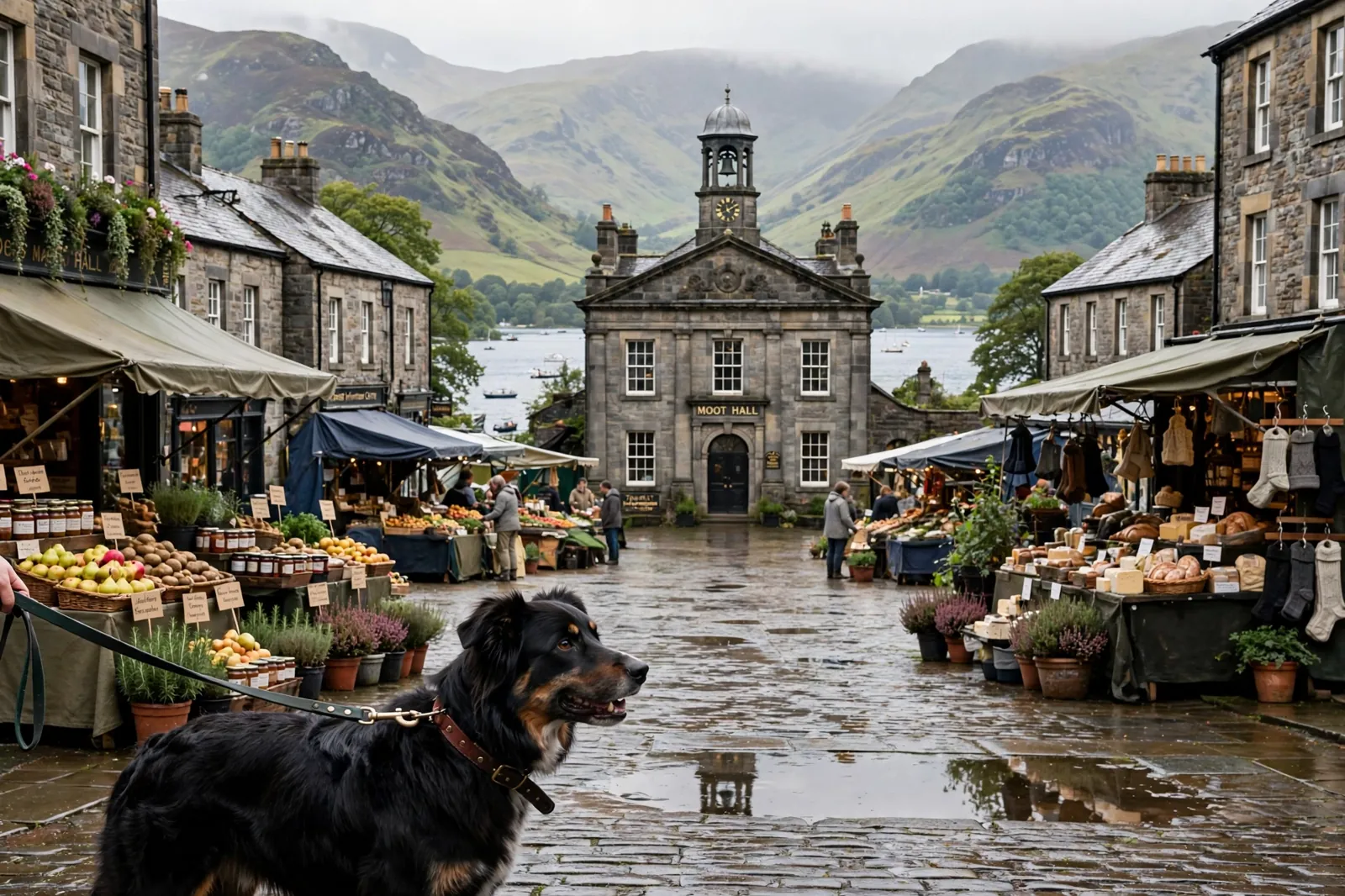
One of the pleasures of the Coast to Coast is that food is never far away for long. The route strings together more than thirty villages, and most of them have at least a pub, while the larger ones have a shop or a small supermarket. That does not mean the food takes care of itself. A pub may be closed on a Monday, a village shop may shut at lunchtime, and a small store may not stock dog food at all. The habit that works is to look at the next day's map each evening, note where the food is, and carry enough to reach it with a day in hand. A dog that is fed on a steady routine will walk better than one whose meals depend on a shop that turns out to be shut.
The dog's ration is the item to get right first. A dog that walks 14 miles a day needs roughly a third more food than it eats at home, and on a cold day on the fells that figure rises. Measure it into one bag per day before the trip, label the bags, and keep the brand the dog already knows. A new food on a long walk is a dependable way to produce an upset stomach, and an upset stomach in a village with no vet is a problem nobody wants. If you use a baggage courier, the bulk of the food can travel in the transferred bag, but a full day's ration belongs in your own pack, in case the courier is delayed.
Water is easy on this route for most of the way, because the path follows rivers and becks through the Dales and the Lakes, and the villages have taps and pubs. Carry a litre for the dog and a litre for yourself anyway, with a collapsible bowl, and fill up whenever the chance appears. Fast, clear becks are generally safe for a dog to drink from, but still pools in warm weather can carry blue-green algae, and water that runs through farmland should be treated with suspicion. Offer the bottle water first, and let the dog drink from a stream only when it is clear and moving.
Pub lunches are part of the Coast to Coast, and they are worth planning for the dog as well as for the walker. A pub that welcomes dogs will usually have a bowl of water by the door and a quiet corner under a table, and a dog that can settle there while you eat is a dog that will be welcome at the next pub too. Feed the dog its main meal an hour before the morning start and an hour after the day ends, with a small top-up of its usual food at lunchtime, because a deep-chested dog that exercises on a full stomach is at risk of bloat. The routine matters more than the menu.
Getting a dog fit for a sea-to-sea crossing
A dog that is going to cross England on foot needs a particular kind of preparation, and it starts months before the first day. The Coast to Coast is not one kind of walking but four: steep fells, farm tracks, moorland and valley paths, and the dog needs to be comfortable with all of them. Begin at least two months out, adding a mile or two a week to the longest walk, and mix the ground from the start. A dog that has trained on fells, on farm tracks and on moorland will cope with the route's variety; a dog that has only ever walked flat paths will find the first fell day a shock.
Stiles deserve their own training, because there are hundreds of them on this route, and some of the stone stiles in the Dales are tall and awkward. Practise at home: lift a small dog over a stile, teach a larger dog to wait while you climb over and then to come through or over on command, and carry a sling for a dog that cannot manage at all. A dog that has met its first tall stile on a wet day in Swaledale, with a queue of walkers behind it, will be stressed; a dog that has practised will take it in its stride.
Rest is part of the training, not a break from it. On the trail, a short day or a full rest after every four or five walking days lets the dog recover, and the same applies in the weeks before. A dog that is walked hard every day for a month will arrive at St Bees stale, not fit. Watch for the signs that the dog has had enough: slow to start in the morning, lying down at every stop, a stiff walk after a night's rest. Those are signals to shorten the day, and a walker who listens to them will have a dog that is still keen on day ten.
Manners matter as much as muscles here. A dog that walks calmly on a lead through a farmyard, that settles under a pub table, and that comes back when called on open fell will be welcome everywhere it goes. Practise the lead work on narrow paths, practise recall where it is safe, and practise settling in busy places, because the Coast to Coast will test all three. The dog that enjoys this crossing most is not the fittest dog on the trail; it is the one that walks steadily, rests well and is welcome at every stop.
A sample ten-day plan
A realistic ten-day plan for the Coast to Coast with a dog might split the route into two halves, with a rest day in the middle at Kirkby Stephen. Days one to five cover the Lake District: St Bees to Ennerdale Bridge, then to Borrowdale, then to Grasmere, then to Patterdale, then to Shap. These are the hardest days, with the most climbing, and they are best walked in settled weather with early starts. Day six is the rest day at Kirkby Stephen, a market town with good pubs and a chance to wash the mud off everything.
Days seven to ten cover the Dales and the Vale of York: Kirkby Stephen to Keld, then to Reeth, then to Richmond, then to the edge of the moors. These days are gentler, with riverside paths and villages that welcome walkers, and they are a good recovery after the Lakes. The final stretch across the North York Moors to Robin Hood's Bay is best saved for a second trip, or for a longer holiday, because it deserves its own unhurried days.
This is a shape, not a prescription. A young, fit dog might add a few miles a day; an older dog might need the rest day earlier and shorter days throughout. The point is the pattern: a demanding start, a steady build, a rest, and a finish that leaves something in reserve. Book the stays first, then fit the walking to the stays, and leave a spare half-day at the end for transport delays or a day lost to weather. Check the official guidance before you travel for the current state of the route, because the National Trail status has brought changes to the line of the path in places.
Before you commit to any itinerary, check the transport at both ends. St Bees has a railway station, which makes the start easy, but Robin Hood's Bay is served by a bus to Whitby and Scarborough, and the buses are infrequent in winter. Plan the return journey before you leave home, and do not assume you can get a bus on a Sunday. The logistics are part of the walk, not an afterthought, and a finish that is easy to leave is worth more than a finish that looks better on the map.
Getting there and getting back
Getting to St Bees is straightforward by train, with a change at Carlisle or Barrow-in-Furness, and the station is a short walk from the start of the trail. Dogs travel free on most trains, but check the operator's rules before you travel, because some require the dog to be on a lead and kept off the seats. Getting back from Robin Hood's Bay is harder: the village is served by a bus to Whitby, where there is a train to Middlesbrough, but the buses are infrequent, especially on Sundays and in winter. Check the timetable before you commit to a finish date, and have a taxi number saved as a fallback.
Many walkers leave a car at one end and use public transport to reach the other, which works well if the transport is reliable. Others arrange a lift from a friend, or book a taxi for the return journey, which can be expensive but is sometimes the simplest option. A few walkers use two cars, leaving one at each end, which works well for a group but is a lot of driving for a solo walker. Whatever you choose, sort it out before you leave home; the end of a long walk is the worst time to discover that the last bus left an hour ago.
Within the route, public transport is patchy. The villages along the way are served by buses that run a few times a day at best, and some have no bus at all. That means the walking plan should not depend on a bus to rescue a tired dog, except where the timetable is known and reliable. A taxi is the more dependable fallback, and it is worth saving the numbers of the local taxi firms for each section. A dog that is tired and sore at the end of a long day does not need a two-mile walk to the nearest bus stop; it needs a lift.
Finally, remember that the Coast to Coast is a linear trail, and the return journey is part of the trip, not an afterthought. Budget a day for it, or at least a morning, and do not book a train home for the evening of the last walking day. A delayed bus, a missed connection or a tired dog can all turn a tight schedule into a stressful one, and the last day of a long walk should end with a good meal and a comfortable bed, not a dash to the station.
For a gentler introduction to the Lakes walking that opens this route, our guide to Keswick with a dog covers the fells, lake shores and market town stays around Derwentwater, with the same attention to fell safety, lead rules and wet-day plans.
Practical questions
Before you go
Can dogs walk the Coast to Coast?
Yes, if the dog is a healthy adult in good condition. The route follows public rights of way for 192 miles, from St Bees to Robin Hood's Bay, and most walkers finish in 12 to 14 days. A lead is needed through farmland and near livestock, and the many stiles can be awkward for large or older dogs, so check the official guidance before you travel and allow for the farm stretches.
How long does the Coast to Coast take with a dog?
The usual time is 12 to 14 days, at 14 to 16 miles a day. With a dog, 13 to 15 days plus a rest day is the wiser target, since the Lakeland fells are punishing on legs and paws and the farm sections take longer than the map suggests. A large share of dog owners divide the walk into two holidays, breaking it at Kirkby Stephen.
Do dogs have to be on a lead on the Coast to Coast?
Control is required throughout, and a lead is mandatory near livestock, on farmland and during lambing season. Much of the route runs through working farms, and worrying sheep is a serious offence. A well-behaved dog can often go off lead on the open fells, but keep a lead in your hand and clip it on the moment sheep, cattle, other walkers or a road appear.
How do dogs cope with stiles on the Coast to Coast?
There are hundreds of stiles on this route, and the tall stone ones in the Dales are the hardest, with no dog gate on some of them. Small dogs can usually be lifted over; large or older dogs may struggle. Take a sling for a small dog, allow extra time on the stile-heavy days, and ask walkers coming the other way which stiles are the worst before you reach them.
Where can I stay with a dog on the Coast to Coast?
Villages along the route offer pubs with rooms, bed and breakfasts, bunkhouses and campsites, and most overnight stops have somewhere that takes dogs, though the dog-friendly rooms fill early in summer. Reserve every night before departure, get the dog confirmed in writing and check the pet fee. Baggage couriers work the whole route, so you can walk with just a day pack.
Is the Coast to Coast waymarked?
It became a National Trail in 2022, and the signing has improved, but it is still patchier than on the older National Trails. Take a guidebook and a map, download offline maps before you set out, and check the official guidance before you travel, because the route has several variants and some stretches are easy to miss when visibility is poor.