This guide is independent and contains no paid placement. Because shop hours and riverside access shift with the seasons, confirm the day's details with the venue or land manager before setting out.
Grassington suits dogs that like village life and riverside walking in equal measure. Keep the dog on lead in the square and around livestock, use the flat riverside path for the main walk, save the stepping stones for low water and a confident dog, and book dog-friendly rooms early in school holidays.
Start in the square, not on the fell
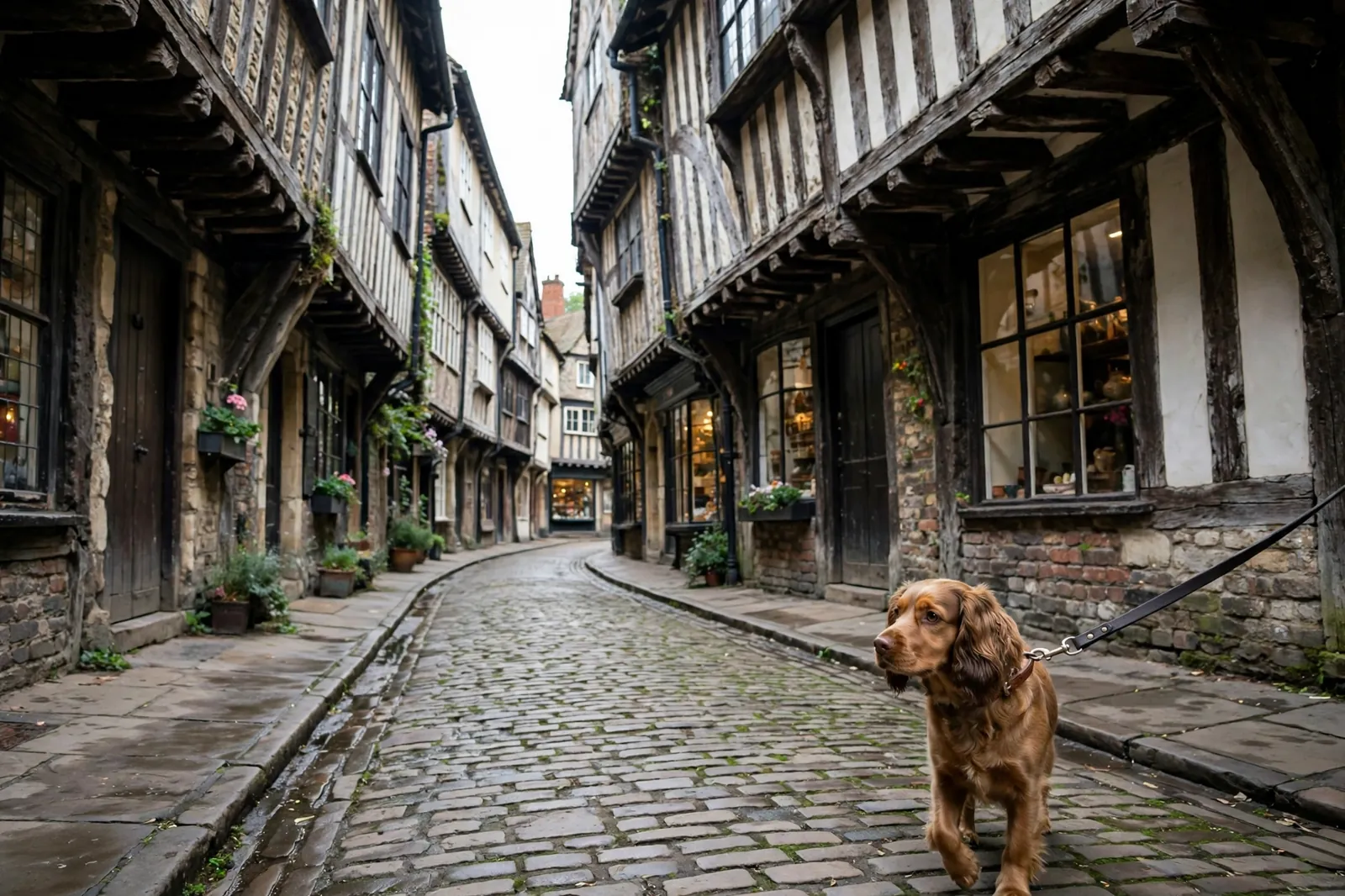
Morning light finds the cobbles before it finds the river. Stone underfoot stays cool from the night, shop shutters lift one by one around the square, and the smell of baking drifts across stone walls while a dog works through every new scent at the corner of a lane. Grassington holds its shape in that hour: cottages tight around an uneven open space, narrow lanes running off at angles, and a low murmur of deliveries, footsteps and birdsong settling over the village. A dog arriving here meets the whole place at once, in a space small enough to read without hurry.
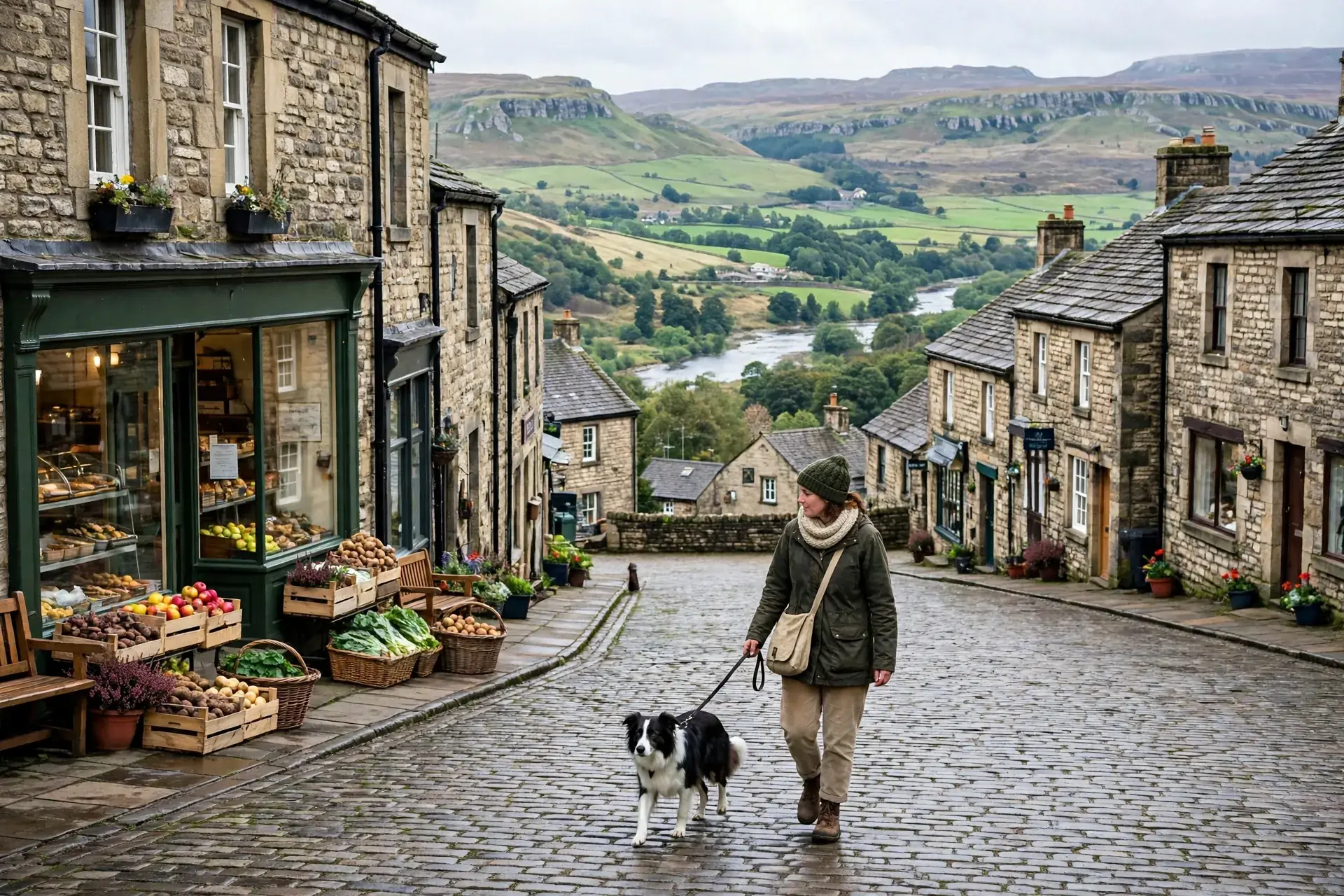
By mid-morning the square turns louder and closer. Voices cross between shop doorways, boots strike cobbles, cyclists thread past stone corners, and a dog learns the rhythm of a working village rather than a quiet park. The uneven surface slows everyone down, which suits a dog still finding its feet after a journey. Pausing beside a wall lets passing dogs go by without a tangled meeting in the middle of the open ground, and the side lanes off the square give a calmer line when the centre fills. At the corner where the square narrows toward the lane down to the Wharfe, a short lead keeps a dog clear of a turning van and a fast cyclist in the same breath.
Late morning brings a different texture to the same stones. Sun warms the cottages, shade pools along the north side of the square, and dogs stretched beside outdoor tables watch the world from cool flagstones. The folk museum and the small shops keep the square feeling lived in rather than staged, with people coming and going on ordinary errands while walkers plan the river. A dog that has circled the square once already walks the second circuit with less pulling and more sniffing, as if the place has stopped being new and started being familiar.
Evening returns the square to itself. Light thins across the cottages, the river air climbs back up the lane, and dogs coming off the Wharfe path shake river damp from their coats before crossing the cobbles toward food and rest. That return matters as much as the departure: the square is where a Grassington day starts, pauses for lunch, and ends, with the same stone corners marking each stage. A dog that knows the square by dusk walks it differently from a dog that only passed through at noon.
The River Wharfe loop from the village
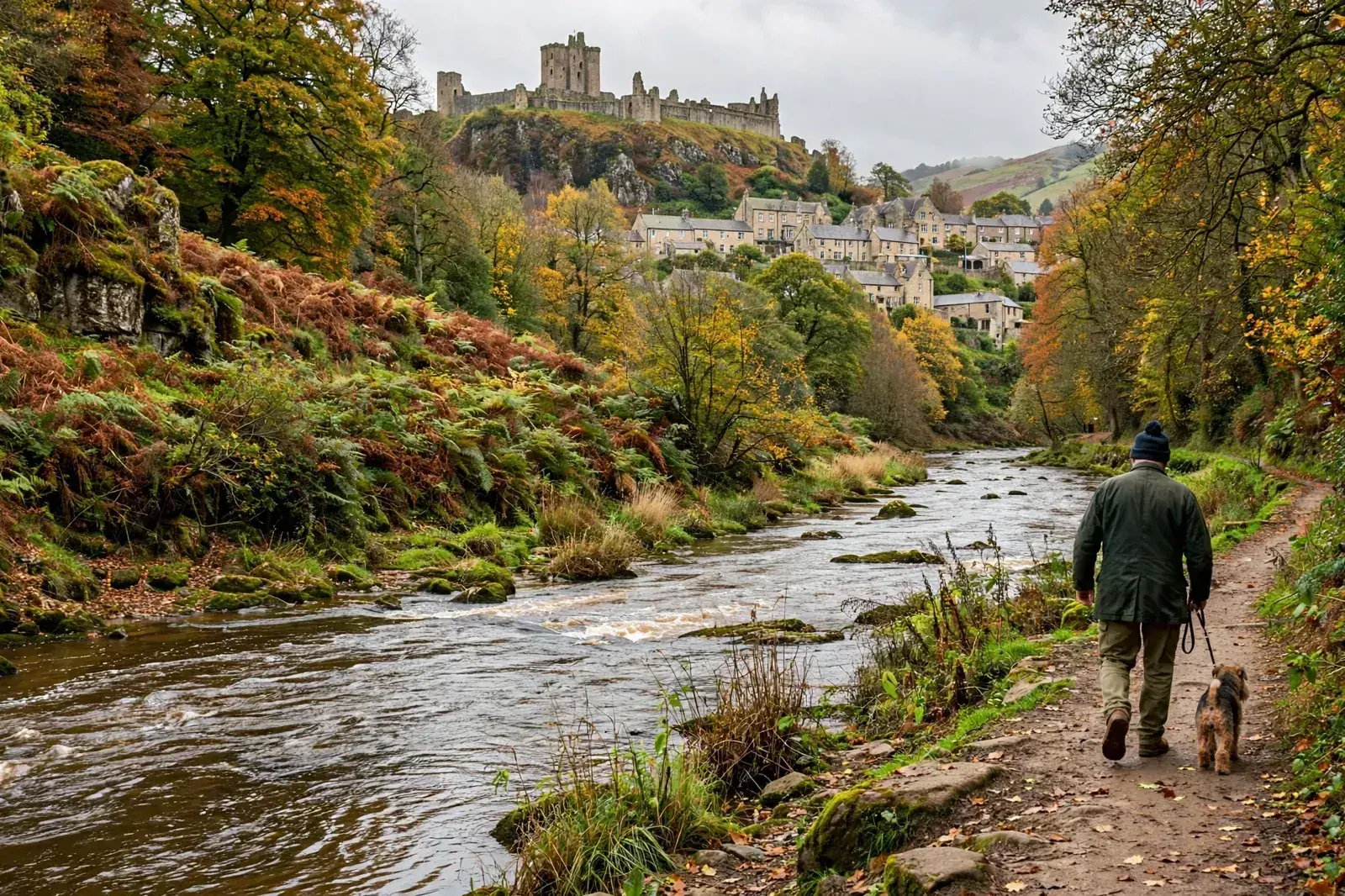
River sound reaches the village before the water comes into view. Down the lane from the square, the ground drops, stone walls give way to grass, and the Wharfe begins to talk over gravel and limestone. Morning on this path smells of damp grass and cold water, and the light moves through riverside trees in broken patches across the track. Dogs pick up the pace here, noses low over meadow grass, while the village noise falls away behind stone field boundaries and the valley opens toward Linton.
Late morning on the Wharfe is a study in water and stone. The river runs clear over pale gravel in the shallows and darkens where it deepens under overhanging branches, and the path follows each bend without climbing far above the bank. Meadow grass brushes a dog's legs, limestone outcrops break the line of the bank, and the far side of the valley holds its green shape against the sky. The walk stays level enough for a slow dog to keep going without strain, and every bend offers a flat patch of grass where a walk can pause without blocking the path.
Afternoon light changes the river again. Sun on the water throws bright flecks across the path, shade under riverside trees feels cooler after an open meadow stretch, and the sound of the Wharfe steadies into a background hum. Turning at a bridge gives the loop its natural shape: one bank out, the other bank back, with the village gradually reappearing over the meadows. Dogs that ran the first stretch with excitement settle into a steadier trot on the return, stopping longer at smells they rushed past on the way down.
Dusk along the Wharfe belongs to quieter walkers. The river darkens, stone cottages on the edge of Grassington catch the last light, and the path empties of midday groups. A dog walking home in that hour hears water, wind in riverside trees, and its own paws on gravel and grass, without the chatter of a busy afternoon. The loop ends where it began, at the lane back up to the square, and the village feels close again after the open stretch of river.
Linton Falls and the stepping stones
The walk to Linton Falls announces itself through sound long before the falls appear. Water that has run quietly past Grassington meadows begins to hurry over limestone shelves, and the air turns cooler and damper as the river narrows. Morning mist sometimes hangs over the water here, softening the banks and making every stone and branch smell sharper to a dog. The path tightens as it approaches the falls, with flat grass giving way to rock and the river filling more of the view with each step.
Midday at the falls is bright, loud and crowded with movement. Spray hangs over the limestone, water breaks white across the shelves, and dogs arrive from both directions along the narrow approach. The stepping stones sit in the middle of that scene, pale and slick in low water, half-hidden when the river runs higher. In a low summer river a sure-footed dog may pick its way across beside its owner, while after rain the same stones disappear under fast water and the bridge nearby becomes the only sensible crossing. No crossing is worth a slip on wet limestone, and watching the water from the bank keeps the whole visit calm.
Afternoon at Linton rewards waiting rather than rushing. The narrowest viewpoints clear in waves, leaving short windows when a dog can stand on flat rock away from the falling water and watch the river without being jostled. The sound never drops, but the light shifts across the shelves and the spray catches it in brief flashes. Dogs that arrive in the heat of a summer afternoon often do better with a short stop here and a slow walk back, since the excitement of water, spray and other dogs builds quickly in a small space.
Evening light thins the crowd and deepens the river colour. The falls keep their rush, but the banks grow quieter, and the walk back toward Grassington follows the Wharfe through meadows that smell of cut grass and damp earth. A dog that stopped at the falls on the way down walks the return with wet paws and a slower gait, pausing at the same grassy bends it passed earlier. The falls stay behind as sound first, then as memory, while the village square comes back into view.
Stretching to Burnsall and Appletreewick
Afternoon stretches the Grassington walk beyond Linton, following the Wharfe as it bends toward Burnsall through meadows and light woodland. The river keeps its limestone character, gravel banks alternating with deeper pools under trees, and the path stays close enough to the water for a dog to hear every change in current. Stone walls mark field edges, woodland shade cools the track after open grass, and the valley widens and narrows in turn. For village detail beyond the river bend, the Burnsall village guide covers the village at the end of this stretch.
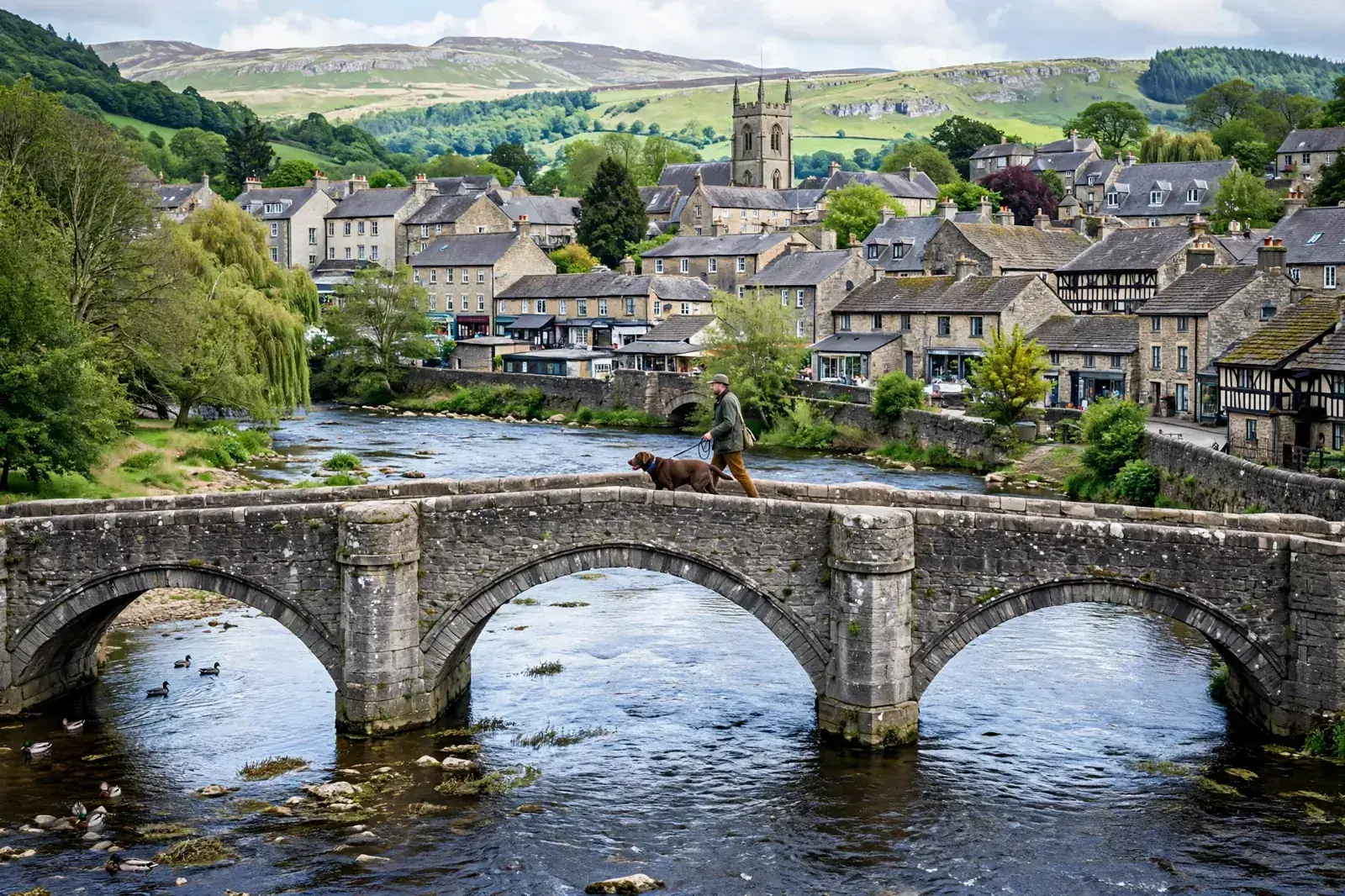
Burnsall itself arrives quietly after the longer riverside stretch. A bridge crosses the Wharfe, a church tower rises above stone cottages, and the village green and riverside grass give a dog space to rest after miles of path. The air here smells of river and stone rather than traffic, and the pace drops to village pace again after the open meadow walking. Lunch in Burnsall, eaten outdoors when the weather allows, splits the walk into two manageable halves and gives a tired dog a proper pause before the return.
Sheep shape this longer stretch in a way the short Grassington loop only hints at. Riverside meadows between Linton and Burnsall often hold flocks close to the path, with field gates marking each change of ground and stone walls running down to the water. A dog meeting sheep in one of those meadows needs steady, quiet movement along the far side of the track, without barking, chasing or sudden lunges toward the flock, while the walker keeps the dog close until the gate at the far end of the field closes behind them.
Appletreewick sits across the river from Burnsall, a quieter counterpoint reached by the bridge, with its own stone cottages and a view back across the Wharfe toward Burnsall. Evening on the return leg brings long light across the meadows, the river turning darker under the trees, and the path back toward Grassington feeling longer in the legs than it did on the way out. Dogs that still trot keenly past Linton on the return have had a full day; dogs that slow here have still had the best of the valley, and the village square waits at the end of the lane.
Pubs, cafes and dog manners indoors
Midday in Grassington smells of cooking drifting from pub doorways and cafe windows around the square. Stone floors stay cool underfoot, low rooms hold the murmur of lunch, and dogs settle beside tables after a river walk, coats still damp from Wharfe spray and paws dusty from the path. The village suits this rhythm: a morning on the river, a pause for food in the square, and an afternoon that can stay lazy or stretch back to the water. Dogs that have walked hard in the morning sleep through much of lunch, waking only for smells from nearby tables.
Afternoon cafes around the square offer a softer version of the same pause. Window seats look onto cobbles and passing walkers, the clink of cups mixes with footsteps outside, and a dog can watch the village go by from a cool corner without the bustle of a full bar. On a warm day the outside tables fill first, with dogs stretched on stone and shade moving slowly across the square. On a cold day the inside rooms, with their stone and timber, hold warmth that a wet dog appreciates after the riverside wind.
Garden seating gives Grassington eating its summer character. Stone-walled gardens behind pubs and cafes catch sun late into the afternoon, river air drifts up from the Wharfe, and dogs have room to lie flat on cool ground while owners eat. Good garden behaviour here means a dog settled close to its own table, clear of paths where staff carry food, and calm when other dogs pass the garden gate. The guide to pub garden manners for dogs sets out that garden rhythm in more detail, from settling on arrival to leaving without a fuss.
Evening meals in the village feel different from lunch. Light fades over the square, the river walkers thin out, and the rooms fill with people staying the night rather than passing through for the day. A dog that has spent the afternoon resting after the Wharfe walk fits that hour well, lying under a table while the village settles. The last walk of the day then runs short, just the square and its lanes in lamplight, before the dog sleeps off river air and cobble miles.
Parking, arrival and the first ten minutes
Early arrival in Grassington starts at the edge of the village, where signed public car parks sit a short walk from the square. Stone walls line the approach, the village rises gently ahead, and the first sound after a car door closes is often birdsong over rooftops rather than traffic. Walking in from the edge gives a dog time to adjust: cobbles underfoot, new smells from shop doorways, and the square opening up ahead as a clear destination rather than a sudden arrival in the middle of a crowd.
Mid-morning arrival feels busier. Cars fill the edge car parks on fine weekends, walkers stream toward the square and the river lane, and the narrow residential lanes stay best left to the people who live along them. A dog stepping out into that flow does better with a slow first circuit of the square, letting the noise and movement settle before the river path. The square in that hour is a sorting place, where walkers gather, dogs meet briefly, and the day takes its shape.
Afternoon arrival brings a second wave of walkers returning from the Wharfe, muddy paws crossing the square toward food and cars. The light softens on the cottages, the river lane empties of its midday groups, and a dog arriving late still finds the village welcoming, with the river walk ahead in its quieter evening form. Parking at the edge keeps that return simple, since the walk back to the car follows the same square lanes without threading through tight residential streets.
Bus arrival follows the same square-first rhythm. Services from Skipton and the upper dale drop walkers close to the village centre, and a dog steps straight onto cobbles and stone lanes without a car journey at either end. Sunday and winter timetables run thinner, so a bus-based day works best with a loose plan: a river walk out, a village pause for food, and a return service with time to spare for a slow dog. The square, again, is the hinge of the day, holding arrival, lunch and departure in one small space.
Where to stay with a dog
Night in Grassington smells of stone, woodsmoke and river damp, and the village offers sleeping places that match that character. Stone cottages tucked into lanes off the square give dogs a garden behind a stone wall and a flagstone floor to shake river water onto, while family-run guesthouses around the square put breakfast, the river lane and the evening pub within a few minutes of the door. Both kinds of stay suit a dog that settles once the day's walking is done, with the square outside quieting as the evening wears on.
Cottages around Grassington suit longer, slower breaks. A dog learns the garden gate, the kitchen floor and the lane to the square within a day, and the same morning river walk repeats with growing confidence. Evenings in a cottage run to a familiar pattern: a short last loop around the square lanes, paws wiped on the doorstep stone, and sleep in a room that smells of the day's river walk. The village outside stays close, but the cottage door closes on its noise.
Pubs with rooms and small guesthouses give a different Grassington night. Stairs and corridors carry the sound of other guests, the bar below hums until closing, and a dog sleeping in such a room learns village noise as background rather than alarm. Ground-floor rooms opening toward a yard suit dogs that need a quick night-time step outside, and the short walk to the square in the morning starts almost from the bedroom door. That closeness to the square is the point of staying in the village rather than outside it.
A Grassington base stretches naturally up and down Wharfedale. Days can run to Kettlewell and Buckden further up the valley, to Burnsall and Appletreewick down the river, or to Malham and Bolton Abbey for a change of limestone scenery, always returning to the same square, the same river lane and the same cottage or guesthouse door. Dogs settle into that return, recognising the lane, the cobbles and the river smell by the second or third night, and the break gains its rhythm from repetition rather than from moving on.
Grassington through the seasons
Spring along the Wharfe runs high and cold after winter rain. The river fills its banks, gravel shallows disappear under brown water, and the path from Grassington to Linton stays soft underfoot long after the square has dried. Meadow grass grows fast, riverside trees come into leaf in stages, and morning air carries damp earth and new growth. Dogs splash through puddles on the lane down to the river and return with muddy legs, while the falls at Linton roar louder than in any other season.
Summer drops the Wharfe to its clearest and lowest. Gravel banks emerge, the stepping stones at Linton stand fully clear of the water, and paddling places along the Grassington bank invite dogs to stand in cool shallows under riverside trees. Stone in the square holds heat through the afternoon, shade moves slowly across the cottages, and the river path fills with walkers from mid-morning until late afternoon. Early mornings and evenings belong to quieter dogs, with low light on the water and the village still cool.
Autumn turns the riverside gold and shortens the day. Leaves gather on the Wharfe path, woodland above the river deepens in colour, and the light slants low across meadows toward Linton and Burnsall. Rain returns in spells, the river rises after each wet week, and the stepping stones that stood clear in summer may sit under faster water again. Dogs walk autumn paths with leaves sticking to wet coats, and the square in the evening smells of rain on stone and cooking from pub doorways.
Winter strips Grassington back to stone, water and sky. Frost sharpens the cobbles in the morning, the Wharfe runs dark and fast between bare riverside trees, and daylight ends early over the valley. The square empties sooner, pub rooms glow warmer against the cold, and a short river walk followed by a long indoor evening suits most dogs better than a forced long day in wind and rain. Winter lights on the cottages and the quiet of a weekday square give the village a different, stiller beauty.
Older dogs, reactive dogs and wet days
Older dogs find their measure on the flat Grassington riverside. Morning on the Wharfe path from the village to Linton asks little climbing, offers flat grass at every bend for a pause, and lets a stiff dog warm up slowly before the falls come into sound. Benches and grassy banks along the way mark natural resting places, and the bridge at Linton gives a clean turning point when legs tire. A slow dog walking this stretch in morning light, stopping for river smells and meadow air, gets the full valley without the strain of a fell climb.
Dogs that struggle with other dogs do better in Grassington at the edges of the day. Early morning on the square lanes, before walkers gather, and late afternoon on the wider meadows beyond Linton give space that the narrow falls approach cannot. The side lanes off the square offer a quiet first loop, and the open grass between Grassington and Burnsall lets an approaching dog be seen from a distance rather than met suddenly around a stone corner. Timing, more than any single path, decides whether such a day feels easy.
Wet days reshape the Grassington walk without cancelling it. Rain darkens the cobbles, the Wharfe rises and quickens, and the riverside path turns to mud in its shaded stretches. A short morning walk in drizzle, with the river high and the falls loud, followed by a long pause in a village pub or cafe, suits many dogs better than a long walk in driving rain. When the river runs too high for comfort, the square lanes and the sheltered woodland edges above the bank give a drier alternative, with the river still audible nearby.
Across a multi-day break, a dog's Grassington rhythm changes. The first day runs on excitement, with the square, the river and the falls all new, while the second and third days settle into slower circuits, longer rests on riverside grass, and earlier evenings. Watching that change matters: a dog that bounded to Linton on day one may prefer the short square loop on day three, and a dog that coped with a busy Saturday square may want the quiet lanes on a Monday morning. The village accommodates both versions of the same dog.
A relaxed two-day plan
Day one in Grassington starts with the square in morning light. Cobbles, shop doorways and stone lanes give a slow first hour, then the lane down to the Wharfe opens the main walk of the day toward Linton Falls. Midday finds the dog back in the square for food, with river damp still on its coat and the falls still loud in memory. Afternoon stays village-shaped: side lanes, shop fronts, a second short riverside stretch if energy allows, and a slow return to the square as light softens over the cottages.
Evening on day one belongs to rest. The square quiets, pub rooms warm up, and a short last loop around the lanes settles the dog before sleep. That early night matters, since day two asks for more miles. A dog that sleeps well after a first day of cobbles, river air and falls spray wakes keener for the longer walk, while a dog pushed too far on day one starts day two already tired.
Day two stretches down the Wharfe toward Burnsall in the morning, when the river light is clear and the meadows are quiet. The walk passes Linton, follows the water through woodland and open grass, and reaches Burnsall for a midday pause beside the bridge. Afternoon returns along the river, with Appletreewick across the water offering a quieter view before the path turns back toward Grassington. Dogs that tire shorten the day at the first bridge; dogs still keen add the Appletreewick loop and arrive back in Grassington with the evening light on the square.
A longer Grassington break repeats that two-day shape with variations rather than new inventions each morning. One day runs to Kettlewell up the valley, another to Bolton Abbey for broader riverside woodland, another stays close with the square and the Linton loop in different light. Each variation returns to the same square, the same river lane and the same evening pause, so the dog's week gains familiarity instead of constant novelty. By the end of the break, the cobbles, the river sound and the falls spray have become a known place rather than a visited one.
Practical questions
Before you go
Can dogs walk off lead around Grassington?
Open meadow stretches along the Wharfe between Grassington and Linton suit a reliable dog off the lead when the ground is clear, the river is calm, and no other walkers are close. The square, the bridge approaches, the narrow falls path and any field holding animals call for a lead instead, with the change made at the Linton bridge approach and at each field gate. A dog whose recall falters around water or other dogs stays on the lead for the riverside stretch, and still enjoys the same walk.
Is the walk to Linton Falls suitable for older dogs?
The Grassington to Linton riverside path suits many older dogs, since it stays level, follows the water without steep climbs, and offers flat grass for rests at regular bends. Walk it slowly in the morning, pause on the grassy banks before the falls, and turn at the Linton bridge if the dog starts to lag or stiffen after a rest. Skipping the steepest bankside steps near the falling water keeps the walk gentle, and the return along the same bank gives a familiar, unhurried route home.
Are dogs welcome in Grassington pubs and cafes?
Grassington pubs and cafes generally welcome dogs in bar areas, garden seating and quieter corners, with stone floors and outdoor tables suiting a dog straight off the river. Policies differ between rooms and between seasons, so a dog settles best where it can lie under a table away from the main doorway, on cool stone after a walk. Muddy paws dry quickly on a towel before entering, and a calm dog sleeping through lunch fits the village rooms far better than a restless dog pacing between tables.
Where should I park in Grassington with a dog?
Signed public car parks at the edge of Grassington village centre give the simplest start with a dog, since the walk into the square follows stone lanes without threading through narrow residential streets. Arriving early on fine weekends avoids the busiest hour, while a late afternoon arrival finds the square quieter and the river path in its evening form. From any edge car park, the first walk runs straight to the square, then down the lane to the Wharfe, without a second move of the car.
What should I do if my dog meets sheep on a Dales walk?
Sheep in a Dales meadow call for slow, steady movement along the far side of the track, with the dog held close and quiet until the field is left behind. Do not approach the flock, call across it, or let the dog run toward animals that scatter, since a startled flock can bolt toward a wall, a gate or the river. If sheep block the path itself, wait for them to drift clear or take the alternative field route, and close each gate carefully on leaving the field.
Is Grassington a good base for a longer Dales break with a dog?
Grassington works well as a longer Dales base for walkers who prefer a village to a town. Riverside walks start at the door, the square holds food and shops within a short walk, and day trips run to Kettlewell and Buckden up the valley, to Malham for limestone scenery, and to Bolton Abbey for broader riverside woodland. Mixing gentle Wharfe days with one longer day trip, then returning to the same cottage or guesthouse, gives a dog a familiar base without daily packing and moving.