This guide is independent and contains no paid placement. If affiliate links are added later, they will be clearly marked and will not change our editorial checks.
Do not try to walk the Lakes flat in three days. Give the dog one proper walk a day, a calm lakeside stop, and a restful evening, and put the biggest walk on Day 2, when the dog is warmed up but not yet tired out. Every day below has a rainy-day backup, because a wet fell is no place for a tired dog.
How to split three days of energy
The Lake District tempts visitors into overdoing it. The fells look close together on the map, the guidebooks list a dozen classic walks per valley, and a fit-looking dog will happily set off at full speed on the first morning. The trouble arrives on the second afternoon, when paws are sore, the dog starts lagging on climbs, and the third day becomes a chore instead of a holiday. A three-day itinerary works best when it is planned backwards from the dog's recovery, not forwards from a list of peaks.
Think of the trip as three different kinds of day rather than three equal days. Day 1 should be a settling-in day: a moderate lowland or lakeside walk, plenty of sniffing time, and an early finish so the dog learns where it sleeps and where the water bowl lives. Day 2 is the main walking day, when the dog is warmed up, knows the routine, and still has a full day of energy in reserve. Day 3 should be the gentlest day, with a short morning walk, a long lazy lakeside stop, and a departure that does not require a tired dog to climb anything. Dogs, like people, recover better when the hardest effort sits in the middle of a trip rather than at either end.
Distance figures mislead in the Lakes. Five miles on a flat lakeside path is a different proposition from five miles with a thousand feet of ascent over rocky ground, and a dog covers far more ground than its owner does, darting off the path to investigate every scent. Judge each walk by time and terrain rather than miles alone, and budget roughly twice the guidebook time if your dog likes to stop and sniff, which most dogs do. A walk described as two hours for a human is often three hours with a dog, and that extra hour matters when rain arrives in the afternoon, as it frequently does.
Build rest into the plan as deliberately as you build walks. A dog that rests for an hour after lunch, with water and a quiet place to lie, will walk far better the next day than a dog dragged from one viewpoint to the next. Cafes and pubs with dog-friendly seating are not indulgences in this plan; they are recovery stops. The same logic applies to evenings. A short after-supper toilet walk around the village is enough. The dog does not need a second expedition, and you do not need to prove anything by fitting one in.
Finally, keep the plan flexible. Weather in the Lakes changes valley by valley, and a forecast for Windermere says little about conditions on a high pass twenty miles away. Each day in this itinerary therefore has three parts: a main walk for a decent day, a lakeside stop that works in most weather, and a rainy-day backup that keeps the day enjoyable when the fells disappear into cloud. If the weather turns, swap the parts around without guilt. A good trip is one where the dog comes home sound and keen for the next one, not one where every planned walk was ticked off.
Day 1: Windermere and the south
Start in the south, where the walking is gentler and the logistics are easiest. Day 1 is about arrival, orientation and a walk that leaves the dog wanting more rather than needing a day off. Base yourself around Ambleside or Bowness-on-Windermere, both of which offer lakeside paths, dog-friendly places to eat, and bus and boat connections that save tired legs later in the trip.
The main walk: the western shore of Windermere
For the first walk, choose the quieter western shore of Windermere rather than the busy eastern promenade. The path from Wray Castle down towards the lake shore and back gives a dog woodland smells, open water views and level ground, without the steep climbs that punish unprepared paws. Allow around ninety minutes including stops, and keep the dog on a lead where the path runs beside the road or through the castle grounds, checking the official guidance before you travel for any seasonal restrictions.
Walk slowly on purpose. Let the dog investigate the shoreline, paddle at the edge if it wants to, and learn the rhythm of stopping when you stop. This is also the right moment to test your kit in real conditions: does the lead tangle on gates, does the water bottle leak, does the dog actually drink from the bowl you brought? Finding out on a gentle first walk beats finding out halfway up a fell. If the dog is pulling hard or overexcited, shorten the walk rather than pushing on; excitement on Day 1 usually means a dog that has travelled a long way and slept badly, and a calm evening will do more good than extra miles.
The lakeside stop: Bowness and the Windermere shore
After the walk, head to the Bowness shore for a proper rest. Sit somewhere the dog can lie on grass or a rug rather than hot pavement, offer water, and let the dog watch the boats for a while. Dogs that have travelled often settle better after a period of doing nothing in a new place, and the shore at Bowness gives them plenty to watch without demanding anything. If the dog is a swimmer, look for a quiet, gently shelving entry away from the boat piers rather than letting it launch itself off a busy jetty. Keep the swim short, rinse the dog if you can, and dry ears and belly before the drive or walk back.
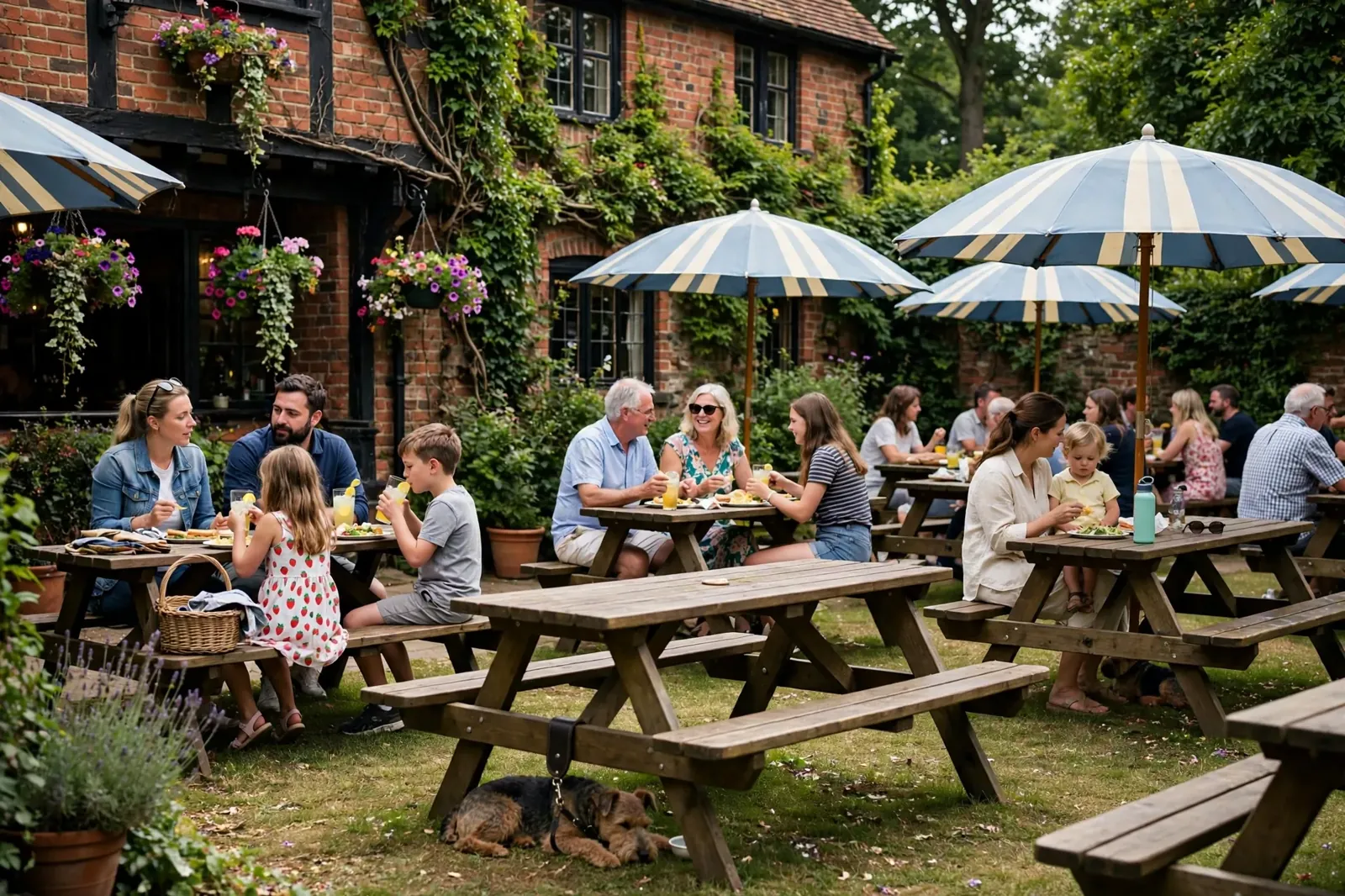
Lunch is best taken somewhere the dog is genuinely welcome rather than merely tolerated. A pub garden or cafe terrace where staff bring a water bowl without being asked tells you more about the welcome than any window sticker. Keep the dog on its lead, settle it under the table, and resist the urge to feed it from your plate all afternoon; a dog with an upset stomach on Day 1 makes Days 2 and 3 miserable. A small chew or a handful of its normal kibble works better as a settle-down reward.
The rainy-day backup: a woodland loop and a village afternoon
If rain arrives on Day 1, do not try to salvage a fell walk. Swap to a sheltered woodland loop, where the tree canopy takes the worst of the rain and the ground drains better than open fell. Shorten the walk to forty minutes, then spend the afternoon in a dog-friendly cafe or browsing village shops that welcome dogs, with the dog on a lead and a towel ready by the door. A drying coat earns its place in the bag on exactly this kind of day, and a dog that is dried promptly is far less likely to spend the evening shivering or refusing to settle.
End Day 1 early. Feed the dog at its usual time, walk a short loop around the village before dark, and let it sleep in the same spot it will use all trip. Resist a second walk after supper. The dog's first night in a new place is often restless, and a calm evening gives it the best chance of sleeping properly, which is what Day 2 depends on.
Day 2: Keswick and Derwentwater
Day 2 is the main walking day, and it is worth an early start and a short drive north to Keswick. The town sits beside Derwentwater, one of the most dog-friendly lakes in the district, with a mostly level shoreline path, frequent boat services that accept dogs, and fells rising directly behind the town for those who want more height. It is the best single base for a big day because the walking, the water and the town all sit within a short distance of each other.
The main walk: the Derwentwater shoreline and Friar's Crag
The classic dog walk here is the Derwentwater shoreline path, particularly the stretch from Keswick towards Friar's Crag and on along the western shore. The path is mostly level, well surfaced in places, and broken by bays where a dog can paddle and sniff. Allow two to three hours for a generous circuit section rather than the whole lake, and turn back when the dog's pace drops rather than pressing on to complete a loop. A dog that walks out and back along the same shore is not missing out; it is simply walking the best part twice.
For dogs that are fit and well conditioned, the walk can be extended with a modest climb, such as the lower slopes above the lake, but keep the ascent short and the descent gentle. Dogs damage themselves more often coming downhill on tired legs than going up, and rocky descents are hard on older joints. Watch for the signs that matter: lagging behind, lying down unprompted, seeking shade, or a change in gait. Any of these means the walk is over, however close the viewpoint looks on the map.
Sheep graze the fields and open land around Derwentwater, so keep the dog on a lead wherever sheep are visible and through any gate that opens onto grazing land. Close every gate behind you, even if it was open when you arrived, because an open gate can let livestock onto a road or into the wrong field. If your dog has a strong chase instinct, a long line used on open ground gives it room to move without giving it the chance to start a chase it cannot be called off.
The lakeside stop: a boat, a beach and a long rest
One of the pleasures of Derwentwater is that a dog can ride the lake launches, which lets a tired dog travel part of the way back by boat instead of on foot. Check the current dog policy and any charge before boarding, keep the dog on a lead and settled on the deck, and bring a towel for wet paws. A boat ride also gives the dog a novel experience without any physical effort, which is an excellent trade on the biggest walking day of the trip.
After the walk, find a quiet bay or grassy shore for a long rest. Offer water little and often rather than a huge bowl all at once, especially if the dog has been running, and let it lie in the shade. This is the moment to check paws properly: look between the toes for grit, check pads for cuts or soreness, and feel for thorns or ticks after woodland sections. A small cut found at lunchtime is a minor matter; the same cut found at bedtime after another three miles is not.
The rainy-day backup: Keswick town and a sheltered valley walk
If the weather closes in over Keswick, the town itself is the backup. Dog-friendly cafes, outdoor shops and the lakeside parks give a wet day structure without a long drive, and a short, sheltered walk along the lower shore or through nearby woodland still gives the dog its outing. Keep the walk under an hour, dry the dog thoroughly, and spend the afternoon somewhere warm and dry. A wet Day 2 is not a failed day; it is a day that protects Day 3, which is worth more than any single walk.
In the evening, feed the dog a little earlier than usual and keep the after-supper walk short and familiar. A dog that has had its biggest walk of the trip needs rest more than it needs a second outing, and an early night sets up the gentle final day properly. Check the dog over once more before bed, paying attention to paws, belly and any stiffness when it stands after lying down.
Day 3: Grasmere, Rydal and a slow finish
Day 3 should feel like a reward, not a test. Head for the central valleys around Grasmere and Rydal Water, where the walks are short, the villages are charming, and the lakes are small enough to feel intimate rather than imposing. The aim is a morning walk that finishes by lunchtime, a long lakeside rest, and a departure with a dog that is tired in the good sense rather than exhausted.
The main walk: Rydal Water and the coffin route
The walk between Grasmere and Rydal Water suits a final morning perfectly. The path is relatively gentle, the lake views open up quickly, and there are plenty of places to stop, paddle and rest. Allow around ninety minutes at a dawdling pace, and keep the dog on a lead through the village sections and anywhere sheep are grazing on the open ground beside the path. If the dog is stiff after Day 2, shorten the walk without hesitation; a short walk enjoyed slowly beats a long walk endured.
Grasmere itself is worth a slow wander. The village is compact, with dog-friendly cafes and a famous gingerbread shop that draws queues, so keep the dog settled and out of the busiest pinch points, and do not leave it tied up outside while you queue. A dog that waits calmly beside you in a busy village has done a real piece of work, and a treat or chew afterwards is well earned. If crowds are heavy, skip the busiest street and take the quieter lakeside path instead.
The lakeside stop: a final paddle and a picnic
Finish the trip with an unhurried stop at the water. Rydal Water has quiet shores where a dog can paddle, sniff and lie in the grass, and a picnic here is a better farewell to the Lakes than a rushed cafe lunch before a long drive. Pack the dog's normal food if the stop falls near mealtimes, bring fresh water rather than relying on lake water for drinking, and give the dog time to dry before the journey home. A wet dog in a car for three hours is uncomfortable for everyone, and a short drying session at the lakeside avoids it.
Use the stop to run through the journey home as well. Offer water, give the dog a toilet break before loading the car, and settle it with its familiar blanket and a chew for the first part of the drive. Plan a break halfway home at a place with grass and shade rather than a motorway service area car park, and check the dog's paws one last time before you leave the Lakes. Small problems are easier to deal with at a lakeside car park than on a motorway.
The rainy-day backup: a village morning and a short woodland loop
If Day 3 dawns wet, the backup is simple: a short woodland walk that drains well, a dog-friendly cafe for a long breakfast, and a slow drive home with a stop at a sheltered village on the way. There is no need to force a final fell walk in rain just to finish the itinerary. The dog will not remember the walk you skipped, but it will remember a miserable wet morning, and so will you. A gentle last day also means the dog arrives home ready to sleep rather than needing a day to recover, which is the right way for a holiday to end.
Where to base yourself
One base for three nights beats moving every day. Dogs settle faster when the sleeping place, the feeding routine and the evening toilet walk stay the same, and you waste less of each day packing and unpacking. For this itinerary, Ambleside is the most convenient single base: it sits between Windermere and the central valleys, and Keswick is a manageable drive or bus ride away for Day 2. Keswick is the better choice if your priority is the biggest walking day, since Derwentwater and the northern fells are on its doorstep, but the drives to Windermere and Grasmere are longer.
When you book, confirm the dog details in writing rather than relying on a "dog-friendly" filter. Ask how many dogs are allowed, whether there is a pet charge and what it covers, where the dog sleeps, and whether the dog can be left alone briefly in the room. A property that allows dogs only in selected rooms may have given away its best rooms by the time you arrive, and a property that forbids leaving dogs alone changes your evenings completely. If you want more detail on choosing a stay, our guide to dog friendly hotels in the UK covers room types, fees and the questions worth asking before payment.
Also check the practical geography of the property. A room up two flights of stairs is a poor choice for an older dog, a ground-floor room near a busy road is a poor choice for a reactive dog, and a property with no garden means every toilet trip becomes a street walk in the rain. Ask where the nearest patch of grass is for a last outing at night, and whether there is somewhere to dry a wet dog and store muddy kit. These small details decide whether three days feel easy or feel like hard work.
Sheep country: leads, gates and livestock
Sheep are part of the Lake District landscape, and they change how you walk. Sheep graze openly on the fells, on commons and in fields crossed by public paths, often with lambs in spring and early summer. A dog does not need to catch a sheep to cause harm: chasing, even briefly, can stress ewes, separate lambs and cause miscarriages, and farmers are legally entitled to protect their livestock. The practical rule is simple and non-negotiable. Wherever sheep are visible, wherever you are on open fell, and wherever a sign asks for a lead, the dog stays on a lead. For the full legal background, see our guide to dogs on leads and the law in the UK.
A lead is not a punishment, and it need not mean a dull walk. A long line of five to ten metres gives a dog room to sniff, wander and choose its own pace on open ground while keeping it under control, provided you manage the line carefully around gates, stiles and other walkers. Shorten the line near livestock, on narrow paths and at road crossings, and practise recall and lead manners before the trip rather than hoping the Lakes will teach them. Dogs that have never walked on a long line can tangle themselves quickly, so try it on a local walk first.
Gates deserve the same respect as leads. The Countryside Code asks walkers to leave gates as they find them, which in practice usually means closed, and a gate left open can let sheep onto a road or into a neighbour's field. Teach the dog to wait at gates rather than barging through, and check for gaps in walls and fences where a small dog could slip into a field of sheep. If sheep are on the path itself, give them a wide berth, keep the dog close and quiet, and move past steadily rather than stopping for photographs in the middle of the flock.
Spring brings extra caution. Lambing season, roughly from spring into early summer depending on the farm, is when sheep are most vulnerable and when many farmers and landowners ask most firmly for dogs on leads. If you are walking in spring, expect more signs, more requests and less tolerance for dogs running loose near flocks. Check the official guidance before you travel for any seasonal notices on the routes you plan to use, and be ready to change route if a field is signed as containing lambing ewes.
Lakeside water safety
Lakes look inviting to dogs, but lake water is not tap water. It is cold, often much colder than the air, and it can carry hazards that are invisible from the shore. The most important is blue-green algae, which can appear as green scum, paint-like streaks or floating mats, particularly in warm, still weather. Algal blooms can be toxic to dogs, and a dog that drinks affected water or licks its coat after swimming in it can become seriously ill very quickly. If the water looks scummy, discoloured or unusual, keep the dog out entirely and find another spot. For more detail, see our guide to blue-green algae and dogs.
Choose swimming spots with the same care you would choose a walking route. A gently shelving shore with a clear entry and exit is far safer than a steep bank, a jetty or a place where boats launch. Strong swimmers still need an exit they can climb out of, because a dog that swims out easily can panic at a steep or slippery bank. Keep the dog in the shallows if it is not a confident swimmer, and use a well-fitting dog life jacket for boat trips or for dogs that love water but tire quickly. Never throw a ball far out into deep water for a dog that will chase it without judging the distance.
Drinking deserves attention too. Dogs that swim often swallow water, and drinking large amounts of lake water can cause stomach upsets even when the water looks clean. Carry fresh water and offer it regularly, especially after swimming, so the dog is not driven to drink from the lake out of thirst. After swimming, rinse the dog with fresh water if you can, dry its ears gently, and check for cuts from stones or debris. In cold weather, keep swimming sessions short, dry the dog promptly, and watch for shivering, which means the swim is over even if the dog wants to go back in.
Other water hazards are worth knowing. Fast-flowing becks after rain can sweep a small dog off its feet, and weirs and mill races are dangerous even for strong swimmers. Keep dogs away from weirs, and be cautious at river crossings after heavy rain, when a stream that was a trickle in the morning can be knee-deep by afternoon. If a route crosses a river, look for a bridge rather than wading, and if there is no bridge, turn back. The Lakes will still be there on your next visit, and a dog that has had a fright in fast water may be nervous of water for a long time afterwards.
Packing for three days on the move
Packing for three days in the Lakes is a balance between being prepared and carrying a mountain of kit on every walk. The daily walk bag should be light enough to carry comfortably: a lead and a long line, a collapsible bowl and a bottle of fresh water, poo bags, a small towel, a drying coat if rain is forecast, and a basic first-aid kit with tweezers for ticks and thorns. Everything else can stay at the accommodation or in the car, ready for the evening rather than weighing down the walk.
Foot care deserves a place in the bag. The Lakes mix rocky paths, wet grass and rough tracks, and even dogs with tough pads can suffer after three consecutive days. Check paws each evening, carry a paw balm for dry or cracked pads, and consider dog boots if your dog has sensitive feet or a previous paw injury, though boots should be tried at home first rather than introduced on a fell. A dog that is limping should rest, not push on with boots as a fix, and any cut that is deep, bleeding persistently or affecting how the dog walks is a reason to find a vet rather than to continue the itinerary.
Food and routine matter more than gadgets. Bring the dog's normal food, measured for three days plus a spare day in case of delays, and keep feeding times as close to home as possible. A sudden change of diet on a walking holiday is a reliable recipe for an upset stomach, and rich treats from cafes and pubs add up quickly across three days. If the dog takes medication, pack it in its original packaging with a note of the dose and timing, and keep it somewhere you will not forget it when changing accommodation. A familiar blanket or bed also helps the dog settle in a new room, and it is worth the space in the car.
Clothing for the dog is not an indulgence in the Lakes. A waterproof coat keeps a short-coated or older dog warm in driving rain, and a drying coat after a wet walk does more for comfort than any number of towels. In summer, the opposite problem appears: dogs overheat on exposed paths, so carry extra water, plan shade breaks, and never leave a dog in a parked car, even for a few minutes. The car's interior heats dangerously fast, and the Lakes offer plenty of dog-friendly stops where the dog can come with you instead.
Getting around without wearing the dog out
Driving is the simplest way to move between the three days, but it has its own rules. Secure the dog properly, whether with a crate, a guard or a harness clipped to a seatbelt anchor, and stop every two hours on a long journey for water, a toilet break and a stretch. On arrival in the Lakes, keep driving days short: the roads are narrow, parking at popular lakes fills early, and a dog that has spent an hour in a hot car is not ready for a long walk. Arrive early, park once, and walk from there rather than driving between every viewpoint.
Buses and boats can take the pressure off tired legs, and many Lake District services welcome dogs. Buses let you walk a linear route and ride back instead of retracing your steps, which is a gift on Day 2 when the dog is tired but the walk is long. Boats on Windermere, Derwentwater and Ullswater accept dogs, usually on a lead and sometimes for a small charge, and they turn a walk into an adventure without adding miles. Check the current dog policy and timetable before you rely on either, because seasonal services change, and check the official guidance before you travel for any route that depends on a particular departure.
Trains are another option for arriving in the Lakes, with Windermere station served from Oxenholme and connections from the West Coast main line. Dogs travel free on most trains, on a lead and under control, and a train arrival avoids the stress of a long drive for the dog. If you arrive by train, plan the first walk from the station rather than adding a taxi ride and a walk on top of a long journey. Our guide to taking a dog on UK trains covers the practical rules, and our Windermere with a dog guide covers the town in more detail.
Whatever transport you use, keep one principle in mind: the dog's energy budget covers the whole day, not just the walk. A long drive, a busy town, a boat ride and a fell walk all draw on the same reserves, and a day that looks easy on paper can still tire a dog if it is full of novelty and noise. Build quiet time into travel days, keep the car calm, and let the dog sleep between stops rather than filling every gap with another attraction. The best three-day itinerary is one that leaves the dog keen to come back, and that depends as much on rest as on walking.
Practical questions
Before you go
How far should a dog walk each day on a Lake District trip?
It depends on the dog, but a useful planning figure is one main walk of 60 to 90 minutes plus short toilet and sniffing walks, rather than three long hikes in a row. Older dogs, puppies and flat-faced breeds need shorter, flatter routes and more rest. Build the itinerary around the dog that tires first, and keep one day deliberately easier than the other two.
Do dogs need to be on a lead around sheep in the Lake District?
Yes, in practice. Sheep graze openly on much of the fells and beside many lowland paths, and a dog that chases livestock can cause serious harm and legal trouble. Keep your dog on a lead wherever sheep are visible, on open fell, and anywhere a sign asks for leads. A long line gives sniffing freedom without the risk of a chase.
Can dogs swim in the Lake District lakes?
Dogs do swim in the lakes, but choose the spot with care. Use a gently shelving shore away from boat launches and swimmers, check the water for algal blooms and scum, and rinse the dog afterwards. Never let a dog drink large amounts of lake water, and keep swimming sessions short in cold weather, because lake water stays cold well into summer.
What is the best rainy-day backup with a dog in the Lakes?
Swap the fell walk for a sheltered lowland route, a dog-friendly cafe or pub stop, and a short woodland loop that drains well. Covered markets, garden centres with dog-friendly cafes and lakeside villages with indoor stops all work well. Keep the dog dry between stops with a drying coat, and save the exposed ridge for a clearer day.
Where is the best base for three days with a dog?
Ambleside or Windermere suits a first visit, because both sit between the southern lakes and the central valleys, with buses, boat piers and lowland walks close by. Keswick suits walkers who want the northern fells and Derwentwater on the doorstep. Pick one base for all three nights rather than moving every day, so the dog sleeps in the same place each night.