This guide is independent and contains no paid placement. If affiliate links are added later, they will be clearly marked and will not change our editorial checks.
Base in town for the market, pubs and shops that genuinely welcome dogs, walk the Derwentwater shore daily, take the launch with the dog on a lead, and climb the fells in honest grades — Catbells for most fit dogs, higher tops only with the fitness, kit and weather for them. Leads near sheep everywhere, and check launch sailings and official guidance before you go.
A town built for dogs: market, shops and street craft
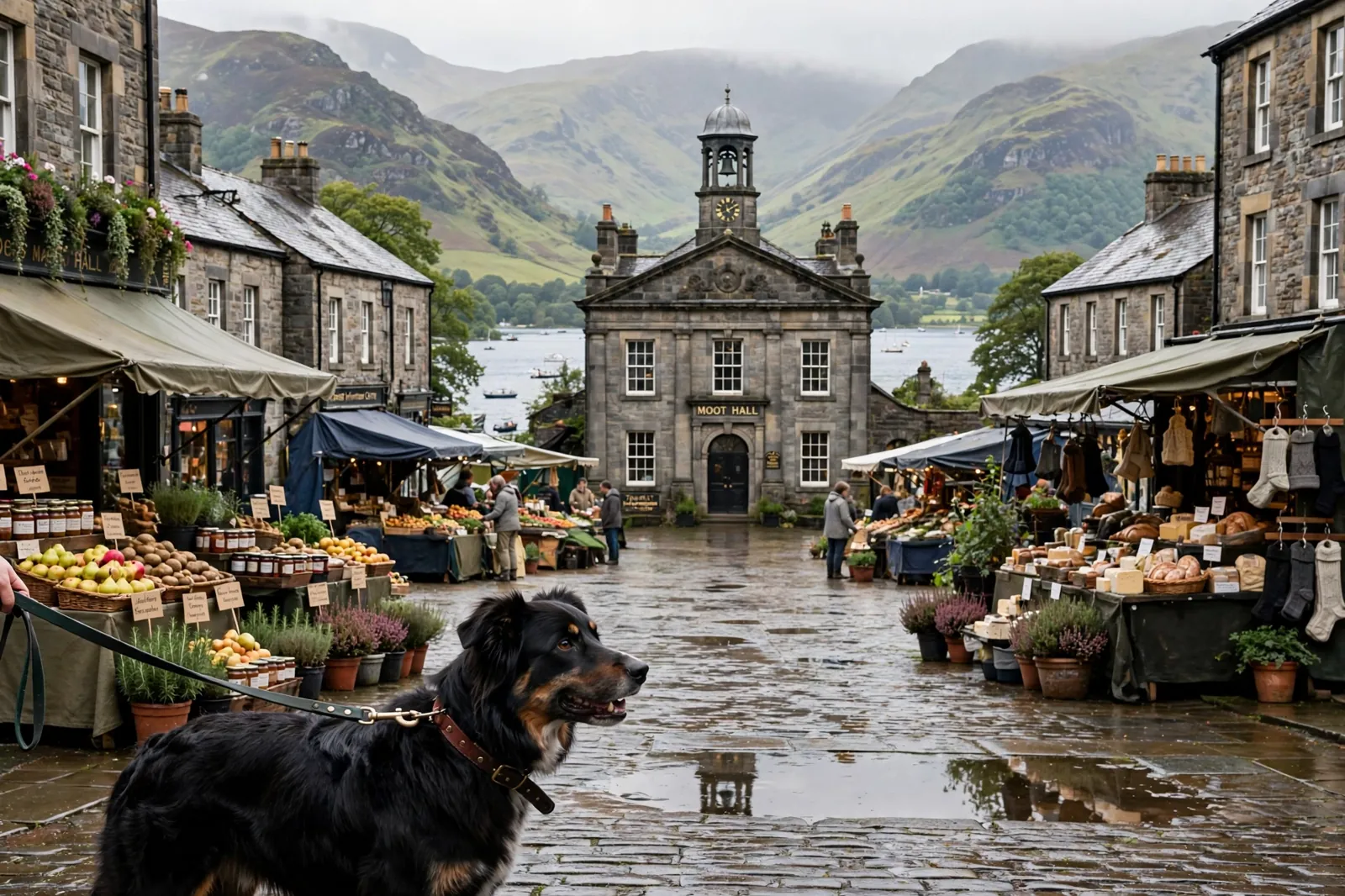
Keswick's reputation among dog owners is earned at street level. This is a market town whose economy runs on walkers, and its shops, cafes and pubs have adapted accordingly: outdoor shops that welcome dogs while you try boots, gear shops with water bowls at the door, a twice-weekly market in the square where dogs on leads are part of the crowd, and pubs that expect a dog under every second table. None of that removes the need to check each doorway — a welcome in one shop is not a promise about the next — but the default assumption in Keswick, unusually, leans toward yes.
The market, held in the main square on Thursdays and Saturdays with seasonal variations, is the town's heartbeat and a good test of a dog's town manners: food stalls at nose height, close crowds, dropped samples and other dogs at every corner. Go early, keep the lead short, walk the outer lanes rather than the dense centre of the market at peak hour, and give stallholders the courtesy of a dog that is not sampling the cheese. The Moot Hall in the square is the traditional meeting point and photograph stop; the streets behind it, toward the river and the museum, run quieter than the square itself.
Keswick Museum and the town's indoor attractions follow the familiar national pattern — assistance dogs yes, pet dogs generally no — so check each venue's current guidance before you go and plan interiors as split visits, with the parks and lake shore providing the dog's half. The Pencil Museum and other family attractions sit in the same category; the dog-friendly Keswick day is mostly an outdoor day, and the town is honest about that.
Evenings are where Keswick's dog culture peaks. After the day walkers leave the fells, the pubs fill with dogs asleep under tables while their owners compare routes, the takeaways and cafes do a steady trade, and the streets stay sociable until late in season. A dog that has done a proper fell or lake walk will settle anywhere; a dog that has been under-exercised in a holiday cottage all day will not, and Keswick will notice. Walk first, pub second, in that order.
Derwentwater: shore walks, beaches and the launch
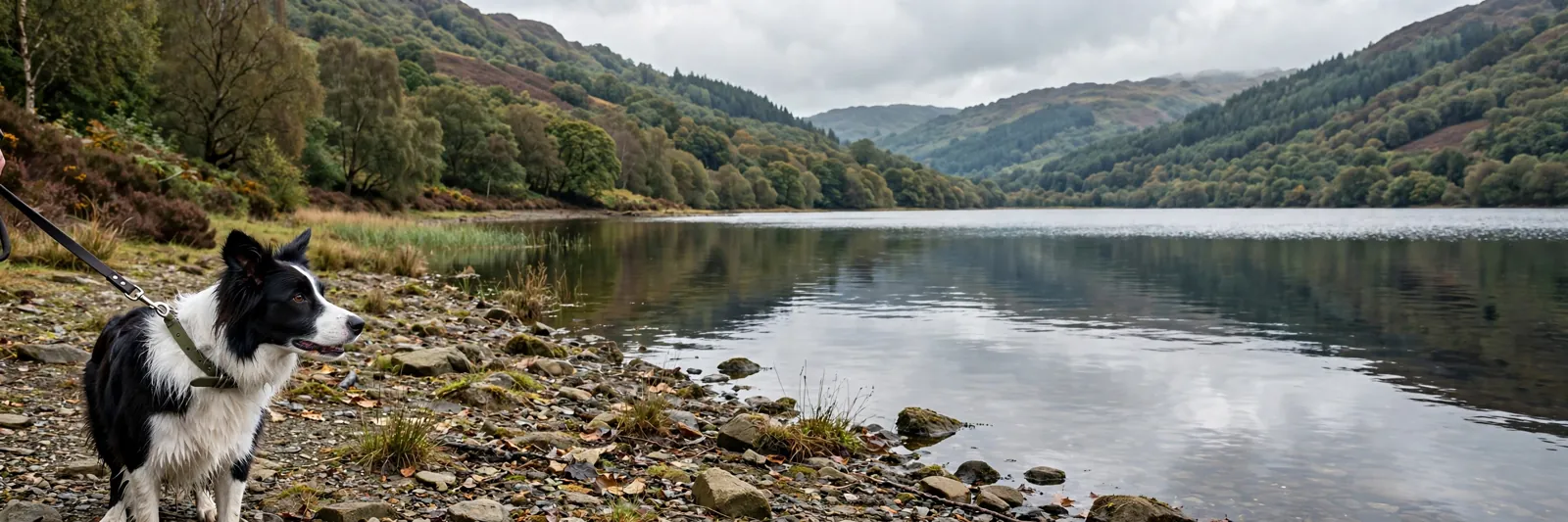
Ten minutes from the market square, the path through Hope Park reaches the Derwentwater foreshore at Crow Park, and the lake takes over the trip. Derwentwater is the gentlest of the big lakes for dogs: three miles long, island-dotted, ringed by woodland paths and pebble shores, with Borrowdale's fells closing the view at its southern end. The shore path from Keswick toward the Lodore side and the landings gives level, beautiful walking in almost any weather, and the bays along it — quiet, shelving and mostly free of boats away from the landings — are the lake's paddling places.
The Keswick Launch, the wooden-lake cruiser service that circuits the lake calling at jetties on both shores, generally carries dogs on leads — confirm the current arrangements, fares and timetable on the official site before you go, as sailings are seasonal and weather can suspend them. The launch turns shore walking into a route network: ride to a jetty such as Hawes End, Ashness Gate or Lodore, walk a shore section, and ride or walk back from the next landing. Keep leads short on the jetties and while boarding, settle the dog on deck away from the gangway, and treat a first launch trip like any first boat trip — short hop, calm day, easy exit.
Friars Crag, the wooded viewpoint promontory a short stroll from the foreshore, is the essential Keswick walk in miniature: a level path through pines to Ruskin's famous view over the lake toward Borrowdale. It suits every dog, takes under an hour with pauses, and works at dawn and dusk when the lake is at its best. Continue beyond it and the shore path opens toward the bay at Strandshag and the boardwalks and woods of the lake's eastern shore — the direction to take when the town-side shore is busy.
Shore discipline is the usual Lakeland code with lake-specific additions. Keep dogs out of the water at the landings and marina areas, on leads near the theatre lawns and Crow Park's formal areas, and away from nesting birds on the shore in spring. Blue-green algae can occur in Derwentwater in warm settled weather, as in any lake; check the latest local and official guidance, obey posted warnings and keep dogs out of discoloured water. Our explainer on blue-green algae and dogs should be read before any lake holiday, and our dog water safety guide covers the rest of the swimming judgement.
Catbells and the lower fells: the honest first climb
Catbells, the small, steep-sided ridge across the lake from Keswick, is the fell that introduces more dogs to hillwalking than any other in England, and it earns the role — with conditions. The standard route from Hawes End, reached by launch, bus or the Portinscale road, climbs steadily on a good path to a summit of 451 metres with a panorama that shames hills three times its height. Most fit, healthy dogs manage it well. The conditions are these: the upper section includes short rocky scrambles where a dog must be steady, close and under control; the ridge is exposed to wind; and in ice, high wind or extreme heat it is the wrong hill for that day, whatever the holiday plan says.
Lead and livestock judgement on Catbells is straightforward and strict. Sheep graze the fell, including on and around the path, so dogs belong on a lead or under genuinely close control for the whole climb, and on a short lead anywhere near stock. The summit and the ridge are busy on fine days — this is a procession hill in season — so a reactive dog will have a better day on the quieter alternatives below. Carry water for the dog; there is no supply on the ridge, the climb is steeper than its height suggests, and the descent by the same or the Hause Gate route deserves the same care as the climb, especially for older dogs' joints.
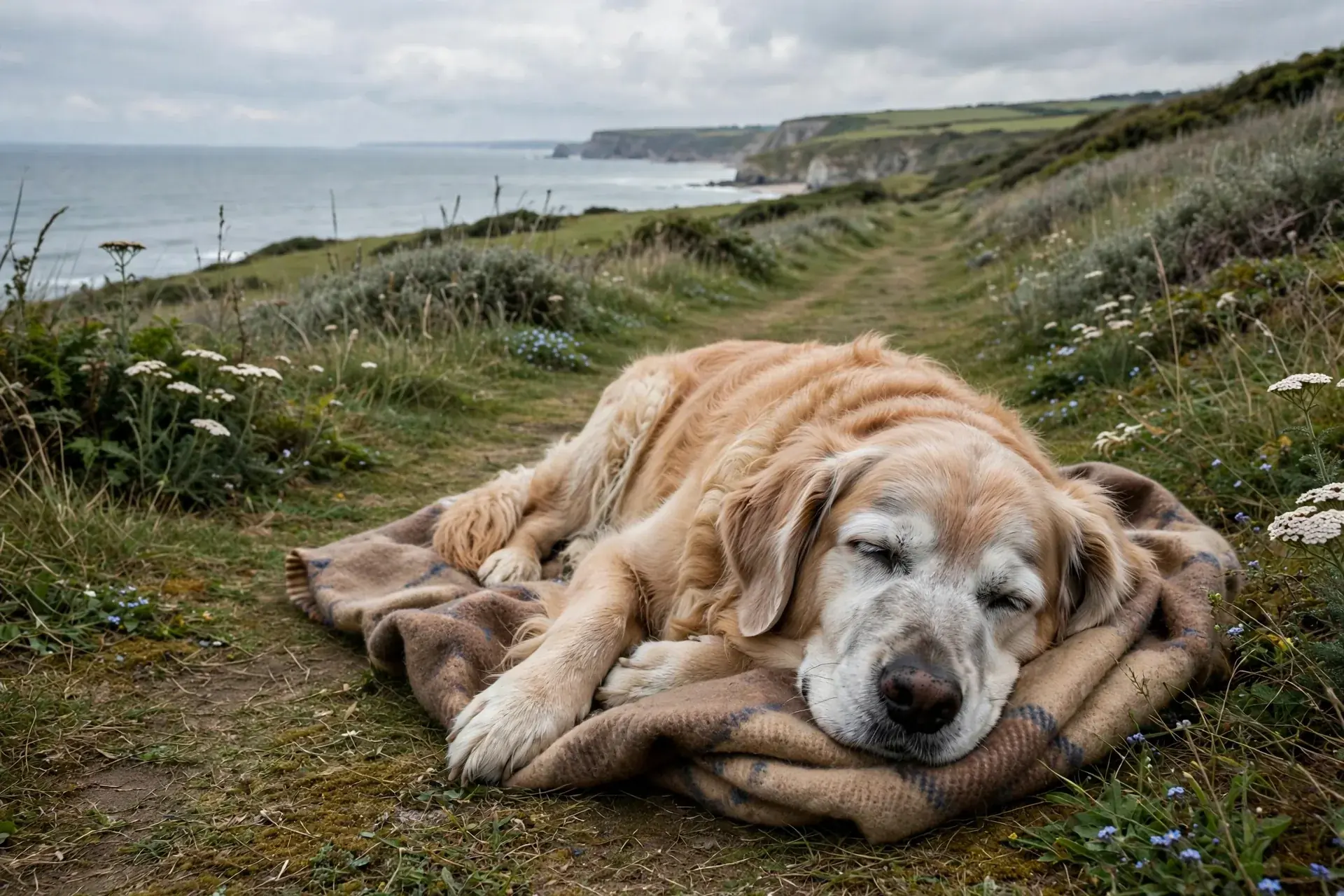
The lower-fell alternatives around Keswick are excellent and underused. Latrigg, the grassy hill directly above the town, gives a summit panorama over Keswick and Derwentwater for a fraction of Catbells' effort, with a gentler path that suits older dogs, children and first-day legs; the popular route from the car park at its shoulder makes it an ideal evening walk. Walla Crag, above the lake's eastern shore, pairs with the shore path and Friars Crag for a half-day circuit. Castle Head, the small wooded top near the town shore, is the ten-minute viewpoint nobody regrets. Our guide to travelling with a senior dog covers pacing, joints and rest-day planning for dogs who should be choosing Latrigg over the high tops.
Build fell days in grades across the week: shore and town on day one, Latrigg or Walla Crag on day two, Catbells when legs, weather and dog are all ready, and a rest or lake day after any big climb. Dogs do not report soreness the way people do; a dog that is stiff, slow to rise or quiet the morning after a climb is telling you the programme needs adjusting, and the shore path exists precisely for those days.
Higher fells and Borrowdale: bigger days, bigger rules
Keswick is a gateway town, and the higher fells stand behind it in every direction: Skiddaw, the great smooth massif to the north, among the highest ground in England; Blencathra, sharp-ridged and serious to the east; and the Borrowdale fells to the south, climbing toward Great Gable and the Scafell range. Dogs climb all of these with their owners every week of the year, and dogs also get into trouble on all of them every year. The difference is preparation, and this section is the preparation checklist in prose.
Fitness first, honestly assessed. A dog that does an hour on the flat at home is not ready for a six-hour Skiddaw day, any more than its owner is. Build distance and climbing over preceding weeks, choose the big day for mid-holiday when the dog is trail-fit, and cut the route without hesitation if the dog slows, seeks shade repeatedly, limps or stops enjoying it. Paws take the damage on Lakeland rock: check pads at every stop, carry a boot or bandage in the first-aid kit, and treat rough, pathless descents as the highest-risk section of any day. Weather second: the tops run far colder and windier than the town, forecasts change by the hour, and a dog in a wet coat on a windy ridge loses heat fast — carry the dog's coat, extra food and water, and turn back on the same triggers you would use for a child.
Borrowdale, the valley running south from the lake's foot, is the gentler way into big country. The valley floor and lower slopes give superb dog walking among woods, rivers and hamlets like Grange, Rosthwaite and Seatoller, with the river Derwent's banks, the famous Bowder Stone and lanes under the fells; leads near livestock are essential throughout, since this is working sheep country in every field. The bus down the valley — generally dog-carrying at the driver's discretion; check before you travel — turns Borrowdale into a walk-one-way, ride-back day that suits dogs of many ages.
Safety systems, briefly and completely. Save the local vet and out-of-hours details before the first fell day, not after the first limp. Check the dog for ticks after every countryside walk in season and remove them properly — our guide to ticks on dogs in the UK covers the method. Carry more water than the walk seems to need, keep the dog on a lead near all cliff edges, crags and quarries — Borrowdale and the slate country have old workings — and tell someone your route on any higher day. Mountain rescue in the Lakes is a volunteer charity service; the best contribution a dog party can make to it is not needing it.
Parks and easy days: Fitz Park, Hope Park and the railway path
Not every Keswick day is a fell day, and the town's parks carry the easy days with style. Fitz Park, along the River Greta north of the centre, is the town's sporting park — cricket, bowls, tennis and wide lawns — with riverside walking, space for a proper run in its open areas and the museum at its edge. Dogs are part of the park's daily life; keep leads on near matches, the play area and the formal gardens, and enjoy the fact that a town this size keeps a park this generous at its centre.
Hope Park, on the way to the lake, is the formal counterpart: gardens, crazy golf, a cafe and a stream, running down to Crow Park and the foreshore. It is a lead-walk park, pretty rather than wild, and it makes the perfect gentle hour for an older dog, a puppy building town confidence or any dog on a rest day. The walk town–Hope Park–Friars Crag and back, with a coffee in the middle, is the Keswick rest day in its complete form.
The Keswick to Threlkeld Railway Path, rebuilt after the floods and running east along the Greta gorge on the old railway line, is the town's flat, surfaced, all-weather walk: tunnels, bridges, river views and the village of Threlkeld with its pubs and cafe at the far end, roughly five kilometres each way. It is shared with cyclists and runners, so leads or close control apply, it is the automatic choice in rain or after fell days, and it gives dogs that cannot climb a walk with real scenery. The gorge sections after heavy rain deserve respect — the river below is powerful — but the path itself is engineered, fenced and maintained.
Assemble the easy days deliberately rather than letting them happen by exhaustion. A holiday that alternates fell, lake and easy days keeps a dog sound and keen for the whole week, keeps the owners' knees intact, and leaves space for the market, the shops and the long pub lunches that are half the reason for choosing Keswick in the first place.
Where to stay with a dog in Keswick
Keswick's dog-welcoming stock is among the deepest in the Lakes: hotels and inns in the centre that accept dogs in many rooms, a long list of guest houses and B&Bs where dogs are regulars rather than exceptions, self-catering cottages and flats in the residential streets, and campsites and holiday parks on the town's edges and along Borrowdale. The choice turns on routine. In-town stays put the evening pubs and the morning bakery at the door, with Fitz Park and the lake path as the daily walks; edge-of-town and Borrowdale stays trade the stroll home from dinner for space, quiet and fell gates at the door.
Ask the Keswick questions before booking. Which rooms take dogs, what is the fee, and is there a drying room, boot room or at least a hose and towel arrangement — the single most useful facility in a Lakeland stay? Can the dog come to breakfast, or is there a bar or residents' lounge arrangement that includes it? Is any garden genuinely enclosed, given that Lakeland walls and hedges often have dog-sized opinions of their own? And may the dog be left alone in the room, which decides your museum and special-dinner options? Our national guide to dog-friendly hotels in the UK carries the full checklist.
Book peak dates with open eyes. Summer, bank holidays, the Keswick Mountain Festival period, the jazz and beer festival dates and Christmas fill the dog-accepting rooms early — the town is small and its fame among dog owners is precisely the problem. Shoulder seasons reward the flexible: spring before the lambing fields fill the lower fells with extra lead discipline, and autumn, when the Borrowdale woods colour and the crowds thin, may be the best dog month of the Keswick year.
Bring the mud-season kit: door towel, spare towel for the car or the launch, the dog's own bed, a chew for the first evening and a paw-check routine after fell days. The stays that work in Keswick are the ones where wet-dog logistics are solved once, on arrival, rather than negotiated nightly with a landlord's carpet.
Eating with a dog: pubs, cafes and market food
Keswick may be the easiest town in England in which to feed a walker and a dog together. Its pubs are famously dog-welcoming — several in and around the centre are known nationally for it — with water bowls, dog menus or treats in some cases, fires, boot-friendly floors and a clientele that does not blink at a wet border collie. Cafes around the square and the side streets follow the same culture, many with dog-welcoming indoor space as well as terraces. Verify each venue as always, and keep the etiquette that sustains the welcome: walked and toileted first, settled under the table, short lead, off seats, and a mat if your dog uses one. Our UK dog-friendly cafes guide sets out the routine.
Market days add street food to the picture, with the same handling rules as anywhere: eat away from the densest stalls, guard food from a practised canine audience, and use the square's edges and the park benches as your dining room. The town's bakeries, butchers and delis equip an excellent shore picnic for Derwentwater days — with the standing conditions of no feeding the ducks and geese, however confident their approach, and every wrapper carried back to town.
For a special dinner, Keswick and the Borrowdale hotels offer the full range; the dog version of a celebration is usually the best pub in the valley after the best walk of the week, and few dogs have ever filed a complaint about the substitution. Eat early on peak weekends — the dog-welcoming tables in the popular pubs are claimed by six — and book where booking is taken. Solo travellers will find Keswick's pubs socially easy with a dog, which is one of the town's quiet kindnesses.
Carry the standard kit and one Lakes extra: a small microfibre towel in the day bag for the dog that found the Greta, the lake or a Borrowdale bog on the way to lunch. Arriving at a pub with a rinsed, towelled dog rather than a dripping one is the difference between a welcome and a tolerance, and Keswick's landlords deserve the effort.
Getting there, parking and the Keswick year
Keswick has no railway station — the line closed decades ago — so most visitors arrive by road via the A66 from Penrith, or by bus from Penrith station, which sits on the West Coast Main Line. Dogs travel free on the trains to Penrith under the standard conditions set out in our guide to taking a dog on UK trains, and the connecting buses generally carry dogs at the driver's discretion; check the latest operator guidance before you travel and state the dog when booking any taxi for the last leg. The drive in along the A66, with Bassenthwaite Lake on one side and the fells rising ahead, is the correct overture to the town.
Parking in Keswick is managed and finite: the central car parks fill by late morning on fine peak days, and the town rewards the early arrival or the car-free pattern of buses, launches and legs. If you are staying in town, accommodation with parking is worth a premium in season, after which the car can rest for days — the lake, the fells, Borrowdale by bus and the railway path cover the whole holiday without it. Never leave a dog in a parked car in a Lakes car park, in any weather, for any duration.
The year in Keswick runs: spring for lambs, leads and lengthening days on Latrigg; summer for the full launch timetable, the shore at its warmest and the fells at their busiest — start climbs early; autumn for Borrowdale colour, quiet summits and the best light on Derwentwater; winter for fireside pubs, the Christmas market atmosphere and serious fell weather that moves most dog parties down to the shore, the parks and the railway path, which is no hardship at all. Events — the Mountain Festival, theatre seasons at Theatre by the Lake, market days — layer crowds onto specific dates, so check the calendar for your week.
Final checks before any Keswick trip: the launch timetable and status for your dates, the weather forecast read for the fell height you actually plan, the local vet's details saved, and the official sources checked for anything you have booked. Keswick asks a little more planning than a beach town and returns a great deal more — a working town, a gentle lake and serious hills, all of them genuinely glad to see your dog.
Practical questions
Before you go
Are dogs allowed on the Keswick Launch on Derwentwater?
Dogs are generally carried on the Keswick Launch services around Derwentwater, travelling on a lead with their owners, sometimes for a small fare. Sailings are seasonal, jetties served vary by service and weather can suspend crossings, so check the official site before you go for the current timetable and dog arrangements, keep leads short on jetties and while boarding, and start with a short hop for a first-time boat dog.
Can dogs climb Catbells?
Most fit, healthy dogs can climb Catbells by the standard route from Hawes End, which includes short rocky sections near the top where a dog must be steady and under close control. Keep dogs on a lead near the grazing sheep, carry water as there is none on the ridge, and avoid the hill in ice, high winds or extreme heat. Older or less fit dogs will enjoy Latrigg or Walla Crag more.
Where can dogs go off lead in Keswick?
Good off-lead opportunities include the open areas of Fitz Park, quieter sections of the Derwentwater shore away from landings and nesting birds, and fell paths where no livestock is nearby and your dog is under close control. Keep leads on in the market square, Hope Park, on the launch and jetties, in Wray-style formal areas and anywhere sheep are present, and follow local signage.
Are dogs welcome at Keswick market and in the town shops?
Keswick is one of the most dog-welcoming towns in Britain: dogs on leads are a normal part of market day crowds, and many shops, including outdoor retailers, welcome dogs inside. Welcomes still belong to each business, so check at the door, keep leads short around food stalls, visit the market early to avoid the densest crowds, and never tie a dog up outside a shop.
When is the best time to visit Keswick with a dog?
Late spring and autumn usually give the best balance of walking weather, operating launches and manageable crowds, with autumn colour in Borrowdale a particular highlight. Summer offers the fullest timetable but the busiest fells and town. Winter suits hardy dogs and shore-level plans, with short days and serious weather on the high fells.