This guide is independent and contains no paid placement. If affiliate links are added later, they will be clearly marked and will not change our editorial checks.
Corfe Castle works brilliantly with a dog if you treat the castle grounds as a lead walk, ride the steam railway to or from the village, and save the long off-lead running for the common or the beach. Arrive early, check the official guidance before you travel for current dog rules, and let the railway do the driving.
The castle comes first: plan around the ruin
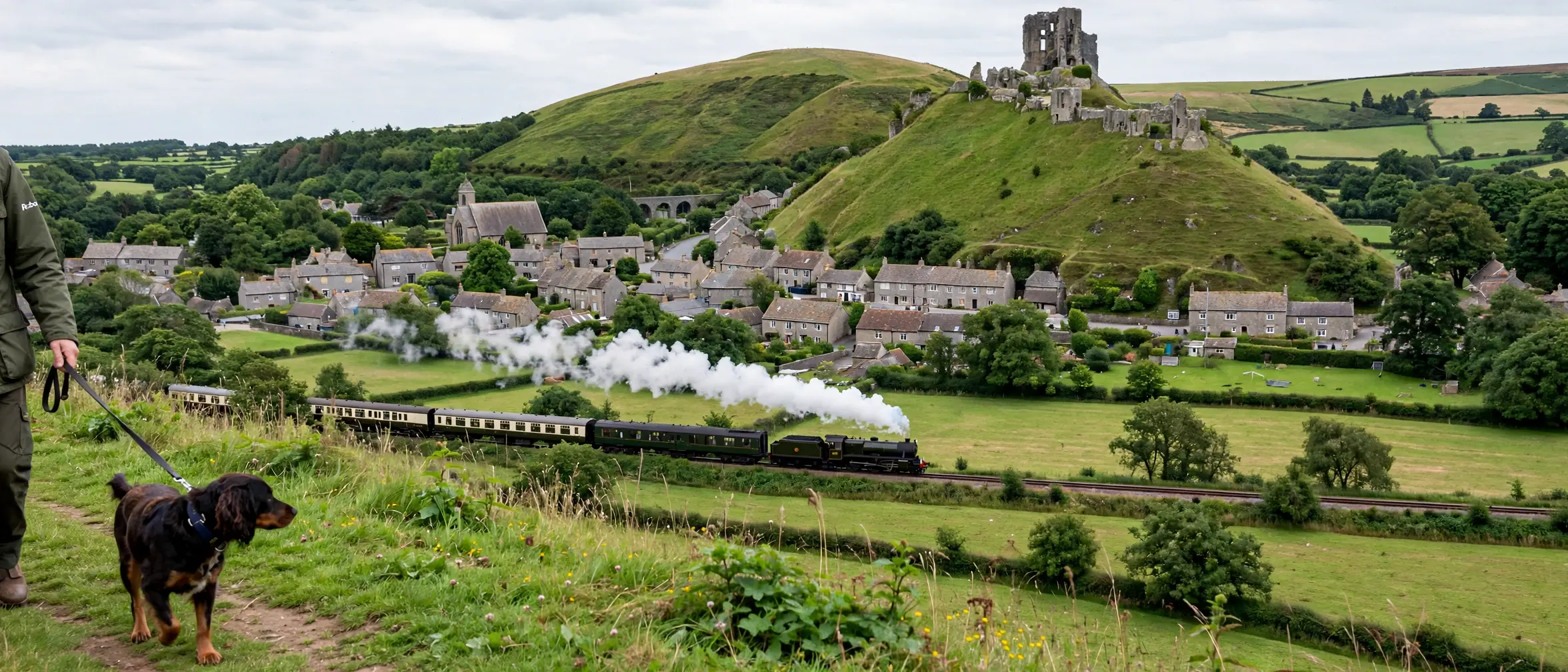
Corfe Castle is a ruined Norman fortress run by the National Trust, standing on a steep chalk hill in the middle of the village it is named after. The castle was built by William the Conqueror and later slighted during the English Civil War, which is why the broken towers lean at such dramatic angles today. Dogs on leads are welcome in the castle grounds, which is the part that matters most for a visit with a dog: the walk up through the outer bailey, the views across the Purbeck Hills, and the grassy areas where you can sit and take in the scale of the place. Only assistance dogs are allowed inside the castle buildings themselves, so set expectations before you go and check the official guidance before you travel for the latest access rules.
The climb to the castle is short but steep, with uneven stone steps and loose gravel in places. Fit dogs manage it easily, but older dogs, very small dogs and dogs with joint problems may struggle on the upper steps, and the hilltop is fully exposed to wind. There is little shade on the mound itself, so on a warm day bring water for the dog and plan the climb for the morning or late afternoon rather than midday. The reward is one of the best viewpoints in Dorset: the village rooftops below, the railway line curving through the valley, and on a clear day the sweep of the Purbeck ridge towards the sea. Allow at least an hour for the grounds, longer if you like to linger, and remember that the castle is a scheduled monument, so dogs should stay on the paths and out of the roped-off masonry.
Tickets and opening times change with the season, and the castle sometimes closes early in winter or for conservation work, so check the National Trust listing on the day of your visit rather than relying on a guidebook. Members enter free, and the ticket covers the grounds for the day, which means you can climb up in the morning, wander the village at lunch, and come back for a second look in the evening light if the light is good. If you are staying nearby for several days, the same ticket logic makes the castle an easy repeat stop rather than a single rushed visit. Keep the lead short around other visitors on the narrow upper paths, especially at weekends, when the steps become a slow two-way queue and a long lead quickly becomes a trip hazard.
Ride the steam railway with your dog
The Swanage Railway runs from Swanage through Corfe Castle to Norden, and it is one of the most dog-friendly heritage railways in the country. Dogs are welcome on board, usually for a small fare, and they travel in the carriage with you rather than in a guard's van. The ten-minute hop between Corfe Castle station and Swanage is the classic move: park in Swanage, ride the steam train up through the valley, spend the day around the castle and the village, then ride back down as the light fades. The railway also runs special services, dining trains and Santa specials, where dog rules can differ, so check the official guidance before you travel if your visit coincides with an event.
Trains are popular, and the carriages fill up fast on sunny weekends and during school holidays, so arrive at the platform in good time and be ready to wait for the next service if the first one is full. A blanket or a familiar mat for the seat helps a nervous dog settle, and a chew or a stuffed Kong keeps a young dog occupied for the journey. Steam locomotives are loud when they pull away, and the whistle can startle a noise-sensitive dog, so sit away from the engine if you can and give the dog a few minutes on the platform to get used to the sounds before boarding. Most dogs settle within a couple of minutes once the train is moving, lulled by the rhythm of the wheels and the passing countryside.
Corfe Castle station itself is worth a slow look. The small museum and the restored buildings give the village its period feel, and the platform is a good place to watch trains arrive while the dog rests in the shade. If you are walking the Purbeck Way or the coast path, the railway also works as a practical shuttle: walk one way along the ridge or down to the coast, then ride the train back to your starting point. Combined tickets with the castle are sometimes available, so ask at the station or the castle entrance whether a joint ticket saves money on the day you visit. Dogs travel free on some services and for a small charge on others, so confirm the fare when you buy your ticket rather than assuming.
The village itself: streets, green and tea rooms
Corfe Castle village is small enough to cross on foot in ten minutes, and that is exactly its charm. Stone cottages line the main street, the village green sits at the foot of the castle hill, and a handful of tea rooms, pubs and shops serve the steady stream of walkers and railway passengers. Dogs are welcome in several of the pubs and in the outdoor seating of the tea rooms, and the village is used to muddy boots and wet dogs, so nobody will mind a damp spaniel at the door. The square and the green are good places for a breather between the castle climb and the longer walks, and the duck pond and the stream at the edge of the village give dogs a sniffing stop.
Start at the village green and work your way along the main street, stopping at the shops that catch your eye. The village has a small supermarket for supplies, a bakery, and gift shops selling local crafts, and the pace is deliberately slow — this is not a place for rushing. Look out for the old cottages with thatched roofs and the stone walls that mark the field boundaries; the village has been a settlement since Saxon times, and the street pattern still follows the medieval layout. If you are staying overnight, the village pubs serve food in the evening and several allow dogs inside the bar area, which matters on a wet night when sitting outside is not an option. Ask at the bar about the dog policy on arrival, because the rules can differ between the restaurant room and the bar, and a dog that is welcome at lunchtime may need to stay in the bar in the evening.
The village also has a small model village attraction and a church worth a look from the outside, and the churchyard is a quiet spot for a sit-down. Keep dogs on a lead through the village itself, because the main road carries through traffic and the pavements are narrow in places. The best time to enjoy the village is early morning before the tour buses arrive, or late afternoon when the day visitors have gone and the castle glows in the low sun. If you are here in summer, the village fete and the local events bring stalls and crowds, so check the parish notice board for dates and plan a quieter walk if your dog dislikes crowds.
Purbeck walks from the village
The walking is the real reason to bring a dog to Corfe, and the options start right at the edge of the village. The most popular route is the climb onto the Purbeck ridge, where the chalk downland opens into wide grassy paths with views in both directions — towards Swanage one way, towards the coast at Kimmeridge the other. A steady climb from the village brings you onto the ridge path, and underfoot it is mostly short grass and chalk, firm even after rain. Keep the dog on a lead or a long line up here: sheep and cattle graze the downland for much of the year, and the ground-nesting birds in spring and summer need space from a dog running free.
For a gentler outing, the walk around Corfe Common is the local favourite. The common is open grassland with a stream, scattered gorse and wide views back to the castle, and it is the place where village dogs do their daily exercise. A loop of the common takes about forty minutes at a dog's pace, and there are several gates onto the lanes around the village if you want to extend it. The ground can be boggy after heavy rain, particularly near the stream, so wear boots and bring a towel for the car. In spring the common is full of wildflowers, and in autumn the gorse turns gold, so the same loop feels different in every season.
- Common loop: forty minutes, flat, easy on stiff legs, with the castle in view throughout.
- Ridge to Swanage: two hours one way, a climb to start and open downland after; ride the train back.
- Corfe to Kingston: a village-to-village walk through fields and lanes, an hour each way, with a pub at the far end.
- Ridge to Studland: half a day for fit dogs; go in dry weather, take water and lunch.
The ridge has no water and no shade, so the bottle and the bowl go in the bag before you leave the car, and the forecast gets checked before you set off — the Purbeck ridge is exposed, and a bright morning can turn wet and windy by lunch. The South West Coast Path passes close by at Swanage and Studland, and the Purbeck Way runs through the area, so longer-distance walkers can use Corfe as a base for multi-day routes. Shut the gates behind you, keep to the waymarked paths through the crops, and pick up after your dog: the farmland around the village is working land, and walkers stay welcome by behaving well.
Beaches and coast within a short drive
Corfe Castle is inland, but the sea is only a short drive away, and the coast is where a beach-loving dog gets its reward. Studland Bay is the nearest big beach, roughly fifteen minutes by car, with four miles of sand backed by dunes and heathland. Dogs are welcome on large stretches of the beach for much of the year, with seasonal restrictions on the main section in summer, so check the signs at the car park and the official guidance before you travel. The middle and southern sections are usually quieter, and the sand is soft and clean, which makes it ideal for a long game of fetch or a proper swim. The National Trust car parks at Studland charge a fee, and they fill early on hot days, so arrive before ten or come late in the afternoon.
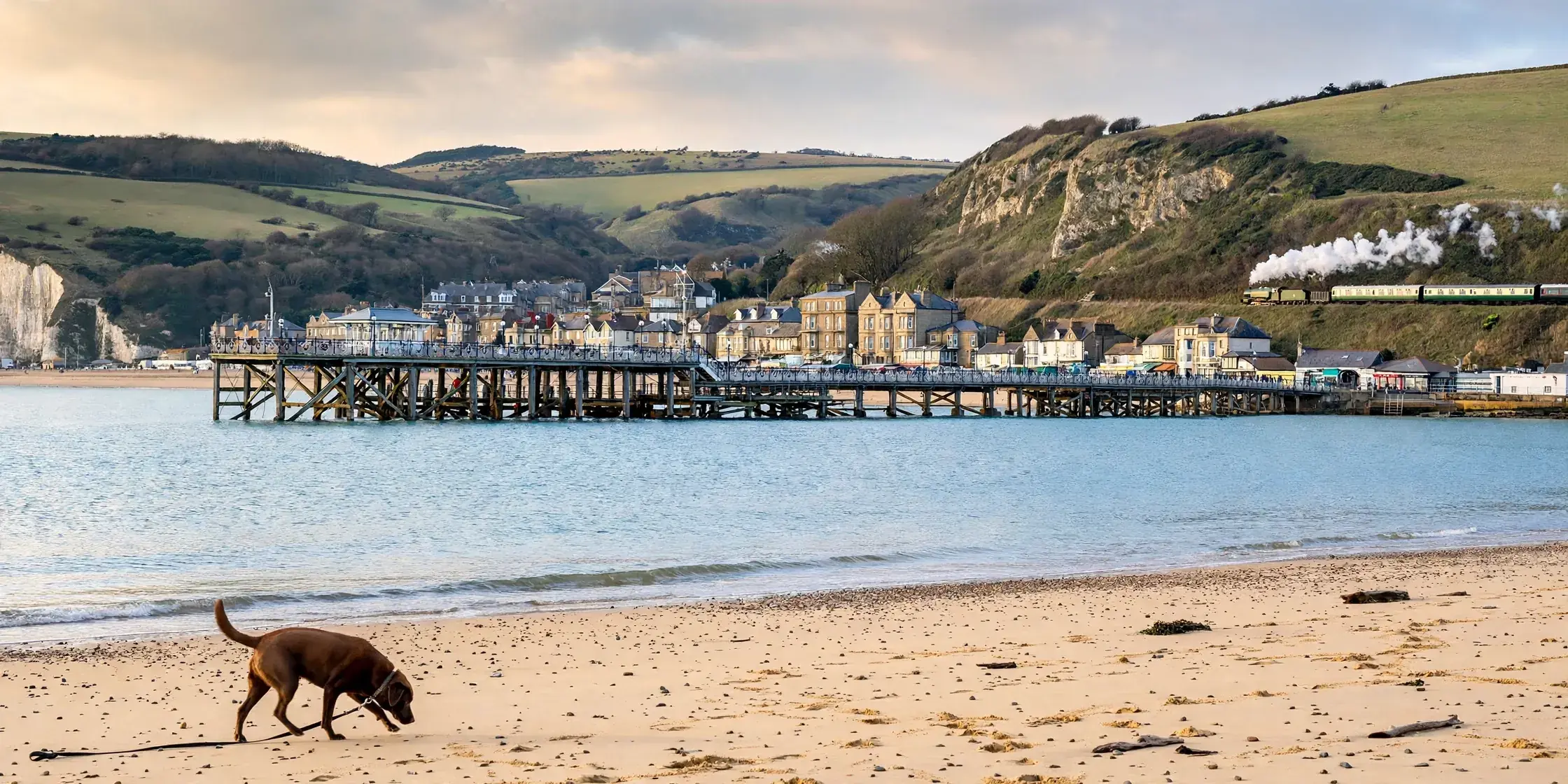
Swanage Bay is the other obvious choice, reached by the railway or a short drive, and it has a gently shelving sandy beach with a promenade, cafes and a pier. Dog restrictions apply on the main beach in summer, but the edges of the bay and the walk out to Durlston Country Park give dogs plenty of space. Durlston itself is a clifftop country park with waymarked walks, a lighthouse and views across to the Isle of Wight, and dogs on leads are welcome on the paths. The coastal path from Swanage to Durlston is a good two-hour out-and-back for a fit dog, with the sea on one side and the downs on the other, and the cafe at Durlston allows dogs in the outdoor seating.
Further afield, Kimmeridge Bay offers rock pools and a wilder, quieter shore, and the village of Worth Matravers has a famous pub and a short walk down to the sea. Lulworth Cove and Durdle Door are the postcard sights of the Jurassic Coast, but they are busy in summer and the paths down to the beach are steep, so they suit a weekday visit better than a bank holiday. Wherever you go on the Purbeck coast, check the tide times before you let a dog off the lead: the coves fill fast, the cliffs are unstable, and a dog that chases a ball into the surf can be in trouble quickly. Keep dogs away from the cliff edges and never let them drink seawater, and rinse them off after a swim to avoid salt irritation.
Split visits that work for everyone
The one part of Corfe Castle a dog cannot do is the inside of the castle buildings, and the village has a few other places with the same rule — so plan to take turns rather than skipping things. The simplest approach is to swap at the castle gate: one of you climbs up through the ruins while the other walks the dog around the common, then change over. The grounds ticket covers the whole day, so the second person can go up afterwards without paying twice, and the dog gets two walks instead of one long wait. Travelling alone? The castle grounds themselves are the main event — the walls, the views, the open grass — and the interior adds relatively little, so a dog owner loses almost nothing by staying outside with the dog.
The same turn-taking covers the tea rooms and the indoor attractions in the village. Many of the tea rooms have outdoor seating where dogs are welcome, and the pubs generally allow dogs in the bar, so the two of you will eat and drink together for most of the day. For the occasional indoor-only stop — the model village, the small museums — keep the visit short and take it in turns, or leave the dog with a companion on the common. Never leave the dog in the car for these stops, even on a cool day, and never for long: the village car parks have no shade and the temperature inside a car climbs fast. The National Trust shop at the castle entrance is worth a browse, and dogs are usually welcome in the shop area on a lead, though this can change, so ask at the door.
Spread the indoor stops across the trip rather than cramming them into a single morning. Castle on the first day, railway on the second, coast on the third, and the dog never has to wait around for long. The village is small enough that a split visit never means a long separation — the common and the lanes give the waiting half of the party a pleasant walk while the other half explores. That is the key to a relaxed Corfe trip: the dog has its own itinerary of walks, and it runs alongside yours rather than getting in its way.
Eating and drinking with a dog in Corfe Castle
Corfe Castle village eats well for its size, and the reason is the walkers: the pubs and tea rooms here feed people who have spent the morning on the ridge or the common, and they do it properly. The pubs serve the Dorset standards — fish and chips, pies, ploughman's lunches, Sunday roasts — with water bowls by the bar and treats behind it, and several have gardens where the dog can lie in the sun while you eat. The tea rooms are the village's other half: cream teas, Dorset apple cake, light lunches, and outdoor tables that fill up on the first warm day of spring. The rule can differ between the bar, the restaurant and the garden, so ask when you arrive, and check the venue's own page before you travel if a particular pub matters to you.
Buy the picnic in the village and eat it outside, because Corfe is at its best outdoors. The village shop sells sandwiches, pasties and drinks, and from there it is a short walk to the common, where the dog can run while you eat with the castle above you, or up into the castle grounds themselves, where the grass and the views do the work of a restaurant. A picnic also solves the problem of a wet dog after the common in winter — nobody wants to sit in a tea room with a muddy spaniel — and it keeps the day flexible when the weather turns. If you are staying in a cottage, the shop stocks the basics and the supermarkets in Wareham and Swanage cover a proper shop; for dinner, ring the pub ahead in summer, because the village pubs fill with walkers and a table for two plus a dog is easier to arrange by phone.
Think about the pub garden at midday before you order. The sun hits the chalk paths hard by one o'clock, and a dog that has just climbed the castle steps will want shade, water and a place to lie down — not a table in the middle of the lawn. Ask at the bar for a bowl when you order your food, and most places will bring one out without being asked twice. Dogs that bark at strangers do better near the door, where they can watch people come and go, than in the middle of a crowded garden, and a blanket from home on the ground tells the dog where its place is. The meal to aim for is the one after the walk, not before it: a tired dog sleeps through lunch, and a fresh one fidgets.
Where to stay in and around Corfe Castle
Corfe Castle village itself has only a small number of cottages, bed and breakfasts and a hotel, and the surrounding Purbeck villages add more choice within a ten-minute drive — so the first decision is whether to stay in the village or just outside it. In the village, you are a few minutes from the castle, the station and the common on foot, which is what you want for a short break; the cottages are the most practical option for most visitors, because they give the dog its own space, a garden or a yard, and no worries about barking in a hotel corridor. Look for an enclosed garden, a ground-floor bedroom and a hard floor in the living area, and check how many dogs are allowed — many cottages take one or two for a small charge each. Book early for school holidays and bank holidays, because the best dog-friendly cottages in Purbeck are booked months ahead.
The bed and breakfasts and small hotels in the village welcome dogs in some rooms, usually the ground-floor ones, and the hosts are often dog owners themselves, so they understand the practicalities. Ask about breakfast — some places serve it in a room where dogs are welcome, others prefer the dog to stay in the room — and check whether there is a secure place to leave the dog if you go out for dinner. The villages around Corfe — Kingston, up on the ridge, Worth Matravers and Langton Matravers towards the coast — have cottages with gardens and lanes straight onto the Purbeck Way, and the prices are often lower than in the village itself. The campsites and caravan parks around Corfe and Swanage suit families, with space, dog-walking areas and a relaxed atmosphere, and the National Trust campsite at nearby Studland is a good base for the beaches.
Rooms in Corfe are few and the good ones go early, so the first message to a host should say everything: what dog, how big, how many, and whether it is used to stairs. Ask in the same message about the garden fence, the nearest field for the morning walk, and whether the dog can be left alone in the cottage while you eat out — a host who answers all three straight away is a host worth booking. Take the dog's bed, its usual food and a blanket from home, and give the new place a quiet first evening. Stay a week and the cottage becomes a base for the whole of Purbeck: the castle on the first day, the coast path on the second, the village-to-village walks after that.
Parking, buses and getting there
Corfe Castle village sits on the A351 between Wareham and Swanage, and the main car park is at the edge of the village, a short walk from the castle and the station. There is also a National Trust car park near the castle entrance, and both fill early on sunny weekends, bank holidays and school holidays — the single most useful tip in this guide is to arrive before ten in the morning. If the car parks are full, the honest answer is to come by train from Swanage or Norden instead, or to park in Wareham and take the bus, because the village lanes are narrow and there is very little on-street parking that does not inconvenience residents. Charges apply in both car parks, so read the board and note the time limit before you walk away.
Public transport is genuinely practical here, which is rare for a village this size. The bus from Wareham and Swanage stops in the village, and the steam railway connects Corfe with Swanage and Norden, so a car-free day is entirely possible — and if you are staying in Swanage, the train is the best way to reach the castle, while from Wareham the bus is the simplest option. Dogs are welcome on the trains and the buses, though the rules differ between operators, so a quick check before you travel is worth it. For drivers, the approach from Wareham is straightforward, but the road through the village is narrow and busy in summer, so drive slowly and watch for walkers and dogs on the verges; satnav will take you to the village car park, but check the postcode before you set off and have a backup plan if it is full.
If the dog cannot climb the castle with you, leave it with a companion on the common, where there is grass, water and shade — not in the car. The village car parks have no cover at midday, and the inside of a car heats up far faster than people expect, even on a mild day. The same goes for the village shops and the tea rooms: if the dog cannot come in, one of you stays outside with it. Electric charging is scarce in the village, so top up before you arrive if you need it, and look at the official parking pages before you travel for the latest charges and restrictions. And if the car parks are full, the backup is the train: park in Swanage, ride the steam railway in, and start the day the slow way.
Seasons, weather and what changes
Aim for May or September at Corfe Castle. The paths are dry, the castle grounds are green, the village is lively without being crowded, and the beach restrictions have eased or not yet begun — May brings wildflowers to the common and the downland, September brings warm days and quiet beaches, and October brings autumn colour to the trees around the village. A dog gets the best of the place in those months: long walks on the ridge, open beaches, and a castle without the queues, with the evening light on the stone as the reward.
Summer at Corfe is governed by two calendars: the castle queues and the beach restrictions. Both are at their worst from late June to early September, when the car parks fill by mid-morning and the main beach at Studland limits dogs to the quieter stretches. The way through is to start before ten, do the castle while the steps are clear, and save the beach for the evening, when the crowds thin and the sand cools. The hilltop has no shade at all, so a bottle and a bowl go in the bag before you leave the car, and the signs of a dog in trouble — heavy panting, drooling, a reluctance to keep walking — mean stop, find shade and cool the dog down. Test the chalk paths with the back of your hand at midday; if they are too hot for you, they are too hot for paws.
Come in winter and Corfe belongs to you. The low light on the ruins is the most dramatic the castle ever looks, the pubs are warm, and the common is empty — but the ridge takes the weather full in the face, and the paths turn to mud after rain. The castle sometimes closes early in winter, or for maintenance, so the day has to be planned around the hours of light, and a torch is worth carrying for the walk back to the car. Pack a waterproof for yourself and a drying coat for the dog, and look at the forecast the evening before you travel as well as the morning you set off: the Purbeck coast can change in an hour.
A one-day plan that works with a dog
Start early and let the dog set the pace. Arrive by nine, park at the edge of the village, and walk the common first, while the dog is fresh and the village is quiet — the loop takes about forty minutes and gives the dog a proper run before the crowds arrive. Then climb to the castle while the morning light is good and the steps are clear, and spend an hour in the grounds taking in the views and the history. By late morning the village is waking up, and a tea room or a pub garden is the natural next stop for a coffee and a rest. That order is the whole trick: the dog is tired and calm by the time you sit down, and the castle is done before the midday heat and the queues.
After lunch, ride the steam railway to Swanage for the afternoon, or drive to Studland for the beach. The train is the more relaxing option, because it avoids the car parks and gives the dog a rest, and Swanage Bay and Durlston Country Park fill the afternoon nicely. If you choose the beach, aim for the quieter sections, keep the dog on a lead until you are sure of the rules, and watch the tide. Either way, be back in Corfe by late afternoon for a second look at the castle in the evening light, when the village is quiet again and the stone glows gold. Finish with dinner in a dog-friendly pub, and book the table in advance if it is a weekend.
- 09:00 Arrive, park at the village edge, and walk the common loop.
- 10:00 Climb to the castle, explore the grounds and enjoy the views.
- 11:30 Coffee and a rest in a village tea room or pub garden.
- 13:00 Steam railway to Swanage, or a drive to Studland Bay for the beach.
- 16:00 Back in Corfe for the evening light and a second look at the castle.
- 18:00 Dinner in a dog-friendly pub, table booked in advance.
A second day on the coast path and a third on the village-to-village walks turn the same shape of day into a longer Purbeck break: walks first, the castle second, food and rest in between, and no long waits in cars or queues. Corfe rewards that order, and the dog will show it by settling happily at your feet in the pub at the end of the day. For a longer stay, our guides to Swanage and Weymouth cover the neighbouring coast in the same practical detail, including beach rules, tides and where to stay.
Practical questions
Before you go
Can dogs go into Corfe Castle itself?
Dogs on leads are welcome in the castle grounds and the outer areas, but only assistance dogs are allowed inside the castle buildings and the tea room. The ruins are largely open air, so a lead walk around the walls and the views from the top still makes a rewarding visit, and there is plenty of grass and shade in the grounds for a rest stop.
Can dogs ride the Swanage Railway?
Yes, dogs are welcome on the Swanage Railway, usually for a small fare, and they travel with you in the carriage. Keep your dog on a lead, bring a blanket for the seat if you can, and check the official guidance before you travel, because special event trains and dining services can have different rules.
Where can my dog run off the lead near Corfe Castle?
Corfe Common and the open ground around the village give dogs room to run, but check the field first: livestock grazes across much of Purbeck, so keep it on a long line unless you have checked the field is empty of stock. The castle grounds are lead-only. For a proper off-lead run, the wide sands at Studland, a short drive away, are the local favourite outside the summer restrictions.
Is there a dog-friendly beach near Corfe Castle?
Studland Bay is the nearest big dog-friendly beach, roughly a fifteen-minute drive, with long sandy stretches where dogs are welcome for much of the year. Seasonal restrictions apply on the main beach in summer, so check the current signs and the official guidance before you travel, and aim for the quieter middle section and South Beach for more space.
Where do I park in Corfe Castle village with a dog?
The main car park sits at the edge of the village, a short walk from the castle and the station, with a National Trust car park near the castle entrance as well. Both fill early on sunny weekends and bank holidays, so arrive before ten — or come by train from Swanage or Norden instead. Never leave a dog in a parked car on a warm day; the village car parks have no shade.
What is the best time of year to visit Corfe Castle with a dog?
Late spring and early autumn are the sweet spot: the Purbeck paths are dry, the castle grounds are green, and the village is lively without the summer crowds. Winter visits are quiet and atmospheric, but the hilltop is exposed to wind and rain. Summer brings the most visitors and the strictest beach rules, so start early and book your stay well ahead.