This guide is independent and contains no paid placement. If affiliate links are added later, they will be clearly marked and will not change our editorial checks.
Weymouth works best as a walking town for dogs: start on the sand at Weymouth Bay, cross to the historic harbour for a short lead walk, climb to Nothe Fort for the views, and finish on the flat Rodwell Trail. Check the seasonal beach rules and the tide times before you travel, because both decide where your dog can run.
Weymouth Bay first: the shape of the town
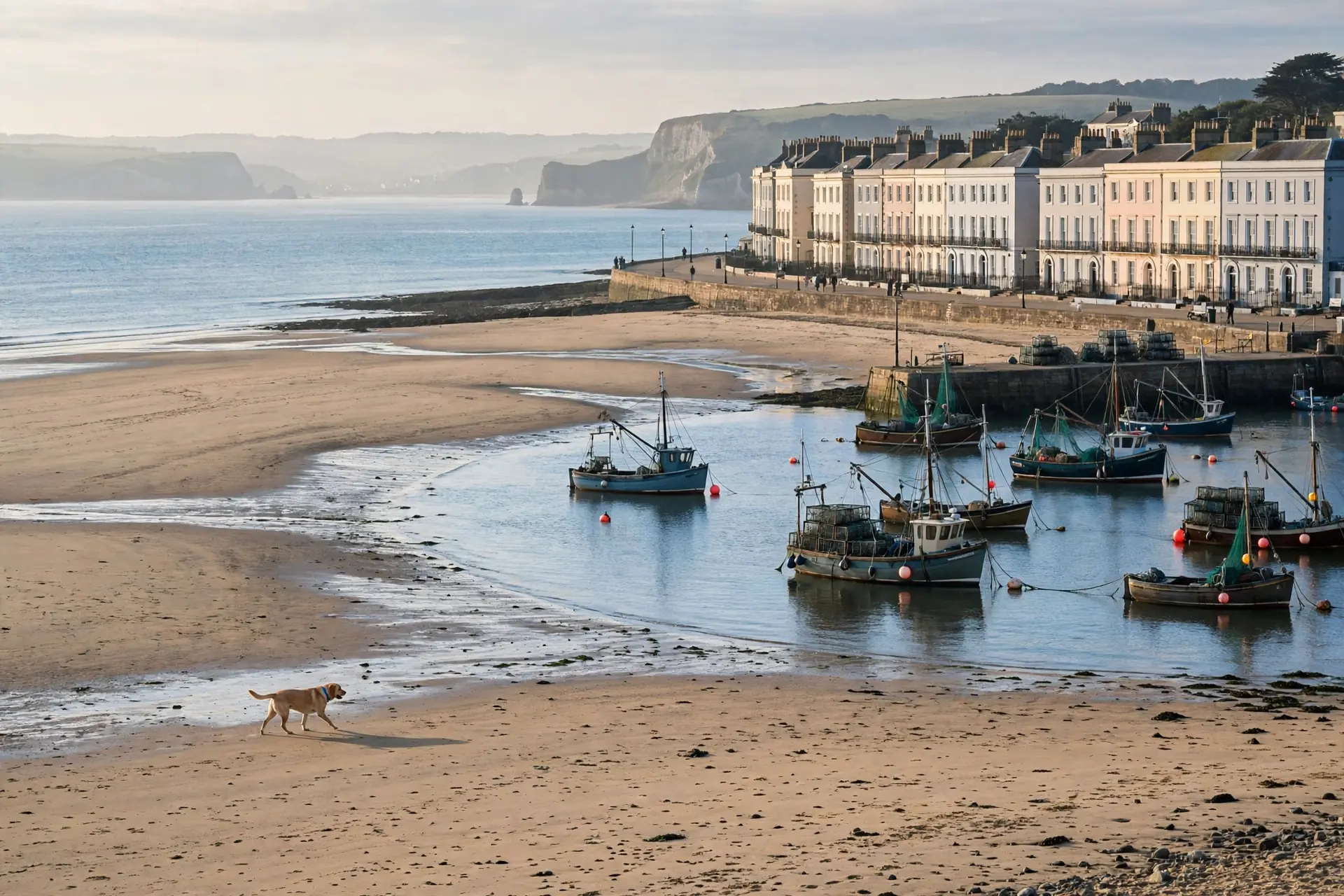
Weymouth is easiest to understand as a curve. Weymouth Bay sweeps in a broad crescent of pale sand, backed by the long, level Esplanade and the pale Georgian terraces of Melcombe Regis. At the southern end of the bay the land rises towards the Nothe, the headland that guards the harbour entrance. At the northern end the beach runs on towards Lodmoor and Preston, where the sand gives way to shingle and the crowds thin out. Once you have that shape in mind, the whole town becomes a walk rather than a drive: beach, promenade, harbour and headland all join up on foot.
That matters for dogs because Weymouth rewards a slow, connected day. A dog that starts on the sand can walk the Esplanade without a car, cross the harbour bridge, climb the short slope to Nothe Gardens, and come back along the Rodwell Trail, all in a single loop. The distances are modest, the ground is mostly flat until the Nothe, and there are water points, bins and shaded corners at regular intervals along the seafront. It is a town built for promenading, and dogs fit into that rhythm naturally.
The other thing to grasp before you arrive is that Weymouth has two personalities, and your dog will meet both. The bay side is open, sandy and holiday-minded: families, buckets and spades, ice-cream queues and dogs paddling at the waterline. The harbour side is working and watchful: fishing boats, trip boats, ropes, gulls and the smell of fish, with narrower pavements and more to sniff at ankle height. Some dogs love the harbour best and are bored by an empty beach; others are the opposite. Plan your day so the dog gets both, and watch which one they settle into.
Season changes the town more than the map does. On a bright summer Saturday the Esplanade is busy from late morning, the beach is crowded, and the harbour pavements fill with people queuing for boats. On a grey October weekday the same route feels spacious, the dogs outnumber the holidaymakers, and a nervous dog can walk the whole bay without being crowded. If your dog is reactive, noise-sensitive or newly adopted, choose the quieter season or the earliest hours of a summer day. The bay at eight in the morning, before the crowds arrive, is a different place from the bay at noon.
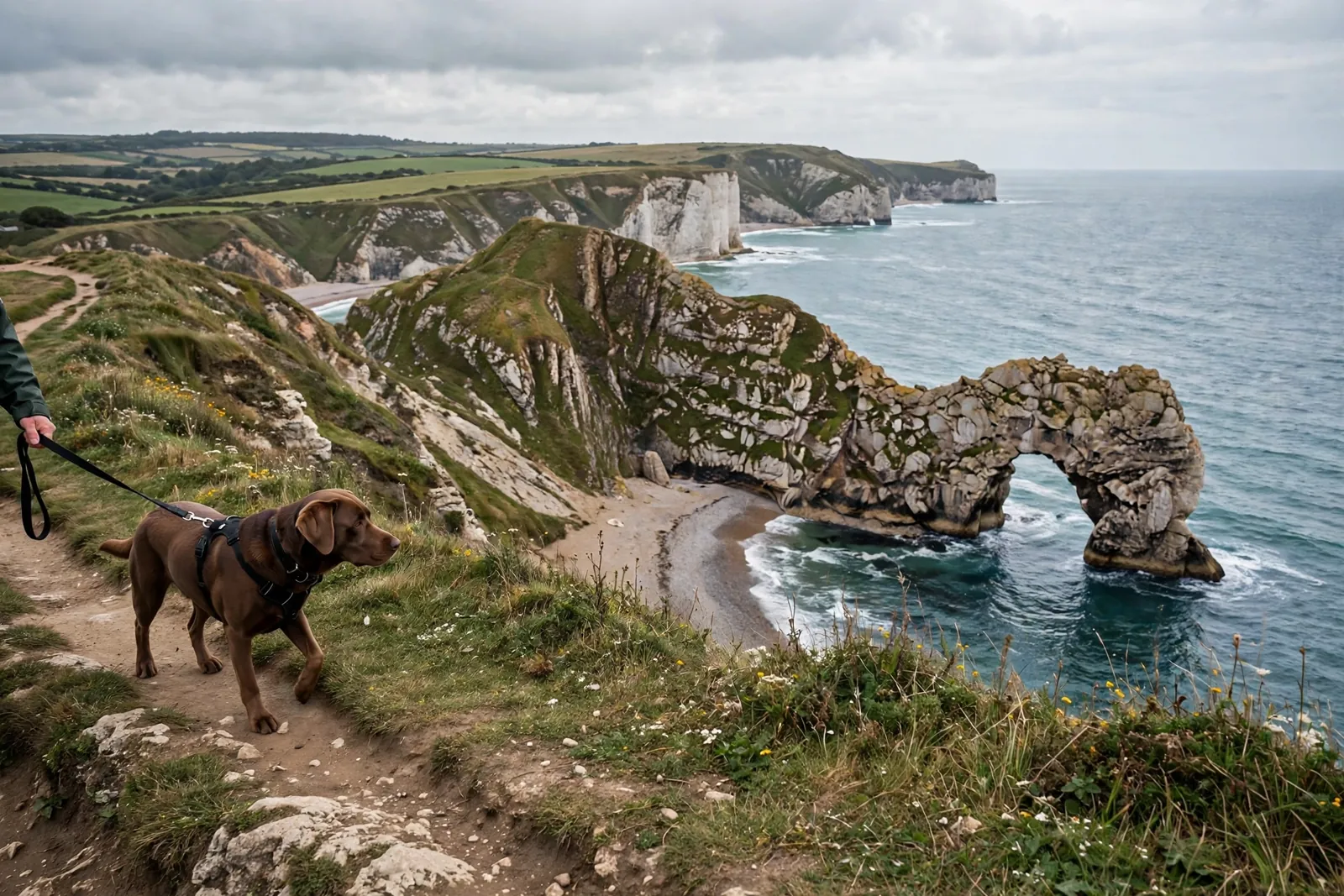
Finally, Weymouth sits on the Jurassic Coast, and the wider Dorset coastline is part of the same trip for many visitors. If you are staying for several days, use Weymouth as a base and the surrounding coast as a series of short drives. Our Dorset dog guide covers the Jurassic Coast beaches and walks around Durdle Door, Lulworth, Studland and Swanage, including the cliff safety and lead rules that matter once you leave the flat bay behind.
Weymouth Beach rules, sand and swimming
Weymouth Beach is the reason most dog owners come here: a wide, gently shelving stretch of sand that runs for a long way at low tide, with shallow water that suits paddling dogs and cautious swimmers. At low tide the wet sand firms up and gives dogs a huge, forgiving surface to run on. At high tide the beach narrows sharply, so the same walk that felt endless in the morning can feel squeezed by the afternoon. Check the tide times before you travel, and plan the beach part of your day around low water rather than around lunch.
The rules are the part to get right before you let a dog off the lead. Seasonal dog restrictions apply to the main central section of Weymouth Beach during the summer months, while other stretches stay open to dogs, and the exact boundary and dates can change from year to year, so check the official guidance before you travel and read the signs at each beach access point rather than following what other dog owners are doing. The signs at the top of the steps and ramps are the authority on the day, and the restricted area is usually marked clearly on the sand as well. If you are unsure whether you are inside the restricted zone, keep the dog on a lead and walk on until you reach a signed dog-friendly stretch.
Outside the restricted season, or on the stretches where dogs are welcome, the beach is generous. Dogs can run on the firm wet sand, chase a ball without the ball disappearing into dunes, and paddle in water that stays shallow for a long way out. That shallow slope is a genuine advantage for older dogs and for dogs that are not strong swimmers: they can wade chest-deep without suddenly losing the bottom. Keep a long line on a dog whose recall is unproven, because the open sand, the gulls and the smell of other dogs are strong distractions, and a dog that runs to the far end of the bay is a long way from you before you notice.
Sand itself needs managing. Fine Weymouth sand gets between toes, into ears and onto car seats, and a wet dog will carry a surprising amount of it home. Bring a towel and a brush, and rinse paws with fresh water before the car journey. Check between the toes for sand and small stones after a long run, and watch for limping on the walk back to the car: sand can hide broken shells and sharp fragments, especially near the harbour end and after rough weather. A dog that keeps licking a paw on the Esplanade probably has something lodged, so stop and look rather than walking on.
Swimming in Weymouth Bay is usually calm, but the bay is not a swimming pool. Keep dogs close to the shore, away from the harbour entrance where boats come and go, and away from any boat lanes or trip-boat routes. Do not let a dog swim after eating a large meal, and do not encourage a tired dog to keep fetching from deep water. After a swim, rinse with fresh water, dry the ears as far as your dog allows, and watch for excessive drinking of seawater, which can cause vomiting and diarrhoea. If your dog swallows a lot of seawater or seems unwell after swimming, contact a vet promptly.
Preston Beach and Bowleaze Cove, north-east of the main bay, offer a useful alternative when the central beach is restricted or crowded. The sand gives way to shingle there, the crowds thin, and the walk along the coast towards Furzy Cliff feels wilder. Shingle is harder on paws than sand, so keep the first visit short for a dog that is not used to it, and carry water, because there is less shade and fewer facilities than on the main Esplanade.
The historic harbour and the Esplanade
Weymouth Harbour is one of the oldest parts of the town, and it still works. Fishing boats unload in the morning, trip boats leave from the quayside, and the harbour walls, ropes and bollards give the whole area a smell and a texture that dogs find endlessly interesting. Walk the harbour on a lead, at the dog's pace, and let them sniff the quayside properly rather than hurrying them past. The harbour is not a place for off-lead running: the pavements are narrow in places, the water is close, and there are moving vehicles, cyclists and people carrying fishing gear.
Start on the Melcombe Regis side, where the Esplanade meets the harbour, and cross by the lifting bridge when it is down and the way is clear. The bridge itself is worth a pause: dogs that are unsure about metal grates, gaps or vibration may hesitate, so let them approach at their own speed and do not drag them across. On the other side, the old harbour streets are narrower and quieter, with pubs, chandleries and small shops, and the walk along the quay gives you the classic Weymouth view back across the water to the Esplanade terraces.
Gulls are the harbour's main dog hazard. They are bold, numerous and used to people, and they will swoop for dropped food and scavenge around bins and fish stalls. Keep food out of reach, do not let your dog chase gulls, and keep a firm hold on the lead near the fish stalls and the quayside cafes where scraps fall. A dog that lunges at a gull near the harbour edge can pull an owner off balance, so shorten the lead and keep the dog on the building side of the pavement where the drop to the water is concerned.
The Esplanade is the easiest walk in Weymouth, and the one most dogs enjoy most. It is wide, level and traffic-separated for long stretches, with benches, bins and water points, and the Georgian terraces behind it give shade on a hot day. Walk it early for a calm, spacious stroll, or late in the afternoon when the day-trippers have left. In the middle of a summer day it is busy, and a reactive dog will find the crowds, the pushchairs, the scooters and the other dogs a lot to process. If your dog struggles with crowds, use the beach at low tide instead of the promenade, or walk the Esplanade after the evening crowds thin.
One practical habit makes the harbour and Esplanade walk much easier: carry a short lead as well as a long one. The long line is right for the beach and the Rodwell Trail, but the harbour pavements, the bridge and the busy stretches of the Esplanade call for a short, controlled lead. Swap leads rather than trying to manage a long line through a crowd. It is a small change that prevents most of the tangles, trips and pulled shoulders that spoil a seaside walk.
Nothe Fort and Nothe Gardens
The Nothe is the headland at the southern end of Weymouth Bay, and the climb up to it is the one hill in an otherwise flat Weymouth day. Nothe Fort, a Victorian sea fort built to defend the harbour, sits on the point with wide views over the bay, the harbour entrance and the coast towards Portland. Nothe Gardens, the public gardens beside the fort, give dogs a green, sloping space to walk on a lead, with benches, trees and views that make the climb worthwhile even if you do not go inside the fort at all.
Walk up from the Esplanade on the road or the footpaths that climb through the gardens, and take it slowly with an older dog or a dog that is not used to slopes. The paths are surfaced but steep in places, and the ground can be slippery after rain. Keep dogs on a lead throughout the gardens and around the fort, because the edges are unfenced in places, the drops to the sea are real, and other visitors, including children, use the same narrow paths. A dog that is fine on a flat beach can still be startled by the height and the wind on the headland, so watch for hesitation and give them time.
Access inside the fort itself can be restricted for dogs, so check the official guidance before you travel rather than assuming your dog can go in with you. Plan on enjoying the outdoor areas, the gardens and the headland paths, and treat indoor access as a bonus if it is available on your visit. If one person in your party wants to go inside while the other waits outside with the dog, the gardens are a comfortable place to wait, with shade, benches and views over the harbour entrance to watch the boats coming and going.
The views from the Nothe are the payoff. From the headland you can see the whole curve of Weymouth Bay, the Esplanade terraces, the harbour mouth and the long sweep towards Portland. It is a good place for photographs, but keep the dog on a short lead near the edges and do not let them climb on walls or sit on parapets. The wind on the headland is stronger than on the beach below, so a small or short-coated dog may feel the cold on a windy day, and a drying coat after a beach swim is worth carrying up with you.
Combine the Nothe with a walk down to the harbour side rather than retracing your steps. The paths down towards the old harbour are quieter than the Esplanade route, and they bring you out among the harbour pubs and quayside where you can stop for a drink. That loop, beach to gardens to fort to harbour, is the most satisfying short walk in Weymouth, and it gives a dog sand, grass, views and harbour smells in under two hours.
The Rodwell Trail to Portland
The Rodwell Trail is Weymouth's best dog walk for owners who want distance without hills, traffic or decisions. It follows the line of the old Weymouth to Portland railway, running flat and traffic-free from the edge of the town towards the Isle of Portland, through cuttings, past old station sites and over the causeway country that links Weymouth to Portland. It is a straightforward out-and-back walk: go as far as your dog is comfortable with, then turn around and come back the same way.
For dogs, the trail's virtues are practical. The surface is mostly firm and level, so older dogs, dogs recovering from injury and puppies building up their walking distance can all manage it. There are no cars, so a dog on a long line can sniff and wander without the owner watching for traffic at every junction. The cuttings give shade and shelter on a hot or windy day, and the open stretches give long views across the Fleet and towards Portland. It is the walk to choose when the beach is restricted, crowded or too hot, and when you want a calm, predictable hour rather than a busy seafront.
Keep dogs on a lead where the trail meets roads, around cyclists and near other walkers, and be ready for bikes: the trail is shared with cyclists, and a dog on a long line across the path is a hazard for everyone. Call your dog in, shorten the line and step to the side when you hear a bike bell or see a cyclist approaching. The same courtesy applies to runners, horse riders where they are permitted, and families with small children. The trail is wide enough for everyone when dogs are kept close at passing points.
Water and shade need planning on the Rodwell Trail. There is little shade on the open stretches and few water points along the way, so carry water for the dog and a collapsible bowl, especially in warm weather. The cuttings are cooler, but the exposed sections can be hot and bright at midday, and the dark surface of the path holds heat. Walk it early or late in summer, and check the dog's paws on the way back: a dog that is slowing down, seeking shade or lifting paws is telling you the surface is too hot or the distance is too long.
How far you go is up to you and your dog. A short out-and-back from the Weymouth end gives a gentle half-hour walk with a taste of the old railway line. A longer walk towards Portland gives a proper half-day outing, with the chance to look across to the Fleet lagoon and the birdlife there. Whatever distance you choose, remember that an out-and-back walk is twice the distance you have already covered, so turn around while the dog still has energy in reserve. An older dog that walks happily for forty minutes out may struggle with forty minutes back if the sun has come out and the wind has dropped.
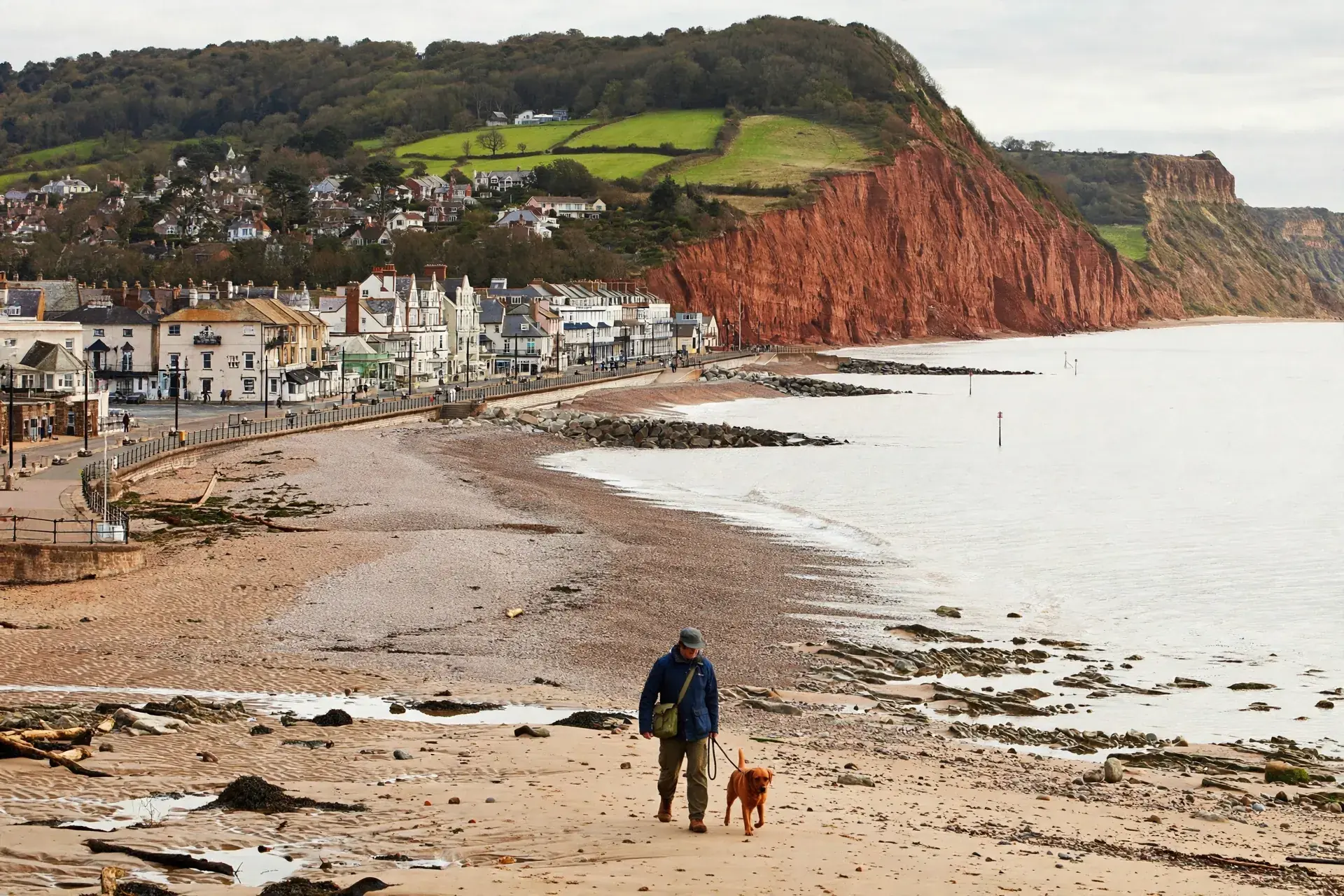
The Rodwell Trail also connects Weymouth to the wider walking country around Portland, but do not treat it as a shortcut to a long coastal walk without preparation. The Portland coast is exposed, with cliff edges and strong winds, and it needs different lead rules and safety checks from the flat trail. If you want to extend the trip, our Dorset dog guide covers the cliff walks and coastal safety rules that apply once you leave the railway line behind, and our Sidmouth guide shows how another Jurassic Coast town handles red cliffs, beach rules and a cliff-top walk, which is a useful comparison before you plan a longer coastal day.
Radipole Lake and the quieter walks
Radipole Lake, the reed-fringed lake at the northern edge of Weymouth town centre, is the quiet counterpoint to the beach and the harbour. It is a nature reserve, home to swans, herons, reed warblers and other water birds, and the paths around it give dogs a calm, green walk on a lead, away from the seafront crowds. The lake is best in the early morning, when the birds are active and the paths are quiet, and it is a good choice for a dog that needs a gentle start to the day before the beach.
Keep dogs on a lead at Radipole Lake at all times, and keep them out of the water and the reed beds. The lake is a wildlife habitat, not a swimming spot, and a dog crashing through the reeds disturbs nesting birds and can pick up ticks and stagnant-water smells. Stay on the marked paths, keep the dog close when birds are on the path ahead, and carry bags: there are bins, but the paths are narrow and other walkers will notice a missed mess quickly. The reserve rewards slow walking and watching, and a dog that is allowed to sniff the hedgerows at its own pace will get more from the visit than a dog hurried around the lake.
Lodmoor Country Park, just beyond the northern end of the beach, offers a different kind of quiet walk. The park has open grass, play areas and paths that link the beach to the countryside inland, and it is a useful stop on a longer walk from the bay towards Preston. Dogs should be kept on a lead around the play areas and the car park, and under close control on the open grass where other dogs and families are playing. It is a good place for a picnic stop, with space to sit and let the dog rest in the shade before the walk back.
For a longer, wilder walk, the coast path north-east from Preston Beach towards Bowleaze Cove and Furzy Cliff gives a taste of the Jurassic Coast without leaving Weymouth. The path climbs, the ground becomes rougher, and the views open up along the coast. Keep dogs on a lead near the cliff edges, watch for loose ground after rain, and do not let a dog run ahead around blind corners where the path narrows. This is the walk to choose when the beach feels too tame and you want a proper coastal hike, but it is not a walk for a dog that pulls, or for a first visit in wet or windy weather.
Sandsfoot Castle, on the coast between Weymouth and Portland, is another quiet stop worth building into a Rodwell Trail day. The castle ruins and the gardens around them give a short, lead-only walk with views back across the bay to Weymouth, and the paths there are gentler than the cliff path. It is a good turnaround point for a shorter Rodwell Trail outing, giving the dog a destination and a rest before the walk back into town.
Eating and drinking with a dog in Weymouth
Weymouth is a seaside town that expects dogs, and most of the eating and drinking that works for dog owners happens outside or on the edge of things: harbour-side terraces, Esplanade cafes with pavement tables, and pubs with gardens or quayside seating where a dog can lie under a table out of the way. That is the pattern to plan around. A dog that is welcome on a terrace may not be welcome inside, and a pub that welcomes dogs in the bar in winter may restrict them to the garden in summer, so check the current policy before you travel and again when you arrive, because policies change with the season and with the landlord.
On the harbour side, the pubs and cafes along the quay are the natural lunch stop after a harbour walk. Look for places with outdoor seating where the dog can settle beside you rather than in a thoroughfare, and choose a table away from the edge of the quay if your dog is restless. Order at the bar or the counter where that is the system, and leave one person with the dog if the ordering point is inside and dogs are not allowed in. Bring a mat or a blanket for the dog to lie on, because quayside flagstones and pub garden slabs are hard and cold, and a dog that has a defined spot settles much faster than a dog left to choose its own.
Along the Esplanade, the cafes and ice-cream kiosks are built for takeaway, which suits dog owners well. Buy food to take away and eat it on a bench or on the beach, rather than trying to fit a dog into a crowded indoor cafe. That also avoids the most common problem on the Esplanade: a dog begging at a neighbouring table, or a neighbouring dog begging at yours. If you do sit at a pavement table, keep the lead short, keep the dog on your side of the table rather than in the walkway, and watch for dropped food, which on a seaside promenade can include bones, corn cobs and wrappers that are dangerous for dogs.
Fish and chips, the classic Weymouth meal, needs a little care with a dog. Chips are fine as an occasional treat in small amounts, but battered fish, bones and the salt and fat of a full portion are not dog food, and a dog that is fed scraps from a chip wrapper will beg for them every time you sit down. Keep the dog's own food and treats in your bag, feed the dog from those, and keep the takeaway wrapper out of reach when you are not eating. Gulls will also try to steal food from an unwatched wrapper, so keep it close.
Water is the other half of eating out. Carry a collapsible bowl and offer water regularly, especially after a beach walk or in warm weather, and do not rely on a pub or cafe having a dog bowl, although many do. If a place does offer water, accept it gratefully and keep the bowl out of the walkway. A dog that has drunk seawater on the beach needs fresh water more than food, so offer water before you order, and let the dog drink and settle before you sit down to eat.
Finally, plan for the meal you cannot take the dog to. Some restaurants in Weymouth do not accept dogs at all, and a long, formal meal is not a good use of a dog's patience. If you want a proper restaurant dinner, plan it for an evening when the dog can rest at your accommodation, or choose a place with a terrace and eat early, before the crowds arrive. A dog that has had a long beach walk, a drink and a rest will settle for an early dinner far better than a dog that has been walked hard all day and is then asked to lie quietly under a table at nine in the evening.
Staying overnight with a dog
Weymouth has a wide range of places to stay with a dog, from seafront hotels and guesthouses on the Esplanade to self-catering flats in Melcombe Regis, holiday parks on the edge of town and campsites towards Preston and Portland. The right choice depends on your dog more than on the view. A dog that settles quietly in a new room will be happy in a hotel; a dog that barks at every corridor noise, needs a garden at midnight or cannot be left alone will be happier in self-catering accommodation with its own door to the outside.
Ask the specific questions before you book, and get the answers in writing. Does the property accept dogs in the room or flat you are actually booking, or only in selected rooms? Is there a pet fee, and is it per dog, per night or per stay? How many dogs are allowed, and is there a size or breed condition? Can the dog be left alone in the room, and if so, for how long and under what conditions? Is there a garden, a terrace or a nearby toilet area, and is it enclosed? A property that answers those questions clearly has thought about dogs; a property that answers with a vague reassurance has not, and you will discover the difference at midnight.
Location matters as much as the room. A place on or near the Esplanade gives you the beach and the promenade on foot, which is ideal for early-morning and late-evening toilet walks. A place on the harbour side gives you the quay and the old town, but may involve steps, narrow streets and more noise at night. A place on the edge of town, towards Lodmoor or Preston, gives you quieter nights and easier parking, but means a drive or a longer walk to the beach. Choose the location that fits your dog's toilet routine and noise tolerance, not just the view from the window.
Settle the dog in the room the way you would at home. Bring their bed, their usual food and water bowls, a familiar blanket and a chew or a toy they know. Walk the immediate area on arrival so the dog knows where the toilet spot is, and keep the first evening quiet: same feeding time, same last walk, same bedtime routine. Photograph any existing damage in the room on arrival, and move anything chewable, including remote controls, charging cables and welcome biscuits, out of reach. A dog that has a defined sleeping spot and a familiar smell settles far faster than a dog left to choose a corner of a strange room.
If you are staying for several days, build a rest day into the plan. Weymouth is a town that invites constant walking, and it is easy to walk a dog too far, day after day, without noticing. A day with a short beach walk in the morning, a long rest in the afternoon and a gentle evening stroll on the Esplanade will do a dog more good than a third consecutive day of beach, fort, harbour and trail. Older dogs, in particular, need a day off, and a dog that is tired and sore on day three will not enjoy the beach on day four.
Parking, arrival and getting around
Arrive early, especially on summer weekends and school holidays, when the seafront and harbour car parks fill up by late morning. The most practical choices for dog owners are the larger car parks around Melcombe Regis, the seafront and the harbour, where you can walk straight onto the Esplanade or the beach without crossing busy roads. A car park that is a ten-minute walk from the beach through traffic is a poor start to a dog day, however cheap it is, because the dog arrives hot, excited and already tired.
Check the official guidance before you travel for current charges, time limits and payment methods, because car park arrangements in Weymouth change with the season and with local decisions. Some car parks have maximum stays that do not suit a full beach day, and some have height or size restrictions that matter for larger vehicles. Read the signs at the entrance before you park, photograph the tariff board if you are unsure, and set a reminder for your return time. A parking ticket is an avoidable end to a good day.
Never leave a dog in a parked car in warm weather, even for a few minutes, even with the windows open. A car in the sun heats up far faster than most people expect, and a dog in a hot car can become seriously ill very quickly. If you need to pop into a shop or a cafe where dogs are not allowed, leave one person with the dog, or choose a place where the dog can wait outside in the shade with water. In cooler weather, a dog that is used to waiting in the car may be fine for a very short stop, but the rule for summer in Weymouth is simple: if you would not sit in the car yourself in a coat, do not leave the dog in it.
Weymouth town centre is compact and walkable, and for most dog days you will not need a car at all once you have parked. The Esplanade, the harbour, the Nothe and the Rodwell Trail all join up on foot, and the walk from the beach to the harbour is a matter of minutes. Use the car only for the longer trips: Preston Beach, Bowleaze Cove, the Rodwell Trail's far end, or a day out along the Jurassic Coast. Walking the town rather than driving between its parts is part of what makes Weymouth work for dogs, because the dog gets exercise and sniffing time between every stop.
If you arrive by train, Weymouth station is a short walk from the seafront and the Esplanade, which makes a car-free day entirely practical. Dogs are generally welcome on trains, but check the official guidance before you travel for the current rules, keep the dog on a lead and under control on the platform, and choose a quiet carriage or a quiet time if your dog is nervous around crowds. From the station, the walk to the beach is level and straightforward, and you can be on the sand within minutes of arriving.
Getting around with a dog that pulls, or a dog that is nervous in traffic, needs a little planning in Weymouth. The Esplanade is wide and forgiving, but the harbour streets are narrower, with parked cars, delivery vehicles and people stepping off pavements without looking. Keep the dog on a short lead and on the building side of the pavement near the harbour, cross roads at the marked crossings, and do not let the dog walk ahead of you around blind corners. A dog that is under control on the harbour streets will enjoy the town far more than a dog that is constantly being pulled back.
Tides, weather and seaside safety
The tide is the single most important safety factor in Weymouth, and it is easy to underestimate. Weymouth Bay is wide and flat, and at low tide the sea can seem a very long way away, which tempts owners to walk far out onto the wet sand. The tide comes in faster than it looks, and the channels and gullies that cut across the beach can fill behind you while you are watching the dog. Check the tide times before you travel, know whether the tide is coming in or going out, and start heading back to dry sand well before the turn of the tide.
Do not let a dog chase the tide out, and do not follow a dog that has run far out onto the sand. Call the dog back while you are still on firm, dry ground, and keep a long line on a dog whose recall is unreliable near the water. If a dog does get cut off by the tide, do not wade in after them: call for help and contact the coastguard. Dogs are strong swimmers and will usually make their own way back, but a person wading into a rising tide after a dog is at far greater risk than the dog.
Weather in Weymouth changes quickly, and the bay is exposed to wind from the south and south-west. A calm morning can become a windy afternoon, and a windy day can make the beach uncomfortable for a small or short-coated dog, even in summer. Bring a drying coat and a windproof layer for the dog, and watch for shivering, tucking the tail or seeking shelter, which are signs that the dog is cold. In hot weather, the opposite problem applies: the sand can become too hot for paws at midday, the Esplanade offers little shade, and the sun reflects off the water and the pale sand. Walk early or late, carry water, and test the sand with your own hand before you let the dog run on it.
Sea conditions matter as much as the weather. After storms, the beach can be covered in seaweed, driftwood and debris, and the water can be rough and murky. Do not let a dog swim in rough water, near the harbour entrance, or where there are strong currents or boat traffic. Check for any local warnings about water quality or beach closures, and check the official guidance before you travel if you are unsure. A dog that has been swimming in rough or dirty water should be rinsed with fresh water and watched for vomiting, diarrhoea or skin irritation.
Other seaside hazards are smaller but worth knowing. Broken glass and sharp shells hide in the sand near the harbour and after busy weekends. Fishing hooks and line can be found on the harbour quays and on the beach near the harbour, and a dog that sniffs a discarded hook can injure its mouth badly. Jellyfish sometimes wash up on the beach, and dogs should not be allowed to eat or play with them. Keep the dog away from dead fish, crabs and other beach carrion, which can cause vomiting, and keep them from drinking from rock pools, which can contain stagnant water and sharp shells.
Save the number of the nearest vet before you need it, and know where the nearest emergency vet is. Weymouth has veterinary practices in the town, but opening hours vary, and an out-of-hours emergency may mean a drive. Save the numbers in your phone on arrival, along with the coastguard number for a genuine emergency on the beach or the cliffs. A few minutes spent saving numbers on arrival can save a panicked search later.
Three dog-friendly day plans
A short morning visit, a full beach day and a longer walking day all work in Weymouth, but they need different plans. Choose the one that fits your dog's age, fitness and temperament, and do not try to fit all three into a single visit.
For a short morning visit of two to three hours, start on Weymouth Beach at low tide, walk the sand for an hour, then stroll the Esplanade towards the harbour. Cross to the harbour side, walk the quay for half an hour, and finish with a drink on a harbour terrace while the dog rests. This plan suits older dogs, puppies and dogs that are new to the seaside, because it gives them sand, sea, harbour smells and a rest, without a hill or a long drive. Arrive early, park near the seafront, and leave before the midday crowds arrive.
For a full beach day, plan around the tide and the sun. Arrive early, walk the beach at low tide, then move to the Esplanade and the gardens for the middle of the day, when the sun is strongest and the beach is busiest. Eat lunch on a terrace or take food away to a bench, let the dog rest in the shade, and return to the beach in the late afternoon when the tide has turned and the crowds have thinned. This plan suits fit, social dogs that enjoy swimming and playing, but it needs water, shade, a towel and a plan for the hottest hours. Do not keep a dog on a hot beach all day without a break.
For a longer walking day, combine the Rodwell Trail with the Nothe and the harbour. Start on the Rodwell Trail in the cool of the morning, walk out for an hour and back, then drive or walk to the Nothe for the gardens and the views, and finish with a harbour walk and an early dinner on a terrace. This plan suits fit, active dogs that need distance and variety, but it is a lot of walking, so build in rests and water stops, and turn back on the trail while the dog still has energy. A dog that is tired on the trail will not enjoy the climb to the Nothe afterwards.
Whichever plan you choose, end the day the same way: a short, calm walk on the lead, fresh water, a towel-down and a rest. A dog that has had a good Weymouth day will be tired, sandy and happy, and the drive home will be quieter if the dog has had time to settle before you load the car. Shake out the sand, check paws and ears, and give the dog a drink before you set off.
What to pack for a Weymouth dog day
Pack for sand, water, wind and a long walk, and you will not go far wrong. The list below is the practical minimum for a Weymouth day, and it fits in a single bag.
- Two leads: a short lead for the harbour, the Esplanade crowds and the Nothe paths, and a long line for the beach and the Rodwell Trail.
- Water and a collapsible bowl: fresh water for the dog, offered regularly, especially after swimming or in warm weather.
- Towels and a drying coat: at least two towels for sand and sea water, and a drying coat for the wind on the Nothe and the drive home.
- Poo bags and a holder: more than you think you need, because a beach day always uses more than a park walk.
- Food and treats: the dog's usual food, a few treats for recall on the beach, and a chew for settling on a terrace.
- A mat or blanket: for the dog to lie on in a pub garden, on a terrace or on the Esplanade, away from cold stone and hot sand.
- Paw care: a bottle of fresh water for rinsing paws, and a check for sand, shells and shingle between the toes after the beach.
- Sun and wind protection: shade in the form of a parasol or a light cover if you plan a long beach stay, and a coat for a short-coated dog on a windy day.
- First aid basics: tweezers for hooks or thorns, a small bottle of saline for eyes, and the number of the nearest vet saved in your phone.
- A spare lead and a spare bag: leads break and bags tear, usually at the far end of the beach, so carry a spare.
Pack the bag the night before, and check it before you leave. The most common Weymouth packing failure is not forgetting the dog's bed or the treats, but forgetting the water, the towels or the short lead, and discovering the gap at the far end of the beach or on a crowded harbour pavement. A bag packed the night before is a calm start to the day, and a calm start is what a dog needs before a seaside walk.
Practical questions
Before you go
Can dogs go on Weymouth Beach all year?
Not on every part of the beach. Seasonal dog restrictions apply to the main central section of Weymouth Beach during the summer months, while other stretches stay open to dogs. The exact boundary and dates can change, so check the official guidance before you travel and look for the signs at each beach access point.
Is the Rodwell Trail suitable for dogs?
Yes, for most dogs. The Rodwell Trail is a flat, traffic-free former railway line between Weymouth and the Isle of Portland, so it suits older dogs, puppies building up distance and owners who want a predictable route. Keep dogs on a lead where the path meets roads, around cyclists and near other walkers, and carry water because there is little shade on the open stretches.
Can dogs visit Nothe Fort?
Dogs are generally welcome in the outdoor areas around Nothe Fort and Nothe Gardens on a lead, but access inside the fort itself can be restricted. Check the official guidance before you travel, and plan on enjoying the headland paths, the gardens and the views over Weymouth Bay and the harbour entrance if the indoor areas are not open to dogs on your visit.
Where can I park in Weymouth with a dog?
The most practical choices for dog owners are the larger car parks around Melcombe Regis, the seafront and the harbour, where you can walk straight onto the Esplanade or the beach without crossing busy roads. Arrive early on summer weekends, check the official guidance before you travel for current charges and time limits, and never leave a dog in a parked car in warm weather.
What should I do if my dog swims in Weymouth Bay?
Let your dog swim only in calm, shallow water close to the shore, and keep a close watch for boats, harbour traffic and changing currents near the harbour entrance. Rinse your dog with fresh water afterwards, check ears and paws, and dry them before the car journey home. If your dog swallows a lot of seawater or seems unwell, contact a vet promptly.