This guide is independent and contains no paid placement. Beach rules, railway timetables and pier access change with the season, so check the official guidance before you travel.
Swanage works brilliantly for dogs outside the summer beach ban: the bay is sandy and sheltered, the steam railway welcomes dogs, and Durlston and Ballard Down give you cliff-top walking in both directions. Keep dogs on leads near cliff edges and on the pier, check the seasonal beach rules and tide times before you go, and plan your parking early on sunny weekends.
Swanage Bay and the beach
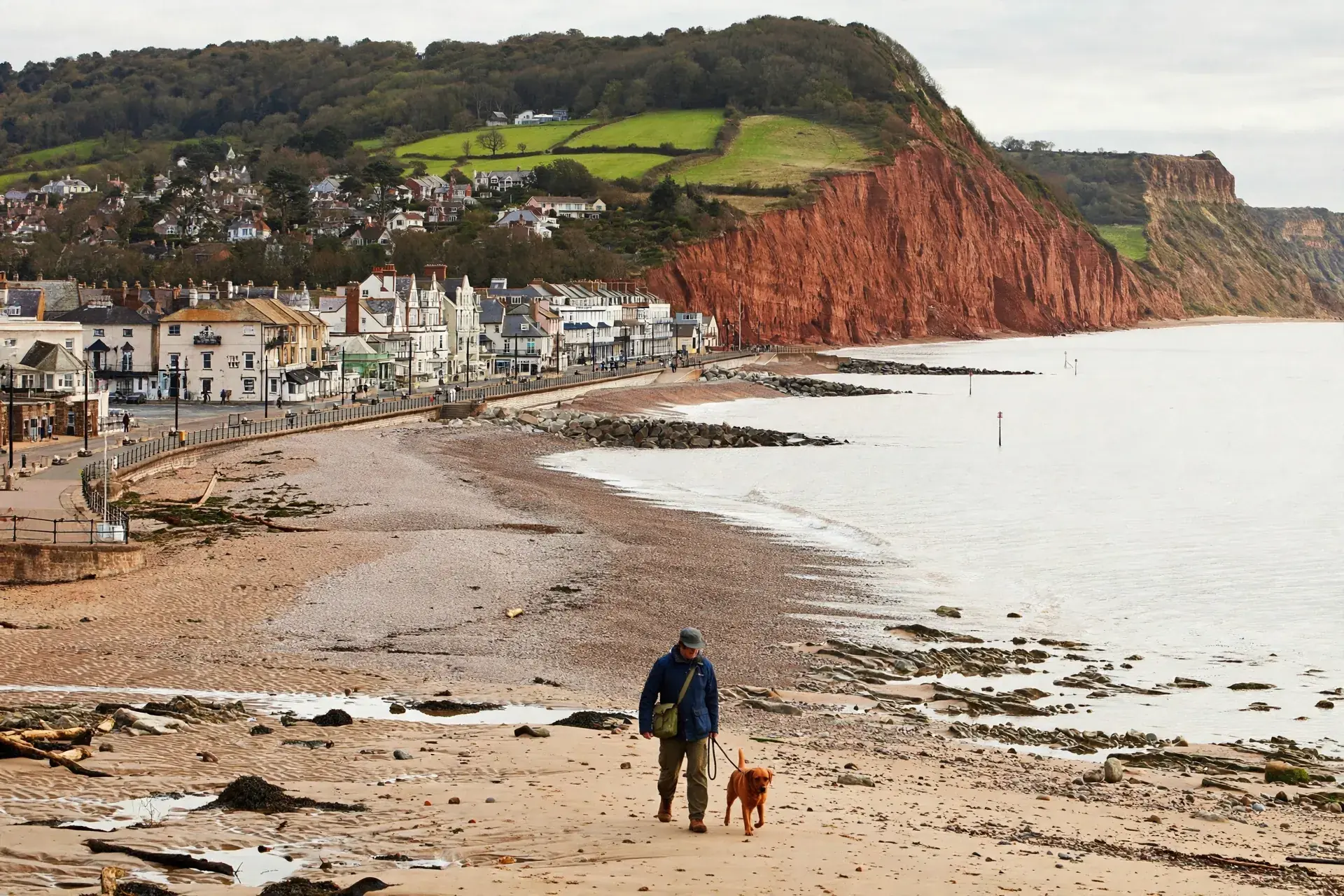
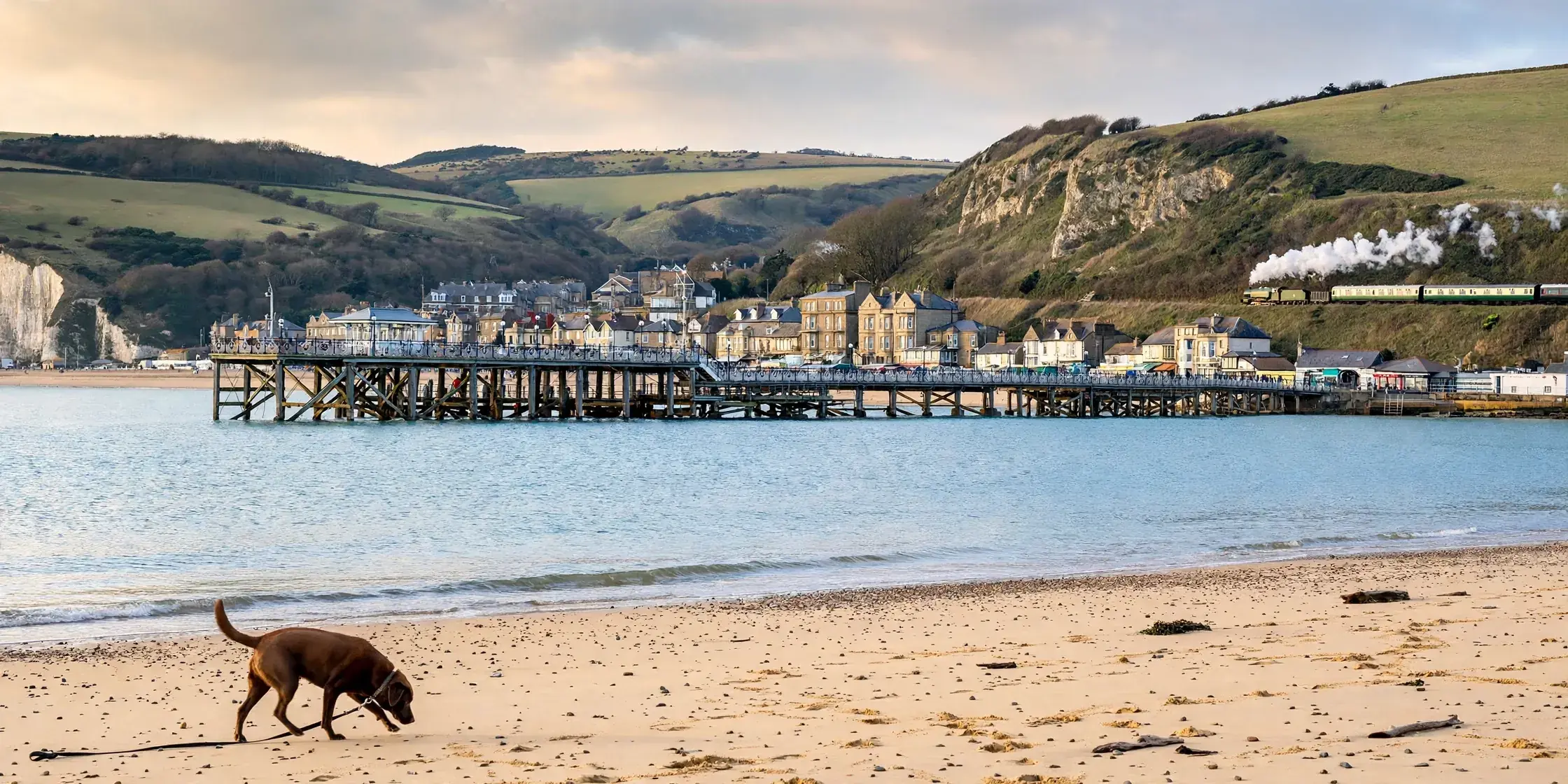
Swanage Bay is the town's front room. It is a broad, gently curving sweep of sand, sheltered by the headlands at either end, with shallow water at the shoreline and a flat promenade running behind it. For dogs, that shape matters: there is room to spread out, the sand is soft under paws, and the walk from the car park to the water is short, which makes it a kind first beach for older dogs, puppies on their first seaside trip and dogs that tire quickly.
The one thing to plan around is the seasonal dog restriction. A ban usually applies to the main beach through the summer months, when the central stretch is at its busiest with families, deckchairs and swimmers. The restricted area and the exact dates can change from year to year, so check the official guidance before you travel rather than relying on a sign you remember from a previous visit. Outside the restricted season, dogs can usually enjoy the sand freely, and even in summer the ends of the bay tend to be more relaxed than the middle. Arriving early in the morning or late in the afternoon also helps: the beach empties, the light softens, and a dog that finds crowds stressful gets the sand almost to itself.
On the sand itself, a few habits make the visit smoother. Rinse salt water off your dog's coat and paws afterwards, because sand and salt dry into itchy skin, and bring fresh water to drink — dogs that lap seawater usually regret it within the hour. A long line is more useful than a short lead on a busy beach: it gives a recall-in-training dog room to run while you keep control near children, picnics and other dogs. Watch for the usual beach hazards too. Fishing lines and hooks turn up near the pier end, broken shells can cut paws at the waterline, and in warm weather the sand itself can get hot enough to be uncomfortable, so test it with the back of your hand before asking a dog to cross it barefoot.
Swimming dogs need a little extra thought at Swanage. The bay is sheltered and the water is usually calm, but there are boats, paddleboarders and swimmers to avoid, and the shore shelves gently enough that a keen dog can wade a long way out before realising it is out of its depth. Let a dog swim only where you can see the bottom and the exit point, keep sessions short in cold water, and dry them off properly afterwards — a wet dog in a car on the drive home is a miserable end to a good beach morning. If your dog is not a swimmer, the promenade walk along the bay is just as good a way to spend the time: flat, scenic and full of smells, with benches where you can sit and watch the boats come and go.
Finally, remember that the bay is not the only beach in reach. Studland Bay, a short drive or bus ride north across the chain ferry, has long stretches of sand where dogs are welcome year-round in places, and the quieter coves west of Swanage reward a short coastal walk. If the main beach is restricted on your dates, a ten-minute drive usually solves the problem — but check the official guidance before you travel, because Studland has its own seasonal zones and National Trust rules.
The steam railway: Swanage to Corfe Castle and Norden
The Swanage Railway is the town's great dog-friendly day out, and it is hard to overstate how well it suits a dog. This is a heritage steam railway running the roughly five-and-a-half miles from Swanage through Herston Halt and Harman's Cross to Corfe Castle and on to Norden, and dogs are generally welcome on board. The journey is slow, scenic and full of things for a dog to watch: steam, whistles, fields, the sudden drama of Corfe Castle appearing on its hill as the train rounds the bend.
Boarding is straightforward if you prepare. Arrive in good time, buy your tickets at Swanage station, and settle your dog on a blanket on the floor or on the seat beside you before the train fills up. Keep the dog on a lead throughout, including on the platform, because steam, crowds and the gap between train and platform are all real hazards for a dog that wanders. If your dog is nervous about noise, choose a seat away from the locomotive and consider a first, short trip — Swanage to Harman's Cross and back — before committing to the full line. Most dogs settle within minutes of departure, lulled by the rhythm of the rails, and many regulars bring a chew or a stuffed Kong to keep a young dog occupied.
The destination is half the point. Corfe Castle is a proper village stop: step off the train and you are minutes from the castle ruins, the village square and the start of the Purbeck Ridge walks. Dogs can walk the paths around the castle, though they need to be on leads near livestock and on the National Trust land, and the village has dog-friendly pubs and tea rooms for lunch. Norden, the line's far terminus, is quieter and greener, with walks out towards Corfe and the heathland. Either way, check the timetable before you set out — services vary by season, some days run a diesel service rather than steam, and the last train back to Swanage leaves earlier than many visitors expect. Check the official guidance before you travel for current times, fares and any special-event conditions.
One practical note: the railway is busiest on summer weekends and during school holidays, when carriages fill and the platform at Swanage gets crowded. If your dog struggles with crowds, travel on a weekday, catch an early train, or visit outside the peak season. Autumn and winter steam services are often quieter and just as atmospheric, with low light across the Purbeck hills and a warm carriage to sit in afterwards. Whatever the season, bring water and a bowl for the dog, and remember that the station has limited shade on hot days, so do not leave a dog waiting in a parked car while you queue for tickets.
Durlston Country Park: castle, globe and cliff-top paths
South of the town, Durlston Country Park is where Swanage turns wild. The park is a National Nature Reserve of cliff-top grassland, woodland and wildflower meadows, centred on Durlston Castle, a Victorian stone building that now holds a visitor centre, cafe and gallery. For dogs, it is one of the best walks in the area: a network of waymarked paths, open ground to sniff through, and views that stretch from Swanage Bay across to the Isle of Wight on a clear day.
Start at the castle. The Great Globe, a huge stone globe carved in 1887 that stands on the cliff edge below the castle, is the park's most famous landmark and a good turnaround point for a short walk. From there the South West Coast Path runs west along the cliffs towards the lighthouse at Anvil Point, and east back towards the town. The paths are mostly well surfaced but undulating, with steps in places and exposed sections where the wind can be strong, so a lead is essential near the cliff edges. Keep dogs on leads around the park's grazing livestock too — cattle and sheep graze the meadows as part of the reserve's management, and a loose dog among them is a serious problem.
Durlston rewards slow walking. The meadows are rich in wildflowers in late spring and summer, the woodland paths are sheltered on windy days, and the seabirds — fulmars, guillemots and the occasional peregrine — give a keen dog plenty to watch from a safe distance. The park also runs events and guided walks through the year, some of which welcome dogs; check the official guidance before you travel if you want to join one. After your walk, the castle cafe is a good place to stop, and there is drinking water available for dogs. The park is free to enter, though parking is charged, and the car park fills up on sunny weekends, so arrive early or walk up from the town — it is about twenty minutes on foot from the seafront, uphill all the way, which is a walk in itself.
For dogs that need a gentler outing, Durlston still works. The paths around the castle and the globe are short and relatively flat, the lawns are good for a sniff and a rest, and the views come without any climbing at all if you drive up and park near the castle. For fitter dogs, the cliff path west towards the lighthouse and beyond makes a satisfying half-day loop, linking back through the woodland paths to the castle. Whichever route you choose, take water — there are few drinking spots once you leave the castle — and be ready for the weather to change quickly on the cliff top.
Ballard Down and Old Harry Rocks
East of Swanage, the land rises into Ballard Down, a chalk ridge that ends in the white cliffs of Old Harry Rocks. This is the classic Swanage dog walk, and one of the finest coastal walks in Dorset: a round trip of roughly four to five miles from the town, following the South West Coast Path up over the down and out to the rocks, with views the whole way — back across Swanage Bay, forward to the Isle of Wight and the Needles, and down to the sheer chalk stacks themselves.
The climb is the first thing to know about. From the seafront the path rises steadily through the houses and then out onto open downland, and the ascent is steady rather than steep, but it is a real climb all the same. Older dogs and very small dogs may find it tiring, and there is almost no shade on the ridge, so on a hot day start early, carry plenty of water, and let the dog set the pace. The reward is the open ground at the top: short chalk grassland, skylarks overhead in spring and summer, and the path running along the ridge with the sea on one side and the Purbeck hills on the other.
Old Harry Rocks themselves are the payoff. The chalk stacks stand in the sea at the end of the headland, white against blue water, and the viewpoint above them is one of the most photographed spots on the Jurassic Coast. Keep your dog on a short lead here and well back from the edge: the cliffs are sheer, the ground near the edge can be undercut, and the wind at the headland is often much stronger than it was in town. This is not a place for off-lead running, however tempting the open downland looks. Dogs that chase birds need particular care, because the cliffs are a seabird colony and a dog that bolts towards the edge is in real danger.
The return can follow the same ridge path, or drop down through the valley towards Studland for a longer loop if you have arranged transport back — but check the official guidance before you travel if you plan a one-way walk, because bus times and ferry times change with the season. In poor weather, skip the ridge entirely: high winds, rain and fog turn an enjoyable walk into an exposed and unpleasant one, and the chalk paths become slippery when wet. On a calm, clear day, though, there is no better walk from Swanage with a dog, and the sense of space at the top — sea on three sides, sky above — is the reason most people come back.
Swanage Pier and the seafront
Swanage Pier is the town's Victorian showpiece, built in the 1890s and still standing on its original iron piles, and it makes a perfect short dog walk. Dogs on leads are generally welcome on the pier, and the walk out over the water is full of interest for a dog: boats below, anglers with their tackle, the smell of the sea and the sound of the waves under the boards. It is a gentle, flat stroll that suits dogs of every age, and on a clear day the view back across the bay to the town and the Purbeck hills is one of the best in Swanage.
Keep your dog close on the pier. The walkway is narrow in places, anglers leave lines and hooks around, and the gaps between the boards can catch a small paw. There is also very little shade, so in hot weather the boards can be warm and the sun strong — go early or late in the day and bring water. The pier sometimes closes or restricts access in bad weather, and there may be a small charge to walk to the end, so check the official guidance before you travel. If your dog is nervous about heights or the movement of the boards underfoot, the promenade alongside the bay is a calmer alternative with the same view.
The seafront around the pier is where Swanage shows its seaside character: the promenade, the beach huts, the gardens behind the beach, and the little amusement and cafe spots that cluster near the shore. It is an easy, flat walk from one end of the bay to the other, and a good first outing for a dog that has just arrived — enough to see, smell and stretch without any real effort. On summer evenings the promenade is busy with families and other dogs, so keep the lead short and be ready to step aside; on winter mornings it is often almost empty, and a dog can walk the whole length in peace.
Eating, drinking and pottering around town with a dog
Swanage town centre is small, walkable and generally welcoming to dogs, which makes it easy to build a day around the dog rather than around the dog's absence. The High Street runs down to the seafront, with independent shops, bakeries, delis and cafes along it, and most of the outdoor seating in town is dog-friendly by default. The habit that works best is to look for a table outside, settle the dog on a mat with water, and order at the counter — dogs are far more relaxed outdoors, where they can watch the street, than in a busy dining room.
For a proper pub lunch, Swanage has several dog-friendly pubs, mostly with outdoor seating along the seafront and on the High Street. Policies change, so check the official guidance before you travel and ask before taking a dog inside — some pubs welcome dogs in the bar but not in the restaurant area, and some are outdoor-only for dogs. Bring a mat and a water bowl so your dog can settle quietly under the table, and order something for the dog if the pub offers it; a small treat on arrival does more for good behaviour than any amount of shushing later.
One of the best-known dog-friendly stops in the area is not in Swanage at all but a short drive away: the Square and Compass at Worth Matravers, a famous stone pub at the end of a coastal walk, with a large garden where dogs are welcome. It is the natural finish to a walk from Swanage along the coast path, or a destination in its own right on a quiet afternoon. The pub is popular, especially on sunny weekends, so expect a crowd and keep your dog on a lead in the garden.
Around town, the practicalities are easy. There are dog waste bins along the promenade and in the main car parks, a couple of pet supply shops on the High Street for forgotten leads and treats, and plenty of benches and low walls where a tired dog can rest. The town's compact size means you are never far from the car or your accommodation, which matters if a dog needs a break. If you are staying for several days, the town also makes a good base for exploring the wider Purbeck area: Corfe Castle, Studland, Lulworth and the Jurassic Coast are all within easy reach, and our wider guide to Dorset with a dog covers the county's beaches, cliff safety and lead rules in more detail.
Where to stay in Swanage with a dog
Swanage has a good range of dog-friendly places to stay, from seafront hotels and guest houses to self-catering cottages, apartments and caravan parks on the edge of town. Self-catering cottages are often the easiest choice for dog owners: your own front door, a kitchen for the dog's food, and no dining room to negotiate. Cottages near Durlston and on the quieter streets above the town tend to have gardens and easy access to the coastal paths, while seafront apartments suit dogs that are happy in a flat and owners who want the beach on the doorstep.
Whatever you book, ask the same questions before you pay. Is there a limit on the number or size of dogs, and is there an extra charge per dog or per stay? Is the garden genuinely enclosed, and how high is the fence — a low wall that a terrier can clear is not an enclosed garden. Are dogs allowed on the furniture, or will you need to bring your own bed and covers? Is there somewhere to wash a sandy dog, and is there a practical toilet walk nearby for the last outing of the night? Get the answers in writing with the booking confirmation, because "dog-friendly" on a listing can mean anything from a dedicated dog welcome pack to a grudging tolerance with a long list of conditions.
Caravan parks and campsites around Swanage are another good option, especially for families with dogs that need space. They tend to have more outdoor room, easier parking beside the unit, and direct access to walks without crossing town. The trade-off is that facilities vary: check whether dogs are allowed in the on-site bar or restaurant, whether there is a dog exercise area, and how far the nearest beach is on foot. For a longer stay, a park on the edge of town with a level walk into Swanage often beats a central flat with a flight of stairs and nowhere to park.
Book early for the best choice. Dog-friendly accommodation in Swanage sells out well ahead in school holidays and on summer weekends, and the best-located cottages — those with enclosed gardens and sea views — are usually booked months in advance. Shoulder season is the sweet spot: May, June, September and October bring good weather, quieter streets, open beaches where the summer restrictions have lifted, and lower prices. If you are planning a longer trip along the coast, our south coast road trip with a dog shows how Swanage fits into a leg-by-leg itinerary with two-hour driving days and overnight stops.
Getting to Swanage and parking with a dog
Swanage sits at the end of the road, which is part of its charm and part of the planning. Most visitors arrive by car, driving through Wareham and Corfe Castle on the A351, a scenic route that slows down considerably in summer. The drive from Corfe to Swanage is one of the prettiest in Dorset, with the castle on its hill and the Purbeck ridge on either side, but it is also narrow and busy on changeover days, so allow extra time and do not rush it with a dog in the car.
An alternative arrival is the chain ferry from Sandbanks to Studland, which crosses the mouth of Poole Harbour and drops you onto the road to Swanage from the north. Dogs stay in the car for the short crossing, and the ferry saves a long drive around the harbour — but it can queue for a long time on summer weekends, and the fare is charged per vehicle, so weigh the saving against the wait. Check the official guidance before you travel for current ferry times and prices. There is also a bus service linking Swanage with Wareham, Corfe Castle and Poole, and dogs are usually allowed on board at the driver's discretion; keep the dog on a lead and be ready to sit where it causes the least disruption.
Parking in Swanage needs a plan, especially on sunny weekends. The main car parks are near the seafront and the station, and they fill up by late morning in peak season. Arrive early, use the larger car parks on the edge of town and walk in, or park near Durlston and walk down — the walk is downhill into town and uphill back, which is worth remembering with a tired dog. Never leave a dog in a parked car in warm weather, even with the windows open: cars heat up fast, and Swanage's sheltered bay can be several degrees warmer than the open coast. If you need to pop into a shop, take the dog with you or leave one person with the dog in the shade.
Once you are in town, you barely need the car. Swanage is compact enough to walk everywhere, the coastal paths start from the seafront, and the railway station is in the town centre. That is the real advantage of the town as a dog base: park once, walk everywhere, and let the car sit idle until it is time to explore further afield.
Tides, cliffs and safety notes
Swanage is a safe town for dogs, but the coast around it deserves respect. The cliffs at Durlston and Ballard Down are high and sheer, with no fences along much of their length, and the ground near the edge can be undercut or crumbly after rain. Keep dogs on leads on all cliff paths, keep them well back from the edge, and do not let them chase birds or other animals towards a drop. If a dog does go over or gets stuck on a ledge, do not climb after it — call the coastguard on 999 and let the professionals handle it.
Tides matter at Swanage more than many visitors realise. The bay itself is wide and safe at most states of the tide, but the coves and the base of the cliffs further along the coast can be cut off by a rising tide, and the South West Coast Path sometimes drops to beach level where there is no escape route at high water. Check the tide times before any coastal walk, plan to be back on high ground well before the tide turns, and never let a dog run ahead around a headland you cannot see past.
Heat is the third thing to watch. Swanage's sheltered bay is a sun trap, and the sand, the promenade and the pier boards can all get hot enough to burn paws on a summer afternoon. Walk early or late in the day, carry water and a portable bowl, and know the signs of heatstroke: heavy panting, drooling, wobbling and glazed eyes. If a dog shows them, move to shade, cool the dog with water on the belly and paws, and get to a vet quickly. The nearest vets are in Swanage itself and in Wareham — save the number before you need it, and check the official guidance before you travel for current opening hours.
Other hazards are smaller but worth a mention. Adders live on the Purbeck heaths and downland, so keep dogs on paths and out of long grass and bracken in warm weather, and know what to do if a dog is bitten — keep the dog still, carry it if you can, and get to a vet immediately. Ticks are common on the heathland too, so check your dog after walks and use a tick treatment. In winter, the cliff paths get muddy and slippery, and the wind on Ballard Down can be strong enough to unbalance a small dog. None of this should put you off: Swanage is a thoroughly dog-friendly town, and a little preparation is all it takes to enjoy it safely.
A relaxed two-day plan for Swanage with a dog
Day one is the town and the bay. Start with a morning walk along the promenade and the beach, letting the dog run and swim while the sand is quiet. Then take the steam railway to Corfe Castle for lunch, wander the village, and ride back in the afternoon. Finish the day with a short stroll on the pier and a pub supper at a dog-friendly table, with the dog settled on a mat beside you. It is a full day without ever rushing, and it covers the three things Swanage does best: sand, steam and seaside atmosphere.
Day two is the cliffs. Walk up to Durlston Country Park in the morning, visit the castle and the Great Globe, and follow the cliff path west towards the lighthouse for an hour or so before turning back through the woodland. After lunch, drive or walk to the Ballard Down path and climb to Old Harry Rocks for the views, taking your time on the ridge and keeping the dog on a lead at the viewpoint. If the weather turns, swap the ridge for the sheltered paths at Durlston or a drive to Studland for a beach walk instead — flexibility is the whole point of a two-day plan.
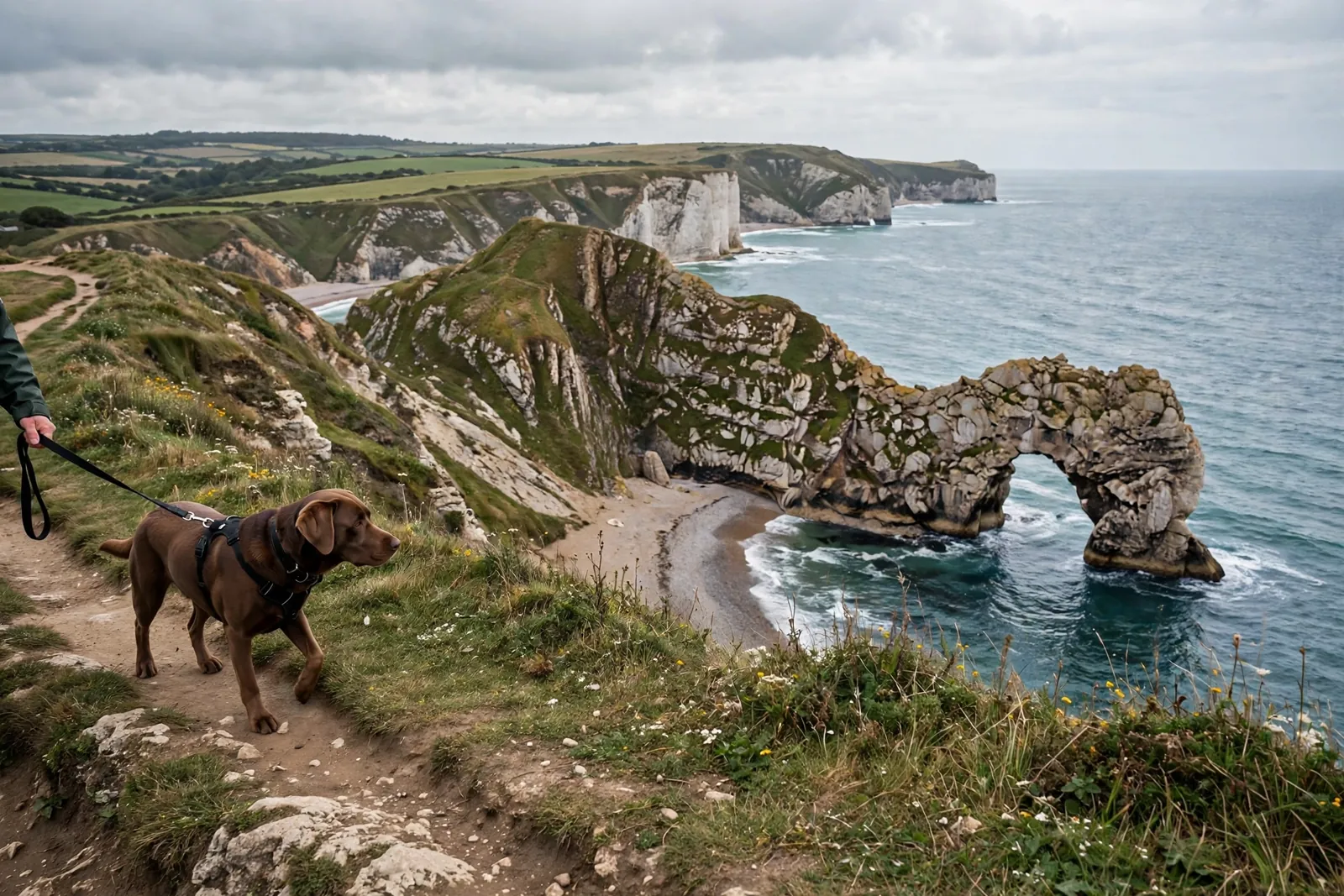
If you have a third day, use it to explore further afield. Corfe Castle and the Purbeck Ridge offer longer walks, the chain ferry opens up Studland and the long sands of the bay, and Lulworth Cove and Durdle Door are an easy drive west along the Jurassic Coast. Each of those is a day trip in its own right, and each has its own dog rules, so check the official guidance before you travel for the latest access and seasonal restrictions. Swanage makes a good base for all of them: small enough to feel like home after a day out, and central enough that nowhere in Purbeck is far away.
Practical questions
Before you go
Can dogs go on Swanage beach all year round?
No. A seasonal restriction usually applies to the main beach through the summer months, so dogs are kept off the central stretch while it is busiest. Outside that season dogs can usually enjoy the sand, and other stretches of the bay are more relaxed. Check the official guidance before you travel, because the exact dates and the boundary of the restricted area can change from year to year.
Are dogs allowed on the Swanage Railway steam trains?
Yes, dogs are generally welcome on Swanage Railway trains, and the ride to Corfe Castle or Norden is one of the best dog-friendly days out in Dorset. Keep your dog on a lead, sit in a compartment or carriage where other passengers are comfortable, and bring a blanket for the seat. Check the official guidance before you travel for any fare, carriage or special-event conditions.
Is Durlston Country Park good for dogs?
Yes, Durlston is one of the best dog walks in Swanage, with cliff-top paths, woodland, wildflower meadows and views across the bay. Keep your dog on a lead near the cliff edges and around grazing livestock, and use the waymarked paths. The visitor centre at Durlston Castle has water and information, and the park links directly onto the South West Coast Path.
Can I walk from Swanage to Old Harry Rocks with a dog?
Yes, the South West Coast Path runs from Swanage up over Ballard Down to Old Harry Rocks, a round trip of roughly four to five miles. It is a steady climb on open chalk downland with sheer cliff edges, so keep your dog on a lead, carry water, and avoid the route in high winds or thick fog. The views at the end, across to the Isle of Wight, are worth the climb.
Are dogs allowed on Swanage Pier?
Dogs on leads are generally welcome on Swanage Pier, which makes it a good short stroll for dogs that like watching boats and people. Keep your dog close on the narrow walkway, watch for fishing lines and hooks, and be ready for the pier to close or restrict access in bad weather. Check the official guidance before you travel for current access and any charges.
Where can I eat and drink in Swanage with a dog?
Swanage has several dog-friendly pubs and cafes, mostly with outdoor seating along the seafront and on the High Street, and the Square and Compass at nearby Worth Matravers is a well-known dog-friendly stop after a coastal walk. Policies change, so check the official guidance before you travel, ask before taking a dog inside, and bring a mat and water so your dog can settle quietly under the table.