This guide is independent and contains no paid placement. If affiliate links are added later, they will be clearly marked and will not change our editorial checks.
Keep your dog under close control, on a lead near livestock and roads, and on the path at all times. Pick up every poo, close every gate you open, and remember that the Countryside Code is guidance — but livestock worrying, fouling and local lead orders are law, and breaking them can mean a fine or prosecution.
What the Countryside Code is and who it applies to
The Countryside Code is the official guidance for everyone who visits the countryside in England and Wales. It is published by Natural England, with Natural Resources Wales involved in Wales, and it is built around three simple ideas: respect everyone, protect the environment, and enjoy the outdoors. The Code is short on purpose. It is meant to be read before a walk, remembered on the walk, and followed without a lawyer standing beside the stile. For dog owners, it is the single most useful starting point for rural walks, because it gathers in one place the behaviour that farmers, landowners, other walkers and wildlife need from you and your dog.
The Code applies to everyone using the countryside for recreation: walkers, runners, cyclists, horse riders, picnickers and people with dogs. It does not matter whether you are on a public footpath, a bridleway, open access land or a permissive path that a landowner has kindly allowed the public to use. The same expectations follow you. It also applies whether you live in the village next door or have driven two hours for a day out. Local knowledge helps, but it does not exempt anyone from the rules. A regular visitor who knows every field by heart is still expected to lead the dog past the sheep, close the gate and pick up the poo.
One distinction matters more than any other, and it is the distinction this guide returns to again and again: the Countryside Code itself is guidance, not a law. You cannot be prosecuted simply for breaking the Code. But many of the things the Code asks you to do are also required by law under separate legislation, and those laws do carry penalties. The Code is best understood as a plain-English summary of good behaviour that sits on top of the law. Follow the Code and you will almost always be on the right side of the law as well. Ignore it and you may find that a friendly-sounding suggestion was, in fact, a legal duty in disguise. Where a detail in this guide is uncertain or depends on local rules, check the official guidance before you travel.
The Code has been revised over the years, and the current version is the one to follow. Older versions, posters in village halls and advice passed on by other walkers can all be out of date, especially on lead rules for open access land and on the wording around livestock. Before a trip to an unfamiliar area, read the current Code on the official government pages and check the local council or national park website for any additional local orders. National parks, Areas of Outstanding Natural Beauty and nature reserves often add their own rules — for example, dogs on leads on certain moors during the bird breeding season — and those local rules apply on top of the national Code.
The dog rules in full, in plain English
The Countryside Code gives dog owners a short list of duties, and each one is worth understanding in full rather than as a slogan. First, keep your dog under effective control at all times. Effective control means the dog stays close, comes back when called, does not run up to other people, other dogs, horses or livestock, and does not leave the path to roam through fields, woods or gardens. A dog that only sometimes recalls, or that recalls everywhere except when it sees a sheep, is not under effective control in the countryside. The test is practical: if you cannot stop the dog doing the wrong thing, the dog needs a lead.
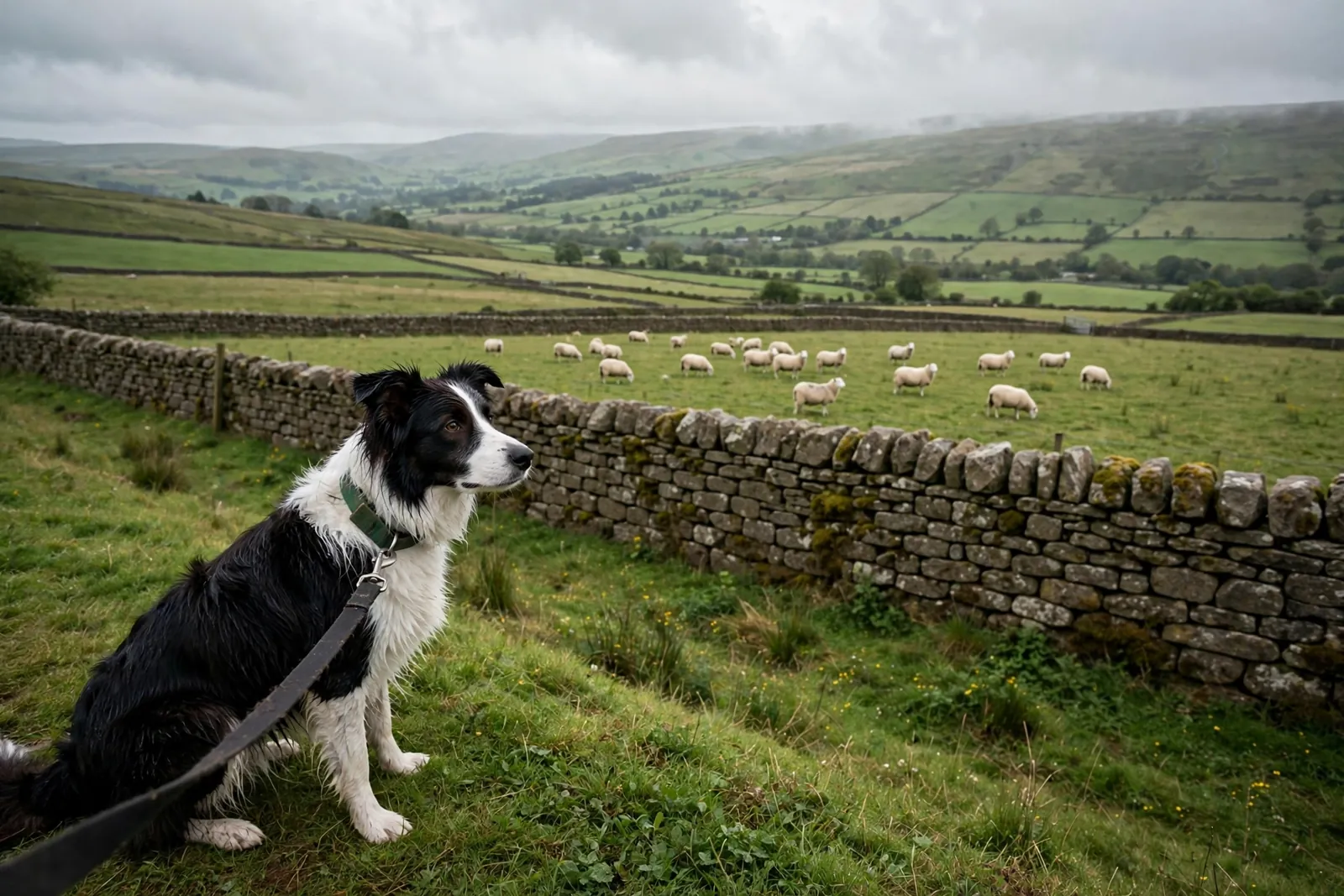
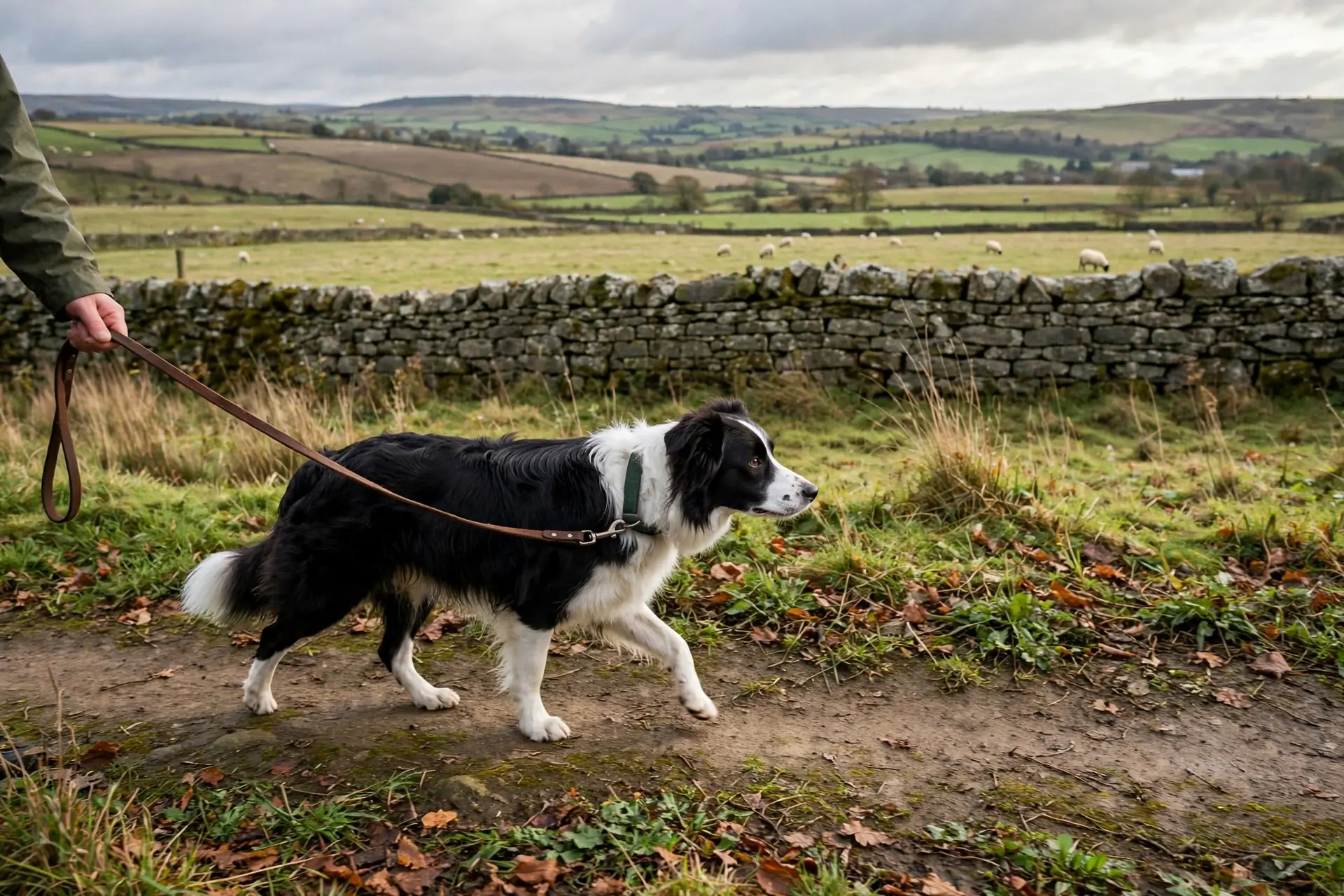
Second, keep your dog on a lead when you are near livestock, and whenever you are asked to by a sign, a landowner or a ranger. The Code is explicit that dogs should be on a lead around farm animals, and this is the rule that causes the most trouble when it is ignored. Sheep, cattle, horses, pigs, goats, poultry and deer kept on farms all count as livestock in this context. Even a friendly dog that only wants to say hello can panic a flock, separate a lamb from its mother, or cause a pregnant ewe to miscarry. The lead rule is not a judgement on your dog's character. It is a recognition that livestock cannot tell a playful dog from a dangerous one.
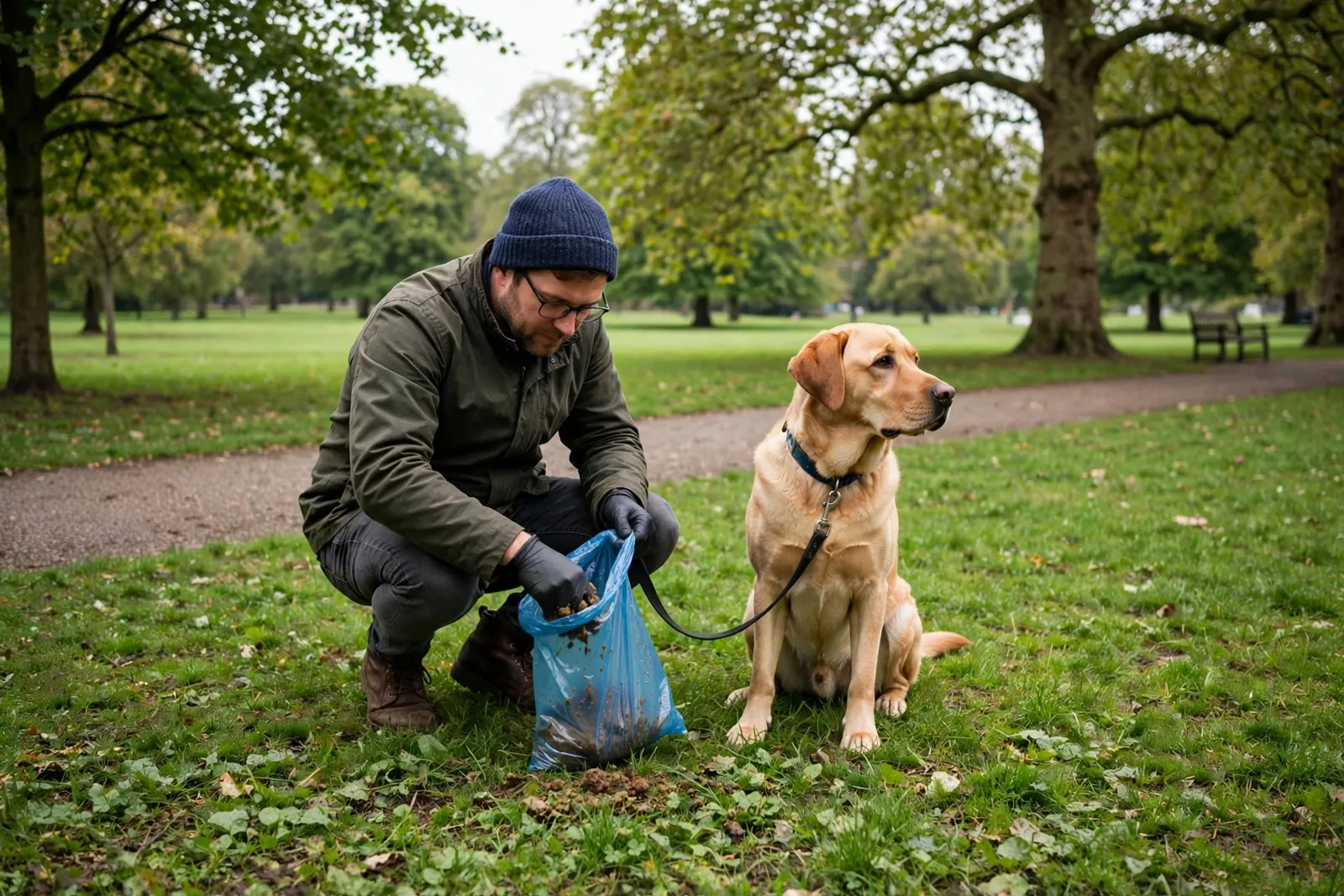
Third, always clean up after your dog and dispose of the bag responsibly. This applies everywhere in the countryside, not only in parks and villages. Dog mess carries parasites that can harm livestock and wildlife, and a bag left hanging from a tree or dropped in a hedge is litter as well as a health hazard. Take bags with you, carry the used bag until you find a bin, and if there is no bin, take it home. The Code also asks you to take your litter home and to leave no trace of your visit, which includes not leaving food, picnic waste or dog treats scattered on the ground.
Fourth, respect the working countryside. That means following signs, using gates and stiles rather than climbing fences, keeping to marked paths, and not disturbing farm work. It also means not letting a dog worry livestock, chase wildlife, or run through crops. A field of young wheat, a meadow being grown for hay, or a patch of ground-nesting birds can all be damaged by a dog running off the path for a few minutes. The damage is often invisible to the walker and expensive to the farmer or the conservation charity that manages the land. Staying on the path is not a minor courtesy. It is one of the main ways the Code protects the countryside itself.
When dogs must be on a lead
There is no single law that says dogs must always be on a lead in the British countryside, and that is exactly why the question confuses so many owners. The answer depends on where you are, what is nearby, and what local orders apply. The safest way to think about it is to start from the situations where a lead is clearly required, and to treat off-lead time as the exception that has to be earned by reliable control, rather than the default. Our guide to UK lead law explains the legislation behind these rules in more detail, including the different types of local order.
A lead is required, or strongly expected under the Code, in the following situations. Use a lead whenever livestock are in the field you are crossing or in the next field, and keep it on until you are well clear of them. Use a lead on or beside any road, including narrow country lanes where a dog stepping into the carriageway can cause a collision. Use a lead on open access land between 1 March and 31 July, when ground-nesting birds are breeding, and at any time of year when livestock are present on that land. Use a lead wherever a sign asks for one, wherever a Public Spaces Protection Order requires one, and in car parks, farmyards, around farm buildings, near children's play areas and at visitor centres. In all of these places, the lead should be short enough to keep the dog close to you — a long line trailing behind a dog that is twenty metres away is not control.
Between those situations, a dog may be off lead on a public footpath only if it is under close, reliable control. That means it stays on the path, comes back the first time you call, does not approach other people, dogs or horses without being invited, and does not chase birds, rabbits, deer or anything else that moves. If any part of that description does not fit your dog, keep the lead on. Young dogs, newly rehomed dogs, dogs with a strong prey drive, dogs that have recently discovered livestock, and dogs whose recall fails when they are excited are all candidates for a long line rather than freedom. A long line gives a dog room to sniff and explore while keeping you in charge, and it is a far better option than an off-lead dog that cannot be recalled.
Practical lead choice matters on rural walks. A standard lead of one to two metres is right for fields with livestock, stiles and narrow paths. A long line of five to ten metres suits open ground where the dog can be given more freedom without being free. Retractable leads are a poor choice in the countryside: they give little control at the moment it matters, they can tangle around legs, stiles and other dogs, and a dog at the end of eight metres of thin cord is effectively off lead. Whatever lead you use, hold it rather than looping it around your wrist, keep it short when you pass other walkers, and shorten it before you reach a gate, a road or a group of animals rather than after your dog has already reacted.
Livestock worrying: the law and the consequences
Livestock worrying is the most serious dog offence in the countryside, and it is the one that dog owners most often misunderstand. Under the Dogs (Protection of Livestock) Act 1953, it is an offence for a dog to worry livestock — and worrying includes attacking livestock, chasing livestock, or being at large in a field or enclosure in which there are livestock. The dog does not have to bite anything. A dog that chases sheep across a field, barks at cattle at close quarters, or scatters a flock so that lambs are separated from their mothers has worried livestock. Our guide to the livestock worrying law sets out the offence, the penalties and the farmer's rights in full.
The consequences can be severe, for the animals, the farmer and the dog owner. Sheep are easily panicked, and a single incident can kill animals outright through stress or injury, cause pregnant ewes to abort, or leave lambs orphaned. Cattle, especially cows with calves at foot, can become defensive and dangerous; a dog that worries cattle puts its owner at risk as well as the animals. Farmers report that even a brief chase can cause losses worth hundreds or thousands of pounds, and the emotional cost of finding injured or dead animals in a field is considerable. That is why farmers, landowners and the police treat worrying as a serious matter rather than a minor lapse.
For the owner, the legal consequences include prosecution, a fine, and in some cases a court order relating to the dog. The person in charge of the dog at the time — not only the registered owner — can be liable, so a friend, family member or professional dog walker who lets a dog worry livestock can be prosecuted. A farmer whose livestock are being worried may also be entitled to take action to stop the dog, and in certain circumstances the law allows a farmer to shoot a dog that is worrying livestock, subject to strict conditions. Dog owners should understand that this is a real legal power, not a rural myth, and that it exists precisely because worrying can destroy a farmer's livelihood in minutes. The details and limits of that power are set out in the livestock worrying guide linked above; check the official guidance before you travel if you need the current position in your area.
Prevention is straightforward, and it is the same advice in every season. Keep the dog on a lead in any field with livestock, and in any field where you cannot see whether livestock are present. Do not assume a field is empty because the animals are out of sight behind a hedge or a dip in the ground. If you meet livestock unexpectedly, shorten the lead, keep the dog close and calm, walk steadily past at a distance, and do not let the dog stare at, bark at or pull towards the animals. If cattle approach you, let the dog go only if you are threatened and the dog can escape safely — the standard safety advice is to release the lead rather than be dragged or trampled while holding on. After an incident, report it honestly, exchange details, and contact the police if livestock have been injured. Hiding what happened helps no one and makes a prosecution more likely.
Closing gates, fences and field boundaries
Leave gates as you find them. That single sentence is one of the oldest rules of the countryside, and it is in the Countryside Code for a good reason. A gate that was closed when you arrived should be closed behind you. A gate that was open when you arrived should be left open. The reason is simple: you do not know why the gate is in that position. A closed gate may be keeping sheep in a field, keeping cattle out of a crop, keeping animals away from a road, or keeping a bull separated from the rest of the herd. An open gate may be there because livestock are meant to move freely between two fields, or because the farmer has deliberately left a route clear for machinery.
Getting a dog through a gate without letting the dog, or the livestock, slip through the wrong way takes a little planning. Put the dog on a lead before you reach the gate, and keep the dog on the side of the gate where you can control it. Open the gate just wide enough to pass through, step through with the dog close beside you, and close and latch the gate before you let the lead out again. Check the latch properly: a gate that looks closed but is not latched will swing open in the wind or under the weight of a curious animal. Look back as you walk away to make sure it has stayed shut. If a gate is broken, tied shut with rope or wire, or held by a chain, leave it as you found it and report the problem to the landowner or the local rights of way team rather than forcing it.
Fences, hedges, dry stone walls and ditches are boundaries too, and the Code expects walkers to respect them. Do not climb over fences or walls, do not cut through hedges, and do not let a dog push through a gap in a fence into a neighbouring field. Stiles are provided so that walkers can cross a boundary without damaging it, and a dog should be lifted over a stile or passed through a dog gate where one is provided, rather than being allowed to scramble over the top and dislodge stones or break rails. Dry stone walls in particular are expensive to repair and easy to damage: a dog jumping on a wall can bring down a section that takes a skilled waller hours to rebuild. Where a path runs beside a wall or a hedge, keep the dog on the path side and do not let it run along the top or through the base.
If you find a gate open that you believe should be closed — for example, livestock are wandering towards a road — do not simply walk past. If it is safe to do so, close the gate and tell the landowner, the farmer or the local authority as soon as you can. Note the location as precisely as you can: the name of the farm, the path number, the nearest village or a grid reference from your phone. The same applies to broken fences, fallen walls and damaged stiles. Reporting a problem is part of being a responsible countryside visitor, and it is far better than leaving the next walker to discover the same hazard.
Public rights of way: footpaths, bridleways and open access land
A public right of way is a legally recorded route that the public may use to pass through private land. In England and Wales there are four main types, and the type decides who may use the route and what a dog may do on it. A public footpath is for walkers only. A bridleway is for walkers, horse riders and cyclists. A restricted byway is for walkers, horse riders, cyclists and horse-drawn vehicles. A byway open to all traffic is open to motor vehicles as well, although many are unsurfaced green lanes. Dogs are not given a separate right of way: a dog accompanies its owner on the route, and the owner's right is to pass along the path, not to roam the surrounding land. That distinction is the key to almost every argument about dogs on rights of way.
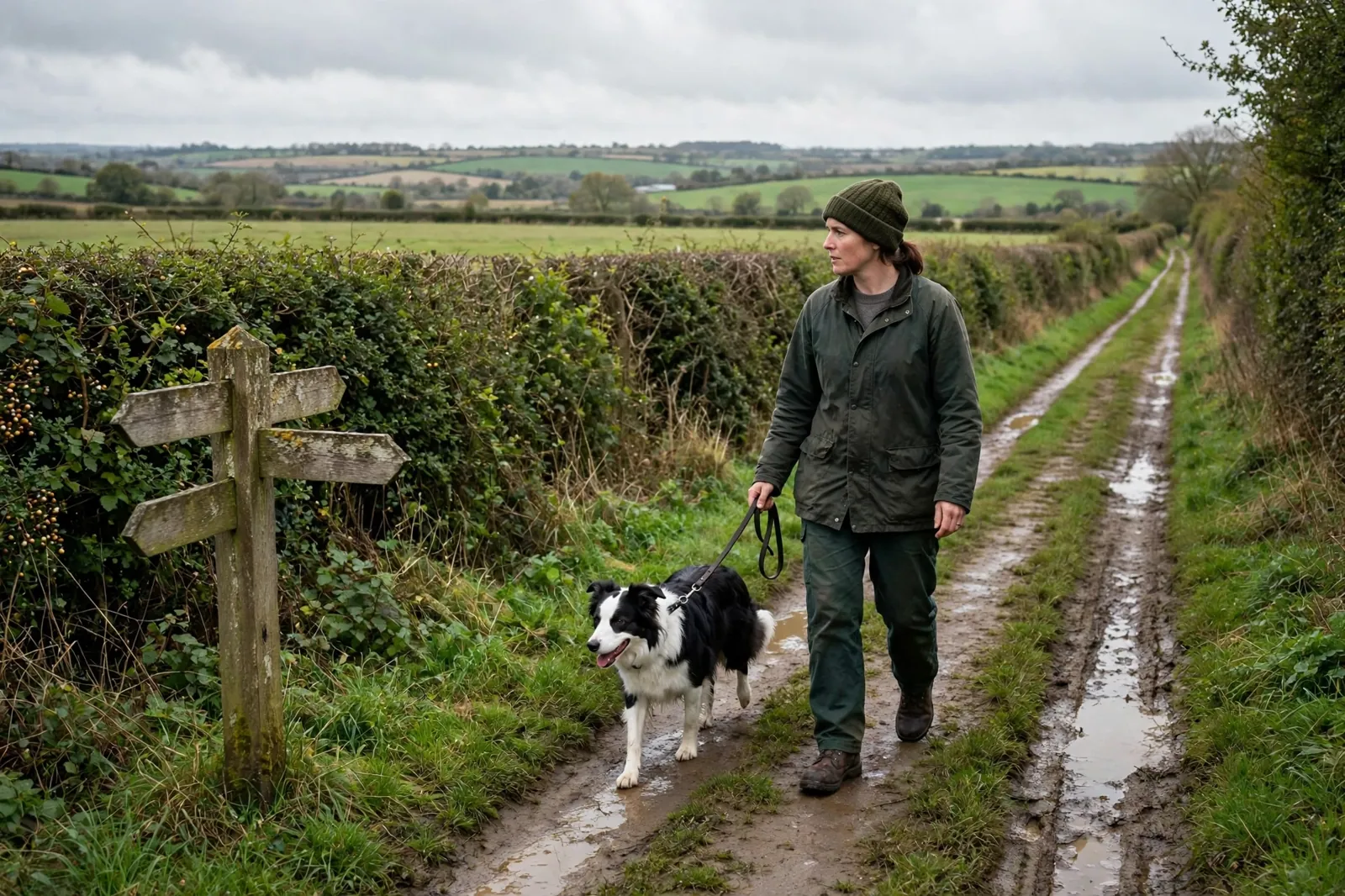
On a footpath, your dog should stay on the path and under close control. That does not necessarily mean on a lead at every moment, but it does mean the dog must not run into the field beside the path, chase animals, disturb crops or enter gardens. If the path crosses a field with livestock, the dog must be on a lead. If the path runs beside a road, the dog must be controlled so that it cannot run into traffic. If you meet other walkers, put the dog on a lead or hold it close until they have passed, especially if they have a dog of their own or children with them. The right of way is shared, and the dog's freedom ends where another person's reasonable enjoyment of the path begins.
Open access land is different again. Under the Countryside and Rights of Way Act 2000, the public has a right to walk on mapped areas of mountain, moor, heath, downland and registered common land in England and Wales. Dogs are allowed on most open access land, but with an important restriction: they must be on a lead of no more than two metres between 1 March and 31 July, and at any time when livestock are present. This is the breeding season for ground-nesting birds, and a free-running dog can destroy a nest, scatter chicks or keep parent birds away from their young for long enough to kill them. Some areas of open access land exclude dogs altogether at certain times, or exclude them entirely, and these restrictions are shown on the official open access maps. Check the map for your area before you go, and check the official guidance before you travel if the position is unclear.
Permissive paths and other informal routes are not rights of way at all. They exist because a landowner has allowed the public to use them, and that permission can be withdrawn or changed. Always follow any signs on a permissive path, including signs about dogs, and treat the route as a privilege rather than a right. The same applies to country parks, nature reserves, National Trust land and Forestry England sites, which often have their own dog rules — for example, dogs on leads in car parks and around visitor centres, or dogs excluded from certain sensitive habitats. Read the signs at the entrance, follow the local rules, and remember that a national rule does not override a stricter local one.
Wildlife, nesting birds and lambing season
The countryside is not an empty exercise ground. It is a working habitat, and a dog running free through it can do real damage even when the dog is only playing. Ground-nesting birds such as skylarks, curlews, lapwings and nightjars nest on or close to the ground on moors, heaths, downs and coastal grassland. Their nests are little more than a scrape in the grass, almost invisible to a walker and completely invisible to a running dog. A dog that flushes a bird from its nest can cause the eggs to chill or the chicks to be taken by predators, and repeated disturbance can cause a pair to abandon a nest altogether. That is why the lead rule on open access land runs from 1 March to 31 July, and why the same care is needed on any path through nesting habitat in spring and early summer.
Lambing season, which generally runs from late winter into spring, is the other period when the countryside needs extra care. Ewes in late pregnancy and ewes with young lambs are easily stressed, and a dog that chases, barks at or even approaches a flock can cause ewes to miscarry, lambs to be separated from their mothers, or animals to injure themselves on fences as they flee. The risk is not limited to fields where lambs are visible: a field that looks empty in the morning may hold a flock that has been moved in during the day, and a dog that has been calm around sheep all winter may react differently when lambs appear. During lambing season, keep the dog on a lead in and around any field with sheep, give flocks a wide berth, and be ready to turn back and take another route if the only path runs through a field full of young lambs.
Other wildlife needs the same consideration. Deer, especially in parks and on the edge of woodland, can be chased by dogs and can injure themselves or a dog in the panic that follows. Rabbits, hares and pheasants are all tempting to a dog with a strong chase instinct, and a dog that disappears into woodland after a deer or a rabbit is a dog that is no longer under control. Adders, which are found on heaths, moors and coastal paths, are a risk to dogs that nose into undergrowth in warm weather, and a dog that disturbs an adder may be bitten. Waterbirds, otters and seals on the coast are also vulnerable to disturbance from dogs, and many coastal paths have seasonal signs asking owners to keep dogs on leads near colonies and haul-out sites. The principle is always the same: keep the dog close, keep the dog on the path, and keep the dog away from wildlife, especially in the breeding season.
Seasonal awareness is part of being a good countryside walker. Before a spring or summer walk, check whether the area is known for ground-nesting birds and whether any seasonal dog restrictions apply. In autumn, be aware that deer are in the rut and can be aggressive, and that pheasant shooting takes place on many estates — a dog running through a shoot is a danger to itself and to others. In winter, remember that short days, wet ground and cold water all change the risks, and that livestock are often brought closer to farm buildings and fed in fields where walkers may not expect them. The Countryside Code does not change with the seasons, but the way it applies does, and a careful owner adjusts the lead, the route and the level of freedom to match the time of year.
Dog fouling, litter and leaving no trace
Picking up after your dog is one of the clearest duties in the Countryside Code, and one of the easiest to get wrong. Dog mess is not fertiliser. It carries parasites, including the Neospora parasite that can cause cattle to abort, and Toxocara roundworm eggs that can harm children and other animals. A single pile of mess left in a field can contaminate grazing land, and mess left on a path is unpleasant for every walker who follows. Pick up every time, in every place, including fields, woods, moorland and beaches. There is no countryside exception to the fouling rules, and the fact that a field looks remote does not make it acceptable to leave mess behind.
Disposing of the bag is as important as picking up. A bag left hanging from a tree, tucked into a hedge, dropped beside a stile or flicked into a ditch is litter, and it is worse than leaving the mess in the open because the plastic will remain in the environment for years. Carry the bag with you until you find a proper bin. If there is no bin on the route, take the bag home and dispose of it there. A small, sealable pouch or a clip-on bag holder makes this easy, and carrying two or three spare bags means you are never caught out. Our guide to dog fouling fines in the UK explains who can issue a penalty, how much it can be, and how the rules differ between councils.
Leaving no trace goes beyond fouling. Take all litter home, including food wrappers, drink cans, picnic waste and dog treat packaging. Do not leave food out for wildlife, and do not scatter dog treats on the ground to reward a recall — the crumbs attract rats and can harm ground-feeding birds. Do not pick wildflowers, damage trees or disturb stone walls and historic features. Do not light fires, barbecues or fireworks in the countryside, and take care with cigarettes and matches in dry weather, when a single spark can start a moorland fire. If you see litter left by someone else, pick it up if it is safe to do so, and report fly-tipping to the local council rather than adding to it.
The habit that makes all of this easy is to pack as if there will be no bin. Bring more bags than you expect to need, bring a small bag for carrying used bags, and bring a rubbish bag for any litter you generate. Plan your route so that you know where the nearest bin, toilet and car park are, and accept that the bag may have to travel home with you. Dog owners who do this routinely find that it becomes automatic, and that other walkers, farmers and landowners notice the difference. A countryside that is clean is a countryside that stays open, and the dog owners who leave no trace are the ones who keep it that way for everyone.
What happens if you break the rules
Because the Countryside Code is guidance, breaking it on its own does not lead directly to a court appearance. But the laws that sit behind the Code do, and the penalties vary widely depending on which law has been broken. Livestock worrying is a criminal offence under the Dogs (Protection of Livestock) Act 1953, and a prosecution can result in a fine. The person in charge of the dog can be prosecuted, and the court can also make orders about the dog. In addition, the farmer may bring a civil claim for the value of livestock killed or injured, for veterinary costs, and for other losses caused by the incident. A single afternoon's walk can therefore lead to a criminal record, a fine and a civil bill that runs into thousands of pounds.
Dog fouling and lead offences are usually dealt with more locally. Many councils use Public Spaces Protection Orders, known as PSPOs, to require dogs to be on leads in specified areas, to exclude dogs from specified areas such as children's play areas or certain beaches, or to require owners to pick up after their dogs and carry bags. Breaching a PSPO can lead to a fixed penalty notice, commonly £100, or prosecution with a fine of up to £1,000. Dog fouling itself is an offence under the Environmental Protection Act 1990 and related local legislation, and the penalty is similar. The exact figures and the way they are enforced vary between councils, so check the official guidance before you travel if you want the current position for a particular area. Enforcement officers, police officers and authorised council officers can all issue fixed penalty notices, and they do not need to warn you first.
Other laws apply in the countryside as well. Letting a dog be dangerously out of control is an offence under the Dangerous Dogs Act 1991, as amended, and it applies in private places as well as public ones. Allowing a dog to chase or injure protected wildlife can be an offence under the Wildlife and Countryside Act 1981. Trespass with a dog — for example, letting a dog roam across private land where there is no right of way — can lead to a civil claim, and a landowner can ask you to leave. In the most serious cases, a dog that has caused injury or damage can be the subject of a control order, a destruction order or a disqualification from keeping dogs. These are extreme outcomes, but they are real, and they underline why the Code's short list of rules is worth taking seriously.
The practical lesson is that the consequences of a countryside incident are rarely limited to an embarrassed apology. A farmer who has lost sheep will report the incident to the police. A council officer who sees a dog fouling a path will issue a penalty. A landowner who finds a gate left open and cattle on a road will remember the walker who did it. Keeping a record of your walks can help if an incident is disputed: note the route, the time, whether the dog was on a lead, and any signs you saw. If you are involved in an incident, stay calm, exchange details, report it to the police if livestock or a person has been injured, and seek legal advice before admitting liability. Do not argue at the scene, and do not leave without giving your details if livestock have been harmed.
Meeting farmers, horses and other walkers
The countryside is shared, and the Countryside Code's first principle — respect everyone — is tested most often in the small encounters on a path. When you meet a farmer, a farm worker or a landowner, a short greeting and a visible effort to control your dog go a long way. Put the dog on a lead as you approach, move to the side of the path, and let the farmer pass with any machinery, animals or equipment. If farm work is under way — for example, a tractor moving between fields, sheep being gathered, or a hedge being cut — wait where you are until it is safe to pass, and follow any instruction the farmer gives you. Farmers are not obliged to make room for a dog walker, and they are entitled to ask you to keep your dog on a lead or to use a different route if one is available.
Horses need particular care. A horse is a large, nervous animal, and a dog running up to it, barking at it or circling its legs can cause it to shy, bolt or kick. When you meet a horse on a bridleway or a shared path, put the dog on a short lead, move to the side, and stand still while the horse passes. Do not let the dog approach the horse, and do not call out or wave your arms. If the rider asks you to wait, wait. If the horse is clearly unsettled, move further off the path and hold the dog close until the rider is well past. The same care applies to horses in fields: do not let a dog run along a fence line barking at horses, and do not allow it to chase or worry them. A horse that is frightened by a dog can injure itself, its rider and the dog.
Other walkers, runners and cyclists deserve the same consideration. Not everyone likes dogs, and some people are frightened of them, allergic to them, or walking with a small child or a nervous dog of their own. Put your dog on a lead or hold it close when you meet other people, and do not allow it to jump up, sniff a stranger's legs, or run up to a child. If the other person has a dog, do not assume the dogs want to meet: keep both dogs on leads, give them space, and let the other owner decide whether an introduction is welcome. A dog that is friendly with its own family can still be frightening to a stranger, and a dog that is friendly with other dogs can still be a problem if the other dog is on a lead because it is reactive, injured or in training.
Good manners on a shared path are mostly about anticipation. Shorten the lead before you reach a blind bend, a stile or a narrow bridge, because that is where you are most likely to meet someone suddenly. Call your dog back before you reach a group of walkers rather than after the dog has already reached them. If your dog is off lead and you see another dog ahead, recall it and put it on a lead until you know whether the other dog is friendly and its owner is happy to let them meet. If your dog does something wrong — jumps up, barks at a horse, chases a sheep, or runs through a garden — apologise, take responsibility, and learn from it. The countryside works because most people are considerate most of the time, and a dog owner who is visibly trying is usually given the benefit of the doubt.
The Code in Scotland and Northern Ireland: key differences
The Countryside Code described in this guide is the version for England and Wales. Scotland and Northern Ireland have their own arrangements, and a dog owner travelling across the border should know the differences before setting out. In Scotland, the Land Reform (Scotland) Act 2003 gives everyone a statutory right of responsible access to most land and inland water, which is broader than the rights of way and open access system in England and Wales. That access is guided by the Scottish Outdoor Access Code, which is the Scottish equivalent of the Countryside Code. The Scottish Code expects dog owners to keep dogs under close control at all times, to keep them on a lead or under close control around livestock, and to take extra care during the lambing and bird breeding seasons.
Scotland's access rights come with responsibilities, and the differences matter in practice. In Scotland you may walk across open fields and moorland where in England you would be expected to stay on a path, but that freedom does not extend to fields with crops, to farmyards, or to land where access would interfere with farming. Dogs must be kept under close control, and the Scottish Code is clear that dogs should not be allowed to worry livestock or disturb wildlife. During the bird breeding season, and in areas with ground-nesting birds, dogs should be kept on a lead or under very close control. The Scottish rules on livestock worrying are similar in spirit to those in England and Wales, but the legislation and enforcement differ, so check the official guidance before you travel to Scotland with a dog. The Scottish Outdoor Access Code is published by NatureScot, and it is the document to read before a Scottish walk.
Northern Ireland has its own Countryside Code, published by the Northern Ireland Environment Agency and the Countryside Access and Activities Network, and its own legislation. The access position in Northern Ireland is different again: there is no general right of access comparable to Scotland's, and most countryside walking is on public rights of way, permissive paths and managed sites. Dogs should be kept under control, on a lead around livestock, and owners should pick up after their dogs. Livestock worrying is an offence under the Dogs (Northern Ireland) Order 1983, as amended, and the penalties and the farmer's rights differ in detail from the 1953 Act that applies in England and Wales. Dog fouling and lead rules are set by local councils, and the fixed penalties and local orders vary between council areas.
The practical point for travellers is to check the local code for the nation you are visiting, rather than assuming the English rules travel with you. A walk in the Scottish Highlands, a coastal path in County Antrim, and a footpath in the Yorkshire Dales all follow the same broad principles — control the dog, respect livestock, close gates, pick up mess — but the legal basis, the access rights and the local restrictions are different. Check the official guidance before you travel, look for local signs at the start of the route, and ask at a visitor centre or a local tourist information point if you are unsure. A few minutes of checking before you set out can save a difficult conversation with a farmer, a ranger or a police officer later in the day.
Practical checklist before a countryside walk
A good countryside walk with a dog starts before you leave the house. Check the route first: look at an Ordnance Survey map or a reliable walking app, note whether the route uses footpaths, bridleways or open access land, and check whether any part of it crosses fields with livestock. Read any local notices for the area, including seasonal restrictions for ground-nesting birds, lambing, shooting or conservation work. Check the weather, the daylight hours and the ground conditions, and choose a route that suits your dog's fitness, age and temperament. A young, fit dog may enjoy a long moorland loop, while an older dog or a puppy needs a shorter, flatter route with places to rest and drink.
Pack for the dog as well as for yourself. Bring a lead and a spare, enough poo bags for the whole walk plus spares, water and a portable bowl, and a towel for a wet or muddy dog. Bring a long line if you plan to give the dog more freedom on open ground. Bring your phone, charged, with the route saved offline, and the number of the nearest vet saved in case of an emergency. Check that the dog's collar and tag are secure, that the microchip details are up to date, and that the dog is wearing identification as required by law. If your dog is on medication, bring it with you, and if your dog has a known health condition such as epilepsy or a heart problem, tell your walking companions and carry the relevant information.
- Route: check the map, the path type, livestock on the route, seasonal restrictions and the nearest car park, bin and vet.
- Lead and control: standard lead for fields and stiles, long line for open ground, and a recall you have tested before the walk, not during it.
- Bags and water: more poo bags than you expect to need, a pouch to carry used bags, water and a bowl, and a towel for mud.
- Dog health: collar and tag, up-to-date microchip, any medication, and a plan for what to do if the dog is injured, bitten or overheats.
- On the walk: lead on near livestock, roads and other people; gates left as found; dog on the path; mess picked up every time.
- After the walk: check the dog for ticks, cuts, thorns and grass seeds, check paws and ears, offer water, and report any broken gates, fences or stiles you found.
On the walk itself, keep the routine simple: lead on before you need it, not after the dog has reacted; recall practised early and often, with a reward the dog values; and a willingness to change the plan if the route turns out to be unsuitable. If a field is full of cattle with calves, if a path is blocked, or if your dog is clearly stressed, turn back and take another route rather than pushing on. The countryside will still be there tomorrow. A walk that ends calmly, with the dog tired and the gates closed behind you, is a successful walk — and it is the kind of walk that keeps farmers, landowners and other walkers happy to share their countryside with dog owners.
Practical questions
Before you go
Does the Countryside Code have the force of law?
Not in itself. The Countryside Code is official guidance, but several of its dog rules restate duties that are already law, including the offence of livestock worrying, local lead orders, dog fouling rules and the duty to keep a dog under control near roads. Breaking the law behind a rule can lead to a fine or prosecution, even though the Code itself is not a statute.
When must my dog be on a lead in the countryside?
Use a lead whenever you are near livestock, on or beside a road, on open access land between 1 March and 31 July, where a sign or a Public Spaces Protection Order requires one, and whenever you cannot be sure your dog will come back at once. At other times on a public footpath, a dog may be off lead only if it is under close, reliable control and stays on the path.
What is livestock worrying?
Livestock worrying is when a dog attacks, chases, or in any way causes suffering to livestock, or is at large in a field or enclosure containing livestock. The dog does not have to bite an animal: chasing, barking at close quarters, or scattering a flock can count. It is a criminal offence under the Dogs (Protection of Livestock) Act 1953, and the owner or person in charge of the dog can be prosecuted.
Do I have to close every gate I open?
Yes, unless a sign says otherwise. Leave gates as you find them: if a gate was closed, close it behind you; if it was open, leave it open. A closed gate may be holding livestock in a field or keeping animals out of a crop, a garden or a road. Check the latch, look back as you walk away, and put your dog on a lead before you open a gate into a new field.
Can I let my dog off lead on a public footpath?
Sometimes, but the footpath is not an off-lead exercise area. A dog on a public footpath must stay on the path, under close control, and on a lead near livestock, roads, other walkers, horses and wildlife. If your dog runs into fields, chases animals, or will not recall reliably, keep the lead on. The right of way is for passing along the route, not for roaming the surrounding land.