This guide is independent and contains no paid placement. If affiliate links are added later, they will be clearly marked and will not change our editorial checks.
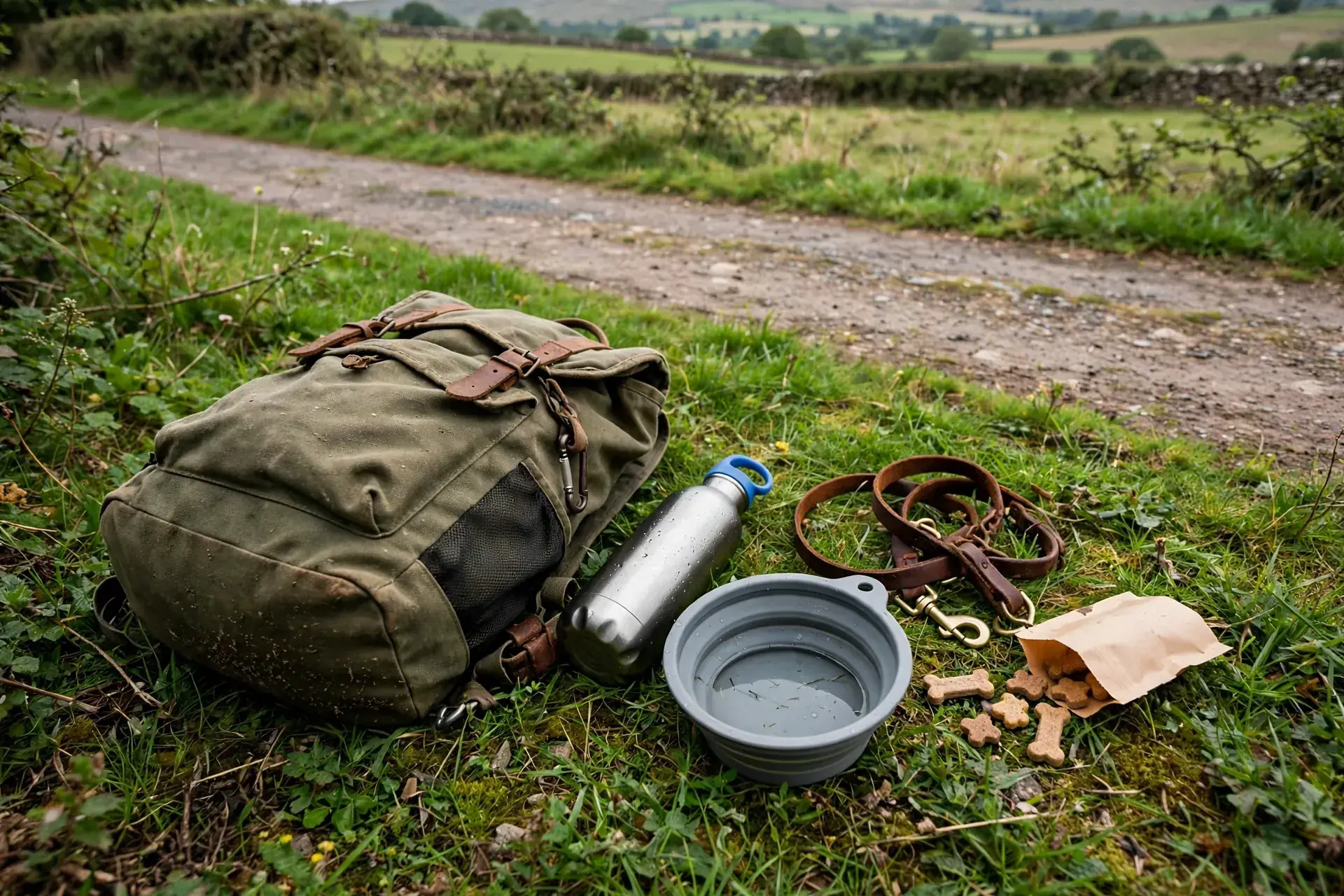
For any UK day trip, pack water and a bowl, food and treats, a lead and a spare, poo bags, a towel, a small first aid kit, and weather cover for the dog and for you. Add a long line, a dog coat and a car blanket for longer, wetter or more open days. Keep the core kit permanently packed so you only add the day-specific extras.
First, name the kind of day
Packing lists fail when they try to cover every possible day at once, because a beach morning, a woodland hike, a city visit and a pub lunch are different days with different risks. Before you open a bag, name the day in one sentence: a three-hour coastal walk with a cafe stop, a full day in the hills, a market town visit with short walks between shops, or a river walk with a swim. That sentence decides almost everything else, from how much water you need to whether a long line, a drying coat or a spare outfit matters.
Distance and terrain matter more than duration on paper. A flat, two-mile towpath walk in cool weather is a light day, even if you are out for five hours with long cafe stops. A steep, six-mile hill walk in summer is a heavy day, even if you are home by lunch. Add the dog's fitness and age to the calculation: a fit adult spaniel and a twelve-year-old terrier on the same route need different water, rest and warmth plans. If you are unsure about the route, check its length, ascent, surface and water points the night before, and check the official guidance before you travel for any seasonal restrictions, livestock or beach rules that affect the day.
Also name the weak points of the day. Is there a stretch with no shade, no fresh water, no phone signal, or no easy exit if the weather turns? Is the cafe actually dog-friendly inside, or only on a terrace that will be miserable in rain? Is parking far from the walk, so a forgotten item means a long detour? Most day-trip problems are not dramatic emergencies; they are small weak points that were never named, such as a dog that gets wet at 11am and then has to sit in a cold car at 4pm, or a walk that passes a farm where a lead is suddenly essential and the spare lead is at home. Naming the day first lets you pack for those specific points instead of carrying everything just in case.
Finally, agree the plan with everyone travelling. Who carries the water, who has the poo bags, who holds the lead at the cafe, and what happens if the dog gets tired or the weather turns? A day trip with two adults and one dog still goes wrong when both adults assume the other packed the treats. A two-minute conversation the night before, plus a permanent bag, prevents most of that.
The non-negotiables, every time
Every day trip, however short, needs the same core kit. Start with identification and control: a collar with an up-to-date tag, a well-fitting harness if your dog wears one, a standard lead, and a spare lead. Leads break, clips fail, and a spare lead is one of the cheapest insurance policies you can carry. Add a long line for open days, but even on a short urban walk, the spare lead earns its place. If your dog is microchipped, make sure the registered phone number is current, because a tag and a chip are only useful if they lead back to you on the day.
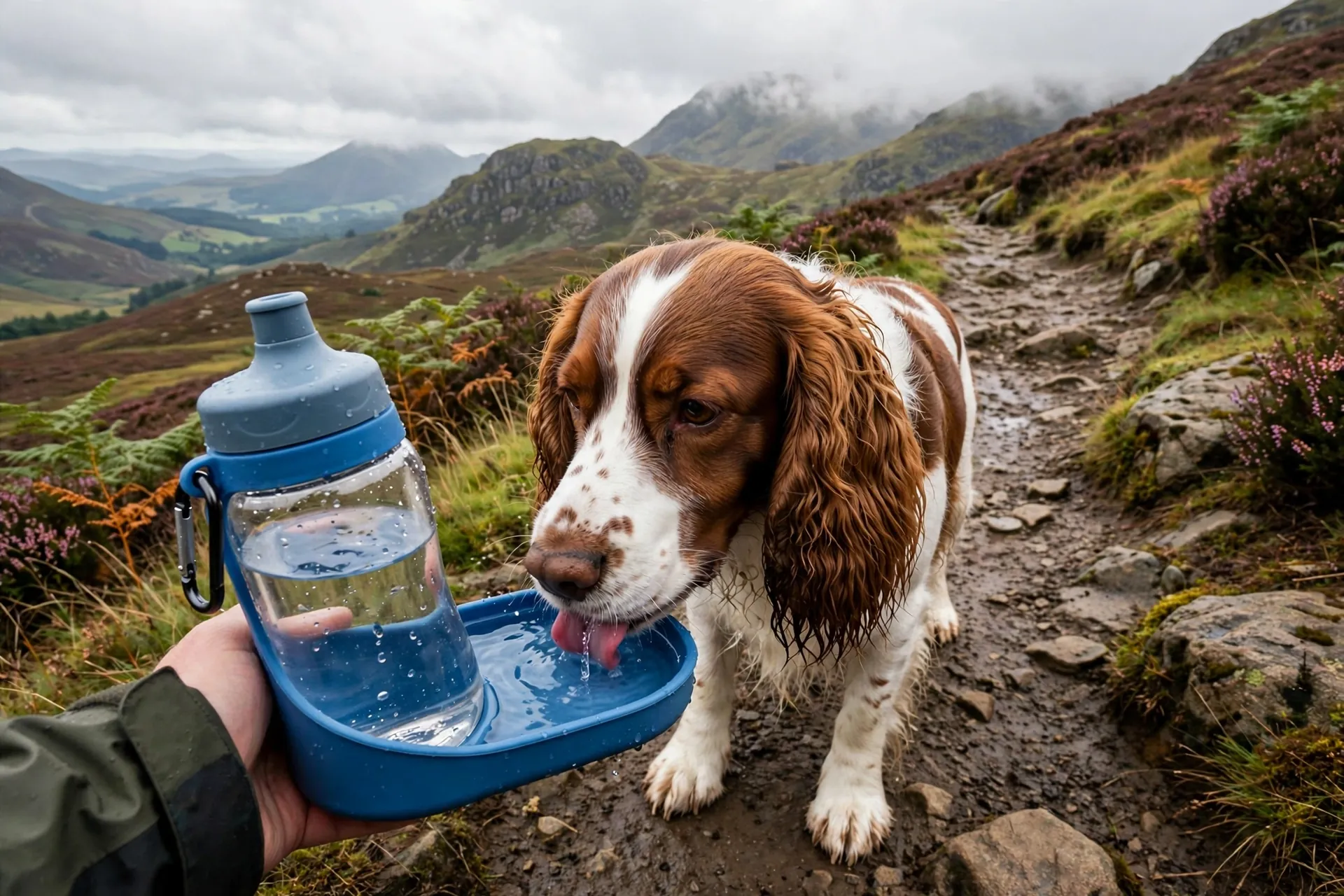
Next, water and a bowl, every time, without exception. Dogs cannot tell you they are thirsty until they are already uncomfortable, and many apparently dog-friendly places have no water bowl, or have one that is empty, dirty or shared with many dogs. A portable bottle and a collapsible bowl weigh little and solve the problem completely. Add poo bags, and more than you think you need, in a dispenser clipped to the lead so they are never left in the car. Add a small bag for used bags if the walk has no bins, because carrying waste responsibly is part of the day, not an optional extra.
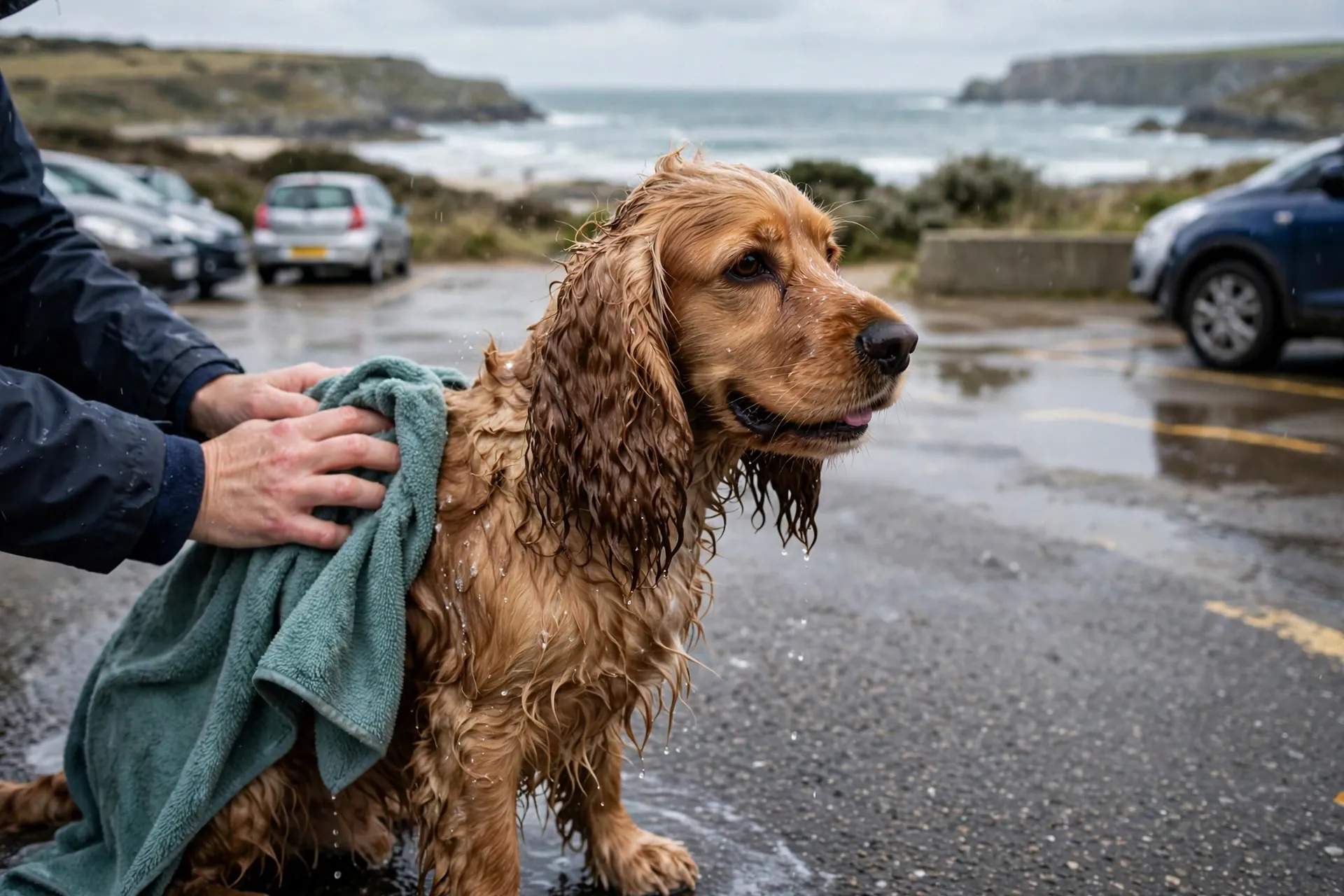
Treats are not a luxury; they are a safety tool. A pocket of high-value treats lets you reward recall, redirect attention from another dog, settle a dog at a cafe, and make a vet or a stranger's approach less stressful. Keep them in a treat pouch or a sealed pocket, not loose in a bag where you cannot reach them quickly. Add a towel, even on a dry day, because dogs find mud, water and puddles with remarkable consistency, and a towel turns a muddy dog from a car disaster into a minor inconvenience.
Finally, your phone, charged, with the route saved offline if signal is uncertain, plus the number of the nearest vet saved before you leave. A phone is also your camera, your map and your way of asking for help, so a portable charger is worth its weight on a long day. These non-negotiables fit in a small rucksack or a waist pack, and once they are packed permanently, the rest of the list becomes a set of choices rather than a daily reconstruction.
Water and food: quantities that work
Water is the item most often under-packed, because owners judge by their own bottle rather than by the dog. As a working guide, carry at least one litre for a medium dog on a moderate walk, more for large dogs, hot days, long walks or dogs that pant heavily. Small dogs need less volume but still need their own supply, and puppies need frequent small drinks rather than one large bowl. Offer water little and often, especially after exercise, rather than letting a hot dog gulp a huge amount at once, which can cause vomiting and, in extreme cases, water intoxication after swimming.
Choose a bottle system that you will actually use. Squeeze bottles with a tray, bottles with an attached bowl, and separate bottles plus a collapsible bowl all work, and the best one is the one you can operate one-handed while holding a lead. Test it at home, check it does not leak in the bag, and clean it regularly, because a bottle that tastes of old water will be refused by a fussy dog. Our guide to portable dog water bottles compares squeeze, tray and bowl designs, sizes by dog weight and cleaning routines in detail, and is worth reading before you buy a new bottle for a walking holiday.
For food, bring the dog's normal food, measured for the day, in a sealed, waterproof container. Do not experiment with new food, rich treats or cafe scraps on a day trip, because an upset stomach far from home is miserable and can cut a day short. If the day includes a main meal for the dog, feed a light meal before a long walk rather than a large one, and leave a sensible gap after eating before vigorous exercise. Pack a few extra treats beyond what you expect to use, because recall training, cafe settling and unexpected distractions all consume treats faster than planned.
Think about where food and water will be served. A collapsible bowl on a dusty path, a bowl that slides across a cafe floor, or a bowl placed where other dogs can reach it all create problems. A non-slip mat, or simply placing the bowl against a wall or in a corner, helps. In hot weather, keep food in shade and do not leave it in a warm car, and in cold weather, remember that a dog that has been working hard still needs water even if it does not seem thirsty. Water discipline is unglamorous, but it is the difference between a comfortable dog and a dog that is quietly struggling.
Weather kit for British conditions
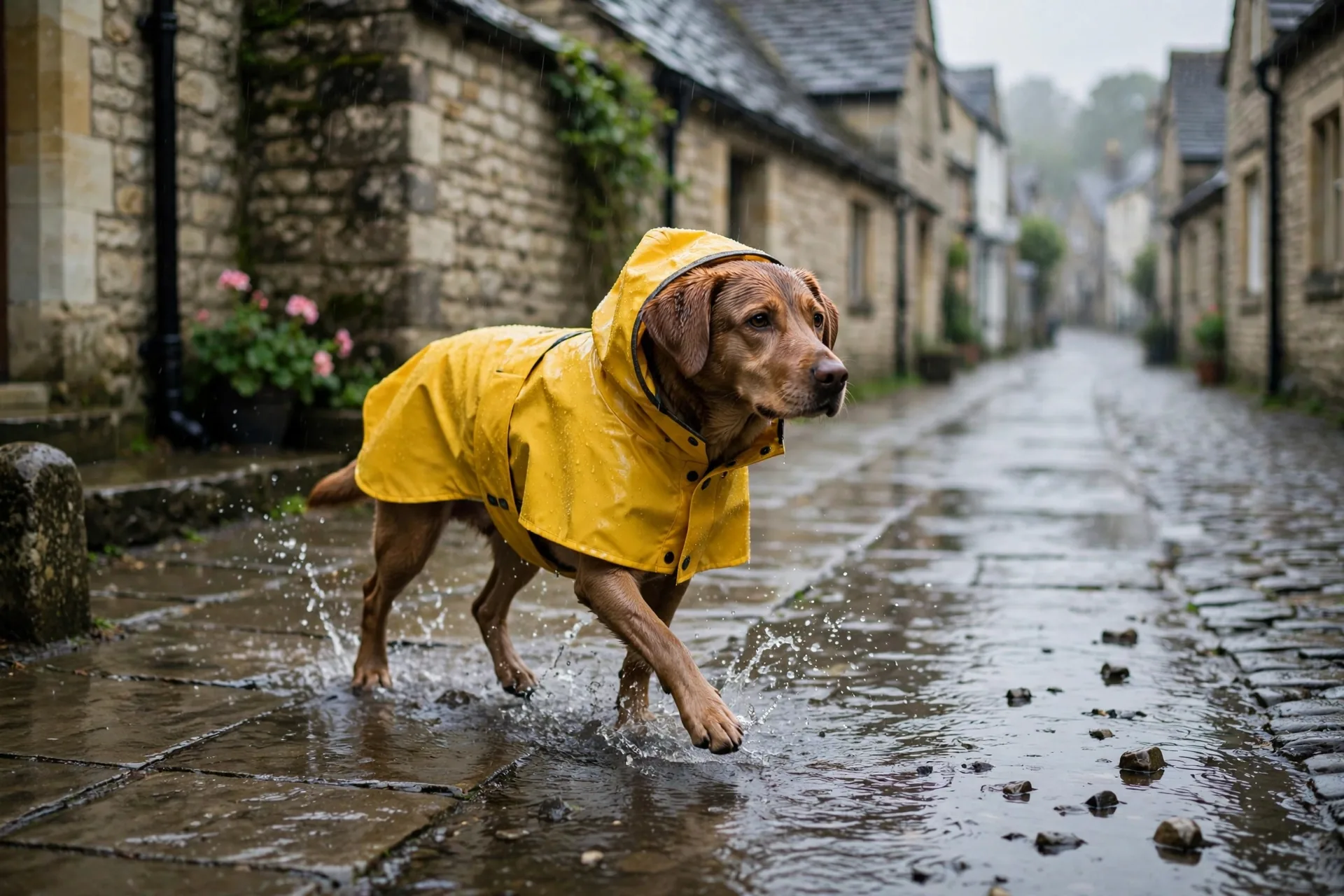
British weather is the reason a day-trip list needs a weather section at all, because a morning that starts in sunshine can end in rain, wind and mud, and a dog that is comfortable at 10am can be cold and wet by 2pm. Pack for the forecast you have, plus one step worse. That usually means a dog coat or a drying coat for short-coated, small, young, elderly or lean dogs, a waterproof layer for you, and a quick-dry towel that actually dries a dog rather than just moving water around.
For the dog, a coat should fit without restricting movement, cover the belly on wet days, and be easy to put on with cold hands. A drying coat, worn after a swim or a wet walk, keeps a dog warm while you drive home or sit in a cafe, and is often more useful than a second towel. Our guide to quick-dry dog towels compares microfibre, bamboo and chamois options, with absorption, sizing and dry times, and helps you choose a towel that will cope with a wet British walk rather than a light summer shower.
For paws, consider the ground. Hot pavements in summer, salted roads in winter, rough tracks and muddy fields all affect paws, and a dog that is limping halfway through a walk has a ruined day. Paw balm, applied before the walk, helps in winter and on rough ground, and a quick paw check at each rest stop catches stones, cuts and ice balls between toes. If your dog wears boots, practise with them at home first, because boots that are new on a day trip will be chewed, kicked off or walked in with great indignation.
For you, pack as carefully as for the dog. A waterproof jacket, a hat, gloves in cold weather, and a spare layer in the bag mean you stay comfortable enough to enjoy the walk and make good decisions. A miserable, cold owner cuts walks short, rushes recall, and misses signs that the dog is tired or cold. The dog's weather kit and your weather kit are one system, not two separate lists, and the car blanket that waits in the boot ties them together: a dry, warm dog and a dry owner travel home happily, while a wet dog in a cold car does not.
Safety and first aid without the bulk
A day-trip first aid kit does not need to be a vet's surgery in a bag. It needs to handle the common, minor problems that actually happen on walks: cut paws, ticks, stings, small grazes, a dog that has eaten something it should not have, and a dog that is overheating or chilling. A small, zippered pouch with a few well-chosen items, plus the knowledge to use them, is far better than a large kit that stays in the car because it is too heavy to carry.
Pack a conforming bandage and a small roll of self-adhesive wrap for paws, sterile saline pods for flushing a wound or an eye, antiseptic wipes, tweezers, a tick remover, a pair of blunt-ended scissors, and a few non-stick dressings. Add any medication your dog needs, in its original packaging, with the dose written down, plus a copy of the vet's number and your dog's medical notes if they have a condition. Check the kit at the start of each season, replace used items immediately after a trip, and throw away anything out of date. A kit that was perfect last summer and has not been checked since is not a kit.
Learn the basics before you need them. Know how to bandage a paw so it stays on but does not cut off circulation, how to remove a tick without leaving the mouthparts behind, how to cool a dog that is overheating by wetting the belly and paws and seeking shade and a vet, and how to recognise the signs that a problem is beyond first aid: uncontrolled bleeding, a swollen face after a sting, vomiting after eating something unknown, collapse, or a dog that cannot bear weight. First aid buys time; it does not replace a vet, and knowing when to stop walking and seek help is the most important first aid skill of all.
Other safety items earn their place by weight. A torch or head torch for a walk that might run into dusk, a whistle for recall and for attracting attention, a bright vest or a light for the dog in low light, and a phone charger all weigh little and solve real problems. In areas with livestock, add nothing except discipline: keep the dog on a lead, keep your distance, and do not let a dog approach sheep or cattle for any reason. Safety kit is not about expecting disaster; it is about making the ordinary problems of a day out small and manageable.
Car, transport and the journey home
The car is part of the day trip, not just transport to it, and packing for the car is often forgotten until a wet dog is standing in a clean boot. Start with restraint: a crash-tested harness, a crate, or a boot guard and divider, chosen for your car and your dog, and used on every journey, not just long ones. A loose dog in a car is a danger to the dog, to passengers and to other road users, and a dog that is thrown around in a sudden stop can be injured even in a minor incident. Keep the restraint system fitted and familiar, so the dog travels calmly rather than treating every car journey as a novelty.
Pack the boot for the return journey, not just the outward one. A waterproof boot liner or an old sheet, a dry blanket, a spare towel, and a bag for wet or muddy kit mean the car survives the day and the dog travels home warm. Add a bottle of water for the journey, a collapsible bowl, and a few treats for settling the dog before you drive. If the journey is long, plan stops where the dog can toilet, drink and stretch, and never leave the dog in the car on a warm day, even with a window open, because cars heat up dangerously fast. On a cool day, keep any stop as short as possible, with shade, ventilation and water, and preferably with another adult staying with the dog.
For public transport, the packing changes slightly. A lead and a muzzle, if required by the operator or if your dog may need one in a crowded carriage, a mat for the dog to lie on, and a bag that keeps your kit compact and off other passengers' feet all matter. Check the operator's dog rules before you travel, because they vary, and check the official guidance before you travel if you are unsure about a specific route or service. A dog that is calm on a train is usually a dog that has a familiar mat, a chew or a settled routine, not a dog that has been loaded with new kit on the day.
Finally, think about the end of the day. The dog will be tired, possibly wet, and ready for home, and you will be tired too. A routine helps: a final toilet walk, a towel down, a drink, a settle in the car, and a check that nothing has been left behind, such as a lead at a cafe, a bowl on a beach, or a coat on a fence. A five-minute end-of-day check saves the next day's scramble and, more importantly, means the dog arrives home in the same good condition it left in.
Adjusting the list by dog
A single list cannot fit every dog, so adjust the core list for the dog in front of you. For puppies, add puppy pads or a plan for frequent toilet stops, a chew to settle them, a familiar blanket for comfort, and extra patience: puppies tire quickly, need frequent rests, and should not be walked for long distances on hard surfaces. For senior dogs, add a ramp or a helping hand for car access, a warm coat, joint medication if prescribed, a mat for resting, and a shorter, flatter route with more stops. Senior dogs often need more water and more warmth than their younger selves, and they will not always tell you.
For reactive or nervous dogs, the packing list is also a management list. Add a long line, high-value treats, a familiar mat for settling, and a plan for space: wide paths, quiet times, and escape routes. A yellow lead or a bandana that signals space can help, but it is not a substitute for management, and you should not rely on strangers understanding it. Pack for the dog's triggers, whether they are other dogs, cyclists, children or traffic, and choose a destination that gives you room to manage those triggers rather than one that forces close encounters all day.
For large dogs, check weight and volume. A large dog needs more water, more food, a stronger lead and harness, and a bigger towel, and a car that actually fits them comfortably with their kit. For small dogs, the risks are different: cold, being stepped on in crowds, and tiredness on long walks, so a carrier or a sling for rests, a warm coat, and a plan to carry them for part of the walk can be essential. For dogs with medical conditions, such as diabetes, epilepsy or allergies, pack medication, a written plan for what to do if something goes wrong, and the vet's number, and tell anyone travelling with you where the medication is and how it is given.
For multi-dog households, multiply thoughtfully, not blindly. Two dogs do not necessarily need two of everything, but they do need enough water, bowls, leads and towels for both, plus a plan for managing them together at cafes, on narrow paths and in the car. Colour-code leads or use different coloured bowls if it helps, and pack a spare for the dog that is most likely to lose or break something. The goal is not to carry a shop; it is to carry the right things for these specific dogs on this specific day.
Load order and the leaving check
How you pack matters as much as what you pack, because a bag that is perfectly stocked but impossible to use on a walk is not a useful bag. Pack in order of use: treats and poo bags accessible in a pocket or a pouch, water accessible without opening the main bag, first aid kit in a known pocket, towel on top for the muddy moment, and food sealed at the bottom where it will not leak. Test the bag on a short walk at home, and adjust it until you can find everything without taking the bag off and emptying it on a path.
Use a permanent bag system. Keep the core kit packed between trips, in a bag that lives by the door or in the car, and top it up after each trip rather than rebuilding it from scratch. After a trip, empty the bag, wash the towel and the bowl, replace used treats and poo bags, check the first aid kit, and repack it the same day, while you still remember what ran out. This habit, more than any checklist, is what prevents the forgotten water bottle or the empty treat pouch on the next trip.
Do a leaving check, out loud, before you close the front door. Lead, spare lead, water, bowl, food, treats, poo bags, towel, first aid kit, coat if needed, phone and charger, car blanket. Say it in the same order every time, and check the dog too: collar and tag on, harness fitted, paws checked, and a final toilet break before the journey. A leaving check takes thirty seconds and catches the one item that would otherwise ruin the first hour of the day.
Finally, keep the list flexible. After each trip, note what you used, what you did not use, and what you wished you had brought, and adjust the permanent bag accordingly. A list that never changes is a list that is slowly becoming wrong, because dogs age, seasons change, and destinations vary. A list that is reviewed after every trip becomes a personal packing system that fits your dog, your car and your kind of day, and that is worth far more than any generic list, including this one, however carefully it was written.
Practical questions
Before you go
How much water should I take for a dog on a day trip?
Take at least one litre for a medium dog on a moderate walk, and more in warm weather, on long walks or for large dogs. Carry your own water rather than relying on streams, because not every water source is safe. Offer small amounts often instead of letting a hot dog gulp a whole bowl at once, and check the official guidance before you travel if you are unsure about water safety at your destination.
Do I need a dog first aid kit for a short day trip?
Yes, even a short trip can produce a cut paw, a tick or a sting. A small kit with a bandage, saline, tick remover, tweezers, antiseptic wipes and your vet's number weighs very little and can prevent a minor problem becoming a ruined day. Know how to use each item before you need it, and check the kit at the start of each season.
What should I pack for a dog in wet or cold weather?
Pack a dog coat or drying coat, a quick-dry towel, a spare lead and a waterproof bag for wet kit. Short-coated, small, young and older dogs feel cold fastest, especially when they stop moving. Dry the dog before the car journey home, and keep a dry blanket in the car so a wet dog does not chill on the way back.
Can I leave my dog in the car while I pop into a shop?
Do not leave a dog in a car on a warm day, even with a window open, because cars heat up dangerously fast. On a cool day, a very short stop with shade, ventilation and water may be lower risk, but it is still best to plan the day so the dog is never left alone in the car. Choose dog-friendly stops, take turns with another adult, or skip the shop.
What food should I bring for a day out with a dog?
Bring the dog's normal food in a sealed container, measured for the day, plus a few extra treats for recall and training. Avoid new foods on a day trip, because an upset stomach far from home is miserable for everyone. Feed a light meal before a long walk rather than a large one, and wait before vigorous exercise after eating.
How do I pack light without forgetting something important?
Keep a permanent day-trip bag packed with the non-negotiables: lead, water bottle and bowl, poo bags, towel, first aid kit and treats. Then add only the extras for that day's weather and destination. A permanent bag removes the morning scramble, and a quick check before you leave catches the one item you actually need that day.