This guide is independent and contains no paid placement. Product details, waterproof ratings and care instructions change, so check the current information from the brand or retailer before you buy or wash any item.
Buy for fit first and fabric second. Measure chest, neck and back length, choose a coat that covers the belly without restricting movement, insist on a lead portal that matches your harness, and pair it with a serious towel and a paw routine. A mid-priced, correctly sized coat will outperform an expensive one that twists, rubs or traps heat.
Start with a checklist, not a coat
It is tempting to treat wet-weather walking as a single purchase: one coat, problem solved. In practice the dogs that stay comfortable in British rain are supported by a small system. The coat keeps the torso drier, something deals with paws and the underside, a towel or drying layer handles what the coat missed, and a sensible route stops a manageable shower turning into an hour of flooded paths and filthy water. Buying those pieces in the wrong order wastes money, because a premium jacket cannot compensate for paws that come home caked in grit or a hallway with nowhere for wet kit to dry.
Begin by naming the problem you actually have. Some owners mainly want a dog that does not shiver on a November pavement walk. Others are protecting a holiday cottage, a car boot or a landlord's pale carpet from a spaniel who finds every puddle. A third group is managing skin that flares when it stays damp, long ear feathering that mats, or a dog who will do a toilet walk in drizzle but plants all four feet when the rain turns heavy. Each problem points to different gear. Warmth matters most for the first dog, coverage and fast drying for the second, and a gentle, familiar routine for the third.
Write a short rainy-day inventory before shopping: current coat or harness, lead type, towel situation at the door, drying space at home, and the surfaces on your usual routes. That five-minute audit usually reveals the real gap. Very often it is not the coat at all, but the absence of a second towel, a mat that stays by the door, or a spare set of dry bedding for the car.
Measure chest, neck and back properly
Size labels are the least reliable part of dog clothing. One maker's medium may suit a compact cocker spaniel, while another's medium is cut for a much longer, narrower dog. Always measure your own dog and compare those numbers with the size chart for that exact garment, checking the current chart before ordering because brands revise cuts and ranges.
Use a soft tape, with the dog standing naturally rather than sitting or stretching. Measure the chest at its widest point, usually just behind the front legs, keeping the tape snug without compressing the coat underneath. Measure the neck where a collar normally sits, not high up behind the ears, because a neck opening that is too tight will pull the whole garment forward. Then measure back length from the base of the neck, between the shoulder blades, to the base of the tail. Note all three numbers, plus weight as a rough cross-check, and repeat the chest measurement after a groom if your dog carries a lot of coat that is clipped seasonally.
- Chest girth decides most fits. If your dog sits between sizes, follow the maker's guidance for that model rather than assuming bigger is kinder; excess fabric twists and rubs.
- Neck opening affects toileting and movement. A coat should not press on the throat when the head drops to sniff, nor gape so widely that rain runs straight inside.
- Back length is about coverage, not fashion. Ending well before the tail base leaves the hindquarters exposed; extending too far can foul when the dog toilets or sits.
- Check the belly panel separately. Male and female dogs need clearance in different places, and a deep-chested dog may need length underneath without extra width elsewhere.
Once the coat arrives, do a proper fitting indoors. Fasten it as you would outdoors, then watch the dog walk, turn in a tight circle, sit, lie down, shake and step over a low obstacle. Look for fabric bunching behind the elbows, straps migrating, and the hem flipping up in a shake. Try the lead or harness combination you will actually use. A short garden session in light rain is a better second test than debuting an untested coat on a long, exposed walk where turning back is awkward.
Waterproofing, seams and breathability
Manufacturers describe water resistance in several different ways, and the wording matters. A showerproof or water-resistant finish sheds light rain for a while, then gradually wets through. A garment described as waterproof should resist sustained rain for longer, especially where seams are sealed or taped and zips are covered, but no coat makes a dog completely dry: water still enters at the neck, legs and belly, and spray arrives from below on wet ground. Treat any hydrostatic head figure, coating name or membrane claim as brand-specific information to verify on the current product page, rather than as a universal score that transfers between makers.
Breathability is the quiet half of the decision. A fully sealed, non-breathable layer can leave an active dog hot and clammy underneath, particularly on milder autumn days or uphill routes. Mesh linings, vented panels and lighter fabrics suit dogs that run hard, while a thin insulated waterproof suits a slow, elderly dog standing around in cold rain. If your dog pants heavily, scratches at the coat or comes home damp with sweat rather than rain, the problem may be heat build-up rather than a leaking outer.
Details that earn their keep include a storm flap over fastenings, a collar that can be turned up without covering the ears, and reflective strips or piping placed where drivers will see them in headlights on dark lanes. Reflectivity is not decoration in winter: a low dog in a dark coat disappears against wet tarmac, so pale colours, reflective trim and a lead or collar light make a practical difference. Finally, find the lead portal before you buy. Harness users need an opening on the back that lines up with their harness attachment point; collar users need neck room that does not force the lead under a tight hood. A portal in the wrong place turns an otherwise good coat into daily friction.
Rain coat, poncho or drying coat?
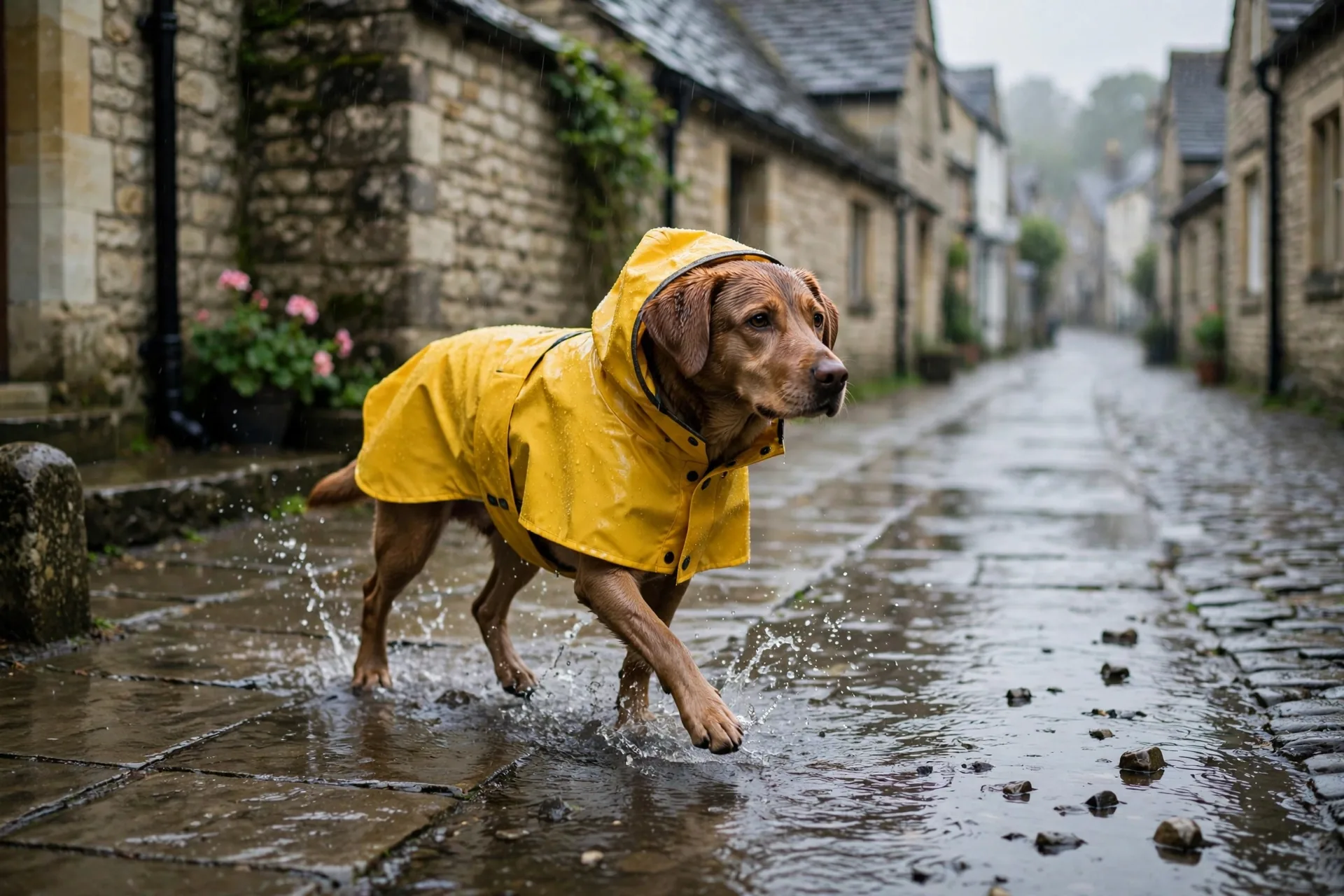
Three garments are often confused, and they do different jobs. A fitted rain coat has shaped panels, fastenings under the chest or along the back, and enough structure to stay in place during a full walk. It offers the best belly coverage and is the right default for most dogs, most routes and most weather. A poncho or rain cape, by contrast, drapes loosely over the back with minimal fastening. Ponchos are quick to throw on for a garden toilet break, easy to share between similar-sized dogs in an emergency, and less likely to bother a dog who hates straps, but they flap in wind, slide sideways and leave the underside almost completely exposed.
A drying coat is not for the walk at all. It goes on afterwards, usually made from towelling or microfibre, and wicks water from a wet dog while containing the shake-off in a car or hallway. Confusing these roles leads to disappointment: wearing an absorbent drying coat out in heavy rain simply gives you a heavier, saturated garment, while expecting a thin waterproof shell to dry a long coat afterwards ignores how much water is held in the fur itself.
Hoods deserve particular scepticism. Some dogs accept them calmly, but many find covered ears disorientating, and a loose hood can slip over the eyes on a windy pavement. Detachable or fold-away hoods are the safer compromise. Similarly, leg sleeves protect feathering on setters and spaniels yet complicate fitting and toileting for everyone else. Choose the simplest design that solves your dog's actual problem, and be wary of features you will spend every walk adjusting.
Protect paws without a battle
Coats get the attention, but paws do the contact work. Wet pavements carry grit, road salt in winter, fallen leaves that hide sharp debris, and runoff whose contents you cannot see. After most ordinary rainy walks, a rinse or thorough wipe is enough. Boots become worth considering when a dog has cracked pads, a healing cut, allergies that flare after contact with grass treatments, or regular routes over rough gravel and gritted surfaces where wiping alone is not protecting the skin.
If you try boots, fit matters more than brand claims. Look for a sole with genuine grip for wet stone and tiled floors, a fastening that sits above the narrowest part of the leg without cutting in, and enough room for the paw to spread naturally when weight is applied. Measure each paw rather than guessing from coat size, because front and back paws often differ. Introduce boots indoors, one or two at a time, for very short periods paired with food rewards, and stop the session while the dog is still coping. Many dogs do a high-stepping walk at first; that performance should settle within a few short practices. If it does not, or the dog freezes, chews the fastenings or becomes less steady on slippery ground, boots are creating risk rather than removing it.
For dogs who refuse footwear, a reliable alternative kit exists. Keep a shallow tray or bottle of plain water by the door for a quick paw dip, a dedicated paw towel that reaches between the toes, and a paw balm only if a vet or the product instructions suggest it suits your dog. Dry between the toes properly, especially on breeds prone to yeast or soreness in damp folds, and check for small stones, grass seeds and grit lodged around the pads. On holiday routes, that two-minute inspection matters even more, because unfamiliar ground hides unfamiliar hazards.
Towels, mitts and drying coats
The most-used rainy-day item in most households is not the coat, it is the towel. Microfibre towels absorb a surprising amount of water for their packed size, dry quickly on a rail, and are cheap enough to keep in several places at once: by the front door, in the car, and in a holiday bag. Cotton towels absorb well too but stay heavy and damp for longer, which matters in a small cottage or caravan with limited drying space. Absorbent mitts and glove-style towels solve a specific frustration, the wet belly and legs that a flat towel skates over. Wearing the towel lets you work around the chest, armpits and feathering with control, and most dogs tolerate hands they already know better than a flapping sheet of fabric.
Technique beats enthusiasm. Start with the back and sides, then move to the chest and belly, then each leg in turn, finishing with paws and a gentle check of ears. Press and hold rather than scrubbing vigorously, particularly on long or curly coats where friction creates tangles that later become mats. For heavily coated dogs, part the fur and blot the undercoat in sections instead of polishing the surface while water remains trapped below.
A drying coat earns its place on longer drives home and in rented accommodation. Put it on after the worst water has been towelled off, fasten it as instructed, and supervise the dog rather than leaving a damp, unsupervised dog in a new garment. Remove it once the coat underneath feels mostly dry, then brush through long fur before it sets into waves and knots. Wash towels and drying coats frequently and dry them fully between uses; a towel that never quite dries will smell, work less well, and quietly reintroduce yesterday's mud to a clean dog.
How long, and which route, in rain?
There is no universal correct duration for a rainy walk, because age, health, coat and enthusiasm vary so widely. As a working approach, keep the purpose of the walk in view. A toilet and stretch walk can be short and close to home in the worst weather, provided the dog gets a fuller outing when conditions ease. A young, fit dog who loves rain may happily complete a normal route in a coat, while an arthritic dog on cold, slick ground is better served by two shorter, steadier outings. Puppies, dogs recovering from illness or surgery, and dogs with breathing difficulties need individual guidance, and a vet's current advice overrides any general guide.
Route choice changes the experience more than most owners expect. Prefer firm surfaces over churned grass gateways, avoid paths that funnel into deep puddles with no way round, and be cautious where fast-moving water crosses a track or where riverbanks become undercut and slippery. In towns, watch for polished stone, wet leaves on slopes, metal covers and painted markings, all of which are treacherous for paws and for human boots alike. Shorten exposed hill or coastal sections when wind drives rain sideways, because a coat protects far less effectively at that angle and a small dog loses heat quickly.
Visibility and control need extra care after dark or in heavy spray. Keep dogs on a lead near roads where drivers are peering through rain, use reflective gear you have already tested at home, and build in sniffing time on a longer lead where it is safe, so a shortened route still feels satisfying. If thunder arrives, flooding blocks your return, or your dog becomes distressed rather than merely damp, end the walk. No exercise target is worth a frightened dog bolting on a wet road. Readers planning wetter coastal outings will also find the local rules and seasonal restrictions in our guide to dog-friendly beaches in the UK worth checking before they travel, since a rainy beach day still counts as a beach day in the rulebook.
The homecoming clean and dry routine
A calm, predictable sequence at the door prevents most of the mess and stress that owners associate with rainy walks. Set the area up before you leave: mat down, towel within reach, paw water ready, treats in a pot, and a gate or closed door if your dog tends to celebrate by sprinting for the sofa. On return, keep the lead on until the first towel-down is finished. That single habit, boring as it sounds, saves upholstery, tempers and the second clean-up that follows the first failed one.
Work in a consistent order so the dog learns what happens next. Remove boots or the rain coat over the mat, where drips land in one place. Rinse or wipe paws, inspect between the toes, then towel the body, belly and legs. Offer water, because dogs often drink less on a wet walk than they need, and only then release the dog to a dry bed or blanket. If mud is extensive, plain lukewarm water in a portable shower, bucket or low-pressure hose is usually kinder than repeated shampooing, which can dry skin when used daily. Reserve proper baths for when they are genuinely needed, using a dog shampoo as its label directs, and rinse thoroughly because residue left in a damp coat causes itching that gets blamed on the weather.
Do not forget the kit. Hang the rain coat somewhere air can circulate, open fastenings so folds dry, wipe the lead and collar, and rinse boots if they came home gritty. Wet harnesses left in a heap will chafe the next day and smell by the day after. In holiday accommodation, lay out the same station on the first evening, protectively and without apology: most hosts would rather see a tidy mat and towel corner than mud tracked through every room.
Wash, reproof and store gear properly
Waterproof garments fail gradually, and owners often misread the signs. When water stops beading and the outer fabric darkens as it absorbs rain, the water-repellent finish may need refreshing even if the membrane or coating underneath is intact. Before doing anything elaborate, wash the coat properly. Grit in seams and detergent build-up both reduce performance, and many coats revive after a correct clean alone.
Follow the care label on the individual garment first, because constructions differ. In general, close hook-and-loop straps so they do not collect fluff or snag linings, empty pockets, shake off dried mud outdoors, and wash cool with a small measure of mild or specialist technical cleaner. Avoid fabric conditioner and heavily perfumed products on waterproof fabrics unless the maker explicitly approves them, rinse until the water runs clear, and air-dry away from radiators and direct heat, which can damage coatings and elastic. If the brand offers or recommends a reproofing product for that fabric, apply it only to a clean garment and exactly as its instructions state, then allow the full drying or curing time before the next walk.
Between washes, spot-clean mud splashes, check stitching around the lead portal and strap anchors, and replace elastic or fastenings that have lost their grip before they fail on a road. Store coats dry, loosely hung rather than compressed under heavy boots in a cupboard, and never pack a still-damp coat into a car or holiday bag and forget it. Mould, odour and coating damage all begin in that forgotten, sealed, wet bundle.
Fit by body shape, coat and age
Standard size charts assume a standard dog, and a great many dogs decline to be standard. Deep-chested sighthounds need chest room without a swamp of extra length flapping at the rear. Long, low breeds need coverage that does not trail in puddles or catch on steps. Broad, muscular dogs often size out of a coat at the neck and shoulders while the back length looks modest on paper. For these shapes, look for makers offering breed-specific cuts, adjustable chest panels or separate neck and body sizing, and be honest about returns: ordering two sizes and sending one back, where the retailer's current policy allows it, is often the fastest route to a genuine fit.
Coat type underneath changes the calculation. A thick double coat adds measurable centimetres to chest girth for half the year and sheds some of that bulk in spring, so an adjustable strap range matters more than a single perfect measurement. Long silky coats snarl against rough linings and hook-and-loop fastenings placed carelessly; smooth linings and covered fastenings reduce the grooming bill. Short, fine coats offer almost no insulation of their own, so those dogs benefit most from a waterproof layer with light warmth in colder months, while a dense-coated dog in the same garment may overheat on an active route.
Age shifts priorities again. Young dogs are still growing, chew straps experimentally, and need short, positive introductions to wearing anything new, which is why our guide to a puppy's first holiday treats new gear as training rather than shopping. Older dogs may need a coat that opens fully along the back so nobody has to thread stiff legs through sleeves, minimal bending during fastening, and warmth balanced against extra weight. Our advice on travelling with a senior dog covers comfort and pacing in more depth, and the same principles apply here: easy on, easy off, nothing that rubs a thin-skinned elbow or an arthritic shoulder. For dogs with medical conditions, recent surgery or anxiety about handling, ask the treating vet or a qualified behaviourist what style is appropriate before spending money.
Budgets: what extra money actually buys
Prices vary widely and change often, so treat the tiers below as a way to judge value rather than as fixed price promises, and confirm the current price and specification before buying. At the budget end, expect a simple unlined shell with basic fastenings and limited size options. That can be entirely adequate for short pavement walks, toilet breaks and occasional wet days, provided the fit happens to suit your dog and you accept that seams and finishes may not shrug off daily downpours for season after season.
Mid-range coats are where most owners get the best return. The extra spend typically buys a wider and more honest size range, sealed or better-finished seams, a lining suited to the season, sturdier strap hardware, reflective detailing that is placed thoughtfully, and a lead portal that aligns with common harness designs. For a dog walked twice a day through a British winter, those differences compound into a coat that goes on in seconds, stays centred, and is still working next year.
Premium prices should be interrogated rather than assumed worthwhile. Pay more only when you can name what you are paying for: a specialist cut for a difficult shape, notably lighter or more breathable fabric for a very active dog, repairable construction, or insulation genuinely matched to cold, slow walks. Spending the same total on a mid-range coat, a drying coat and two good towels often serves a family better than one flagship garment and nothing to dry the dog with afterwards. Whatever the tier, set money aside for replacement straps, reproofing and a second towel rotation, because rainy-day gear is a small ongoing system, not a single lifetime purchase.
Rainy-day packing list for trips away
Packing for a British break means assuming at least one properly wet day, whatever the forecast promised when you booked. Pack the rain coat your dog already knows, not a new one bought the night before, because unfamiliar gear plus unfamiliar accommodation is a reliable recipe for a dog who refuses both. Add the drying kit, a spare lead that does not stay soggy, and enough bedding protection to keep a car and a cottage manageable.
- The proven rain coat, checked for straps, portal position and cleanliness before it goes in the bag.
- Two microfibre towels minimum, one in use and one drying, plus an absorbent mitt for bellies and legs.
- A drying coat for car journeys and cottage hallways, sized and introduced at home first.
- Paw kit: small towel, plain-water rinse bottle, any boots the dog already accepts, and a balm only if it is already part of your routine.
- A waterproof bag for isolating soaked kit in the car, so one wet afternoon does not perfume the whole boot.
- Reflective extras such as a collar light or high-visibility vest for dark lanes and early winter evenings.
- Spare bedding and a washable mat to build an instant drying station wherever you are staying.
- Food, medication and familiar comforts, because rainy days spent mostly indoors are easier with normal routines intact.
On arrival, unpack the wet-weather corner first. Decide where towels live, where the coat hangs, and which door you will use after walks, then keep that arrangement for the whole stay. If rain settles in for days, rotate towels through any available drying space, shorten exposed routes without cutting sniffing and toilet time to nothing, and plan indoor enrichment such as training games and food puzzles. A dog who has been rained on, dried properly and given something interesting to do indoors will usually settle far better than one dragged through an extra hour of weather to hit an arbitrary exercise target.
Practical questions
Before you go
Does my dog really need a rain coat, or is it just for looks?
Some dogs cope well without one, especially thick-coated breeds that dry quickly and enjoy wet weather. A coat becomes genuinely useful for short-coated, small, older, very young or unwell dogs, for dogs that shiver or refuse to walk in rain, and for anyone trying to limit how much mud and water comes back into a car, caravan or rented cottage. It is a comfort and housekeeping tool, not a fashion requirement.
How tight should a dog rain coat be?
Aim for snug but not restrictive. You should be able to slide two fingers between the coat and the chest or neck strap, the dog should be able to walk, sit, turn and toilet normally, and the panel should stay centred when the lead pulls gently. If the coat twists to one side, rides up at the neck or rubs behind the front legs, the size or shape is wrong regardless of what the size chart suggests.
Are dog boots worth it for rainy walks?
Boots help on gritty pavements, sharp gravel, very cold or chemically treated surfaces and for dogs with sore, cracked or recently treated paws, but many dogs dislike them at first and some walk less safely until they are used to the feel. Introduce them indoors in short sessions with rewards, check the fit often, and never leave a reluctant dog struggling on a slippery surface just to persist with new footwear.
How do I stop my home smelling of wet dog after every walk?
Most of the smell comes from a coat and bedding that stay damp. Towel the dog thoroughly at the door, use a drying coat or absorbent mitt for the belly and legs, wash and fully dry towels and blankets regularly, and clean ears and paw folds so moisture is not trapped. Rinse mud off with plain water rather than adding scented products every day, and let boots, coats and leads dry in moving air away from direct heat.
Can I put a rain coat in the washing machine?
Many can, but the label on the specific garment is the authority. As a general routine, fasten straps, shake off grit, wash cool with a small amount of mild or technical detergent, rinse well and air-dry. Avoid fabric conditioner on waterproof fabrics unless the maker says otherwise, because residues can reduce water repellency, and check whether the coat needs reproofing after several washes.