This guide is independent and contains no paid placement. If affiliate links are added later, they will be clearly marked and will not change our editorial checks.
A large microfibre travel towel is the default best pick for UK dog trips: it absorbs several times its weight, wrings nearly dry, and recovers between outings where cotton never does. Buy three, size up for spaniel-and-bigger dogs, and treat the towel as a consumable that lives in the car boot, not the bathroom.
The rain maths of a British dog trip
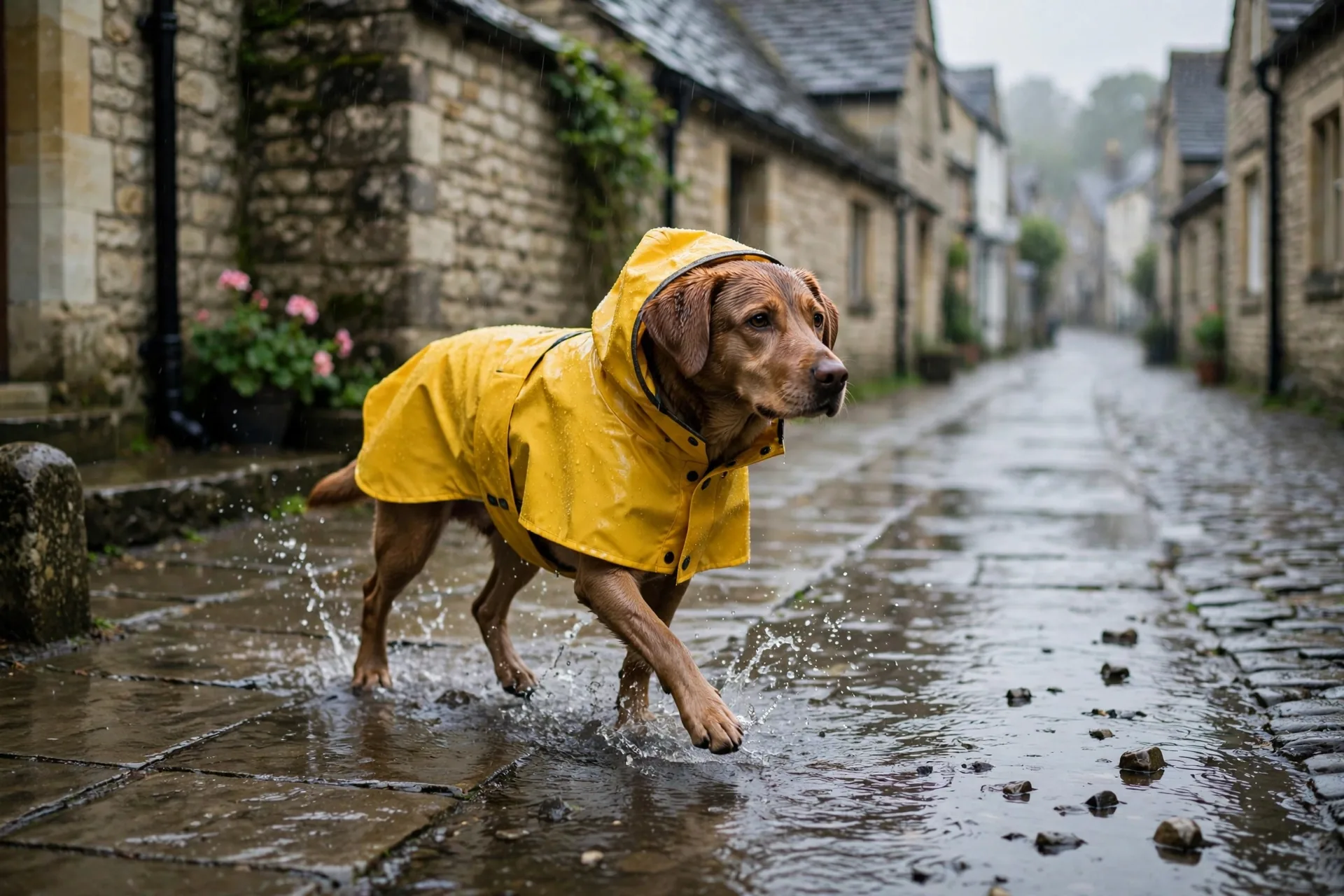
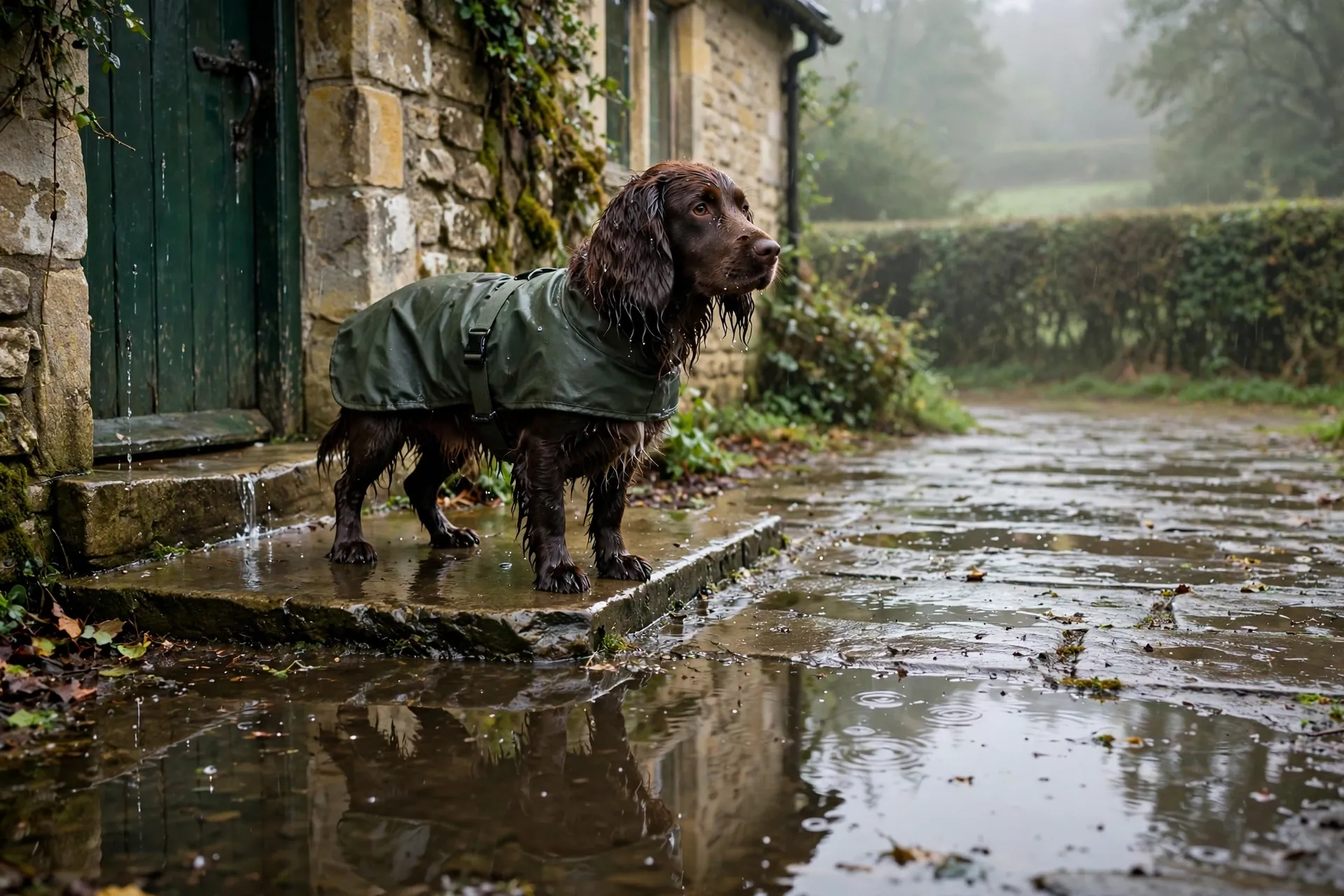
Britain averages roughly 150 rain days a year in many western and upland areas, and dog walking happens in almost all of them. The Met Office records annual rainfall above 3,000 millimetres on parts of the Lake District and Snowdonia fells, and even drier eastern counties still see more than 100 wet days a year. For a dog owner planning a week of coastal walks, that arithmetic turns the towel from an afterthought into one of the most-used items in the boot. A spaniel can return from a single beach session carrying a kilogram of sand and seawater; a collie on a muddy bridleway can absorb a season's worth of field drainage in forty minutes. If you are holidaying somewhere famous for its weather, check the official guidance before you travel about seasonal restrictions and ground conditions — but assume the dog will get wet.
Thinking of the dog towel as a consumable rather than a luxury changes how you pack. The cotton bath towel you borrowed from the house last time probably did one job passably and spent the rest of the week smelling of wet dog in the corner. A proper travel towel earns its space because it finishes one drying session almost as dry as it started, which matters when the next outing is four hours later and the washing machine at the cottage has a queue of human clothes. On a typical seven-day UK dog trip you may do twelve to fourteen walks; each one asks the towel for a full performance, so the right towel gets roughly a fortnight of normal household use compressed into a single week. That is why experienced dog-trippers keep a dedicated set in the car permanently, separate from the towels they use at home.
The real cost of the wrong towel is not money but friction. A damp cotton towel folded into a bag becomes a warm, airless breeding ground that smells like a canal by day two, and spreading it over a cottage radiator to rescue it risks a phone call from the owner. A towel that wrings out hard, packs small, and dries on a line or a shower rail overnight removes the whole negotiation. Buy the towel for the second-wettest day of the trip, not the first — that is when the system either works or falls apart.
How quick-dry fabrics actually work
Quick-dry travel towels work through fibre geometry, not magic. Standard cotton is spun into relatively thick, round fibres that hold water between them and inside the fibre itself; the water then evaporates slowly because the surface area to volume ratio is low and the fibre stays swollen. Microfibre splits each polyester-polyamide strand into eight or more wedge-shaped filaments, each a fraction of a denier — thinner than a human hair. Those wedges act like tiny gutters: water is pulled along their edges by capillary action into the gaps between filaments, where it sits as surface water rather than being absorbed into the fibre. Surface water is easy to wring out with a hard twist, which is why a microfibre towel feels almost dry after one squeeze while a cotton towel of the same size still drips.
The same geometry explains the fast re-drying. Because the water is held between filaments rather than inside the fibre, air moving over the towel's enormous internal surface area evaporates it quickly. In practice a wrung-out microfibre towel hung in a ventilated room feels dry in a few hours, where a cotton towel of equivalent absorbency takes overnight or longer — check the official guidance before you travel if your accommodation has a tumble dryer, but most cottages and holiday lets expect guests to manage laundry on their own schedule. The trade-off is that microfibre feels less plush and can feel slightly grippy on skin and thin coats; a towel advertised as a high GSM (grams per square metre) in the 400–600 range balances absorbency against that draggy feel.
Bamboo-based towels use viscose fibre made from bamboo pulp. The fibre surface has micro-gaps that wick water quickly, and the material has a naturally smoother hand-feel than microfibre, which nervous dogs often prefer. Bamboo towels tend to dry marginally faster than microfibre of the same size and resist sour smells for longer between washes, but they are usually sold at a higher price point and can be less robust to hard wringing over time. Chamois-style cloths — the synthetic leather type originally made for cars — absorb astonishingly well for their thinness and pack down to pocket size, but they must be stored slightly damp to stay supple, which is awkward in a dog context, and they cover less area per pass.
Microfibre, bamboo and chamois compared
Put side by side on a wet labrador after a beach walk, the three fabric families behave very differently. A good microfibre towel in a plush, high-pile weave is the workhorse: it takes the bulk of the water off a big dog in two or three passes, wrings out to near-dryness with one hard twist, and survives hundreds of machine washes. Look for a polyester-polyamide blend around 80/20 — the polyamide component is what gives the fibres their water-loving edges. Cheaper 100% polyester versions still dry fast but absorb noticeably less, so they are fine as a second towel but disappointing as the main one. Microfibre's weakness is texture: on very short-coated dogs like boxers or whippets, the grippy feel can be unpleasant, and some dogs learn to flinch at it.
Bamboo-blend towels sit between the two. They absorb well — typically rated at three to five times their own weight — and their smoother surface slides through spaniel feathering and retriever feathering without the grabby feel of microfibre. They also tend to smell fresher on a multi-day trip, which matters when the towel lives in the car boot. The downside is price: a bamboo-blend towel large enough for a big dog often costs nearly twice its microfibre equivalent, and the viscose fibres can lose a little of their wicking speed after a year of hard use. If your dog is sensitive to texture or you travel for weeks at a time, the premium is worth considering.
Chamois cloths are the specialist tool. A synthetic chamois the size of a tea towel can pull a surprising amount of water off paws and legs, and it folds to the size of a wallet. But it must be kept slightly damp in storage or the material hardens and cracks, which means carrying a damp cloth in a plastic case in the boot — workable for paws, miserable for a full dog. They also leave water on the surface of thick coats rather than wicking it deep. For most travellers, the honest verdict is: a microfibre main towel, a bamboo second towel if budget allows, and skip the chamois unless you specifically want a compact paw-wipe for pub garden visits.
What to look for when buying
Start with the absorption claim, and read it sceptically. Manufacturers quote figures like "absorbs five times its weight" without saying how they measured it — but relative numbers still help: within one brand's range, the towel rated 5x will genuinely outperform the one rated 3x. More useful is GSM for microfibre: 400–600 GSM gives a plush, thirsty weave, while ultra-light 200 GSM towels are really emergency towels that pack tiny but need many more passes. Weigh the towel in the shop if you can; a 90 × 140 cm microfibre towel around 400–500 grams is about right, and noticeably lighter than a cotton towel of similar thirst.
Sizing is the most common mistake. Owners buy the size that sounds sensible for the dog and then discover they are doing twelve passes because the towel covers only half a flank. For a terrier or similar small breed, 60 × 90 cm is genuinely enough. Spaniels, collies and labradors need 80 × 120 cm or larger so the chest, flanks and back get covered in a few presses. Giant breeds justify 100 × 150 cm. When between sizes, size up — a folded large towel doubles as a seat protector in the car, while an undersized towel just wastes your time on every walk. Check whether the towel comes with a carry bag, and specifically whether the bag has a mesh panel or vent: a towel sealed into a waterproof bag while still damp will smell by the next morning, so breathable storage is a buying feature, not packaging.
Odour control and stitching are the two things you notice on day three. A towel with a silver-ion or bamboo-charcoal anti-odour treatment genuinely smells fresher between washes on a long trip, though it does not excuse bad drying habits. Check the binding and stitching around the edges — cheap towels fray after a dozen hard wrings, and loose threads snag claws. Dark colours or patterns hide mud and sand between washes, which sounds trivial until you are using the same towel in a smart pub. Finally, confirm the wash instructions: a towel that needs a delicate cool wash is a liability on a dog trip; you want 40–60 degree machine washing with ordinary fragrance-free detergent and no fabric conditioner, which coats fibres and kills absorbency.
The five-step drying routine: paws to body
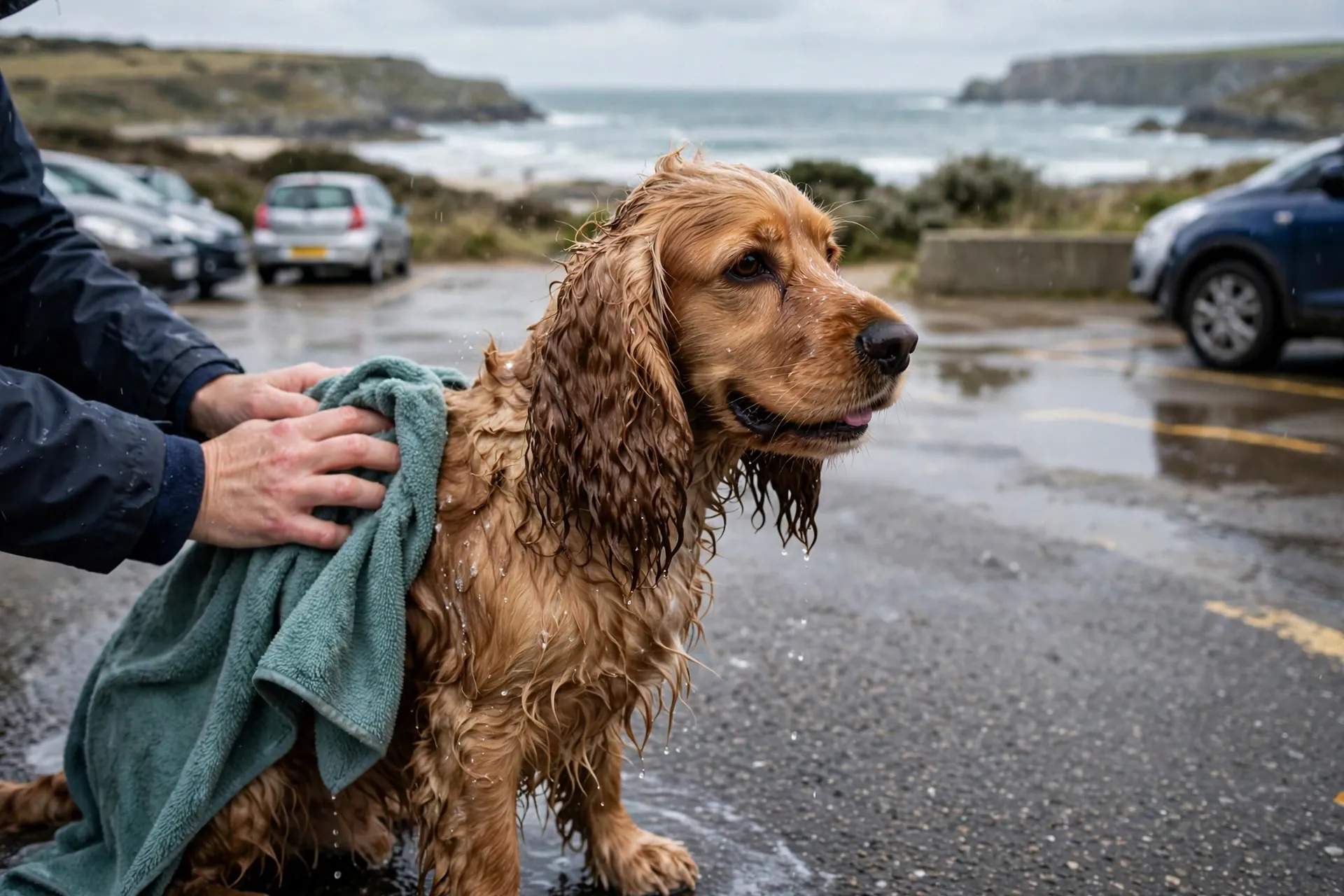
A good routine is fast, calm and repeatable — five minutes that a nervous rescue can learn to tolerate because it always goes the same way. Start before you leave the car: open the towel bag, fold the main towel lengthways so you have a long working edge, and keep the spare folded for step five. The aim of each step is one press-and-lift rather than repeated rubbing; pressing pushes water into the towel, rubbing just relocates it and frizzes long coats.
Step one: paws and lower legs. Work around the dog one paw at a time, pressing the towel around each foot and between the toes, then wringing before the next. Mud collects on the back of the pasterns and between the pads, so press there firmly rather than scrubbing. A paw dip of clean water before towelling pays off after beach or salted paths — road salt in winter and sand between pads both irritate, and towelling dry over a dirty paw just grinds grit in. If your dog lifts paws willingly, do the front pair first while they are standing square.
Step two: chest and throat. The chest acts as a plough on wet walks and holds more water than most owners expect, especially on deep-chested breeds. Fold the towel over the chest and press down along the keel, working from the throat latch backwards. On coated breeds, press the towel into the feathering rather than smoothing it, which leaves the surface wet. Wring the towel after this step — the chest is where the first saturation usually happens.
Step three: flanks and back. Drape the towel over the back like a saddle and press along both flanks with the flat of your hand, working from withers to tail head. Two passes with a large towel covers a labrador; a single press held for a few seconds on each side is kinder to thin coats than vigorous rubbing. This is the step where undersized towels reveal themselves, because you end up repositioning a dry corner again and again.
Step four: belly and inside legs. Lift the edge of the towel under the belly and press up along the tuck, then do the insides of the back legs where water sheets off the flanks. Mud splatter concentrates on the belly and inner thighs, and this step is what keeps car seats and cottage sofas safe. For low-slung breeds like dachshunds and bassets, this step matters more than the flanks — their bellies sweep everything.
Step five: ears, face and the final check. Use a dry corner or the second towel for the head — pressing gently around the ear bases and under the chin, where damp fur goes unnoticed. On drop-eared breeds, lift and press under the ear flap itself; trapped moisture there is the classic cause of musty ear smells. Then run a hand against the lie of the coat all over: anywhere that still feels cold and slick needs one more press. Finish by wringing the towel hard, shaking the dog (away from the car door), and clipping the lead back on.
Muddy walks: order of operations
Mud changes the sequence because towelling a muddy dog just makes brown soup. If the dog is caked rather than merely wet, rinse before you dry. Carry a litre or two of water in the boot for exactly this purpose — a squeeze bottle or an old milk jug works fine — and pour it over the worst patches, paws first, so gravity does the rinsing for you. Many National Trust and country-park car parks now provide dog-wash stations or taps; use them, but check the official guidance before you travel about whether the water is potable, because you do not want the dog drinking rinse water.
After rinsing, squeeze excess water out with your hands before the towel touches the dog: each handful of water you squeeze off saves the towel an absorption cycle. Then run the five-step routine as normal, but treat the first pass as a sacrificial mud pass and the second as the real drying pass — this is where the third towel earns its place on multi-day trips. On clay-soil walks in Shropshire or the Weald, mud dries into concrete-like clumps in leg feathering; rather than pulling at them, work a dry corner of the towel against the lie of the coat to lift the grit, then brush once home. For dogs prone to drying-coat wearing after a wet outing, rinse and towel first and then put the coat on — the coat finishes the job, it does not start it.
One more mud discipline worth keeping: keep the dirty towels separate. A mesh laundry bag in the boot with its own identity prevents the boot from becoming a swamp and means clean towels stay clean. Rotate so that the least-damp clean towel is always the one you reach for, and never put a towel back into its bag while it is dripping — wring it first, even in the rain. The rainy-day gear checklist covers the full wet-walk kit to pair with your towels, from car-seat covers to spare leads.
Drying in the car and at your stay
The car is where most travel towels spend their working lives, so set it up properly. Lay a waterproof boot liner or an old tarpaulin, then a cheap washable throw over it — the towel does the dog, the liner does the floor. Keep the working towel in a breathable bag clipped near the boot door rather than buried under the picnic hamper; if you have to hunt for it in the rain, the dog is standing in the rain too. On the drive home after a wet walk, crack a window slightly even in cold weather: a wet dog in a sealed car fogs the windows and keeps the coat damp, while a little airflow starts the drying process.
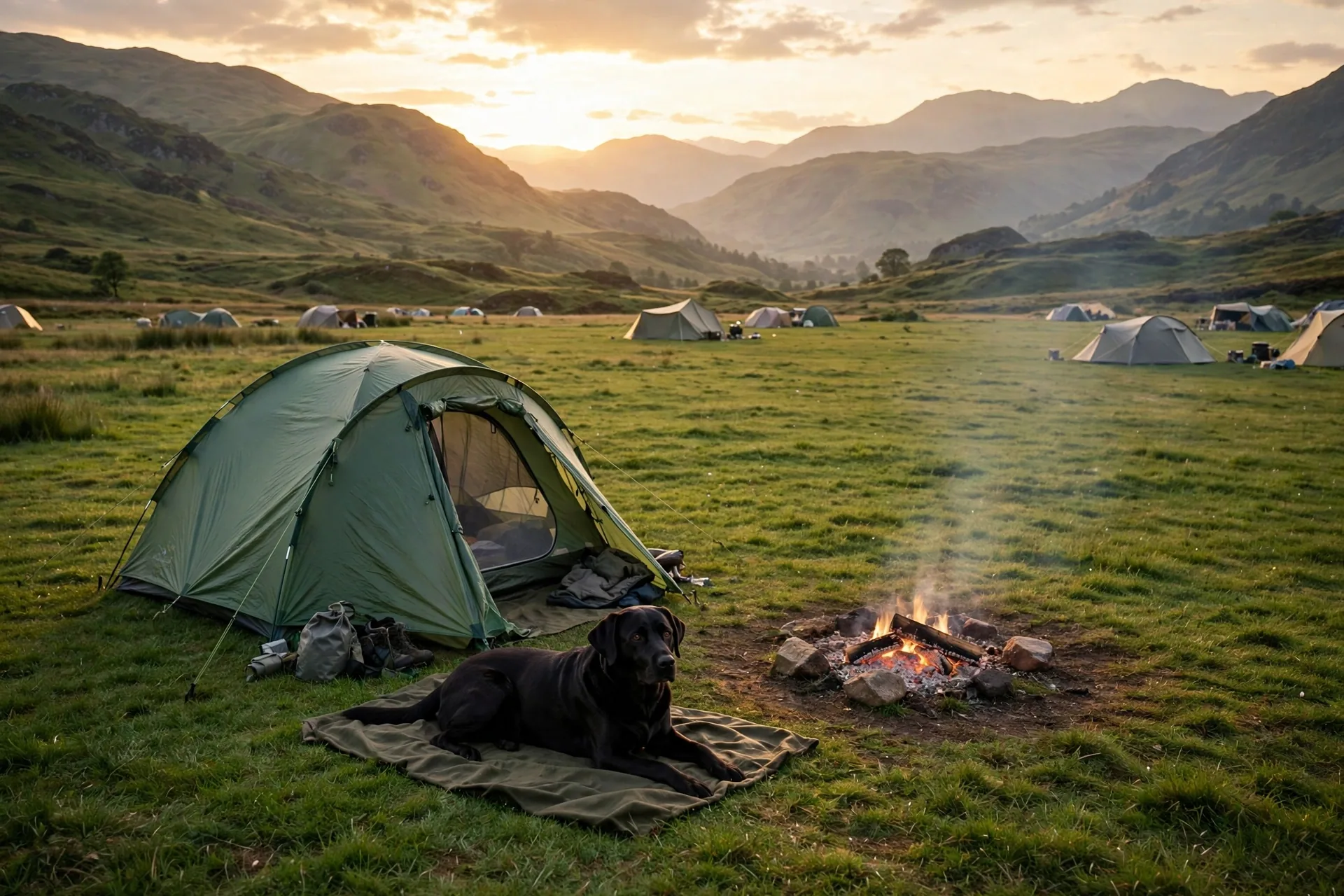
At the accommodation, claim a drying zone on arrival. The utility room, the boot room, or a corner of the bathroom by the extractor fan all work — what matters is ventilation and a hard floor. Hang the day's towels over a shower rail or a freestanding airer rather than radiators; radiators bake damp towels into stiff, sour boards and some cottage owners understandably object. In a caravan, hang towels near the open roof vent and crack it overnight even in cold weather — wet-dog steam plus closed windows is the classic recipe for condensation and a lingering smell, as our caravan holiday guide explains. On campsites, a bungee line under the awning or between tent poles works in all but sideways rain, and a towel left out overnight in good air is often dry by the breakfast walk.
Establish the order of towels on day one and stick to it: today's towel hangs to dry, yesterday's towel is today's spare, and the clean one is the one you reach for. This rotation means no single towel works two consecutive days, which is the main way smells get a foothold. If your stay has a washing machine and you are there for a week or more, run the towels through on day three or four at 40 degrees — a mid-trip wash resets the whole system, and clean towels dry dogs measurably faster than saturated ones.
Odour control and washing
Smell is the towel's real enemy, and it is almost always a storage problem, not a washing problem. Towels that are wrung out hard and hung with airflow between uses stay neutral for days; towels folded damp into a bag or piled in the boot go sour overnight. The vinegar trick is genuinely effective: add half a cup of white vinegar to the rinse cycle, which neutralises odour without leaving a scent of its own, and never use fabric conditioner — it coats the fibres with a waxy film that cuts absorption and traps smells. Wash at 40 degrees with fragrance-free detergent; on a long trip, one hot 60-degree wash of all the towels is a good reset if any have started to smell stale.
Line-dry whenever you can. Sunlight and moving air finish the job better than any machine, and a towel dried stiff on a line in the Lakes somehow smells cleaner than one dried indoors in a heated cottage. If you must tumble dry, keep the heat low — high heat can damage microfibre's fine structure over time, though occasional use is harmless. Never iron a microfibre towel; the heat melts the filaments flat and destroys the absorbency you bought it for. A small bottle of fragrance-free detergent in the packing list, plus a handful of vinegar sachets, costs almost nothing and saves a trip to the shops in a strange town.
Between washes, the quickest deodourising move is a hard wring followed by fresh air, not another wash. Towels washed too often wear out faster and never fully dry on a damp trip. If a towel smells sour despite correct washing, the usual culprit is detergent residue from over-sudsing — run one cycle with no detergent at all, just the vinegar rinse, and the smell usually clears. Persuading the whole household into the rotation system is worth it: one towel left wadded under a car seat will undo a week's good habits in a single night.
When a towel is done
A good microfibre towel lasts years of normal use, but dog trips are not normal use — mud, claws, hard wringing and salt water all take a toll. The honest replacement signals are clear: the towel no longer gets the dog noticeably drier after two presses, it takes far longer to dry between uses than it used to, it smells stale immediately after a correct wash, or the edges are fraying enough that threads snag on claws. A towel that fails any two of those tests has become a smelly rag and should be retired to garage duty, not the dog kit.
Retire proactively before a trip, not during one. Two weeks before travelling, test your towels on a wet walk at home: if the main towel needs constant wringing to finish one medium dog, buy the replacement now and let the old one become the spare. Keep the rotation count honest — three working towels plus the retired one as an emergency backup is a sensible system for a family dog trip. Mark the retiring towel with a stitch or a marker so it does not creep back into the working set by accident, because the worst travel towel is the one you meant to throw away and find in the boot at a rainy beach car park in October.
Cost-wise, there is no need to overthink it. A solid large microfibre travel towel typically costs between £8 and £20 in the UK, with bamboo blends running higher. Replacing one towel a year on a rotation of three works out at the price of a pub lunch — negligible against the cost of a wet-car valet or a damaged cottage deposit. Buying two at once often costs little more than one plus shipping, and it means the towels age together and behave the same, which keeps the rotation predictable.
Practical questions
Before you go
What is the best quick-dry dog towel for UK travel?
A large microfibre travel towel with a stated absorption of at least 3-5 times its weight, ideally one sized 90-140 cm for medium to large dogs. Look for a plush microfibre weave for soaking up bulk water fast, a carry bag that lets it breathe, and reinforced stitching. Bamboo-blend towels dry slightly faster and smell fresher between washes, while chamois cloths pack smallest but hold less water overall.
Are microfibre towels safe for dogs?
Yes, microfibre towels are safe for rubbing a dog's coat down after a wet walk, provided you do not drag them roughly over sore or damaged skin. Some very dense microfibre can feel grippy on thin coats, so a gentler pressing motion suits nervous or thin-coated dogs. Wash the towel before first use to remove manufacturing dust, and avoid fabric conditioner, which coats the fibres and reduces absorption.
How many dog towels should I pack for a UK trip?
Pack three: one in the car for the walk-to-car drying, one at the accommodation, and one spare because British weather rarely dries a towel between outings. On multi-walk days, one towel per outing is a realistic minimum for a medium dog, and a dog swimming or rolling in mud can burn through two in a single session.
How do I stop dog towels smelling?
Wring the towel out hard after use and hang it somewhere ventilated, never sealed in a bag while damp. Wash at 40 degrees with a fragrance-free detergent and add half a cup of white vinegar to the rinse cycle to neutralise odour without conditioner residue. Line-dry in the open air whenever possible, and give any towel that smells stale even after washing an extra rinse at 60 degrees before you decide it has reached the end of its life.
Can I just use a normal bath towel for my dog?
You can in a pinch, but a cotton bath towel is slower to absorb and far slower to dry than a quick-dry travel towel. On a UK trip with two wet walks a day, a damp cotton towel never recovers and ends up smelling by day two. A dedicated microfibre towel absorbs more per squeeze, wrings nearly dry, and is ready for the evening outing.
What size travel dog towel do I need?
For a terrier or similar small breed, a 60 x 90 cm towel is enough. Spaniels, border collies and labradors need 80 x 120 cm or larger to cover the flanks and chest in one go. Giant breeds may need 100 x 150 cm. When in doubt, size up: a bigger towel dries a dog in fewer passes, and a folded large towel works as a seat protector in the car.