For a rainy UK holiday, pick a drying coat in microfibre or bamboo with full belly coverage, an adjustable chest and belly strap, and a size chosen by back length from your own tape measure. It goes on after the walk, not instead of a towel, and does its best work on a calm dog resting indoors for half an hour to an hour. Check retailer pages for current prices before you buy.
The rainy-holiday problem a towel cannot solve
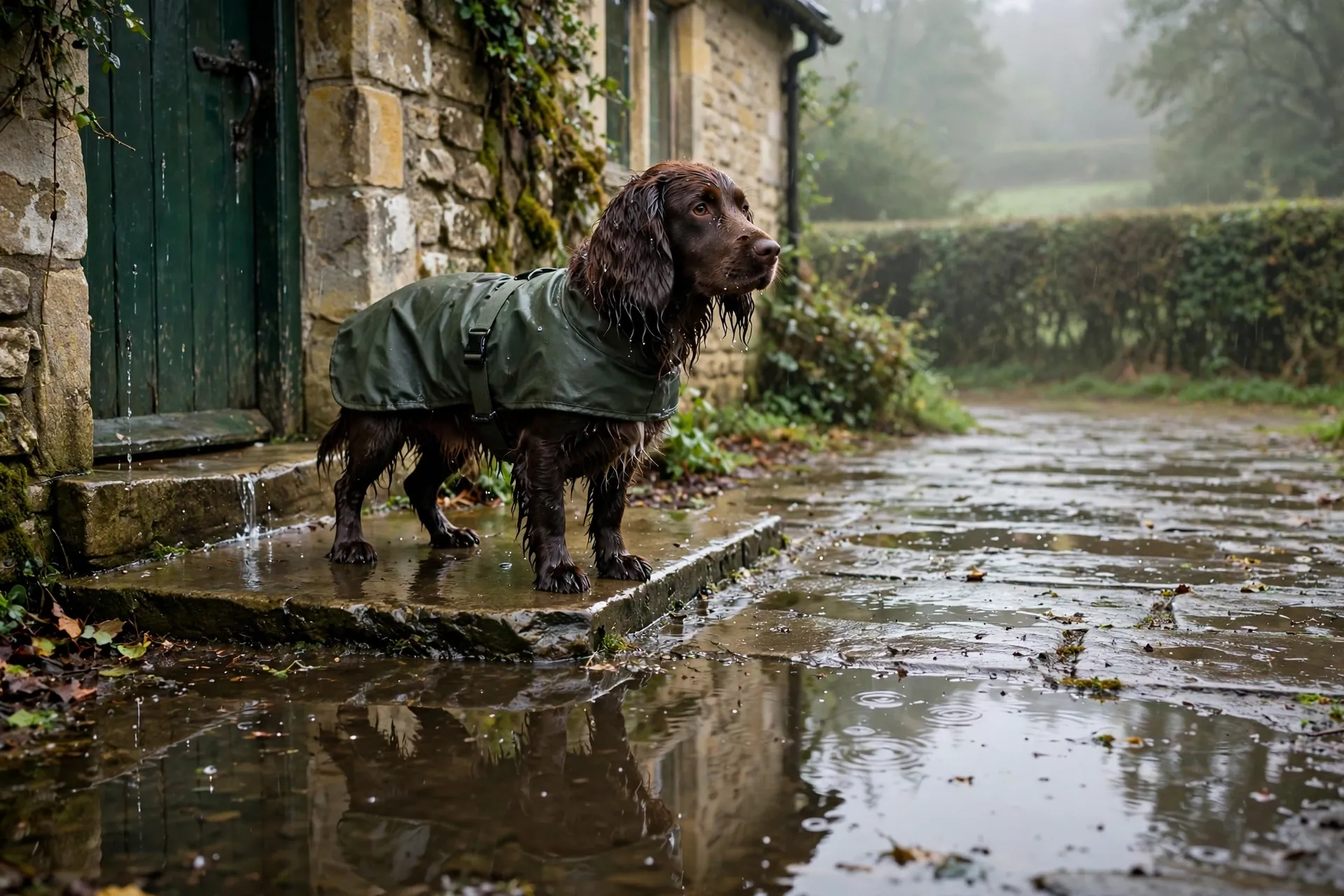
British holidays come with weather attached. The Lake District averages rain on roughly half the days of autumn, Cornish coastal paths stay damp long after the shower passes, and a November week in Snowdonia can deliver horizontal rain before breakfast. Most dog owners accept this — they pack the waterproofs and go anyway. What catches people out is not the walk itself but the half hour after it: the dripping dog standing in the porch of a self-catering cottage, the boot already full of wet towels, and a landlord who will notice muddy paw prints on the carpet.
A towel handles the surface of the problem. It takes the worst off a short coat in a few minutes, and for a smooth-coated dog in summer it is often enough. On a wet week with a spaniel, a retriever or any dog with feathering, the moisture goes deeper than the towel reaches. Rubbing harder moves the problem around rather than solving it, and it mats the coat you are trying to dry. The other failure mode is volume: one towel is fine for one walk, but a week of two wet walks a day turns the drying pile into its own small laundry operation, and holiday accommodation rarely has the radiator space to cope with six damp towels.
This is the gap a drying coat fills. It is not magic, and it does not replace towelling — think of it as the second stage of a drying system. The towel takes the bulk water off; the coat draws out what remains while the dog rests. Dogs that hate being fussed over with towels often accept a coat far better, because once it is on, nobody is rubbing at them any more. For nervous or older dogs on holiday, that calmness is part of the point: the dog settles on its bed, the coat works silently, and the humans can make tea instead of wrestling with damp fleece.
What a drying coat actually does
A drying coat is a fitted, highly absorbent garment that wraps the dog's body after wet exposure. The mechanism is simple: the inner layer is made of a material with a large surface area of fine fibres, which pulls moisture from the fur by contact and wicking. Unlike a towel you move across the coat, the garment holds absorbent material against the whole body at once, so it keeps working for the full time it is worn. Most coats also cover the belly and chest, which are the areas that hold moisture longest and pick up the most mud.
Expect realistic results rather than miracles. On a typical medium-coated dog, a well-fitted microfibre coat will leave the fur noticeably drier within 15 to 30 minutes, and after 45 to 60 minutes most dogs are dry enough to be allowed onto furniture without leaving damp patches. Very thick or double coats — a husky-type undercoat, a dense retriever ruff — take longer and may need the coat re-positioned or a second short session. Cold rooms slow everything down; a dog resting near gentle warmth dries faster than one shivering in a stone-floored porch, though you should never put a coated dog right against a radiator or a hot air vent.
There is also a warming effect that matters on cold days. A wet dog loses heat fast, and shivering burns energy the dog would rather keep. The coat reduces evaporation from the fur, which reduces the chill effect, so the dog warms up and dries out at the same time. This is why drying coats are standard kit for dogs that swim in cold water and for working dogs that stand around between activities — and why they translate so well to a November cottage where the heating comes on late.
Fabrics: microfibre, bamboo and the rest
Fabric is the single most important buying decision, more important than brand or colour. Nearly all drying coats use one of a small handful of materials, and understanding them lets you judge any product on its own merits rather than its marketing.
Microfibre is the workhorse. It is a synthetic fabric of very fine polyester or polyamide fibres with an enormous total surface area, which is what gives it such strong absorbency and wicking. Microfibre dries fast itself — often overnight on a shower rail — which makes it practical for a week with two wet walks a day. Downsides are real but manageable: it can feel less soft than natural fabrics, it picks up static in dry indoor air, and it loses absorbency if you wash it with fabric softener, which coats the fibres. As a category it is the most widely available and the easiest to buy in the UK, from pet shops to outdoor retailers.
Bamboo (usually bamboo viscose) is the newer alternative and has earned its following. It is soft, naturally a little antibacterial, and absorbent without the plasticky feel some dogs dislike. Many owners report that dogs who fidget in microfibre settle better in bamboo. It tends to dry more slowly than microfibre, which matters if you need the coat twice a day, and it can be pricier. For dogs with sensitive skin or coat-chewing habits, the softer hand-feel is a genuine advantage rather than a luxury.
Cotton and cotton mixes appear in towelling-style coats, often with a looped pile like a bathrobe. They absorb well and are cheap, but they stay damp much longer than microfibre or bamboo, which makes them awkward for repeated daily use on holiday. A cotton robe can work as a backup or for a single-walk dog in mild weather, but it is the fabric most likely to go musty in a damp cottage.
Wool blends turn up in a few premium designs and have excellent moisture management in theory, but they need careful washing and are slow to dry — a poor combination with a muddy week and a shared washing machine. Unless you specifically want wool, treat it as a specialist choice rather than a default.
When reading product descriptions, look past adjectives and check three things: the stated fabric composition, whether the coat is double-layered or has an absorbent lining rather than a single skin, and the care label temperature. A double layer of the same fabric generally outperforms a single layer of a "premium" material, because absorbency is fundamentally about how much thirsty fibre is in contact with the fur.
Measuring your dog: three numbers, no guesswork
Breed labels are a starting point at best. A "labrador" size assumes a certain shape that your particular labrador may not have, and a deep-chested lurcher can measure completely differently from a barrel-bodied spaniel of the same weight. Spend three minutes with a soft tape measure and you will avoid the single most common complaint about drying coats — that they gap, slip or leave the belly exposed.
Measure the dog standing, on a firm floor, ideally calm rather than just back from a walk. Back length runs from the base of the neck — the prominent point between the shoulder blades where a collar sits — to the base of the tail, where the tail meets the body. This is the measurement most size charts lead with, and it determines which size band you are in. Chest circumference is taken around the deepest part of the ribcage, just behind the front legs, with the tape snug but not tight. This decides whether the size band actually closes on your dog. Neck circumference is taken at the base of the neck where the coat's collar or opening will sit; it matters most for high-collared designs.
Between sizes? This happens constantly, especially with stocky terriers and leggy sighthounds. The rule that saves most purchases: choose by back length first, then check that the chest measurement for that size has at least a few centimetres of slack for your dog's actual chest. A coat that is slightly long but closes properly beats a shorter one that gapes at the sides. Deep-chested breeds — greyhounds, whippets, standard poodles, some setters — should pay particular attention here, because many coats are cut for average chests and pull tight exactly where these dogs are widest.
Write the three numbers down and keep them in your phone. Holiday shopping for dog kit is exactly when you discover the tape measure is at home, and "medium, I think" is how returns happen. If the coat has adjustable straps, a slightly generous size is forgiving; if it is a pullover style with fixed openings, precision matters more.
Design details that matter on holiday
Once fabric and size are settled, the design details decide whether the coat is a pleasure or a chore to use twice a day for a week. Picture the scene: a wet dog, a narrow cottage hallway, mud on your own boots. The features below are the ones that show their value in exactly that moment.
Belly coverage. The underside of the dog is where mud accumulates and where moisture lingers longest, particularly on low-slung breeds, spaniels and anything that has been wading through puddles. Wrap-around designs with an underbelly panel and an adjustable strap cover this area; vest-style pullovers often leave it open. On holiday, where floors are someone else's, belly coverage is the feature most worth paying for.
Closures and ease of putting on. Velcro-style touch fasteners are the most common and the fastest to use on a damp, wriggling dog. Buckles are more secure but fiddlier with cold fingers. Pullover designs have no fasteners at all, which suits dogs that freeze when touched around the belly — but they require pulling over the head, which some dogs strongly dislike. If your dog is noise-sensitive, note that touch fasteners make a ripping sound; a nervous dog's first experience of a coat should be calm and treat-fuelled, not rushed in a rainy porch.
High collar or neck coverage. Many drying coats include a tall collar or snood-style neck that covers the ruff, which is often the last part of a long-coated dog to dry. This is genuinely useful for spaniels and setters. Check that the collar is wide enough to sit comfortably without pressing on the throat, especially for dogs that pull on the lead.
Leg straps and tail opening. Some coats have elasticated leg straps to stop the coat riding up; these help on active dogs but should be loose enough not to chafe behind the front legs. The tail opening should sit at the base of the tail without pulling it. If the coat shifts every time the dog lies down, the size is wrong — no strap arrangement fixes a fundamentally poor fit.
Two-layer construction. A quilted or double-layer coat holds more moisture than a single skin and feels less cold and clammy against the fur. On a week with two walks a day, the difference between a coat that still has absorbency left at the second walk and one that is saturated is often the second layer.
Colour. This sounds trivial until you are photographing mud stains for a deposit dispute. Dark colours hide stains on holiday; pale coats show every puddle. Some brands (mentioned here only as examples of the category, such as Ruffwear, Equafleece or Dogrobes) offer both, and there is no performance difference — pick the colour that will look acceptable on day six.
Drying coat or rain coat — or both?
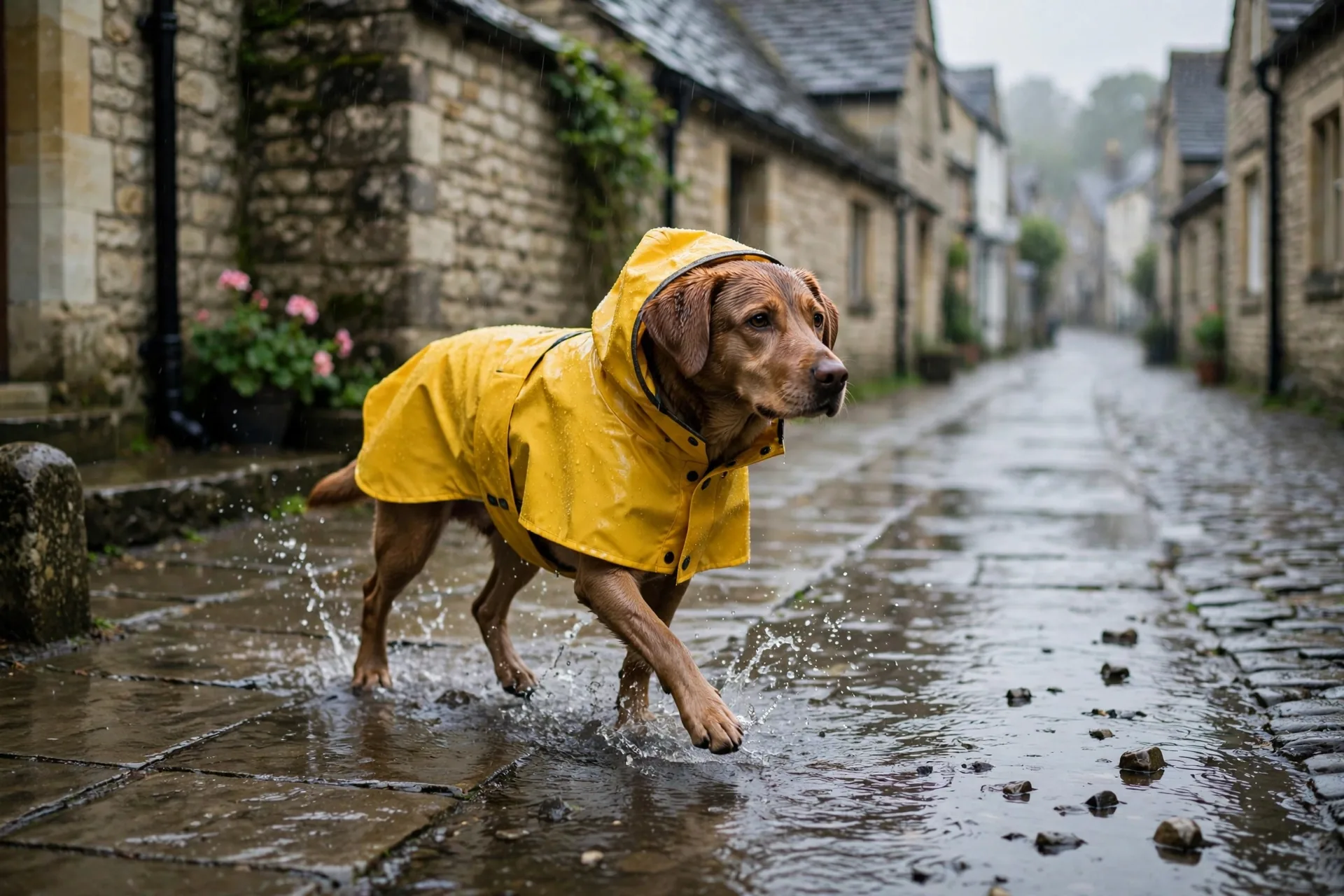
The two garments solve opposite halves of the wet-walk problem and are easy to confuse in a product listing. A rain coat goes on before the walk: it is waterproof, worn outside, and its job is to keep water off the dog. A drying coat goes on after the walk: it is highly absorbent, worn indoors, and its job is to pull moisture out of the fur.
For a rainy UK holiday, the pair covers you both ways. The rain coat reduces how much water the dog brings home; the drying coat handles what gets through, plus legs, belly and paws that no rain coat fully protects. Our rainy-day gear checklist walks through how the two work together with paw care and drying routines, if you are building the full wet-weather kit.
If you are buying only one to start with, choose based on your dog's coat and your accommodation. Short-coated dogs in mild rain often manage with just a drying coat, because there is little fur to hold water. Long, dense or double coats in heavy rain benefit most from the combination: the rain coat keeps the top layer manageable and the drying coat finishes the job in half the time. One thing not to do is use a drying coat as a rain coat — saturating it outside wastes its absorbency before it is needed and leaves you with a wet dog and a soaked garment.
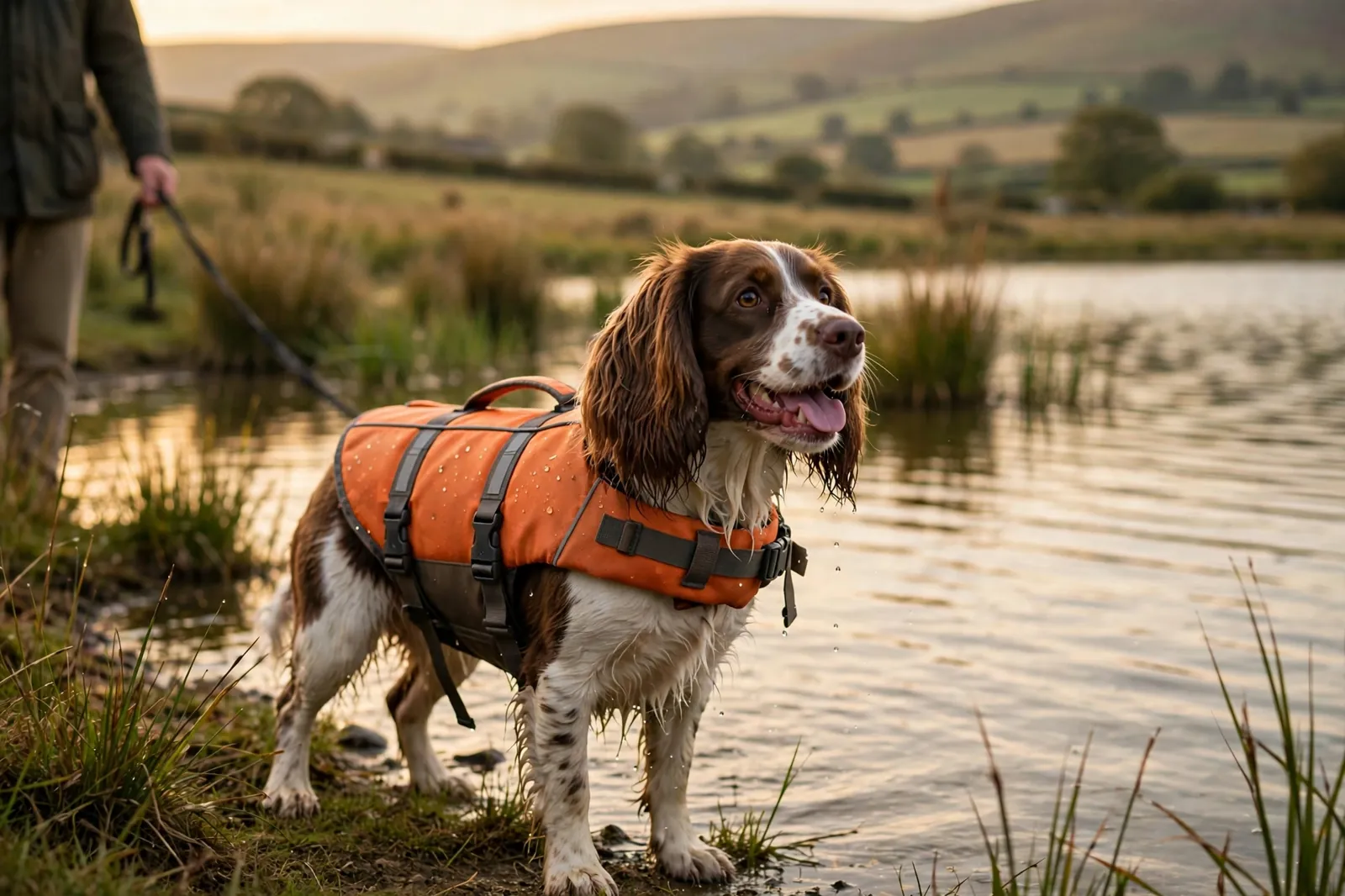
Dogs that swim complicate the choice in a good way. After a lake dip or a sea swim, the drying coat earns its place twice over: it dries the dog and takes the edge off the post-swim chill, which matters in cold UK water even in summer. See our dog water safety guide for the risks around cold water and currents that no coat can fix.
When to reach for it on a trip
The obvious moment is after a rainy walk, but a drying coat repays its packing space across more of the trip than that. After beach walks, it handles the combination of sea water, sand and drizzle that defines so many British coastal days; rinse the dog first if you can, then coat on for the car journey home. After a bath — holiday cottages with dog-friendly bathrooms often have a shower but poor drying facilities — the coat replaces the towel marathon entirely. After ferry crossings or boat trips, where dogs come off the deck damp from spray and wind, it warms and dries them for the drive onward. After agility, canicross or a long training session in the rain, it keeps the dog warm while you pack up.
Timing matters. Put the coat on as soon as the dog is towelled, not an hour later after the moisture has migrated into the bedding. On a multi-walk day, the sequence is: walk, quick towel, coat on, rest for 30 to 60 minutes, coat off, shake out the coat and hang it somewhere ventilated. If the dog is going straight back out — the classic second walk of a wet week — the coat buys you a drier dog between outings and a coat that has had an hour on a shower rail is often usable again.
There are moments to skip it. A dog that is panting hard after exertion needs airflow, not insulation; let the dog cool down first. On genuinely warm days the extra layer can overheat a dog, particularly brachycephalic breeds. And a coat left on for hours in a warm room stops being a drying aid and becomes a damp garment against the skin — take it off once the job is done, generally within an hour.
Washing and keeping it absorbent
A drying coat on holiday gets washed more than you expect. On a wet week with two walks a day, every two to three days is realistic; waiting until it smells musty means the fibres are already carrying a bacterial load that slows drying and bothers sensitive noses. The good news is that care is simple if you follow three rules.
First, wash at the temperature on the label, usually 30 to 40 degrees. Hotter is not better for microfibre — heat damages the fine fibres and shortens the coat's life. Second, skip the fabric softener entirely. Softener coats fibres with a waxy film that blocks the wicking action, and one softener wash can noticeably reduce a microfibre coat's performance. A plain detergent, or a sports-wash detergent designed for technical fabrics, is the safe choice. Third, dry it properly: hang-dry or lay flat wherever possible. High-heat tumble drying degrades microfibre and can shrink bamboo; if the label allows a low-heat tumble, use it only when you need the coat again fast.
Holiday practicalities: if your accommodation has a washing machine, check the house rules before washing dog kit in it — some owners object, and a quick message avoids an awkward review. Pack a large wet-bag for the damp coat on travel days so it does not soak the car boot. And bring a backup plan for the day the coat is in the wash: one old towel and a hairdryer on its coolest setting, held well away from the dog, will get you through.
Storage between trips matters too. Never pack the coat away damp in a sealed bag; mildew forms fast and is hard to shift from technical fabrics. Wash it, dry it completely, and store it loose and dry. A coat that has lost its absorbency despite correct washing has simply reached the end of its working life — two to three years of regular use is a reasonable expectation for a decent microfibre coat.
Six buying mistakes to avoid
Most drying-coat disappointment comes from avoidable errors at purchase rather than bad products. Run through these before you pay.
- Buying by breed label alone. Two "large" dogs of different breeds can differ by ten centimetres in back length. Measure; the tape is never wrong about your dog.
- Choosing style over belly coverage. The sleek vest looks neat in product photos and leaves the muddiest part of the dog completely exposed. On holiday, coverage beats looks.
- Ignoring the care label. A coat that needs hand-washing or takes two days to dry is a liability on a week of wet walks. Check wash temperature, drying method and drying time before buying, not after.
- Buying the cheapest single-layer coat for a heavy-coated dog. A thin single layer saturates fast on a retriever in November. For thick coats, a double-layer design is the cheaper option in the long run because it actually does the job.
- Forgetting a second coat — or a wash plan. One coat and no washing machine means a musty garment by day four of a wet week. Either pack two lighter coats or confirm laundry access before you travel.
- Expecting it to replace drying entirely. The coat is stage two of the system. A quick towel-off first removes the bulk water and lets the coat work on what remains; skipping it slows everything down and soaks the coat faster.
A note on price: drying coats in the UK range from budget towelling robes to premium bamboo wraps, and prices move with seasons and sales — check the retailer's current page rather than relying on any figure quoted in a guide. As a rough orientation, expect the useful middle of the market to cost about the same as a decent dog rain coat. That is not a coincidence: it is the other half of the same wet-weather system.
Building the holiday drying kit
The drying coat works best as part of a small, deliberate kit rather than a lone purchase. For a week in a wet part of Britain — think the Lakes, Snowdonia, the west coast of Scotland or Cornwall in October — the full setup fits in one corner of the boot and transforms the damp-dog logistics of the trip.
The core is two absorbent towels and the drying coat itself. Add a washable waterproof mat for the car boot or the cottage hallway, so the towelling-down happens on a surface that protects the floor. A lidded box by the door corrals muddy leads, the wet coat between uses and the dirty towels, keeping the whole damp operation in one place instead of spreading through the accommodation. Paw balm earns its place on gritty winter paths and salted pavements, and a spare lead means the muddy one can dry while you still have a clean one for the evening stroll.
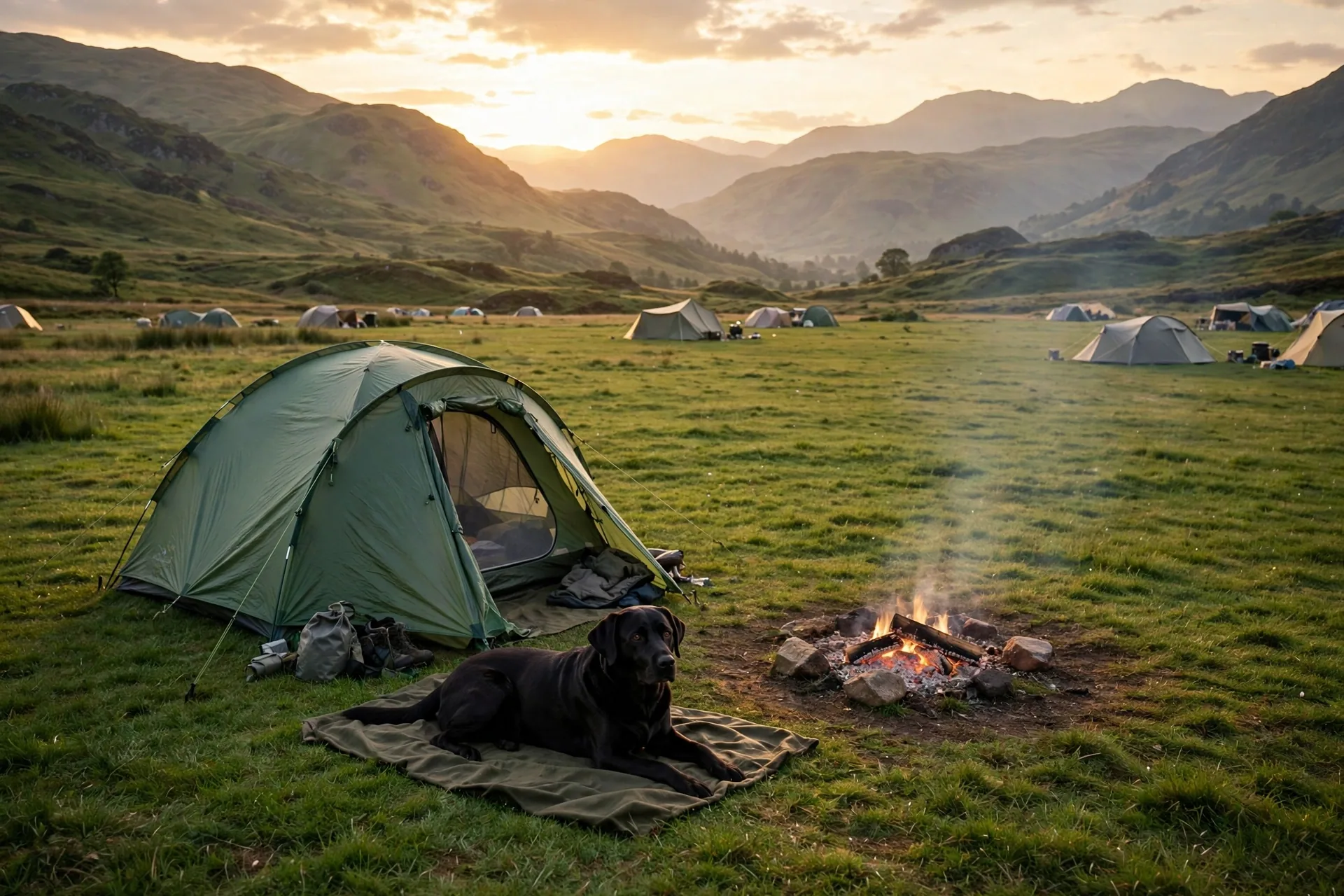
If you are camping, the kit matters even more, because there is no porch and no spare radiator. Our camping with a dog guide covers tent layouts and sleeping arrangements; add the drying coat to that packing list and plan where the damp garment hangs overnight — a line strung under the porch awning works if the rain has stopped, the car boot if it has not.
None of this is expensive, and all of it is reusable trip after trip. The drying coat is the single item in the kit that people buy once and then wonder how they holidayed without — not because it is clever, but because it quietly removes the worst half hour of every wet day.
Practical questions
Drying coat questions, answered
How long does a dog drying coat take to work?
Most well-fitting microfibre drying coats make a noticeable difference within 15 to 30 minutes, and many dogs are dry enough to get on furniture after 45 to 60 minutes. Thick or double coats, very small dogs and cold rooms slow the process, so on holiday it helps to put the coat on immediately after towelling and let the dog rest somewhere warm but not hot.
What is the difference between a dog drying coat and a dog rain coat?
A rain coat goes on before the walk to keep water off the dog; a drying coat goes on after the walk to draw moisture out of the fur. Rain coats are waterproof and worn outside, while drying coats are highly absorbent and worn indoors. For a rainy UK holiday the pair covers you both ways, and our rainy-day gear checklist explains how the two work together.
How do I measure my dog for a drying coat?
Measure three things with a soft tape: the back length from the base of the neck to the base of the tail, the chest circumference just behind the front legs, and the neck circumference. The back length decides the size band and the chest measurement confirms it, especially for deep-chested breeds. If your dog falls between sizes, check the brand's own chart and choose by back length rather than breed labels.
Should the drying coat cover the belly and legs?
Belly coverage matters because the underside collects the most mud and holds moisture longest, especially on low-slung breeds and spaniels. Full wrap-around designs with an adjustable belly strap cover more of the dog than vest-style pullovers. Leg coverage is rarer and often unnecessary; a coat that covers the back, sides, chest and belly handles the great majority of holiday drying.
Can I machine wash a dog drying coat?
Most microfibre and bamboo drying coats are machine washable at 30 to 40 degrees, but always check the label first. Skip fabric softener because it coats the fibres and reduces absorbency over time, and avoid high-heat tumble drying unless the manufacturer allows it. Hang-dry or lay flat, and wash the coat before it develops a musty smell — on a wet week of holiday that can mean washing it every two to three days.