This guide is independent and contains no paid placement. If affiliate links are added later, they will be clearly marked and will not change our editorial checks.
Let your dog swim only where entry and exit are easy, the water is visibly clean, there is no current you would not wade against, and you can recall them before they tire. Avoid algae-suspect lakes, weirs, harbour mouths, reservoirs that ban swimming and any sea swim in rough conditions. Rinse, dry ears, watch for symptoms for a few hours, and check the latest official guidance before you travel.
Read the water before the dog reads it
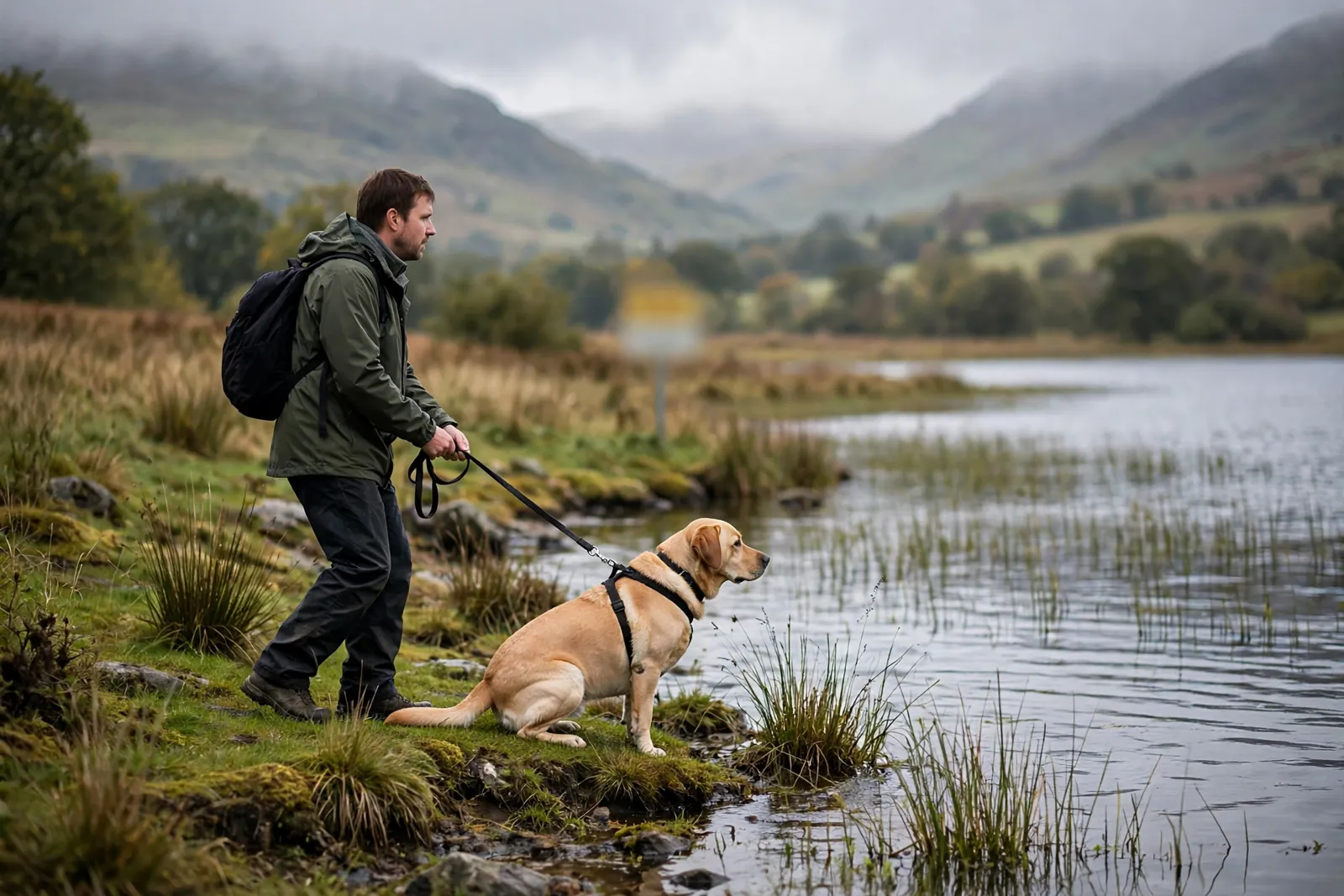
Dogs judge water by enthusiasm. Owners have to judge it by evidence, and the evidence is all visible in the two minutes before anyone gets wet. Walk the entry point yourself first. You are looking for a gently sloping bank or beach where a tired dog can walk out under its own power, not a vertical edge they would have to be hauled up. Check what the bottom feels like: soft silt can trap paws, sharp rock and broken shells cut pads, and a sudden shelf into deep water is the classic trap for a dog that has only ever paddled. If you cannot see an easy exit within a few metres of the entry, choose somewhere else, however keen the dog looks.
Next, look at movement. Still water and moving water are different sports. A river that looks gentle on the surface can be travelling faster than a dog can swim, especially after rain in upland catchments in Wales, the Lake District or Scotland. Stand and watch a floating leaf for ten seconds: if it travels briskly, shortens the swim or skip it. Note anything downstream that would matter if the dog drifted — weirs, bridge piers, moored boats, anglers and overhanging branches all turn a small mistake into a serious one. On beaches, look for the warning flags, signs about bathing quality and any local notices about jellyfish, sewage outflows after storms or seasonal restrictions.
Finally, read the dog. A dog that has already run for an hour in warm weather is a worse swimmer than a fresh one, because exhaustion arrives suddenly in water. Puppies, elderly dogs, dogs recovering from injury and flat-faced breeds all have smaller safety margins, and a dog that has never swum may panic, climb at you and push itself under. Plan the first swims of the season as short, shallow and boring. The goal of the first session is not fitness or fun at maximum volume; it is information — how your dog enters, turns, exits and recovers — gathered while everything is still easy.
Rivers, lakes, reservoirs and the sea compared
Each type of British water has its own risk profile, and treating them as interchangeable is where many problems start. Shallow river pools on slow lowland rivers can be excellent, provided you avoid the structures: weirs and sluices create recirculating currents that even strong swimmers cannot escape, and they are often unsigned on minor footpaths. After heavy rain, a familiar ford can become deep and fast within hours. Give flooded rivers a complete miss, keep dogs out of spate conditions, and remember that a wet, undercut bank can collapse under a scrambling dog.
Lakes and tarns are usually the calmest option, which is why they carry the algae risk covered in the next section. Their other trap is temperature: upland tarns in places such as Snowdonia and the Cairngorms stay cold deep into summer, and a dog swimming strongly can still chill quickly. Reservoirs deserve a category of their own. Many water companies prohibit swimming outright because of deep cold water, steep engineered sides, hidden machinery and water-quality protection, and those prohibitions apply to dogs as much as people. Obey the signs even when the water looks inviting and other people are ignoring them; our guide to UK beach rules for dogs explains how to read local restriction signs, and the same habit of checking first applies inland.
The sea adds tides and swell. A wide, gently shelving sandy beach at mid-tide in calm weather is one of the safest places a confident dog can swim in Britain. The same beach at low tide with channels filling behind you, or in an onshore wind pushing breakers onto the shore, is not. Harbours, marinas, estuary mouths and the water around piers combine boat traffic, fishing tackle, strong tidal movement and poor exits, and should be treated as no-swim zones whatever the dog thinks. Canals sit between categories: slow and shallow-looking, but with lock currents, slippery stone edges, boat propellers and a higher chance of leptospirosis in stagnant stretches, which is one reason vaccination conversations with your vet matter before a canal-heavy holiday.
Blue-green algae and invisible hazards
The hazard owners worry about most is also the one most often misjudged. Blue-green algae — cyanobacteria — can produce toxins that harm dogs within a short time of swallowing affected water, and dogs are exposed precisely because they drink while swimming and lick their coats afterwards. Blooms often look like green paint, pea soup, turquoise streaks or a scum collecting along the downwind shore, but toxic water does not always look dramatic, and clear-looking water a day after a bloom is not guaranteed safe. The only reliable rule is avoidance: if a lake or pond looks suspicious, smells musty, carries an official warning sign or has dead fish along the edge, the swim is cancelled and the dog is kept on a lead away from the shoreline.
Our detailed guide to blue-green algae and dogs covers identification and symptoms in depth, and it is worth reading before any lake-based holiday in warm weather. Symptoms can include vomiting, drooling, diarrhoea, weakness, wobbling, collapse and seizures, and they justify an immediate vet call rather than a wait-and-see approach — say clearly that algae exposure is possible, because it changes how the vet triages the case. Do not induce vomiting, and rinse the coat with clean water if you can do so without delaying the journey, so the dog stops ingesting toxins while licking.
Algae is not the only invisible problem. After heavy rain, storm overflows can degrade bathing water quality at some beaches for a day or two; bathing water ratings and local signage exist for exactly this reason. Stagnant ponds can carry leptospirosis, rat urine in the water being the route in, and flooded fields add agricultural runoff and hidden debris such as wire and glass. Swallowed sea water causes its own dose-dependent harm, from an upset stomach to dangerous salt poisoning in small dogs that drink repeatedly while fetching balls from the surf. A floating toy that keeps the mouth busy and regular fresh-water breaks on shore reduce the amount a dog drinks far better than shouting after the fact.
Tides, currents and cold water
Tide tables are a dog-safety tool, not just a beach-day convenience. Around much of the British coast the tidal range is large, which means the safe swimming window moves every day. Swimming as the tide floods over warm sand is very different from swimming on a falling tide that is pulling surface water — and anything floating, including a tired dog — seaward along channels. Rip currents form near groynes, piers and sandbar gaps and flow directly out to sea; a dog caught in one will exhaust itself swimming against it. Teach yourself to spot the calmer, darker channel of a rip, keep dog swims away from structures, and if a dog is ever carried out, call for help rather than swimming after them — the standard advice for people applies doubly when the casualty you are imagining rescuing weighs thirty kilos and panics.
Cold is the quieter killer. UK sea temperatures lag the seasons, staying cold through spring and only peaking in early autumn, and inland upland water can be colder still. Dogs do not show hypothermia theatrically at first: swimming becomes less coordinated, enthusiasm fades and exits get clumsy. Keep cold-water swims short — a few minutes of actual swimming, not a long session of repeated retrieves — and watch small, lean, elderly and short-coated dogs most closely. Shivering that does not stop with towelling, stiffness and unusual quietness after a swim all mean warm up slowly and stop for the day. On hot days the temptation runs the other way: water is a good way to cool a dog, but it is not a licence to extend exercise at midday, and the advice in our summer heat and travel guide about shade, rest and timing still applies on the beach.
Wind ties the two together. An offshore wind on a British beach flatters the surface near shore while pushing floating objects — and swimming dogs — out to sea, and it can turn a manageable return swim into a losing battle. If flags, hair and towels are all streaming seaward, keep the dog paddling in the shallows on a long line instead. Conditions, not the calendar, decide the swim.
Life jackets, leads and first swims
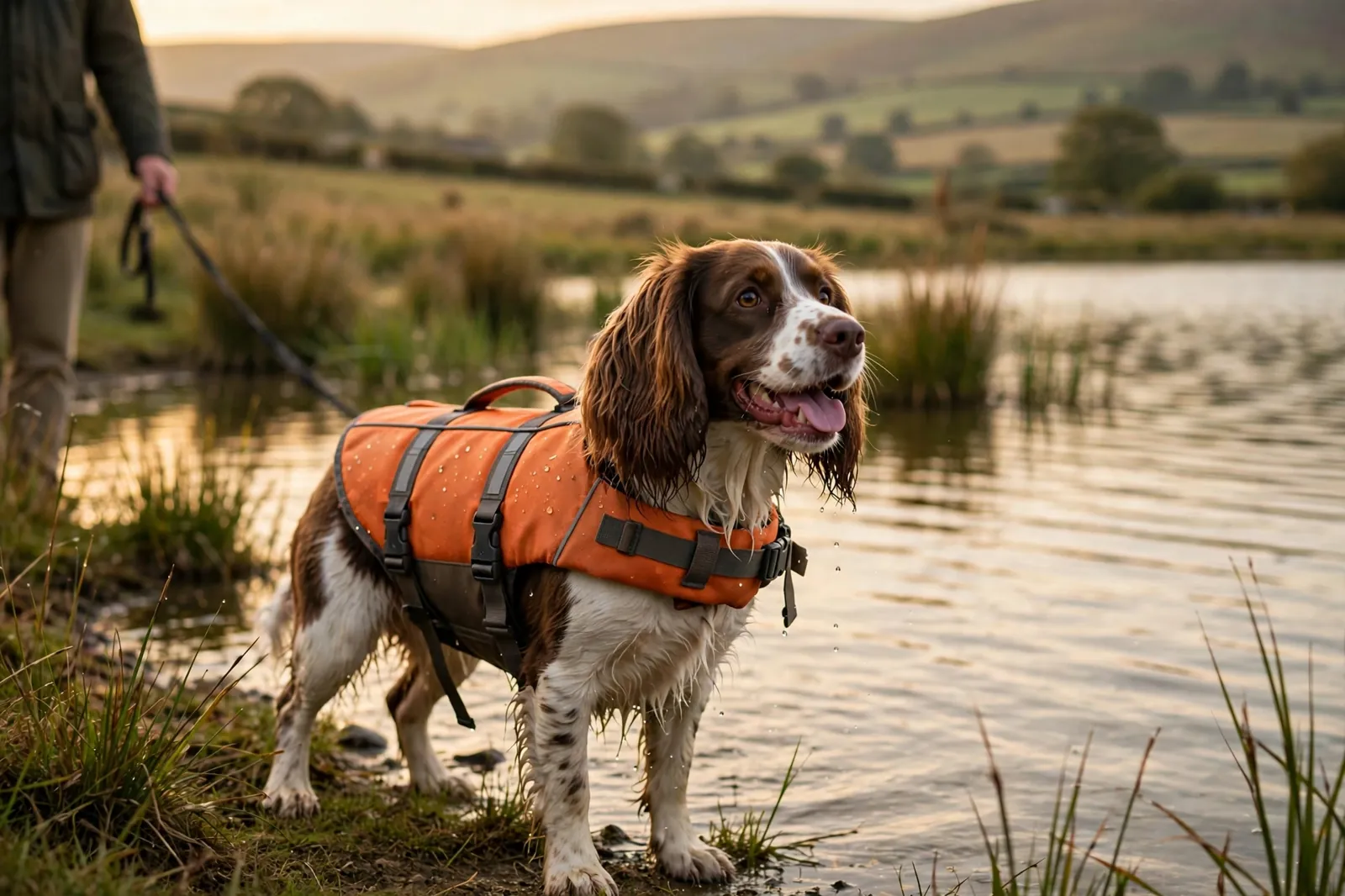
A canine life jacket is not an admission of weakness; it is what makes swimming recoverable when something unexpected happens. Fit matters more than brand. The jacket should buckle snugly without restricting breathing, lift the dog roughly level in the water rather than tipping the head down, include a sturdy grab handle on the back and leave toilet functions and leg movement unobstructed. Try it first in shallow water where the dog can stand, because some dogs freeze or roll when they first feel buoyancy. Jackets are close to essential for boat trips, paddleboard outings, deep-water dock entries, elderly dogs, enthusiastic fetchers who swim until they drop and any breed whose build fights against it — dachshunds, corgis, bulldogs and other short-legged or front-heavy dogs tire fast.
Leads and water need thought. Never tie a dog to yourself in moving water, and avoid trailing leads that can snag on submerged branches or wrap legs. In calm, shallow water a long line held loosely can give a learner security while you stay in control of the session length. Collars should be flat and snug — loose collars catch on underwater obstacles — and tags matter more, not less, on a wet holiday: a dog that exits the water two hundred metres down the beach needs its identification on it, not in the car.
Structure the early swims. Enter together at the easy slope, let the dog paddle parallel to shore rather than straight out, and recall while they are still keen — finishing early is the training trick that keeps recall reliable around water all summer. Throw toys into the shallows, not the deep, because repeated deep retrieves are how fit dogs quietly reach exhaustion. Rinse-off breaks every few minutes reset both temperature and excitement. Dogs that love water will not pace themselves; pacing is the owner's job, and a dog lifted out protesting is a success, not a spoiled afternoon.
Rinsing, drying and ear care afterwards
What happens in the twenty minutes after the swim prevents most of the following week's vet visits. Rinse the coat with clean fresh water as soon as practical, especially after sea swimming, to remove salt, sand and anything picked up in lake water before the dog licks it off. Pay attention to the places owners miss: between the toes, where grit and small stones lodge; the armpits and groin, where sand rubs skin raw on the walk back; and under the collar, where trapped moisture irritates. Check paw pads for cuts from shells and barnacles while the dog is still calm, and keep a note of any limp that appears later that evening, because minor pad injuries often only announce themselves once the excitement fades.
Ears deserve their own routine. Water trapped in the ear canal is the classic precursor to the head-shaking, scratching ear infection that ruins day three of a holiday. Dry the outer ear gently, use a vet-recommended ear cleaner after swimming if your dog is prone to infections, and never push cotton buds into the canal. Spaniels and other long-eared, hairy-eared breeds need the most diligence. If a dog shakes its head persistently, tilts it, or the ear smells sweet or yeasty, that is a vet visit, not a home remedy — our holiday emergency vet guide explains how to find help quickly away from home.
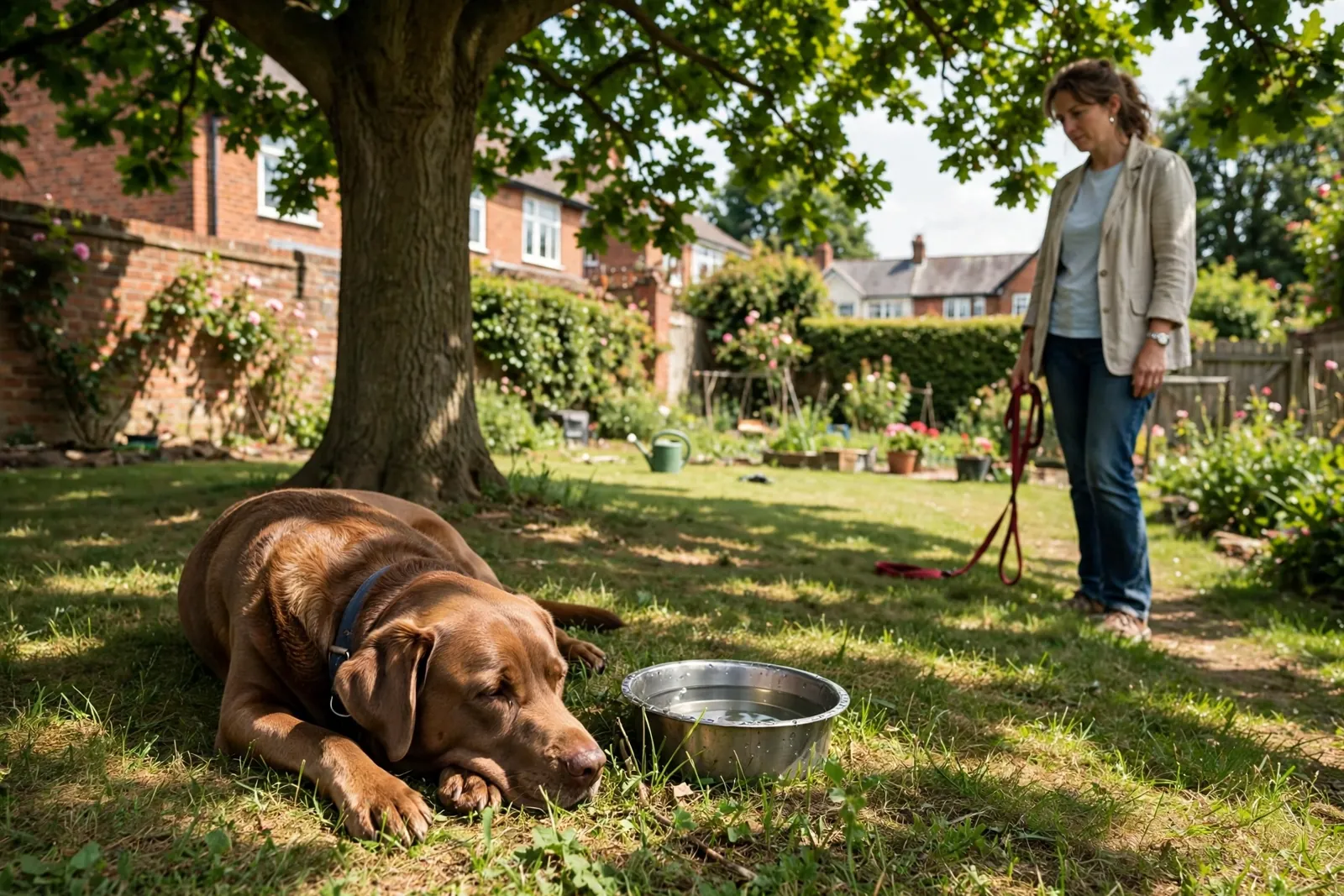
Dry the dog properly before the car or the cottage. A soaked dog in a cold wind chills fast even in summer, and a wet dog shut in a warm car steams, pants and feels worse. Towel first, then a drying coat or a walk in the breeze, and offer fresh drinking water because swimming dogs are often thirstier than they realise — and because a dog that rehydrates from the bowl is a dog that stops trying to drink the lake. For the rest of the day, watch without hovering: appetite, energy and toilet habits over the next few hours tell you more than any single check at the water's edge.
If something goes wrong
Decide your emergency plan before the holiday, because the middle of an incident is the worst time to improvise. Save the number of a vet near where you are staying, know how your own vet handles out-of-area emergencies, and keep your pet insurance details on your phone rather than in a drawer at home. If a dog gets into difficulty in the water, your safety comes first: owners drowning while attempting rescues is a documented pattern in British waters, and a dog in a rip current or a weir needs professional help from the coastguard or fire service, reached on 999, not a heroic swim. Shout, keep eyes on the dog, note landmarks, and throw anything that floats if it can reach them.
After any incident — a near-miss, a big swallow of suspect water, a collapse on exit — treat it as a vet conversation the same day, even if the dog seems to recover. Secondary problems such as water inhalation can deteriorate hours later, and algae cases move faster still. Give the vet the facts in order: what water, how long, what the dog swallowed or how it behaved, and what changed since. If you are travelling in a group, one person phones while another keeps the dog warm, still and off its feet; a dog that has inhaled water should not be walked back to the car as a test.
Most British dog swims end with nothing more dramatic than a wet car. The gap between that ordinary outcome and a bad one is almost never the dog's swimming ability — it is the owner's two minutes of checking at the start, the willingness to cancel when the water says no, and the discipline to end the swim while everyone is still having fun. Build those habits and water stops being the risky part of the holiday and becomes what it should be: the bit the dog talks about, in its own way, all the way home.
Practical questions
Before you go
Can all dogs swim naturally?
No. Many dogs paddle instinctively, but short-legged, heavy-chested, very young, elderly or flat-faced dogs can tire or struggle quickly, and some dogs panic in water. Introduce swimming gradually in shallow, calm water, stay within reach at first, and use a well-fitted life jacket for any dog that is new to swimming, unsteady, or swimming from a boat or deep bank.
How can I tell if blue-green algae is present?
Look for green, blue-green or turquoise scums, paint-like streaks or cloudy green water, often collecting at downwind edges. Blooms can appear and move quickly and toxins cannot be judged by eye, so if the water looks suspicious or a warning sign is posted, keep your dog out entirely and do not let them drink from the edge. Our separate guide to blue-green algae covers identification in more detail.
Is it safe for my dog to swim in the sea in the UK?
It can be, on a gently shelving beach in calm conditions, away from groynes, piers, harbour mouths and strong tidal races. Check tide times before you go, watch for rip currents and sudden drop-offs, keep swims short in cold water, and rinse salt water off afterwards. Never let a dog swim near boats, jet skis or anglers, and recall them well before they tire.
What should I do if my dog swallows a lot of sea water?
Stop the swim, offer small amounts of fresh water, and watch for vomiting, diarrhoea, wobbliness, excessive drooling or unusual tiredness over the next few hours. Large amounts of salt water can cause serious salt poisoning, so contact a vet promptly if symptoms appear or if a small dog has drunk repeatedly. When in doubt, phone the vet rather than waiting.
Are dogs allowed to swim in reservoirs and canals?
Often not. Many reservoirs prohibit swimming for people and dogs because of cold deep water, steep sides, machinery and algae risk, and signs should always be obeyed. Canals carry risks from boat traffic, lock currents, slippery banks and leptospirosis in stagnant water. Choose designated dog-friendly beaches, shallow river pools away from weirs, and lakes where swimming is clearly permitted instead.