This guide is independent and contains no paid placement. It offers general information only and is not a substitute for veterinary advice. If symptoms persist, worsen or worry you, please consult a vet.
Dry your dog's ears within minutes of every swim, using a soft towel or cotton pad on the parts you can see. A vet-approved ear cleaner helps frequent swimmers, but it never replaces drying. Watch for a new smell, redness, discharge, repeated head shaking or scratching over the next 48 hours, and contact a vet promptly if any of those signs appear or persist.
The shake that tells you everything
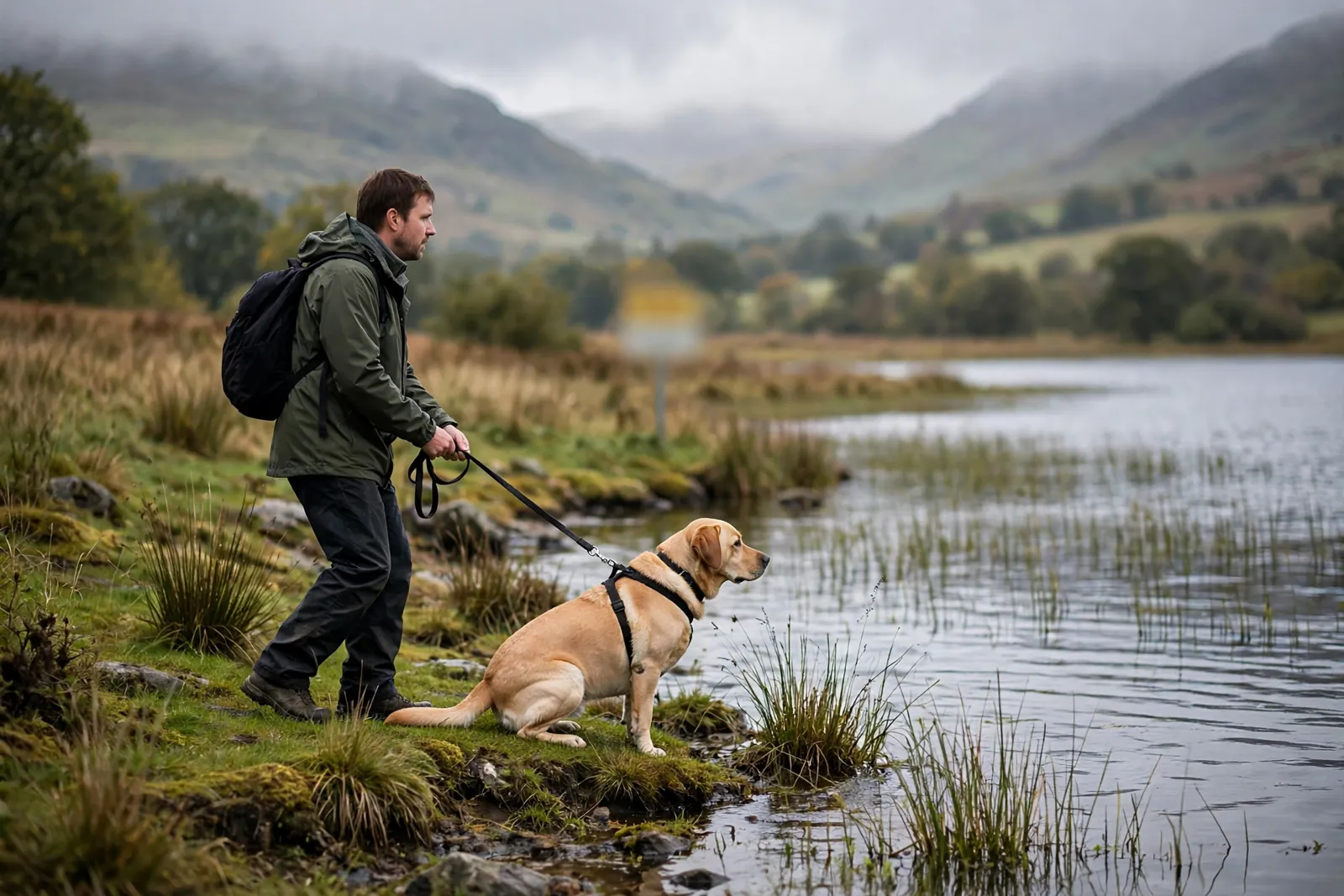
Watch a dog climb out of a lake. The first thing it does is not run for a treat or roll in the grass. It plants its feet, lowers its head slightly, and shakes — hard, from the shoulders out, ears flying. That shake is useful, and it is also a clue. It clears much of the water from the coat, but it rarely clears the ear canal itself, especially when the ear flap hangs down over the opening and folds the canal into a warm, sheltered pocket.
The shake is therefore the start of ear care, not the end of it. A dog that shakes once, trots off happily and forgets about its ears is probably fine. A dog that shakes, pauses, shakes again, then paws at one ear or rubs its head along the ground is telling you something is still there. Water, sand, a fragment of weed or simply the sensation of dampness can all trigger that repeat shaking. Learning to notice the difference between a single joyful shake and a persistent, one-sided shake is the single most useful skill in this guide, because it turns a vague worry into an early warning.
This guide builds from that moment at the water's edge. It explains why water stays in a dog's ear, which dogs are most vulnerable, how to dry and clean ears safely, what healthy ears look and smell like, and which changes mean a vet should be involved. It covers lakes, rivers, the sea and pools, because each leaves something slightly different behind. It also covers the practical side of travelling with a swimming dog in Britain: what to pack, how to fit ear care into a busy day out, and how to keep a simple watch over the two days after a swim without turning every outing into a medical inspection.
One important boundary runs through everything that follows. This is general information for owners, not a diagnosis and not a treatment plan. Ear problems can look similar but have different causes, and a product that helps one dog can irritate another. Where this guide says to contact a vet, it means it. Do not keep cleaning a sore, smelly or painful ear at home in the hope that it will settle, and do not use leftover drops or treatments prescribed for a different dog or a different episode. If symptoms persist, please consult a vet.
Why water lingers in a dog's ear
A dog's ear canal is not a straight tube. In people, the canal runs fairly directly inward. In dogs, it runs downward first, then turns sharply inward toward the eardrum, forming an L shape. Water that enters the outer part of the canal can therefore sit in the bend rather than draining out on its own, especially when the dog's head is upright again. A vigorous shake helps, but it cannot reliably clear that bend in every dog, and it cannot dry the skin inside the canal.
Warmth and moisture are the other half of the problem. The inside of a dog's ear is warm, dark and sheltered, which is exactly the environment in which yeast and bacteria multiply most easily when the normal balance is disturbed. Healthy ears cope with occasional wetness well: the skin barrier is intact, natural cleaning mechanisms move debris outward, and the ear dries over time. Repeated wetness, or wetness that is never dried, tips that balance. The skin softens, tiny cracks or irritation develop, and organisms that normally live in small numbers on the skin can overgrow. That is why a single swim rarely causes trouble on its own, while a week of daily swims with no drying routine often does.
Debris makes the situation worse. Lake and river water carries silt, algae fragments, pollen and microscopic life. Sea water leaves salt behind as it dries, which can irritate skin. Pool water carries chlorine and other treatment chemicals. Sand grains can lodge just inside the ear opening and scratch the skin when the dog shakes or scratches. None of this means swimming is dangerous or should be avoided. It means the ear needs the same brief attention after a swim that the coat gets: a check, a dry, and a moment to confirm that nothing is trapped.
Airflow matters as much as drying. An ear flap that lies flat over the canal opening reduces ventilation, so moisture evaporates slowly. Dogs with heavy, long ear flaps therefore dry more slowly than dogs with upright ears, even after the same swim. Lifting the flap gently for a minute or two after drying, while the dog rests or has a drink, allows air to reach the canal entrance and helps the last dampness disperse. This is a quiet, easy habit, and it costs nothing.
Which dogs are most at risk
All dogs can develop ear problems after swimming, but some face a higher risk, and knowing where your dog sits helps you decide how thorough the routine needs to be. Dogs with long, heavy, hanging ears are the classic group: spaniels, retrievers, setters, basset hounds and similar breeds carry ear flaps that seal the canal opening and trap humidity. Their ears are also more likely to dip into the water during a swim and to drag through wet grass afterwards, collecting extra moisture and debris.
Dogs that swim frequently are the second group, regardless of ear shape. A dog that swims once a month in summer has time to dry fully between outings. A dog that swims every day on holiday, or several times a week at a favourite lake, accumulates wetness faster than the ear can recover, particularly if each swim is followed by a car journey with the windows closed and no drying at all. Frequency, not just ear shape, is what turns an occasional risk into a pattern.
A third group is dogs with a history of ear trouble. Once a dog has had an ear infection, the canal skin may remain more sensitive, and the same conditions that caused the first episode are more likely to cause another. Allergies also belong here: dogs with skin allergies, food sensitivities or seasonal itching often have inflamed ear canals as part of the same picture, and swimming can aggravate already irritated skin. If your dog has had ear problems before, ask your vet about a personal after-swim plan before the swimming season, rather than improvising after the first swim of the year.
Age and coat play smaller but real roles. Puppies are still learning to tolerate handling, so early, gentle ear drying builds a habit that pays off for years. Older dogs may have narrower canals, existing thickening of the canal skin, or reduced ability to shake water out vigorously. Dogs with dense hair growing inside the ear opening trap more moisture and debris, and that hair should only be managed on veterinary advice, not plucked at home as a routine. Finally, dogs that love to dive, retrieve from deep water or shake their heads underwater get more water into the canal than dogs that paddle at the edge. The enthusiastic diver needs the most careful drying, which is a fair trade for the joy of the swim.
Lakes, sea and pools are not the same
The water your dog swims in changes what is left in the ear afterwards, so the after-swim check should change slightly too. Still lakes and slow rivers are the most common swimming spots in Britain, and they carry the widest mix of debris: silt, decaying plant matter, pollen in summer, and sometimes algae. After a lake swim, look for visible grit or weed fragments at the ear opening and wipe them away gently. If the water looked discoloured, had a surface scum, or carried a warning sign, keep the dog out altogether and check the official guidance before you travel to that site again. Our guide to blue-green algae and dogs explains why some blooms are dangerous and how to recognise a risky waterway.
Sea swimming brings salt. Salt water itself is not inherently harmful to ears, but salt crystals left behind as the ear dries can irritate skin, and sand is the sea swimmer's special problem. Fine sand can work its way just inside the ear flap and stay there, scratching with every shake. After a beach swim, pay extra attention to the folds of the ear flap and the opening, and rinse the outer ear with clean fresh water if sand is visible, before drying. Do not flush water deep into the canal to chase sand out; wipe what you can see and let a vet deal with anything deeper.
Swimming pools, hydrotherapy pools and dog swim centres use treated water. Chlorine and other disinfectants can dry and irritate ear skin, particularly with frequent sessions, and the warm, enclosed environment of an indoor pool means ears may stay damp longer afterwards if the dog goes straight into a car. After a pool swim, drying matters just as much as after a lake swim, and a fresh-water rinse of the outer ear can help remove chemical residue. If your dog attends hydrotherapy for a medical condition, ask the therapist or your vet whether the after-swim routine should differ, because a recovering dog may have additional sensitivities.
Canals, ponds and farm ditches deserve a special caution. They may look inviting on a hot day, but stagnant or slow-moving water in agricultural areas can carry higher bacterial loads and agricultural runoff, and access may be unsafe for other reasons. A quick ear check does not make an unsuitable waterway safe. Choose swimming spots with clean, moving water where possible, respect local signs and landowner rules, and check the official guidance before you travel if you are unsure about a new location.
The after-swim routine, step by step
A good routine is short enough to do every time and thorough enough to matter. Aim for about five to ten minutes, ideally at the waterside before the car journey home, when the dog is still in swimming mode and the water has not yet had time to dry into place. The order below works for most dogs and can be adapted once you know your own dog's tolerance.
- Let the shake happen, then settle the dog. Allow the natural shake, then ask for a sit or a calm stand. A dog that is still bouncing will not hold still for ear handling, and forcing it creates a struggle that makes the next swim's routine harder.
- Check each ear from the outside. Look at the flap, the folds behind it and the opening. Note any redness, swelling, visible sand, weed, ticks or discharge before you touch anything. Compare the two ears: asymmetry is often the first clue that one ear needs more attention.
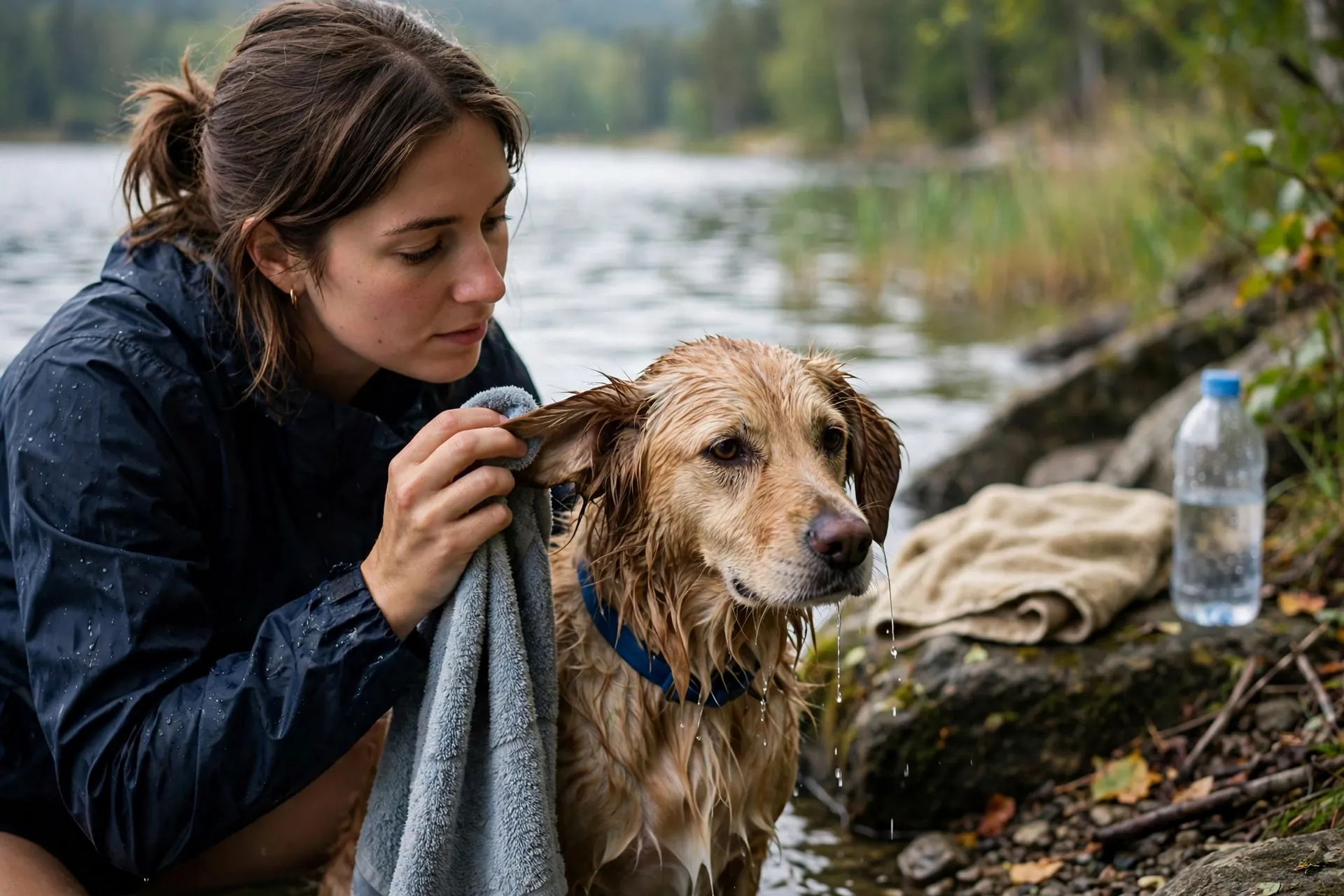
- Dry the visible ear with a soft towel or cotton pad. Gently wipe the inner surface of the flap and the parts of the ear you can see without reaching into the canal. Use a separate pad or a clean section of towel for each ear so you do not transfer debris from one side to the other.
- Lift the flap and let air in. Hold each flap up gently for a minute or so while the dog rests, drinks or eats a treat. Airflow finishes what the towel started.
- Use an ear cleaner only if it is part of your dog's plan. If your vet has recommended a cleaner for frequent swimmers, apply it exactly as directed and allow the dog to shake, then wipe away what comes out. If no cleaner has been recommended, drying alone is the right routine for an occasional swimmer.
- Watch the dog for a few minutes. A single shake and a return to normal behaviour is reassuring. Repeated shaking, pawing, head tilting or rubbing means something is still irritating the ear, and you should look again and, if it continues, seek veterinary advice.
- Dry the coat and check the rest of the dog. Ears are part of a whole wet dog. A drying coat, a towel for the paws and a check for ticks, cuts or burrs complete the after-swim picture, and a settled, dry dog is far easier to examine than a dripping one.
Timing matters. Drying at the waterside is better than drying an hour later at home, because warm, wet ears change fastest in the first hour. If you must drive first, keep the car ventilated, avoid letting the dog lie with a wet ear pressed against a seat or blanket where air cannot reach it, and dry the ears as soon as you stop. On a multi-swim day, repeat the routine after each swim rather than saving it for the end of the day: a second swim into an already damp ear is a different risk from a second swim into a dry one.
Make the routine rewarding. Pair ear handling with something the dog values — a small treat, a calm word, a favourite toy for a minute — and keep your own movements slow and predictable. Dogs that learn that ear checks predict good things will hold still willingly, which lets you see more and handle the ear more gently. Dogs that learn that ear checks mean a struggle will tense, pull away and make every future check harder. Patience in the first few sessions is an investment, not a delay.
How to dry ears without causing harm
Drying sounds simple, and it mostly is, but the ear is sensitive and a few common mistakes turn a helpful habit into irritation. The guiding rule is to clean and dry only what you can see. The outer ear — the flap, its inner surface, the folds and the entrance to the canal — is yours to wipe. The canal itself, beyond the opening, is not. Pushing a towel corner, a cotton bud or any implement into the canal can scratch the skin, push debris deeper, or, in a worst case, damage the eardrum. Cotton buds are particularly unsuitable for dog ears: they compress debris into a plug and give a false sense of thoroughness while doing harm.
Choose soft materials. A clean microfibre towel, a soft cotton towel, a muslin cloth or a plain cotton pad all work well. Avoid rough fabrics, scented wipes, baby wipes with fragrance, or anything containing alcohol or strong detergents unless your vet has specifically recommended it. Fragrance and alcohol sting irritated skin and can turn a routine dry into a painful experience that makes the dog dread the next one. If you use reusable towels, wash them between trips and keep a separate set for ears, so grit from paws and coats does not end up in an ear.
Work gently and in the right direction. Support the ear flap with one hand and wipe outward, away from the canal opening, so debris moves out rather than in. Do not scrub, do not twist the flap, and do not hold the ear in an unnatural position for long. If the dog flinches, pulls away or cries when you touch a particular spot, stop and look more carefully: pain on handling is information, not disobedience, and it may mean the ear is already sore. Note which ear and what you saw, because that detail helps a vet enormously.
For dogs with very hairy ears or heavy flaps, drying takes a little longer. Part the hair gently with your fingers, wipe the skin underneath where you can see it, and give the ear extra air time. Do not cut or pluck ear hair as part of a drying routine. If hair is clearly trapping moisture or debris, raise it with your vet, who can advise whether any management is appropriate for that dog. The same caution applies to any home remedy involving oils, vinegars or herbal washes: the internet is full of them, and the ear canal is a poor place to test one. If a product has not been recommended for your dog by a vet, leave it out of the routine.
Finally, dry the dog's head and neck area as well as the ears themselves. Water runs from the top of the head down behind the ears, and a damp patch behind the flap can keep the ear humid long after the visible surface feels dry. A quick wipe behind each ear and along the neck, followed by a drying coat or a towel wrap for the journey home, completes the job.
Using an ear cleaner safely
An ear cleaner is a liquid product designed to help remove debris and excess wax from the ear canal and to support drying. It is not a treatment for infection, and it is not a substitute for veterinary care. For dogs that swim often, or for breeds prone to waxy build-up, a vet may recommend a cleaner as part of a regular routine. For occasional swimmers with healthy ears, drying alone is usually enough, and adding a cleaner unnecessarily can irritate skin that was perfectly fine.
Choosing a product starts with a veterinary recommendation, not a shelf or a search result. Ear cleaners vary in acidity, drying agents and active ingredients, and the right choice depends on your dog's ear history, skin sensitivity and whether any irritation is already present. A cleaner that suits a healthy ear can sting an inflamed one, and a drying cleaner used too often can over-dry the canal and cause flaking. Ask your vet which product, if any, suits your dog, and how often it should be used. That conversation is worth having before the swimming season, when there is no urgency and the ears are healthy.
Application technique matters. In general, the method is to lift the flap, apply the cleaner as directed without forcing the nozzle deep into the canal, massage the base of the ear gently so the liquid distributes, allow the dog to shake, and then wipe away debris from the visible ear. Do not use more than directed, do not apply a cleaner to an ear that is red, swollen, painful, smelly or discharging unless your vet has told you to, and never use a cleaner in an ear with a known or suspected perforated eardrum. If you are unsure about any of these points, check with your vet first. This guide deliberately gives no doses or product quantities, because those depend on the individual dog and product.
Storage and hygiene complete the picture. Keep the cleaner clean: do not let the nozzle touch the ear surface or the ground, replace the cap promptly, and do not share one bottle between dogs without veterinary advice, since infection can transfer. Check expiry dates, store the bottle as directed, and discard it if it smells unusual or has changed colour. A cleaner kept in a hot car boot all summer is not the product your vet recommended, however good the label looks.
If your vet has prescribed treatment drops for an ear problem, follow that prescription exactly and do not mix it with a routine cleaner unless told to do so. Treatment and maintenance are different jobs. Using a cleaner on top of prescribed drops can dilute the treatment, wash it out, or irritate an already inflamed canal. When in doubt, the prescription takes priority and the cleaner waits.
What not to put in a dog's ear
A short list of things to keep out of dog ears saves a surprising amount of trouble. Cotton buds top the list, for the reasons above: they push debris deeper and can injure the canal. Tweezers, hair grips, ear picks and any pointed implement have no place in a routine ear check. So do homemade mixtures, essential oils, alcohol-based solutions, hydrogen peroxide and leftover human ear drops. Human products are formulated for a different ear anatomy and a different set of problems, and some ingredients that are safe for people are harmful to dogs.
Do not flush the ear with a hose, a syringe of water or a shower head in an attempt to wash out sand or debris. Forceful flushing can drive material deeper, damage the eardrum if pressure is high, and leave the canal wetter than before. A gentle wipe of the outer ear with clean water, followed by drying, is the safe limit of home rinsing. Anything that needs flushing belongs in a veterinary practice, where the ear can be examined first and the right equipment used.
Do not ignore a foreign body in the hope that shaking will clear it. Grass seeds are the classic example in Britain, particularly in summer meadows: a seed can enter the ear canal, cause sudden intense shaking and head tilting, and then work its way deeper. If your dog suddenly starts shaking violently, tilting its head to one side, or crying after walking through long grass or swimming near a grassy bank, treat it as urgent and contact a vet the same day. Do not attempt to fish anything out of the canal yourself.
Finally, do not use another dog's medication, a previous prescription, or an internet remedy as a shortcut. Ear infections have several causes — yeast, bacteria, mites, allergies, foreign bodies — and treatments differ accordingly. The wrong treatment can mask symptoms while the real problem worsens, or can irritate an already damaged eardrum. The money saved by skipping a vet visit is rarely worth the longer, more expensive treatment that follows a wrong guess.
Infection signs to watch for
Healthy ears give you a baseline, and the fastest way to learn it is to look and smell your dog's ears when they are well. A healthy outer ear is a normal skin colour for that dog — usually pinkish, without angry redness — and the skin looks smooth rather than thickened, crusty or scaly. There may be a small amount of pale, waxy debris, but not a large, dark or coloured discharge. The smell is faint or neutral. The dog does not flinch when the ear is touched gently, does not scratch at it constantly, and does not shake its head repeatedly once the ears are dry.
Infection changes that picture, often gradually at first. The most reliable early signs are a new or stronger smell, redness inside the flap or at the canal opening, and a change in behaviour: more head shaking, more scratching or pawing at the ear, rubbing the head on furniture or the ground, or a reluctance to have the ear touched. Discharge is another clear sign. Healthy wax is pale and modest; infected discharge may be dark brown, yellow or greenish, thick, or crumbly, and it often appears with a smell. Swelling of the flap or the canal opening, heat in the ear, and a head tilt toward the affected side all suggest the problem has progressed beyond simple dampness.
Smell deserves special attention because owners often notice it before they see anything else. A yeasty infection tends to smell musty, like bread dough or stale beer, while a bacterial infection can smell sharper, sourer or simply foul. Neither smell is a diagnosis on its own — only a vet examining the ear and, if needed, looking at a sample can identify the cause — but a new smell is a reliable prompt to act. If one ear smells noticeably different from the other, or if a familiar smell suddenly becomes much stronger after swimming, do not wait for more signs to accumulate.
Behavioural changes can be subtle in stoic dogs and dramatic in sensitive ones. Some dogs become quieter, eat less eagerly, or avoid play after an ear becomes sore. Others become restless, whine when lying on the affected side, or guard the head against handling. Puppies and older dogs may show these changes before obvious discharge appears. Any persistent change after swimming — especially a change that lasts into the next day — is worth a vet's opinion, even if the ear does not look alarming from the outside. Ear canals are deep, and the worst part of a problem is often out of sight.
One sign needs urgent attention on its own: a rapidly swelling ear flap. If the flap balloons, feels soft and fluid-filled, and the dog is in pain, this may be an aural haematoma, where a blood vessel in the flap has broken, often after vigorous shaking or scratching. It is painful and it needs prompt veterinary assessment, not home treatment. The same urgency applies to bleeding from the ear, a sudden loss of balance, circling, a pronounced head tilt with vomiting, or any sign that hearing has changed suddenly. These are not wait-and-see symptoms.
The 48-hour watch after a swim
Most swim-related ear problems do not announce themselves at the waterside. They develop over the next one to two days as moisture, irritation and organisms interact. A simple 48-hour watch catches them early, when treatment is usually simpler and shorter. It does not require equipment or expertise — just a brief check at the same times each day, for example at breakfast and before bed.
On the evening of the swim, check both ears once more after the dog has settled at home. Look for redness, discharge and smell, and note whether the dog is shaking or scratching more than usual. The next morning, repeat the check. A healthy ear should look the same as it did before the swim, or slightly cleaner after drying. An ear that is redder, smellier or more discharging than the morning before is moving in the wrong direction, even if the dog still seems cheerful.
On the second day, the picture should be stable or improving. If shaking has stopped, the ear looks calm and the smell is normal, the watch can end. If shaking persists, scratching increases, discharge appears, or the dog becomes reluctant to have the ear touched, contact your vet rather than extending the watch. A useful habit is to note the date of the swim, the water type and which ear is affected, because patterns become visible over a season: a dog that always develops a problem in the left ear after lake swims, but never after sea swims, is giving you and your vet valuable information about triggers and prevention.
For dogs on a swimming holiday, the watch overlaps with the next swim, which is why the routine matters daily rather than weekly. If an ear shows early warning signs, skip the next swim and let the ear dry and settle while you seek advice. One missed swim is a small price for avoiding a holiday interrupted by a vet visit, medication and a dog that associates water with pain. Children in the family can help with the watch — a quick sniff and look, done gently, teaches them to notice animal welfare signs without turning it into a chore.
Keep the watch proportionate. Checking twice a day for two days is sensible. Checking every hour, lifting flaps constantly and wiping repeatedly can irritate the ear and stress the dog, which defeats the purpose. The goal is early detection, not constant interference. Trust the baseline you learned when the ears were healthy, and act on clear changes rather than on anxiety alone.
When to contact a vet
Contact your vet promptly if any of the following appear after swimming: head shaking or scratching that persists beyond a few hours or returns the next day; redness, swelling or heat in the ear; discharge of any colour beyond a small amount of pale wax; a new or strong smell; pain when the ear is touched; a head tilt; wobbliness, circling or loss of balance; or any change in hearing or behaviour that worries you. If symptoms persist, please consult a vet rather than continuing home cleaning. Early treatment usually means a shorter course and a faster return to swimming.
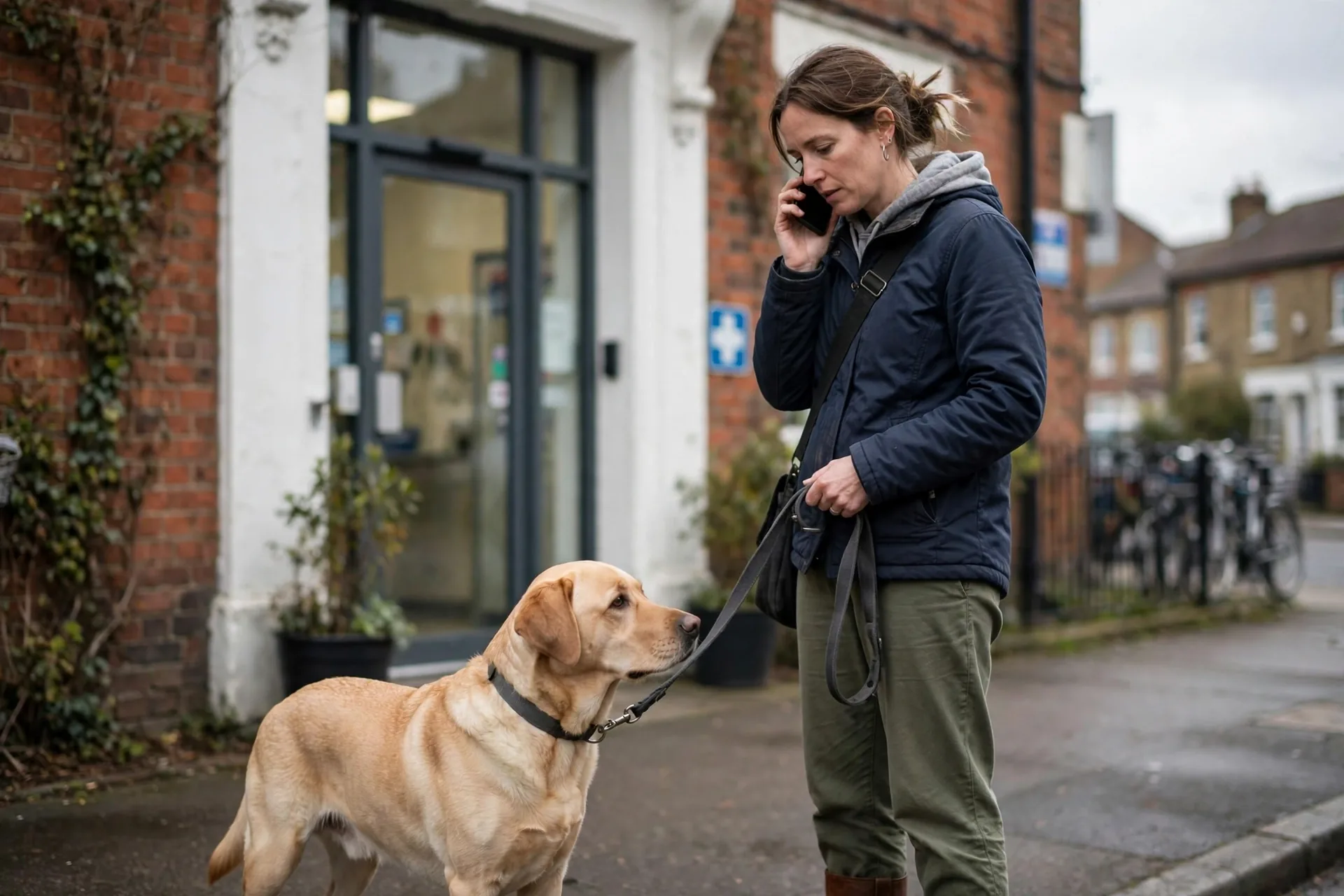
Seek urgent veterinary help, the same day or out of hours if needed, for severe pain, a rapidly swelling ear flap, bleeding from the ear, a foreign body that may be lodged in the canal, sudden balance problems, vomiting with a head tilt, or a dog that is clearly distressed. On holiday, find the nearest practice before you need it and save the number in your phone. Our guide to finding an emergency vet on holiday covers how to call ahead, what information to have ready, and how to handle costs and insurance while you are away from home.
What to tell the vet makes a difference. Before you call, note when the dog last swam, what type of water it was, which ear is affected, when the signs started, and what you have already done — drying, any cleaner used, and whether the signs are improving or worsening. Mention any history of ear problems, allergies or medication, and whether the dog has been in long grass, which raises the possibility of a grass seed. This short history helps the vet decide whether the dog needs to be seen urgently, what examination is needed, and whether a sample should be taken.
At the appointment, expect the vet to examine the ear canal with an otoscope, and possibly to take a swab to identify yeast, bacteria or mites. Treatment depends on the cause and may include cleaning under supervision, prescribed drops, or treatment for an underlying allergy. Follow the prescribed course fully, even if the dog improves quickly, and return for a recheck if advised. Stopping early because the smell has gone is a common reason for recurrence, and a recheck is how the vet confirms the canal has truly healed rather than merely quietened down.
After treatment, ask about swimming again. Some dogs can return to swimming with a stricter drying routine and a recommended cleaner, while others need a break until the ear is fully healed, or a change in swimming habits altogether. That decision belongs to the vet who examined the ear, not to a general guide. If your dog is a keen swimmer, this conversation is worth having at the recheck, when the ear is improving and a realistic plan can be made for the rest of the season.
Packing an ear-care kit for trips
Ear care fails most often not through lack of knowledge but through lack of kit at the waterside. A small, dedicated pouch kept with the swimming gear solves that. It does not need to be large, and everything in it should be familiar to the dog from home use, so the first use is not on a holiday.
- Two soft towels or a set of cotton pads. One for each ear, plus a spare. Microfibre towels dry quickly and pack small; cotton pads are useful for a precise wipe of the flap folds.
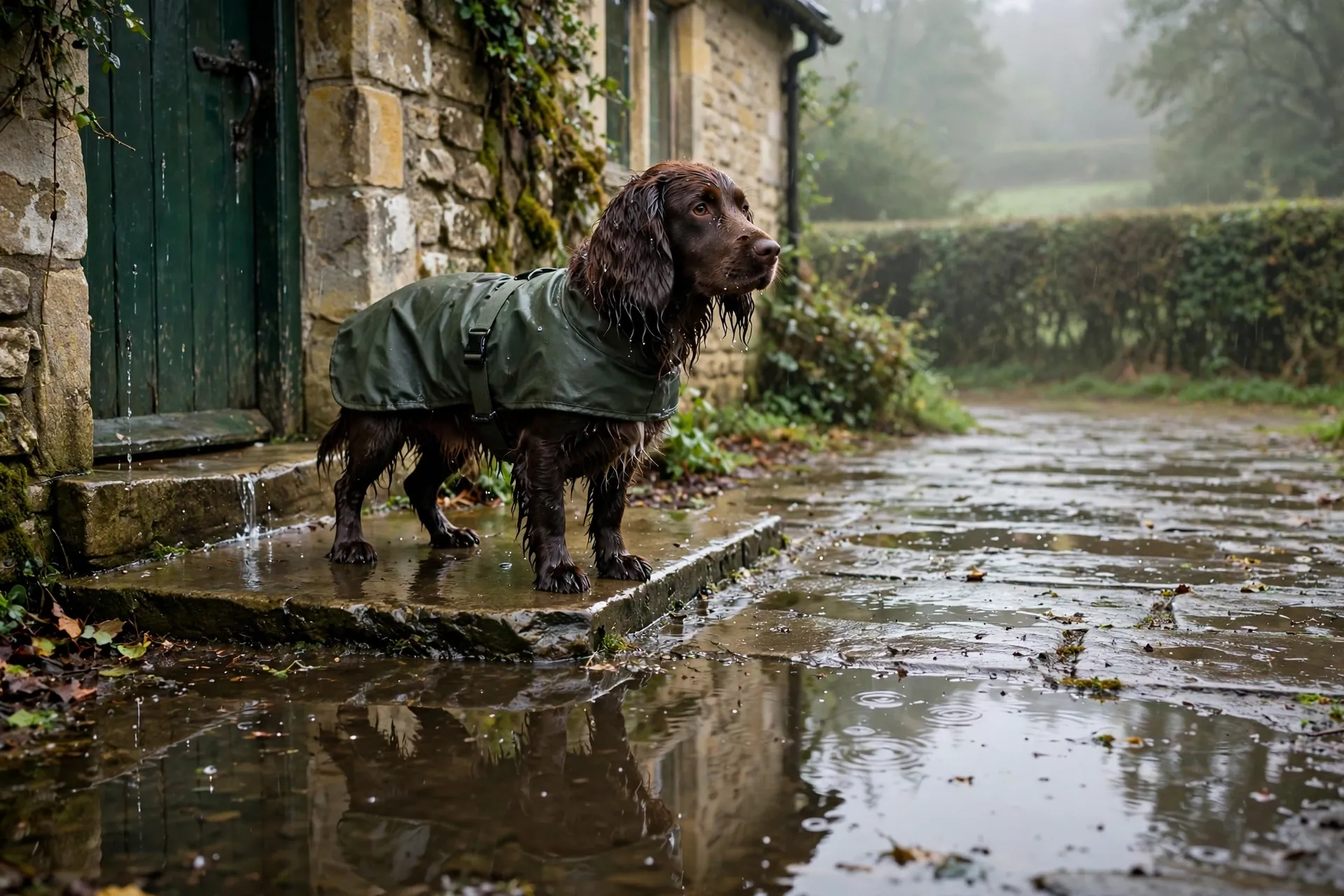
- A drying coat, if your dog uses one. A coat keeps the head and neck area drier on the journey home and reduces the damp patch behind the ears. Our guide to choosing a dog drying coat covers fabric, fit and belly coverage for rainy British holidays.
- A vet-approved ear cleaner, only if recommended. Pack it in a sealed bag, check the expiry date before the trip, and keep it out of a hot car boot. Do not pack a cleaner you have never used before and hope to learn on holiday.
- Clean water and a bowl. Fresh water for drinking after a swim, and for a gentle rinse of the outer ear if sand or mud is visible. Never use lake or sea water for rinsing ears.
- A small torch or phone light. Ear checks at dusk, in a car park or inside a tent are far easier with light. A quick look with a light beats a guess in the dark.
- A notebook or phone note for the 48-hour watch. Date, water type, ear affected and any signs. Patterns over a season are invisible without notes.
- Your vet's number and the nearest holiday practice. Saved in your phone before departure, not searched for in a panic. Include your dog's insurance details if you have them.
Pack the kit where you can reach it without unpacking the car. A pouch in the boot beside the towels, or in a rucksack for a walk to a lake, is useful; a pouch buried under luggage at the bottom of a suitcase is not. On a beach day, the same pouch can live in a dry bag with the water bottle and treats, so the routine happens at the water's edge rather than being postponed until you are home.
For dogs that swim daily on holiday, add a laundry plan for towels. Two or three towels in rotation, washed and fully dried between uses, are better than one towel that stays damp all week. Damp towels transfer moisture and organisms back into the ear they are supposed to dry, so the kit needs a clean supply, not just a single favourite towel.
Puppies, seniors and dogs with a history
Puppies deserve a gentle introduction to ear care long before their first proper swim. Start by handling the ears briefly during calm moments at home: lift the flap, look inside, touch the folds, then reward. Keep sessions short and positive, and build up to a wipe with a soft cloth. A puppy that learns ear handling as a normal, pleasant part of life will tolerate after-swim drying as an adult without a struggle. Puppies also need care about where they swim: very young puppies, puppies not yet fully vaccinated, and puppies still building stamina should only swim where your vet advises, and for short sessions. Check the official guidance before you travel if you are unsure about a site's suitability for a young dog.
Senior dogs need the same routine with extra gentleness. Older ears may be more sensitive, the canal skin may be thicker, and arthritis can make holding still uncomfortable. Support the dog's head rather than pulling the ear, keep sessions brief, and dry the dog in a warm place out of the wind. Senior dogs are also more likely to have concurrent conditions — allergies, thyroid problems, or a history of ear disease — that make professional advice more important. If a senior dog develops ear signs after swimming, contact a vet sooner rather than later, because older dogs can deteriorate faster and may have less reserve to cope with infection.
Dogs with a history of ear problems should have a written plan, agreed with their vet, before the swimming season. The plan might include a specific cleaner, a frequency for its use, a threshold for contacting the practice, and a decision about which types of water to avoid. Keep that plan with the ear kit, and share it with anyone else who walks or swims the dog, such as family members or a pet sitter. A plan that only one person knows is not a plan on a day when that person is not there.
For dogs with allergies, swimming and ear care sit inside a larger picture. Allergies inflame the ear canal and make infection more likely, so controlling the allergy — through diet, medication or environmental management as prescribed — is part of ear prevention, not a separate issue. After-swim drying still matters, but it will not compensate for uncontrolled allergy. If ear problems recur despite careful drying, ask your vet whether allergy investigation is the next step, rather than simply cleaning more often or more vigorously.
Swimming through the UK seasons
British swimming is a seasonal story, and ear care changes with it. In late spring, water is cold, dogs swim briefly, and ears dry quickly in the breeze — but pollen counts are rising, and pollen can irritate already sensitive ears. In summer, the peak swimming season, frequency is the main risk: daily swims on holiday, warm water, algae blooms in some lakes, and long grass with seeds near banks all combine. This is when the routine matters most, and when skipping it for a few days in a row is most likely to cause trouble.
Autumn brings cooler water and shorter days, which means dogs may swim and then sit in a cold car or a damp tent, slowing drying. Wind chill after a swim can make a wet dog shiver, and owners understandably rush to warmth, forgetting ears in the hurry. Keep the ear check in the routine even when the light is fading and everyone is cold: a minute with a towel now is easier than a vet visit later. Autumn also brings harvest debris and fallen leaves into rivers, so check for fragments at the ear opening after riverside swims.
Winter swimming is a minority pursuit in Britain, but some hardy dogs and their owners swim year-round, and hydrotherapy continues through winter. Cold water, cold air and indoor heating create a cycle of wetting and rapid drying that can dry out ear skin, so avoid over-cleaning in winter and keep the routine to drying plus any vet-recommended product. If a dog swims in winter, dry the ears indoors in warmth, not in a cold car park, and watch for signs that the skin is becoming dry or flaky rather than infected. The distinction matters, and a vet can advise if you are unsure.
Wherever and whenever you swim, the same principles hold: choose clean water, respect signs and local rules, dry promptly, watch for 48 hours, and seek veterinary advice early when signs appear. Swimming is one of the great joys of a dog's life in Britain, from a Cornish cove to a Lake District tarn, and ear care is what keeps it joyful. A dog that comes home with dry, comfortable ears will be ready to swim again tomorrow — and that, after the shake at the water's edge, is the whole point.
Practical questions
Before you go
How soon after swimming should I dry my dog's ears?
As soon as your dog is out of the water and settled, ideally within a few minutes. Lift each ear flap gently, wipe the parts you can see with a soft towel or cotton pad, and let air reach the ear. Do not push anything into the ear canal. If your dog is still excited, wait until it can stand calmly, but do not leave wet ears until bedtime.
Should I use an ear cleaner after every swim?
Not necessarily. Drying is the essential step after every swim, while a vet-approved ear cleaner is a useful extra for dogs that swim often or are prone to ear problems. Use only a product your vet has recommended for your dog, follow its instructions, and stop and seek veterinary advice if the ear is red, sore, smelly or painful.
What does an ear infection smell like in dogs?
An infected ear often smells musty, yeasty or sour, and the smell is stronger than the normal faint smell of a healthy ear. A new or worsening smell, especially with redness, discharge, head shaking or scratching, is a reason to contact your vet rather than to keep cleaning at home.
Why does my dog keep shaking its head after swimming?
Head shaking right after a swim is often a dog clearing water from its ears, and it usually settles within minutes once the ears are dried. Repeated shaking over hours, shaking that returns the next day, or shaking combined with pawing, redness, smell or discharge is different: it can signal irritation or infection, and the dog should be checked by a vet.
When should I contact a vet about my dog's ears?
Contact a vet promptly if you see persistent head shaking, scratching, redness, swelling, discharge, a strong smell, pain when the ear is touched, a head tilt, loss of balance or hearing changes. Seek urgent veterinary help for severe pain, a very swollen ear flap, bleeding, or any sign that the dog is distressed. Do not wait for a routine appointment if symptoms are worsening.