This guide is independent and contains no paid placement. If affiliate links are added later, they will be clearly marked and will not change our editorial checks.
Begin at least eight weeks before departure if your dog has no routine yet. Keep treatment up to date through the trip, match the product to your dog and your destination with your vet, and check your dog for ticks every day after walking in grass, woodland or moorland.
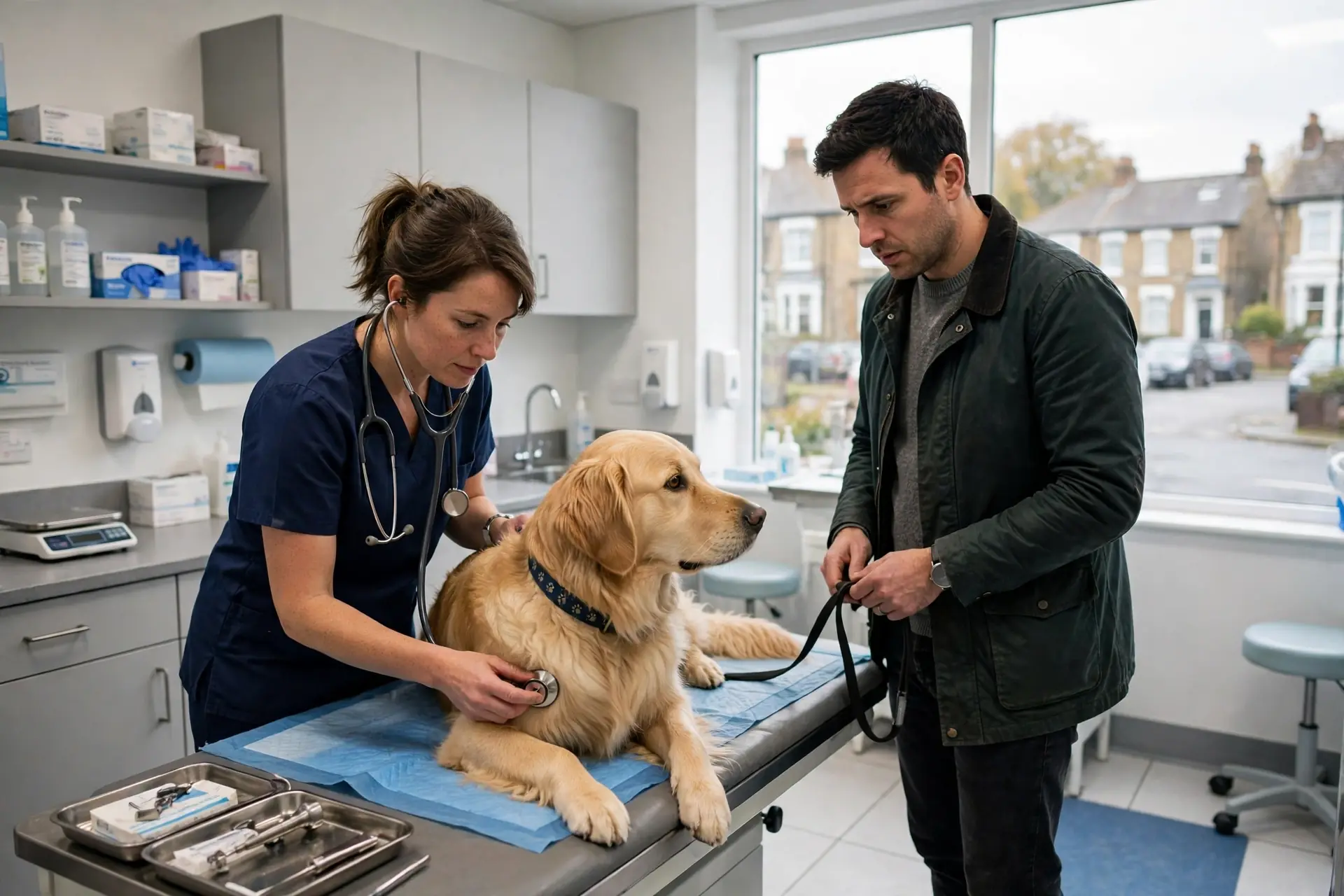
Eight weeks before: start the conversation
Eight weeks sounds generous for a routine that takes minutes to apply, but the point of starting early is not the application itself. It is the time to discover a problem while there is still room to fix it. A dog that has never been treated, a product that no longer suits a dog that has gained or lost weight, a puppy that has just crossed a minimum age or weight threshold, or a destination with a higher tick risk all need a decision made calmly, not the night before departure. At eight weeks out, a vet can also check whether your dog is due a booster, a worming dose or a health check at the same time, so one appointment can cover several holiday preparations at once. If you are travelling to a new part of the country, this is the moment to ask whether the parasite risks there differ from your home area, and whether your current routine still covers them.
Start by writing down the facts your vet will need. Note your dog's current weight, age, breed, any health conditions and any medicines already in use, plus the name and type of the flea and tick product you last used and the date it was given. If you cannot remember the date, say so honestly rather than guessing, because the gap between doses matters more than the product name. Also note where you are going and what you plan to do there: a week in a cottage beside woodland and bracken is a different risk from a city break with pavement walks, and a dog that swims daily needs a different conversation from one that stays on dry paths. Bring the product packaging or a photo of it to the appointment if you have it, so the vet can see exactly what was used and whether it covers both fleas and ticks.
Use this early window to check the basics at home too. Look through the dog's coat for signs of fleas, such as small dark specks that turn reddish-brown on damp white paper, excessive scratching, or patchy hair loss around the base of the tail. Check the bedding, the car boot and any rugs your dog sleeps on, because fleas live in the environment as well as on the animal. If you find anything suspicious, tell the vet before you start a new product, because treating the dog alone may not be enough and the house may need attention as well. Starting eight weeks early also gives a new product time to show whether your dog tolerates it well, with no holiday pressure if a change is needed.
- Book the vet conversation if your dog has no current routine, has changed weight or health, or you are heading somewhere new.
- Record the last treatment date and the next due date, and compare both with your travel dates.
- Note your destination and activities — woodland, moorland, long grass, swimming and farm walks all change the risk.
- Check the home for flea signs in bedding and resting spots before you rely on a single dose.
Finally, set a reminder system now, while the trip is still abstract. A phone calendar entry for each dose, a note on the fridge, or a reminder in the same place you keep the booking confirmation all work, but pick one and stick with it. The most common failure in flea and tick protection is not choosing the wrong product; it is a dose given late, forgotten in the packing rush, or left at home on the kitchen shelf. Eight weeks is enough time to build the habit and to test that the reminder actually fires.
Four weeks before: confirm the plan
Four weeks before departure is the checkpoint. By now you should know which product type your dog will use, when the next dose falls, and whether any dose is due during the holiday itself. If a dose falls mid-trip, decide now whether to give it a day or two early or late only if your vet agrees, or to take the dose with you and give it on the road. Never move a dose date on your own guesswork: some products have a strict interval and others allow a small window, and the difference matters. Write the agreed dates on a card that travels with the dog's things, not only in your phone, because phones run out of battery and signal in exactly the places where a reminder is most needed.
This is also the time to buy what you need, rather than hoping a rural shop stocks it. Order or collect the product, a tick-removal tool, a fine-toothed flea comb, and a small sealable bag or pot for any tick you remove. Check the product's storage instructions: some need to be kept cool and dry, which affects where they go in a hot car or a sunny cottage. If your dog uses a collar, check that it still fits, that the fastening works, and that the stated protection period covers the whole trip plus the journey home. A collar bought last spring may have expired without anyone noticing, and a collar that is too loose does not protect properly.
At four weeks, think about the rest of the holiday health picture as well. Our guide to dog vaccinations before a holiday sets out the booster timing and the checks that often sit alongside parasite treatment, and it is worth reading now rather than the week you travel, when a booster given too late may not be fully effective. If your dog needs worming, a dental check or a repeat prescription, four weeks leaves time for the vet to supply it without a rush fee or a second visit. Confirm that your pet insurance details are current, and save the number of a vet near your destination, because finding one at midnight with a sick dog is a poor time to start searching.
Do a practice run if your dog is new to the product. Apply a spot-on treatment or fit a collar a few weeks before travel so you can watch for skin irritation, lethargy or stomach upset in a familiar setting, and so the dog is not dealing with a new sensation on top of a long journey. For tablets, give the dose on a normal day at home, at the usual time, with food if the instructions say so, and note how your dog reacts. If anything seems wrong, you have weeks to contact the vet and change course, which is exactly the safety margin this countdown is designed to create.
One week before: pack the kit
The final week is for packing and for a last coat check, not for starting a new routine from scratch. Give any dose that is due this week on the agreed date, and record it immediately: the product name, the date, the time and the dog's weight at the time. If the dose is due during the holiday, put it in the bag now, in its original packaging with the instructions, so it cannot be mistaken for another product. Pack the tick-removal tool where you can reach it without unpacking the whole car — a glovebox, a coat pocket or the top of the dog bag is better than the bottom of a suitcase.
Build a small parasite kit and keep it together for the trip. A useful kit contains the next dose if one falls during the holiday, the tick-removal tool, a flea comb, a few sealable bags, disposable gloves, antiseptic wipes or a gentle skin cleanser approved by your vet, and a small torch for evening checks. Add a towel for drying the coat after wet walks, because a damp, matted coat hides ticks far more effectively than a dry, brushed one. If your dog swims, pack a spare lead and a drying coat as well, since a wet dog that shakes in the car will scatter whatever is in its coat across the seats.
Run your hands over the whole dog in the final week and learn what is normal for them. Feel for lumps, scabs, sore spots and any small hard bumps that could be mistaken for a tick later, and note where they are. This baseline matters: on holiday, you will be feeling for something new, and knowing that the small bump behind the left ear has been there for months saves a worried evening. Check between the toes, inside the ears, under the collar and around the groin and armpits, because these warm, sheltered spots are where ticks most often attach. If you find a tick at this stage, remove it with the tool and tell your vet, rather than leaving it and hoping the holiday treatment deals with it.
- Dose due this week: give it on the agreed date and write it down straight away.
- Dose due on holiday: pack it in its original box with the instructions, where you can find it.
- Tick tool, comb, gloves, bags and torch: keep them together in one pouch.
- Baseline check: feel the whole coat now so new bumps stand out later.
Finally, check the accommodation and the journey. If you are staying in a cottage, ask whether previous guests' dogs have stayed there and whether the bedding is washed between stays, because fleas can persist in soft furnishings. For the car, vacuum the boot and the back seat before you load up, and bring a washable blanket for the dog to lie on. A clean start does not guarantee a flea-free trip, but it removes one source of trouble before you set off, and it makes any later problem much easier to trace.
Departure day: the last checks
Departure day should be boring, and that is a compliment. The parasite work is already done: the dose is given or packed, the kit is in the car, and the vet's number is saved. What remains is a short routine before you load up. Check that the collar, if your dog wears one, is still fitted with room for two fingers underneath and has not been chewed loose in the final week. If you use a spot-on treatment, check that the application site is dry and that the dog has not rolled in mud or been bathed since it was applied, because washing too soon afterwards can reduce its effect. Check the official guidance before you travel if you are unsure how soon after application your dog can swim or be bathed.
Give the dog a quick brush before the journey. This is not a grooming session; it is a last look for fleas, ticks or sore skin, and a chance to remove loose hair and debris that would otherwise travel with you. Pay attention to the ears, the neck and the belly, and check the paws for anything caught between the toes. If you find a tick now, remove it before you leave and note the date, because a tick found on departure day was almost certainly picked up at home, and that tells you something useful about your own garden or local walk.
Pack the dog's paperwork with the same care as your own. That means the vaccination record, any prescription details, the name and dose of the flea and tick product in use, and the contact details for your home vet. If your dog needs emergency care on holiday, a new vet will ask what treatment the dog is already on before prescribing anything else, and guessing from memory under stress is a poor substitute for a written record. Keep a photo of the product box on your phone as a backup, and keep the original packaging for the dose you packed, so the active ingredients can be read if needed.
On the journey itself, keep the dog cool and settled, and avoid stopping for a long walk in deep bracken or long grass on the way if you can choose a short, mown stop instead. The holiday does not need to start with a tick hunt at a motorway service area. A short lead walk on a clear path, water, and a chance to stretch is enough, and the proper countryside walks can wait until you arrive, when you have the tick tool and the torch to hand and time to do the evening check properly.
Where fleas and ticks are a bigger risk
Fleas and ticks are found across the UK, but the risk is not the same everywhere or in every season. Ticks favour damp, shaded places with long vegetation: woodland edges, bracken, rough grassland, moorland and the margins of footpaths where deer, sheep and small mammals pass through. They are also common in gardens that back onto fields or woods, and in parks where long grass is left uncut. Fleas, by contrast, are largely an indoor problem once they are established: they thrive in warm homes, in carpet, in pet bedding and in the cracks of wooden floors, and they can be active all year round in a heated house. A winter cottage with central heating can harbour fleas just as readily as a summer one, which is why a seasonal approach to flea treatment often fails.
Geography adds another layer. The south and west of England, parts of Wales, the Scottish Highlands and the Lake District all have well-known tick areas, but ticks are now reported much more widely than they once were, including in urban parks and gardens. Upland walking, deer country and sheep-grazed moorland carry a higher tick risk than a mown village green, while coastal paths with short turf and sea wind are generally lower risk, though not risk-free. The time of year matters too: ticks are most active from spring to autumn, with a peak in late spring and early summer, but they can appear on mild days in winter as well, especially in sheltered spots. Check the official guidance before you travel for the latest advice on tick activity in the area you are visiting.
Your dog's habits matter as much as the map. A dog that pushes through bracken, sniffs along hedgerows, lies down in long grass or chases through undergrowth will pick up more ticks than one that stays on a wide, surfaced track. Dogs that swim may wash off some parasites, but they also push through bankside vegetation to get in and out of the water, which is where ticks wait. Working dogs, spaniels and terriers that quarter ground are at higher exposure than a dog that walks calmly to heel on a path, and a dog that visits several different habitats in one holiday — woodland in the morning, moorland in the afternoon, a farm walk the next day — accumulates risk across the week rather than from a single walk.
Use this risk picture to plan, not to panic. Choose walks that suit the season and the dog: wide tracks and mown paths in peak tick season, and save the bracken-bashing for a day when you have time for a thorough check afterwards. Keep the dog out of deep bracken where a path runs beside it, and stick to the centre of the track through long grass rather than the edges where ticks quest. If you are staying somewhere with a garden, check whether it is enclosed, whether it backs onto rough ground, and whether the grass is long. A quick mow or a decision to use the front garden for toilet breaks can reduce exposure more than any product alone.
Spot-on, tablets and collars compared
Most UK flea and tick products fall into three broad types: spot-on liquids applied to the skin, oral tablets given by mouth, and collars worn around the neck. They work in different ways, they protect for different lengths of time, and they suit different dogs and different holidays. No single type is right for every dog, which is why a vet conversation matters more than a shelf comparison. This section explains the categories so you can have that conversation well informed; it does not recommend a specific brand or dose, and you should choose a product only on your vet's advice for your individual dog.
Spot-on treatments are liquids applied, usually between the shoulder blades or along the back, where the dog cannot easily lick them off. The active ingredient spreads over the skin surface or is absorbed, and fleas or ticks are killed when they come into contact with it or bite. Spot-ons are widely used, they are applied at home in a minute or two, and many cover both fleas and ticks, though not all do, so check the cover carefully. Their drawbacks are practical: the coat can look greasy for a day, the dog should not be bathed or swim for a period after application, and the dose must be matched to the dog's weight band. A spot-on applied to wet fur, parted incorrectly, or licked off by another dog in the household may not work as intended.
Oral tablets are chewed or swallowed, often flavoured, and work from inside the dog: the active ingredient circulates in the blood, and a flea or tick that bites is killed. Tablets avoid the greasy coat and the bathing restriction of spot-ons, which suits dogs that swim daily or are bathed often, and they remove the risk of the product rubbing off onto furniture or children. Their protection period varies by product, from about a month to several months, and some tablets cover fleas only, some cover ticks only, and some cover both, so the label must be read with care. A tablet that is spat out, vomited shortly after giving, or given on an empty stomach when food is required may not give full protection, and a vet should be consulted if a dose is lost in this way.
Collars release their active ingredient slowly over weeks or months, giving long-lasting cover from a single fitting, which suits a long holiday or a dog whose owner finds monthly dosing hard to remember. A collar is visible, easy to check, and does not depend on remembering a date each month. The trade-offs are fit and safety: a collar must be snug enough to work but loose enough for two fingers to pass underneath, it can be caught on branches or fencing, and it should have a safety release or breakaway feature for a dog that runs through woodland. Some collars are not suitable for puppies below a certain age, for pregnant dogs, or for households with small children who may chew or handle the collar, so ask your vet about your household as well as your dog.
- Spot-on: applied to the skin, usually monthly, check flea and tick cover, avoid bathing or swimming for the period stated in the instructions.
- Tablets: given by mouth, no greasy coat, check whether the product covers fleas, ticks or both, and what to do if a dose is spat out or vomited.
- Collars: long-lasting cover from one fitting, check the fit, the protection period and whether it suits puppies, other pets or small children in the home.
- Other forms: sprays and shampoos exist but usually give shorter protection; ask your vet whether they fit a holiday plan at all.
Whichever type you use, the same rule applies: follow the product instructions exactly, use the correct weight band, and never use a product made for a different species or a different size of dog. A cat product on a dog, or a large-dog dose split between two small dogs, can be dangerous. Keep the packaging until the protection period has ended, so you can check the dates and the active ingredients if your dog becomes unwell or needs another medicine while you are away.
How to use treatment correctly
Correct use sounds obvious, but most treatment failures are user errors rather than product failures, and holidays add distractions that make errors more likely. Read the instructions every time, even for a product you have used for years, because formulations, weight bands and application points change. Check the expiry date, check that the pipette or tablet is the right size for your dog's current weight, and check whether the product covers fleas, ticks or both. Weigh the dog if you are unsure: a dog that has put on weight over winter may have moved into a higher band, and a dog that has lost weight after illness may have moved down.
For a spot-on, part the fur at the application point so the liquid reaches the skin, not the top of the coat. Apply it where the dog cannot turn and lick it, usually between the shoulder blades, and hold the dog still for a moment afterwards so the liquid does not run off. Keep other dogs and cats away until it is dry, and wash your hands after application. Do not apply a spot-on to broken, sore or sunburnt skin, and do not bathe the dog immediately before or after application unless the instructions say you can. If the dog shakes, rolls or rubs the area straight away, check how much product was lost and ask your vet whether a repeat application is needed.
For a tablet, give it exactly as directed: with food or on an empty stomach, whole or with a small treat, and watch to make sure it is actually swallowed. If your dog is skilled at spitting tablets out, try the method your vet recommends rather than hiding it in a large meal that may be left uneaten. Note the date and time, and watch for vomiting in the hours afterwards; if the tablet comes back up, contact your vet for advice rather than giving another one on your own initiative. For a collar, fit it snugly, cut off any excess length as directed so another pet cannot chew it, and check the fit weekly, because a growing puppy or a dog that loses weight can change the fit quickly.
Common mistakes are worth naming plainly so you can avoid them. Giving a dose late because the holiday packing took over. Using a leftover pipette from a heavier dog. Applying a spot-on and then bathing the dog the same evening. Combining two products in the hope of doubling protection. Stopping treatment in autumn because the weather turned cold, then finding fleas in a warm house in January. Treating one dog in a multi-dog home and forgetting the other. Each of these is easy to do and easy to prevent with a written plan and a calendar reminder. If you are unsure about anything in the instructions, check the official guidance before you travel and ask your vet, rather than improvising on the day.
When you must ask a vet first
Some situations should never be handled by a shelf purchase alone. If your dog has never had flea or tick treatment, has had a reaction to a product before, is on other medication, or has a health condition such as epilepsy, liver or kidney disease, skin disease or a weakened immune system, ask your vet before choosing a product. The same applies if your dog is pregnant, nursing, very young, very old, or has recently had surgery. A vet can weigh the options for that individual dog, including whether a particular product type interacts with other medicines, and can record the choice so any vet you see on holiday knows what is already in use.
Ask a vet promptly if you find a heavy flea infestation, if your dog is scratching raw, losing hair, or has sore or infected skin, or if you find many ticks at once. These are signs that the current routine is not working, or that the environment needs attention as well as the dog. A vet can check for anaemia in a heavily infested puppy, for skin infection that needs treatment of its own, and for tick-borne illness if your dog has a fever, lethargy, loss of appetite, swollen joints or a limp after a tick bite. Our guide to ticks on dogs explains the symptoms and the Lyme disease signs to watch for in more detail, and it is worth reading before you travel so you know what counts as urgent.
Travelling abroad changes the rules entirely, and this guide covers UK holidays only. If your holiday involves leaving the UK, even for a short trip across the Channel, different parasite risks, different products and legal requirements for tapeworm treatment and documentation may apply. Check the official guidance before you travel and speak to your vet well in advance, because some requirements have strict timing windows that cannot be fixed at the port. The same caution applies if you are importing a dog, adopting a dog from abroad, or travelling with a dog that has recently arrived in the UK.
Finally, ask your vet if you are unsure about the product you have been using, or if you have bought a product online from an unfamiliar seller. Counterfeit and incorrectly stored parasite products are a real problem, and a product bought cheaply from an unverified source may contain the wrong ingredient, the wrong strength, or nothing effective at all. Buy from your vet or from a reputable supplier your vet recommends, keep the receipt, and check the packaging for signs of tampering. If the price looks too good to be true, treat that as a warning, not a bargain.
Multi-pet homes, puppies and older dogs
A holiday with more than one dog, or with a dog and a cat, needs a plan that covers every animal, not just the one that travels most. Fleas do not respect a rota: if one dog is treated and the other is not, the untreated animal becomes a reservoir that reinfests the treated one, the house and the car. Treat all pets in the household on the same schedule where your vet advises it, and keep a written record for each animal, because it is easy to remember the spaniel's dose and forget the terrier's. Cats need cat products, dogs need dog products, and the two must never be swapped, as some dog products are toxic to cats. If a cat grooms a dog that has just had a spot-on applied, or sleeps curled against the application site, the cat can be exposed, so keep animals apart until the product is dry.
Puppies need particular care. Many products have a minimum age, often around eight weeks, and a minimum weight, and a puppy that is just below the limit must wait rather than being given a reduced adult dose. A puppy's weight changes fast, so weigh the puppy close to the treatment date rather than relying on a weight from a month earlier. Puppies also explore with their mouths, chew collars, lick other dogs and roll in anything they find, which increases the chance of ingesting a product meant for the skin. Ask your vet which product type is safest for a puppy that does all of these things, and check whether the puppy's vaccination schedule interacts with the timing of any treatment.
Older dogs bring a different set of questions. An arthritic dog may struggle to be lifted onto a table for a spot-on application, a dog with kidney or liver disease may process medicines differently, and a dog on long-term medication for another condition may have interactions to consider. Cognitive decline can also make a senior dog more anxious about handling, so a calm, familiar routine at home matters more than a rushed application in a holiday cottage. If your older dog has thinning skin, sores or a skin condition, ask the vet whether a tablet or a collar suits them better than a liquid applied to fragile skin, and whether the application site needs to be varied.
In a multi-pet home, also think about the house and the car as part of the treatment plan. Wash bedding, vacuum carpets and soft furnishings, and treat the environment only with products your vet recommends as safe for your animals, because some household flea sprays are toxic to cats, fish or small pets. On holiday, keep each dog's bedding separate where you can, and wash it before you bring it home, so a flea picked up in one cottage does not move into your house. A little organisation at this stage saves a household-wide problem later, and it is far easier to treat the environment before an infestation takes hold than after it has spread.
The daily tick check on holiday
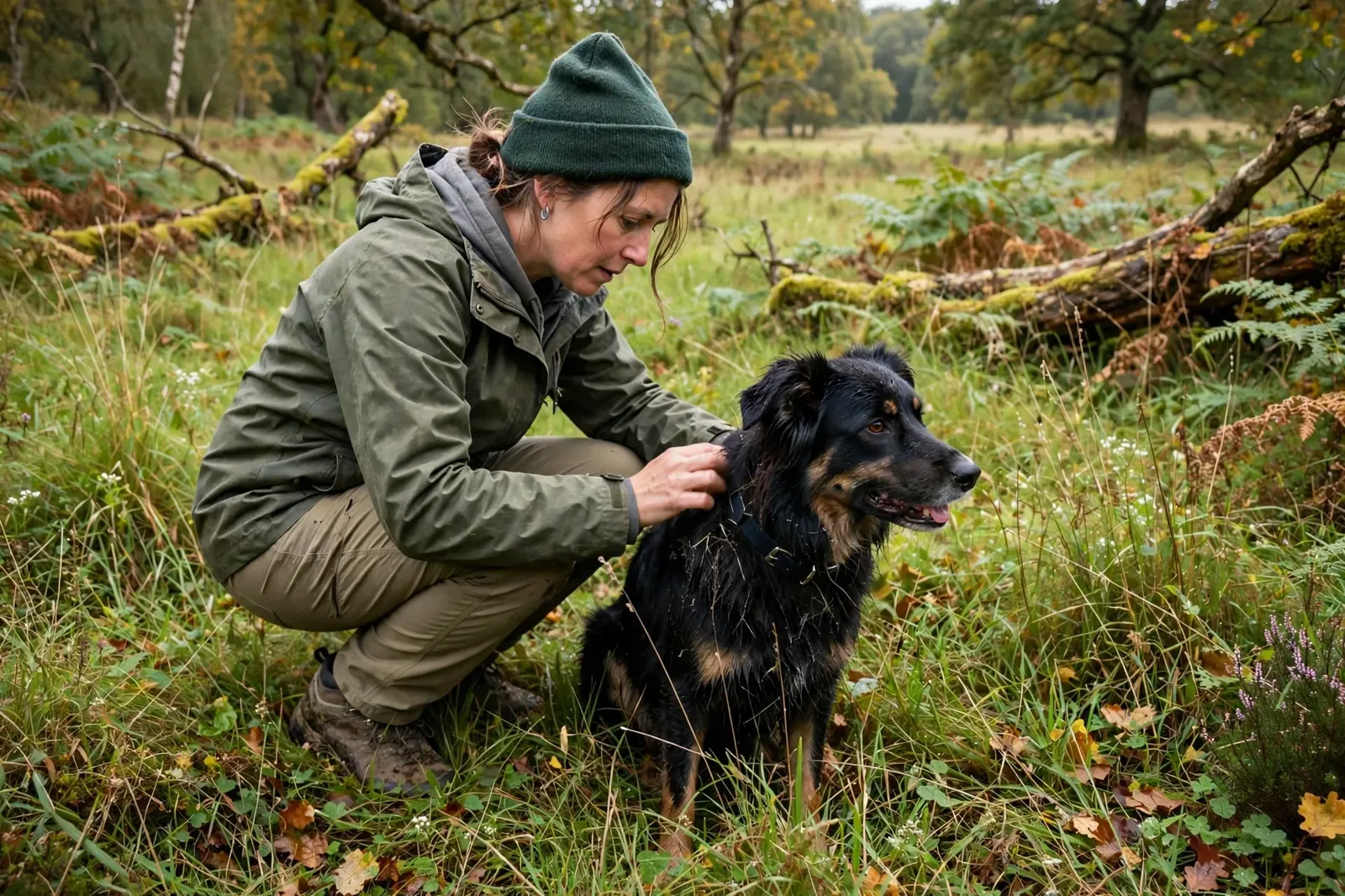
The daily tick check is the single most useful habit on a countryside holiday, and it takes less than ten minutes once you know the routine. Do it every evening, after the last walk and before the dog settles for the night, in good light, with the dog calm and, ideally, after a brush. A torch helps in a dim cottage, and a second pair of hands helps with a wriggly dog, but one person can do it alone if the dog is used to being handled. Work in a fixed order so you do not miss a spot: start at the head and work back along the body, then do the belly, legs and tail. The routine matters more than speed, because ticks hide in the places you skip.
Feel as much as look. A tick that has just attached can be as small as a poppy seed, and a flat tick in a thick coat is easy to miss by eye alone. Run your fingertips slowly through the coat against the lie of the fur, feeling for a small, hard bump that was not there before. Pay special attention to the warm, thin-skinned places ticks prefer: inside and around the ears, under the collar, in the armpits, around the groin, between the toes, under the tail and along the belly. Long-eared dogs need the ears checked inside and out, and thick-coated dogs need the fur parted in sections rather than skimmed over the top. If your dog wears a harness, check under the straps as well, because ticks attach where the skin is warm and undisturbed.
Use a flea comb as part of the check on a dog with a thick or long coat. Comb through in sections, and look at what comes out on the comb: flea dirt looks like small black specks that turn reddish-brown on damp white paper, while adult fleas are small, dark and fast-moving. If you find flea dirt, tell your vet and check whether the current treatment is still in date and correctly applied. Keep a note of what you find each day, even if it is nothing: a short daily note — date, walk, nothing found — builds a record that helps a vet if your dog becomes unwell later, because the timing of a tick bite can matter for diagnosis.
- When: every evening after the last walk, in good light, before the dog settles.
- How: fingertips through the coat, against the lie of the fur, in a fixed order from head to tail.
- Where: ears, under the collar, armpits, groin, between the toes, under the tail and along the belly.
- Tools: a flea comb, a torch, and the tick-removal tool within reach before you start.
Make the check a calm, rewarding routine rather than a wrestling match. A few treats, a quiet voice and a familiar spot in the cottage help a nervous dog accept handling, and a dog that enjoys the check will stand still for it. If your dog resists, keep sessions short, reward the parts they tolerate, and build up over the holiday rather than forcing a full check on the first night. Children can help by holding the torch or the treats, but an adult should do the actual feeling and looking, because a tick is easy to miss if the check is treated as a game.
Removing a tick safely, step by step
Finding a tick is unsettling, but removing it promptly and correctly is straightforward, and most dogs suffer no ill effects if it is done well. The key principle is to remove the whole tick, including the mouthparts, without squeezing its body, because squeezing can push bacteria into the bite. Use a proper tick-removal tool — a tick hook or tick tweezers — rather than ordinary tweezers, your fingernails or a lit match. Keep the tool in your holiday kit, not in a drawer at home, and learn how to use it before you need it, ideally by practising the motion on a dry run or watching your vet demonstrate it.
To remove a tick, part the fur so you can see the tick clearly, place the tool around the tick as close to the skin as possible, and follow the tool's instructions — usually a gentle twist and a steady pull, without jerking. Do not pull the tick straight up by the body, do not twist with ordinary tweezers, and do not apply petroleum jelly, nail polish, alcohol or heat, because these can make the tick release more saliva or break apart. Once the tick is out, check that the mouthparts have come with it, clean the bite area with a gentle skin cleanser or antiseptic wipe, and wash your hands. If part of the tick remains in the skin, contact your vet rather than digging at it yourself.
After removal, keep the tick in a sealed bag or take a clear photo of it, and write down the date, the place where you think it was picked up, and where on the dog it was attached. This record is useful if your dog develops symptoms in the following days or weeks, because a vet will want to know when the bite happened. Watch the bite area for redness, swelling or discharge, and watch the dog for lethargy, loss of appetite, fever, swollen joints or a limp. These signs can appear days or weeks after a bite, so keep watching after you are home, not only on the holiday itself. If any of these appear, contact your vet promptly and mention the tick bite and the date.
Dispose of the tick safely: seal it in a bag and put it in an outdoor bin, or flush it away where that is appropriate, and do not crush it with bare fingers. Clean the tool after use, and wash any bedding or clothing that was in contact with the tick. If you find several ticks on one dog, or ticks on more than one dog in the group, tell your vet and review your prevention routine, because a cluster of ticks suggests a hotspot on a particular walk or in a particular place, and avoiding that spot for the rest of the holiday may be wiser than relying on treatment alone.
After the holiday: the tidy-up check
The holiday does not end when you unpack the car. Give the dog a final tick check at home, in good light, with the same routine you used on holiday, because a tick picked up on the last walk may not have been found in the rush of packing. Check the bedding, the travel blanket and the dog's holiday bed as well, and wash them before they go back into the house. Vacuum the car boot and the back seat, and wash any towels or drying coats that travelled with you. This tidy-up takes half an hour and stops a holiday parasite from becoming a household problem.
Keep the treatment routine going after you are home. A dose that falls due in the week after the holiday is still due, and stopping treatment because the holiday is over is one of the commonest ways fleas establish themselves indoors. Record the date of the last dose given on holiday, work out the next due date, and put it in the calendar before you forget. If you found fleas or ticks during the trip, tell your vet, and ask whether the house needs attention or whether the product should be changed. If your dog was unwell during or after the holiday, mention the travel dates, the places visited and any tick bites, because that history helps a vet narrow down the cause.
Finally, review what worked and what did not, while the trip is still fresh. Did the product suit a dog that swam every day? Was the collar comfortable under a harness? Did the daily check fit into the evening routine, or did it keep getting skipped? Did a particular walk produce ticks while others did not? Write down the answers in a sentence or two and keep them with your holiday notes, so the next trip starts from what you learned rather than from scratch. The best parasite plan is not the most expensive one; it is the one you can actually keep up, on a wet evening, in a strange cottage, with a tired dog that wants to sleep. Build the next holiday around that reality, and the countdown will be shorter and calmer next time.
For the rest of the holiday health picture, revisit the vaccination checklist alongside this guide before your next booking, and keep both records together in one folder. A dog that is vaccinated, treated for parasites and checked daily is a dog that can enjoy the countryside properly, and an owner who has done the preparation can enjoy it too, without the evening worry that something small and eight-legged has been missed.
Practical questions
Before you go
How far in advance should I start flea and tick treatment before a holiday?
Start at least eight weeks before departure if your dog is not already on a regular routine. That leaves time for a vet conversation, for a product to take effect, and for a follow-up dose if the first one is due during the trip. If your dog is already treated on schedule, check the date of the next dose against your travel dates and bring the next dose with you if it falls while you are away.
Can I use a flea collar and a spot-on treatment at the same time?
Do not combine products unless your vet tells you to. Some combinations can overdose a dog or irritate the skin, and others simply duplicate the same protection without adding any benefit. If you are switching from one product type to another, ask your vet about the safe gap between them and follow the product instructions exactly.
What should I do if I find a tick on my dog during a holiday?
Remove it promptly with a tick-removal tool, gripping the tick close to the skin and twisting gently as the tool directs, then clean the bite area and wash your hands. Keep the tick in a sealed bag or take a photo and note the date, so you can show your vet if your dog becomes unwell. Watch for swelling, lethargy, loss of appetite or a limp in the days and weeks afterwards, and contact a vet if any of these appear.
Do dogs need flea and tick treatment in winter in the UK?
Often yes, because fleas can survive indoors all year in heated homes, and ticks can be active on mild winter days, especially in sheltered woodland and grassland. Many vets recommend year-round treatment rather than stopping in autumn. The right routine depends on your dog, your home and where you walk, so check the official guidance before you travel and ask your vet about winter cover.
Can puppies and older dogs use the same flea and tick products as adult dogs?
Not always. Many products have minimum age and weight limits, and older dogs or dogs with health conditions may need a different product type. Puppies, pregnant or nursing dogs and dogs on other medication need a vet to choose the product. Never split an adult dose for a puppy or use a product made for a different species.