This guide is independent and contains no paid placement. Pregnancy-related advice here is general information only, not medical advice: for personal decisions, check with your midwife or GP.
Keep it short, keep it close to home, and keep the dog's routine intact. One restful base, one gentle walk a day, one dog-welcome place to eat, and a deliberately empty day will do more for a babymoon than a packed itinerary ever could.
What actually changes on a babymoon
A babymoon is often described as a last holiday before the baby arrives, and that framing sets the wrong expectations. It suggests a grand trip, a bucket list, a final fling. In practice, the couples who enjoy these breaks most treat them as something quieter: a few days of unhurried time together, somewhere comfortable, with the dog along because the dog is part of the family and leaving them behind would spoil the point. The change is not about doing less of the same holiday. It is about changing what the holiday is for.
The first thing that changes is energy. Pregnancy tiredness is real and uneven: a morning can feel fine and an afternoon can flatten you, or the other way round, and it rarely follows a timetable. A babymoon built around long drives, early starts and full days out fights that reality all week. A babymoon built around a comfortable base, a short walk, a long lunch and an afternoon with nowhere to be works with it. The test for any plan is simple: if the day goes wrong, can it shrink to the cottage, the garden and the dog without anyone feeling the trip has failed? If the answer is no, the plan is too rigid.
The second change is the dog's role. On most dog holidays the dog is the excuse for adventure: longer walks, wilder beaches, new trails. On a babymoon the dog becomes the rhythm-keeper. Dogs need feeding, toileting and walking at roughly the same times every day, and that routine is a gift when everything else feels up in the air. It gets you outside in the morning, it breaks the day into manageable pieces, and it gives the trip a shape that does not depend on anyone's energy levels. Protect that routine rather than disrupting it, and the dog stays calm, which in turn keeps the whole break calm.
The third change is decision-making. A normal holiday tolerates a certain amount of improvisation: a wrong turn, a closed pub, a beach that turns out to be further than expected. On a babymoon those small frictions cost more, because comfort and rest are the whole point. So the planning shifts forward. You check the garden fence before you arrive, not after the dog has found the gap. You confirm the dog can come into the restaurant before you book the table, not at the door with a hungry dog and a tired partner. You agree in advance what happens on a bad-weather day, so nobody has to negotiate it while already wet and tired. None of this is glamorous, but it is exactly what makes the break feel restful instead of merely relocated.
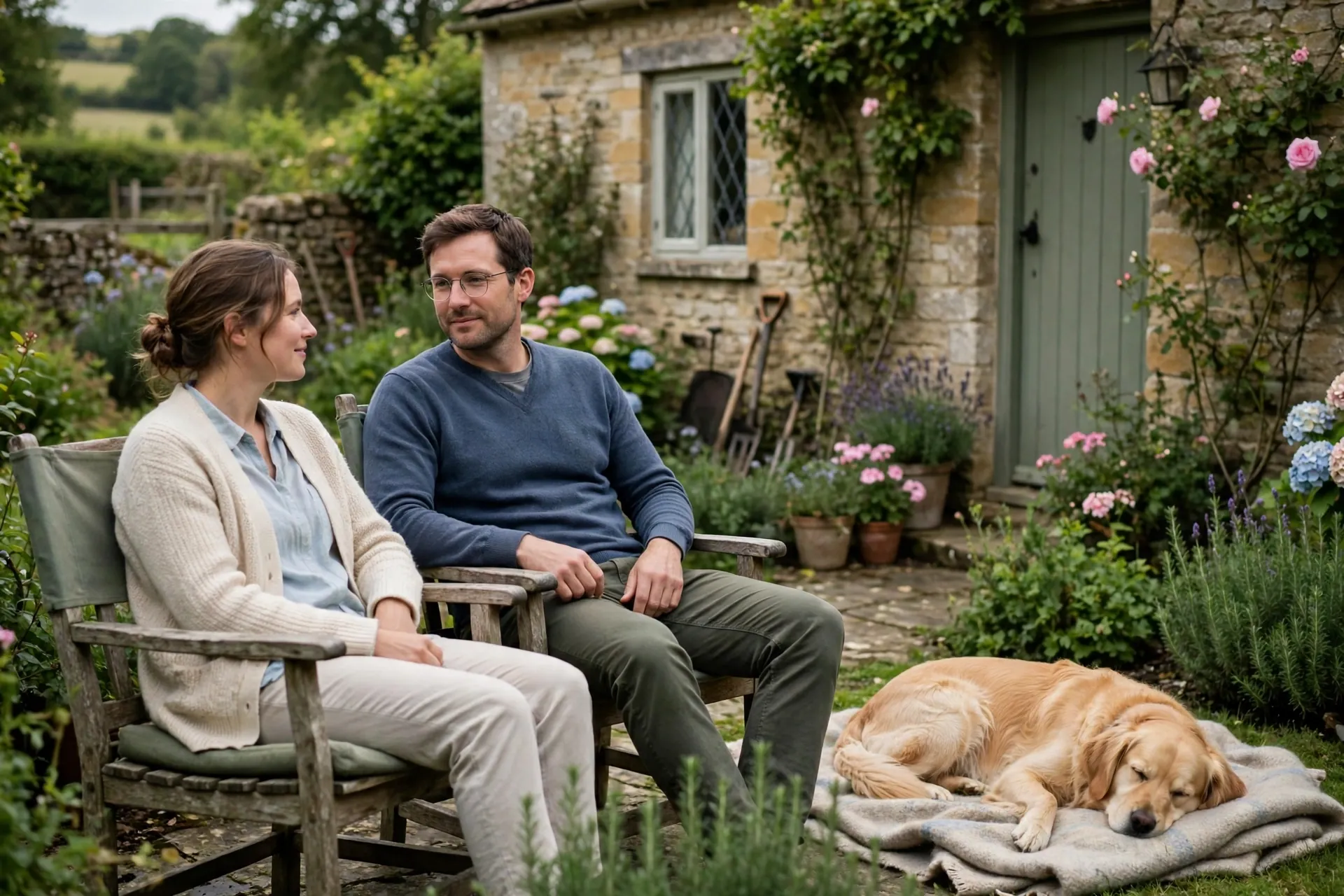
There is also a quieter emotional change worth naming. A babymoon sits between two chapters: life as a couple with a dog, and life as a family with a baby and a dog. Many couples use the time to talk about practical things they have been putting off, like how dog walks will work in the early weeks, or simply to enjoy the dog's uncomplicated company before everything changes. A break that leaves space for those conversations, rather than filling every hour with activities, serves that purpose far better. Build in empty time on purpose. Sit in the garden. Let the dog sleep on your feet. That is not wasted time on a babymoon; that is the trip.
Finally, accept that a babymoon is a rehearsal in the best sense. The habits that make it work — a short journey, a base that suits everyone, a flexible day, a bag packed the night before, a plan for cutting things short without guilt — are the same habits that will make early family trips with a baby and a dog work later. Treat this break as practice, and you will come home with more than photographs: you will come home knowing what your family, dog included, actually enjoys.
Choosing the right window and pace
Timing a babymoon is less about finding a magic week and more about removing pressure. The right window is the one where travel feels manageable, the destination is enjoyable in that season, and the booking can move if circumstances change. For personal timing decisions, check with your midwife or GP, and do not let a guide, a blog or a well-meaning friend overrule that conversation. What follows is about logistics, not medicine: journey length, season, and pace.
Start with distance, and be stricter with yourself than you would be for an ordinary break. A journey of ninety minutes to two hours each way is a sensible ceiling for most couples, and for many it should be shorter. Long motorway drives with a dog that needs toilet stops, a pregnant passenger who needs comfort breaks, and luggage for two humans and a dog add up to a tiring day before the holiday has even begun. A closer destination also pays off at the other end: if you need to come home early, you can, without a six-hour drive hanging over the decision. Search within a radius of home first, and only widen it if nothing suitable appears.
Season matters more than usual, because comfort outdoors is the main activity. Late spring and early autumn are often the sweet spot in Britain: mild weather, quieter attractions, and beaches where seasonal dog restrictions have eased or not yet begun. Summer brings warmth but also crowds, busy roads and hot cars, which are a poor combination with a dog and a pregnancy. Winter can be lovely in a cottage with a fire, but short days and muddy walks narrow your options, and icy paths are a genuine hazard. Whatever the season, check the official guidance before you travel for the specific beach, park or attraction you plan to visit, because local dog rules change by season and by site, and a rule you assumed can ruin a day.
Length is the next decision, and shorter is usually better. Two to four nights hits the balance: long enough to settle, short enough that the dog's routine at home is barely disrupted and the packing does not become a project. A single night rarely justifies the journey and the settling-in, while a full week on a babymoon often drifts into restlessness or exhaustion, especially if the weather turns. If you want a longer break, consider two short stays rather than one long one, or a week with the middle days deliberately left empty. The same logic applies to daily pace: one main activity per day, plus a walk and a meal, is a full day on a babymoon. Two activities is a busy day. Three is a mistake you will feel the next morning.
Book flexibility into the trip wherever you can afford it. Look for free cancellation or date changes up to a few days before arrival, and read the actual terms rather than trusting a badge on a listing. Some properties offer flexible terms only on direct bookings, while platform bookings carry stricter rules. Travel insurance that covers cancellation is worth pricing for a babymoon, since plans in pregnancy genuinely do change; check what it covers and what evidence it requires before you buy. If you are booking trains or ferries, check the change fees at the same time. A babymoon that can move is a babymoon that stays relaxing even when life intervenes.
Finally, plan the pace of arrival and departure as carefully as the days themselves. Arrive in daylight if you can, so the dog can explore the garden and settle before dark. Avoid a departure that requires a dawn start and a deep clean of the cottage. Leave a buffer day at home after you return before work or appointments resume, so the break ends gently rather than slamming into normal life. A babymoon should feel like a pause with soft edges, not a box squeezed between two busy weeks.
Picking a base that rests everyone
The base makes or breaks a babymoon, because you will spend far more time there than on a normal dog holiday. On an active break, a basic cottage is fine because you are out all day. On a babymoon, the cottage, hotel room or lodge is the holiday: the place you rest, eat, read, nap and watch the dog sleep. Choose it as if you were choosing a second home for a week, and judge it on comfort, quiet and dog practicality rather than looks alone.
Start with the bedroom and bathroom, since sleep and comfort dominate the trip. A genuinely comfortable bed matters more than a stylish one, and a ground-floor bedroom, or a bedroom reached without steep stairs, matters more than a view. Ask about the mattress type if you have strong preferences, and check whether the bathroom has a bath, a walk-in shower or both, plus enough space to move comfortably. Self-catering places should have a proper kitchen rather than a kitchenette, because cooking simple meals at the base is often easier and more restful than eating out every night. If you are booking a hotel, check whether dogs are welcome in the room only or also in the bar and restaurant, since a dog confined to the room while you eat downstairs defeats the purpose.
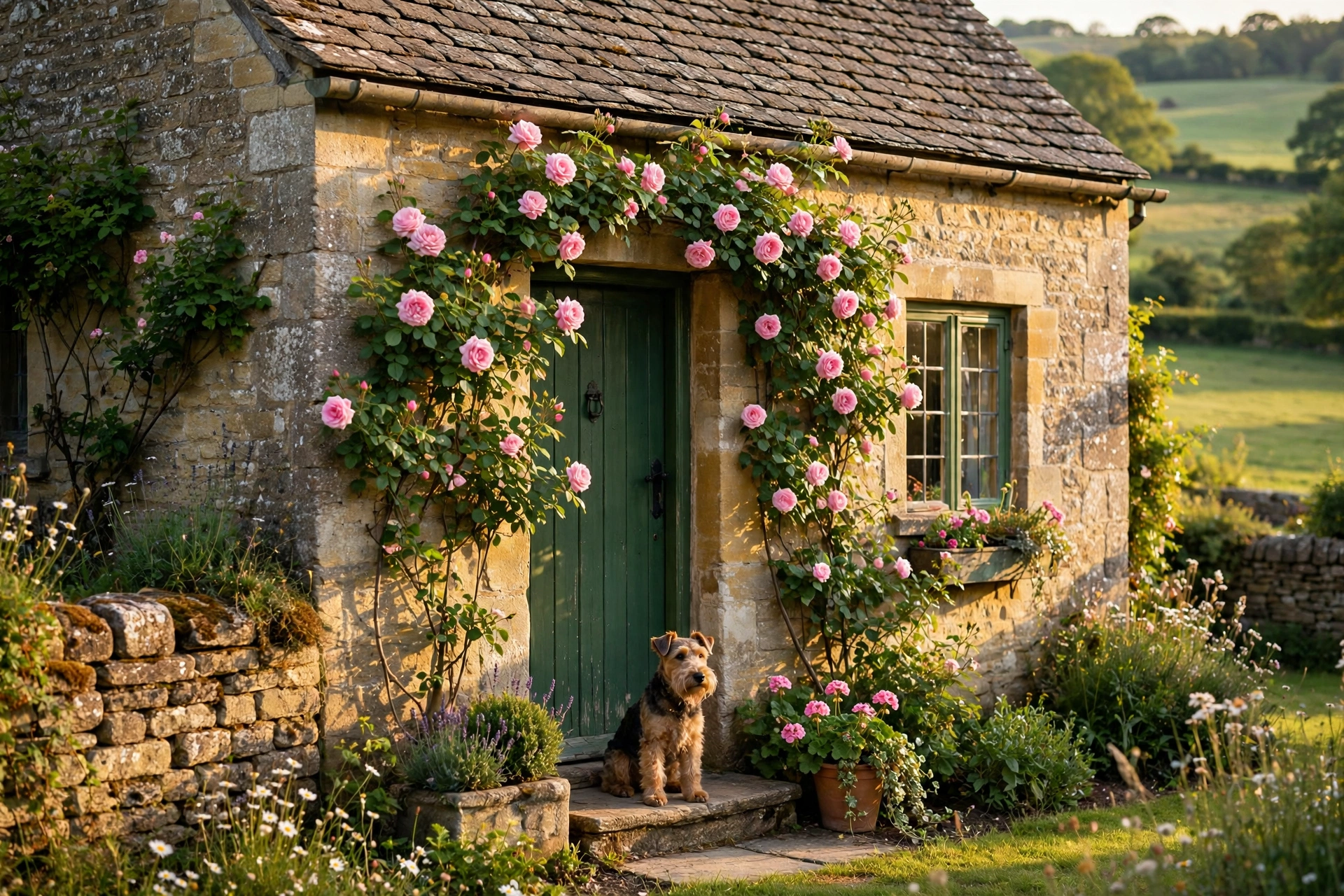
Then look at the outside space through the dog's eyes. A secure, enclosed garden or patio is worth paying extra for: it lets the dog out for a morning toilet trip without a full walk, gives a safe place for daytime naps in the sun, and means the pregnant partner can supervise from a chair rather than from a muddy path. Ask directly how high the fence is, whether gates latch securely, and whether there are gaps a small or determined dog could exploit. A garden that looks enclosed in photographs but has a low hedge on one side is not enclosed. For rentals, our guide to dog friendly Airbnb in the UK covers the garden and host questions worth asking before you pay. For a shorter format, a low-stress 48-hour plan shows how a well-chosen base carries the whole break.
Noise and neighbours deserve the same attention. A babymoon base should be quiet at night and calm during the day. Ask whether the property sits on a busy road, next to a pub garden, above a bar, or beside a children's play area. For dogs, the equivalent question is foot traffic past the door: a cottage on a popular footpath means constant barking triggers, while a slightly set-back property means a settled dog. If your dog is noise-sensitive or a known barker, say so honestly when booking and ask for the quietest available unit. Hosts would rather place you well than deal with complaints, and a calm dog makes for a calm break.
Practical details add up. Check parking distance from the door, because carrying bags, dog food and a crate across a car park in the rain is miserable. Check phone signal and wifi, since a babymoon often involves staying in touch with family and a midwife. Check the heating: a cottage that is cold in the evening or draughty at night will not feel restful, whatever the photographs promise. Check laundry facilities, because dog towels, blankets and muddy clothes accumulate fast. And check the nearest vet and out-of-hours vet before you arrive, saving the number in your phone. You probably will not need it, but knowing it exists is part of resting properly.
Finally, think about who else the base needs to rest. The non-pregnant partner needs rest too, and so does the dog. A base with a garden the dog can enjoy alone, a comfortable chair for the partner, and a kitchen that makes simple meals easy serves all three. If the base only suits one person, the others quietly absorb the cost all week. The right base is the one where, on a rainy afternoon, everyone in the party, dog included, can be comfortable without leaving the property.
Walks that tire the dog without tiring anyone
Dog walks on a babymoon need a redesign, not a reduction in quality. The goal is a dog that comes home content and settles happily, achieved without turning the walk into an expedition. The secret is that most dogs tire more from sniffing, exploring and social variety than from distance. A forty-minute wander through interesting smells on a long line often does more for a dog than an hour of brisk marching along a road, and it does far less damage to the humans.
Choose flat, surfaced, circular routes wherever possible. Riverside paths, canal towpaths, forestry tracks, park circuits and old railway lines are ideal: even ground, no stiles to climb, somewhere to sit, and a clear turn-back point at every stage. Avoid steep hills, scrambly coastal paths, boggy moorland and routes with many stiles, because each one is a small obstacle that adds up over a walk. A circular route is better than an out-and-back route of the same length, because there is no psychological pressure to reach a far turning point, and you can cut it short at any junction without retracing your steps.
Split the walking between adults as a deliberate plan, not a last-minute negotiation. One person can take the morning walk while the other rests, and the roles can swap for the evening toilet trip. If the dog needs more exercise than one gentle walk provides, add a second short outing rather than lengthening the first: a twenty-minute garden play session, a sniff walk around the village, or a trip to a secure dog field where the dog can run while the humans sit. Secure fields, bookable by the hour in many parts of Britain, are an underused babymoon asset: the dog gets a proper run, and nobody has to walk further than the car park.
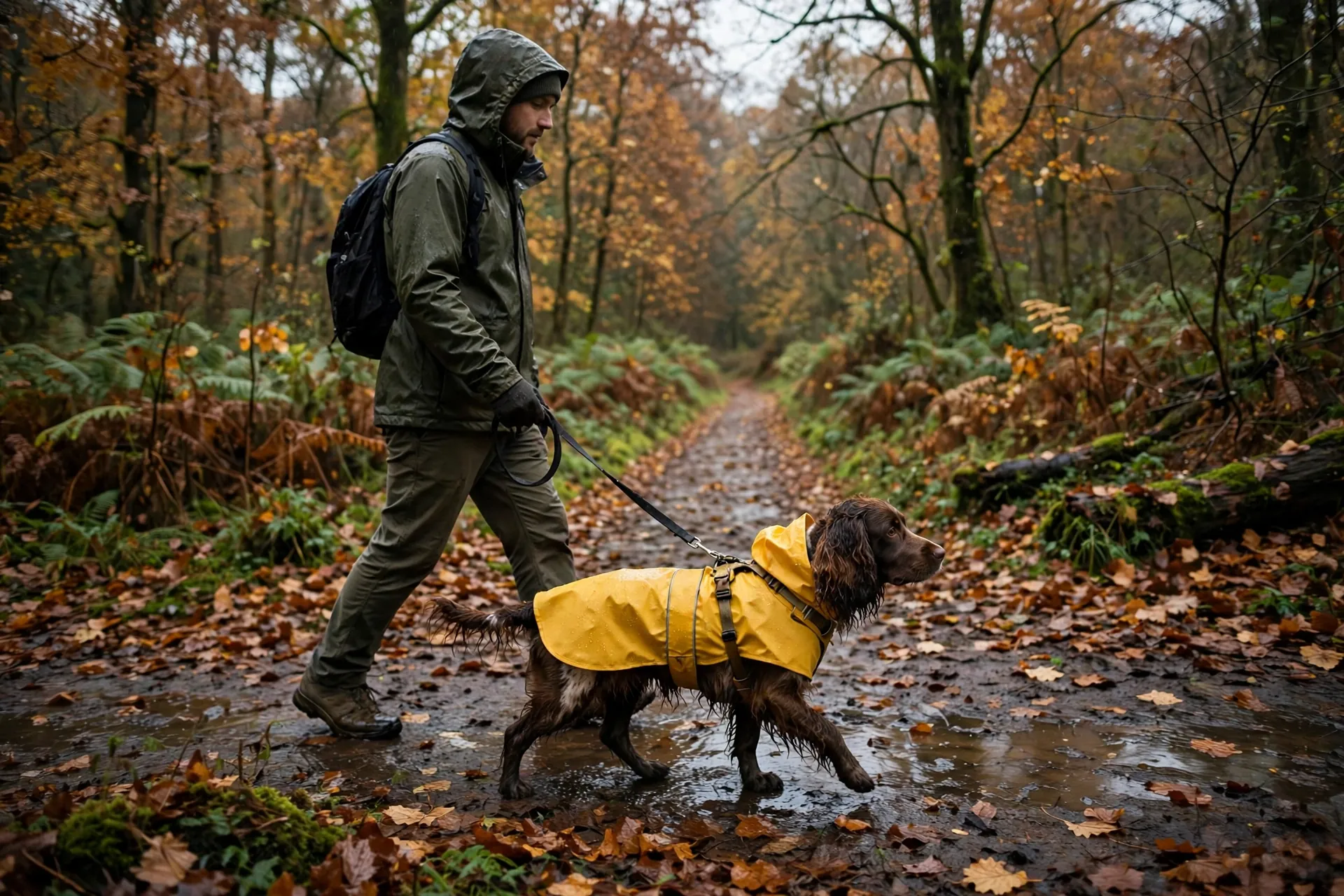
Build rest stops into every walk, and choose routes that pass a bench, a cafe or a pub garden. A walk with a cafe halfway through is a different experience from a walk without one: it gives the pregnant partner a seat, a drink and a toilet, and gives the dog a chance to settle and watch the world. Pack water for the dog and a portable bowl, and carry a lead that is comfortable for tired hands. In warm weather, walk early or late, stick to shade, and watch the dog for signs of overheating; in wet weather, choose surfaced paths that stay passable and save the muddy fields for a day when energy is higher. Check the official guidance before you travel for any route that crosses farmland or a nature reserve, since seasonal restrictions and livestock rules can change the plan.
Have a menu of walks, not a single route. A good babymoon base has at least three options: a five-minute toilet loop for first thing and last thing, a twenty to thirty-minute village or park loop for ordinary days, and a longer forty-five-minute route for good days. Knowing all three in advance means a tired morning does not become a debate about where to go. It also means the dog gets variety without anyone having to research routes while already dressed for a walk. Ask the host for local recommendations on arrival: hosts usually know which paths are flat, which are muddy, and which have a bench at the right moment.
Eating out and days out with a dog in tow
Eating out is where many dog-friendly breaks quietly go wrong, because “dogs welcome” can mean anything from a water bowl by the door to a full place at the table. On a babymoon, where meals are a main event rather than a refuelling stop, it is worth being precise. Before booking a table, ask whether dogs are allowed inside the dining room, on a covered terrace, or only in the bar area, and whether there are restrictions at lunch versus dinner. A pub that welcomes dogs at lunchtime but not in the evening restaurant changes your plans entirely, and discovering that at the door is exactly the kind of friction a babymoon should avoid.
Choose venues that suit a tired person and a settled dog, not just venues that tolerate dogs. A good babymoon restaurant has space between tables so the dog can lie flat without blocking a walkway, a floor that is not too slippery, background noise low enough that the dog can relax, and staff who genuinely welcome dogs rather than merely permitting them. Cafes are often better than formal restaurants for this reason: daytime hours, relaxed seating, outdoor space, and a culture of dogs under tables. A guide to dog-friendly cafes is a useful starting point for finding places where the dog is part of the furniture rather than an exception. When in doubt, call ahead and describe your dog honestly, including size and temperament; a venue that says yes to a calm older Labrador may reasonably say no to a boisterous young spaniel in a small dining room, and that honesty saves everyone an awkward evening.
Plan meals around the dog's routine, not around restaurant fashion. Feed the dog before you go out, give them a toilet trip first, and bring a familiar blanket or mat for them to settle on. A dog that arrives fed, toileted and tired is a dog that sleeps through dinner. Bring a chew or a lick mat for longer meals, and keep the first visit to a new venue short: lunch before dinner, a coffee before a full meal. If the dog cannot settle, have a graceful exit plan agreed in advance, so one person can take the dog out without the evening collapsing into an argument about whose fault it was.
Days out follow the same principle: one attraction, chosen for shade, seating, toilets and dog policy, beats three attractions chosen for excitement. Gardens, National Trust properties with dog-welcome grounds, country parks, steam railways that allow dogs, and market towns with dog-friendly shops are usually better babymoon choices than theme parks, busy city centres or long museum visits. Before you go, check the official guidance before you travel for the specific attraction, because dog policies vary between properties in the same organisation and can change with events or seasons. Look for places with shaded parking if you are driving, since a dog must never be left in a hot car, and with a cafe where the dog can join you afterwards.
Build the day around a base camp. Drive to one place, walk there, eat there, and come home, rather than stringing together several stops. A day with one destination and a slow return leaves energy for the evening at the cottage, which is often the best part of the day anyway. And keep a genuinely good wet-weather alternative ready: a covered market, a dog-friendly bookshop cafe, a garden centre with a restaurant, or simply a film afternoon at the base. The alternative should be appealing in its own right, not a consolation prize, or nobody will choose it when the rain arrives.
A two-bag packing system
Packing for a babymoon with a dog goes wrong in a predictable way: everything goes into one large bag, nothing can be found on arrival, and the first evening is spent unpacking in a tired heap. A two-bag system fixes this by separating the dog's needs from human comfort, so each bag can be grabbed, used and repacked without disturbing the other. Pack both bags the night before you leave, and keep them accessible in the car rather than buried under suitcases.
The dog bag is the working bag. It should contain food measured for the trip plus one extra day, the usual bowl or a collapsible equivalent, treats, a lead and a spare lead, poo bags, a towel and a drying coat, the dog's bed or a familiar blanket, any regular medication with its instructions, a copy of vaccination records if your accommodation or a kennel might ask for them, and a favourite toy or chew. Add a basic first-aid kit for the dog: tick remover, saline for rinsing eyes, and the number of your own vet plus the destination vet. If the dog eats a special diet, pack it rather than assuming a local shop stocks it. Familiar food, a familiar bed and a familiar smell are what let a dog settle in a strange cottage on the first night, so this bag is not luggage: it is the dog's home, portable.
The comfort bag is the human bag, and its purpose is rest rather than style. Pack layers for changing British weather, comfortable walking shoes that are already broken in, a waterproof jacket, and clothes that are easy to move in. Add the small comforts that make a cottage feel like a break: a good book, a pregnancy pillow if you use one, snacks for the journey, a reusable water bottle, chargers, and any personal items that help you sleep well away from home. Include a small kit for the car: water, wipes, a spare bag for muddy items, and a change of clothes for the driver in case of a muddy-paw incident. The comfort bag should be packed so that the first evening requires nothing more than opening it and sitting down.
Then there is the shared kit that lives between the two bags: the things both humans and dog need on a day out. A day pack with water and a bowl for the dog, a bottle for the humans, snacks, a phone charger, a map or offline directions, and a lightweight blanket for sitting outside covers most outings. Keep this pack by the door at the base, ready to grab, so a spontaneous walk does not require ten minutes of gathering supplies. On the last day, repack the dog bag first, while the dog is still settled, and leave the comfort bag until the cottage is otherwise ready. The order matters: a dog whose bed has already vanished into the car will spend the final hours unsettled, and nobody needs that on departure day.
One final packing rule saves more babymoons than any gadget: pack for the trip you are actually taking, not the trip in the photographs. If the forecast is rain, pack waterproofs and accept the mud. If the base has a washing machine, pack fewer clothes and use it. If the dog is a mud magnet, pack three towels and no white trousers. A bag packed for reality is lighter, easier to live from, and far less likely to produce that sinking feeling of having brought the wrong things to the wrong place.
Contingency plans and cutting a day short without guilt
Every babymoon needs a contingency plan, and the best time to write it is before you leave, when everyone is calm and generous. Contingency planning is not pessimism. It is the reason a disrupted day feels like a change of plan rather than a disaster. Agree the triggers and the responses in advance, write them down if it helps, and then stop worrying about them.
Start with weather, the most common disruptor of British breaks. For each planned day out, name a wet-weather alternative that is genuinely enjoyable: a covered attraction, a long lunch, a village with good cafes, or a day at the base with a film and a fire. Agree that the alternative will be chosen the evening before, based on the forecast, not debated in the rain at the car. Pack for the forecast rather than hoping it is wrong, and remember that a rainy day at a comfortable cottage with a settled dog is a perfectly good babymoon day. Some couples find their wet day becomes the day they remember most fondly, precisely because nobody was trying to achieve anything.
Next, plan for tiredness, because it will arrive on some day, possibly the day you least expect. Agree a simple rule: if either person wakes up tired, the day shrinks to the base, the garden and one short walk, with no discussion and no guilt. The other person takes the dog duties for the day, or the duties are split so the tired person genuinely rests. This rule works only if it is agreed beforehand, because in the moment, tired people often push through to avoid disappointing their partner, and partners often insist on going out to avoid seeming lazy. A pre-agreed rule removes the negotiation and lets both people rest without keeping score.
Plan for the dog as well. A dog that becomes unsettled, unwell or overexcited needs a plan that does not depend on improvisation: the destination vet's number, the location of the nearest emergency vet, a quiet room at the base where the dog can decompress, and an agreement about who stays with the dog if a planned outing becomes unsuitable. If the dog cannot settle in a restaurant, one person leaves with the dog and the other finishes the meal, or you both leave and eat at the base; either is fine, but deciding it in advance prevents a tense evening. Similarly, if the dog is ill, know before you need it whether your insurance covers treatment away from home and what your vet at home would want you to do. Check the official guidance before you travel for any local rules about dogs on public transport or at attractions you might need as a fallback, so a changed plan does not hit a second surprise.
Finally, plan for coming home early, and say it out loud: coming home early is allowed. A babymoon cut short by tiredness, weather or simply a desire to be home is not a failed trip. It is a trip that served its purpose and ended at the right time. Flexible bookings make this possible, and a short journey makes it painless. Couples who agree this in advance enjoy their trips more, paradoxically, because the pressure to justify every day disappears. The measure of a babymoon is not how many days you stayed or how many places you visited. It is whether you came home rested, closer, and glad you went, dog included.
Pre-booking checklist
Use this checklist before you pay for anything. It takes ten minutes and catches the problems that most often spoil a dog-friendly babymoon. Work through it for each shortlisted property, and only book the one that passes the questions that matter most to your party.
- Journey: Is the drive under two hours, with a planned stop for the dog and for comfort breaks? Is there a fuel or service station on the route where a tired driver can pause?
- Flexibility: Can the booking be moved or cancelled without losing the full cost? Are the exact terms written in the confirmation, not just implied by a badge?
- Dog policy in writing: Does the specific room or unit accept dogs, how many, and what is the total pet fee including any cleaning charge or deposit?
- Outside space: Is the garden or patio genuinely enclosed, how high is the boundary, and do the gates latch? Is there a lit, safe toilet area for last thing at night?
- Bedroom and bathroom: Is the bed comfortable, is the bedroom reachable without steep stairs, and does the bathroom suit the pregnant partner comfortably?
- Sleep and quiet: Is the property away from busy roads, pub gardens and heavy foot traffic past the door? Is the neighbourhood quiet at night?
- Kitchen and laundry: Is there a proper kitchen for simple meals and a washing machine or laundry facility for dog towels and muddy clothes?
- Walks from the door: Is there a flat, surfaced loop of twenty to thirty minutes that needs no car, plus a five-minute toilet loop for first and last thing?
- Eating together: Are dogs welcome where you actually want to eat, inside or on a covered terrace, at both lunch and dinner?
- Days out: Is there at least one dog-welcome attraction nearby with shade, seating and toilets, plus a wet-weather alternative you would genuinely enjoy?
- Vet cover: Have you saved the nearest vet and out-of-hours vet numbers, and do you know whether your pet insurance covers treatment away from home?
- Packing: Are the dog bag and the comfort bag packed the night before, with food for the trip plus a spare day, and is the day pack ready by the door?
- Contingency agreed: Have you agreed what happens on a tired day, a wet day and a restless-dog day, and is coming home early explicitly allowed without guilt?
- Personal check: Have you checked with your midwife or GP about any personal timing or travel questions, and does the trip still feel restful rather than ambitious?
If a property fails on journey, flexibility or the garden, it is usually worth passing, however pretty the listing looks. Those three are the hardest to fix after arrival. If it fails on a smaller point, such as a lack of laundry facilities, you can often compensate by packing differently. The checklist is not about finding a perfect property. It is about choosing the compromises consciously, before you pay, rather than discovering them at midnight in the rain with a dog that needs to go out.
Practical questions
Before you go
When is the best time to take a dog-friendly babymoon in the UK?
There is no single right week. Choose dates when travel feels comfortable, the journey is short, and the base lets you rest without a packed schedule. For personal timing decisions, check with your midwife or GP, and book flexible terms so you can move the trip if plans change.
Can we still take proper walks with our dog on a babymoon?
Yes, if you change what a proper walk means. Short, sniff-rich loops on flat, surfaced paths usually tire a dog well without turning the day into a hike. Split walking between adults, plan a cafe stop halfway, and keep a shorter route in reserve for tired days.
What should we ask a host or hotel before booking a babymoon with a dog?
Ask whether the specific room or unit accepts dogs, what the pet fee covers, whether the garden or outside space is enclosed, how many steps there are to the door and bedroom, and whether dogs are welcome in the eating areas. Get the answers in writing with your booking confirmation.
How should we split dog care fairly on a babymoon?
Agree the split before you leave: who does the early toilet trip, who handles muddy paws and feeding, and when the other person gets a proper rest. A written rota sounds formal, but it stops the trip quietly becoming one person's job and keeps the break restful for everyone, dog included.
What if we need to cut a day short or cancel part of the trip?
Treat it as part of the plan, not a failure. Choose refundable or movable bookings where you can, keep one day deliberately empty, and agree in advance what tiredness, bad weather or a restless dog means for the schedule. A shorter day at the cottage often leaves everyone happier than a pushed-through day out.