This guide is independent and contains no paid placement. If affiliate links are added later, they will be clearly marked and will not change our editorial checks.
Pick a garden with real shade, a cool lying surface, water and space, arrive after a walk and a toilet break, keep the dog on a short lead on a mat, and leave before heat, crowds or tiredness spoil the visit. A short, calm garden stop beats a long, hot, crowded one every time.
What makes a garden good for a dog
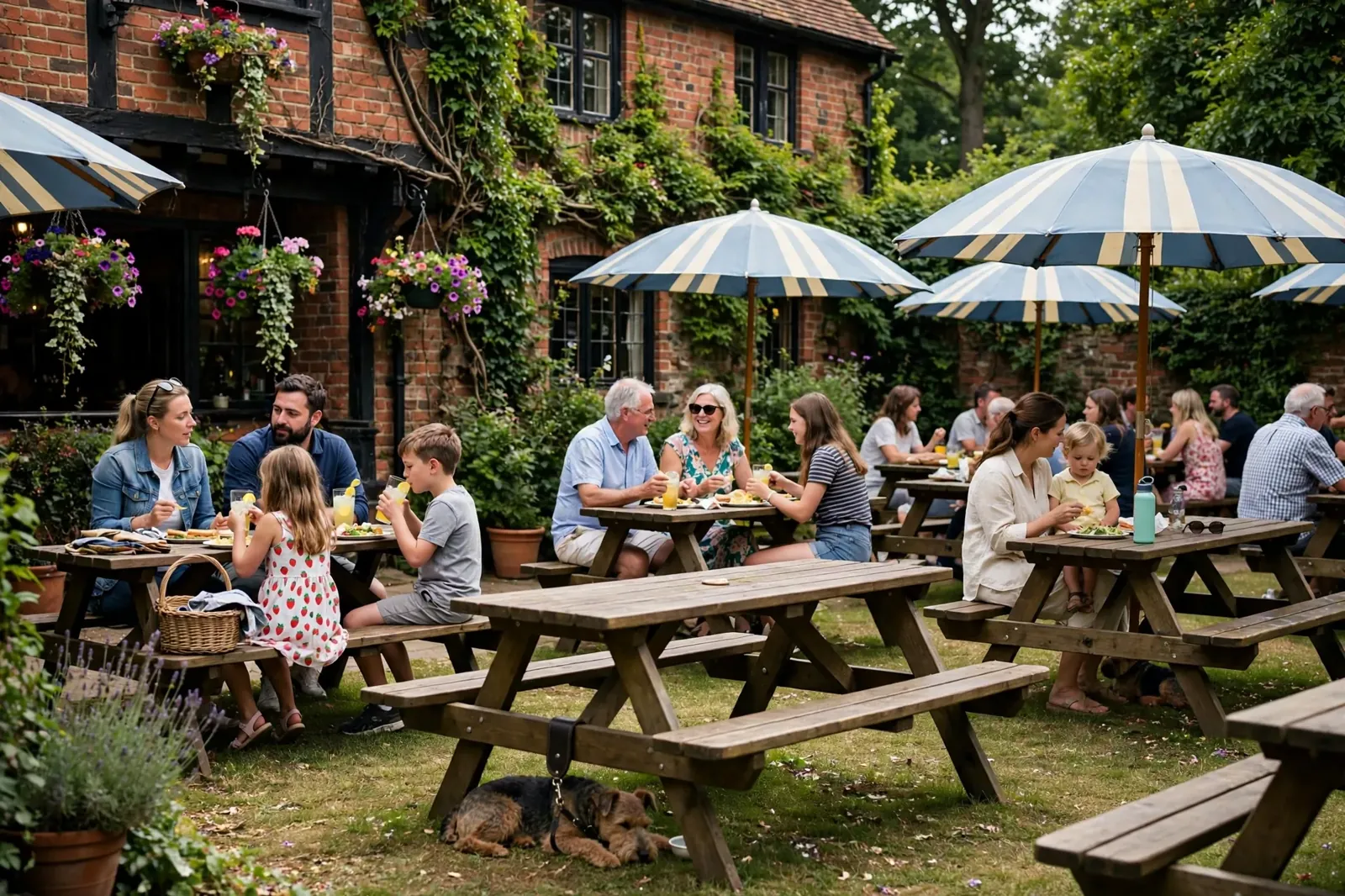
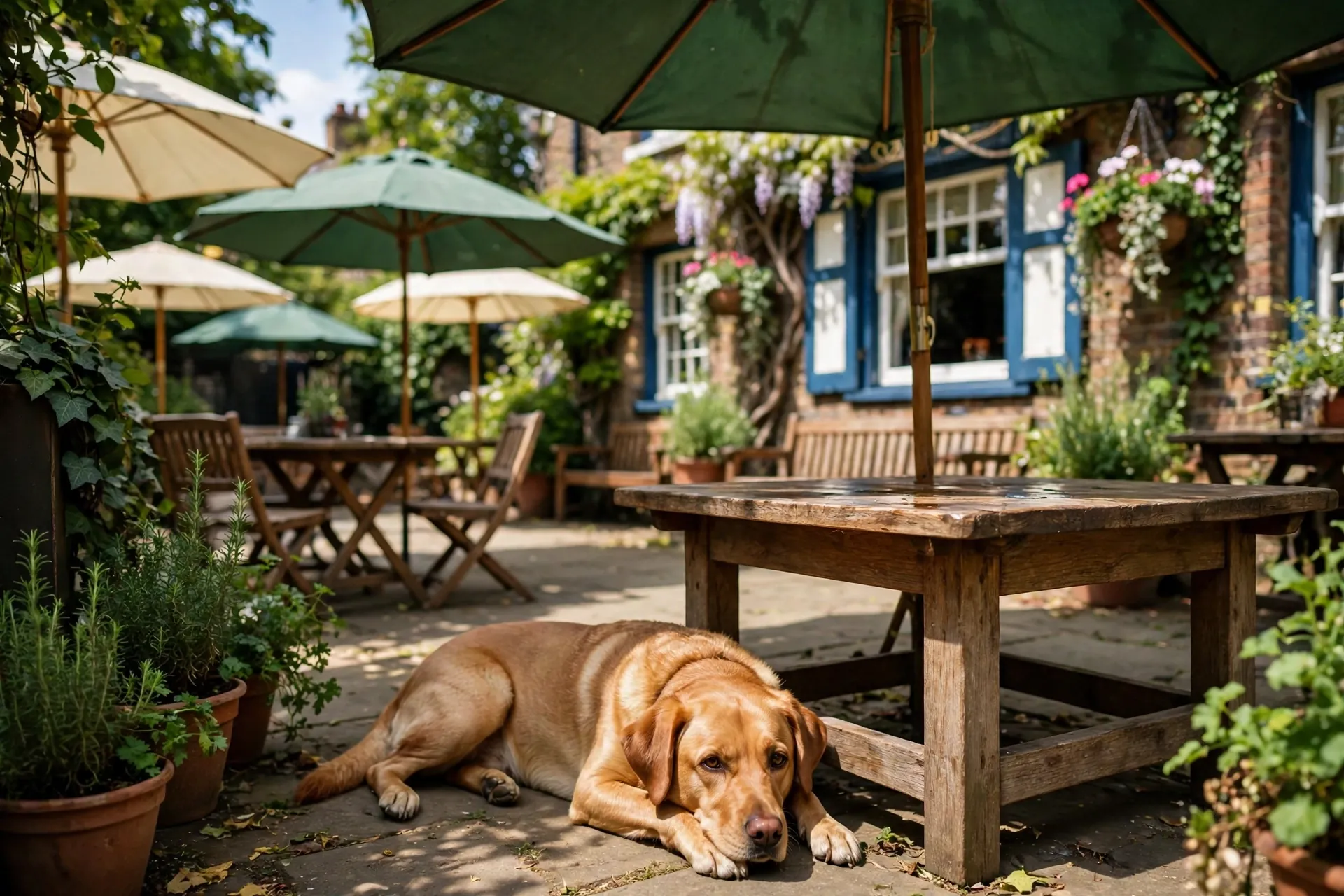
A beer garden that works for a dog is designed, whether intentionally or not, around four things: shade, surface, water and space. Shade matters most, because a dog in direct summer sun overheats far faster than a human in a t-shirt, and a garden with mature trees, parasols, awnings or a covered terrace will stay usable for hours longer than a garden that is a single sun-trap. Look for shade that moves with the sun, not just shade at noon, because a table that is shaded at midday may be in full sun by three o'clock, when the heat is at its worst. A garden with a mix of sunny and shaded tables, and the freedom to move between them, is far better than a garden with one shaded corner that everyone competes for.
Surface is the second test, and it is often overlooked until the dog is already uncomfortable. Grass is ideal: it stays cooler than paving, it is comfortable to lie on, and it gives a dog a natural toilet area nearby. Gravel is acceptable if it is fine and shaded, but coarse gravel can hurt paws and is hard to lie on for long. Paving, decking and concrete absorb heat and can burn paws on a hot day, and a simple hand test, holding your palm on the surface for five seconds, tells you whether it is safe for a dog to lie on. If the surface is too hot for your hand, it is too hot for paws and belly, and you should choose a grass table, bring a mat, or move on. A garden with a mix of surfaces, and a hose or a shaded tap for cooling, is a garden that has thought about dogs.
Water and space complete the picture. A garden that provides fresh water, a bowl, and a shaded refill point is signalling that dogs are genuinely welcome, not merely tolerated, while a garden with no water, no bowl and no shade is signalling the opposite, however friendly the website sounds. Space matters because a dog needs room to lie without being stepped over, to stand and stretch without entering another dog's space, and to retreat from children, waiters and other dogs without being trapped against a fence. Pub garden etiquette for dogs covers leads, tables, water bowls and leaving no trace in detail, and it is worth reading before your first summer garden visit, because good manners are what keep gardens dog-friendly.
Enclosure and access are the final parts of the anatomy. A fully enclosed garden with a latched gate is safer than an open garden beside a road or a car park, especially for a dog that might slip a lead or chase a squirrel, but enclosure is not a reason to let the dog off the lead, because most gardens require leads at all times and because other dogs, children and food make off-lead play inappropriate. Access matters for older, larger or less mobile dogs: a garden reached by steps, a steep slope or a gravel path may be difficult, while a level garden with a wide gate and a nearby parking area is far easier. A garden that is easy to enter, easy to leave, and easy to move around in is a garden you will return to.
Heat is the real summer risk
Summer heat is the single biggest risk in a beer garden, and it is more dangerous than most owners realise, because dogs cool themselves mainly by panting, which is inefficient in humid, still air, and because a dog that is settled and happy may not show distress until it is already overheated. Brachycephalic breeds, such as bulldogs, pugs and French bulldogs, are at particular risk, as are overweight dogs, older dogs, puppies and dogs with heart or respiratory conditions, but any dog can overheat in direct sun, on hot paving, or in a crowded garden with no breeze. Heatstroke can develop quickly, and it can be fatal, so prevention is not a precaution but the whole point of summer garden planning.
Prevention starts before you leave home. Walk and toilet the dog in the cooler part of the day, offer water before you go, and consider a cooling coat, a damp towel or a cooling mat for the garden, especially for a thick-coated or brachycephalic dog. At the garden, choose shade, check the surface temperature, offer water regularly in small amounts, and watch for the early signs of heat stress: heavy panting that does not settle, drooling, restlessness, seeking shade or water, bright red gums, or a reluctance to lie down. If you see these signs, move the dog to shade or indoors, offer cool water, wet the coat with cool water, and seek veterinary advice promptly, because heatstroke can worsen rapidly even after cooling begins. Do not use ice water or an ice bath, which can cause shock, and do not leave a dog in a car while you check a garden, even for a few minutes, because a car in sun becomes lethal quickly.
Timing is the simplest heat control, and it is free. A garden visit at ten in the morning or six in the evening is a different experience from a visit at two in the afternoon, with lower temperatures, more shade, fewer crowds and a calmer dog. If you must visit at midday, choose a garden with deep shade, a breeze and a water feature, keep the visit short, and have a cool indoor backup, such as a dog-friendly cafe, in mind. Summer heat and travelling with dogs explains panting, cooling and heatstroke signs in more depth, and it is worth reading before a heatwave garden trip, because the signs of heat stress are easy to miss when you are enjoying a drink and conversation.
Humidity, breeze and acclimatisation also matter, and they are easy to forget in a British summer that is often humid rather than dry. A humid, still day feels hotter to a dog than a dry, breezy day at the same temperature, because panting cannot evaporate moisture effectively, so a garden with a breeze, a fan or a water mist is more comfortable than a sheltered, humid courtyard. Dogs that are not acclimatised to heat, such as dogs that have spent the winter indoors or dogs visiting from a cooler climate, need shorter, shadier visits at first, with gradual exposure over days, not a sudden long garden afternoon. A dog that has been swimming or walking in heat needs time to cool and drink before settling in a garden, because a hot, tired dog in a crowded garden is a dog at risk.
Choosing a garden for your dog
Choosing a garden starts with the dog, not the pub, because a garden that is perfect for a calm, older Labrador may be overwhelming for a reactive terrier, a puppy, or a dog that is nervous around children. A sociable dog that enjoys people, other dogs and new places will thrive in a busy, lively garden with a mix of tables, music and activity, while a nervous dog needs a quiet corner, a garden with fewer dogs, and a table away from the main thoroughfare, where the dog can watch without being approached. A large dog needs floor space, a sturdy table and a mat that does not slide, while a small dog needs protection from feet, other dogs and dropped food, and a raised bed or a blanket on a chair, if the pub allows it, can help a small dog feel secure without being underfoot.
Practical filters help you shortlist quickly. Check the pub's website or social media for a dog policy that mentions gardens specifically, because a pub that welcomes dogs in the bar may not welcome them in the garden, and vice versa, and a pub that welcomes dogs in the garden may still restrict them from a food-serving terrace or a children's play area. Call ahead if the policy is unclear, and ask specific questions: is the garden enclosed, is there shade and water, are dogs allowed on a lead at all tables, is there a limit on dog numbers, and are there times when dogs are not allowed, such as during live music or food festivals. A pub that answers clearly is likely to be genuinely dog-friendly, while a pub that answers vaguely may still be welcoming but will require more care on the day.
Reviews and local knowledge are useful, but they need reading with a dog owner's eye. A review that says “lovely garden, great for dogs” is less useful than a review that mentions shade, water bowls, a fenced area, a quiet corner, or staff who brought water without being asked, because those details tell you what the garden is actually like for a dog. Local dog walking groups, social media and pub guides often have the most accurate, recent information, because garden policies change with seasons, managers and events, and a garden that was dog-friendly last summer may have changed. Check the date of any review, and confirm the policy on the day, especially for a special occasion or a long journey.
Finally, consider the whole outing, not just the garden. A garden that is a short walk from a riverside path, a park or a beach is better than a garden that requires a long drive, a hot car and a crowded car park, because the dog arrives calmer and happier after a walk and a toilet break. A garden that is near a dog-friendly cafe, a shop or a shaded walk gives you options if the garden is full, too hot or too crowded, while a garden in the middle of nowhere leaves you with no backup. The best summer garden day is a walk, a garden stop, and a walk home, with the garden as the middle, not the whole, of the day.
Arriving and settling well
Arrival sets the tone for the whole garden visit, and a calm arrival is worth more than any amount of training in the garden itself. Walk the dog before you arrive, toilet the dog thoroughly, and let the dog sniff and explore the area around the pub before you go in, so that the dog arrives tired, empty and familiar with the surroundings, rather than bursting with energy and a full bladder. Enter the garden calmly, on a short lead, and choose a table before the dog chooses one, because a dog that is allowed to rush to the most exciting table, greet every dog and sniff every plate will be overstimulated before you have sat down. A quiet table at the edge, with shade, space and a view of the garden but not in the main flow, is usually the best choice for a first visit.
Settling is a routine, not a hope. Lay down a mat or blanket, which marks the dog's space, insulates from hot or cold surfaces, and gives the dog a scent anchor, offer water, and give a familiar chew or a long-lasting treat that encourages lying down rather than scanning the garden. Keep the lead short but not tight, and attach it to your chair or hold it, rather than tying it to a table leg that the dog could pull over, and never leave the dog tied up unattended, even for a quick trip to the bar, because a tied dog can panic, tangle, or be approached by another dog or a child without you there. If you need to go inside, take the dog with you if the pub allows it, or ask a companion to stay with the dog, because a dog left alone in a garden is a dog at risk and a nuisance to other customers.
The first ten minutes are the most important. If the dog settles, lies down, sighs and watches the world, you have a good visit ahead, and you can relax, order and enjoy. If the dog paces, whines, pulls, barks or cannot settle after ten minutes, do not wait for it to improve on its own: move to a quieter table, offer a toilet break, take a short walk around the block, or leave and try another garden, because a dog that cannot settle in ten minutes is unlikely to settle in an hour, and a forced, stressful visit teaches the dog that gardens are stressful. A short, successful visit is far better than a long, miserable one, and a dog that leaves happy will be happy to return.
Staff interaction is part of settling, and a brief, friendly introduction helps. Tell staff that you have a dog, ask where dogs are welcome, whether water is available, and whether there is a quieter area, because staff know the garden, the busy times and the regular dogs, and they can often suggest a table you would not have found. Thank staff who bring water or a treat, clean up promptly if the dog has an accident, and keep the dog's area tidy, because good manners are remembered and rewarded, and a pub that has a good experience with your dog will welcome you back. A garden visit is a social contract: the pub provides shade, water and space, and you provide a calm, clean, well-behaved dog.
Food, drink and other dogs
Food in a beer garden is a management challenge, because dropped food, other people's plates, barbecue smells and children's snacks are all powerful distractions for a dog, and a dog that begs, steals or guards food can ruin a visit for everyone. Feed the dog before you arrive, so that the dog is not hungry in a garden full of food smells, and bring a familiar, low-value treat or a chew that keeps the dog occupied without creating a mess or a smell that attracts other dogs. Keep the dog's food and treats in a sealed container, not in an open bag on the table, and clean up any crumbs or spills promptly, because a garden that is left clean is a garden that stays dog-friendly.
Other dogs are the most variable part of a garden visit, and they need active management, not passive hope. Some gardens have a culture of dogs greeting each other, while others expect dogs to stay at their own tables, and the difference is rarely written down, so watch the garden for a few minutes before you settle, and follow the local norm. Keep greetings short, on lead and with space, avoid face-to-face meetings in a narrow gap between tables, and be ready to move if another dog is reactive, off lead or uncontrolled, because a garden is not a dog park and a forced greeting can escalate quickly. If your dog is reactive, choose a table with a barrier, such as a planter or a fence, between you and other dogs, and use a visual barrier, such as a blanket over a chair, to reduce stimulation without blocking the gangway.
Children, waiters and other garden users complete the social picture. Children are often excited by dogs and may approach without asking, so teach your dog to stay calm when approached, ask children to approach slowly and with permission, and be ready to intervene politely if a child is too rough or too close. Waiters carrying trays, glasses and hot food are a hazard for a dog underfoot, so keep the dog's lead short, keep the dog away from the main service route, and tuck the lead and the dog's belongings out of the way, because a tripped waiter with hot food is a serious accident. Other garden users may be allergic, frightened or simply not dog lovers, and respecting their space, keeping the dog quiet and clean, and moving if asked, are all part of being a welcome guest.
Alcohol and responsibility are worth a direct word, because a beer garden is, after all, a place for drinking, and a dog's safety depends on the owner's alertness. Drink moderately, keep water available for yourself as well as the dog, and have a plan for getting home that does not involve driving after drinking, because a dog that is walked home by a sober companion is safer than a dog that is driven home by an impaired owner. If you are visiting with friends, agree who is responsible for the dog, who holds the lead, and who will take the dog for a toilet break, because a dog with several owners and no clear responsibility is a dog that is easily overlooked. A garden visit should be enjoyable for the dog and the owner, and that enjoyment depends on the owner staying present and attentive.
Evenings, music and events
Evening beer gardens have a different atmosphere from daytime gardens, and they suit some dogs better and others worse. The heat eases, the light softens, and the garden becomes calmer and more social, which suits a dog that finds daytime crowds overwhelming, but evenings also bring live music, quizzes, sports screenings and larger groups, which can be noisy, exciting and harder for a nervous dog. A dog that is comfortable with music and crowds may love an evening garden, while a dog that is noise-sensitive, or that becomes restless after a long day, may be better with a daytime visit and an early evening at home. Choose the time that suits the dog, not just the social occasion.
Live music, in particular, needs thought. A solo acoustic set at low volume is very different from a loud band, a DJ or a karaoke night, and a dog that is comfortable with background music may still be distressed by sudden loud noises, feedback or cheering. Sit away from speakers, bring a familiar blanket and a chew to help the dog settle, and be ready to leave if the dog shows signs of distress, such as pacing, panting, hiding or trying to leave, because a dog that is forced to endure loud music will associate gardens with noise and stress. Fireworks, which sometimes accompany summer events, are a particular risk, and a garden near a fireworks display should be avoided for a noise-sensitive dog, however enjoyable the event may be for humans.
Food festivals, beer festivals and garden parties are a step beyond a normal garden visit, with more people, more food, more dogs and more excitement, and they should be approached as advanced outings, not first visits. If you attend a festival with a dog, arrive early, before the crowds build, choose a quiet area away from the main stage and food stalls, keep the visit short, and have an exit plan, because a festival that becomes too crowded or too loud is difficult to leave quickly with a dog. A dog that enjoys festivals is a wonderful companion, but a dog that does not should not be forced, and a festival day without the dog, with a sitter at home, is a better day for everyone than a festival day with a distressed dog.
Sunset and dusk bring their own practicalities. Midges, mosquitoes and other biting insects are active at dusk, especially near water, woodland and gardens with dense planting, and a dog with a thin coat or sensitive skin may need insect protection, a light coat or a move indoors. Light levels fall quickly, and a garden that is easy to navigate in daylight can become a trip hazard in dusk, with leads, table legs and steps all harder to see, so bring a light for the dog's collar or harness, and leave before it becomes too dark to walk home safely. A summer evening garden visit that ends with a calm walk home in the last light is a perfect finish to a day, and it is worth planning the walk home as carefully as the garden itself.
Country, city and coastal gardens
Country pub gardens, with their large grass areas, trees, streams and views, are often the best for dogs, because they offer space, shade, natural toilet areas and a relaxed atmosphere where dogs are expected and welcomed. A country garden may have a stream, a pond or a field nearby, which gives the dog a walk before and after the garden, and a chance to cool off, but it also brings livestock, wildlife, mud and insects, which need management. A country garden that is near a road, a farm or a footpath may have dogs, walkers, cyclists and horses passing through, so keep the lead short and the dog settled, even in a large garden, because a large garden is not a safe off-lead area.
City beer gardens are smaller, busier and more varied, with rooftop terraces, courtyard gardens, canal-side terraces and pavement gardens all offering different experiences. A city garden may have limited shade, hard surfaces, traffic noise and crowds, but it may also have excellent facilities, such as water bowls, dog menus, blankets and staff who are experienced with dogs, because city pubs compete for dog-owning customers. A city garden is often best for a short, social stop, rather than a long, relaxed afternoon, and it pairs well with a city walk, a park visit or a shopping trip, rather than being the whole day. Check access carefully in a city garden, because steps, narrow gates and crowded pavements can be difficult for larger or older dogs.
Coastal beer gardens offer sea views, sea breezes and a holiday atmosphere, but they also bring sand, salt, gulls and wind, which can excite, chill or distress a dog. A coastal garden with a sea breeze is cooler than an inland garden, which is welcome in heat, but the breeze can also be strong, cold and noisy, and a dog that is wet from a beach walk will chill quickly in a coastal breeze, so bring a towel and a coat, even on a warm day. Gulls are a particular coastal hazard, because they steal food, swoop at tables and excite dogs, so keep food covered, keep the dog settled, and do not encourage chasing, because a dog that chases gulls in a garden may chase them on a beach or a cliff, where the consequences are more serious.
Gardens attached to breweries, vineyards, farm shops and hotels offer a different experience again, with tours, tastings, shops and accommodation that may all have different dog policies. A brewery garden may welcome dogs in the garden but not in the taproom, a vineyard may welcome dogs on a lead on a tour but not in a tasting room, and a hotel garden may welcome resident dogs but not visiting dogs, so check each area separately rather than assuming a single policy. These gardens are often larger, quieter and more scenic than a typical pub garden, and they can be excellent for a longer, more relaxed visit, especially if they have a shop, a walk or a view that makes the trip worthwhile beyond the garden itself.
When a garden is not the answer
A beer garden is not always the best choice, and recognising that is part of good summer planning. On a very hot day, with temperatures above 28 degrees, high humidity and no breeze, even a shaded garden can be too hot for a brachycephalic, older or overweight dog, and a cool indoor alternative, such as a dog-friendly cafe with air conditioning, a shaded woodland walk, or a quiet afternoon at home, is a better choice. On a day with thunderstorms, high winds or heavy rain, a garden with metal furniture, trees and open exposure can be unsafe, and an indoor plan is safer for both dog and owner. A garden that is crowded, noisy or full of other dogs may be overwhelming for a nervous or reactive dog, and a quieter alternative, such as a riverside walk or a garden at a quieter pub, is better than forcing a visit.
Health and behaviour are also filters. A dog that is ill, recovering from surgery, in season, or on medication that affects heat tolerance, balance or behaviour may need to stay home, with a sitter, rather than visiting a garden, and a dog that is in pain, limping or vomiting should not be taken to a garden in the hope that fresh air will help. A dog that is not yet toilet trained, that barks excessively, or that has not yet learned to settle in public, may need shorter, quieter training visits, rather than a long garden afternoon, and a puppy's first garden visit should be short, calm and positive, with a quick exit if the puppy becomes overwhelmed. A garden visit should be enjoyable, not a test, and a dog that is not ready for a garden will enjoy a garden more later, after gradual training.
Logistics can also make a garden unsuitable. A garden that requires a long drive in a hot car, with no shade in the car park and no water on arrival, may be more stressful than enjoyable, and a garden that is far from a toilet area, a vet or a shaded walk may be a poor choice for an older dog or a dog with a medical condition. A garden that is the only option in an area, with no backup if it is full or closed, is a risk, and a plan that includes a second garden, a cafe or a walk is always better than a plan that depends on a single garden. If the garden is not working, leave graciously, thank the staff, and try another day, because a garden that is left on a good note is a garden you can return to.
Alternatives to a beer garden are plentiful in summer, and they should be seen as equally enjoyable, not as second best. A dog-friendly cafe with a shaded terrace, a riverside picnic with a cool box and a blanket, a woodland walk with a stream, a lakeside path with a swim, or a quiet afternoon in a dog-friendly holiday cottage garden can all be wonderful summer days, and they may suit the dog better than a busy pub garden. Dog-friendly cafes offer indoor shade, water and calm, while dog-friendly restaurants offer a more structured dining experience, and both are worth considering when a beer garden is too hot, too crowded or too noisy for the dog in front of you.
Moving between gardens
Moving between gardens, whether on a pub walk, a village crawl or a day out with friends, can be a delightful summer activity, but it needs more planning than a single garden visit, because each move involves a walk, a new garden, new dogs, new smells and a new settle, all of which accumulate fatigue and stimulation. Limit the number of gardens to two or three, with walks between them that include shade, water and toilet opportunities, and keep each garden stop to a manageable length, such as forty-five minutes to an hour, rather than a long afternoon at each. A dog that visits three gardens in a day will be tired, thirsty and overstimulated by the third, however enjoyable the first was, so plan the day as a walk with garden stops, not as a garden crawl with walks between.
Transport between gardens needs thought, especially if the gardens are far apart or if the day includes driving. Never leave a dog in a car while you visit a garden, even for a short stop, because a car in summer heat becomes dangerous quickly, and a dog left in a car is also at risk of theft, distress and dehydration. If you are driving between gardens, take the dog with you into each garden, or leave the dog with a companion who stays with the dog, and plan parking in shade with water available on arrival. If you are walking between gardens, carry water, a bowl, poo bags and a towel, and check the route for shade, busy roads, livestock and other hazards, because a walk between gardens in heat, without shade or water, can be more demanding than the gardens themselves.
Group dynamics add another layer. A group of friends with several dogs, visiting several gardens, can quickly become a large, noisy, hard-to-manage party, with dogs greeting, barking and competing for attention, and with owners distracted by conversation. Agree in advance who is responsible for each dog, how many gardens you will visit, how long each stop will last, and what the backup plan is if a dog becomes tired, hot or reactive, because a group that agrees a plan in advance is far easier to manage than a group that improvises. Keep the group small, keep dogs on leads, and be ready to split the group if one dog needs to go home early, because a dog that leaves early with a companion will have a better day than a dog that is dragged through a long group outing.
End the garden-hopping day as you began it: with a walk, water and rest. Toilet the dog after the last garden, offer water, check paws for hot surfaces, gravel or glass, and give the dog a quiet evening at home, with a familiar bed, a drink and a calm routine, rather than another exciting activity. A dog that has visited several gardens will be tired, even if it seemed energetic at the last garden, and a tired dog that is pushed to play or walk further may become grumpy, reactive or unwell. A good garden-hopping day ends with a happy, tired dog asleep at home, not with a dog that is still wired at midnight, and that ending is the measure of a well-planned day.
A summer calendar for garden dogs
Summer is not a single season for a garden dog, but a progression from late spring to early autumn, with different risks and pleasures in each month. May brings mild temperatures, longer evenings and gardens that are just opening for the season, with grass, blossom and fewer crowds, making it an ideal time for a first garden visit, a puppy's introduction to gardens, or a nervous dog's gradual exposure. June brings warmer days, longer evenings and the start of the busy season, with gardens filling at weekends, live music beginning, and the first heatwaves, so June visits need shade, water and timing, but they also offer the best of summer: long, light evenings in a garden with a dog at your feet.
July and August are the peak, with the highest temperatures, the largest crowds, the most events and the greatest risk of heatstroke, sunburn and overexcitement, but also with the longest days, the most gardens open, and the most opportunities for a dog-friendly day out. In peak summer, choose gardens carefully, visit early or late, keep visits short, and have indoor backups, because a peak summer garden at midday is the hardest test for a dog. August also brings harvest, wasps and fallen fruit, which can attract dogs and cause stings or stomach upsets, so keep an eye on fallen apples, plums and other fruit in a country garden, and keep the dog away from wasp nests, bins and compost areas, which are common in summer gardens.
September is often the best month for garden dogs, with cooler temperatures, fewer crowds, gardens still open, and a softer light that makes evenings particularly pleasant. September gardens offer shade without extreme heat, space without peak crowds, and a chance to enjoy the last of summer without the risks of July and August, making it ideal for older dogs, brachycephalic dogs and dogs that struggled in peak heat. October brings autumn colours, cooler evenings and gardens that begin to close or reduce hours, with fallen leaves, conkers and mushrooms that need watching, because conkers and some mushrooms are toxic to dogs, and a dog that forages in an autumn garden needs supervision.
Across the whole summer, the pattern is the same: start gently in May, manage heat and crowds in June, July and August, and enjoy the mellower days of September, with each month offering a different kind of garden day. A dog that has a good summer in gardens will have learned to settle, to drink, to rest in shade and to enjoy people and other dogs calmly, and those skills will carry into autumn, winter and the next summer. The best summer garden guide is not a list of pubs, but a habit: check shade, check water, check the dog, and leave while the day is still good, because a garden day that ends well is a garden day the dog will want to repeat.
Practical questions
Before you go
Can dogs go inside the pub if the beer garden is full?
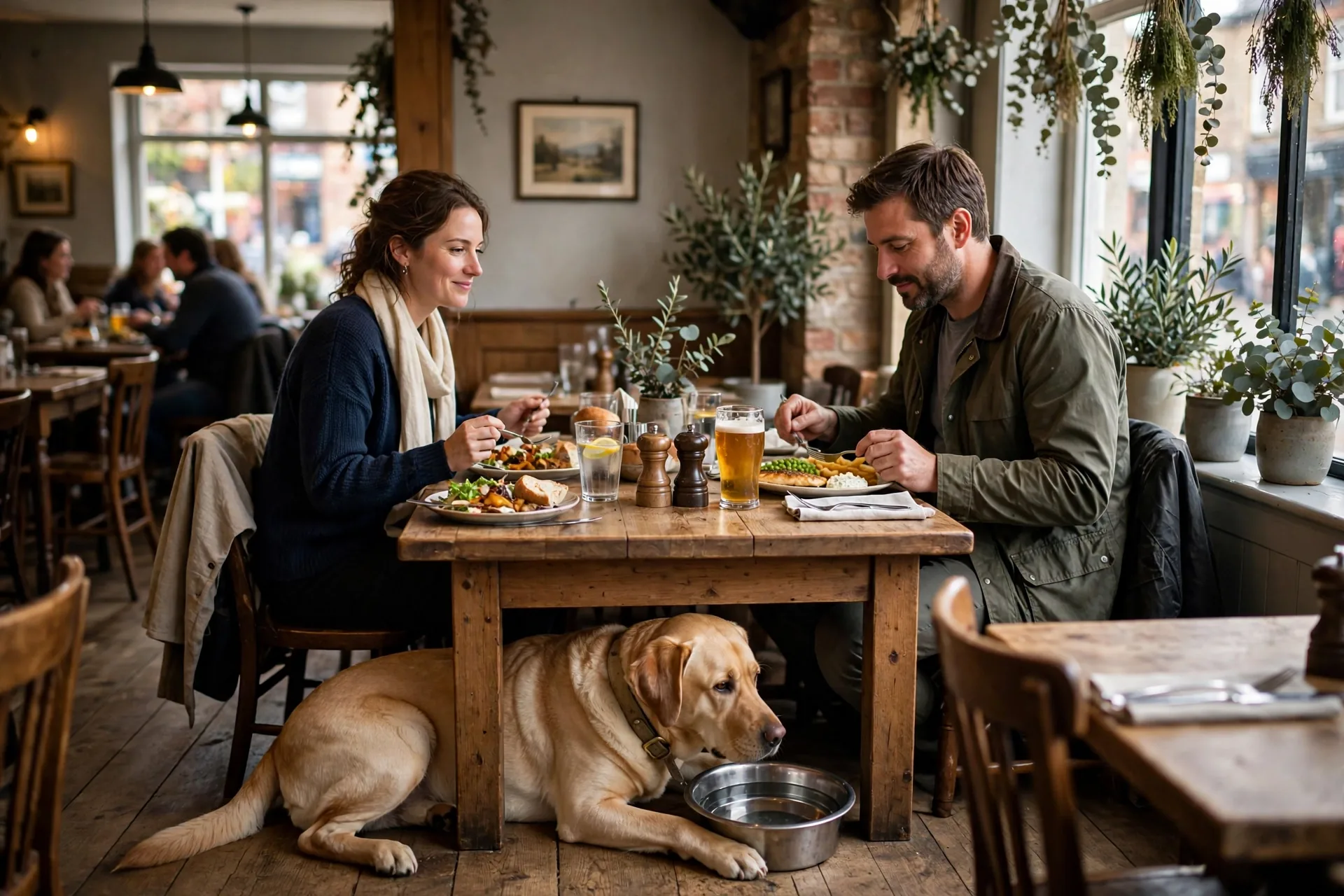
Only if the pub allows dogs indoors, which many do not. Check the indoor policy before you travel, and have a backup pub or a shaded walk in mind. Do not assume that a dog-friendly garden means a dog-friendly bar, because food preparation areas and licensing rules differ.
Do beer gardens provide water bowls for dogs?
Many do, but not all, and a shared bowl may be empty, dirty or in use by another dog. Bring your own collapsible bowl and a bottle of water, and refill it regularly. A familiar bowl also encourages a reluctant dog to drink in a busy garden.
How long can a dog stay in a beer garden in summer heat?
It depends on shade, temperature, humidity and the dog. In shade with water and a cool surface, many dogs settle for an hour or two, but in direct sun, on hot paving, or above 25 degrees, even thirty minutes can be too much for brachycephalic, older or overweight dogs. Watch for heavy panting and restlessness, and leave before the dog is distressed.
Are dogs allowed off the lead in a beer garden?
Almost never. Most gardens require dogs to be on a lead at all times, even in enclosed gardens, because of other dogs, children, food and traffic at the gate. Keep a short lead, attach it to a table leg only if it is secure and the dog cannot pull the table, and never leave a dog tied up unattended.
What should I do if another dog approaches my dog in a garden?
Stay calm, shorten the lead without yanking, and move your dog away with a treat or a turn, rather than letting a face-to-face greeting escalate. If the other owner does not recall their dog, stand up, ask politely for help, and move to another table or leave. Do not pick up a large dog in a panic, because that can escalate the encounter.