This guide is independent and contains no paid placement. If affiliate links are added later, they will be clearly marked and will not change our editorial checks.
Start with a short, calm river cruise, fit a canine life jacket at home, toilet your dog before boarding, and keep the dog on a short lead on deck. Coastal trips, open water and hire boats are wonderful next steps, but they need more planning, more weather awareness and a clear plan for toilet stops.
The kinds of boat trip that suit dogs
Dog-friendly boat trips in the UK fall into several quite different experiences, and choosing the right type is more important than choosing the prettiest destination. River cruises, typically lasting forty-five minutes to two hours, are the gentlest introduction: the water is calm, the boat is stable, the scenery moves slowly, and there is usually a sheltered cabin if the weather turns. Canal boat trips are similar but slower and narrower, with locks, towpaths and waterside pubs that make the whole day feel unhurried. Lake cruises, on Windermere, Ullswater, Loch Lomond and similar waters, offer bigger views and a little more wind, but remain sheltered compared with the sea, and they often allow dogs on open decks where the dog can watch the shoreline.
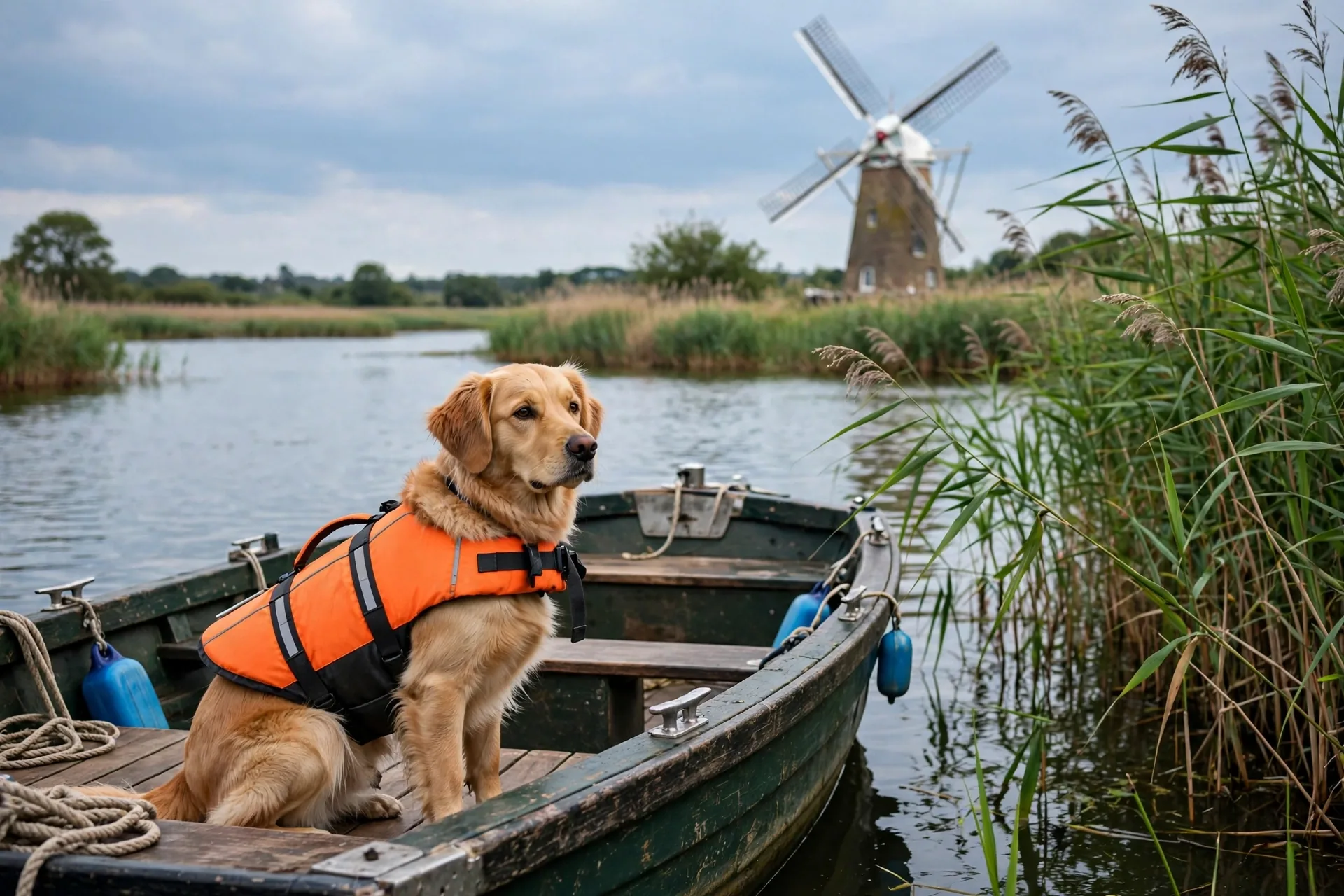
Coastal tours are a step up in excitement and in exposure. Wildlife trips to see seals, puffins or dolphins, harbour tours, estuary ferries and island crossings all involve open water, swell, spray and wind, and they can last longer than a river cruise, with no toilet stop and no easy exit. They suit a dog that is already comfortable on water, that does not mind noise and movement, and that can settle for an hour or more without a toilet break. Hire boats, where you steer the boat yourself for a day or a week, are a different category again: the dog lives on board, with a cabin, a deck and a routine, and the trip succeeds or fails on your planning, your handling of locks and moorings, and your dog's ability to settle in a small, moving home. Boating on the Norfolk Broads with a dog is a useful deep dive into hire-boat life, from life jackets to mooring and towpath walks.
Smaller experiences complete the range. Rowing boats, pedalos and small self-drive electric boats are sometimes dog-friendly, but they are tippy, low to the water and easy to capsize if a dog shifts weight suddenly, so they suit only calm, small dogs and very sheltered water, with a life jacket essential. Steamers and heritage boats add noise, smoke and crowds, which some dogs love and others find overwhelming. Ferry crossings that are primarily transport, rather than leisure trips, have their own rules about where dogs travel, which are covered in ferry guides, and they should not be confused with a leisure cruise: a dog that copes with a car ferry may still struggle on an open wildlife boat, and vice versa. The practical approach is to start small, observe your dog, and graduate gradually, rather than booking the longest, wildest trip first and hoping for the best.
Duration is a useful filter when you compare types. A forty-five minute river cruise is a trial; a two-hour lake cruise is a proper outing; a half-day coastal tour is a commitment; and a week on a hire boat is a holiday that needs a different kind of preparation. For a first trip, choose the shortest option that still feels like a day out, ideally with a shore walk before and after, so that the boat is one part of the day rather than the whole day. If the dog enjoys it, you can extend next time with confidence; if the dog does not, you have lost less than an hour and you have learned something valuable without a miserable afternoon for everyone.
Booking questions that matter
“Dogs welcome” on a boat operator's website can mean many things, and the differences matter more on water than on land, because you cannot simply walk away mid-trip. The first question is where dogs are allowed: open deck only, lower deck, cabin, or everywhere, and whether there is a sheltered area if it rains or if the dog becomes cold. The second is whether dogs must be on a lead, in a carrier, or under a blanket, and whether there is a limit on dog numbers per sailing, which matters on popular wildlife tours where several dogs may be on a small boat. The third is the fare: some operators carry dogs free, some charge a small fare, and some include the dog in a family ticket, so check rather than assuming.
Capacity and crowding deserve a direct question, because a boat that is comfortable with twenty passengers can feel crowded with sixty, and a dog at foot level experiences crowds differently from a standing adult. Ask how many passengers the sailing usually carries, whether seating is allocated or first-come, and whether you can choose a quieter sailing, such as the first of the day or a weekday afternoon. Ask about the toilet situation honestly: is there a toilet stop, how long is the non-stop stretch, and what happens if a dog has an accident on board. Operators who answer these questions plainly are usually experienced with dogs and will be helpful on the day; operators who answer vaguely may still be welcoming, but you will need to plan more defensively.
Weather and cancellation policies are part of booking, not an afterthought. Boats cancel for wind, fog, high river levels, low water, storms and mechanical problems, and the threshold for cancellation is lower than for a land attraction, because safety on water is unforgiving. Ask how cancellations are communicated, whether you can rebook or be refunded, and how late a decision may be made, because a morning cancellation can still leave time for a shore walk if you have a backup plan. Check whether the operator has a phone number you can call on the day, rather than relying on email, and save it before you leave home, because mobile signal at a remote jetty or harbour can be patchy.
For hire boats, booking questions multiply. Ask whether dogs are allowed in the cabin as well as on deck, whether there is a dog fare or a cleaning charge, what happens if the dog damages upholstery, whether the boat has a safe place for the dog while you work locks, and what the mooring and water facilities are like. Ask about the dog's swimming ability and whether a life jacket is provided or must be brought, and ask for a handover that includes the dog: where the dog should be during locks, how to secure the boat at a mooring, and what to do if the dog falls in. A hire company that takes dogs seriously will welcome these questions and may have a dog-specific handover sheet; a company that brushes them off is a warning sign.
Life jackets, leads and deck safety
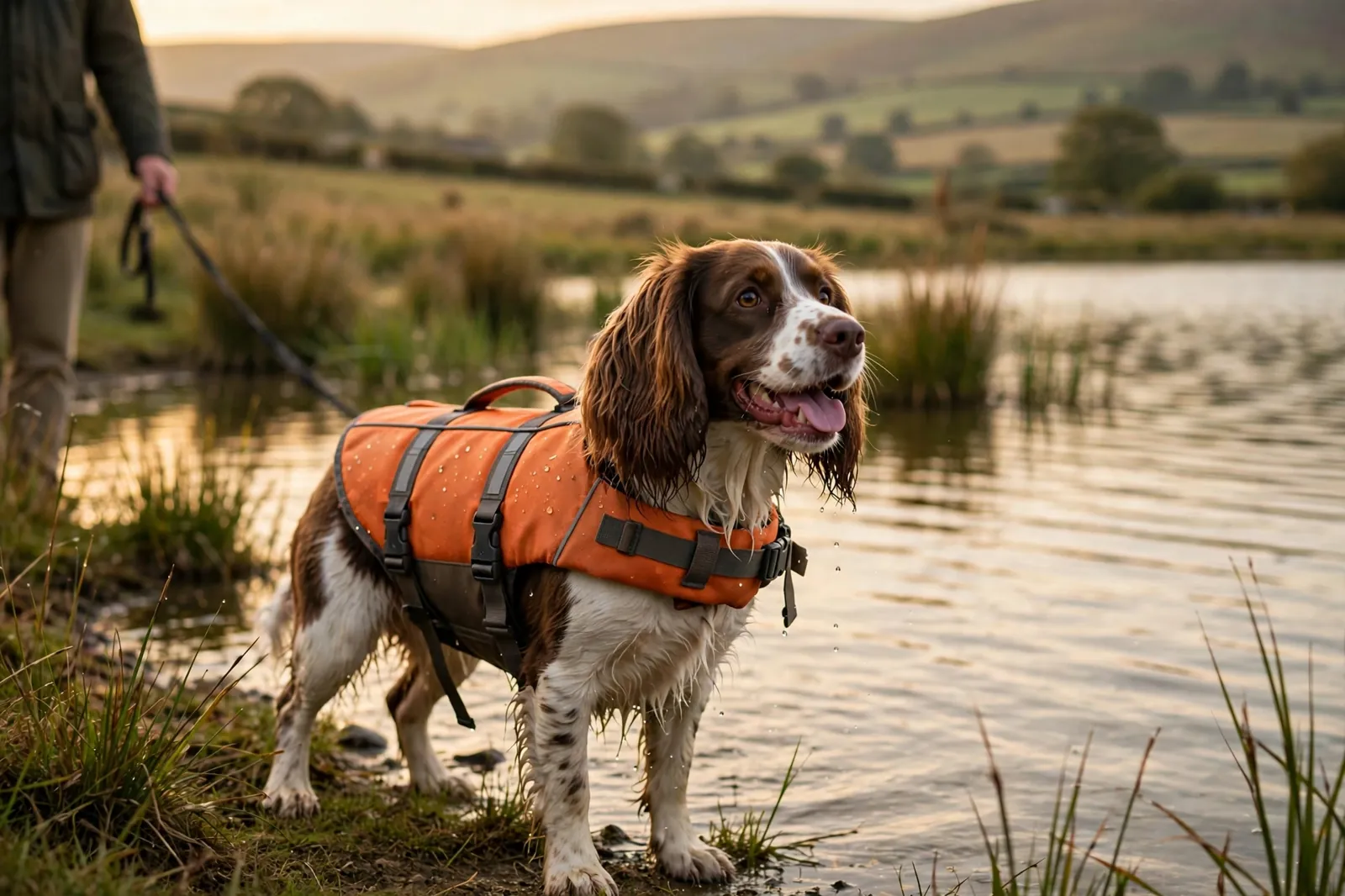
A canine life jacket is the single most important piece of equipment for a boat trip, and it deserves the same care as a child's life jacket: correct size, correct fit, and practice before the day. Measure your dog's chest, length and weight, and choose a jacket with a sturdy handle on top, a secure belly strap, and bright colouring for visibility in water. Fit it at home, adjust the straps so that two fingers fit snugly underneath, and let the dog wear it around the house and garden before the trip, so that the jacket is familiar rather than frightening. On the day, put the jacket on before boarding, keep it on for the whole trip, and use the handle to lift the dog on and off the boat and, if necessary, out of the water, rather than pulling on the collar or lead.
Not every dog needs the same jacket, and not every trip needs the same level of protection. A strong swimmer on a calm river cruise in a large, stable boat may be safe without a jacket, but the jacket still helps with visibility, lifting and confidence, and it costs nothing to wear. A poor swimmer, a brachycephalic breed, an older dog, a puppy, or any dog on a coastal trip, a hire boat or a small open boat should always wear one, because cold water, currents and panic can overwhelm even a good swimmer quickly. Check the official guidance before you travel if your dog has a condition that affects swimming or breathing, and discuss life jacket use with your vet if you are unsure. A jacket that is too loose will slip off in water, a jacket that is too tight will restrict breathing, and a jacket that has never been tried on will be a distraction on the day, so fitting at home is not optional.
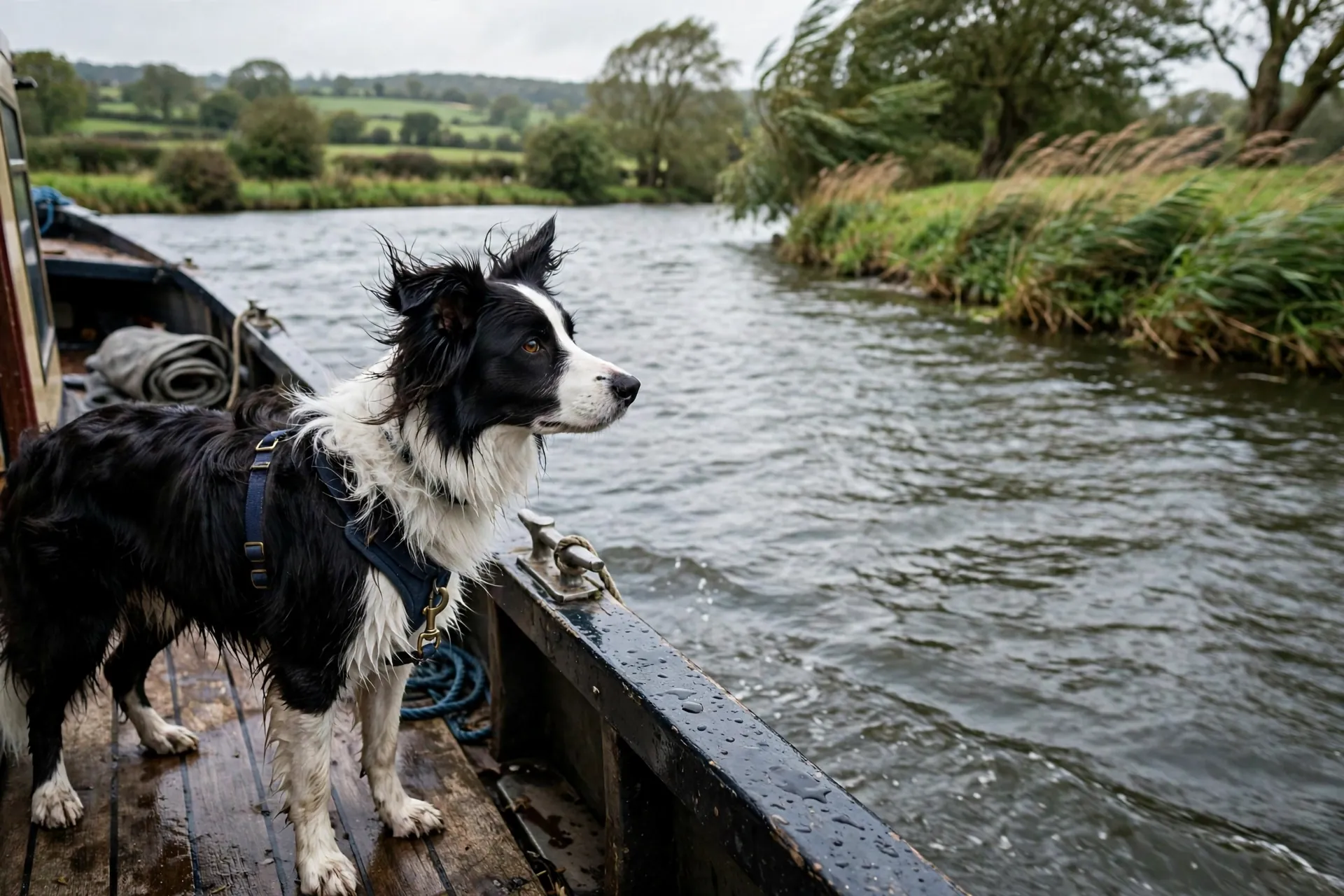
Leads and deck discipline are the second layer of safety. Keep the dog on a short, non-retractable lead at all times on deck, because a retractable lead can wrap around rails, cleats, other passengers and the dog itself, and a long lead on a moving boat is a trip hazard. Keep the dog away from the edge, from open gates, from ropes and winches, and from the stern where propellers and wash are a hazard, and never let the dog drink from the water alongside the boat, which may contain fuel, algae or pollutants. If the boat has a cabin, the cabin is often the safest place for a nervous dog, with a mat, a familiar blanket and water, while the deck is the reward for a calm dog that can settle and watch the world. Teach a settle cue at home and use it on board, because a dog that can lie down on command is far safer than a dog that paces the deck.
Other safety items are small but worth packing. A spare lead, a towel, a collapsible bowl, water, poo bags, cleaning cloths, a dog coat for wind and spray, and a torch if the trip may run into dusk all fit in a small bag and prevent most minor problems. A whistle or a bright collar can help you spot the dog in a crowd, and a phone in a waterproof pouch is useful for photographs and for calling the operator if you are separated from the group. Most importantly, know what to do if the dog falls overboard: stay calm, alert the crew immediately, keep sight of the dog, use the life jacket handle to lift the dog out, and do not jump in after the dog unless the crew directs you to, because a panicking person in cold water creates a second rescue problem. Crew are trained for this, and their instructions take priority.
Boarding, gangplanks and settling
Boarding is the most hazardous part of a boat trip, because it combines a moving gangplank, a gap between jetty and boat, water below, crowds, and a dog that may be excited or nervous. Arrive early, toilet your dog thoroughly before you approach the jetty, and let the first rush of passengers board before you, so that you can board calmly with space around you. Keep the lead short, keep the dog close to your leg, and guide the dog across the gangplank steadily, without pulling or rushing, because a dog that is dragged across a narrow plank may panic and slip. If the gangplank is steep, wet or narrow, ask the crew for help or for a steadier boarding point, and lift a small dog across if that is safer than walking.
Once on board, settle the dog before the boat moves, because a dog that is still pacing when the engine starts and the boat pulls away will associate movement with chaos. Find your seat or standing spot, lay down a mat or blanket, offer water, and give the dog a few minutes to sniff, look around and lie down, with a treat for settling rather than for excitement. If the boat has a cabin, settle the dog there first, then move to the deck once the boat is under way and the dog is calm. If other dogs are on board, keep distance at first, avoid face-to-face greetings in a narrow gangway, and let the dogs settle separately before any interaction, because a boat is a confined space and a reactive greeting can escalate quickly with nowhere to retreat.
Seating choice on board follows the same logic as on a train: low, central and sheltered is best. The centre of the boat moves least, which reduces motion sickness and anxiety, while the bow and stern pitch more and are wetter and windier. A seat near an exit is useful if you need to move quickly, but a seat in the middle of a crowd is stressful for a nervous dog, so choose a quiet corner with a view of the water but not in the main thoroughfare. If the boat has an upper deck, remember that the upper deck moves more and is windier, and that stairs to the upper deck can be steep and slippery for dogs, so a lower deck may be the better choice for a first trip, even if the view is less dramatic.
Disembarking deserves the same patience as boarding. Wait until the rush has cleared, keep the lead short, guide the dog across the gangplank steadily, and move away from the jetty promptly, because the next group will be boarding and the jetty can become crowded. Toilet your dog as soon as you are ashore, offer water, and give the dog a short, calm walk to decompress before the drive home, because a boat trip is stimulating even for a calm dog, and a wind-down walk helps the dog process the experience. If the dog was frightened or seasick, note what happened and adjust the next trip: a shorter trip, a calmer river, a different time of day, or a cabin seat may all make the difference, and a dog that has one bad boat experience can still enjoy boats if the next experience is carefully graded.
Comfort on the water
Once under way, comfort is about wind, spray, sun, shade and routine, all of which change faster on water than on land. Wind chill on a boat can be significant even on a warm day, because the boat's speed adds to the natural wind, and a wet dog in wind cools quickly, so bring a dog coat, a towel and a sheltered spot, and watch for shivering, hunching or seeking shelter, which are signs to move indoors or to wrap the dog. Sun is the opposite problem on a still, bright day: a dark-coated dog on a light deck can overheat, and a dog with a thin coat can sunburn on ears and nose, so seek shade, offer water regularly, and consider a light coat or sunscreen formulated for dogs if your vet recommends it. Shade on a boat is often limited, so a cabin seat or a shaded deck area is worth requesting at booking.
Routine helps a dog settle on water, just as it helps at home. Keep feeding times, toilet times and rest times as close to normal as the trip allows, and avoid feeding a large meal immediately before boarding, because a full stomach increases the risk of sickness and discomfort. Offer small, familiar treats for settling, not novel, smelly chews that may upset the stomach or distract other dogs, and keep water available but not unlimited in a single gulp, because a dog that drinks excessively and then moves may vomit. If the trip includes a stop, use it for a toilet break, a drink and a short walk, and return to the boat in good time, because a dog that is rushed back on board will be unsettled for the next leg.
Noise and vibration are part of boat life, and dogs vary in their response. Engine noise, especially on a diesel boat, can be loud and low-frequency, and dogs with noise sensitivity may need a cabin seat, a familiar blanket to muffle vibration, or a calming routine such as a chew or a settle mat. Wildlife tours add guide commentary through loudspeakers, which can startle a dog, so sit away from speakers if your dog is sensitive, and introduce the dog to recorded boat sounds at home if you have time. Vibration through the deck can unsettle a dog that is standing, so encourage lying down on a mat, which dampens vibration and gives the dog a stable base, rather than standing on a hard, vibrating deck.
Other passengers are part of the comfort equation, and good boat manners protect the dog's welcome. Keep the dog's belongings contained, clean up any accident immediately and discreetly, keep barking to a minimum by settling the dog early, and be ready to move if a fellow passenger is uncomfortable, allergic or frightened. Children are often excited by dogs on boats, and a dog that is comfortable with children may enjoy the attention, but a dog that is not should be given space, and children should be asked to approach calmly and with permission. A well-behaved dog on a boat is an ambassador for all dog owners, and a single disruptive trip can lead an operator to restrict dogs, so the stakes are higher than on a walk.
Seasickness and motion
Seasickness in dogs is real, common and often mistaken for anxiety, because the signs overlap: drooling, lip licking, yawning, restlessness, whining, vomiting and lethargy can all indicate motion sickness, anxiety or both. The distinction matters because the remedies differ: anxiety responds to settling, routine and a calm owner, while motion sickness responds to a stable position, fresh air, a view of the horizon and, in some cases, medication. A dog that drools only on boats, vomits after twenty minutes of choppy water, and recovers quickly ashore is likely seasick, while a dog that drools on cars, trains and boats, paces from the start, and settles with reassurance may be anxious, and a dog that does both needs both approaches.
Prevention starts with trip choice. A calm river cruise on a large, stable boat is the lowest-risk first trip, while a small, fast coastal boat in a swell is the highest-risk, and a dog that has never been on water should not start with the latter. Keep the dog low and central, where movement is least, encourage the dog to lie down rather than stand and stare at moving water, and provide fresh air, because stuffy cabins can worsen sickness. Avoid strong smells, such as fuel, food or cleaning products, which can trigger nausea, and avoid feeding a large meal before the trip, while offering small sips of water to prevent dehydration if the dog does vomit. If the dog does vomit, clean up calmly, offer water, and do not make a fuss, because a stressed owner increases the dog's stress.
Medication is an option, but it requires veterinary advice and advance planning. Anti-sickness medications for dogs, such as those used for car sickness, can be effective for boat trips, but they must be prescribed for your dog, dosed correctly, and trialled before the trip, because a medication that causes drowsiness or other side effects is not a solution if it is first tried on the boat. Ask your vet well before the trip, discuss the trip length, the water conditions and the dog's history, and follow the vet's instructions about timing, food and repeat doses. Do not give human anti-sickness medication to a dog, do not share medication between dogs, and do not rely on herbal remedies without veterinary advice, because the evidence for them is limited and the risk of interaction is real.
After a seasick trip, recovery is usually quick, but it deserves attention. Offer small amounts of water, then a small, bland meal once the dog is settled ashore, and monitor for continued vomiting, lethargy or refusal to drink, which may need veterinary advice. Do not write off boats after one seasick trip: many puppies outgrow motion sickness, many dogs improve with gradual exposure, and a shorter, calmer trip with medication may succeed where a long, choppy trip failed. Keep a note of what happened: trip type, duration, water conditions, position on the boat, food timing and medication, because this record helps your vet advise on the next trip and helps you choose a better trip next time.
River calm versus coastal chop
River and coastal trips differ in almost every practical respect, and understanding the difference helps you choose and prepare. River trips are sheltered, slow and predictable: the water is flat, the banks are close, the boat is stable, and a shore is always nearby, which means a nervous dog can see land, a seasick dog can recover quickly, and an emergency can be managed by mooring. Coastal trips are open, faster and more exposed: the swell can build quickly, the shore can be distant, the wind can change, and the boat may need to alter course or return early, which means a dog needs to cope with movement, spray and uncertainty for longer, with no exit until the boat returns. Neither is better in itself, but they suit different dogs and different days.
Tides, currents and river levels add a layer of planning that land trips do not have. A coastal trip may be timed to the tide, with departure and return windows that cannot be moved, and a missed departure may mean a missed day, not just a later boat. A river trip may be affected by high water after rain, low water in drought, or strong currents that make the boat work harder and move more. Ask the operator about tide and water conditions, and check the weather forecast for wind, not just rain, because wind is the main determinant of comfort and safety on water. A forecast of strong winds, even on a sunny day, is a reason to choose a river trip over a coastal trip, or to postpone, and a forecast of fog is a reason to expect delays or cancellations.
Wildlife and scenery also differ. River trips offer kingfishers, herons, waterside pubs, locks and bridges, all at a gentle pace that suits a dog watching from a mat. Coastal trips offer seals, seabirds, cliffs and open horizons, which are spectacular but also involve gulls, which can excite or frighten dogs, and the smell of fish and seaweed, which can overstimulate a scent-driven dog. A dog that chases birds or is reactive to wildlife may find a coastal wildlife tour challenging, while a dog that is calm and observant may love it. Ask the operator what wildlife is likely, whether dogs are expected to stay in a particular area during wildlife viewing, and whether the boat approaches wildlife closely, because close approaches can be noisy and exciting.
Safety planning differs too. On a river, a dog that falls in can usually be retrieved quickly from a bank or a shallow edge, and the water is slower and warmer. On the coast, a dog that falls in faces cold water, currents and waves, and retrieval depends on the crew, the life jacket handle and the boat's manoeuvrability, which is why a life jacket is non-negotiable on coastal trips. Dog water safety covers currents, cold water, algae and safe swimming in detail, and it is worth reading before any coastal trip, even if your dog does not plan to swim, because the risks of falling in are the same. The message is not to avoid coastal trips, but to respect the difference: a coastal trip is an adventure, a river trip is a relaxation, and the dog's preparation should match.
Wildlife, locks, tides and other boats
Locks are a distinctive feature of canal and river hire boats, and they are a moment when the dog's safety needs active management. During a lock, the boat rises or falls, water rushes in or out, gates move, and the crew is busy with ropes and paddles, so the dog should be below deck, in the cabin, or in a safe, secure spot away from the edge, with a lead held or a door closed. A dog on deck during a lock can slip, panic at the noise and movement, or jump, and a dog that falls into a lock faces a dangerous, turbulent environment. If you are hiring a boat, practise the lock routine before the first lock: where the dog goes, who holds the lead, and what the dog's settle cue is, so that the routine is automatic when the lock is busy and noisy.
Other boats, from narrowboats to ferries to kayaks, are part of the water environment, and dogs react to them in different ways. A dog that barks at passing boats can disrupt a peaceful trip and disturb other passengers, while a dog that lunges at a kayak or a paddleboard can unbalance a small boat or frighten the paddler. Keep the dog settled as other boats pass, use a treat or a settle cue to redirect attention, and avoid encouraging barking or chasing, even playfully, because a habit formed on a boat is hard to break. If your dog is reactive to other dogs on the towpath or at a mooring, keep distance at locks and moorings, and use the cabin as a retreat, because a mooring is a confined space where two dogs may meet unexpectedly.
Wildlife encounters need the same discipline as other-dog encounters, but with additional legal and ecological considerations. Seals, nesting birds, otters and other protected species should not be disturbed, and dogs should not be allowed to chase, bark at or approach wildlife, even from a boat, because disturbance can affect breeding, feeding and survival. Operators on wildlife tours will brief passengers on distance and behaviour, and following that briefing is part of being a responsible dog owner, not just a courtesy. On a hire boat, keep the dog on a lead at moorings near nature reserves, and check local rules about dogs on towpaths and at locks, because some areas have seasonal restrictions to protect ground-nesting birds or livestock.
Livestock, anglers and other towpath users complete the picture. A dog on a towpath at a mooring may encounter sheep, cattle, horses, anglers with lines and bait, and cyclists, all of which require a short lead and a calm dog. Anglers in particular can be a hazard, because hooks, lines and bait are attractive to dogs and dangerous if ingested, so keep the dog away from fishing gear and do not let the dog drink from bait buckets or eat discarded bait. A hire boat trip that includes towpath walks is a wonderful way to explore, but the walks need the same lead discipline as any rural walk, with the added complication that the dog is returning to a small boat, not a car, and a wet, muddy dog needs drying before going below deck.
Dogs that are better left ashore
Not every dog should go on every boat, and recognising that is good ownership, not a failure. Dogs that are severely seasick despite medication, dogs with serious heart or respiratory conditions that make exertion or stress dangerous, dogs that are highly reactive and cannot settle in a confined space, and dogs that are in pain, recovering from surgery, or in season in a way that affects behaviour, may all be better left with a sitter, a family member or a trusted boarding arrangement for the boat trip. A dog that is left ashore with a familiar person and a comfortable routine will have a better day than a dog that is forced onto a boat and spends the trip distressed, and the owner will enjoy the trip more without worrying about the dog.
Age and health are practical filters. Very young puppies that have not completed vaccinations should not be exposed to crowded boats and public decks, and very old dogs with arthritis, incontinence or cognitive decline may find boarding, gangplanks and long periods without a toilet break distressing. Dogs with epilepsy may be triggered by stress, noise or flashing light on water, and dogs on medication that affects balance or alertness may be less safe on a moving deck. In each case, discuss the trip with your vet, weigh the dog's enjoyment against the risks, and consider a shorter, calmer alternative, such as a riverside walk with a view of the boats, which gives the dog the scenery without the movement.
Behaviour is the other filter. A dog that barks continuously, lunges at strangers, guards resources, or panics in confined spaces is unlikely to enjoy a boat, and is likely to disrupt other passengers, which may lead the operator to restrict dogs in future. A dog that is fearful of water, of engine noise, or of crowds may be better introduced gradually, starting with a stationary boat visit, then a short river cruise, rather than a full coastal tour. If you are unsure, ask the operator whether you can visit the boat at the jetty without sailing, or whether a short taster sailing exists, because a low-stakes introduction is far better than a high-stakes trial. Check the official guidance before you travel if your dog has a behavioural condition that a boat trip could worsen, and consider professional advice before booking.
Leaving a dog ashore should be planned, not improvised. Arrange a sitter who knows the dog, leave clear instructions about food, medication, toilet routine and vet contact, and choose a trip length that matches the sitter's availability, because a dog left alone for a long coastal tour is a different proposition from a dog left for an hour's river cruise. If the whole family is travelling, consider whether the boat trip is essential, or whether a dog-friendly alternative, such as a lakeside walk or a riverside picnic, would give everyone a better day. The goal is a good day for the dog and the owner, not a tick on a list of boat trips, and sometimes the best boat trip is the one the dog watches from the bank.
After the trip: rinse, rest and check
After a boat trip, a dog needs the same wind-down as after any stimulating outing, with a few water-specific extras. Rinse the coat with fresh water if the dog has been splashed with salt water, river water or algae, because salt dries the skin, river water can carry pollutants, and algae can irritate skin and be toxic if licked. Dry the coat thoroughly, especially ears, paws and belly, and check for cuts, ticks, hooks or debris picked up at the jetty, the mooring or the towpath. Check ears for water, because dogs that have shaken, splashed or swum may have water in the ear canal, which can lead to infection if not dried, and watch for head shaking, ear scratching or odour in the days after the trip.
Rest and food should return to normal gradually. Offer water first, then a small meal once the dog is settled, and avoid a large, exciting play session immediately after the boat, because a tired, overstimulated dog needs rest, not more excitement. A short, calm walk near home, a drink and a quiet evening are the right finish, and they give you a chance to notice anything unusual, such as vomiting after seasickness, diarrhoea after drinking river water, a limp after a gangplank slip, or a reluctance to settle that may indicate stress or pain. If anything concerns you, contact your vet and mention the boat trip, because water exposure, motion and stress are relevant details for diagnosis.
Equipment also needs aftercare. Rinse the life jacket in fresh water, dry it fully before storing, and check straps, buckles and the handle for wear, because a jacket that is stored wet will deteriorate and may fail when needed. Wash the mat or blanket, clean the bowl, and repack the boat bag so that it is ready for the next trip, rather than discovering a missing item at the jetty. If the trip was a hire boat holiday, clean the boat's cabin and deck as instructed, report any damage honestly, and leave the boat in the condition you would wish to find it, because dog-friendly hire depends on owners leaving boats clean and undamaged.
Finally, record what worked. Note the operator, the trip type, the duration, the weather, the dog's behaviour, any seasickness, and what you would change next time, because this record turns one trip into a learning experience for future trips. A dog that enjoyed a river cruise can graduate to a lake cruise, a dog that was seasick on a coastal tour can try a calmer river trip with medication, and a dog that loved a hire boat can plan a longer holiday with confidence. Boat trips are a skill for both dog and owner, and like any skill, they improve with practice, reflection and a willingness to start small and build gradually.
Practical questions
Before you go
Do dogs need a life jacket on a boat trip?
Not by law on every trip, but a well-fitted canine life jacket is strongly recommended on open decks, coastal trips and hire boats, and essential for dogs that cannot swim well, are older, or are brachycephalic. Check the fit at home, use the handle for lifting, and keep the jacket on for the whole trip.
Can dogs go to the toilet on a boat trip?
Usually not, except on longer hire boats with a deck area or a planned stop. Toilet your dog thoroughly before boarding, choose a trip length your dog can manage, and carry bags and cleaning supplies for accidents. On a hire boat, agree a toilet routine before departure and use shore stops.
Do dogs get seasick on boat trips?
Yes, some dogs do, especially on choppy coastal water. Signs include drooling, lip licking, restlessness, vomiting and lethargy. Choose a calm river trip for a first outing, keep the dog low and central in the boat, offer fresh air, and ask your vet about anti-sickness medication before a longer coastal trip.
Are dogs allowed on the top deck of a boat?
It depends on the operator. Some boats welcome dogs on open decks, some restrict dogs to a lower deck or a sheltered area, and some allow dogs only in a carrier. Check the deck policy at booking, because a top-deck restriction changes the experience, especially in rain or strong wind.
What if the weather changes during a boat trip?
Operators may shorten, delay or cancel a trip for wind, fog, high water or storms, and the decision is theirs for safety. Dress for wind and spray even on a sunny day, bring a dog coat and a towel, and have a shore-based backup plan so a cancellation does not ruin the day.