This guide is independent and contains no paid placement. If affiliate links are added later, they will be clearly marked and will not change our editorial checks.
Only take a dog to a festival that explicitly welcomes dogs, that your dog can enjoy without distress, and that you can leave early from. Choose a small, daytime, outdoor event, stay at the edges, manage noise with distance and breaks, and treat leaving early as success, not failure.
Should your dog go at all
The most important festival decision is made before you buy a ticket, and it is not about the line-up. It is about the dog. A confident, social, noise-tolerant adult dog that enjoys crowds, can settle on a mat, and recovers quickly from excitement may enjoy a small daytime festival. A nervous, reactive, noise-sensitive, elderly, very young, ill or in-season dog will rarely enjoy a festival, and may find it distressing or even harmful. Puppies in particular need careful judgement: a festival is not socialisation, because socialisation means gradual, positive exposure at the dog's pace, not immersion in noise and crowds for hours.
Ask four honest questions before you book. First, has your dog coped happily with similar noise, crowds and duration before, in a smaller setting? Second, can your dog settle on a mat in a busy place, or does it pace, bark, pull or hide? Third, can you leave the festival quickly, at any time, without losing money, transport or a whole group's day? Fourth, is there a realistic alternative for the dog, such as a sitter, a day at home, or a quieter event, that would be kinder? If the answer to the first two questions is no, or if you cannot leave quickly, the festival is not the right event for that dog on that day, however much you would like it to be.
Be honest about your own plans too. A festival day that involves a long drive, a full day on site, evening headliners, fireworks and a late journey home is a different proposition from a two-hour daytime visit to a village fete. If you plan to stay all day and into the night, the dog will need to cope with the loudest, busiest and most tiring part of the festival, not just the calm opening hours. A shorter visit, with a clear exit plan, is often the kindest and most enjoyable option for both dog and owner, because it ends while the dog is still happy, rather than after the dog has had enough.
Festival types, and which suit dogs
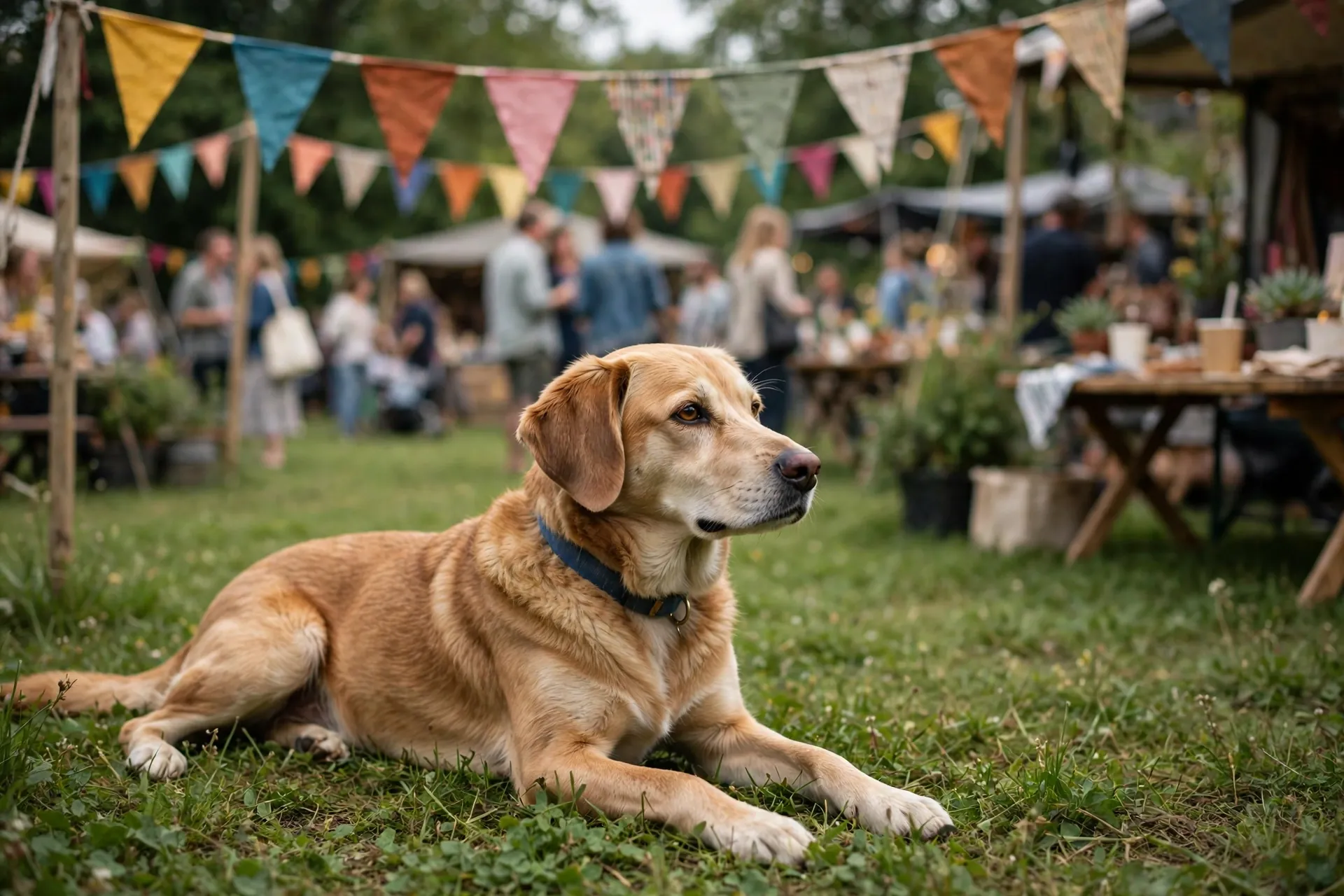
Festivals are not one thing, and the type matters more than the name. Village fetes, food festivals, flower shows, agricultural shows and small community festivals are often the best fit for dogs, because they are daytime, outdoor, spread out, and have quiet edges, shade and easy exits. Dog shows and canine festivals are designed for dogs, but they can still be overwhelming for a nervous or reactive dog, because they concentrate many dogs, smells and sounds in one place. Music festivals vary widely: a small acoustic, folk or jazz festival in a park may suit a calm dog, while a large rock, dance or multi-stage festival with camping, late nights and huge crowds rarely does.
Food and drink festivals deserve a specific warning. They combine crowds, dropped food, cooking smells, glass, hot surfaces and food stalls at dog-nose height, which is a challenging mix for a dog that scavenges, pulls, or is reactive around food. If you take a dog to a food festival, keep it on a short lead, avoid the busiest food courts, watch for dropped food, glass and bones, and do not let the dog eat from stalls or from the ground. A food festival can be enjoyable for a calm, well-trained dog that can settle beside a table at the edge, but it is not a good first festival for a young, excitable or food-obsessed dog.
Agricultural shows and country fairs offer a useful middle ground: they are large, but they are also spread out, with livestock areas, craft tents, food areas and open ground. Dogs are often welcome, but livestock areas require leads, and some areas may exclude dogs entirely. Check the show's dog policy for each zone, keep dogs away from livestock, and use the quieter fields and edges for breaks. A country fair that allows dogs in the main showground but not in the livestock pens is not being inconsistent; it is protecting animals, visitors and dogs, and that is a policy to respect, not to work around.
Rules, tickets and site policies
Festival dog rules are set by the organiser, the venue and sometimes the local council, and they can change from year to year. Always check the festival's official website, ticket terms and frequently asked questions before you book, and look for the specific dog policy, not just a social media post that says dogs are welcome. Check whether dogs are allowed on the whole site or only in certain areas, whether leads are required at all times, whether there is a maximum number of dogs per person, and whether assistance dogs are treated separately. If the policy is unclear, email the organiser and keep the reply with your tickets, because a written answer is more useful than a memory of a phone call.
Tickets and entry also matter. Some festivals require a dog ticket, a dog registration, or proof of vaccination, while others allow dogs free of charge. Some festivals check dogs at the gate, require a lead and a muzzle in certain areas, or refuse entry to dogs that are unwell, in season, or without identification. Arrive with the dog's identification, a lead, a harness, and any documents the festival requires, and be prepared for a bag check and a dog check at the gate. A dog that arrives without identification, on a retractable lead, or with no water in hot weather may be refused entry, and that refusal is a safety decision, not a personal judgement.
Site rules on the day are as important as ticket rules. Follow lead rules, clean up immediately, use designated dog toileting areas if provided, and respect no-dog zones, even if they seem inconvenient. Do not tie a dog to a fence, a tent or a stall while you go elsewhere, because a tied dog in a crowd is stressed, vulnerable and at risk of theft or escape. Do not leave a dog in a car on a festival site, even for a short time, because cars heat up quickly and a festival car park is not a safe place for a dog. If you need to leave the dog, leave the festival with the dog, rather than leaving the dog alone on site.
Noise: distance, breaks and hearing
Noise is the most common reason a festival goes wrong for a dog, and it is also the most manageable, if you plan for it. Dogs hear higher frequencies and louder volumes than people, and a sound that is enjoyable for a human at the front of a stage can be painful or frightening for a dog. The most effective noise management is distance: stay far from speakers, stages and generators, use buildings, hedges and hills as barriers, and move further away as soon as a set gets louder. A dog that is 100 metres from a stage, with a barrier between it and the speakers, hears a very different festival from a dog that is 10 metres from a speaker stack.
Breaks are the second tool. Give the dog regular breaks in a quiet area, away from stages, crowds and generators, where it can drink, toilet, sniff and settle. A break every 30 to 45 minutes, in a quiet corner, a car park edge, or a nearby park, can prevent a build-up of stress that would otherwise end the day early. Watch for stress signs during and after a loud set: panting, shaking, yawning, lip licking, hiding, trying to leave, or a sudden change in behaviour. Those signs mean the dog needs distance, quiet and time, not more exposure. Do not try to train a dog through noise by keeping it near a stage until it stops reacting; that is flooding, not desensitisation, and it can make noise sensitivity worse.
Ear protection for dogs exists, in the form of ear muffs, snoods and wraps, but it must be introduced gradually at home, over days or weeks, with treats and praise, before it is used at a festival. A dog that has never worn ear protection will not accept it calmly in a noisy, crowded place, and a dog that paws at muffs or shakes them off is more stressed, not less. Even with ear protection, distance and breaks remain essential, because ear protection reduces noise but does not remove vibration, crowd pressure or the overall stimulation of a festival. If you are unsure about ear protection, ask your vet or a behaviourist, and practice at home with recorded sounds at low volume before you try it in public.
Crowds, heat and ground underfoot
Crowds affect dogs in ways that owners sometimes underestimate. A dog at human knee height is in a forest of legs, bags, pushchairs and feet, with limited vision, limited escape routes, and constant close contact with strangers. A dog that is friendly in a park may become stressed, reactive or fearful in a dense crowd, especially if people reach out to stroke it without asking, step on its paws, or crowd around it. Keep the dog on a short lead in crowds, walk at the edges rather than through the centre, and advocate for the dog: step in front of it, ask people not to stroke it, and move away if a crowd builds. A dog that can walk at the edge, with space to move, is a dog that can cope; a dog that is trapped in the centre of a crowd is a dog that cannot.
Heat is a serious festival risk, especially in summer. Dogs overheat faster than people, and a festival site with little shade, hot tarmac, and long queues can be dangerous. Bring water and a bowl, offer water regularly, use shade, a cooling mat or a wet towel, and watch for excessive panting, drooling, lethargy or collapse, which are signs of heatstroke and need immediate veterinary attention. Do not leave a dog in a car, a tent or a hot marquee, and do not rely on a single water bowl in a crowd. Brachycephalic, elderly, overweight and very young dogs are at higher risk, and for those dogs, a hot festival day may be a reason to stay home, even if the festival welcomes dogs.
Ground underfoot matters too. Festival sites can be muddy, dusty, stony, or covered in hot tarmac, broken glass, bottle tops, food waste and cables. Check the ground where the dog will walk, lie and toilet, and bring a familiar mat for the dog to lie on, which gives it a clean, familiar place to settle. Protect paws from hot surfaces by walking on grass, using shade, and checking paws regularly for cuts, burns or foreign bodies. If the ground is muddy, bring towels and a plan to clean the dog before the car journey home. A dog that has a clean mat, water and shade is a dog that can rest, and rest is what makes a festival day sustainable.
A festival day plan, hour by hour
A good festival day is planned in blocks, not as an open-ended stay. Arrive early, when the site is quieter, the queues are shorter, and the dog can explore, toilet and settle before the crowds build. Use the first hour for a calm walk around the site, a visit to the quiet areas, a toilet break, and a settle on the mat, rather than heading straight to the main stage. Midday, when the site is busiest and hottest, is the hardest part of the day: move to the edges, take frequent breaks, offer water, and consider a longer break outside the site. Afternoon, as the site begins to thin or as the programme changes, can be calmer, but it can also bring louder evening acts, so check the programme and plan your exit before the evening peak.
Plan your exit as carefully as your arrival. Know where the exits are, how long the walk to the car or transport will take, and what time the crowds will build at the exits. Leave before the final acts, before fireworks, and before the exit crowds, even if that means missing the finale. A dog that leaves calmly, on a lead, with a treat and a calm walk to the car, is a dog that will enjoy the next festival. A dog that leaves in a crush, after fireworks, exhausted and over-stimulated, is a dog that may dread the next festival. If you are travelling with a group, agree the exit plan in advance, so that one person does not have to argue for leaving while others want to stay.
Transport to and from a festival needs the same care as the festival itself. Plan parking, public transport or a taxi that allows dogs, and allow extra time for a calm journey home. Do not drive if you are tired, and do not leave a dog in a parked car while you fetch something from the site. If you are camping at a festival, check the campsite dog rules, the tent setup, and the overnight noise, because a festival campsite at night is louder, busier and less safe for a dog than a daytime site. For many dogs, a day visit with a journey home is kinder than an overnight camp at a loud festival.
Food, water and toileting
Food, water and toileting are the practical details that make or break a festival day. Bring fresh water and a bowl that does not tip over, offer water regularly, and do not rely on festival water points, which may be busy, distant or unsuitable for dogs. Bring the dog's usual food for the day, in a sealed container, and feed at the usual times, rather than relying on festival food, which may be unsuitable, spicy, or dropped on the ground. Keep food away from other dogs, and do not let the dog eat from stalls, bins or the ground, where glass, bones, wrappers and allergens are common.
Toileting at a festival needs a plan. Find out where dogs can toilet, whether there is a designated area, and where bins are, before the dog needs them urgently. Carry more poo bags than you think you need, bag waste immediately, and use the bins provided, even if that means a walk to a bin. Do not let a dog toilet in a food area, a children's area, or a tent, and do not leave waste on grass, paths or near water points. A festival that welcomes dogs depends on owners cleaning up, and a single incident can change a festival's dog policy for the next year. Be the owner who makes the next festival possible.
For dogs that are nervous about toileting in crowds, practice toileting on a lead in busy places before the festival, and allow extra time for toilet breaks. A dog that will not toilet at a festival may become uncomfortable, stressed and unwell, and that is a sign to leave, rather than to wait for hours. If a dog has a medical condition, is on medication, or needs frequent toilet breaks, factor that into your festival plan, and choose a festival with easy access to quiet toileting areas, rather than a large, crowded site with distant facilities.
Evenings, finales and fireworks
Evenings change a festival. Light fades, crowds thicken, music gets louder, and the programme often builds to a finale, a light show, or fireworks. For a dog, evening is the hardest part of a festival day, even if the daytime was enjoyable. Plan to leave before the evening peak, and do not assume that a dog that coped with daytime music will cope with evening fireworks, because fireworks are sudden, loud, unpredictable and accompanied by flashes, smoke and crowd reactions. Our fireworks guide explains how to build a safe room, walk before dark, and keep a dog settled during Bonfire Night, and its advice on leaving before fireworks, providing a safe space, and avoiding sudden noise applies directly to festivals.
If a festival includes fireworks, drone shows, pyrotechnics or a loud finale, check the programme timing, the location, and whether dogs are allowed in the finale area. Some festivals exclude dogs from finale areas, even when dogs are welcome during the day, and that exclusion is a safety measure, not an inconvenience. If you cannot leave before the finale, consider not taking the dog at all, or arranging for the dog to be elsewhere during the finale. A dog that is left in a tent, a car or a quiet area near a fireworks display is not safe, even if it is not in the main crowd, because sound travels and a frightened dog can escape, injure itself, or become lost.
After fireworks, the exit crowds, traffic and noise can be overwhelming for a dog that is already stressed. If you must stay for a finale, plan a calm exit route, a quiet waiting area, and a journey home that does not add to the dog's stress. Give the dog water, a familiar blanket, and a calm voice, and do not try to comfort a frightened dog by holding it tightly or by punishing it for barking or hiding. A dog that is frightened needs space, quiet and time, not restraint or scolding. The best evening plan for most dogs is simple: leave before the finale, travel home calmly, and let the dog settle in a familiar place.
After the festival: recovery
Recovery after a festival is as important as the festival itself. A dog that has spent hours in noise, crowds and heat will be tired, over-stimulated and possibly stressed, even if it seemed happy on the day. Give the dog a quiet evening, fresh water, a familiar bed, and a calm walk, rather than another outing, a busy meal, or a long car journey. Watch for signs of over-tiredness, such as restlessness, excessive panting, reluctance to settle, reduced appetite, or a change in behaviour the next day, and treat those signs as information, not disobedience. A dog that sleeps soundly, eats normally and is keen the next morning has recovered well; a dog that is withdrawn, reactive or unwell the next day may need a vet check and a longer rest.
Check paws, ears and coat after a festival. Look for cuts from glass or stones, irritation from mud or dust, ticks from grass, and ear irritation from noise, wind or water. Clean paws, brush out mud and debris, and check for any food, wrappers or foreign bodies that the dog may have picked up. If a dog vomits, has diarrhoea, limps, or shows signs of illness after a festival, seek veterinary advice promptly, and note what the dog ate, drank and was exposed to, because that information will help a vet. A festival that ends with a healthy, settled dog is a success, even if you left early.
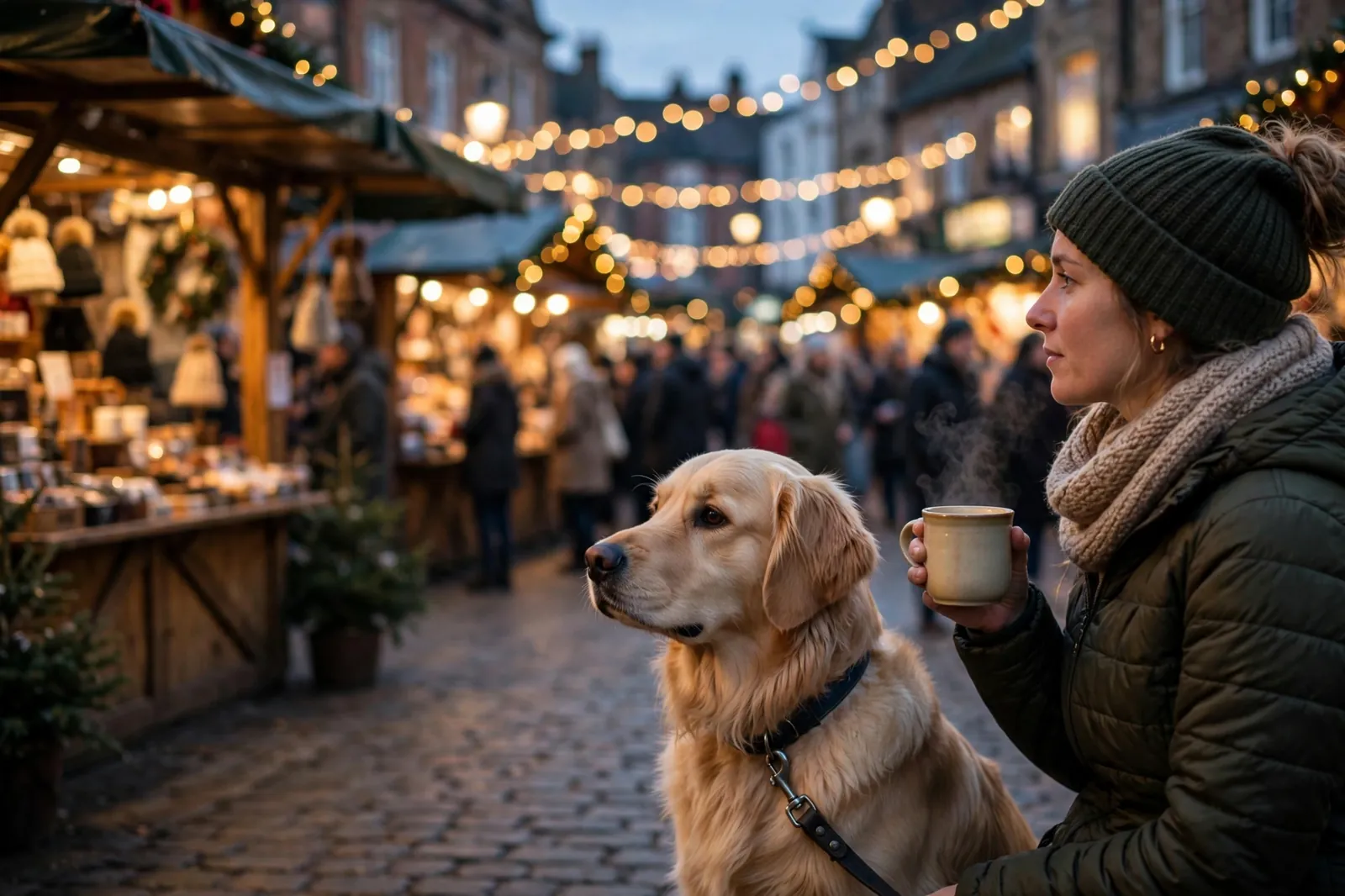
Reflect on the festival as a whole, not just on the highlights. Did the dog enjoy the day, or did it merely cope? Did it settle, or did it pace and pant? Did it recover quickly, or was it unsettled for days? Use those answers to decide whether to return to the same festival, try a smaller event, or choose a different kind of day out. A dog that enjoyed a small daytime festival may enjoy a similar event next year, while a dog that struggled at a large music festival may be happier at a village fete, a market, or a farm park. Our guides to Christmas markets and to farm parks offer calmer, more structured days out that many dogs enjoy more than a large festival, and they are worth considering as alternatives.
Quieter alternatives that still feel festive
A festival does not have to be large, loud and late to feel festive. Village fetes, farmers markets, craft fairs, flower shows, open gardens and small food festivals offer music, food, people and atmosphere, with quiet edges, easy exits and daytime hours that suit dogs. Markets, in particular, can be a good alternative, because they are often daytime, outdoor, and spread out, with stalls to browse and cafes to sit at. The key is to choose an event where the dog can be at the edge, with space, shade and an exit, rather than in the centre of a crowd.
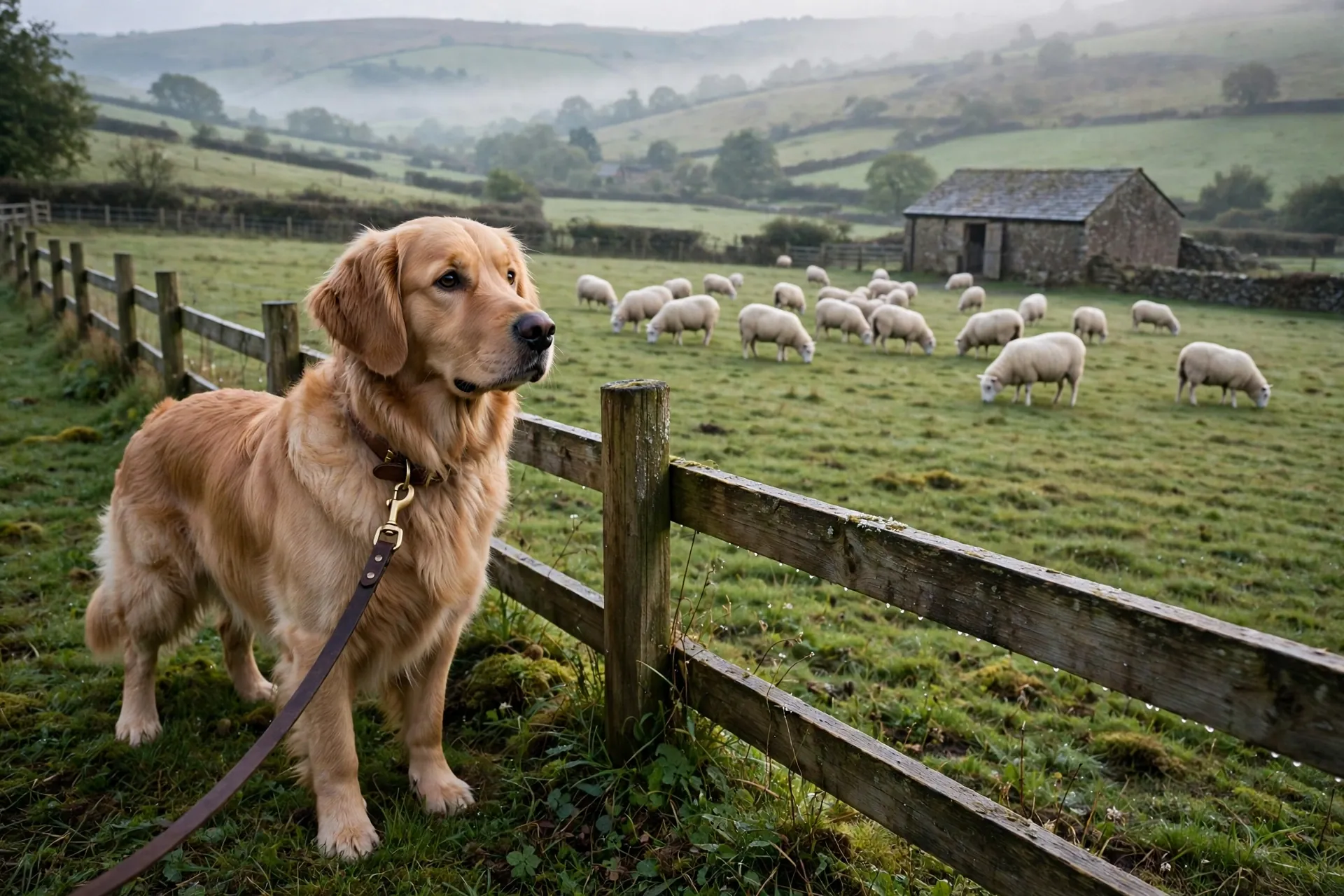
Farm parks, country parks and dog-friendly attractions offer another alternative: a day out that is festive in atmosphere but structured in a way that suits dogs. A farm park with clear lead rules, livestock areas and quiet paths can be more enjoyable for a dog than a festival, because the dog knows what to expect, the crowds are smaller, and the day can be planned around the dog's needs. The same applies to a country park with a cafe, a lake walk and a quiet area: it feels like a day out, without the noise, crowds and late finish of a festival.
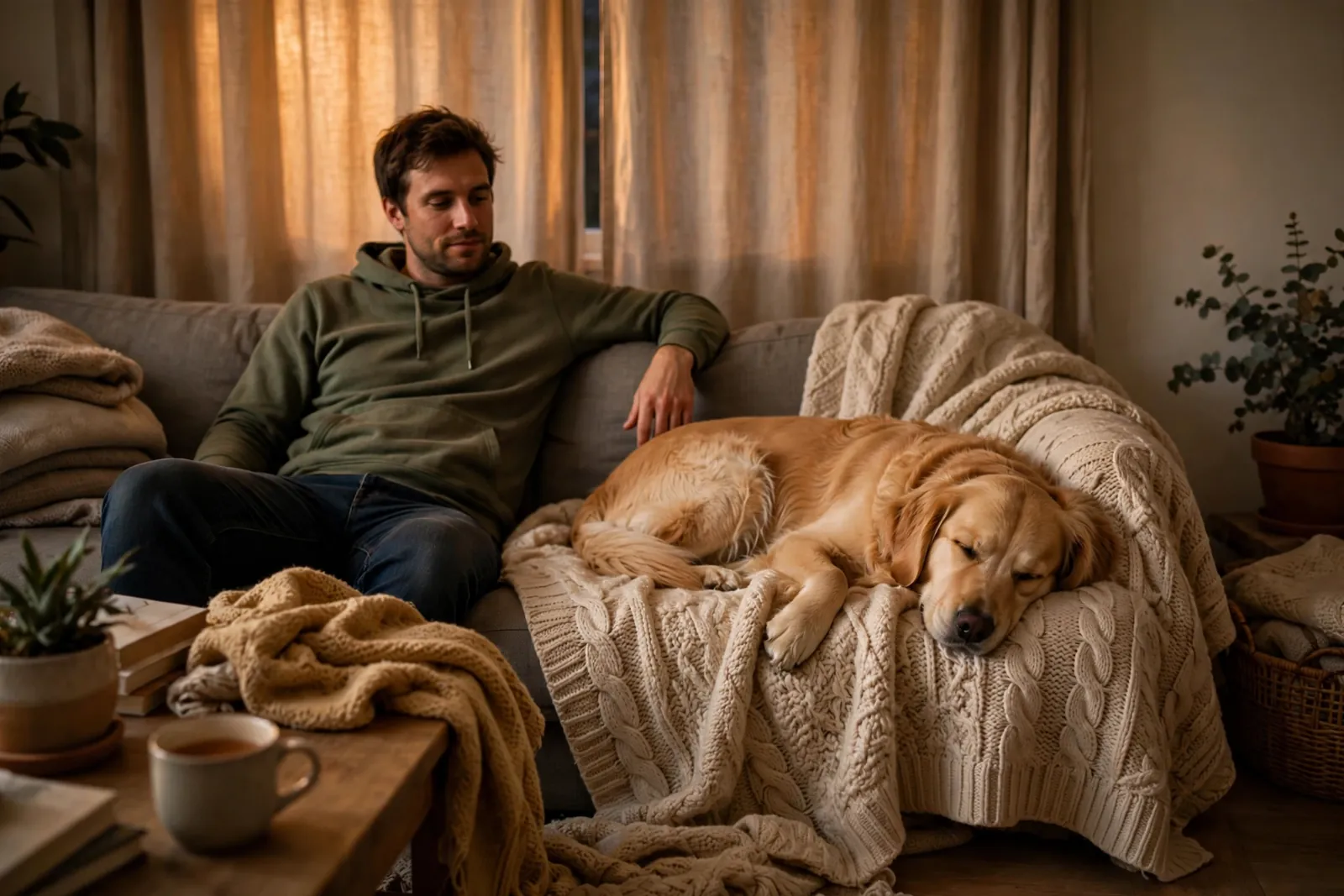
Finally, consider a festival at home. A garden party, a picnic with friends, or a small gathering with music at a comfortable volume can give a dog the social, festive experience without the risks of a large event. A dog that enjoys people, food and music in a garden is a dog that is enjoying a festival on its own terms, and that is a success. The goal is not to take a dog to every festival; it is to find the events, large or small, where a dog can be happy, safe and settled, and to leave the rest for a day without the dog.
Practical questions
Before you go
Are dogs allowed at UK festivals?
Some UK festivals welcome dogs, some allow dogs only in certain areas, and many large music festivals do not allow dogs at all. Always check the festival's official dog policy, ticket terms and site rules before you travel, and do not assume that a festival that allowed dogs last year still does.
How do I protect my dog from loud music at a festival?
Stay far from speakers, use distance and barriers, give your dog breaks in quiet areas, and watch for stress signs such as panting, shaking, hiding or trying to leave. Dog ear protection exists, but it must be introduced gradually at home first, and distance is usually more effective than any single product.
Should I take a nervous dog to a festival?
Usually not. A nervous, reactive or noise-sensitive dog will rarely enjoy a festival, and a festival can set back training. Choose a smaller, quieter event, visit for a short time at a quiet hour, or leave the dog at home with a sitter. A festival is not a training exercise for a dog that is already struggling with noise and crowds.
What should I pack for a dog at a festival?
Pack a lead, a harness, fresh water and a bowl, poo bags, a familiar blanket or mat, a shade or cooling aid, treats, any medicine, and identification. Add ear protection only if your dog is already used to it, and carry a phone charger, because a festival site is a poor place to lose contact or directions.
Are fireworks allowed at dog-friendly festivals?
Some festivals include fireworks, drone shows or loud finales, even when dogs are welcome during the day. Check the programme, plan to leave before the finale, and do not rely on a dog being fine with fireworks because it tolerated music. Fireworks are sudden, loud and unpredictable, and they frighten many dogs that cope with other noise.
When should I leave a festival with my dog?
Leave as soon as your dog shows persistent stress signs, cannot settle, tries to escape, or stops eating and drinking. Leave before the evening peak, before fireworks, and before the exit crowds build. Leaving early is not a failed day; it is the decision that keeps a dog safe and willing to try another, quieter event.