This guide is independent and contains no paid placement. Glamping sites set their own dog policies and prices, which change between seasons, so confirm the current details before you book.
Glamping suits dogs best in formats with solid doors, enclosed private plots and hard standing by the entrance: shepherd huts lead on practicality, safari tents on space, bell tents and yurts on charm with more caveats around canvas, guy ropes and shared fields. Whichever you choose, confirm the enclosure, the stove safety arrangements and the lead rules before paying.
The four formats compared
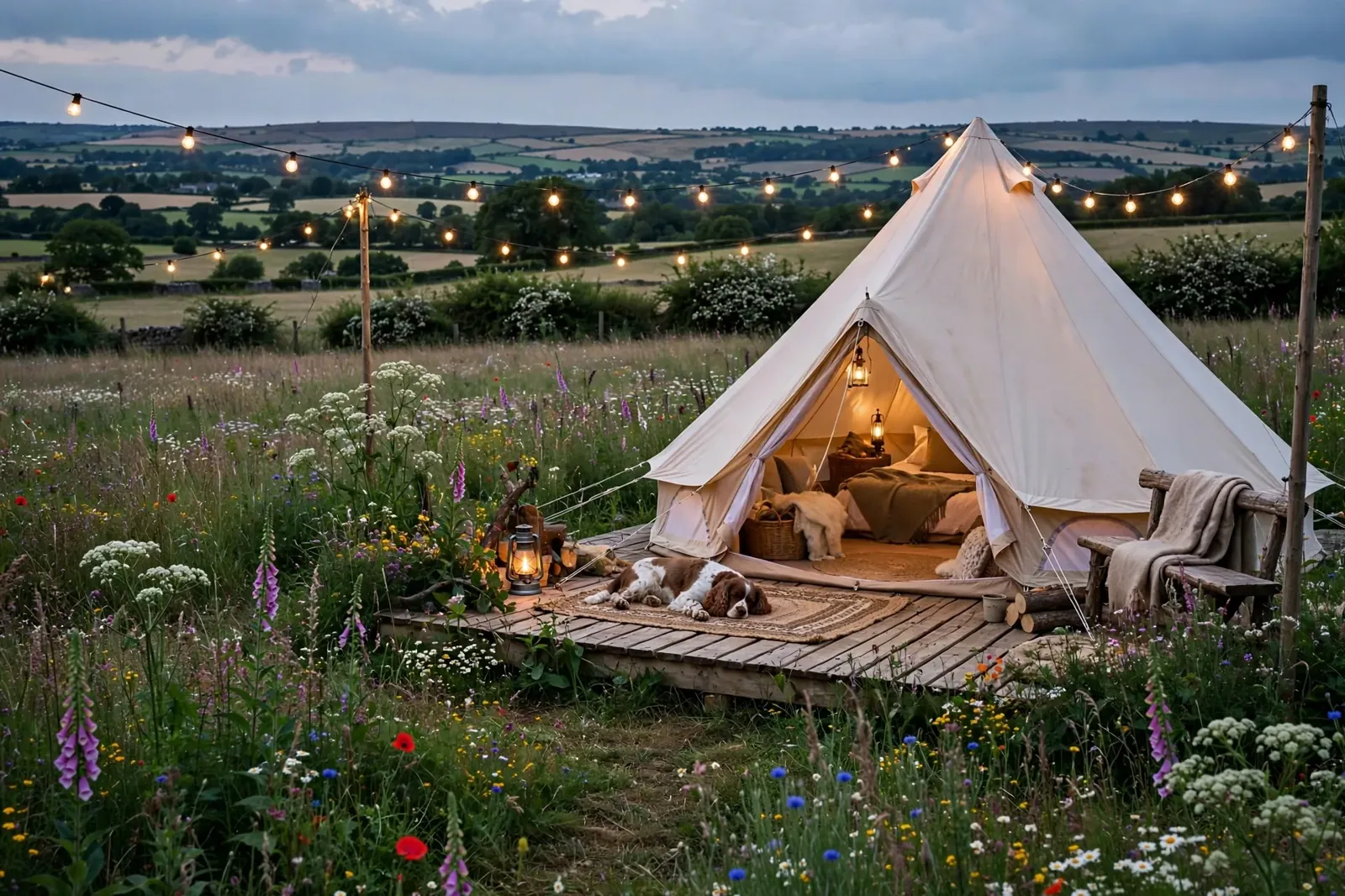
Begin with the comparison nobody makes for you, because 'glamping' covers structures with almost nothing in common. The bell tent is canvas on a groundsheet with a central pole, charming and airy, with a zip door a determined dog can learn to nudge and guy ropes radiating exactly at nose height. The yurt adds a wooden lattice, a solid lockable door and usually a stove — a meaningful step up in security and weather resistance. The safari tent is a canvas lodge on a deck, often with separate sleeping compartments, a veranda and the most floor space of any canvas format. The shepherd's hut is not canvas at all but a small timber cabin on wheels, with a real door, hard floor and the weather manners of a tiny cottage.
For dogs, the ranking writes itself once you list what matters: containment, floor, and calm. Shepherd's huts win on containment — a dog cannot push through a latched timber door — and on floors that shrug off mud. Safari tents win on space, letting a large dog have a genuine territory that is not also the walkway. Yurts sit happily in the middle, secure if the door latches well. Bell tents, for all their romance, demand the most management: zip discipline, rope awareness, and a dog that can be trusted not to treat canvas walls as suggestions. None of this makes bell tents a bad choice — with a tether point on the deck and a settled dog they are glorious — but it makes them the wrong first format for a young, strong or anxious dog.
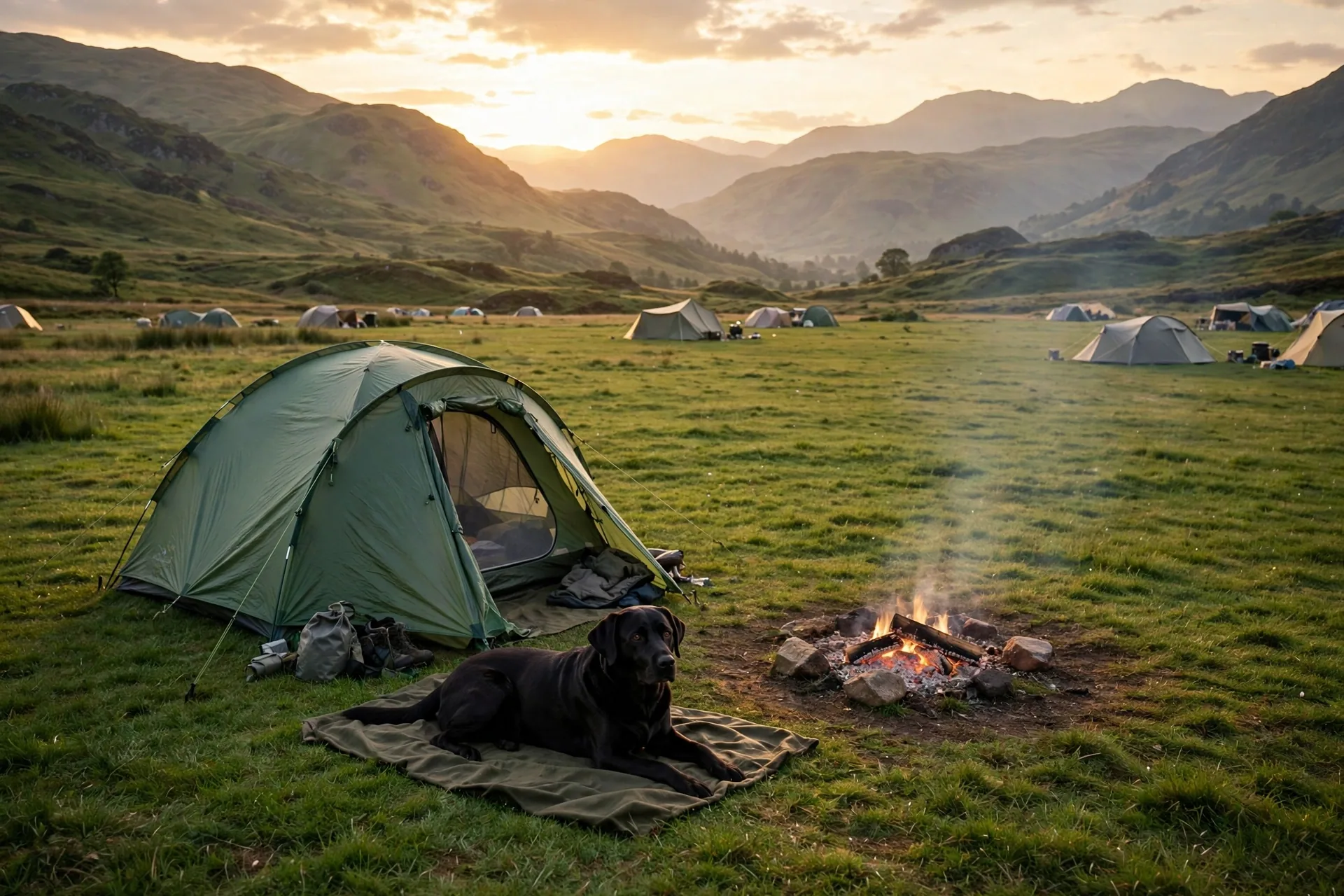
Compare sites within a format as carefully as the formats themselves. Two bell tents on neighbouring farms can differ in plot privacy, distance between units, the presence of a fenced garden area, and whether the welcome pack for dogs is a token biscuit or a considered kit of bed, bowls, towels and treats. The sections that follow take the comparison criteria in turn — enclosure, heat, bedding, facilities and cost — so that by the booking stage you are judging real differences rather than marketing adjectives. If you are also weighing a straightforward tent trip, our guide to camping with a dog in the UK covers the self-pitched end of the spectrum.
Enclosed plots and boundaries
The best glamping sites for dogs fence the plot, not just the field. An enclosed private plot — a picket or post-and-rail boundary with a gate around your tent or hut and its deck — transforms the stay: the dog can be off the tether while you cook, sit outside with the door open, and manage the dawn toilet trip at the pace of a dog rather than a drill. When you browse listings, treat 'private enclosed garden' as a headline feature worth paying for, and treat its absence as a tethered holiday, which is fine but different, and should be priced and packed for accordingly.
Interrogate the enclosure as rigorously as you would a rental garden. Fence height and gate latches matter, but so does what the fence encloses: a plot that includes long grass, a fire pit area and the path to the facilities gate gives the dog a world; a token pen beside the tent gives the dog a waiting room. Ask whether the boundary is shared with the neighbouring plot, because two dogs nose-to-nose through a fence at dawn will set each other's mornings off early. And ask what lives beyond the fence — glamping fields are working countryside, and a plot backing onto a sheep field is a lead-only plot whatever the gate suggests.
Sites without enclosed plots operate on the tether-and-lead system familiar from ordinary camping, and the good ones design for it: solid anchor points on the deck, a dog walking field for off-lead exercise, and clear rules about dogs in communal areas. Carry your own long line and stake regardless, because the anchor provided may be positioned for the view rather than for shade. A dog that will spend its outdoor hours tethered needs that territory planned — shade through the day, water within reach, and a bed outside as well as in — and the planning is the difference between a dog that watches the field contentedly and one that wraps itself around a pole by ten o'clock.
Stoves, fires and dog safety
Most glamping heat comes from a wood-burning stove, and the stove is the one genuinely hazardous object in the unit. Dogs investigate stoves the way they investigate everything: nose first, at exactly flue height. The safe setups share features you can ask about before booking — a fixed fireguard or a stove positioned in a corner behind a rail, a hearth that keeps bedding and dog beds at a clear distance, and a flue that exits without a low hot section crossing the dog's zone. If a listing's photographs show the stove within tail-sweep of where a dog bed would go, that is a site to question, not to book on hope.
Fire discipline continues outside. Fire pits and barbecues sit at dog height by design, and the dangerous moment is not the flames but the hour afterwards, when the pit looks finished and a dog pads across warm ash or finds the discarded skewers and fat-soaked coals that cause a significant share of glamping vet visits. Keep the dog on the lead or inside while any fire is lit or cooling, dispose of food waste from fires into sealed bins the same evening, and never leave a dog alone in a unit with a stove burning — a rule most sites state outright, and one that applies even to the dog that has ignored your stove at home for years, because this stove smells different and sits in a smaller room.
Candles and lanterns complete the heat picture. Many units use LED lanterns precisely to remove naked flames, and sites that still provide candles usually place them in jars or wall holders out of casual reach. Position any flame you are given above tail height, away from the dog's bed and the curtain of a canvas wall. None of this should frighten anyone off glamping — thousands of dogs snooze safely beside stoves every season — but the safety margin is created by arrangement, not luck, and arranging it is a five-minute job on arrival that this guide will walk you through again in the first-night section.
Beds, bedding and house rules
Glamping units are furnished to a standard that camping never attempts, which is precisely why their dog rules matter. Expect most sites to prohibit dogs on the beds — the crisp white linen of the brochure is cleaned to hotel standards between guests, and a dog that sleeps on your bed at home needs a planned alternative, not a debate at midnight. The sites that handle this best provide a proper dog bed in the unit, positioned away from the stove, with washable blankets the dog is allowed on the sofa-equivalent with. Bring your dog's own bed or a familiar blanket regardless: in a strange structure full of new smells, the home-smelling rectangle is the dog's anchor, and it protects the site's furnishings better than any rule.
Floors decide the mud question. Huts and safari tents on decks cope gracefully; bell tents with coir matting or rugs over groundsheets show every paw print and hold the damp. Either way, the routine is the one this site recommends everywhere: a towel station at the door, paws wiped on entry every time, a drying coat for wet evenings, and the dog's outdoor territory equipped so that coming inside is a choice rather than an escape from discomfort. Sites increasingly provide dog towels and even outdoor dog showers; ask what is supplied so you do not pack duplicates of bulky items for a small unit where storage is genuinely limited.
Two house rules deserve attention before booking because they are the ones that end stays. The first is the alone rule: as with hotels and rentals, most glamping sites prohibit leaving a dog alone in the unit, and canvas structures add a second reason — a frustrated dog can damage or escape a tent in ways it never could a cottage. The second is noise. Glamping fields are quiet by design and canvas carries sound in both directions; a dog that barks at passing walkers will be heard by the whole meadow. Be honest about your dog's voice when you book, ask for the end plot if one exists, and plan evenings that end with a tired dog. Sites forgive a great deal from owners who warned them.
Communal facilities with a dog
Glamping's communal areas are where the format's social contract gets tested. Toilet and shower blocks, washing-up stations, honesty shops and shared kitchens usually operate a dogs-on-leads or dogs-outside policy, and the practical question is where the dog waits while you shower. Some sites provide tether rings and a sheltered waiting spot by the facilities; others expect a second adult. Solo travellers should ask this question before booking, because the answer shapes every morning. Private facilities — an ensuite hut or a tent with its own bathroom pod — remove the problem entirely and are the single upgrade solo dog owners consistently rate worth the money.
Shared kitchens and dining barns follow the food rules that apply anywhere dogs gather: leads short, bowls away from preparation areas, and no feeding from communal supplies of either species. Many sites lean into the sociability instead, with dog-friendly communal evenings, pizza nights where dogs are expected under the benches, and welcome packs that list which parts of the site welcome dogs where. Read that list on arrival rather than assuming; the meadow games lawn, the kitchen garden and the hot tub deck (almost universally dog-free, for hygiene reasons you do not want explained) all have their own arrangements.
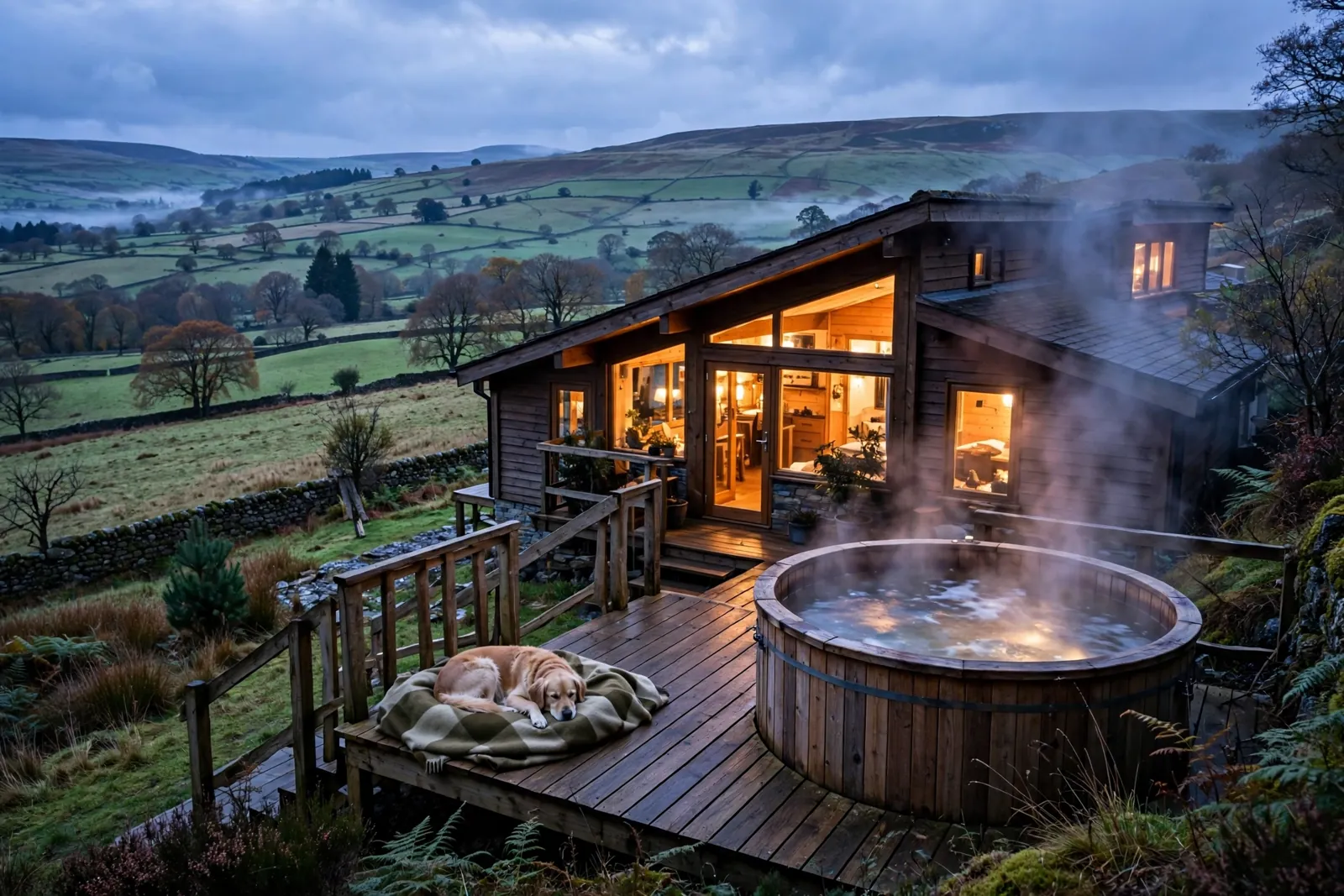
Hot tubs deserve their own sentence in a dog guide because so many glamping units now include them. Dogs do not go in hot tubs — the water temperature, chemicals and stress make it unsafe and every site prohibits it — so a unit with a tub needs a plan for the dog during your soak: settled inside within sight, or on the deck behind the plot gate, never tethered beside deep water unsupervised. If the tub is the point of the trip, check the deck fencing and the dog's view of you from its bed. Owners who have thought this through enjoy the tub; owners who have not spend the soak watching the dog instead of the stars.
What glamping with a dog costs
Glamping is priced like boutique accommodation, not like camping, and honesty about that saves disappointment. A well-equipped unit in a popular area commonly costs £80–£180 a night with minimum stays of two or three nights, and shepherd's huts and safari lodges with hot tubs can run well beyond that in school holidays. Dogs usually add £5–£15 per night or a flat £20–£40 per stay, sometimes including a dog welcome pack. Compare the total against a hotel room or a rental cottage for the same dates, not against a tent pitch, because that is the market glamping actually competes in — our UK dog travel costs guide lays the formats side by side.
Within that market, dog owners can find genuine value. An enclosed-plot safari tent sleeping four, where the dog costs a tenner and the field provides the entertainment, undercuts two hotel rooms and a dog fee stack comfortably. Shoulder seasons transform the sums: April, May, September and October bring lower rates, quieter fields and weather that canvas handles well, though you should budget for stove fuel — some sites include the first basket of logs and charge for the rest, and a cold week with a dog that feels the chill can work through several. Ask what the heating fuel arrangement is when you book, particularly for early and late season stays.
The costs to watch are the incidental ones created by the format's romance. Farm shops, honesty bars, pizza nights and breakfast hampers are priced for holiday mood, and a dog adds its own small economy: replacement chews, an extra blanket bought in the village, the laundry of muddy throws on your return. None of it is unreasonable, and much of it is the pleasure of the thing — but the traveller who budgets the unit, the dog fee and nothing else will feel the drift. Glamping rewards the same discipline as every format in this series: total the whole stay, in writing, before the deposit.
Seasons and weather realism
Canvas has a season and it is honest about it. Most glamping sites operate from around Easter to the end of October, with huts and the best-insulated yurts extending into winter. Within the season, the dog experience swings widely. Spring offers empty fields, lambs to be led past respectfully, and nights cold enough that the stove earns its keep and the dog's night coat is not a precaution but a necessity. Early summer is the format's glory — long evenings, dry ground, dogs asleep on decks — and books out first at every good site.
High summer asks for shade management. A tent in an unshaded meadow becomes uninhabitable by mid-morning on a hot day, and the dog's day must be planned around water and woodland until the evening cools. Choose sites with tree cover, a stream or the sea within reach, and units that open up — safari tents with full-width openings cope best, and huts with windows on two sides catch whatever breeze exists. Our summer heat safety guide for dogs applies with double force to canvas, where there is no masonry to hold the night's cool into the day.
Autumn is the connoisseur's season and the muddiest. The fields empty, the stoves come into their own, and dogs adore the smells of a turning countryside — while every path produces the kind of wet, leaf-mould dog that tests a unit's towels. Pack for it: drying coat, spare bedding, paw kit, and a car you are prepared to forgive. Winter glamping exists in huts and insulated structures and suits hardy dogs and owners who plan daylight carefully. Whatever the season, check the site's latest opening dates and dog policy before travelling, because small sites adjust both to weather, staffing and the lessons of the previous year.
Questions to ask before booking
A short message to the site, sent before the deposit, separates the dog-ready sites from the dog-tolerant ones. Ask: is the plot enclosed, and if so with what fencing and gate; is there a maximum dog size or number, and what is the exact dog charge for our stay; where may dogs go on site — specifically the facilities, any shared kitchen or barn, and is there an off-lead exercise field; what is the stove arrangement and is there a guard; may the dog be left alone in the unit at all; and what do you provide for dogs, so I know what to pack. Six questions, five minutes, and the answers write your packing list for you.
Read the answers for fluency, as with every format in this series. A site that replies with fence heights, the position of the dog field and a note that the end plot is quietest for a vocal dog has its dog operation thought through. A site that answers 'dogs are fine, everyone loves dogs here' may be wonderful, but you should pack as if nothing is provided and confirm the enclosure and the fee in writing. Photographs in the listing deserve the same scepticism: look for the dog bed in the corner of the interior shots, the gate in the plot photographs, and the distance between units in the wide shots — sites that genuinely cater for dogs tend to show it, because their dog guests are the ones who rebook.
Timing follows the usual logic of scarce inventory. Enclosed plots and hut formats are the minority of units on most sites, so for school holidays and bank holiday weekends, book them as early as the site allows — many open bookings for the following season to returning guests first, which is one more reason a successful first stay is worth cultivating. Midweek shoulder-season stays are when sites are most flexible on dog numbers, plot choice and checkout times. And if your dog needs a particular arrangement — a plot away from other dogs, step-free access, space for a very large breed — ask early and plainly; small sites would rather solve it in March than meet it in August.
Making the first night work
Arrive in daylight and do the safety walk before the romance. With the dog on a lead, check the plot boundary and gate, the stove and its guard, the position of candles and lanterns, any gaps under decking, and the route to the facilities and dog field. Set the dog's bed in its place — away from the stove, out of the doorway draught — with the home blanket on it, put water down in the spot it will live all stay, and only then unload the car. A dog that has watched its corner being made has a destination; a dog turned loose in a furnished tent has a project.
The first evening runs on the familiar rails: feed at the usual time, walk the site's perimeter and the dog field while it is still light, wipe paws at the door, and end the day at your normal hour with the dog settled on its bed and a chew to mark bedtime. Canvas transmits the field's sounds — owls, sheep, the neighbouring plot's kettle — and most dogs comment once and then sleep the deep outdoor sleep that is half the point of the exercise. Keep the stove routine boring and supervised, bank it down as the site instructs, and know where the torch, lead and your shoes are for the night walk, which will be along the route you scouted at dusk.
Leave the unit and the plot as the site hopes to find them: dog hair brushed off furnishings with the lint roller every glamping veteran packs, mud contained to the towels, the garden checked in a slow grid for waste, and any damage — a chewed cushion, a scratched door — reported with a photograph and an offer to pay before you are asked. Then, if the stay worked, do the thing that makes the next one easier: note the plot number, the walks, what you would pack differently, and book the return while the site still remembers your dog's name. Glamping sites are small businesses built on exactly that loyalty, and a dog that is known is a dog that is welcomed back to the best plot in the field.
Practical questions
Glamping with dogs: your questions
Are dogs allowed in all types of glamping accommodation?
No — policies vary by site and by unit. Many sites welcome dogs in some or all units, but some restrict dogs to certain tents or huts, limit numbers or size, or keep their most luxurious units pet-free. Always book a specifically dog-accepted unit, declare your dog's size and number, and confirm the dog charge before paying.
Is glamping safe for dogs around wood-burning stoves?
Yes, with sensible arrangements. Look for units with a fireguard or a stove positioned away from the dog's area, keep the dog's bed at a clear distance, supervise while the stove is lit, and never leave a dog alone in a unit with a fire burning. Take the same care with fire pits and barbecues outside, including the cooling period afterwards when ash stays hot.
Do glamping sites provide enclosed gardens or plots?
Some do, and they are the best choice for most dog owners — a fenced private plot lets the dog relax off the tether and makes night-time trips simple. Many sites do not enclose individual plots and instead require dogs on leads or tethers on the field, with a separate off-lead exercise area. Check the enclosure arrangement for your specific unit before booking.
How much extra do dogs cost when glamping?
A common arrangement is £5–£15 per dog per night or a flat fee of around £20–£40 per stay, sometimes including a welcome pack with bed, bowls and treats. Total accommodation costs vary widely, roughly £80–£180 a night for well-equipped units in popular areas. Ask for the full total for your dates, including any charge for stove fuel.
Can I leave my dog alone in a glamping tent or hut?
Usually not. Most sites prohibit leaving dogs unattended in units — in canvas structures a distressed dog can damage or escape the accommodation, and in any structure an unattended dog risks noise complaints and, with a stove, a safety issue. Plan the stay so the dog comes with you, or travel with another adult so someone can always stay with the dog.