This guide is independent and contains no paid placement. If affiliate links are added later, they will be clearly marked and will not change our editorial checks.
Start at least a month before you travel, choose a basket muzzle that leaves room to pant and drink, and train in tiny daily steps: nose in, treat, muzzle off. By departure day the muzzle should feel as ordinary as a lead — never a punishment, never a first-time surprise at the station.
The first second matters: nose in, treat out
Picture the moment most muzzle training goes wrong. A dog is already excited, the car is loaded, someone is holding a strange plastic cage and trying to coax a nose into it while saying, in an increasingly tense voice, that it will be fine. The dog learns exactly one lesson in that second: the muzzle appears when life gets stressful, and the correct response is to back away. Everything in this guide is designed to replace that memory with a different one, built weeks earlier, in a quiet room, with no journey waiting at the end of it.
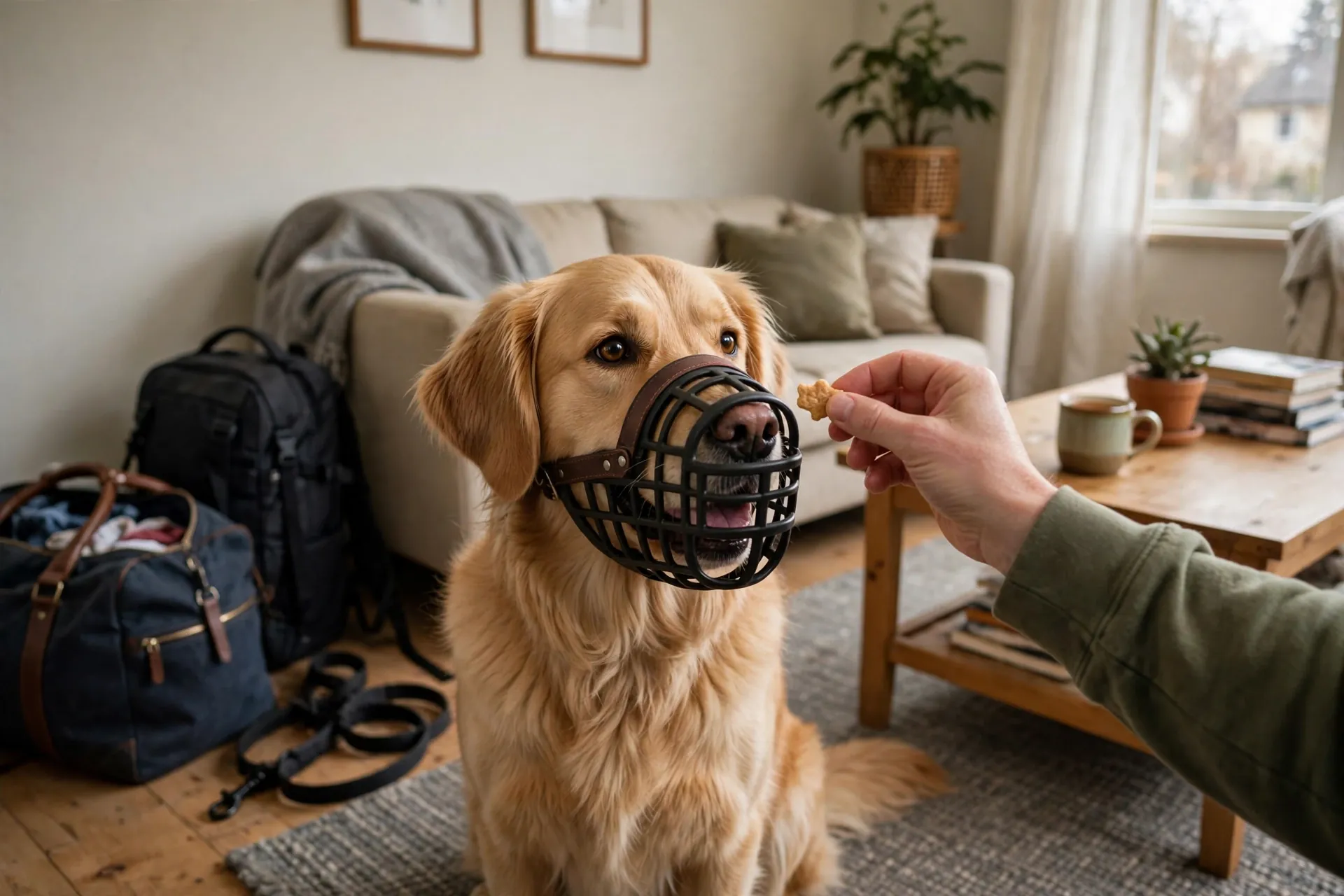
The better first second looks almost boring. You sit on the floor with the muzzle resting in your lap and a pouch of small, smelly treats beside you. You do not put it on the dog. You do not even hold it towards the dog. You let the dog sniff it, and the instant the nose moves towards the basket, a treat appears — ideally delivered through the open end of the muzzle, so the dog has to push its nose a little further in to reach it. That is the whole exercise for day one. The muzzle predicts good things, the dog chooses to approach, and the session ends while the dog still wants more. If you remember only one principle from this guide, make it this: the dog should always be moving towards the muzzle, never having it moved towards a reluctant dog.
Why does this matter so much for travel, rather than only for vet visits? Because travel stacks novelties. A station concourse, a rattling train, a new holiday cottage, other dogs in a corridor, a cafe where the dog must lie quietly under a table — each one raises arousal a little. A muzzle that is merely tolerated at home will often be pawed at, rubbed on furniture or frozen in on a busy day out. A muzzle that the dog actively enjoys, because it has a long history of treats, sniffing games and short happy wears, survives those stacked pressures. Training is not really about the plastic basket at all. It is about building such a strong, positive association that the basket becomes background noise while the dog deals with everything else.
It also matters because a muzzle is sometimes a legal or house-rule requirement rather than a personal preference. Some breeds and types are subject to specific controls, some transport operators require muzzles in certain circumstances, and some attractions, beaches or hire properties ask for one in shared spaces. If you only discover the requirement at the gate, you have no time to train kindly. Training early turns a rule into a non-event. Even if you never need the muzzle on a particular trip, the training itself is useful: it teaches your dog to accept handling around the head, to settle while wearing unfamiliar kit, and to recover quickly from mild frustration — all skills that transfer to harnesses, coats, life jackets and vet examinations.
Set expectations honestly before you start. Most confident, food-motivated dogs can learn a relaxed muzzle association in two to four weeks of short daily practice. Shy dogs, rescue dogs with an unknown history, dogs that have already had a bad muzzle experience, and dogs that are generally anxious about head handling may need six weeks or longer, and that is not failure. It is information. A dog that needs longer at the sniffing stage is telling you that the foundation matters more than your departure date. If the trip cannot wait, use the time you have as well as you can, keep sessions positive, and plan the journey around what the dog can genuinely cope with — shorter legs, quieter services, a car rather than a crowded train — rather than forcing a muzzle onto an unprepared dog and hoping for the best.
Finally, agree the rules of the game with everyone who will handle the dog. Training fails most often not because the dog cannot learn, but because one person rushes, another person straps the muzzle on for a joke, and a third person leaves it on for an hour while the dog paws in distress. A muzzle is training equipment, not a gag and not a shortcut for behaviour problems. If your dog lunges, bites or is dangerously reactive, a muzzle can be part of a wider plan, but it does not replace distance management, lead skills and, where needed, professional help from a qualified behaviourist. Use this guide for travel preparation and everyday acceptance, and seek specialist advice for aggression or serious anxiety rather than relying on a basket alone.
Choosing a basket muzzle that fits
A basket muzzle is the right choice for travel because it leaves space around the nose and mouth. Your dog should be able to open its mouth, pant, drink, yawn and take small treats while wearing it. That space is not a luxury. Dogs cool themselves mainly by panting, and a muzzle that clamps the mouth shut removes their main cooling system. This is why fabric muzzles, which wrap tightly around the snout, are unsuitable for journeys, walks or any wear longer than a brief procedure: they are handling aids for a vet or groomer, not travel equipment. If a product is marketed as a muzzle but your dog cannot pant freely in it, do not use it for a day out, however neat it looks.
Basket muzzles come in several materials, and each has trade-offs worth weighing before you buy. Hard plastic baskets, such as the widely available Baskerville-style designs, are light, inexpensive and easy to clean, and many have an optional overhead strap for dogs that slip out of muzzles easily. Wire baskets are sturdier, offer excellent airflow and allow treats to pass through the gaps readily, but they are heavier and can feel cold in winter. Biothane and other coated-strap designs are softer against the face and can be custom-shaped, which helps dogs with unusual head shapes, but they may cost more and need checking for chew damage. Leather baskets look traditional and soften with use, yet they absorb water and smells and need more care after wet walks. None of these is universally best. The best muzzle is the one that fits your dog, that your dog will happily wear, and that you can clean and check before every trip.
Fitting starts with three measurements, taken while your dog is calm and ideally standing with its mouth closed and then relaxed open. First, the length from the tip of the nose to just below the eyes. Second, the circumference around the widest part of the snout, usually a couple of centimetres back from the nose tip. Third, the width across the snout at its widest point, and a rough sense of head width where the strap will sit behind the ears. Compare these numbers with the manufacturer's sizing chart for that exact model, not with a generic small-medium-large label, because sizing varies wildly between brands. A muzzle labelled large by one maker can be smaller than another maker's medium. If you are between sizes, the larger size is usually the safer starting point, provided it does not slip over the eyes or allow the dog to pull a paw inside it.
Once you have a candidate muzzle, do a fitting check before any training session. With the basket held in place, there should be a finger-width or so of space at the end of the nose, and the dog should be able to open its mouth inside the basket. The basket should not press on the bridge of the nose, rub the corners of the eyes, or sit so low that it pushes the lips upwards. The strap should sit snugly behind the ears without pulling the ears forward, and the dog should still be able to move its ears normally. Many dogs benefit from an additional overhead strap that runs between the ears and attaches to the head strap, which stops clever dogs from hooking the muzzle off with a back paw. Check also that the muzzle does not interfere with a collar or harness: straps can tangle, and a muzzle strap that pulls the head strap of a harness tight is a sign to re-route one of them.
Brachycephalic dogs — flat-faced breeds such as pugs, French bulldogs and bulldogs — need extra care, and some cannot wear a standard basket muzzle safely at all. Their short noses, narrow airways and protruding eyes make both fitting and heat regulation harder, and a basket that seems to fit may still restrict airflow or press on the eyes. If your dog is brachycephalic, elderly, has a respiratory condition, or has a very unusual head shape, ask your vet or a qualified canine professional to check the fit before travel, and plan journeys that avoid heat and long muzzled periods altogether. Puppies need a different caution: they grow fast, so check the fit every couple of weeks and be ready to size up. A muzzle that fitted a four-month-old puppy may be painfully tight at six months, and a growing dog that associates the muzzle with pinching will be harder to retrain than one started a little late.
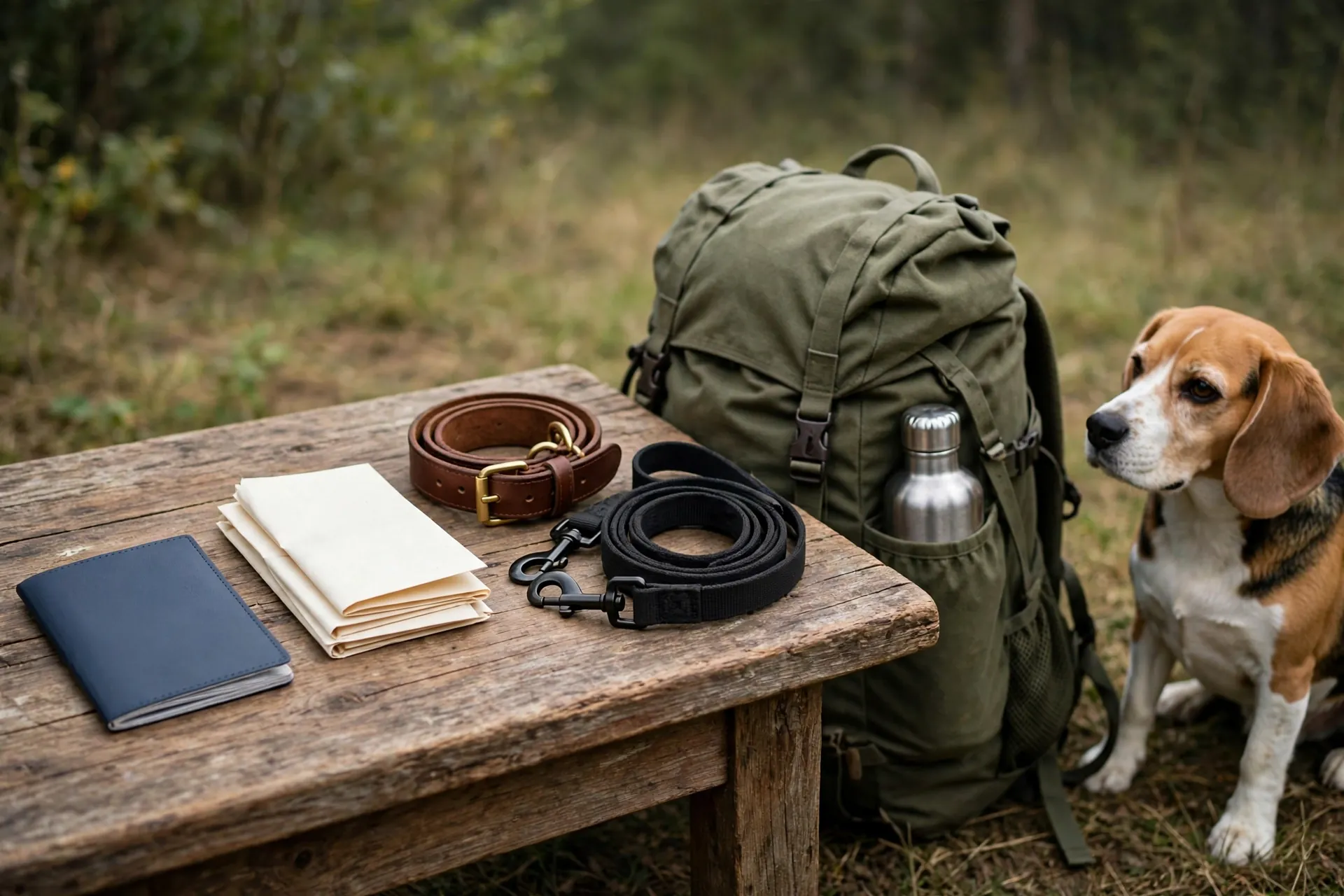
Buy early, and buy a spare if you can. Muzzle training is much easier when the dog learns on one consistent basket rather than a rotating cast of borrowed muzzles, and a spare in the car saves a trip if a strap breaks or a basket cracks on holiday. Keep the muzzle clean: rinse plastic and wire baskets after muddy walks, wash straps regularly, and inspect for cracked plastic, bent wire, frayed stitching or a buckle that no longer holds. A damaged muzzle can fail at exactly the wrong moment, on a train platform or in a busy attraction, so retire it rather than patching it with tape. Finally, remember that a muzzle is not a substitute for the rest of your travel paperwork and kit. If your trip involves documents, vaccinations or insurance papers, our dog travel documents checklist is worth running through alongside this guide, because a well-trained dog in a well-fitted muzzle still needs its paperwork in order.
A four-week desensitisation plan
The plan below assumes one or two short sessions a day, each lasting two to five minutes, with the muzzle put away between sessions. Short and happy beats long and dutiful every time. If your dog is already comfortable at a step, you can move on within a day or two; if your dog hesitates, stay at that step for several days. Progress is measured by enthusiasm, not by the calendar. A dog that races to the muzzle on day ten is further ahead than a dog that tolerates it gloomily on day twenty.
Week one: the muzzle is a treat dispenser. Hold the basket so the open end faces your dog, and smear a little soft food or squeeze paste just inside the rim. Let the dog lick it off, then remove the muzzle. Repeat a few times, then progress to placing a treat at the bottom of the basket so the dog must push its nose fully in to retrieve it. Never push the muzzle onto the dog during this week. Your job is to hold it steady and let the dog do the approaching. End each session with a favourite game or a walk, so the muzzle session is sandwiched between good things. By the end of week one, most dogs will orient towards the basket as soon as they see it, which is exactly the response you want to build on.
Week two: straps, buckles and brief wears. Once the dog happily holds its nose in the basket for a few seconds to eat a series of small treats, start touching the straps while the dog is eating, then gently bringing them behind the ears without fastening them. Feed continuously during this handling, then take the muzzle off. Next, fasten the strap for one second, feed, and remove it. Build gradually to ten seconds, thirty seconds and then a minute, feeding a treat every few seconds throughout. If the dog paws or freezes, you have stayed too long or fastened too soon: drop back to unfastened nose games for a day. Also introduce the sound of the buckle separately, clicking it near the dog while feeding treats, so the click itself becomes a predictor of food rather than a startling snap beside the ears.
Week three: movement, duration and real life at home. With the muzzle fastened, ask for simple behaviours your dog already knows — a sit, a hand touch, a short walk to the kitchen — and reward each one. Walk around the house and then the garden, letting the dog sniff and move normally. Gradually stretch the gaps between treats from every few seconds to every ten or fifteen seconds, but keep the total wear short, building from a minute to five minutes, then ten. Practise putting the muzzle on in different rooms, by the front door and beside the car, so it is not tied to one spot on the living-room rug. This is also the week to practise drinking: offer water from a bowl and from a travel bottle while muzzled, and check that the dog can lap comfortably. If drinking is awkward, revisit the fit before you blame the training.
Week four: rehearsals that feel like travel. Now simulate the journey in miniature. Put the muzzle on, walk to the car, sit in the car for a minute with the engine off, then go back inside and remove it. Next time, drive around the block. Then try a short train-platform visit without boarding, a quiet cafe garden, or a walk past another dog at a distance your dog can handle. Keep each rehearsal shorter than you think necessary, and always end with the muzzle coming off and something enjoyable happening. Dogs that have only ever worn a muzzle in a quiet house can be surprised by wind, traffic noise and other dogs, so these rehearsals are where you discover problems while you still have time to fix them. If a rehearsal goes badly, do not repeat it immediately at the same difficulty; drop back to an easier version the next day.
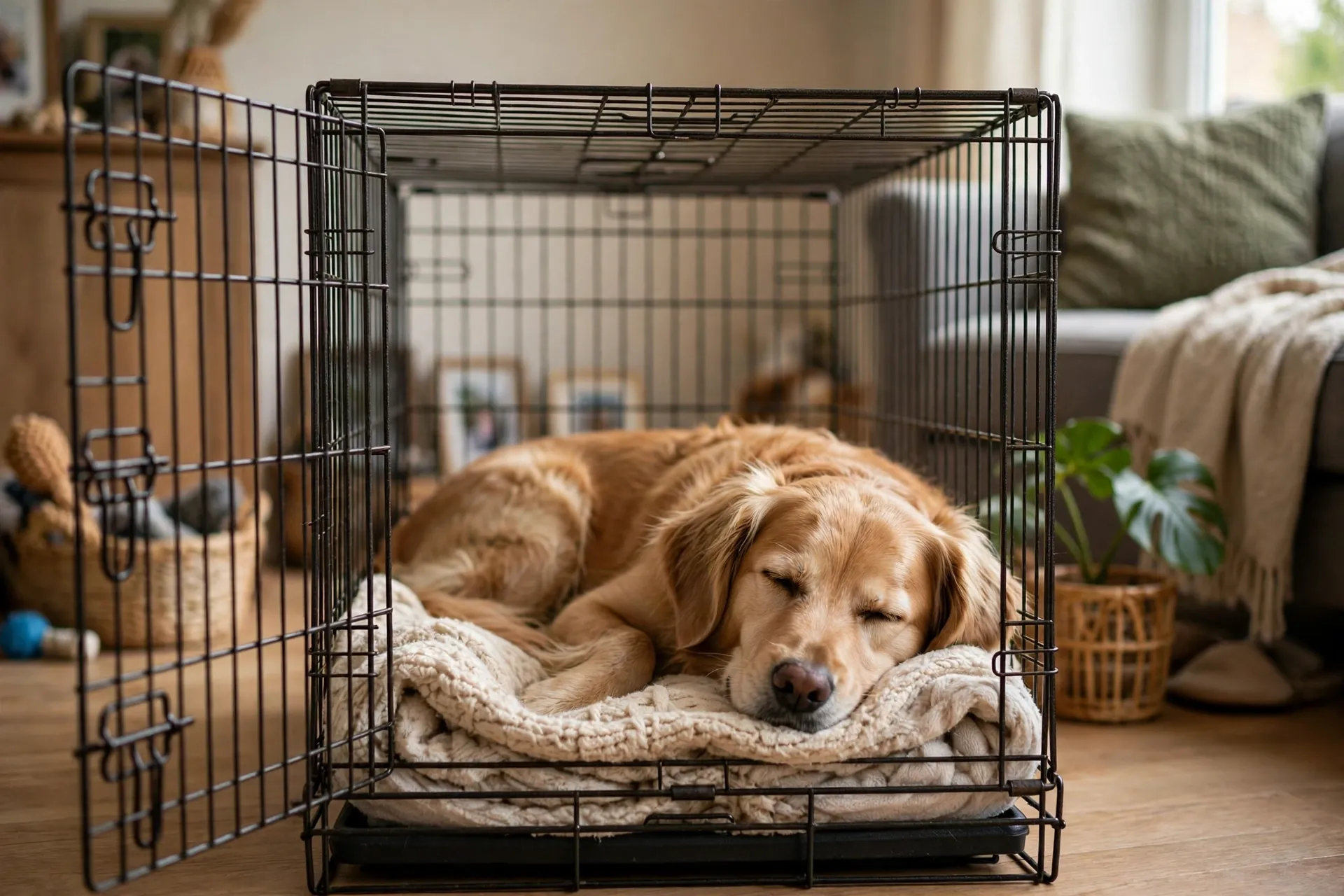
For dogs that need more time, the same structure stretches gracefully. Repeat week one for two weeks if the dog is shy about head handling. Spend an extra week on duration if the dog is fine for a minute but paws at five. The parallel skill worth training alongside the muzzle is a calm settle on a mat or blanket, which is the behaviour you will actually want on a train or in a cafe. Our crate training guide follows the same gradual logic, and dogs that are comfortable in a crate often transfer that settle-and-wait skill to muzzled outings surprisingly well. Keep a simple training log — date, duration, what went well, where the dog hesitated — because it stops you from guessing, and it shows you clearly when a step has genuinely been mastered rather than merely survived once.
Panting, drinking and comfort checks
A muzzle check done only while the dog is lying calmly at home tells you very little. Panting is the test that matters, and panting only happens properly when the dog is warm, active or mildly excited. After a normal walk, when your dog would naturally pant, put the muzzle on and watch. The mouth should open widely inside the basket, the tongue should move freely, and the breath should sound easy rather than strained or high-pitched. If panting looks shallow, if the dog keeps trying to open its mouth wider than the basket allows, or if drool builds up because the mouth cannot move properly, the muzzle is too small, the wrong shape, or fitted too tightly. Change the equipment rather than asking the dog to adapt to it.
Heat is the safety issue behind every panting check. Dogs do not sweat like people, and a muzzled dog on a warm train, in a stuffy car or on a sunny pavement has fewer ways to cool down. Never leave a muzzled dog unattended in a warm vehicle, never muzzle a dog for a long, hot walk when an unmuzzled alternative route exists, and always carry water. On summer journeys, plan shade stops, choose cooler services where possible, and watch for early signs of overheating: excessive panting that does not settle, a bright red tongue, drooling, restlessness, wobbliness or vomiting. If you see these signs, remove the muzzle, move the dog to shade, offer small amounts of cool water, wet the paws and belly, and seek veterinary help promptly if the dog does not recover quickly. Heatstroke can develop fast, and a muzzle that restricts panting makes it develop faster.
Drinking needs its own rehearsal, not just a hope that it will work. At home, offer water in the dog's usual bowl while muzzled, then try a deeper bowl, a travel bottle with a spout, and a collapsible bowl of the kind you will actually carry. Some dogs learn to lap through the basket gaps immediately; others need the water level higher, or a bowl wide enough that the basket can dip slightly without tipping. On a journey, offer water little and often rather than waiting until the dog is desperate, because a thirsty, stressed dog drinks frantically and may then need a toilet stop sooner. Treats need a similar check: use small, soft treats that fit through the basket gaps, and practise delivering them quickly on a walk so you can keep rewarding calm behaviour in public without fumbling. Hard biscuits that will not fit through the gaps are useless as travel rewards, however much your dog loves them at home.
Comfort checks should become a habit, like checking a lead clip. Before every outing, run a finger around the nose bridge, the strap behind the ears and the corners of the mouth, looking for redness, rubbing or hair loss from previous wears. After removing the muzzle, check the same places again, and look inside the basket for trapped food, mud or grit that could irritate the nose next time. A muzzle that fitted perfectly in winter may rub in summer when the dog's coat changes, and a strap that has stretched after washing may let the basket slide towards the eyes. If you notice persistent rubbing, try padding the nose bridge with a soft cover designed for that purpose, or consider a different shape; do not simply tighten the strap to stop movement, because tightness elsewhere is usually what causes the rub.
Duration limits deserve honesty too. A well-fitted basket muzzle is comfortable for far longer than a fabric one, but that does not mean all-day wear is kind. Build up to the longest period your trip genuinely requires, give the dog regular muzzle-free breaks in safe places, and watch for the subtle signs that a break is overdue: yawning, lip licking when no food is present, repeated pawing, rubbing the face on the ground, or a sudden refusal to walk. These are communications, not disobedience. A dog that gets breaks, water and treats will wear a muzzle far more willingly over a long day than a dog that is expected to endure it without relief. If your itinerary genuinely requires many hours of continuous muzzling, reconsider the itinerary before you reconsider the dog.
Public transport and visitor attractions
Transport rules in the UK are not a single national rule, and that is precisely why muzzle training is worth doing even if your usual operator does not require one. Train operators, bus companies, ferry services and individual attractions each set their own conditions, and those conditions can differ between a quiet local service and a busy intercity train, between the main deck and a lounge, or between peak and off-peak travel. Some operators require muzzles for dogs above a certain size, some require them only in specific areas, and some ask only that the dog is on a lead and under control. Because rules change and staff interpret them differently on the day, check the official guidance before you travel for each leg of your journey, and carry the muzzle even when you expect not to need it. A trained dog with a muzzle in your bag is prepared; an untrained dog facing a surprise requirement at the barrier is not.
On trains, the practical challenges go beyond the written rule. Carriages are noisy, narrow and full of legs, luggage and other dogs. Book a seat where your dog can lie at your feet without blocking the aisle, avoid the busiest peak services for early trips, and keep the muzzle on for the parts of the journey where other passengers are closest, even if you remove it during a quiet stretch. Practise the specific behaviours a train requires: lying on a mat, ignoring food dropped on the floor, staying settled when the train brakes, and walking calmly through a vestibule. A dog that can do these things muzzled is far easier to travel with than a dog that is merely wearing the equipment while pulling, barking or lunging. If your dog is reactive to other dogs, choose services and carriages with fewer dogs, keep distance at stations, and use a quiet corner rather than squeezing into a crowded vestibule and hoping nobody else boards with a dog.
Buses, coaches and ferries each add their own twist. Buses often have limited floor space, so a small dog that can lie under a seat is easier than a large dog in a narrow aisle, and some services restrict dogs to certain seats. Coaches may require dogs to travel in a specific area or may not accept them at all, so confirm before booking rather than assuming. Ferries range from pet-friendly lounges to kennel requirements on longer crossings, and the rules for the crossing, the terminal and any shuttle bus in between can all differ. In every case, the muzzle question is only one part of the plan: toileting before boarding, water, a familiar blanket, a chew or long-lasting treat where allowed, and a plan for delays all matter as much as the basket. A delayed train with a thirsty, muzzled dog and no water is a welfare problem, not just an inconvenience.
Visitor attractions, stately homes, gardens, castles and museums vary even more. Some welcome dogs throughout, some restrict dogs to grounds and gardens, some allow dogs only in certain rooms, and some require muzzles in indoor spaces or around livestock. A muzzle can be the difference between your dog joining you and your dog waiting in the car, which should never be the fallback on a warm day. Check the attraction's own visitor information before you travel, note whether the muzzle requirement applies to the whole site or only to specific areas, and plan muzzle-free breaks in the grounds or in a quiet corner where the rules allow. If an attraction has livestock, keep the dog on a short lead as well as muzzled, give sheep and cattle a wide berth, and remember that a muzzle does not make chasing acceptable: it only reduces the risk if a chase starts.
Holiday accommodation has its own version of the same question. Some cottages, hotels and holiday parks ask for muzzles in shared corridors, lifts, bars or dining areas, while allowing dogs unmuzzled inside the room or unit itself. This is a sensible compromise to learn in advance, because it affects how you plan evenings: a dog that will happily wear a muzzle for the walk from the room to the terrace is easy to live with, while a dog that panics in a lift is not. When you book, ask specifically about shared spaces, not just whether dogs are allowed, and note the answer with your booking confirmation. Our holiday parks guide explains the wider questions worth asking about boundaries, shared areas and complaints procedures, which pair naturally with a muzzle plan for communal spaces.
Finally, keep perspective about what a muzzle signals to other people. Some fellow travellers will be reassured, some will assume your dog is dangerous, and a few will comment. A calm dog walking politely in a basket muzzle is the best answer to any of those reactions, and it does more for public acceptance of dogs on transport than any argument. Avoid using the muzzle as a visible warning to keep people away, and avoid apologising for it constantly, which can make your dog uneasy. Treat it as ordinary kit, like a harness or a raincoat, and your dog will read your relaxed attitude far more clearly than any words you say.
When your dog resists, paws or freezes
Setbacks are normal, and how you respond to them determines whether training recovers or stalls. Start by diagnosing, not by pushing through. Pawing at the muzzle usually means one of four things: the fit is uncomfortable, the muzzle went on too early, it stayed on too long, or the rewards stopped. Freezing — standing completely still, refusing to move, staring blankly — often means the dog is overwhelmed or has learned that struggling does not help, which is more worrying than active pawing because it looks like calm acceptance. Backing away, turning the head, lip licking, yawning and showing the whites of the eyes are earlier, quieter signals that the dog is unhappy. If you see them, the session is already too hard, and the kindest move is to make it easier immediately.
The fix for most setbacks is the same: go back to the last step your dog genuinely enjoyed, shorten the session, and increase the rate of rewards. If the dog paws after two minutes, train for one minute with a treat every few seconds. If the dog freezes when the strap is fastened, return to unfastened nose games for several days, and fasten the strap for only a second at a time. If the dog will wear the muzzle in the kitchen but not in the garden, the problem is distraction and novelty, not the muzzle itself, so rebuild duration in the garden from scratch with easier rewards. Resist the temptation to hold the muzzle on while the dog paws, on the theory that the dog will give up: this teaches the dog that its signals are ignored, and it often produces a dog that either escalates to biting at the straps or shuts down entirely.
Some dogs have specific sticking points that need targeted work. Dogs that hate having straps behind their ears may need a muzzle with a different strap arrangement, or a period of rewarding ear handling separately from muzzle training. Dogs that chew the basket may be bored, frustrated or teething, and need shorter wears with more engaging rewards, or a sturdier wire basket rather than a soft one they can gnaw. Dogs that rub their faces on furniture are often trying to remove pressure from the nose bridge, so check the fit and try padding before assuming defiance. Dogs that are fine at home but panic on transport may not have a muzzle problem at all: they may be travel-sick, noise-sensitive or car-anxious, and the muzzle is simply where the stress becomes visible. In that case, work on the travel anxiety separately, with shorter journeys and veterinary advice if sickness is involved.
Children, visitors and other dogs can accidentally undo good training. A well-meaning visitor who straps the muzzle on to show a friend, a child who pulls at it, or another dog that paws at it in play can all create a bad association in seconds. During training, control who handles the muzzle, explain the rules briefly to anyone staying with the dog, and store the muzzle out of reach between sessions so it is never used as a toy or a punishment. If a setback happens because someone else mishandled the muzzle, do not punish the dog for its reaction. Rebuild calmly, starting from sniffing games, and treat the incident as a reminder that the muzzle is training equipment with a single, consistent handler until the association is solid.
Know when to seek help rather than persisting alone. If your dog panics, snaps, bites at the muzzle aggressively, or becomes generally more anxious after several weeks of careful training, stop and consult a qualified behaviourist or your vet. Pain is a common hidden cause: dental problems, ear infections, skin irritation under a strap, or a muzzle pressing on a sore spot can all make a previously willing dog refuse. A vet check is cheap insurance before you label a dog stubborn. Similarly, if your dog has a bite history or serious reactivity, muzzle training should sit inside a broader behaviour plan, not replace it. A muzzle makes a reactive dog safer to manage, but it does not teach the dog to feel safe around triggers, and that emotional work needs professional guidance.
From living room to real trips
The gap between a successful living-room session and a successful journey is where most training unravels, so bridge it deliberately. Start with the smallest real-world version of your trip: muzzle on, walk to the end of the street and back, muzzle off. Then a walk around the block, then a walk past a bus stop, then a short car ride to a quiet park. Each step adds one new element — distance, duration, noise, other dogs, other people — rather than all of them at once. If you are planning a train journey, visit the station without travelling, then take a one-stop ride, then a longer ride. This graduated exposure is slower than simply hoping for the best, and it is the reason dogs trained this way cope when the real journey throws up a delay, a crowded carriage or a barking dog in the next seat.
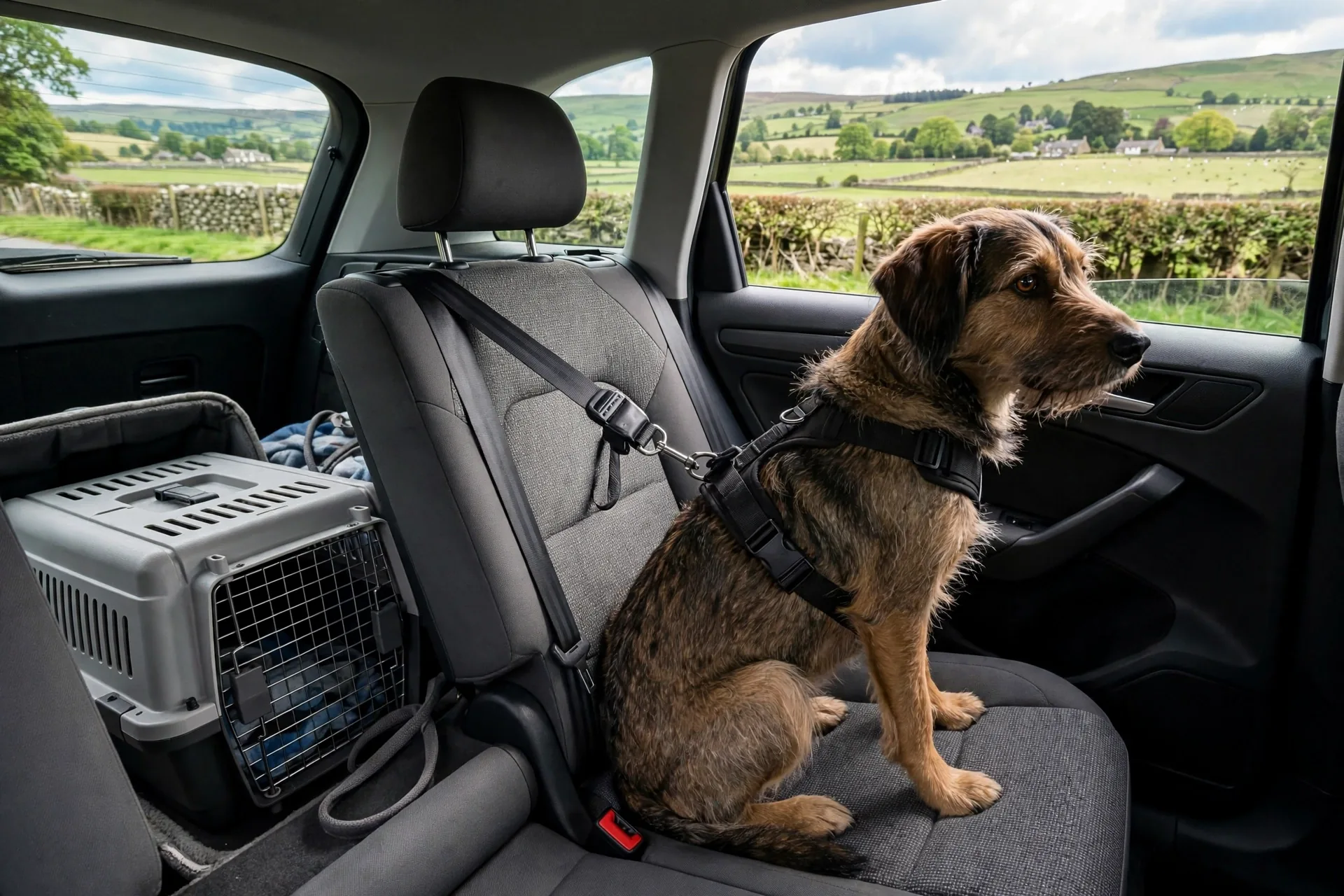
Build a travel routine around the muzzle so it becomes a cue for a predictable sequence. For example: toilet walk, muzzle on with treats, settle on the travel mat, journey, muzzle off at a safe stopping point, water and a sniff walk. Dogs thrive on predictability, and a routine tells the dog when the muzzle is coming off as well as when it is going on. Keep the mat or blanket consistent across car, train and holiday cottage, because the familiar smell and texture help the dog settle faster in each new place. If your dog travels in a crate or with a car restraint, practise the muzzle together with that restraint at home, because two pieces of kit at once can feel very different from either one alone. Our car safety guide covers harness and crate choices in detail, and pairing that decision with your muzzle plan avoids discovering a clash of straps on departure morning.
Think about the humans on the trip too. A journey is easier when everyone knows the plan: who carries the muzzle, who carries water and treats, who handles the dog at stations, and what happens if the dog needs a break. Agree in advance that anyone can call for a muzzle-free break in a safe place without argument, because a tired, thirsty dog that is forced to continue will not learn to love the muzzle. If you are travelling with children, give them a clear, simple role — holding the treat pouch, for example — rather than letting them fiddle with straps. And if you are using a dog walker, sitter or holiday-park staff member during the trip, show them the fitting, the removal and the comfort checks before you leave the dog with them, and leave written notes if the stay is longer than a day.
Finally, maintain the training after the trip. Muzzle acceptance fades if the muzzle only appears for stressful journeys, so keep up a brief, happy session once or twice a week even when you are not travelling. A two-minute nose game with treats, a short muzzled walk to a favourite sniffing spot, or a muzzle-on-then-off routine before a meal keeps the association fresh without any effort. Dogs that practise regularly are ready for the unexpected — a vet visit, a new transport rule, a cottage that asks for muzzles in corridors — while dogs that only meet the muzzle twice a year have to relearn it under pressure. Think of it like lead training: not a course you finish, but a skill you keep in good working order.
Packing and pre-departure checklist
A calm departure starts the night before, not at the front door. Lay out the muzzle, check the straps and buckles, clean the basket, and pack a spare if you have one. Put small, soft treats in a pouch that fits through the basket gaps, fill a travel water bottle and a collapsible bowl, and pack the dog's familiar mat or blanket. Charge your phone, save the vet's number and the number of an emergency vet near your destination, and check the official guidance before you travel for each transport operator and attraction on your route. Print or screenshot the relevant rules, because station Wi-Fi and rural phone signal are unreliable witnesses at a barrier.
On the morning of travel, give your dog a proper toilet walk and a chance to pant, drink and settle before the muzzle goes on. Fit the muzzle calmly, run the comfort check — nose space, mouth opening, strap behind the ears, no rubbing — and reward the dog for a settled wear before you leave the house. Plan water stops into the journey rather than hoping for them, and build in muzzle-free breaks wherever the rules and safety allow: a quiet layby, a park, a garden area at a service station. If a leg of the journey runs long, prioritise a break over punctuality. A dog that arrives an hour late but relaxed is in a far better state than a dog that arrives on time but distressed, and the rest of the holiday will be easier for it.
At your destination, keep the first hour low-key. Let the dog sniff the accommodation, find water, and settle on its mat before you head out to explore. If the property asks for muzzles in shared areas, practise the corridor or lift route once, calmly, before the busy evening period, so the dog learns it when the building is quiet. Keep the muzzle clean and dry between outings, check for rubbing each evening, and note anything that needs adjusting before the next day. A holiday is a series of small repetitions, and each calm repetition strengthens the association you built at home.
Use this final checklist before every muzzled trip: basket muzzle fitted and checked, spare muzzle or repair kit packed, soft treats that fit through the gaps, water and bowl, familiar mat, lead and harness separate from the muzzle strap, operator and attraction rules checked, toilet walk done, and a plan for breaks. If any item is missing, fix it before you leave rather than improvising on a platform. Muzzle training is not about perfection on day one. It is about giving your dog a fair, gradual introduction, a comfortable fit, and a travel routine it can trust — and then enjoying the places that training opens up, together, without the muzzle ever becoming the story of the trip.
Practical questions
Before you go
How long does muzzle training usually take before a trip?
Most dogs need two to four weeks of short daily sessions before a muzzle feels routine, and nervous or muzzle-shy dogs may need six weeks or more. Start at least a month before travel, keep sessions under five minutes, and only move on when your dog happily pushes its nose into the muzzle for a treat. A rushed first fitting on departure day is the most common reason training fails.
Can my dog pant, drink and take treats in a basket muzzle?
Yes, in a correctly fitted basket muzzle your dog should be able to pant fully, drink water and take small treats through the gaps. If panting looks shallow, the tongue cannot move freely or treats will not fit through, the muzzle is too small or the wrong shape. Test panting after a walk, not only when your dog is resting calmly at home.
Is a fabric muzzle OK for a train journey or a long day out?
No. A fabric muzzle that holds the mouth shut is only suitable for very brief handling, such as a vet examination, because it restricts panting and therefore cooling. For travel, choose a basket muzzle with space around the nose and mouth, and check the official guidance before you travel if a particular operator or venue states a different requirement.
Do trains and buses in the UK require dogs to wear a muzzle?
Rules vary by operator, route and sometimes by the individual service, and they change, so check the official guidance before you travel. Some operators require muzzles for larger dogs or in certain areas, while others ask only that the dog is under control on a lead. Train your dog to accept a muzzle even where it is not compulsory, so a rule change or a busy carriage does not become a crisis.
My dog paws the muzzle off every time. What should I do?
Go back to a step your dog enjoys and shorten the session. Pawing usually means the muzzle went on too early, stayed on too long, the fit is uncomfortable, or the reward stopped flowing. Rebuild with nose-in-the-basket games, reward every few seconds, keep early wears to under a minute, and check the fit around the eyes, nose bridge and strap before blaming stubbornness.
Should a muzzled dog still wear a harness or lead on a trip?
Yes. A muzzle is not a substitute for a lead, harness or other restraint, and it does not control pulling. Keep your normal lead and harness, keep the muzzle strap separate from the lead attachment where possible, and never tie a lead to a muzzle. Check both pieces of kit before every outing, because a strap that has slipped can change the fit of both.