This guide is independent and contains no paid placement. If affiliate links are added later, they will be clearly marked and will not change our editorial checks.
Holiday dogs are easier targets than dogs at home: new surroundings, more strangers, disrupted routines and moments when the dog is briefly out of sight. The best protection is layered — a correct microchip and ID tag, a secure stay, a dog that is never left alone in public, and a plan for the first hour if your dog goes missing. No single gadget replaces those habits.
Why holiday dogs are targeted
At home, your dog has a routine, a familiar garden, neighbours who know the sound of your gate and a walk where you know every shortcut, every blind corner and every dog that lives behind each fence. On holiday, almost all of that local knowledge disappears at once. You are reading a map instead of watching the pavement, carrying bags instead of holding the lead with both hands, and trying to work out where the beach path starts while your dog is already three steps ahead of you. That divided attention is exactly what makes a holiday dog easier to take than the same dog at home, and it is why prevention on holiday needs to be deliberate rather than left to habit.
Thieves do not need a long opening. Most dog thefts are opportunistic rather than carefully planned: a dog tied outside a shop while its owner queues inside, a dog visible through a car window in a busy car park, a small dog left in an unfenced front garden while luggage is unloaded, or a dog off the lead on an unfamiliar path that runs out of sight around a bend. In each case the window is measured in seconds, not minutes, and the owner is usually close by but facing the wrong way. The dog does not have to be a rare breed or an expensive puppy to be taken. Friendly dogs that approach strangers willingly, small dogs that are easy to lift, and puppies that attract attention in a crowd can all be targets, and a dog that is stolen for resale, for breeding or simply because someone wanted a dog that day is equally lost to its owner.
Unfamiliar places add a second layer of risk that has nothing to do with crime. A dog that slips a collar on a strange path has no idea how to get back to a cottage it arrived at an hour ago. A dog that bolts after a rabbit on a coastal cliff path, or through a gap in a hedge into a field of livestock, may be lost before its owner has worked out which direction it went. That is why the advice in this guide mixes theft prevention with lost-dog prevention: in the first minutes after a dog disappears, the two look identical, and the steps that help in one case — a correct microchip, recent photos, a fast alert to the right people — also help in the other. If your dog does go missing on a break, our guide to a lost dog on holiday sets out the search in detail.
The good news is that the risk is manageable without turning a holiday into a security exercise. Think in layers, and make each layer easy to keep. If one layer fails — a gate is left open, a lead slips, a stranger distracts you — the next layer should still hold: the dog is microchipped and wearing an ID tag, someone in your group knows where the dog is, and you have the photos and numbers ready to act within minutes. The sections below build those layers in the order you will actually use them, from the checks to make before you leave home to the kit to pack and the checklist to run before you drive away.
Before you travel: microchip, ID tag and recent photos
Start with the microchip, because it is the one form of identification that cannot be slipped off, cut away or left behind in a cottage. In England, Scotland and Wales, dogs must be microchipped by the time they are eight weeks old, and the details held by the database must be kept up to date. Before a holiday, log in to your microchip database account and check three things: the chip number, your current mobile number, and your home address. If you have moved house, changed numbers or taken over a rescue dog whose chip is still registered to a previous owner or a rescue, fix it now, not from a car park in Cornwall. A chip with an old number is little better than no chip at all, because a vet or warden who scans a found dog will reach a dead end. Keep the chip number and the database helpline in your phone, and carry the same details on paper in case your phone battery dies.
Next, check the ID tag on the collar your dog will actually wear on holiday. The law in the UK requires a dog in a public place to wear a collar with the name and address of the owner on a tag, and the tag is often the fastest way for a member of the public to return a found dog without any scanning equipment. Make sure the engraving is still legible after months of wear, that the split ring is not about to fail, and that the phone number on the tag is the mobile you will have with you, not a landline at home. If you use a holiday tag with a temporary number, keep your usual tag as well, or make sure the holiday tag carries the same permanent details. A second tag on the harness, with the same number, is a cheap backup if the collar comes off on a walk.
Take fresh photos the day before you travel, and take more than you think you need. Photograph your dog from the side, from the front, and from above, in daylight, standing on a plain surface so the size, coat pattern and markings are clear. Add a close-up of any distinctive feature — a white chest patch, a torn ear, a spot on the tongue, a scar — and one photo of you with the dog, which helps prove ownership if there is ever a dispute. Save the best three or four to your phone's favourites so you can find them without scrolling through a holiday album, and send a copy to another adult in your group. If your dog is stolen or lost, you will be asked for a clear recent photo within minutes, and a blurry picture from last Christmas will slow everything down.
Finally, do the small paperwork jobs that are easy to forget. Note the name, address and phone number of the vet nearest your stay, and of an out-of-hours vet if the local practice closes early. Save the number for your microchip database and the DogLost helpline in your phone. If your dog takes medication, pack a spare day's supply and a copy of the prescription. Check that your pet insurance is in force and that you know the policy number, and check the official guidance before you travel if anything about the rules for your destination, your dog's breed or your travel arrangements is unclear. None of this takes more than half an hour at home, and it is the difference between acting in the first ten minutes and spending those minutes searching for a number.
Choosing a stay with security in mind
Security starts at the booking stage, long before you load the car. When you compare cottages, lodges and parks, look past the phrase "dog-friendly" and ask what it actually means for the building you will sleep in. A ground-floor cottage with a private enclosed garden is a different proposition from a first-floor flat above a busy street, or a lodge on a park where the outdoor space is a shared lawn beside a public footpath. Ask for the exact arrangement in writing: is the garden private or shared, is it fully enclosed, how high is the fence or wall, is there a gate, and does the gate lock? A listing photograph taken from a flattering angle can hide a low hedge, a gap beside a shed or a gate that a determined terrier can push open.
Think about the route between the front door and the outside world. A cottage that opens straight onto a road is riskier for a dog that bolts than one with a porch, a hallway or a small enclosed yard as a buffer. A park pitch beside the main pedestrian route means a constant stream of strangers past the door, which is hard for a reactive dog and gives an opportunist more chances to watch your routine. An edge pitch, a cottage at the end of a lane, or a unit with parking beside the door usually means fewer passers-by and a shorter, calmer transfer from car to building. Ask where the bins are collected, where deliveries arrive and whether the garden backs onto a footpath, a beach or farmland, because each of those shapes the daily risk in a different way.
Ask the host or park directly about the rules that affect security. Can the dog be left alone in the accommodation, and for how long? Is there a crate or a dog gate you can use, or should you bring your own? Are there cameras on the site, and who monitors them? Is there a warden or host on site overnight, and what is the number to call if something goes wrong? The answers matter less than their specificity: a host who can tell you the fence height, the gate latch type and the name of the nearest vet has thought about dogs properly, while a host who only says "we love dogs" has not. Keep the useful answers with your booking confirmation, so you can check them again on arrival instead of relying on memory.
For a fuller set of questions to ask before you pay, our guide to a dog friendly cottage with a secure garden covers fence heights, gate checks, hazards and booking questions in detail. The principle is the same in both guides: the cheapest listing is rarely the safest, and a stay that fits your dog's size, temperament and escape skills is worth more than a prettier view. If you are choosing between two similar places, pick the one where you can see the dog, reach the dog and keep the dog contained without constant vigilance, because that is the stay where you will actually relax.
Garden and boundary checks on arrival
Do the garden check before you unload the dog, not after. Park, leave the dog in the car with a responsible adult and the windows shaded, and walk the boundary yourself. Push every fence panel, tug every gate, look for gaps under hedges, holes dug by a previous dog, loose gravel boards, broken trellis and the space beside sheds, oil tanks and compost bins. Check the height from the dog's point of view: a fence that looks tall to you may be a low hurdle to a springy collie, and a wall with a bin beside it is a staircase for a clever dog. If the garden is described as enclosed but you find a gap, report it to the host straight away, photograph it, and do not let the dog out unsupervised until it is fixed or blocked.
Pay particular attention to gates, because gates are where most garden escapes happen. Test the latch from both sides, and check whether it can be opened by a dog jumping up, by a child, or by a gust of wind. A gate that swings outward onto a pavement is worse than one that swings inward, and a gate without a lock is only a suggestion. If the latch is weak, use a simple clip, a carabiner or a bungee to hold it shut, and agree with everyone in your group that the gate stays shut unless someone is actively walking through it. At a park or campsite, the same rule applies to the pitch boundary and to any communal dog exercise area: check the gate before you unclip the lead, and check it again when someone else's dog arrives.
Look for hazards as well as exits. Move slug pellets, rat poison, fertiliser, barbecue lighter fluid, hot-tub chemicals and cleaning products out of reach, and check for cocoa shell mulch, lilies, foxgloves and other plants that are toxic to dogs. Look for broken glass, sharp wire, open water butts and ponds, and for gaps in decking where a small dog could slip through or get a paw trapped. If the garden backs onto livestock, a road or a river, treat the boundary as a hard limit rather than a suggestion, and keep the dog on a long line for the first few outings until you know how they react to the new smells and sounds.
Make the first garden visit boring on purpose. Let the dog sniff the boundary on a lead, show them where the water bowl and bed are, and let them toilet in the same spot each time so the garden quickly becomes a familiar place rather than a new territory to explore. Supervise every garden visit for the first day, even in a garden that looks secure, because a dog that is settling in is also a dog that is testing limits. After that, keep the habit of a quick visual check each morning: storms, frost and a previous guest's dog can all create a new gap overnight, and a thirty-second check is cheaper than a lost afternoon.
Never leave your dog tied up outside shops and cafes
Tying a dog outside a shop is the single easiest way to lose one. The lead can be untied in a second, cut with a pocket knife, or simply slipped off a collar that is a little loose, and the owner is inside, out of sight, with a basket in one hand and no idea anything is happening. Busy high streets make it worse: a crowd gives a thief cover, a queue gives them time, and a dog that is friendly to strangers will walk away happily with someone it has only just met. Even a dog that barks at strangers can be lifted, muzzled or carried away quickly by someone who expects the noise. If you would not leave a wallet on a bench outside a shop, do not leave a dog there either.
The stress on the dog is a reason in itself, even before theft is considered. Many dogs find being tied and left alone in a busy place frightening: traffic noise, trolleys, bicycles, children running past and other dogs on leads all pass within a metre, and the dog cannot move away or come to you. That stress can lead to tangled leads, a slipped collar, a bite if a stranger reaches out to stroke the dog, or a dog that breaks free and runs into traffic. Some shops also have signs asking owners not to leave dogs tied outside, and local rules or a shop's own policy may mean the dog is moved by staff or reported. The safest choice is also the simplest: the dog does not wait outside alone.
Plan around the rule rather than breaking it once and hoping. Travel with at least two adults when you can, and take it in turns to wait outside with the dog while the other person shops. Choose dog-friendly shops, farm shops, garden centres and cafes where the dog can come inside or sit on a terrace with you, and check the policy before you go rather than assuming. If you are travelling alone, do the shopping in a different way: use click and collect, order a delivery to your stay, shop at a supermarket with a dog-friendly cafe area, or leave the errand until the dog is safe and settled at the cottage with someone else. A short delay is a small price for a dog that is still there when you come back.
If you arrive somewhere and find there is no good option, change the plan on the spot. Sit outside with the dog and have a coffee instead of going in, split the group so one person stays with the dog at all times, or drive on to a place that welcomes dogs. It is worth saying the same thing to children in the group, so they do not tie the dog to a bench "just for a minute" while they look in a window. "Just for a minute" is exactly the window a thief needs, and a holiday is full of those minutes: buying an ice cream, checking a menu, taking a photograph. Make "never tied up alone" a house rule for the whole trip, and the decision is already made before the temptation arrives.
Car safety: never leave a dog visible and alone
A dog left visible and alone in a car is a target and a welfare risk at the same time. A thief can smash a window or open an unlocked door in seconds, and a dog in a crate in the boot is no safer if the car is left unattended in a quiet car park with no one watching. The risk is highest at the places holidaymakers stop most: service stations, beach car parks, National Trust car parks, pub car parks and supermarket car parks, where a dog is easy to spot and the owner is easy to watch walking away. Even a few minutes is enough, and a dog that is barking or visible through the window is advertising itself. The rule is simple and absolute: if the dog is in the car, an adult stays with the dog, or the dog comes with you.
Heat makes the same rule a matter of life and death. A car heats up dangerously fast on a warm day, even with a window cracked open and even on a day that does not feel hot to you. A dog cannot sweat the way people do, and a dog in a hot car can suffer heatstroke in minutes, with damage that is not always reversible. The common advice to leave a window open or park in the shade is not a safe workaround, and a bowl of water in the footwell does not change the physics of a sealed metal box in the sun. If you cannot take the dog with you, do not make the stop, or split the group so someone stays with the car and the dog in the shade with the doors open and air moving.
Plan your journey and your stops so the car rule is easy to keep. Before a long drive, work out where you will stop and whether dogs are welcome there, and choose service areas and cafes with outdoor seating or dog-friendly indoor areas. Keep the dog's water, a travel bowl and a shade cloth in the car, and never leave valuables, dog food, a lead or a crate visible on the seats, because those are signals that a dog may be nearby. When you park, reverse into a space where you can see the car from the cafe terrace, and lock the car even if you are only stepping away for a moment. If you are using a roof box or a boot, keep the dog's belongings out of sight and the dog's bed covered, so a passer-by cannot tell at a glance that a dog travels in this car.
On the road itself, keep the dog restrained with a crash-tested harness, a secured crate or a dog guard, so a sudden stop does not throw the dog forward and so the dog cannot jump out when a door opens at a service station. Check the restraint at every stop, because a loose harness or a crate door that has worked open is an escape waiting to happen. If you are travelling with a puppy or a nervous dog, build in more stops and shorter legs, and let the dog toilet and stretch in a safe, enclosed area rather than on a verge beside a fast road. A calm dog that is used to the car is less likely to panic, bolt or draw attention at a stop, and a calm owner who has planned the stops is less likely to be distracted at exactly the wrong moment.
Walks and off-lead risk in unfamiliar places
Unfamiliar walks are where good recall is tested hardest. At home, your dog knows the route, the smells and the point where the path turns for home. On holiday, every field looks new, every scent is worth investigating, and a rabbit, a deer or a pheasant can appear from a hedge your dog has never met before. A dog that is reliable off the lead in a local park may not be reliable on a coastal path with cliffs on one side, a woodland with a road on the other, or a moor where the horizon offers no landmark to run back to. The safe default on the first days of a holiday is a lead or a long line, even for a dog with good recall, until you have seen how the dog behaves in the new place and how strong the distractions are.
Choose the walk for the dog you have, not the walk the guidebook describes. Check the route before you set out: is it enclosed, does it cross roads, does it run beside a river, a cliff edge or a field of sheep, and is there a clear place to turn back? Ask at reception, in a local shop or at a visitor centre, because local knowledge about a path that floods, a field that has just been stocked with lambs or a beach with a strong current is rarely written down. Keep the dog on a lead near livestock, near roads and on cliff paths, and check the official guidance before you travel if you are unsure about the rules for dogs on a particular beach, common or nature reserve. Seasonal dog bans on beaches, lambing-season restrictions and ground-nesting bird areas all change through the year, and a fine is the least of the problems if a dog chases livestock.
Make the dog easy to find and easy to hold. A bright collar or harness, a tag with your mobile number, and a lead that is comfortable to hold for an hour all help. A dog GPS tracker can add a useful layer on rural walks, especially where phone signal is patchy and a dog could cover a long distance quickly, but it is a backup, not a substitute for a lead: check the battery before you leave, test the signal in the area, and remember that a tracker on a collar that has been removed tells you nothing. Carry a spare lead and a whistle, and agree a recall word with everyone in the group so the dog hears the same call from every adult. If the dog does not come back on the first call, do not chase: stop, call once more in a calm voice, and crouch down so the dog comes to you rather than running further away.
Watch the people as well as the place. Holiday paths are busy with strangers, other dogs, cyclists, horse riders and children, and a dog that is friendly at home may be overwhelmed by the volume of new encounters. Keep the dog close when another dog approaches, and ask the other owner whether their dog is friendly before letting them greet. If your dog is nervous, reactive or in season, choose quieter times — early morning or late evening — and wider paths where you can step aside. A dog that is on a lead, close to you and under control is a much harder target for theft than a dog running free fifty metres ahead, and it is also a dog you can protect if a stranger tries to approach it too closely. If someone pays unusual attention to your dog, asks where you are staying or tries to take the lead, walk on, keep the dog close and trust your instincts.
At the beach, pub and campsite: everyday habits
Beaches are the happiest part of many dog holidays, and they are also the place where owners are most distracted. A dog running free on a wide beach can be fifty metres away in seconds, out of sight behind a dune or around a headland, and a thief or a well-meaning stranger can pick up a small dog before its owner has looked up from a picnic blanket. Keep the dog within sight at all times, and use a long line on a first visit to a new beach until you know the layout, the tide times and the exits. Check the tide before you go, because a rising tide can cut off a beach and turn a relaxed walk into a scramble, and keep the dog away from fishing lines, bait, dead fish and discarded food, all of which can be harmful as well as distracting.
In pubs, cafes and restaurants, keep the dog close to you and under the table or beside your chair, not tied to a fence outside or left by the door while you order. Choose a table where the dog is not in a walkway, and keep the lead short enough that the dog cannot wander to another table or out of the door. If the pub is busy, ask for a quieter corner, and bring a mat or blanket so the dog has a place to settle. A dog that is settled and out of the way is less likely to be approached, stroked without asking or offered food by a stranger, and it is also less likely to be tripped over. If you need to go to the bar or the toilet, take it in turns with another adult so the dog is never left alone at the table, and do not leave a lead hanging on a hook by the door while you are inside.
On a campsite or caravan park, the habits are similar but the setting is more open. Pitches are close together, children run between tents, and dogs are often off the lead in the evening when owners are cooking or sitting outside. Keep your dog on a lead or a long line on the pitch, even if neighbouring dogs are free, and do not leave the dog alone in a tent, an awning or a caravan while you go to the shower block or the shop. A tent zip is not a lock, and a caravan door left ajar for ventilation is an open invitation. At night, bring the dog inside with you, close the tent or caravan properly, and keep a torch and the lead by the door so a night-time toilet trip is quick, calm and controlled. If the site has a dog exercise area, check the gate and the fence before you use it, and stay inside the area with the dog rather than watching from outside.
The thread through all three settings is the same: the dog stays with a responsible adult, within sight, on a lead or in a secure space, at all times. That sounds strict, but in practice it becomes a habit within a day. Choose places where the dog can be with you rather than places where you have to leave the dog behind, and choose times when those places are quieter if your dog is nervous or excitable. A holiday where the dog is part of every outing is not only safer; it is also the holiday you probably imagined when you booked a dog-friendly break in the first place.
If your dog is stolen: the first hour step by step
The first hour after a dog is stolen is the most important, and it is also the hour when most owners are too shocked to think clearly. Having a plan in advance is what makes the difference. If the theft is happening now, or the thief is still nearby, call 999 straight away. Give the location, a description of the person and any vehicle, and the direction they went. Do not chase a thief into a dangerous situation, and do not put yourself or anyone else at risk, but do shout, make a noise and attract attention, because a thief who is being watched is more likely to drop the lead or abandon the dog. Note the time, the exact place and anything distinctive about the person or vehicle, and write it down as soon as you can, because details fade fast under stress.
If the theft has just happened and the thief has gone, call the police on 101 and report it as a theft, not simply as a lost dog. Ask for a crime reference number and write it down, because every later contact — with the microchip database, with DogLost, with vets and with insurers — will ask for it. Then contact your microchip database immediately and ask for the chip to be marked as stolen, so that if the dog is scanned anywhere in the country, the scanner sees a stolen alert rather than a routine registration. Check that the database holds your current phone number before you hang up, because a stolen marker is useless if the database cannot reach you. If you do not know which database holds your dog's chip, your vet can tell you from the chip number, and the chip number itself should be in your phone and on paper in your holiday kit.
Next, alert DogLost and the local dog warden, and start the local search in parallel. DogLost is a free national service that circulates alerts to volunteers, vets, wardens and rescue centres, and a DogLost alert with clear photographs reaches far more people than a single social media post. Contact the dog warden for the council area where the theft happened, and the wardens for neighbouring areas if the dog could have been taken across a boundary. Visit or call every vet within a reasonable radius, and ask them to check the stolen register and to note the chip number. Leave a clear photograph and your phone number with each practice, and ask them to call you if a dog matching the description is brought in, even for a routine check. Do the same with rescue centres, boarding kennels and pet shops in the area, because a stolen dog may be taken to any of them.
Search the immediate area yourself, but search smartly. Walk the streets and paths around the theft in widening circles, calling the dog's name and listening for a bark, and ask people you meet whether they saw anything, without assuming the dog is still nearby. Check car parks, side streets and quiet lanes where a vehicle could have stopped, and look for CCTV: shops, pubs, petrol stations and car parks often have cameras, and the police can request footage, so note which cameras cover the spot and tell the police. Share a clear post on local social media groups and lost-dog pages, with the best photograph, the exact time and place, the dog's name, breed, size and markings, the crime reference number and your phone number, and ask people to share it rather than to approach a stranger with a dog. Keep your phone charged and with you, answer unknown numbers, and keep a note of every call, sighting and message, because a small detail reported hours later can still break a case open.
Police, DogLost, vets and microchip databases
Understanding who does what makes the first hour faster and the days after it less confusing. The police are the first call for a theft, because dog theft is a crime, and a crime reference number is the key that unlocks the rest of the system. The police can take a statement, request CCTV, check a vehicle and record the theft on the national system, and they are the only body that can investigate and prosecute. In England and Wales, the theft of a pet is treated seriously, and the law has been strengthened in recent years, but the practical value of a police report is immediate and concrete: it creates an official record, it gives you a reference number to quote everywhere else, and it means a dog found by someone else can be matched to a reported theft. Check the official guidance before you travel if you want the current position on the law in Scotland or Northern Ireland, where the arrangements can differ.
DogLost is the national lost-and-found network most owners will use, and it is free to register a lost or stolen dog. A DogLost alert includes photographs, a description, the location and the date, and it is circulated to a large network of volunteers, vets, wardens and rescue centres. Register as soon as you can after the theft, and keep the alert up to date: add better photographs if you have them, add the crime reference number, and update the alert if there is a sighting. DogLost also has local coordinators who know the area, the vets and the wardens, and who can advise on where to search and who to call. If you are not sure whether to register a dog as lost or stolen, register it and explain the circumstances in the description; the important thing is that the alert is live and circulating while the trail is fresh.
Vets and microchip databases are the quiet backbone of recovery. Every vet, warden and rescue centre can scan a microchip, and a scan that returns a stolen marker changes the situation immediately: the person holding the dog can be asked to wait, the police can be called, and the registered owner can be contacted. That is why the chip must be registered correctly, and why the stolen marker must be set as soon as possible. There are several microchip databases in the UK, and your dog's chip is held by only one of them, so make sure you know which one it is before you travel. If a vet scans a dog and finds a chip registered to a different database, they can still trace it, but the process is slower, and in a stolen-dog case, hours matter. Keep the database name, the chip number and the helpline number in your phone, and carry a card with the same details in your wallet.
Dog wardens, local councils and rescue centres complete the picture. The warden is the person who collects stray dogs in an area, and a stolen dog that is abandoned or that escapes from a thief may be picked up as a stray. Contact the warden for the area where the theft happened, and ask them to note the chip number and the description. Rescue centres and boarding kennels may be contacted by someone trying to sell or hand in a stolen dog, so alert the ones in the area with a photograph and the crime reference number. Keep a single list of everyone you have contacted, with the date, the name of the person you spoke to and what they said, because after a day of phone calls the details blur, and a list is what lets you follow up without repeating yourself. If your dog is found, tell everyone on the list straight away, so the alert can be closed and other owners' dogs get the attention.
Prevention kit and departure checklist
Pack a small prevention kit and keep it in one place, so you are not searching for a spare lead in a holiday cottage at midnight. The kit does not need to be large, but it should cover identification, containment and communication. Start with a well-fitting collar and a spare, an ID tag with your mobile number, a lead and a spare lead, a long line for first walks in new places, and a harness if your dog normally wears one. Add a carabiner or clip for a weak gate, a small torch for night-time toilet trips, a shade cloth for the car, and a travel water bowl. If you use a dog GPS tracker, pack the charger and a cable, and charge it every night so it is full each morning. A whistle, a few high-value treats for recall and a familiar blanket or bed complete the kit, because a dog that settles quickly is a dog that is easier to keep safe.
Add a paper card to the kit with the details you would need if your phone died: the microchip number and database helpline, the vet near your stay, the DogLost helpline, the police non-emergency number 101, your insurance policy number and the phone number of another adult in your group. Keep the card in your wallet or in the car, not only in the cottage, so it is with you on a walk or at the beach. Take a photograph of the card as well, so you have a backup on your phone. This sounds old-fashioned, but a paper card is the one thing that still works with a flat battery, no signal and wet hands, which is exactly the combination a holiday can produce.
Run a departure checklist before you leave home, and run it again before you drive home. Before you leave, check the microchip details, the ID tag, the recent photographs, the vet number, the tracker battery and the prevention kit. Check the stay's garden arrangements and the gate latch type with the host, and agree the house rules with everyone travelling: never tied up alone, never left visible in the car, never off the lead in a new place until you have walked it, no live location posts. On arrival, walk the boundary, test the gates, move hazards out of reach and photograph any damage. Each morning, do a thirty-second check of the gate and the fence, charge the tracker, and confirm who is with the dog for each outing. Before you leave the stay, check the garden and the rooms for a dog that is hiding, check the car before you close the boot, and make sure the lead, the collar and the dog are all in the same place at the same time.
None of this is complicated, and none of it needs to cost much. A tag, a spare lead, a carabiner and a paper card cost less than a single pub lunch, and the habits — checking a gate, keeping the dog in sight, posting a photograph after you leave — become automatic after a day or two. The aim is not to worry more on holiday; it is to worry less, because the layers are in place and the plan is written down. Book the stay that fits your dog, keep the dog with you, and enjoy the break knowing that if something does go wrong, you will know what to do in the first ten minutes, and you will have the numbers and the photographs ready to do it.
- Before you travel: microchip details checked, ID tag legible, recent photos saved and shared, vet and database numbers in your phone.
- On arrival: boundary walked, gates tested, hazards moved, damage photographed, host told about any gap.
- Every day: tracker charged, gate checked, dog supervised in the garden, lead and spare lead packed for every outing.
- Every outing: dog with a responsible adult, within sight, on a lead in new places, never tied up alone, never left visible in the car.
- If the worst happens: call 999 or 101, mark the chip as stolen, alert DogLost, vets and wardens, and share clear photos with the exact time and place.
Practical questions
Before you go
Is dog theft common on holiday in the UK?
Dog theft is uncommon compared with the number of dogs taken on holiday each year, but holidays create the conditions thieves look for: unfamiliar places, dogs left briefly alone and owners distracted by maps, menus and luggage. The risk is real enough to plan for, and low enough that simple habits make a large difference. Treat prevention as routine, not as a reason to stay at home.
Should I leave my dog in the car while on holiday?
No. A dog left visible and alone in a car can be stolen in seconds, and a car also heats up dangerously fast on a warm day, even with a window cracked open. Plan every stop so the dog either comes with you or stays with another adult. If a place does not admit dogs and you have no one to stay with yours, choose a different stop.
Is it safe to tie my dog outside a shop?
No. A dog tied outside a shop is one of the easiest targets for theft, because the lead can be untied or cut while you are inside and out of sight. It is also stressful for many dogs and can lead to tangles, escapes or a confrontation with a passer-by. Take it in turns to wait outside with the dog, use a dog-friendly shop, or leave the errand until the dog is safe at your stay.
What should I do first if my dog is stolen?
Call the police on 999 if the theft is happening now or the thief is still nearby, and on 101 if it has just happened. Then mark the microchip as stolen with the database, contact DogLost, alert nearby vets and wardens, and share clear recent photos with the exact time and place. Do the police report and the microchip alert first: they are the steps that make later sightings useful.
Does a GPS tracker prevent dog theft?
A GPS tracker does not prevent theft, but it can help you find a stolen dog quickly if the thief does not remove the collar. It works best as one layer among several: a secure stay, a dog that is never left alone in public, a correct microchip and fast reporting. Check battery life and signal coverage before you travel, and keep the tracker charged every day.
Social media and oversharing your location
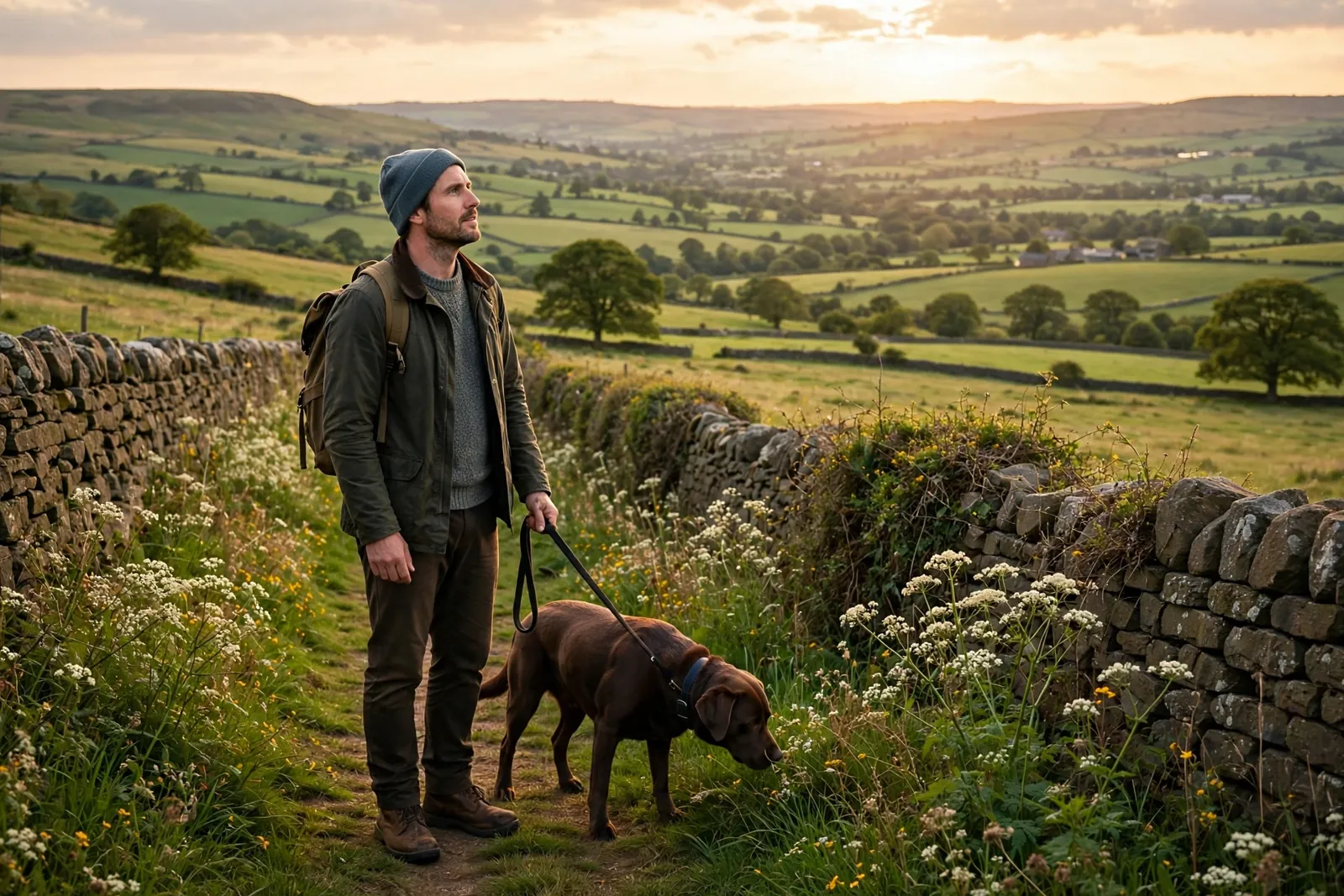
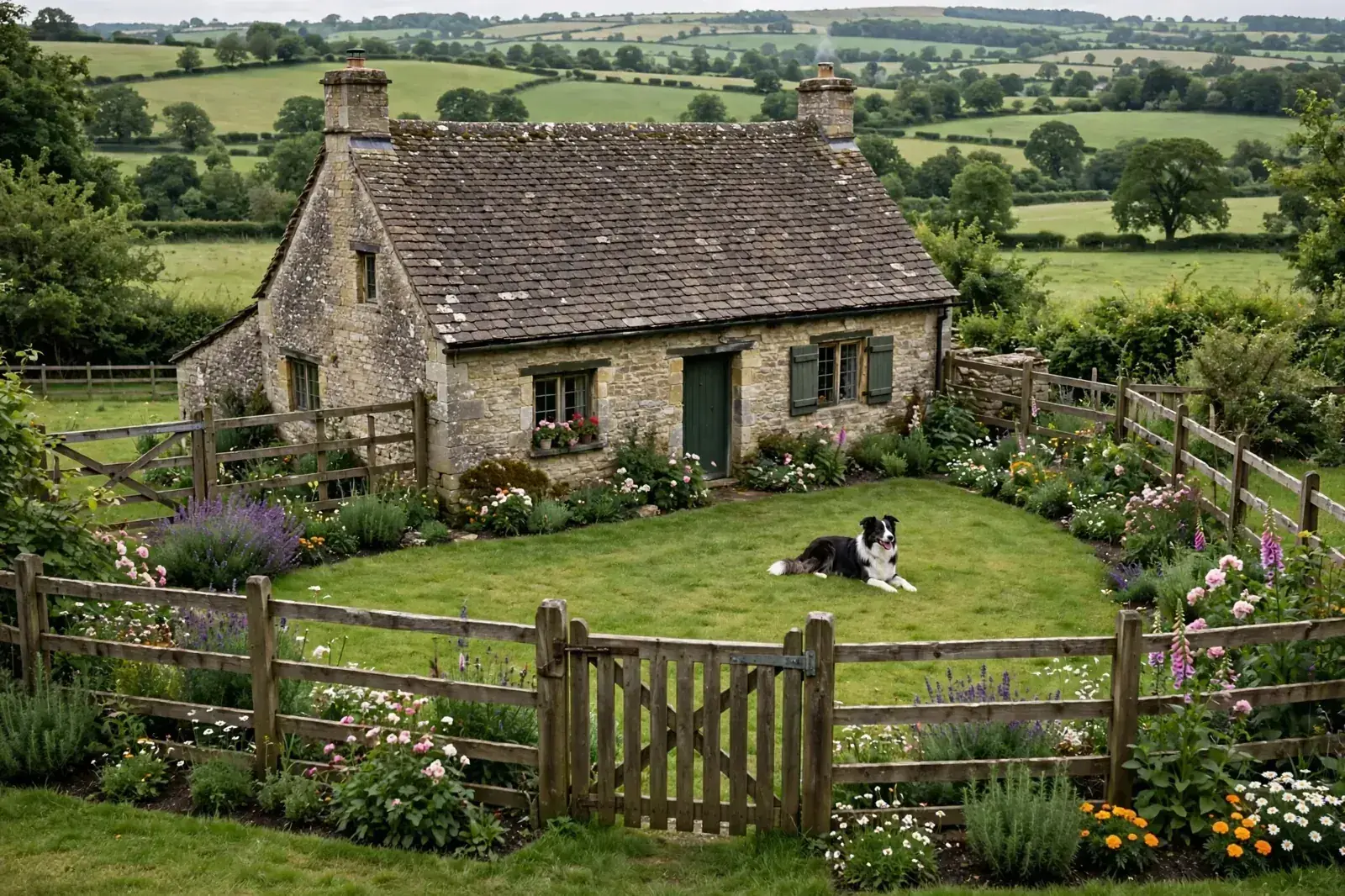
Holiday photographs are the most natural thing in the world to share, and they are also one of the easiest ways to tell a stranger exactly where your dog is. A photograph of a dog on a beach, outside a cottage with a visible house name, or in a pub garden with a location tag gives away the place, the time and the dog, all in one post. A video of a puppy playing in a garden can show the fence, the gate and the road outside. A story posted in real time tells anyone watching that you are at that beach, at that cafe, right now, and that the dog is with you. None of that is a reason to stop taking photographs, but it is a reason to think about when and how you share them.
The practical fix is delay and selection. Post photographs after you have left a place, not while you are still there, and turn off precise location tagging on posts and stories. Avoid photographs that show the cottage name, the house number, the car registration or the exact beach access point, and check the background before you post: a sign, a distinctive building or a view from a bedroom window can identify a property more precisely than a caption ever will. If you want to share a dog's name, breed and age, remember that those details can also be used to sell a stolen dog convincingly, so keep the most identifying details — the microchip number, the exact markings, the vet's name — private. Share the cute photograph, not the identity file.
Think about who can see what you post, and about the accounts that repost it. A public account with a large following is a different proposition from a private account shared with family, and a local dog-walking group or a holiday cottage page may have members you do not know. Check your privacy settings before the holiday, and be careful with live video, which cannot be edited after the event and which shows your surroundings in real time. If you are staying in a place for a week, do not post a daily routine — "morning walk at 7am on the beach, then the pub at lunchtime" — because a routine is exactly what makes a dog predictable. Vary your times and routes anyway, for the dog's sake as well as for security, and let the photographs wait until you are home.
Children and other adults in the group need the same briefing, in plain language. A teenager posting a story from the cottage garden, a grandparent sharing a photograph in a family group that is then shared again, or a friend tagging you at a location can all undo a careful plan. Agree a simple rule before you travel: no live locations, no cottage name or number, no photographs of the garden gate or the car, and photographs are posted after you leave. It is not about secrecy or fear; it is about keeping the holiday enjoyable for everyone, including the dog, without handing a stranger a map to find them.