This guide is independent and contains no paid placement. Behaviour and medication advice here is general information only: follow the advice of your registered vet or a certified behaviour specialist for your own dog.
A dog afraid of car travel needs desensitisation, not persuasion. Work in tiny steps over about six weeks: first the parked car, then the engine, then very short drives that always end well. Never force a frightened dog into a long journey and hope it gets used to it, because flooding usually makes the fear worse.
Fear is not stubbornness
The scene is familiar to thousands of UK dog owners. You open the car door, and your dog plants its feet, lowers its body, turns away or simply walks back to the house. Or the dog gets in, but the moment the engine starts it begins to pant, drool, shake or whine. A well-meaning friend may say the dog is being stubborn, or that it just needs a long drive to get over it. Neither is true, and both ideas can make the problem worse.
A dog that is afraid of car travel is anxious, and anxiety follows its own logic. From the dog's point of view, the car is a small, noisy, moving box that smells strange, vibrates, tilts around corners and sometimes makes it feel sick. If every car journey has ended at the vet, at the groomer or in a long, miserable drive, the car itself becomes a predictor of bad things. The dog is not refusing to cooperate out of spite. It is trying to avoid something it genuinely believes is unpleasant or frightening, and it has learned that freezing, pulling away or panicking sometimes works.
That is why the fix is gradual desensitisation rather than a single brave push. Desensitisation means exposing the dog to the feared thing at such a low intensity that it stays calm, then raising the intensity in tiny steps while the dog keeps coping. Each calm repetition teaches the dog a new association: the car predicts treats, quiet praise and a short, pleasant outing, not nausea and panic. Done properly, it is slow and almost boring. Done impatiently, it is a flooded dog, a setback and several weeks of lost progress.
It helps to reframe the whole project before you start. You are not training your dog to tolerate the car. You are changing how your dog feels about the car, and feelings change more slowly than behaviours. A dog can be lured into a car with a sausage and still be terrified once the door closes. That is not success. Success is a dog that walks to the car willingly, settles on its bed or seat, breathes normally and can take a treat. If you keep that picture in mind, you will know when to move on and when to stay at the same step for another week.
Most dogs can improve a great deal with patient work at home. Some need veterinary help for nausea or anxiety as well, and a small number need a qualified behaviourist to design a plan. None of that is a failure. It is simply matching the help to the size of the problem, and this guide explains how to judge that as you go.
How to recognise car anxiety
Anxiety does not always look dramatic. Some dogs shake, pant and drool. Others go quiet, freeze or stare fixedly out of the window. Learning to read the early, subtle signs matters, because the earlier you notice stress, the sooner you can stop, lower the difficulty and protect the progress you have made.
Watch for drooling that starts before the car moves, or the moment the dog sees the keys. A dog that licks its lips repeatedly, yawns when it is not tired, or pants with a tight, closed mouth is often stressed rather than hot. Shaking or trembling, a tucked tail, flattened ears and a low, crouched body are clearer signals. Some dogs pace in the boot or on the back seat, scratch at the door or try to climb into the front. Others go the opposite way and shut down completely: they lie flat, refuse food and will not respond to their name. Both extremes mean the same thing, which is that the dog is over its coping threshold.
Vomiting, diarrhoea and urination in the car can be signs of anxiety, travel sickness or both, and they deserve a vet check rather than a guess. Whining, barking and howling are common too, especially in dogs that are also frustrated or over-aroused. The pattern to look for is timing. If the signs start when you pick up the lead, open the garage or walk towards the car, the dog is anticipating something unpleasant. If they start only once the car is moving, sickness is more likely to be part of the picture. Keep a short diary for a week or two: what happened, when it started, how long it lasted and what helped. Patterns that are invisible day to day become obvious on paper, and a vet or behaviourist will find that diary genuinely useful.
It is also worth watching how your dog behaves after the journey. A dog that takes an hour to settle, refuses food, hides or seems unusually clingy after a short drive has not simply had a boring trip. It has had a stressful one, and the recovery time is part of the cost. A good desensitisation plan aims for the opposite: a dog that hops out, shakes off, has a sniff and carries on as normal. That is the standard to judge every session against.
Finally, notice your own behaviour, because dogs read it closely. If you are tense, rushing, apologising and fussing, your dog will pick up on the tension. If you are calm, unhurried and matter-of-fact, the dog has a much better chance of staying calm too. This is not about blaming yourself. It is about recognising that you are half of the partnership in the car, and that your breathing, your voice and your pace are part of the training environment.
Travel sickness or anxiety? How to tell them apart
Many owners treat car fear as a training problem when the real culprit is nausea, or treat nausea as a behaviour problem when the real culprit is fear. The two are often tangled together: a puppy that feels sick on every journey quickly learns to dread the car, and a dog that dreads the car can work itself into a state where it feels sick. Sorting out which came first changes the treatment, so it is worth spending a little time on the distinction.
True travel sickness, or motion sickness, comes from the balance system in the inner ear. It is very common in puppies and young dogs, because that system is still maturing, and many puppies grow out of it between one and two years of age. The classic signs are drooling, lip-licking, retching and vomiting once the car is moving, often worse on winding roads and better on straight motorways. A dog with pure travel sickness may be perfectly happy to get into a parked car, take treats and settle, and only start to feel ill once the motion begins.
Anxiety, by contrast, often starts before the engine turns over. The dog may refuse to approach the car, freeze at the door, shake while you load the boot, or pant and whine in a stationary car. The signs may ease once the journey is under way, or they may stay constant for the whole trip. A dog whose fear is purely learned will often be fine on a short, smooth drive to a favourite walk once the dread of getting in has been dealt with, while a dog with nausea will still feel ill however short the drive.
The practical test is to separate the pieces. Try a session with the dog sitting in the parked car, engine off, for five minutes, with treats and praise. If the dog is relaxed there, try the engine running but stationary. If the dog stays relaxed, try a two-minute drive down a straight, smooth road. Note exactly where the stress begins. If it begins with motion, talk to your vet about anti-nausea medication. If it begins with the sight of the car, the work is mainly behavioural. If it begins with both, you may need both kinds of help, and that is perfectly normal.
Do not try to diagnose this yourself if the dog vomits regularly, loses weight, seems in pain or has any other health concern. Puppies, older dogs and dogs with ear infections, digestive problems or a history of illness need a vet check before any training plan starts. A dog cannot learn to love the car while it feels sick, and no amount of treats will fix nausea. Get the medical side settled first, then do the behavioural work on a dog that feels physically well. If in doubt about any health detail, check the official guidance before you travel and ask your vet.
The six-step desensitisation method
The method below is the core of this guide. Each step is a small, controlled increase in difficulty, and you only move to the next step when the dog is genuinely relaxed at the current one. Relaxed means loose body, normal breathing, soft eyes, willingness to take a treat and the ability to settle. If any of those are missing, stay where you are. A week spent happily at step two is worth far more than a rushed jump to step five that ends in panic.
Before you begin, gather your equipment: high-value treats cut into tiny pieces, a familiar blanket or bed, a favourite chew or lick mat, a lead and harness, and a calm helper if you have one. Choose a quiet time of day and a quiet place to park. Work in sessions of five to ten minutes, two or three times a week at first, and always end while the dog is still calm. Short, successful sessions build confidence. Long sessions that end in stress teach the dog that the car is exhausting.
Step one: the parked car, engine off
Start with the car parked on your drive or in a quiet street, doors open, engine off. Walk the dog towards the car on a loose lead, rewarding every calm step. Let the dog sniff the tyres, the door and the boot. Scatter a few treats on the ground beside the car, then on the sill, then on the seat or in the boot where the dog will travel. Do not lure the dog in and shut the door. Let the dog get in and out freely, and reward the choice to get in. End the session after five minutes, even if it is going well, and take the dog for a normal walk. Repeat this until the dog walks to the car happily and hops in without hesitation, which may take several sessions.
Step two: settling inside with the doors closed
Once the dog enters willingly, practise settling. Ask the dog onto its blanket, close one door, then the other, and sit with the dog for a few minutes. Offer a chew or a lick mat smeared with something the dog loves. Talk quietly or sit in comfortable silence. Open the doors again before the dog gets restless, reward the calm settle, and let the dog out. Gradually extend the time from two minutes to ten, always ending before the dog shows stress. If the dog starts to pant, whine or paw at the door, you have stayed too long. Open the door calmly, let the dog out and try a shorter session next time.
Step three: the engine running, car still parked
With the dog settled inside, start the engine and let it idle. Do not drive anywhere. Keep the session short, reward calm behaviour and switch the engine off after a couple of minutes. Some dogs are startled by the vibration, the sound of the fan or the beep of the seat-belt warning, so introduce each new sound gently. Run the engine for a little longer each session, and try the indicators, the wipers and the radio at low volume one at a time. The goal is a dog that hears the engine start and thinks of treats, not a dog that braces for a journey.
Step four: moving a few metres
Now drive, but barely. Reverse out of the drive and back in again, or drive to the end of the street and back. Keep the speed low and the corners gentle. Stop, praise, offer a treat and let the dog out in a pleasant place. The whole drive may last less than a minute, and that is fine. Repeat the same tiny drive until it is boring, then make it very slightly longer. Boring is the goal. A dog that finds the car boring is a dog that is no longer afraid of it.
Step five: short drives to good places
Extend the drive to five minutes, then ten, always ending somewhere the dog enjoys: a quiet field, a favourite sniffing walk, a friend's garden. The destination matters enormously, because it teaches the dog that the car leads to good things. Avoid the vet, the groomer and long motorway drives during this phase. Drive smoothly, brake early, take corners slowly and keep the car cool and well ventilated. Stop every ten minutes on longer practice drives so the dog can stretch, drink and toilet. If the dog shows stress at any point, shorten the next drive rather than pushing through.
Step six: building up to normal journeys
Only now should you start adding the features of a normal journey: a slightly longer drive, a busier road, a short stop at a petrol station, a passenger in the front seat. Add one new element at a time, and keep the total journey well within what the dog has already coped with. A thirty-minute drive built up over weeks is a triumph. A thirty-minute drive attempted in week one is a gamble. Keep a log of each journey: distance, duration, the dog's behaviour at the start, middle and end, and what you would change next time. The log keeps you honest and shows you how far you have come on the days when progress feels slow.
Throughout all six steps, remember that the dog sets the pace. Some dogs move through the steps in a fortnight. Others need a month on step one alone, especially rescue dogs with an unknown history or dogs that have been sick in cars for years. That is not a problem to solve by speeding up. It is information about how frightened your dog is, and it deserves respect. For dogs that also react to other dogs, traffic or strangers, our guide to reactive dog holidays explains how to choose calm stays and quiet walks once the car itself is no longer the main problem.
Your six-week plan
Six weeks is a realistic target for many dogs, not a deadline. Treat the table below as a shape for the work rather than a strict timetable. If your dog needs two weeks on step one, take two weeks and shift everything along. The plan only fails if you force the dog through it on schedule regardless of how it is coping.
| Week | Focus | Typical sessions | Ready to move on when |
|---|---|---|---|
| Week 1 | Approach and entry | Three short sessions near the parked car, engine off, treats on the sill and seat | The dog walks to the car willingly and hops in without hesitation |
| Week 2 | Settling inside | Three sessions of two to ten minutes sitting in the car with the doors closed, chew or lick mat provided | The dog lies down, breathes normally and takes treats inside the car |
| Week 3 | Engine and sounds | Three sessions with the engine idling, then indicators, fan and radio introduced one at a time | The dog stays relaxed when the engine starts and when each new sound appears |
| Week 4 | First movement | Three very short drives of one to three minutes on quiet, smooth roads | The dog stays calm for the whole drive and recovers immediately afterwards |
| Week 5 | Short trips to good places | Two or three drives of five to fifteen minutes, always ending at a favourite walk | The dog settles within a minute of setting off and enjoys the destination |
| Week 6 | Longer, more normal journeys | Two drives of twenty to thirty minutes with one new element each, such as a busier road or a short stop | The dog copes with a thirty-minute journey and settles quickly at the other end |
A few practical notes make the plan work better. Train when your dog is neither hungry nor full, and avoid sessions straight after a big meal, because a full stomach makes nausea more likely. Pick the same quiet parking spot for the early weeks so the only new thing is the car itself. Keep a small bag packed and ready by the door with treats, a towel, water, a spare lead and cleaning supplies, so you never have to rush. And write down one line after every session: what you did, how the dog coped and what you will try next. Six weeks of one-line notes is a surprisingly powerful record, and it is exactly what a vet or behaviourist will ask to see if you need extra help.
It is worth planning around the calendar as well. If you have a holiday, a family visit or a vet appointment that needs a long drive, start the plan at least eight weeks beforehand, and do not let the deadline compress the steps. If the journey cannot wait, talk to your vet about the least stressful way to manage that one trip, and accept that it may set the training back a little. That is a cost worth paying if the alternative is a panicked dog and a ruined journey. The plan will still be there afterwards.
Rewards and reassurance done right
Rewards are the engine of desensitisation, but they only work when they are used well. The principle is simple: reward calm behaviour, and reward it at the exact moment it happens. A treat given while the dog is trembling rewards trembling. A treat given the moment the dog takes a deep breath, looks at you or lies down rewards the calm you want more of. Timing matters more than the size of the treat, so keep treats tiny, soft and easy to swallow, and keep your hand movements slow and predictable.
Use a hierarchy of rewards. Everyday kibble is fine for easy moments near the car, but the harder steps deserve the good stuff: small pieces of chicken, cheese or sausage, or a lick mat smeared with peanut butter made for dogs, mashed banana or plain yoghurt. Check the ingredients of any spread before you use it, because some products contain xylitol, which is toxic to dogs, and check the official guidance before you travel if you are unsure about a food. Rotate the rewards so they stay interesting, and save the very best ones for the car so the car itself becomes associated with the best treats in the dog's life.
Food is not the only reward. A calm word, a slow stroke along the chest, a favourite toy or the chance to sniff a new patch of grass can all work, especially for dogs that go off food when stressed. In fact, a dog that refuses a treat it would normally devour is telling you something important: it is too stressed to eat, and the session is too hard. Do not wave the treat under its nose or push it into its mouth. Lower the difficulty, give the dog space and try again at an easier step. Appetite returning is one of the best signs that the dog is coping.
Reassurance is often misunderstood. Many owners are told never to comfort a frightened dog because it will reward the fear. That advice is too blunt. A calm, steady presence does not reward fear. It gives the dog something safe to lean on. Speak in a low, even voice, keep your movements slow and avoid looming over the dog or staring into its eyes. A hand resting quietly on the dog's shoulder or a slow stroke down its side is usually better than excited praise or frantic petting. What you should avoid is panic of your own: high-pitched pleading, repeated apologies, picking the dog up and clutching it, or dragging it towards the car while telling it there is nothing to be afraid of. Your dog believes your body far more than your words.
There is also a place for simply doing nothing. Some dogs cope best when they are given a chew and left alone in the back seat with the door open, free to come and go. Others cope best with a familiar person sitting beside them. Learn your dog's preference and respect it. The right reassurance is the kind your dog finds reassuring, not the kind that makes you feel helpful.
Setting up the car
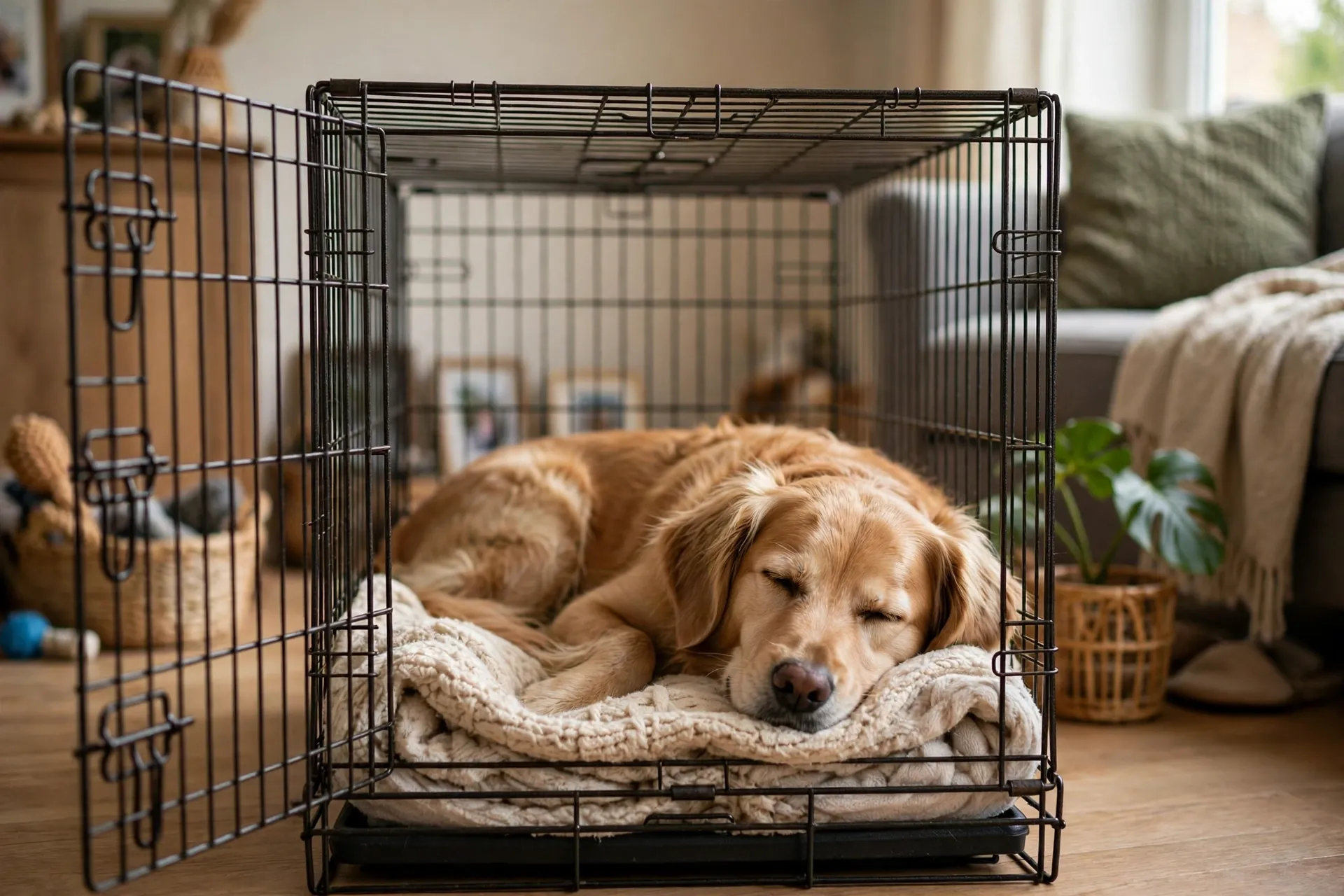
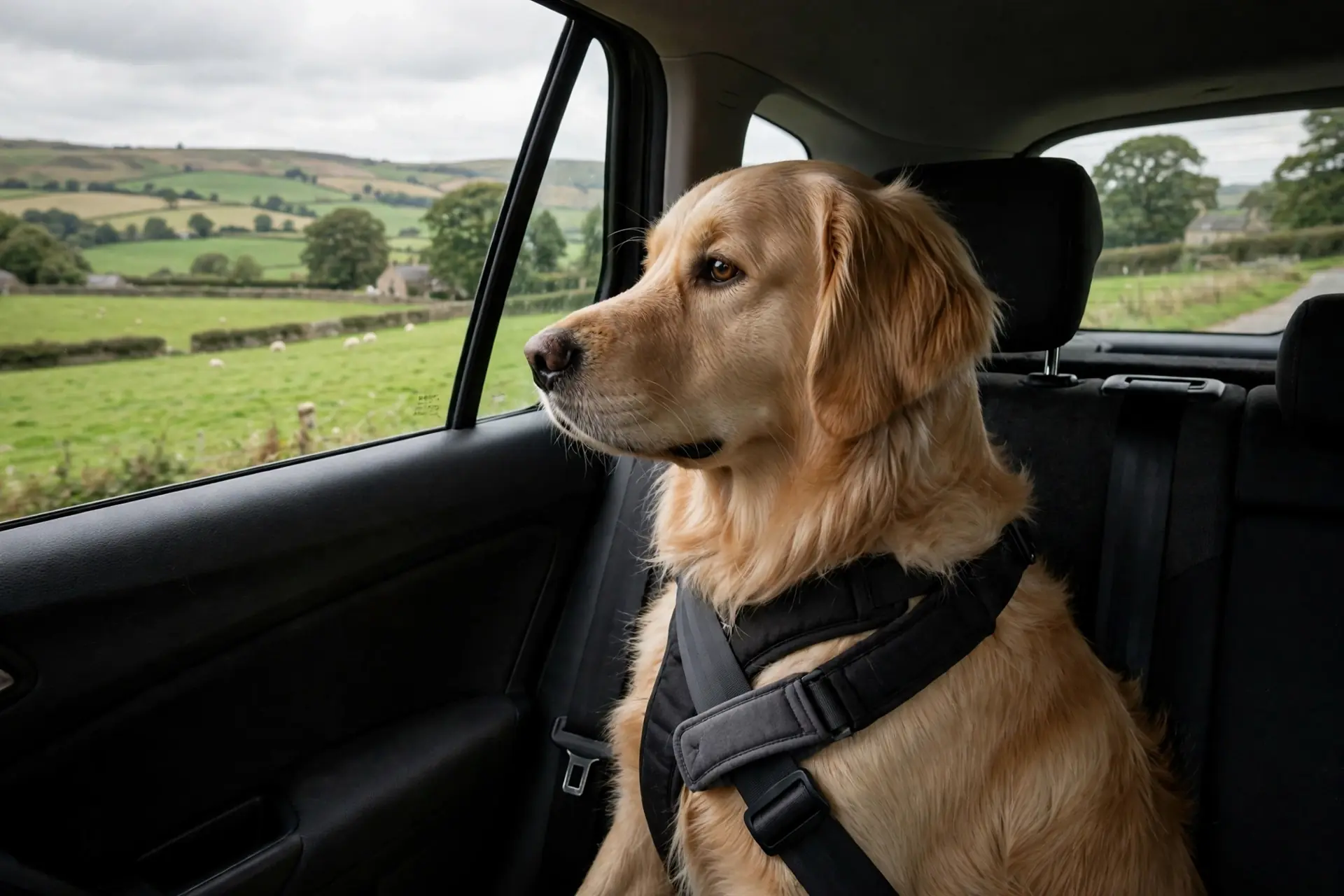
The car itself can be made much easier to cope with, and these changes are worth making before the first training session. Start with restraint, because safety and calm are linked. In the UK, Rule 57 of the Highway Code says dogs must be suitably restrained in a vehicle so they cannot distract the driver or injure themselves or others if the vehicle stops quickly, and unrestrained dogs can affect insurance claims. A crash-tested harness attached to a seat belt, a secured crate or a dog guard with a boot liner are all sensible options. Choose the one your dog finds most comfortable, introduce it at home first, and never let a frightened dog travel loose. A dog that slides around on the back seat at every corner has one more reason to hate the car. If you are considering a crate, our guide on crate training a dog for travel explains sizing, setup and a calm four-week introduction that pairs well with this plan.
Ventilation matters more than most people realise. A warm, stuffy car makes nausea worse and panting harder to read. Before you set off, open the windows briefly to clear stale air, then keep a window cracked or the air conditioning on a gentle setting. Aim for cool and fresh rather than cold and draughty, and never leave a dog alone in a parked car, even for a few minutes, because temperatures inside can rise dangerously fast on a mild day. A sun shade on the rear window helps on bright days, and a light-coloured blanket reflects heat better than a dark one.
What the dog can see also matters. Some dogs settle better when they can look out of the window and watch the world go by, while others are calmer when their view is partly blocked and the passing world is less stimulating. A raised booster seat can help a small dog see out without standing, and a familiar blanket over the back of the seat can create a cosy den feeling for a dog that prefers to hide. Experiment gently during the parked-car stage, and let your dog show you which arrangement it prefers. There is no single right answer, only the arrangement your dog settles in.
Smell is the sense owners most often forget. Air fresheners, strong cleaning products, fast-food wrappers and the lingering smell of a previous dog's vomit can all make a car deeply unpleasant for a nose as sensitive as a dog's. Clean the travel area with a mild, dog-safe cleaner, air the car out, and avoid hanging strong fresheners. A blanket or bed that smells of home is far more reassuring than a pine-scented tree. Some owners find that a worn item of their own clothing, placed near the dog's bed, helps the dog settle, and it costs nothing to try.
Finally, think about the driving itself. Smooth driving is kind driving: brake early, accelerate gently, take roundabouts slowly and avoid sudden lane changes. Plan routes that favour straight, smooth roads over winding lanes during the training phase, even if they take a few minutes longer. Keep the radio low or off, and ask passengers to keep their voices calm. The car should feel like a quiet room that happens to move, not a fairground ride.
Medication and when to call the vet
Medication has a legitimate place in this work, but it is a support for training, not a substitute for it. A pill will not teach a dog that the car is safe, and a dog that is sedated into stillness has not learned anything. Used well, medication can lower nausea or anxiety enough for the dog to cope with a training session and actually learn from it. Used badly, it can mask fear, leave the dog groggy and confused, or make the next session harder. That is why every decision about medication should involve your registered vet.
Book a vet appointment if your dog vomits on most journeys, drools heavily, refuses food before travel, or shows signs of pain or illness alongside the fear. The vet will check the ears, teeth, stomach and general health, and ask about the history of the problem. Bring your diary and any short videos you have taken, because they help the vet far more than a general description. If travel sickness is confirmed, the vet may prescribe an anti-nausea medicine to use before journeys during the training period. If anxiety is the main problem, the vet may discuss anxiolytic medication, a calming supplement or a referral to a behaviour specialist. Follow the vet's advice on dose and timing exactly, and never share medication between dogs or use human travel-sickness tablets without veterinary guidance, because doses and safety vary widely.
There are also non-prescription products marketed for calming dogs, from pheromone sprays and collars to herbal chews and calming music. Some owners report that they help a little, and they are unlikely to do harm when used as directed, but the evidence for most of them is modest. Think of them as background support, not as the treatment itself. A pheromone spray on the dog's blanket may take the edge off, but it will not replace the six steps above. If you try one, introduce it during a calm parked-car session so you can see whether it makes any difference, and stop using it if the dog seems bothered by the smell.
Timing matters too. If your vet prescribes medication for a journey, give it at the time advised, usually an hour or two before travel, and combine it with a short, easy drive rather than a long test. Note the effect in your diary: how quickly the dog settled, whether it ate, whether it vomited, and how long it took to recover afterwards. That record helps the vet adjust the plan at the next visit. And if medication makes your dog unusually drowsy, unsteady or distressed, contact your vet before using it again.
One more vet-related point is worth making early. Keep your dog's vaccinations and identification up to date before you start travelling more, and make sure the microchip details are current. A dog that travels regularly will meet more dogs, more places and more unexpected situations, and the paperwork is part of being ready. Check the official guidance before you travel if your plans involve ferries, the Channel Tunnel or travel outside Great Britain, because the rules for pet travel documents differ by route.
When to seek a behaviour specialist
Most mild cases improve with the plan in this guide, but some dogs need professional help, and asking for it early is sensible, not a sign of failure. Seek a certified behaviourist if the fear is getting worse rather than better, if the dog panics, tries to escape the car, injures itself or becomes aggressive when handled near the car, or if progress has stalled for several weeks despite patient work. You should also seek help if you have a long journey you cannot avoid, such as a house move, and you need a plan that balances the journey against the training.
Choosing the right professional matters. In the UK, look for a behaviourist certified by a recognised body, such as a Certificated Clinical Animal Behaviourist, or a vet with a behaviour qualification. Ask how they work, what methods they use and what a plan would look like before you book. A good behaviourist will take a full history, watch your dog, involve your vet and design a plan for your individual dog, not hand you a generic sheet. Be cautious of anyone who promises a quick fix, recommends punishment, flooding or dominance-based methods, or suggests you simply force the dog through its fear. Those approaches can make anxiety worse and damage the trust between you and your dog.
What should you expect from the process? Usually an initial consultation of an hour or more, often including a visit to your home or a video call, followed by a written plan with clear steps, criteria for moving on and a review date. The behaviourist may work alongside your vet, especially if medication is part of the plan. The cost varies by region and by practitioner, so ask for the fee in advance and check whether your pet insurance covers behaviour consultations. Some insurers do, with a vet referral, and it is worth asking before you pay.
Between appointments, keep doing the small, patient work. The specialist can design the plan, but only you can do the daily repetitions that make it work. Bring your diary to every appointment, be honest about what you managed and what you skipped, and do not be embarrassed if a session went badly. Bad sessions are data, not failures, and a good behaviourist will use them to adjust the plan.
Setbacks and bad days
Setbacks are a normal part of desensitisation, not a sign that the plan has failed. A dog that coped happily with a ten-minute drive last week may refuse to get in this week after a bumpy ride, a loud noise or a visit to the vet. That is how learning works: progress is rarely a straight line, and a frightened brain remembers bad experiences more vividly than good ones. The right response to a setback is to go back a step or two, rebuild confidence there, and then move forward again more slowly.
Common causes of setbacks are worth knowing so you can avoid them where possible. A long, unavoidable journey in the middle of training is the most frequent one, and it is worth planning for: if you know a long drive is coming, ask your vet about the least stressful way to manage it, and plan a few easy sessions afterwards to rebuild confidence. Illness is another: a dog with an upset stomach or an ear infection will feel worse in the car, so pause training until it is well. Changes in the car, such as a new vehicle, a different seat or a new passenger, can unsettle a dog that had just started to cope, so introduce changes one at a time. And hot weather, fireworks season and busy holiday traffic can all add stress that has nothing to do with the car itself.
On a bad day, the kindest thing you can do is stop. End the session calmly, let the dog out, take it for a normal walk and try again in a few days at an easier step. Do not coax, plead or push, and do not repeat the failed step three times in a row hoping for a different result. The dog is not testing you. It is telling you that today is too much, and listening to that message is what builds trust over time.
It also helps to keep your own expectations in check. If you set a target of a two-hour drive to the coast by a particular date, every slow week feels like a failure. If you set a target of a dog that is a little calmer in the car than it was last month, every small improvement counts. Celebrate the quiet wins: the first time the dog walks to the car without hesitating, the first time it takes a treat with the engine running, the first time it lies down on a drive. Those are the moments that add up to a dog that can travel.
Finally, remember that some dogs will always find car travel mildly stressful, even after good training. The goal is not a dog that loves the car. It is a dog that can cope with the car well enough to enjoy the walks, holidays and visits at the other end. That is a realistic and worthwhile goal, and it is within reach for most dogs with patient work.
Your first real journey
When your dog has coped with thirty minutes of calm driving, it is time to plan the first real journey. Choose a destination the dog will love, keep the drive well within what it has already managed, and treat the whole day as a training session rather than a test. Pack the night before so the morning is unhurried. Exercise the dog lightly before you leave, offer water, and feed a small, plain meal at least two hours before departure rather than a large meal just before the car. Bring the familiar blanket, the usual treats, a chew, water and a bowl, a towel, cleaning supplies and a spare lead.
Set off at a quiet time if you can, and build in a stop every hour or so on longer drives. At each stop, let the dog stretch, drink, toilet and have a short sniff around a quiet area before you set off again. Keep the car cool, drive smoothly and keep the radio low. If the dog settles and sleeps, leave it alone. If it becomes restless, talk to it calmly, offer a treat if it will take one, and consider stopping earlier than planned. Arriving a little late is always better than arriving with a panicked dog.
At the destination, give the dog time to decompress before you expect it to enjoy itself. A short, quiet walk on a long lead, a drink and a chance to sniff the new surroundings will help far more than an immediate plunge into a busy beach or a crowded cafe. Let the dog set the pace for the first hour, and keep the first day gentle. A dog that arrives calm and has a good day will associate the car with that good day, and the next journey will be a little easier.
The return journey deserves the same care. Dogs are often more tired on the way home, and tired dogs can be more anxious. Keep the routine the same, stop as often as needed, and do not be tempted to push through the last hour because you are nearly home. When you arrive, let the dog out, offer water and food at the usual time, and let it rest. A quiet evening at home after a successful trip is the best reward of all.
After the journey, update your diary while the details are fresh. What worked, what did not, how long the dog took to settle, and what you would change next time. Then plan the next trip at a similar length before you attempt anything longer. Confidence is built by repeating success, not by testing its limits, and the second journey matters just as much as the first.
Practical questions
Before you go
How long does it take to help a dog that is afraid of car travel?
Most dogs need four to eight weeks of short, calm sessions before they are ready for a normal journey, and some need longer. Progress is measured in relaxed behaviour, not in miles covered. If your dog is still drooling, shaking or refusing to get in after several weeks of patient work, ask a registered vet or a certified behaviourist for advice before pushing further.
My dog drools and vomits in the car. Is that anxiety or travel sickness?
It can be either, and the two often overlap. Travel sickness usually causes drooling, lip-licking and vomiting once the car is moving, and it is common in puppies whose balance system is still maturing. Anxiety can start before the car moves, with shaking, yawning, freezing or trying to escape. A vet can help you tell them apart and advise on suitable medication, so do not guess.
Should I comfort my dog when it is scared in the car?
Yes, calm reassurance is fine. Speak in a low, steady voice, keep your own body relaxed and offer a treat only when the dog takes a breath or settles for a moment. Avoid picking the dog up, crowding it or pleading with it, because frantic fussing can add to the tension. The goal is a calm presence, not a rescue.
Can I use calming medication for my dog's car anxiety?
Some dogs benefit from medication prescribed by a vet, either for travel sickness or for anxiety, but nothing should be given without veterinary advice. A vet can check for pain, nausea and other health problems first, then choose a product and dose suited to your dog. Sedatives bought without advice can mask fear rather than reduce it, so always follow a registered vet's guidance.
What if my dog will not get into the car at all?
Do not lift or drag the dog in. Go back to the earliest step: reward the dog for standing near the car, then for putting paws on the sill, then for sitting inside with the doors open and the engine off. A ramp or a low step can help older or smaller dogs. If the dog still refuses after patient work, a certified behaviourist can design a plan for your dog.
When should I ask a behaviour specialist for help?
Ask for help if the fear is getting worse, if the dog panics, tries to escape or injures itself, if progress has stalled for several weeks, or if you have a long journey you cannot avoid. Choose a certified behaviourist or a vet with a behaviour qualification, and check the official guidance before you travel. Bring notes and short videos of your dog's behaviour to the appointment.